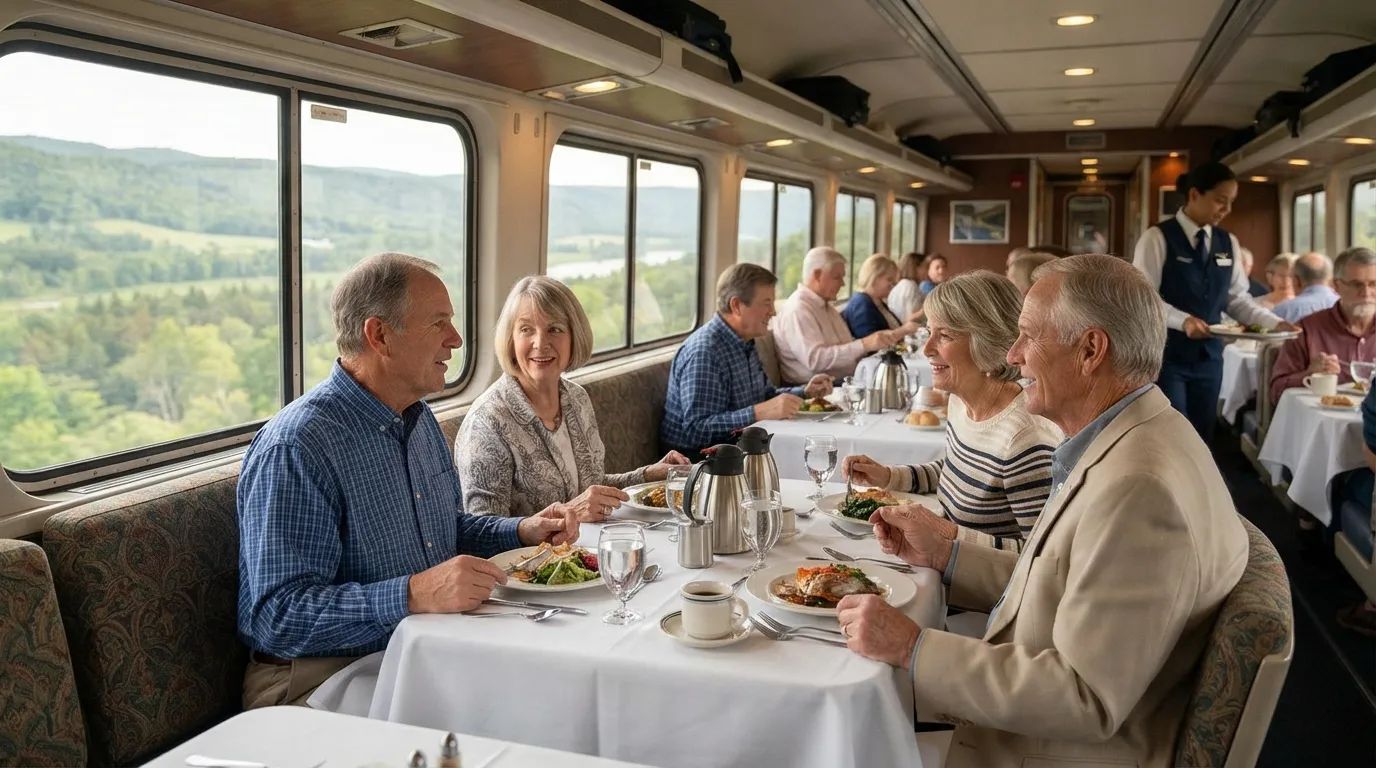
Picture a sleeper train as a rolling hotel suite, and your first look inside a roomette will feel like a plot twist. If you are over 65 and planning your first overnight rail trip, this list covers what many riders only figure out after the train has already left the station.
None of these is a reason to cancel. A few of them, though, can decide whether you step off rested and glowing or wincing at 6 a.m. beside a suitcase you cannot reach.
Some of the surprises are about the room itself. Others are about money, motion, and what happens in the dark hours that no brochure photographs.
Stay with the list to the end. The last reality is the one that may change how you plan the whole trip.
1. The Roomette Is About the Size of a Walk-In Closet
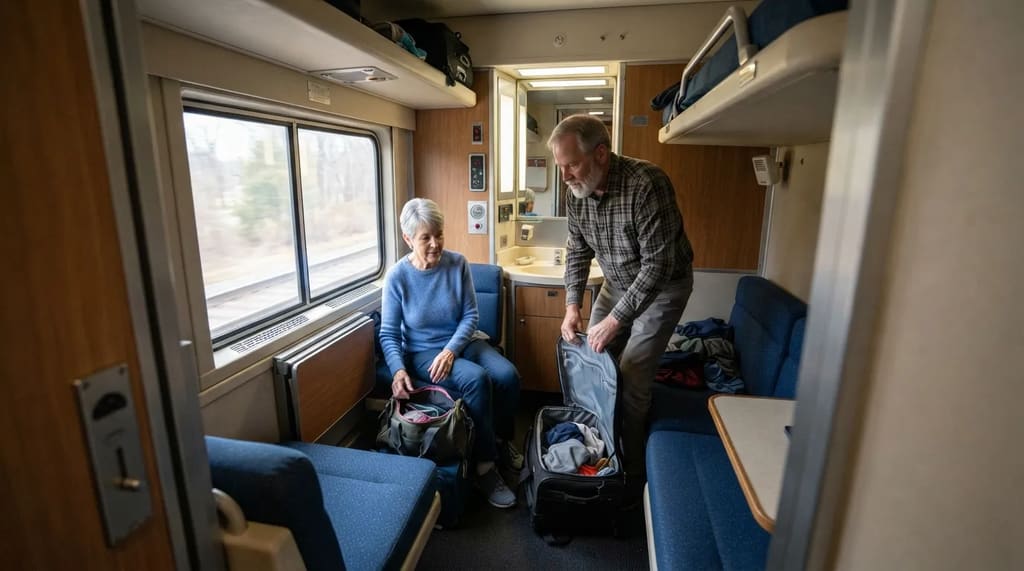
Amtrak lists a Superliner roomette at roughly 3.5 feet wide by 6.5 feet long. That is a generous closet, and it holds two facing seats, a fold-out table, and everything you bring aboard.
Here is the twist: in daylight it feels surprisingly roomy. The seats are wide, the window is big, and nobody expects you to sit bolt upright for ten hours.
The squeeze arrives at bedtime and at unpacking time. Two adults and two open bags can turn the floor into a game of elbow Tetris.
Fast Facts
- Room size: 3 feet 6 inches by 6 feet 6 inches
- Lower bed: 2 feet 4 inches wide, 6 feet 6 inches long
- Upper bed: 2 feet wide, 6 feet 2 inches long, reached by steps
- Capacity: up to two adults
Many first-timers open the door and wonder where their feet are supposed to go. The honest answer is under the seat, and not where your companion needs to step.
Do a five-minute reset right after boarding. Pick one small bag to live in the room and send everything else to the luggage rack.
2. Your Bed Does Not Exist Until Someone Builds It
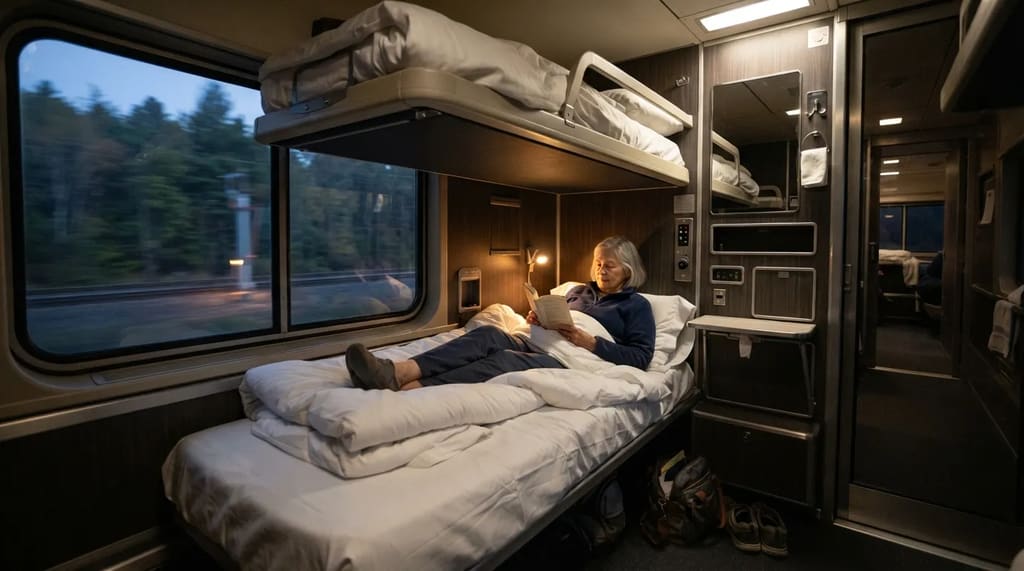
In the afternoon, your roomette is a sitting room. At night, the sleeping car attendant converts it, and the transformation is the real magic trick of the trip.
The two seats slide together into a lower bed. The upper berth folds down from the wall and is reached by a ladder, with a safety strap to keep a sleeper from rolling out.
There is a catch. You lose your daytime seats the moment the bed goes down, so the room becomes a place for lying down, not lounging.
Tell your attendant early what time you want the bed made, and whether you want only the lower bed. Traveling solo? The upper bunk can stay folded away, which gives you far more headroom.
Ask for the bed to be made after dinner and before you are exhausted. Climbing around a half-built room at 10 p.m. is nobody’s idea of vacation.
3. The Toilet Is Not Inside Your Room
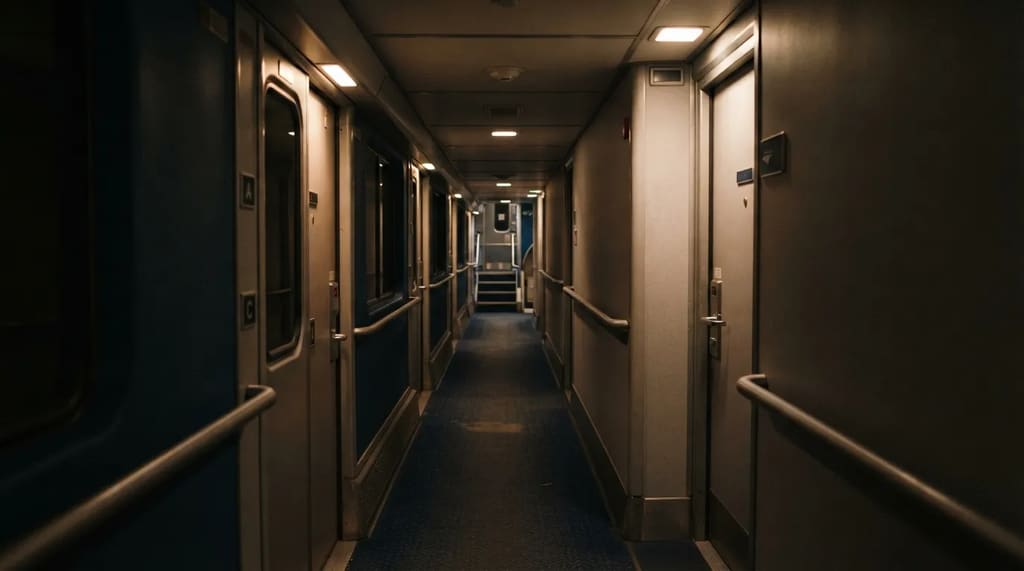
On Superliner trains, which run many of Amtrak’s western and Chicago-based long-distance routes, the roomette has no private toilet. Restrooms are shared and located elsewhere in the car, and showers are on the lower level.
That detail surprises plenty of people who assumed a private room meant a private bathroom. Bedrooms with in-room facilities cost considerably more.
So a 3 a.m. bathroom trip becomes a small expedition. You will need shoes, a robe if you like one, and a steady hand on the rail.
The shared shower, meanwhile, is a pleasant surprise. Attendants typically supply towels, and a hot shower while the countryside slides by is oddly memorable.
Check which car type runs your route before you book. Then pack slip-on shoes you can find in the dark.
4. The Stairs Can Decide Which Room You Should Book
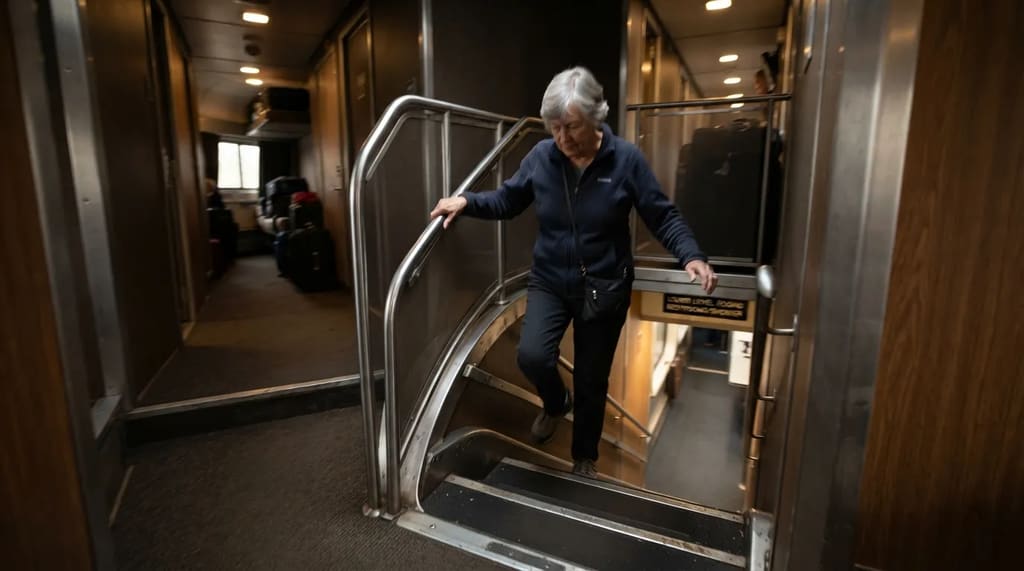
Superliner sleeping cars have two levels, connected by narrow, winding stairs. Many roomettes sit upstairs, and the shower sits downstairs.
Stairs are one thing in a quiet station. They are another thing when the whole car is rocking gently beneath your feet.
If knees, hips, or balance are a concern, ask about a lower-level roomette when you book. Those rooms put you closer to the vestibule and the downstairs restroom.
At a Glance
- Upper level: 10 roomettes, plus larger bedrooms1
- Lower level: 4 roomettes, a family bedroom, and an accessible bedroom
- Shower: on the lower level
- Best bet for stair worries: ask for a lower-level roomette
Be honest with the reservation agent about your mobility. Travelers who truly cannot climb stairs should ask about Amtrak’s accessible bedroom, which is designed for that need.
It is much easier to solve this on the phone in March than on the platform in June.
5. The Sway Is Real, and It Changes How You Walk
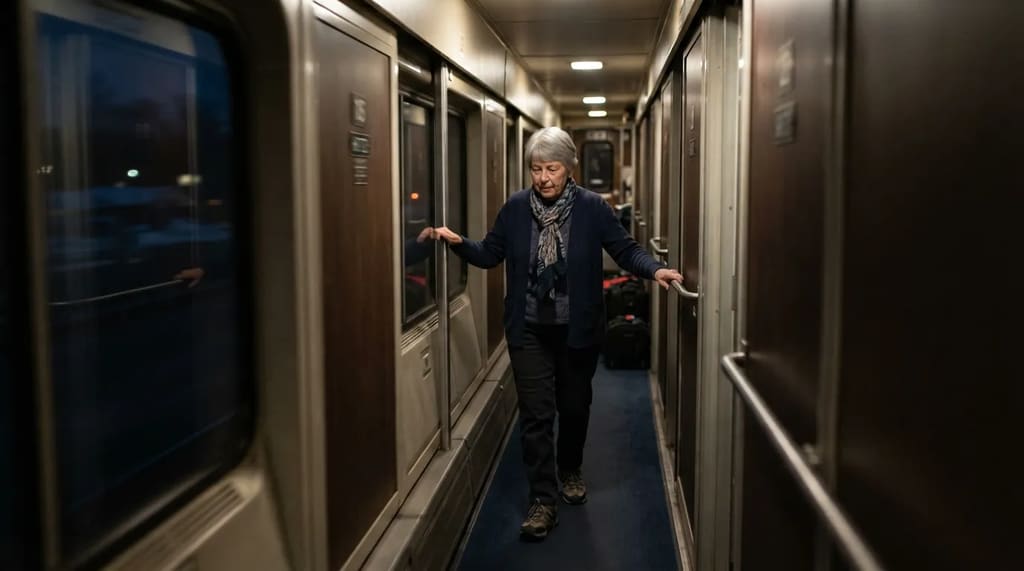
Trains do not glide like movie scenes suggest. They roll, lean, and lurch softly over switches and curves.
Many riders find the motion lulling, like a hammock the size of a bus. Others take a night or two to stop noticing it.
The practical lesson is about walking. Move through the car one hand to the next, the way sailors do, rather than letting go of one grip before finding another.
Go slowly in the aisle, and wait for a straight stretch before you stand up from the bed. A sudden swing is much easier to handle when you are not mid-step.
Bring shoes with grip rather than smooth slippers. Your future self at 2 a.m. will approve.
6. The Night Is Not Silent
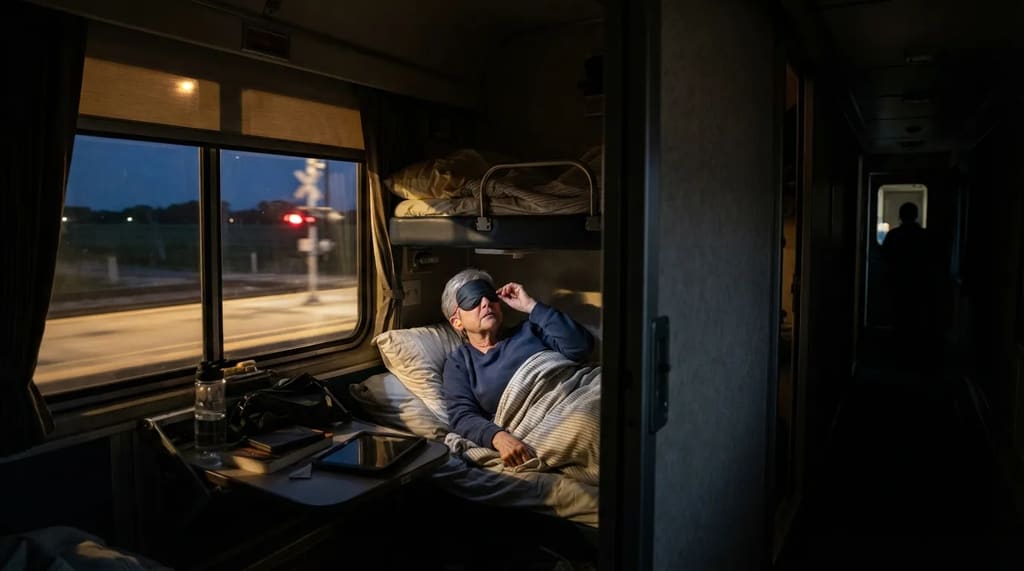
You may expect a hush. What you get is a soundtrack of wheels, rattles, and the train horn.
Federal rules generally require horns at public road crossings, and they are sounded in a long-long-short-long pattern. Through farm country and small towns, that pattern can arrive again and again.
The train also stops after dark for crew changes, servicing, and passenger stops. Platform lights can glow around the shade, and announcements may carry through the car.
Roomette doors and walls are not soundproof, so you will also hear footsteps and the occasional cough from the hall.
Pack foam earplugs and a soft eye mask. They are tiny, cheap, and may be the best sleep upgrade you can bring.
7. Your Suitcase Probably Cannot Sleep With You
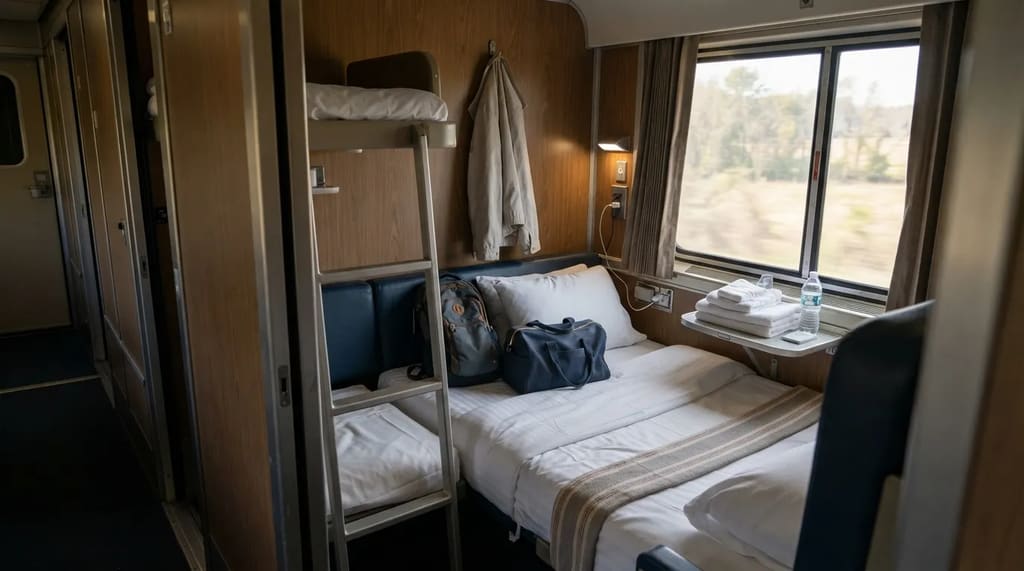
A roomette does not have room for a full-size rolling bag. Superliner cars have luggage racks on the lower level near the stairs, and that is where big suitcases belong.
The room itself holds small bags and carry-ons, plus a few spots to tuck things away. That works well only when you plan for it.
The smart move is an overnight kit. Put medications, glasses, a charger, pajamas, a light sweater, and tomorrow’s outfit in one small bag that rides with you.
Worth Knowing
- The room already has a garment rack, so a light jacket has a home
- Each room has an electrical outlet and individual reading lights
- Fresh linens, towels, and bottled water are provided
- You can leave bulky toiletries and bath towels at home
Treat the lower-level rack as a storage unit you visit once or twice. Walking down the stairs every time you want a sweatshirt gets old fast.
Keep valuables and medications with you, never on the rack. Peace of mind weighs nothing.
8. Meals Come With the Ticket, but the Style Varies by Route
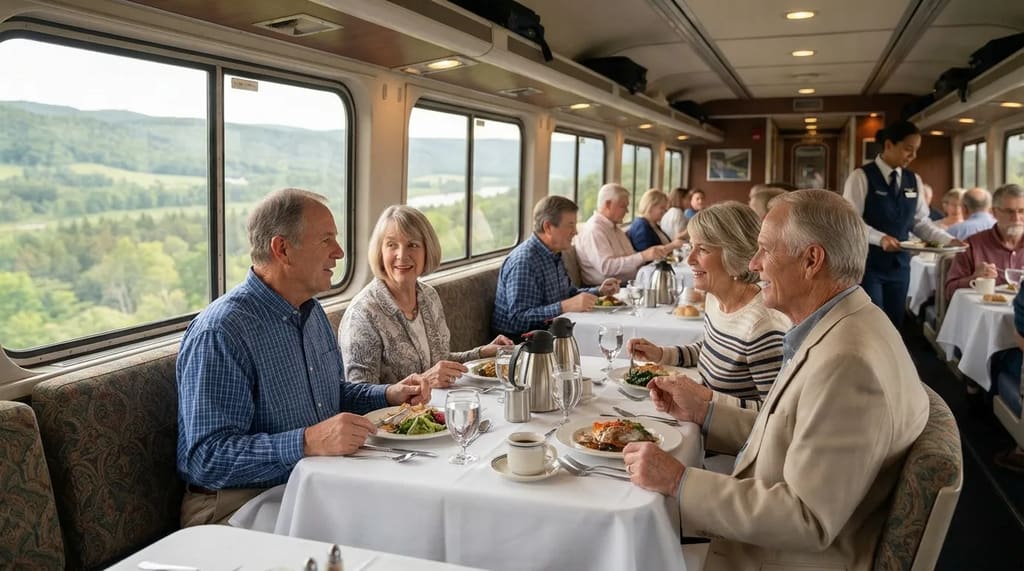
On most Amtrak long-distance trains, sleeping car fares include meals in the dining car. That is a real value, because it can cover several meals across a long trip.
Your attendant often handles dining reservations. In a traditional dining car, you may be seated with strangers, which delights some travelers and surprises others.
Menus and service styles have changed in recent years and differ from route to route. Some trains bring meals to your room, so ask your attendant what is available on yours.
If you follow a special diet, say so early. A simple conversation at the start of the trip saves a lot of awkwardness later.
Many people remember the dining car as the social heart of the journey. Pass the salt, and you may leave with a new friend.
9. The Price Is for the Room, and the Senior Discount May Not Cover It
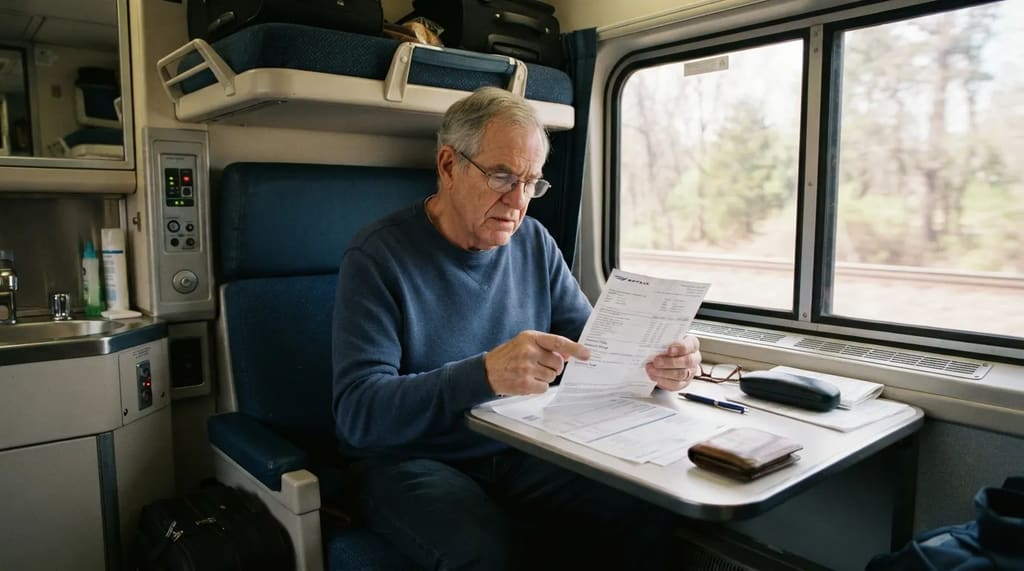
Sleeper pricing has two parts: each traveler’s rail fare, plus a charge for the room. The room charge covers up to two people in a roomette, so two travelers split it, while a solo traveler pays all of it.
Amtrak offers a 10 percent discount for riders 65 and older on most trains. It typically applies to the rail fare portion, not the room charge, so read the fare breakdown before you assume the savings.2
Quick Compare
- Usually discounted: the base rail fare, on eligible fares
- Not discounted: the roomette charge, which is often the biggest part of the price
- Also excluded: saver fares and flexible fares
- Included in the room price: dining car meals for everyone in the room
Room prices also tend to climb as the best-priced rooms sell out. Booking early often helps.
Compare the total, not just the sticker shock. When you count meals, the room, and a night you do not spend in a hotel, the picture changes.
Ask a reservation agent to confirm exactly which discounts apply to your trip. A few minutes on the phone can save real money.
10. A Late Arrival Can Ruin the Plans You Built Around the Train
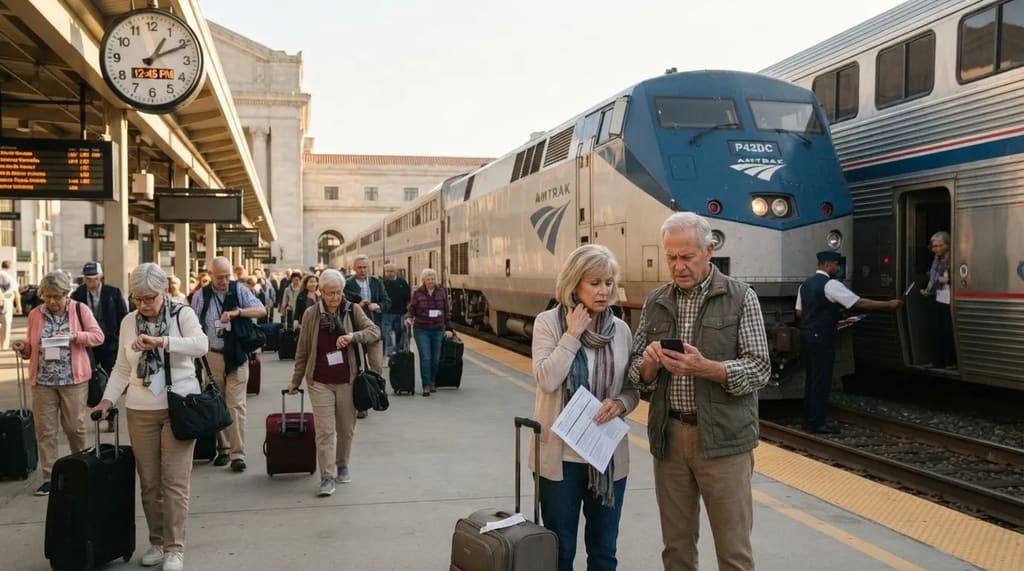
Most of the track Amtrak uses outside the Northeast Corridor is owned by freight railroads. When freight traffic backs up, passenger trains can end up waiting on a siding.3 4
Long-distance trains are often behind schedule.4 A train that should arrive at 8 a.m. may roll in at noon or later.
That is no problem if you wake up with nowhere to be. It is a big one if you booked a same-day flight, a tour, or a family dinner.
Build in a buffer at the end of your trip. A full free day after arrival is far better than a tight connection.
Related Stories From Travelbinger
Treat delays like weather. You cannot control them, so you plan around them and keep your sense of humor.
11. You Will Be Offline Longer Than You Expect
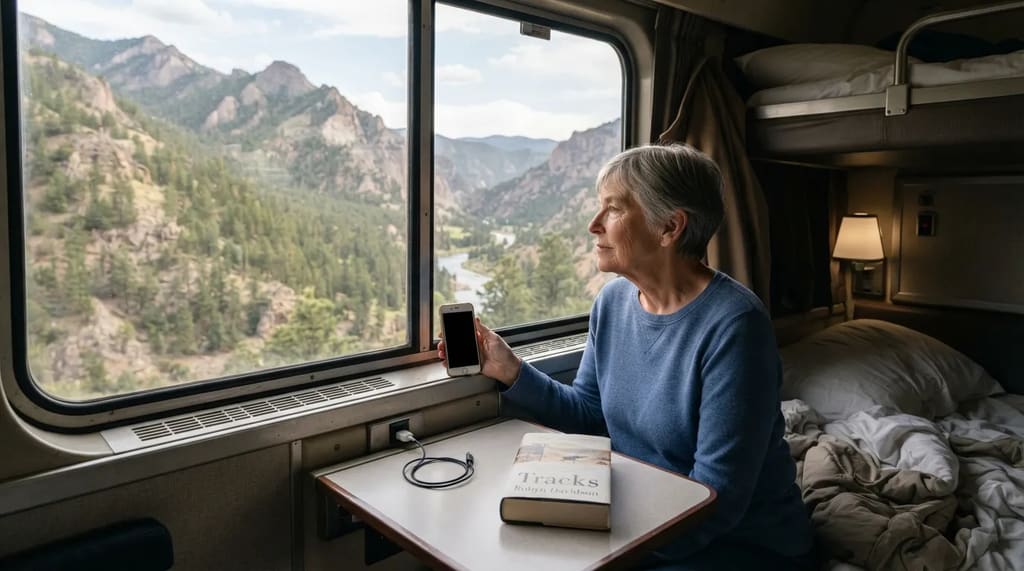
Wi-Fi is limited or unreliable on many long-distance routes. Cell coverage also fades across mountains, deserts, and empty plains.
That surprises travelers who planned to answer email or stream a movie from bed. It can feel like a tiny crisis for about an hour.
Then something shifts. You look up and find the window is more interesting than the phone.
Download books, shows, music, and boarding documents before you leave. The roomette has an outlet, so bring a short charging cable that reaches your bed.
Tell family your signal may disappear for stretches. A quick heads-up prevents a lot of worried calls.
12. The Best Moment Happens Before Breakfast
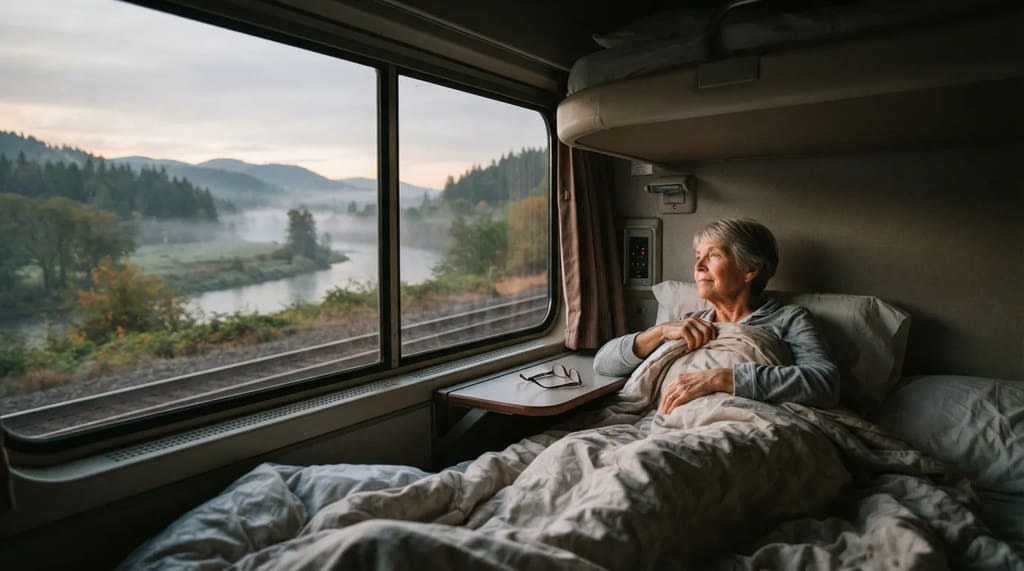
Nobody warns you about the first morning. You wake to gray light around the edge of the shade, and for a second you forget where you are.
Then you lift the shade. The landscape outside is nothing like the one you fell asleep to.
Maybe it is mist on a river, red rock at dawn, or a small town just opening its shutters. You are lying down, warm, with a view that most people can only reach by driving for hours.
Many travelers find that this single quiet hour makes the stairs, the sway, and the tiny room feel worth it. It is a front-row seat with no line to wait in.
Set your alarm a little early on your last morning. Whatever else goes wrong, do not sleep through this.
A roomette is not a luxury hotel, and it was never meant to be. It is smaller, louder, slower, and more surprising than the photos suggest.
But go in knowing what is coming, and the quirks turn from complaints into stories. Ask for a lower-level room if stairs worry you, pack an overnight bag, and leave extra time at the end.
Then lift the shade at sunrise and let the country roll past. That is the part you will tell people about later.
Bonus: The Five-Minute Attendant Briefing Nobody Tells You to Ask For
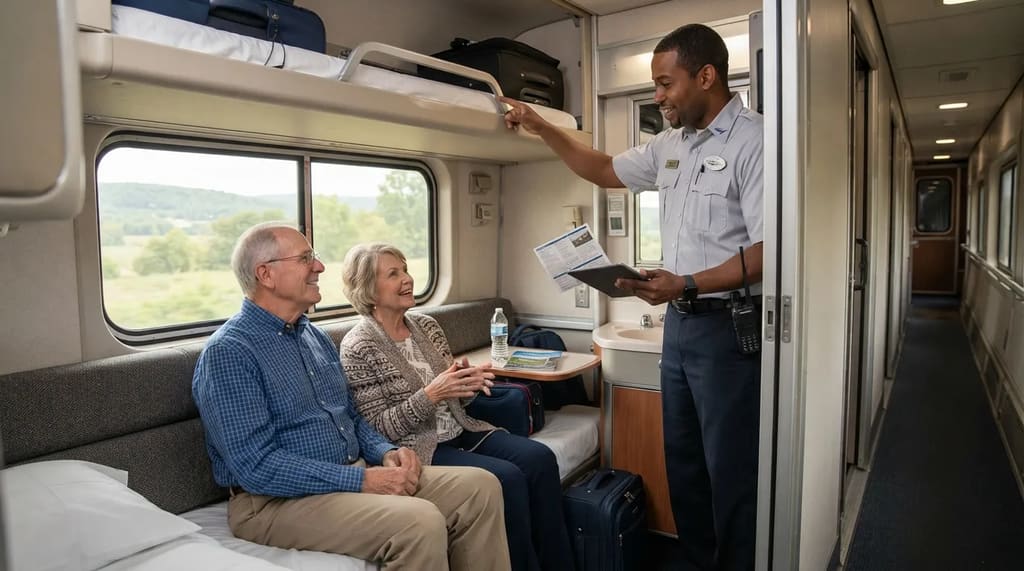
Your sleeping car attendant is the single most useful resource on the train, and most first-timers never use them fully. In the first few minutes after boarding, find your attendant and settle the whole trip in one short conversation.
- Set your bed time. Name the hour you want the bed made, and say whether you want only the lower bed so the upper berth stays folded away.
- Lock in your meals. Ask how dining works on your route, request a reservation time that suits you, and mention any dietary needs now rather than at the table.
- Ask about your wake-up. Tell them what time you want to be up for the sunrise view and for breakfast, and ask whether they can give you a knock.
- Mention your mobility. If stairs, balance, or the late-night walk to the restroom worry you, say so. They know the car and can suggest the safest way to manage it.
It costs nothing, and it turns a stressful first night into a smooth one. A tip at the end of the trip is a thoughtful thank-you for good service.
- Superliner Layout Overview: https://www.trainsandtravel.com/amtrak-superliners-old-but-still-super/
- Amtrak Senior Discount Guide: https://retirehub.org/senior-discounts/amtrak/
- Amtrak Host Railroad Report: https://www.amtrak.com/content/dam/projects/dotcom/english/public/documents/corporate/HostRailroadReports/Amtrak-2022-Host-Railroad-Report-Card-and-FAQs.pdf
- Rail Passengers Delay Report: https://www.railpassengers.org/happening-now/news/blog/surprise-freight-interference-still-drives-most-delays/