

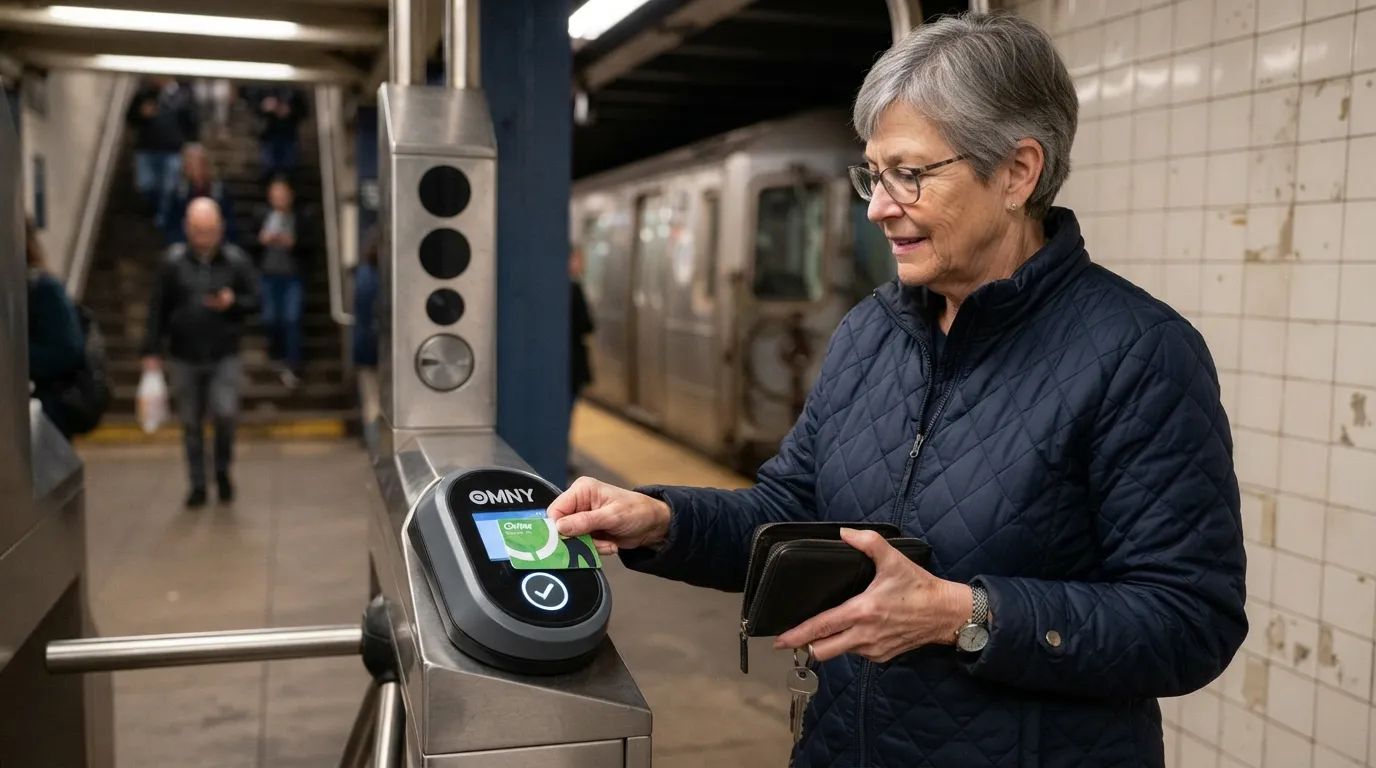
A subway or local bus ride in New York City costs $3 as of January 2026, and a rider 65 or older with the right card pays $1.50. That is half price on the trip to the doctor, the pharmacy, church and the grandchildren’s apartment. Without the card, every one of those rides costs double.
Signing up takes less time than most people expect, and in person it can be done in a single visit. The costliest slip comes after you have the card, and it involves something you may already carry in your pocket or purse. The fare itself changed this year, so that is where this starts.
#10 – A $1.50 Fare That Rose Just Five Cents
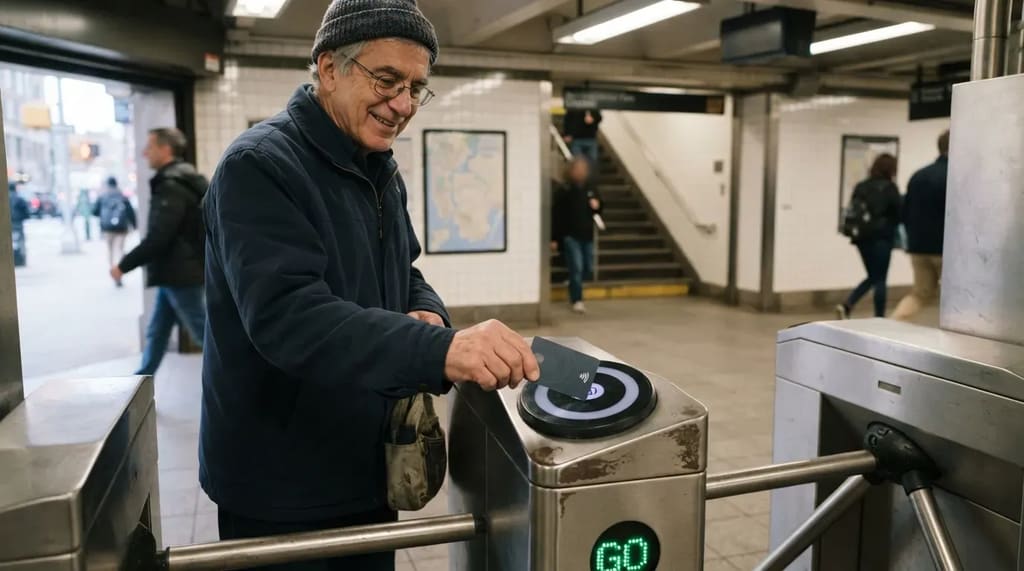
The MTA raised the base fare for subways and local buses from $2.90 to $3, and the reduced fare went from $1.45 to $1.50.1 Half of $3 is $1.50, so the senior price still moves in lockstep with the full price.
The MTA board approved the changes on September 30, 2025, and they took effect on or about January 4, 2026.2 The jump before that came in August 2023, when the fare rose from $2.75 to $2.90. Increases have tended to arrive about every two years.
Fast Facts
- Full fare, subway and local bus: $2.90 before, $3 now.
- Reduced fare for riders 65+: $1.45 before, $1.50 now.
- Board approval: September 30, 2025.
- Previous increase: August 2023, from $2.75 to $2.90.
A nickel is no reason to put off applying. A rider who takes twenty trips in a month pays $30 at the reduced fare and $60 at the full fare, so the card pays for the trip to the counter within the first month.
The price applies to a specific group of riders, and two other programs with similar names serve different ones.
#9 – The Age 65 Line and Two Look-Alike Programs
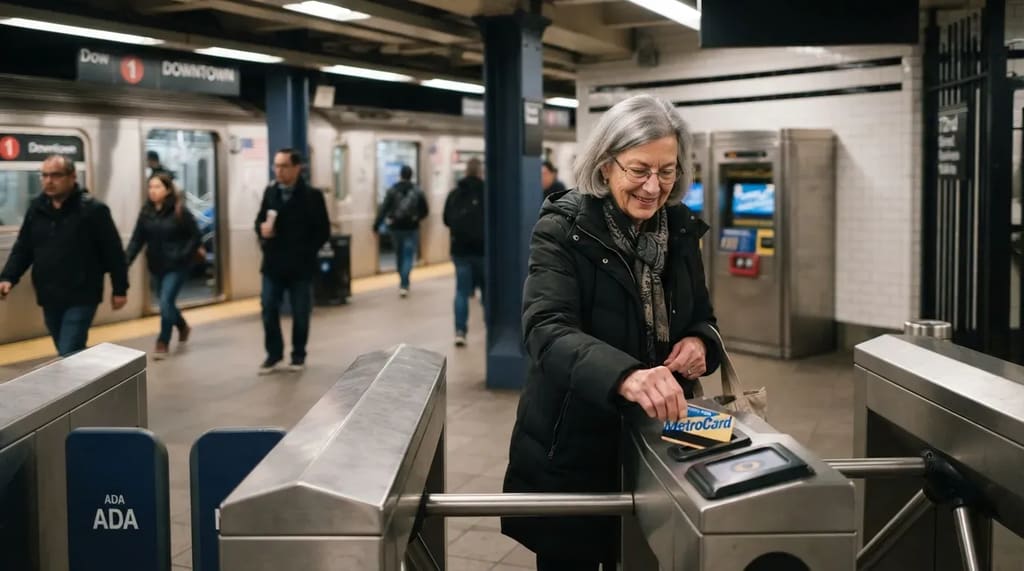
The MTA says any person aged 65 or over qualifies, as does anyone with a qualifying disability, including people receiving Medicare benefits for a reason other than age. For a rider over 65, the birthday is the qualification. No income test, no medical form.
The first look-alike is Fair Fares, a city program. It is meant for low-income households and gives a 50 percent discount on subway and eligible bus fares or Access-A-Ride fares. The MTA’s own guidance is that if you are 65 or older or have a qualifying disability, you apply to the MTA Reduced-Fare program.
The second is Access-A-Ride, the paratransit service. The City reports that the half-off Access-A-Ride discount does not apply to senior riders in the Reduced-Fare program, and the MTA lists the Access-A-Ride base fare at the same $3 as the subway. A senior card and an Access-A-Ride trip are separate matters.
A rider who still holds an old Reduced-Fare MetroCard is carrying a card the MTA has stopped issuing.
#8 – The MetroCard Just Retired, and Old Cards Are on Borrowed Time
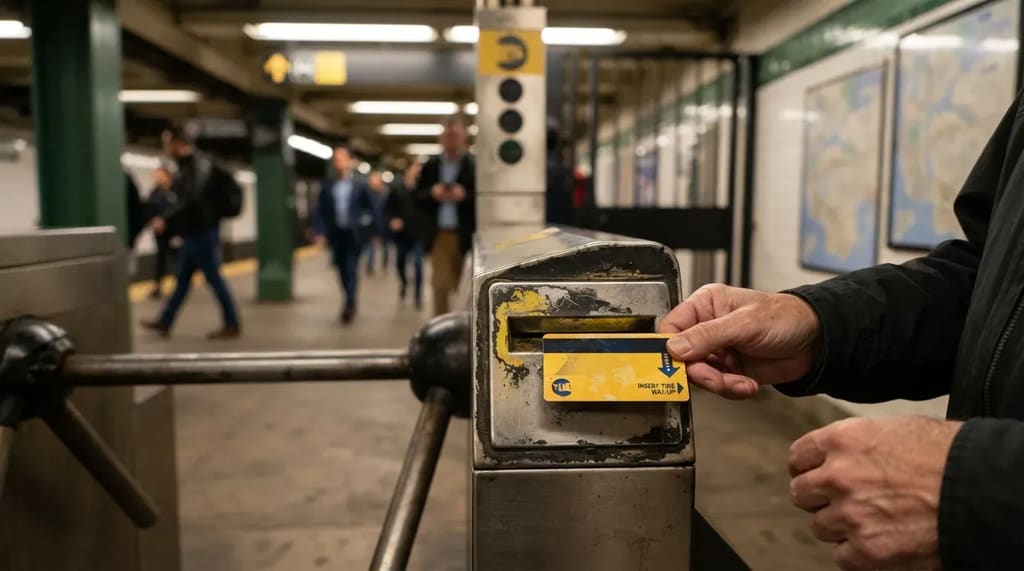
The MetroCard began as a test. On June 1, 1993, the MTA handed out 3,000 of them, and by May 14, 1997, the entire bus and subway system accepted the card. The first free bus-to-subway transfers followed on July 4, 1997.
That run is ending. According to NYC311, MetroCard sales ended December 31, 2025, and the cards continue to be accepted into 2026. Check the MTA’s current word on the cutoff before you count on an old one.
If a card still has money on it, it is worth a trip to a Customer Service Center. Old balances can be moved to an OMNY card there or refunded. Letting the money sit in a drawer is the one outcome that gains you nothing.
Getting the new card starts at a counter, with a short list of things to bring.
#7 – One Photo ID and Nothing Else
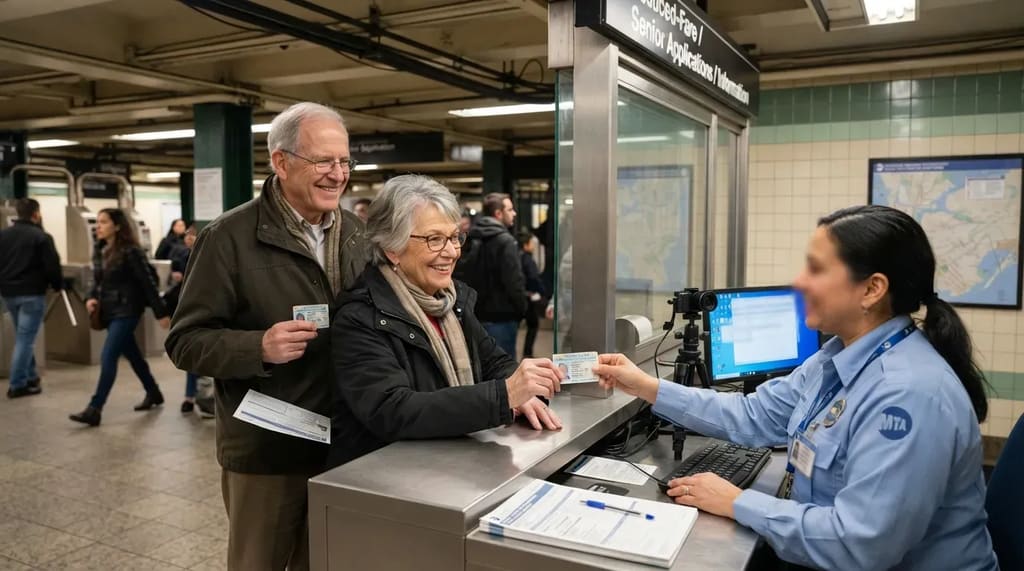
For riders over 65 the paperwork is light. The MTA’s summary says all you need is a valid photo ID. A younger rider with a disability has a longer list of documents to gather.
The MTA’s application page names a valid driver’s license from any state among its accepted forms of photo ID, and it lists others. Look at that list before you leave home, because the wrong document means a second trip.
- In person: your photo ID. Staff at the Customer Service Center take the photo for you at no charge.
- By mail: the application form and your own photo, which you include with your paperwork.
The ID is the easy part; the harder choice is which counter to take it to.
#6 – Same-Day Cards at Centers Across the Boroughs
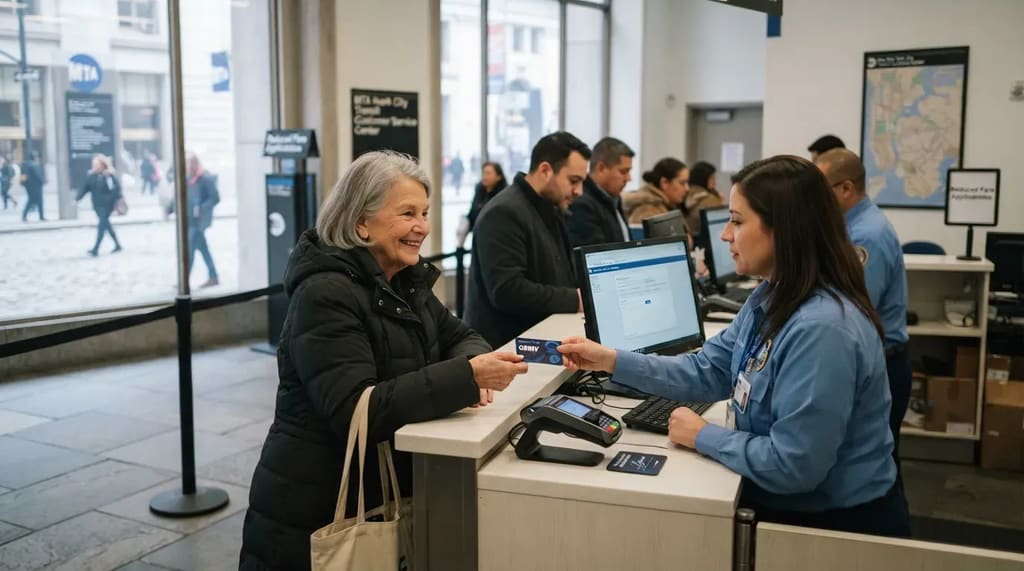
The MTA names several places to apply in person:
- The main New York City Transit Customer Service Center at 3 Stone Street in Lower Manhattan.
- Subway Customer Service Centers in all five boroughs.
- Mobile sales buses and vans.
The reason to go in person is speed. If you are 65 or older, you can sign up in person and receive your new Reduced-Fare OMNY card the same day.3 You walk out with a card you can use on the next ride.
The other route is the mailbox, since the online application is not currently available.4 Confirm which locations are open and what hours they keep on the MTA’s website before you set out.
#5 – The Two-Hour Free Transfer Window
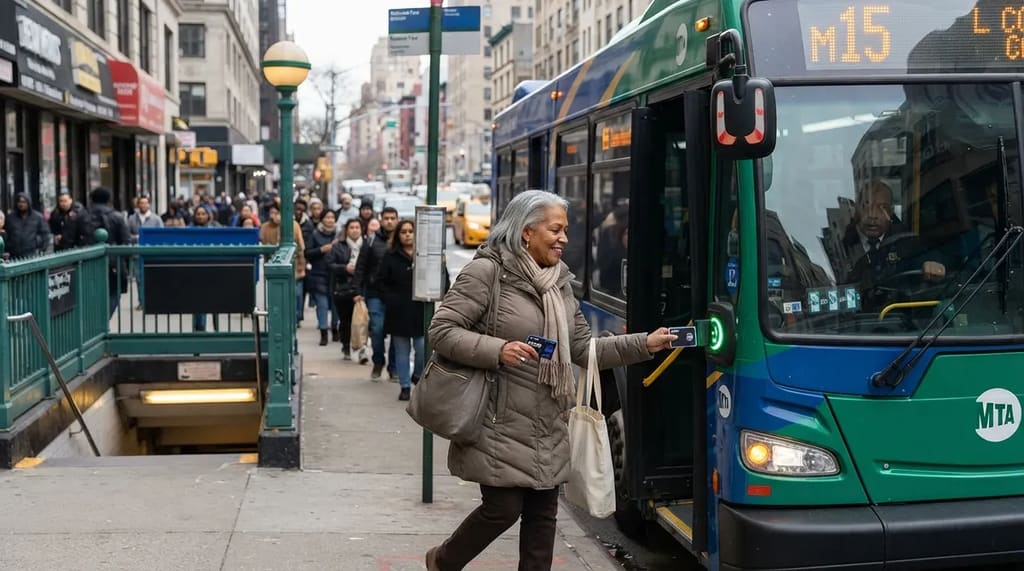
A ride that needs a connection costs one fare, not two. With OMNY, you can tap into the subway, exit, and board a local bus within two hours, and the bus is free. The MTA says Reduced-Fare OMNY riders get the same free transfers they did with MetroCard.
There is a limit on the benefit. Only one transfer per fare paid is free. A long trip with three connections can still bring a second charge.
At a Glance
- The window: two hours.
- The free leg: a local bus after a subway tap.
- The limit: one free transfer per fare paid.
- The trap: a paper Single Ride ticket at $3.50.
The window also explains why the paper Single Ride ticket is a poor deal for a senior. It costs $3.50 from a vending machine, more than double the reduced fare, and it does not carry the full transfer rights an OMNY tap does.5
Express buses sit outside this arrangement, since a transfer onto one carries a step-up charge.
#4 – Express Buses and Commuter Rail Play by Different Rules
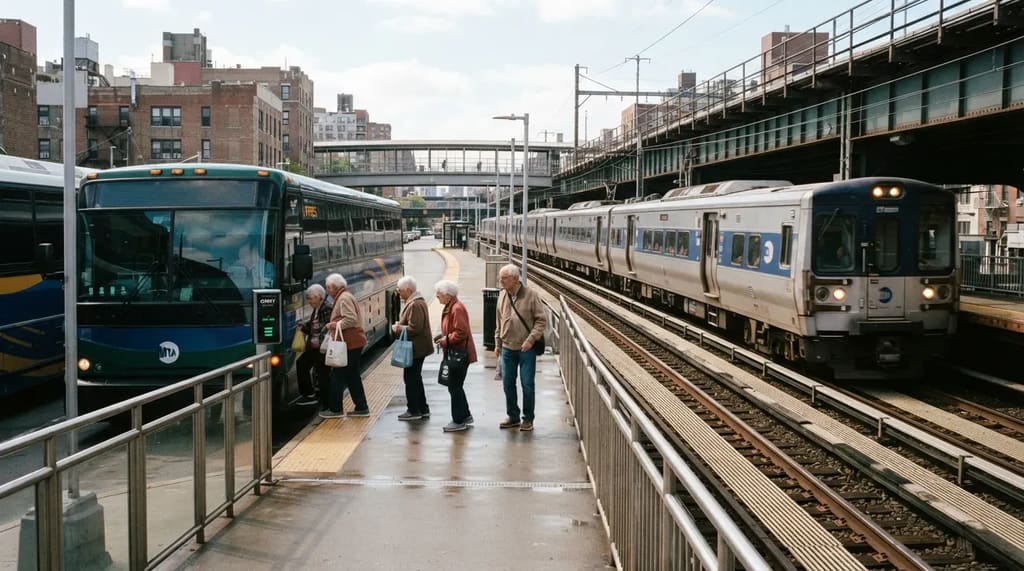
The express bus base fare rose from $7 to $7.25 in January 2026.5 The reduced express fare is about half of that, which works out to roughly $3.60.
- Subway and local bus: $1.50.
- Express bus: about $3.60.
- Long Island Rail Road and Metro-North: a Reduced-Fare OMNY Card serves as acceptable documentation for reduced fares.
The old rules had time-of-day limits. Before 2026, the reduced express fare did not apply during weekday peak hours, and the commuter rail discount of up to 50 percent excluded weekday morning peak travel into the city. The MTA’s 2026 fare materials say that reduced-fare tickets will be valid all day, including the morning peak period.
For a short trip, the local bus at $1.50 beats the express at about $3.60, as long as you can spare the extra minutes. The express earns its price only on a long route where it truly saves time.
#3 – The $17.50 Weekly Cap That Ends the Counting
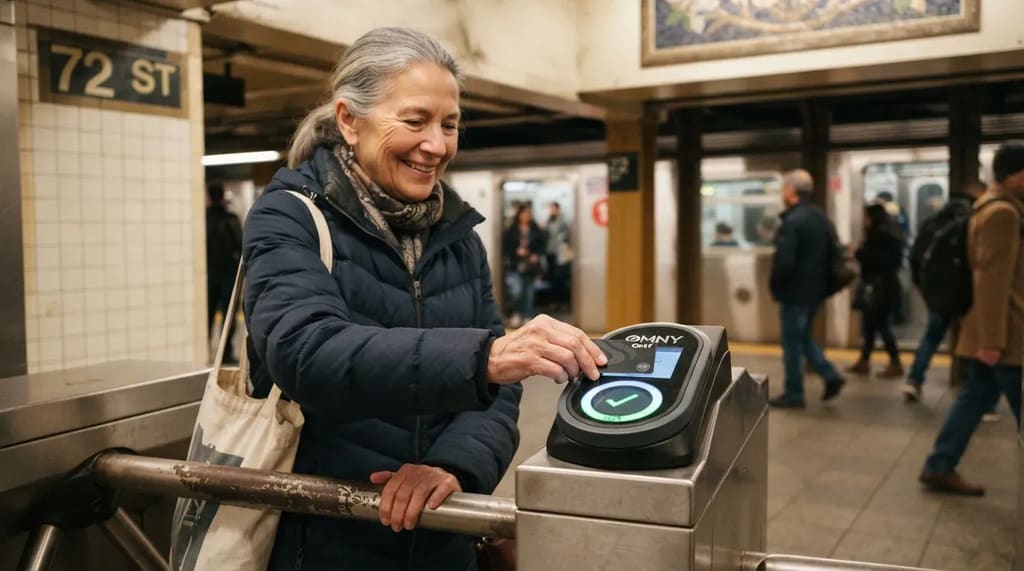
OMNY stops charging you once you have paid enough in a week. For Reduced-Fare riders, the MTA says you pay for 12 fares in seven days, and the rest of your rides in that stretch are free. Reduced-fare customers will pay no more than $17.50 in a week.1 6
- The seven-day period begins with your first tap and resets every seven days.
- The cap only counts trips on the same card or device.
- Full-fare riders hit a cap of $35, double yours.
The cap is easy to oversell. A rider who goes out four or five days a week and takes a round trip each day makes ten rides, or $15, and never reaches the ceiling. For that rider the flat $1.50 does the saving, and the cap matters mainly to someone who is out and about all the time.
The cap only works once the card is in your hands, and for some applicants that takes far longer than a week.
#2 – The Three-Month Wait for a Mailed Card
Apply by mail and the clock slows. The MTA says that new customers who apply by mail may experience processing times of up to three months before they receive a Reduced-Fare OMNY card.3 In person, the same card comes the same day.
Quick Compare
- In person: card in hand the same day, with a free photo taken by staff.
- By mail: up to three months of waiting, and you supply your own photo.
- Cost of waiting: about $227.50 in extra fares for a rider who would otherwise hit the cap every week.
Three months is roughly 13 weeks of riding. A rider who would hit the cap every week and pays full fare in the meantime spends $35 instead of $17.50 each week, which adds up to about $227.50 in extra fares before the card shows up.
That makes the counter worth the trip whenever you can get to one. Mail is for riders who cannot travel there, and The City notes that applying in person can be a barrier for seniors or people with disabilities who have trouble getting around. For those riders, the MTA ships the cards to those who choose to apply by mail.4
Related Stories From Travelbinger



Whichever way the card arrives, it does nothing until it is tapped, and it has to be the right thing that gets tapped.
#1 – The Wrong Tap That Costs Full Fare
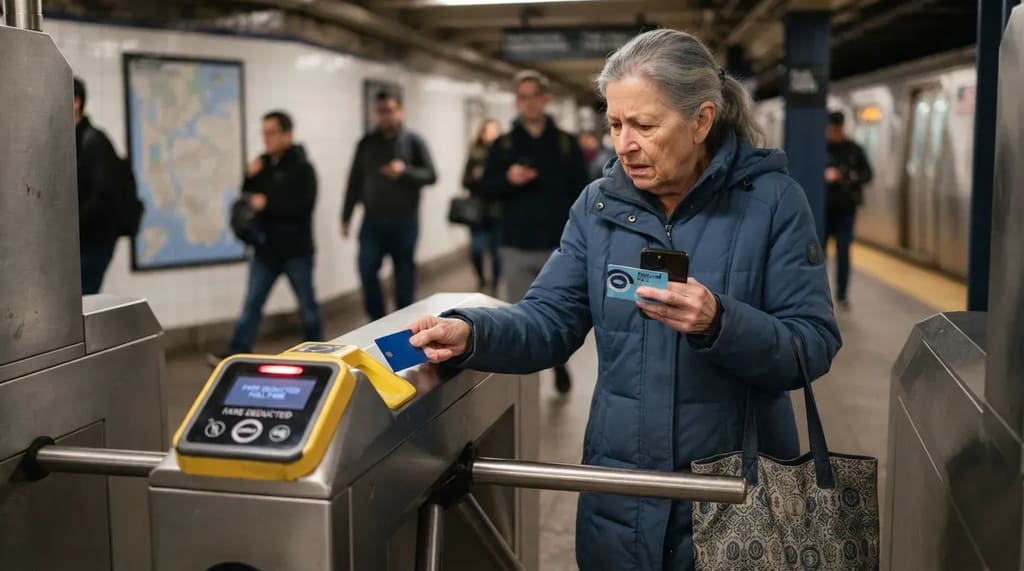
The half-price rate belongs to the card or device that was set up for it, not to the rider. Reduced-fare customers can use their own debit or credit cards, but those cards must be registered with OMNY. A phone, watch or bank card that has not been registered looks like any other rider to the reader, so it pays the ordinary fare.
The same logic covers the cap. The MTA says you must use the same contactless bank card, smart device or OMNY card for each trip. If you tap your phone one morning and the plastic card the next, OMNY treats them as two riders, and each one starts its own count toward the cap.7
The cost shows up quickly. A week of 12 rides at the wrong rate comes to about $35 instead of a maximum of $17.50, which is the whole benefit gone in seven days. That is a bigger loss than the nickel from the fare increase or the pharmacy stop that ran past two hours.
One more habit matters here. After your twelfth ride in a week the rides are free, but you still have to tap every time, because that is how the reader keeps count of your week.
If you are not at ease with a phone, the physical Reduced-Fare OMNY card is the simpler choice. You do not need an OMNY account to use it, although a free account lets you load the card online instead of at a vending machine.
One Small Habit Before Your Next Ride
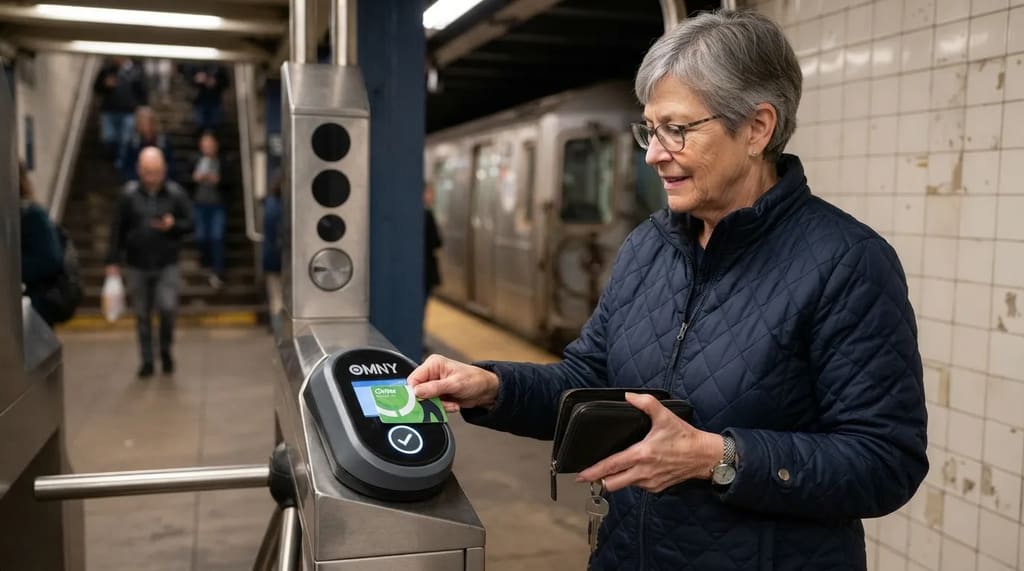
The program is more forgiving than the paperwork makes it sound: a photo ID, an afternoon at a counter, and a fare that has stayed at half price through the January increase. The only piece that keeps asking for attention is the card itself.
Treat it the way you treat a house key. Give it one place in your wallet, tap it every time, and leave the phone and the bank card alone at the turnstile.
Which card or device do you tap at the turnstile now, and have you ever found out it was the wrong one?
- MTA Fare Increase Release: https://www.mta.info/press-release/mta-board-adopts-fare-and-toll-increases-take-effect-january-2026
- ABC7 MTA Fare Vote: https://abc7ny.com/amp/post/mta-approves-fare-hike-proposals-subway-bus-nyc/17908993/
- MTA Reduced-Fare Program: https://www.mta.info/fares-tolls/subway-bus/reduced-fare
- The City Reduced-Fare Guide: https://www.thecityreporter.nyc/2026/02/20/lower-cost-fare-mta-subway-bus-money/
- NY1 Fare Hike Approval: https://ny1.com/nyc/all-boroughs/news/2025/09/30/mta-board-approves-subway-and-bus-fare-hike-for-2026
- OMNY Weekly Fare Cap: https://omny.info/fares
- OMNY Fare Cap FAQ: https://omny.info/faq/fare-cap