
You bought the condo, packed the car, and told everyone you’re “basically a Floridian now.” New York may still disagree, and it keeps better records than you do. These are the 13 residency rules that can turn a sunny winter into a state tax audit, counting down from small paperwork traps to the one that can reach your heirs.
The odd part is where the danger sits. The rules that bite hardest are written in Albany, not Tallahassee. Florida asks very little of a part-year resident, and New York keeps asking long after you’ve left. The cheapest piece of paper on this list is tied to the biggest bill, and that bill gets mailed to an estate, not to you.
#13 – A Sworn Florida Form That Never Mentions Days
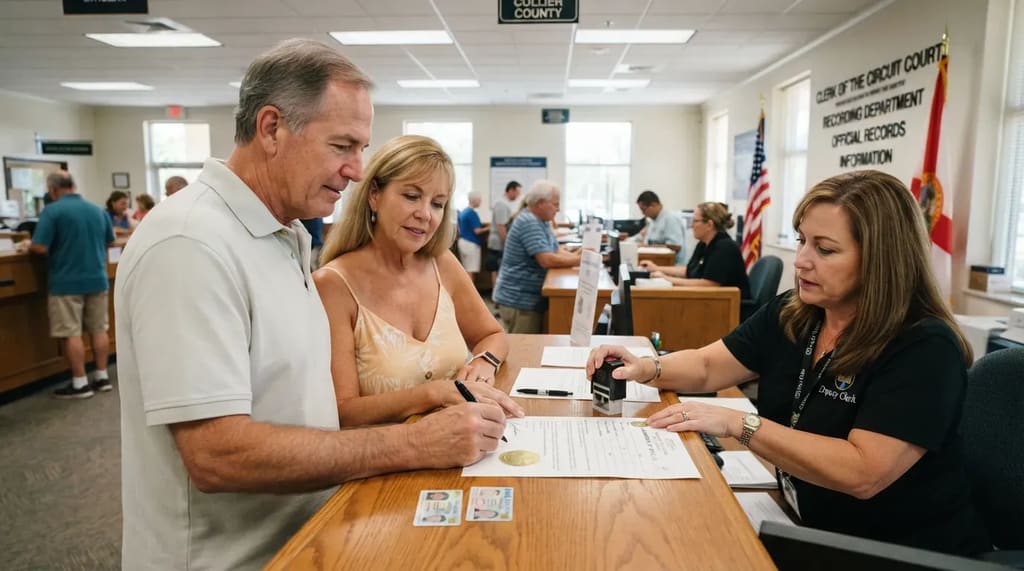
Florida doesn’t care how many days you spend here. It has no state income tax, so it has no reason to count. Snowbirds can make Florida their legal domicile no matter how long they stay.
The tool is the Declaration of Domicile, a sworn statement filed with the clerk of the circuit court in your Florida county. It says the Florida home is the place you intend to keep as your permanent residence. The statute asks about a residence and your intent, and it names no minimum number of days.1
The filing is dated and public, so it makes handy evidence. It is still only one piece of the puzzle. Domicile is one place, proven by intent plus conduct: license, voter registration, time spent, and where your advisers and key possessions are.
As a shortcut, the form is overrated. A declaration filed in Naples carries little weight against a New York house where you spend most of the year.
Florida can afford to be relaxed about the calendar. New York counts days in a very literal way.
#12 – One Hour in New York Costs You a Whole Day

Any part of a day spent in New York counts as a full day. Arrive late Friday and leave early Sunday, and you’ve just burned three days. The test looks at full or partial days, and a funeral in New York counts the same as a vacation.
That makes a string of short weekend trips far pricier than the nights alone suggest. A quick dash north for a birthday, a doctor’s visit, and a holiday dinner can eat a week of your allowance.
The line itself is more than 183 days. Exactly 183 stays under it, because the test requires more than 183. That leaves very little cushion for a snowbird who also takes a long summer in the Hudson Valley and a few holiday trips.
The day count only bites when it’s paired with a New York home, and that half of the test is the part you can change most directly.
#11 – The New York Apartment You Rent Still Counts

The day count alone doesn’t make you a New York resident for income tax. More than 183 days plus a permanent place of abode does.2 Fewer days, or no abode, does not.
A permanent place of abode includes any house, apartment, or residence available for your use, whether you own it or rent it. A lease you never gave up is enough, even if the place sits empty most of the year.
There are two ways out: keep your New York time below 183 days, or get rid of the apartment. If your summers in the city run close to the line, that apartment may be the costliest convenience on this list. Giving it up before the year starts is a cleaner answer than defending it afterward.
Stay well under 183 days and a kept place doesn’t trip this particular test. It can still come up when someone asks where your real home is, and that question is a separate one.
#10 – Spending Under 183 Days Doesn’t Prove You Left

New York has a second route to treating you as a resident, and it needs no day count at all. A New York domiciliary can remain a resident without ever exceeding 183 days. Simply spending winters in Florida doesn’t establish domicile.
You have to show that Florida is your primary and permanent home and that you abandoned your New York domicile. Domicile is where you consider your permanent home to be, so the Florida winter has to be part of a larger move.
Quick Compare
- Statutory resident: more than 183 days in New York plus a permanent place of abode there.
- Domiciliary: New York is still your permanent home, and no day count is needed to make you a resident.
- The overlap: either route can make you a New York resident for income tax.
Auditors look at the pattern as well as the total. A year where your Florida days climb and your New York days fall tells a better story than one where nothing changes. A year of 170 days north, with your doctor, lawyer and bank branch still in Westchester, is harder to defend than a year of 150 days with your life visibly relocated.
New York can still tax you as a domiciliary if it decides your domicile never really changed, even when you spent fewer than 183 days there.
#9 – Blank Calendar Days Can Be Assigned to New York
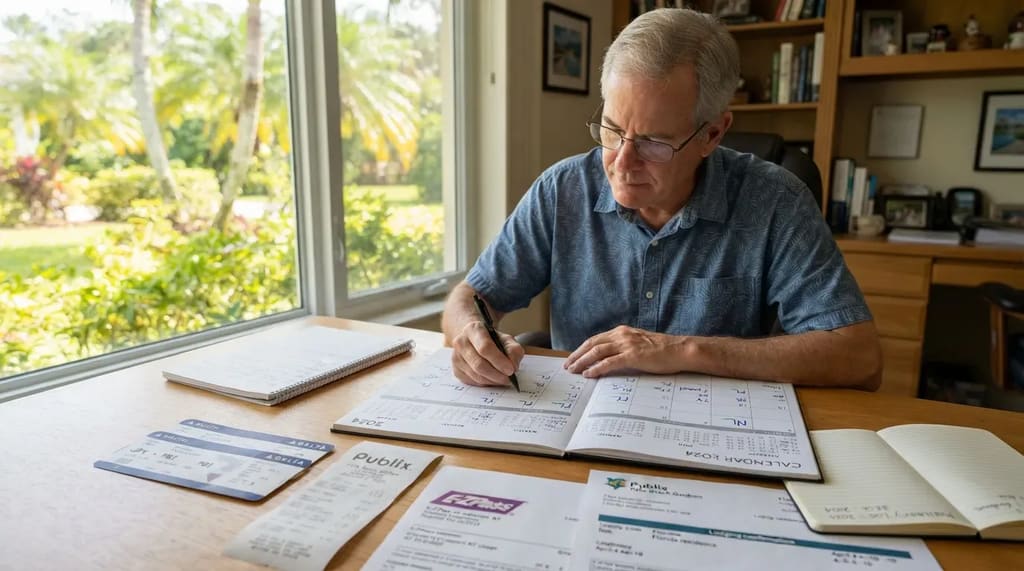
In an audit, the burden of proof sits with you. You need to show where you were, day by day, and if you can’t, the auditor may assume the unaccounted-for day was a New York day. Gaps get filled by inference, and the inference isn’t always kind.
A gap between two Florida records is easier to explain than a gap between two New York ones. Airline tickets, credit card receipts, E-ZPass data and lodging confirmations are the kinds of records that support a daily log.
A simple calendar is the cheapest and best defense on this list, and it costs nothing but a few minutes a month. Audits can look back at earlier years, so a log kept in real time is worth far more than a reconstruction made after a letter arrives.
A log shows where you slept. It says nothing about the paperwork Florida expects once you really live here.
#8 – Thirty Days to Trade In Your License
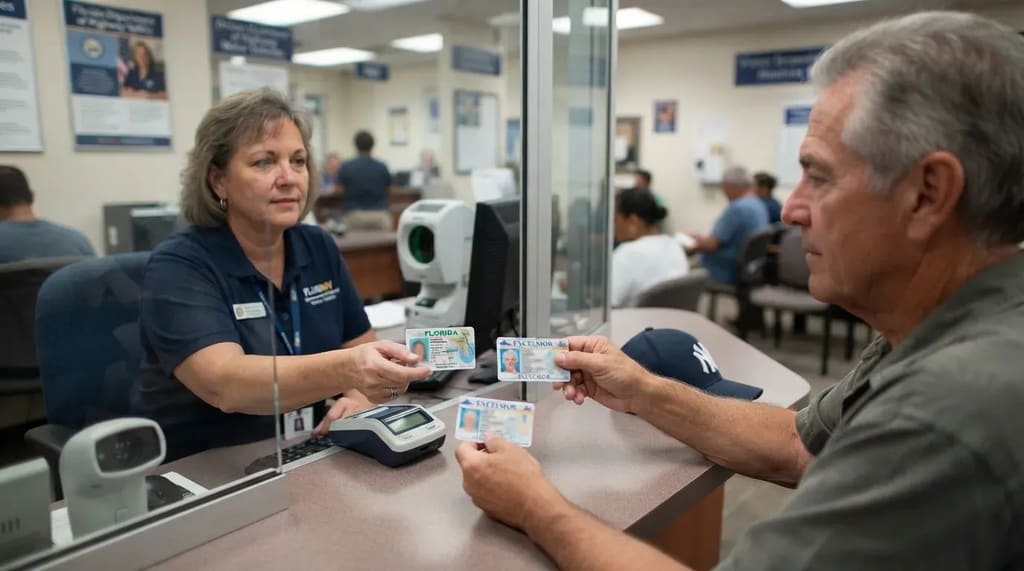
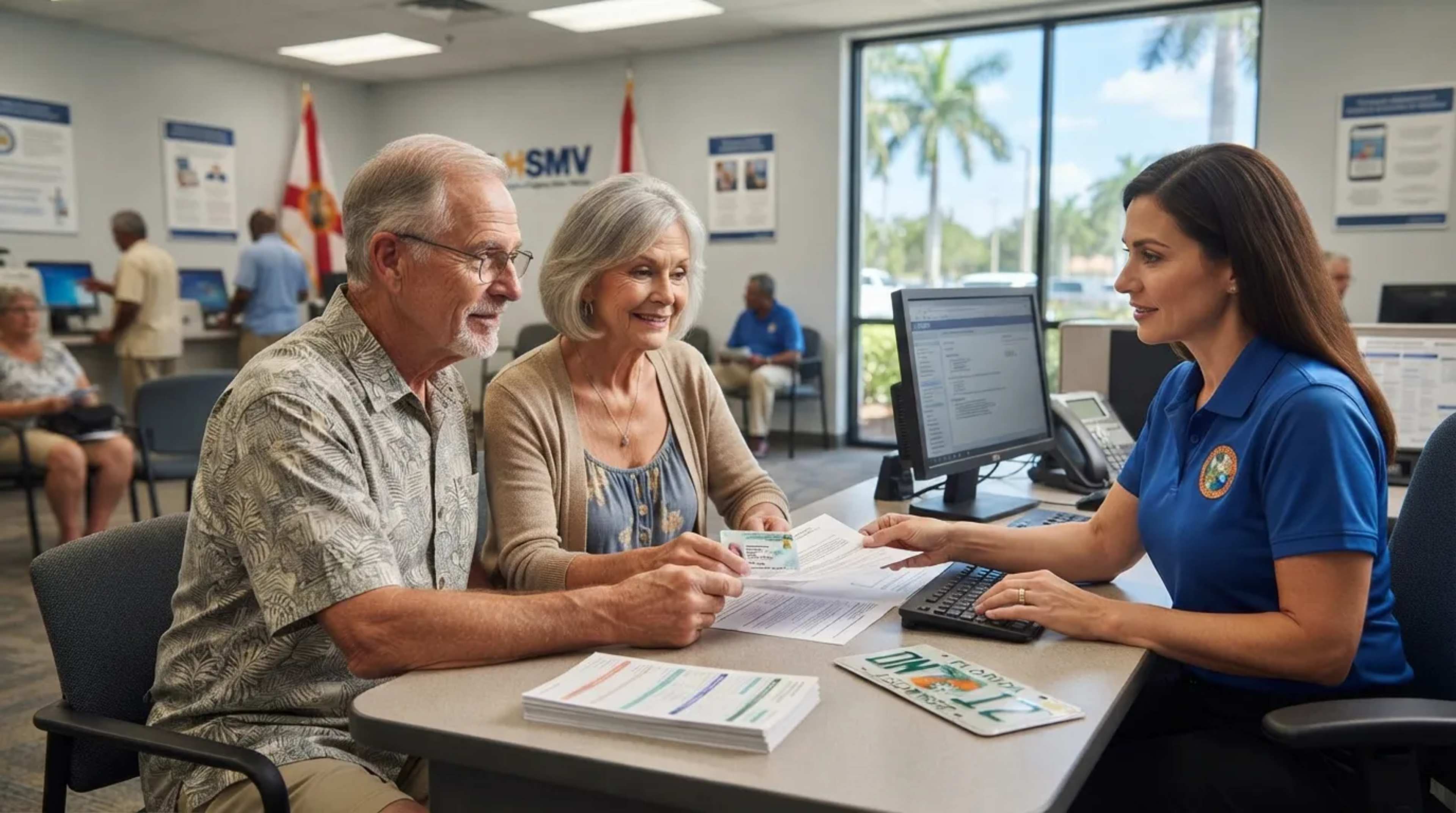
The Florida Department of Highway Safety and Motor Vehicles gives new residents 30 days from establishing residency to get a Florida driver license.3 Residency is established by accepting a job, enrolling a child in public school, or making a permanent home in Florida. A winter visit alone doesn’t start the clock.
Expect a vision test. Written and road exams are often not required if you hold a valid out-of-state license. You’ll surrender your old state’s license when you switch.
If you’ve decided Florida is home, don’t let this one drift. You’ll show the license when you register your vehicle, and property appraisers typically ask for a Florida license or ID when you apply for a homestead exemption.
The license is the easier deadline. The car has a shorter one, plus an insurance requirement that has to be settled first.
#7 – Ten Days to Register the Car, Insurance First
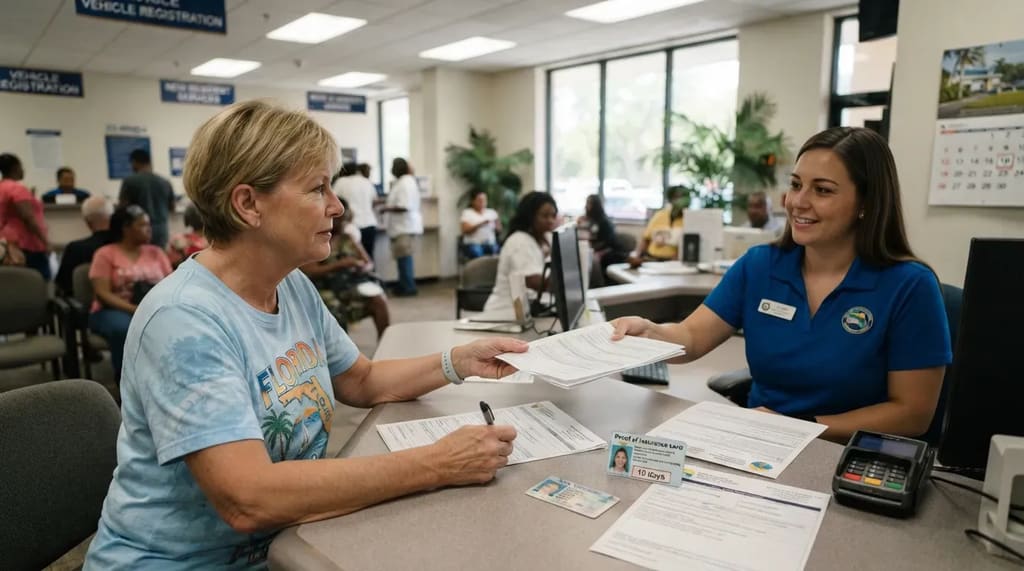
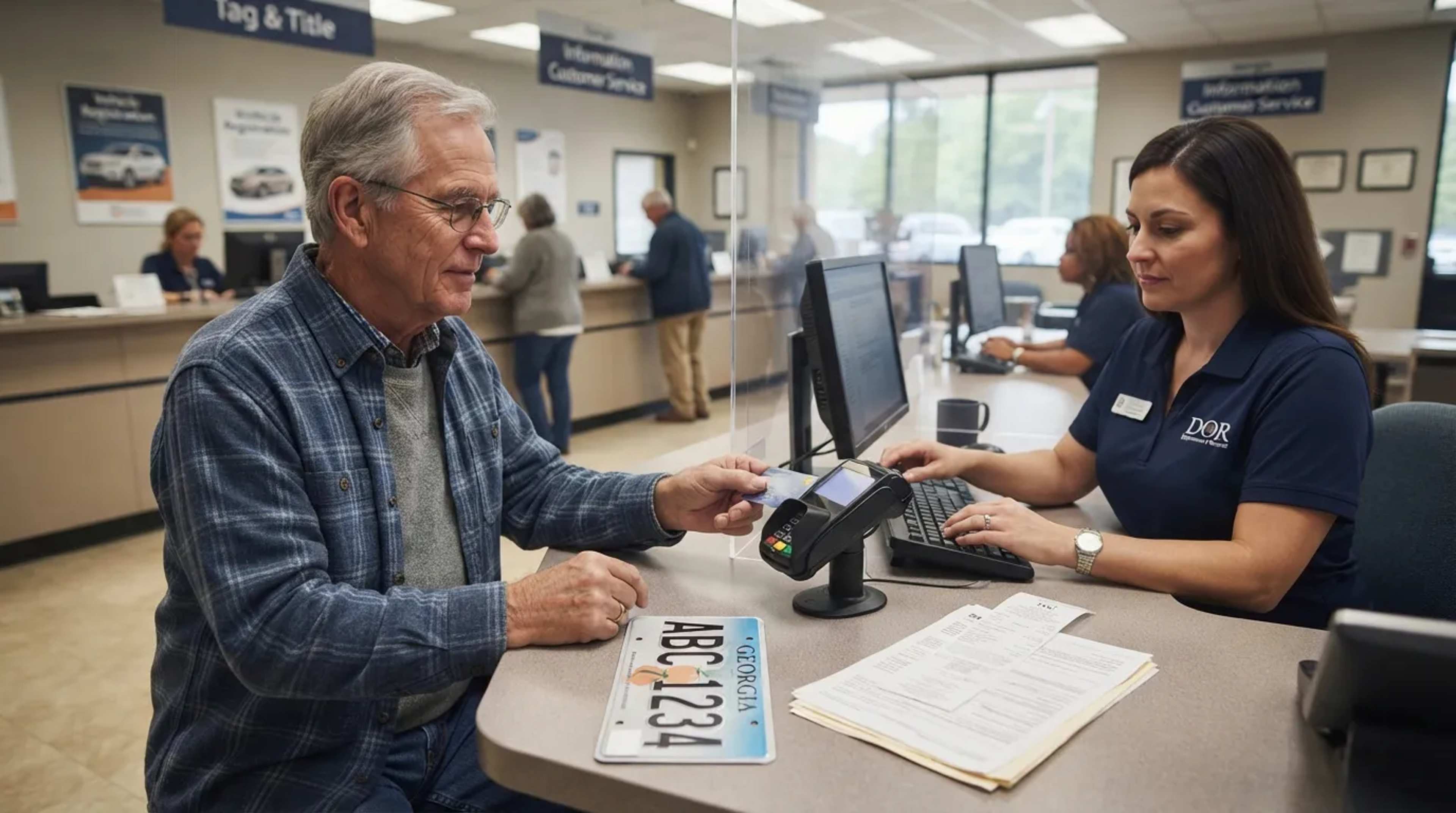
The same agency gives you only 10 days to register or title a vehicle, vessel, or mobile home. That is well short of the 30 days for a license. The state says a new resident must get insurance from a Florida-licensed agent before titling and registering, so the insurance call comes first.3
The initial fee is $225. Check your county office’s appointment options before your 10 days begin, because the wait can eat the window.
At a Glance
- Vehicle, vessel or mobile home: 10 days to register or title.
- Driver license: 30 days from establishing residency.
- Insurance: a Florida-licensed agent, before titling.
- Initial fee: $225.
Part-time residents get mixed signals on plates. Some guidance says home-state plates can stay while a 90-day clock governs insurance, and other guidance says a car here more than 90 days must be registered in Florida. If your car sits in Florida all year while you’re back in New York, ask your county tax collector before you assume your old plates are enough.
#6 – The Voter Card Auditors Can Point To
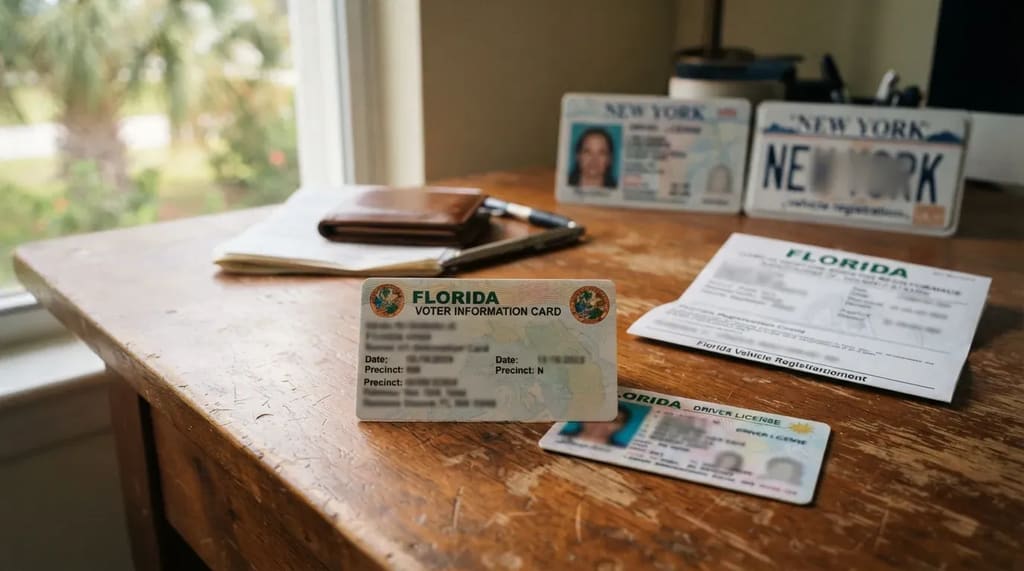
A voter card, a driver license and a license plate each say something about where you live. Plenty of snowbirds quietly mix them: a New York license, a New York voter registration, and a Florida car. It feels harmless, but property appraisers and tax auditors read the same credentials you carry.
Appraisers look for a Florida driver’s license, voter registration, vehicle registration and a declaration of domicile as proof of permanent residency.4 A mismatched set undercuts a Florida claim without anyone needing to dig.
Voter registration in Florida goes through your county supervisor of elections. If Florida is the home you’ve declared, registering there and dropping the New York registration is one of the cheapest ways to make your paper trail agree with itself. Keep voting in New York for sentimental reasons and you’ve handed an auditor an easy exhibit.
The voter card and the license also feed the next filing, a property tax application that asks for exactly those documents.
#5 – January 1 Residency and a March 1 Deadline
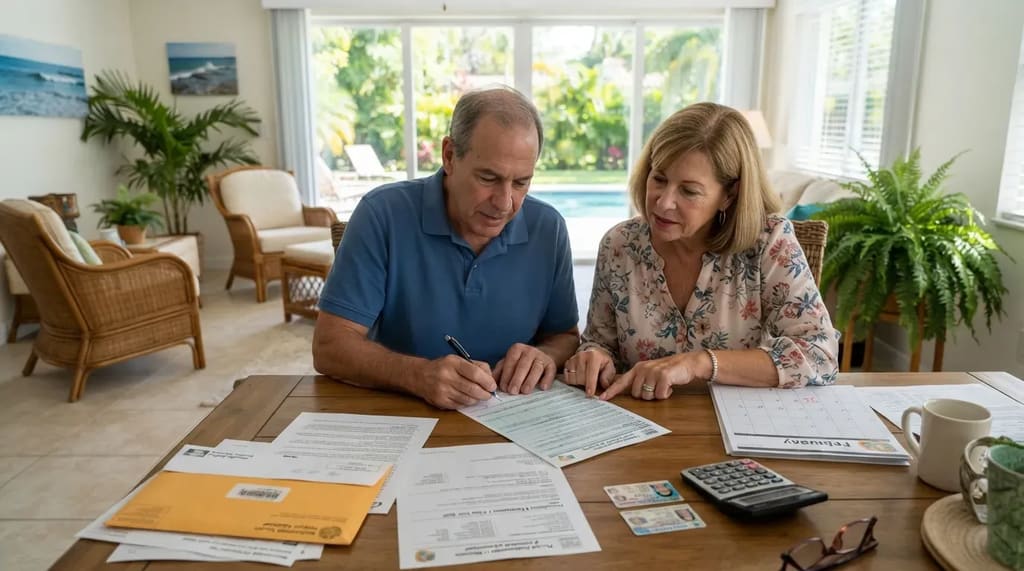
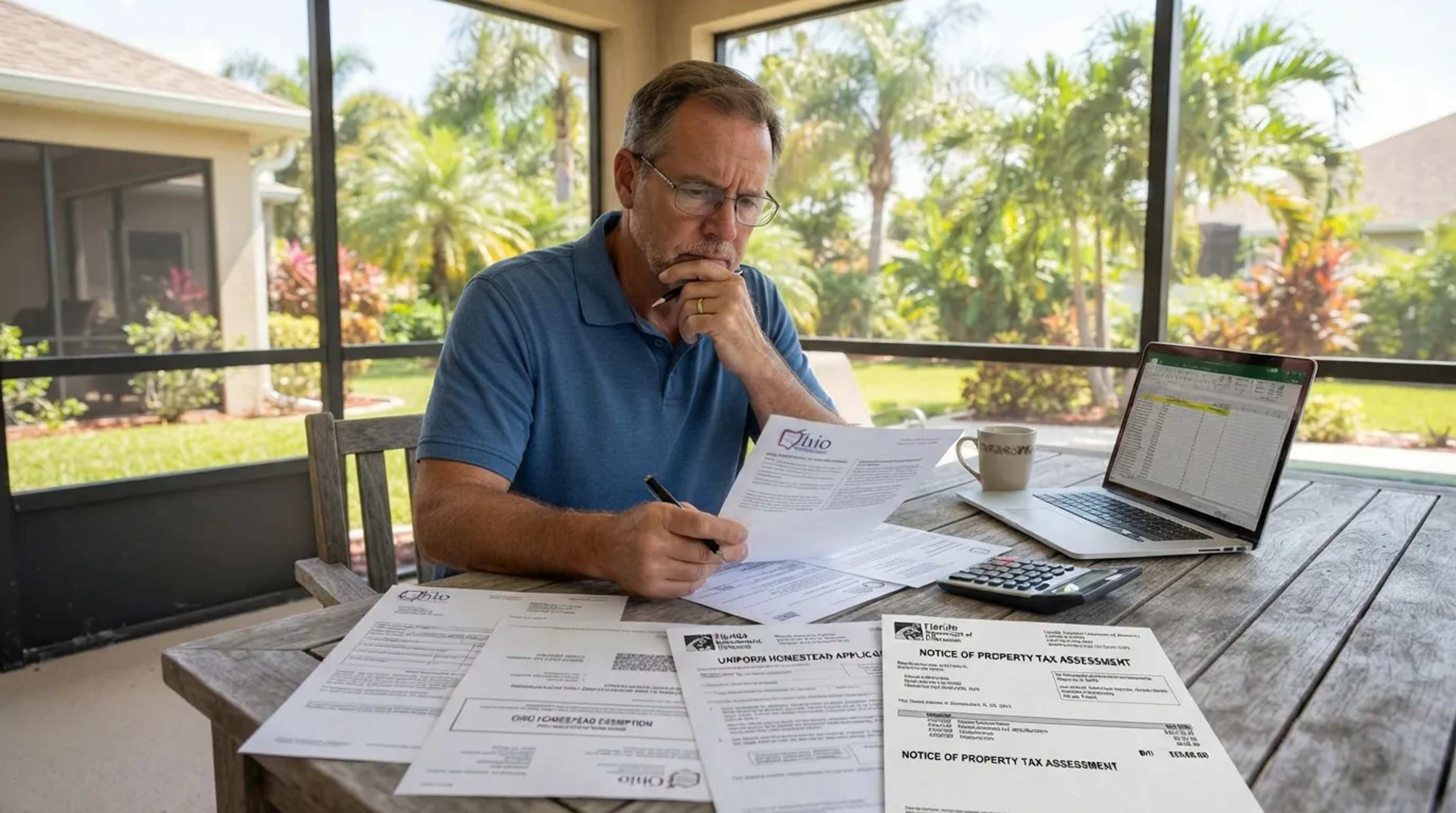
Florida’s homestead break goes to someone who owns the home and lives in it as a permanent residence. The owner must be in place as of January 1 and file with the county property appraiser by March 1.5 6 For 2026, the Miami-Dade appraiser lists a total exemption of $51,411, because the second portion is indexed for inflation.
The Palm Beach County Property Appraiser says the exemption can generally save $750 to $1,000 in property taxes each year.5 Many buyers assume it was handled at closing. It wasn’t.
Snowbirds run into the residency test first. Temporary occupancy, seasonal residence, or intent to move later in the year generally doesn’t satisfy the legal standard. Buy in February and you can’t claim the exemption until the following January 1.
Miss the March 1 deadline and you waive the exemption for that year.5 Once you have it, the Save Our Homes cap limits annual assessment increases to 3% or inflation, whichever is lower.
Seasonal use is excluded, and that creates a second problem for New Yorkers. A Florida homestead can’t sit alongside a residency-based tax break back home.
#4 – Florida Homestead and New York STAR Collide
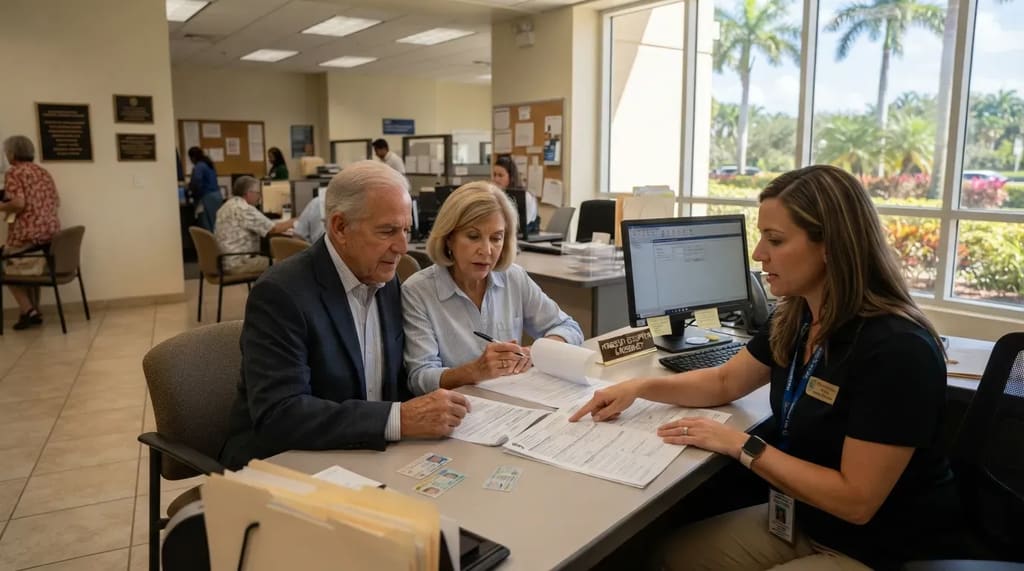
The Palm Beach County Property Appraiser lists among its qualifications that you have no other residency-based benefits elsewhere. It names STAR and Enhanced STAR as examples.5 A person receiving a residency-based exemption or tax credit in another state isn’t entitled to the Florida one.
A married couple may claim only one property as their permanent residence. You can’t put the New York house on STAR and the Florida condo on homestead and enjoy both.
Worth Knowing
- Homestead requires owning the home and living in it as a permanent residence on January 1.
- The application is due to the county property appraiser by March 1.
- STAR and Enhanced STAR are named examples of benefits elsewhere that conflict with it.
- A married couple gets one permanent residence, not two.
For a true snowbird whose main home is still in New York, homestead usually isn’t worth chasing. The savings are modest, roughly $750 to $1,000 a year according to that same appraiser. Filing also declares that Florida is your permanent home, which is hard to square with a New York house you treat as the real one.
Related Stories From Travelbinger



#3 – Wills and Directives That Still Say New York
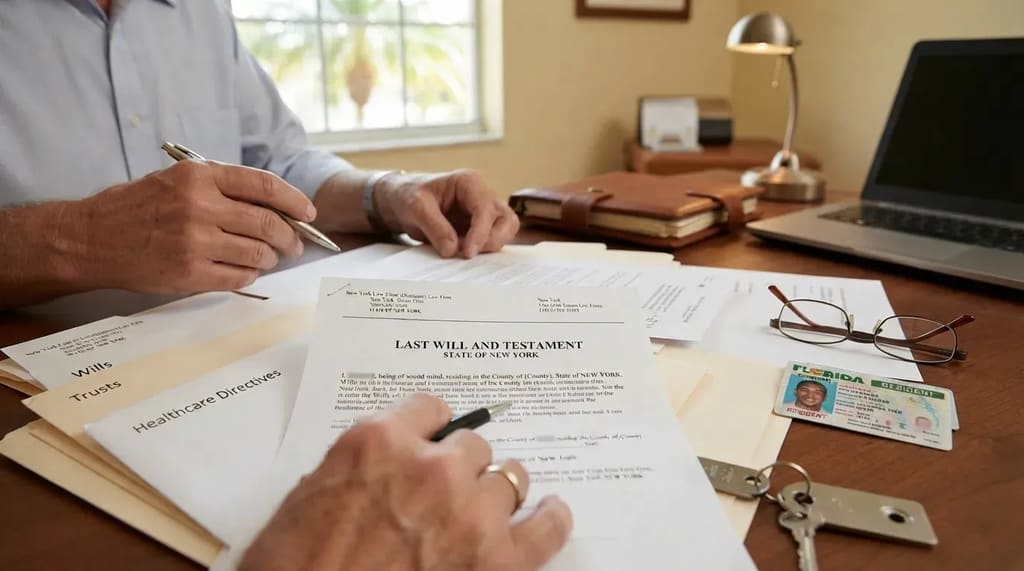
The housekeeping list for a real move includes updating wills, trusts and healthcare directives to reflect Florida domicile, and moving significant possessions. Think about what a will says about you. One that recites a New York address, drafted by a New York lawyer and kept in a New York safe-deposit box, tells a different story from the Florida license in your wallet.
Failing to update legal documents, and keeping strong financial and social ties to New York, are among the common reasons a Florida claim weakens. Do the documents in the same month you do the license, while the move is fresh and your intentions are easy to state. An estate lawyer in Florida can tell you what the new paperwork should say.
These documents do their real work after a death, and by then New York has a claim that a move to Florida doesn’t fully erase.
#2 – The Manhattan Apartment New York Still Taxes

A change of domicile doesn’t pull New York property out of New York’s reach. Moving to Florida before death eliminates New York estate tax on the worldwide estate, except for New York real property and New York tangible personal property you still own.7
Picture a Florida-domiciled decedent who owns a NYC apartment, a New York brokerage account and a Florida primary residence. That estate is subject to New York estate tax only on the apartment. The Florida house or condo is not taxable for estate tax purposes in New York.
The apartment you keep for the summer is exposed twice. While you’re alive it feeds the abode test, and after death the building itself can draw a New York estate tax return even if the rest of the estate has no connection to the state. Whether that matters depends on the size of your estate and how the property is held, so ask a New York estate lawyer before you decide to keep it.
Once the real estate is counted, what remains is the size of the whole estate, and there New York has a cliff.
#1 – A $7.35 Million Cliff Behind Every Other Rule

New York’s estate tax has a cliff. For 2026, the exemption is $7,350,000, but a taxable estate over $7,717,500 is taxed on its whole value, not just the part above the exemption.8 One dollar of difference near that line can cost a family hundreds of thousands.
The federal exemption is $15,000,000 per person in 2026 and portable between spouses. New York’s exemption is not portable, so a couple can’t count on pooling two exemptions the way the federal system allows. Estates below the exclusion don’t face the cliff at all, though the income tax questions in the earlier slides still apply.
Florida residents at death owe zero state estate tax regardless of estate size. If the person who died was a Florida resident who owned no real property in New York, the estate would owe no New York estate tax. This is the bill the cheap paperwork is tied to.
The day log, the license, the voter card and the updated will are what an executor would hand New York to show the decedent really lived in Florida. Your heirs end up making that argument, using the records you kept.
The thread through all of this is that New York asks for proof, and proof gets built while you’re living the year, not afterward. A calendar, a license, a filing date and a revised will cost little when they’re made and are worth a great deal when someone else has to read them. Because the answer turns on your own days, homes and assets, a New York tax professional and a Florida estate lawyer should look at your particulars.
If an auditor asked you to account for last February day by day, what record could you hand over today?
- Florida Statute 222.17: https://www.leg.state.fl.us/Statutes/index.cfm?App_mode=Display_Statute&=&Search_String=&=&URL=0200-0299%2F0222%2FSections%2F0222.17.html
- NY Tax Department Regulatory Statement: https://www.tax.ny.gov/pdf/rulemaking/oct1309/students/sapa/ris.pdf
- FLHSMV New Resident Guide: https://www.flhsmv.gov/new-resident/
- Palm Beach Exemption Qualifications: https://pbcpao.gov/do-you-qualify.htm
- Palm Beach Homestead Exemption: https://pbcpao.gov/homestead-exemption.htm
- Palm Beach Tax Collector Welcome Guide: https://www.pbctax.gov/welcome-guide/
- NY Estate Tax Nonresidents: https://reedcorp.tax/helpful-guides/new-york-city-cpa-firm/nyc-estate-tax-exemption/
- NY Estate Tax Cliff: https://brevy.com/financial/new-york/estate-tax