
Most people treat the drive from Chicago to Arizona like a chore. You fill the tank, set the cruise, and let the interstate swallow two or three days. The twelve stops below are the reason plenty of snowbirds refuse to drive it that way. They follow the old Route 66 corridor, which starts at a sign near Michigan and Adams in downtown Chicago and dates to 1926, and they turn a trip of well over 1,700 miles into something you will actually tell people about.
The surprise is how many of the best stops are small, free or just plain odd, while a couple of the famous ones ask for real money. Two stops on this list charge admission, and the cheaper of the two holds more of the old road than the pricier one. That one is waiting at #1. First you have to get out of Chicago.
#12 – A Small Sign Downtown Starts the Whole Road
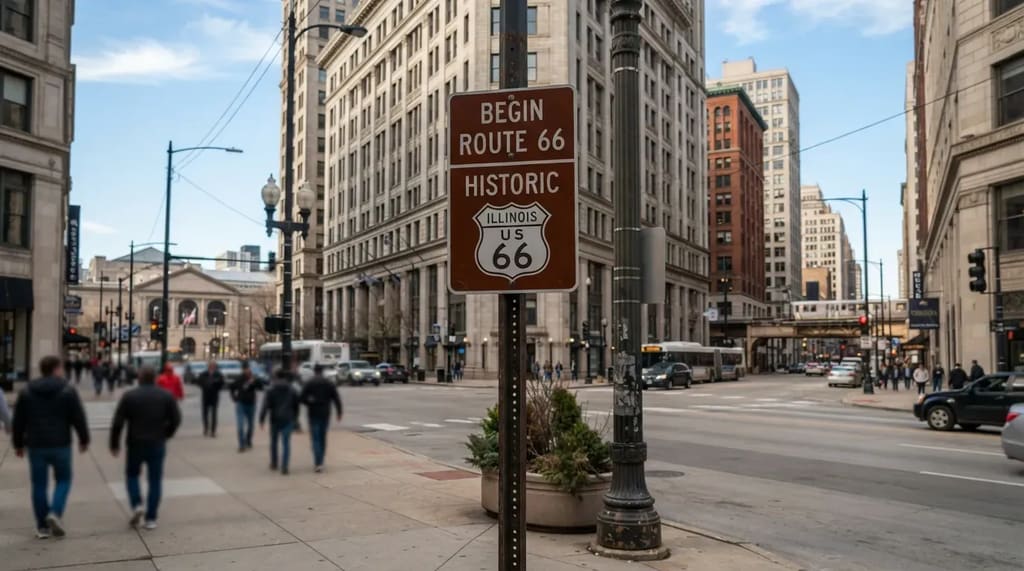
The “Begin Route 66” sign near Michigan and Adams is the classic first photo of the old highway. Take the picture, then get moving. Interstates such as I-55 now cover much of the original route out of the city, so the sign is a symbol more than a stretch of road you can drive.
Fast Facts
- The full route ran roughly 2,400 miles from Chicago to Santa Monica.
- It was officially removed from the U.S. highway system in 1985.
- Kansas gets only about 13 miles of it, the shortest stretch of any state.
- Fans call it the Mother Road and Main Street of America.
From here the highway ran through eight states, from Illinois to California, and Arizona is the seventh on the way west. Texas holds only about 186 miles of the route, while New Mexico holds about 487, which is a lot of open road between photo ops. The first real reward is a few counties south, in a small Illinois town with painted walls.
#11 – Pontiac, Illinois, Wraps Route 66 in Murals
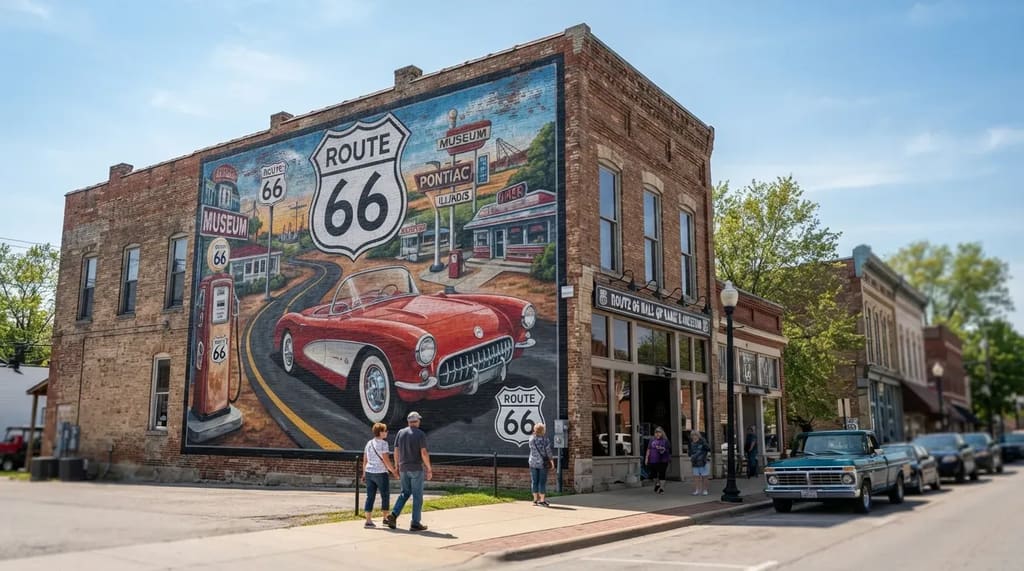
Pontiac looks like nothing on a map, and that is the fun of it. Its murals and its Route 66 museum sit close together, so you can see a lot without hunting around town. The Route 66 Hall of Fame there holds old license plates, signs and gas-pump relics, and it is easy to enjoy even if you have never cared about cars.
Two other Illinois names are worth knowing. Wilmington has the Gemini Giant, a fiberglass muffler man holding a rocket, and Springfield has the Cozy Dog Drive In, which has long claimed to have introduced the corn dog on a stick in 1946. If you only have energy for one Illinois stop, make it Pontiac, because it packs the most into the smallest area. After that, Illinois runs out at the Mississippi, and in St. Louis the river is crossed on a bridge that cars no longer use.
#10 – The Mississippi Bridge With a 22-Degree Bend
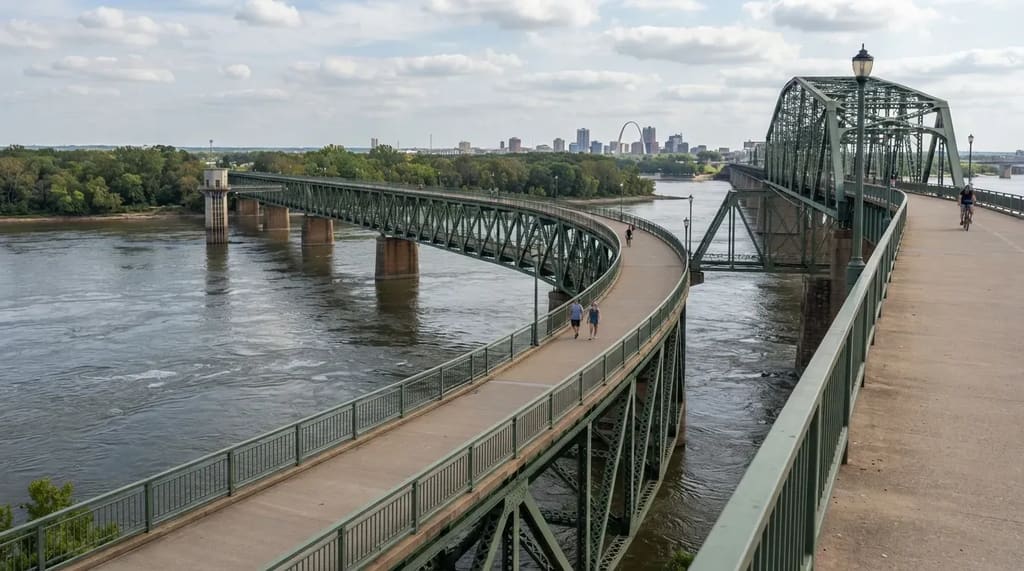
The Chain of Rocks Bridge near St. Louis is one of the road’s best-known landmarks, and its signature is a 22-degree bend over the Mississippi. Missouri’s stretch of Route 66 is known for bridges, caves and nostalgic roadside stops, and this is the bridge. Today it is a walking and biking crossing, so you park and go out on foot.
My view is that it is worth the time only if your legs want a break. After hours on I-55, a short walk toward the bend feels great, and you can turn around whenever you like. If you are behind schedule or the weather is ugly, skip it without guilt, because the road ahead has better uses for the hour.
#9 – A Blue Whale Waits Beside the Road in Oklahoma
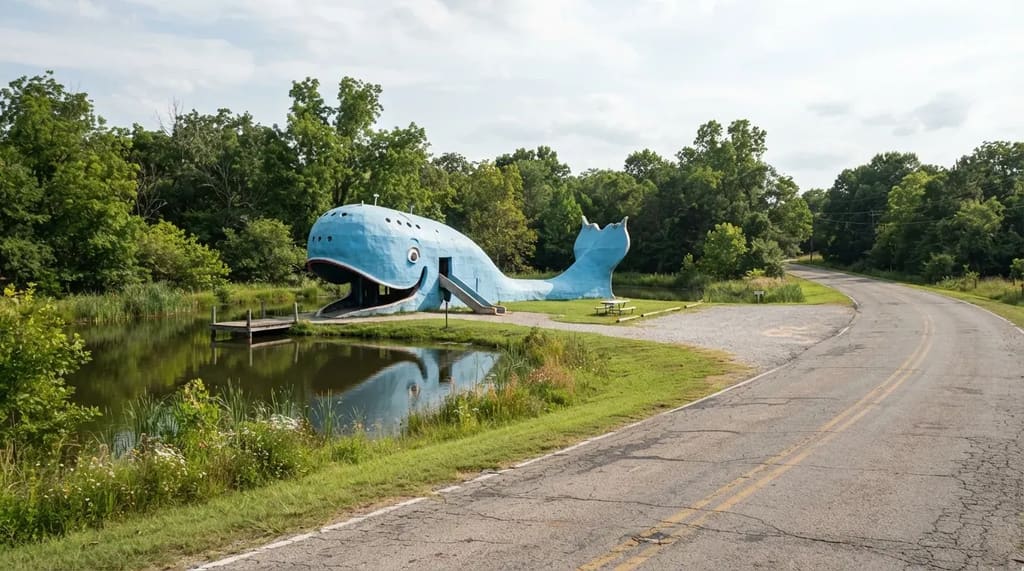
The Blue Whale of Catoosa shows up on lists of the most popular Route 66 stops, and it earns its place by being delightfully weird. A local man built it decades ago as a gift for his wife, which is the kind of detail that turns a silly roadside giant into something sweet. It takes little time, and it makes a great photo to text to the grandkids.
Oklahoma is a good state for slowing down. It is often said to have the longest drivable stretch of the old road, and it is full of museums and neon. Tulsa is known for its art-deco buildings, so a quick downtown loop pays off. Farther west the road reaches the Texas Panhandle, where the odd art is buried rather than built.
#8 – Ten Cadillacs Stand on Their Noses Near Amarillo
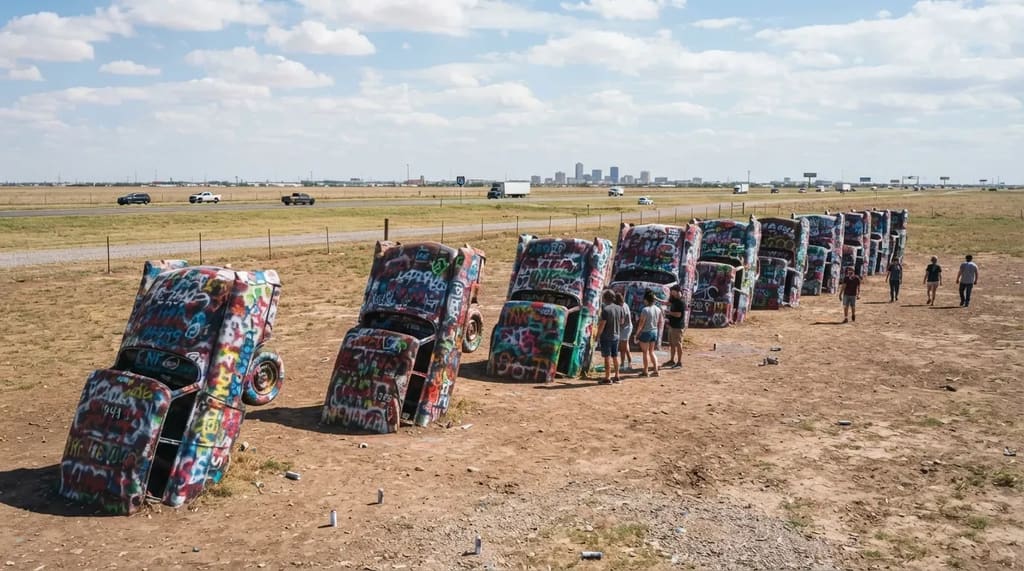
Cadillac Ranch is ten Cadillacs buried nose-down at an angle, tail fins pointing at the sky, just west of Amarillo. Local millionaire Stanley Marsh 3 commissioned it from an art collective called The Ant Farm.1 Visitors spray-paint the cars constantly, so the colors you see are never the colors in last year’s photos.
Make this a short stop, but make it. It costs little, it is easy to walk around, and it is one of the few stops where the art keeps changing under visitors’ hands. If you want a meal in Amarillo, the Big Texan Steak Ranch is famous for a 72-ounce steak that is free if you finish the whole meal within an hour. That is about four and a half pounds of beef, so most travelers will want something smaller.
If a steak that size is more than you want, a slice of pie is a lighter meal, and it is waiting at the halfway sign.
#7 – Pie at the Exact Halfway Point of the Road
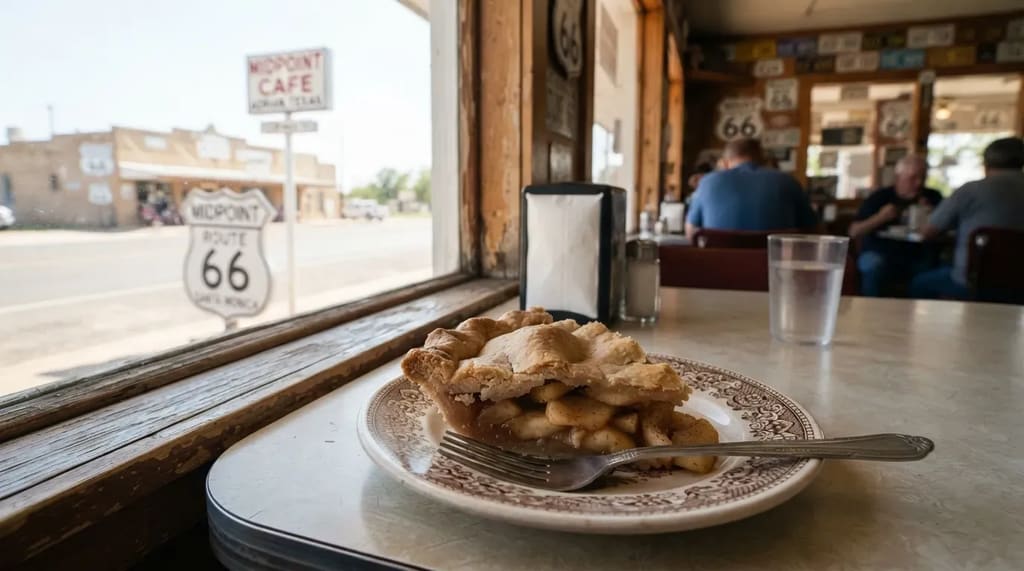
Adrian, Texas, is the midpoint of Route 66, 1,139 miles from both Chicago and Santa Monica.2 A white line marks the spot, a few steps from the Midpoint Cafe, famous for “ugly crust” pies that taste far better than they look. You have to exit I-40 and drive into Adrian to find it, which is why plenty of drivers sail past without knowing it is there.
The sign and the white line are free, so the pie is the real reason to stop. Just west of here the road reaches the ghost town of Glenrio near the New Mexico line, an easy place to stretch your legs and picture the traffic that once stopped there. By now the trip has changed from a sightseeing drive into a steady westward run, and the halfway line is a good place to notice that.
#6 – Tucumcari’s Neon Is Best After Dark
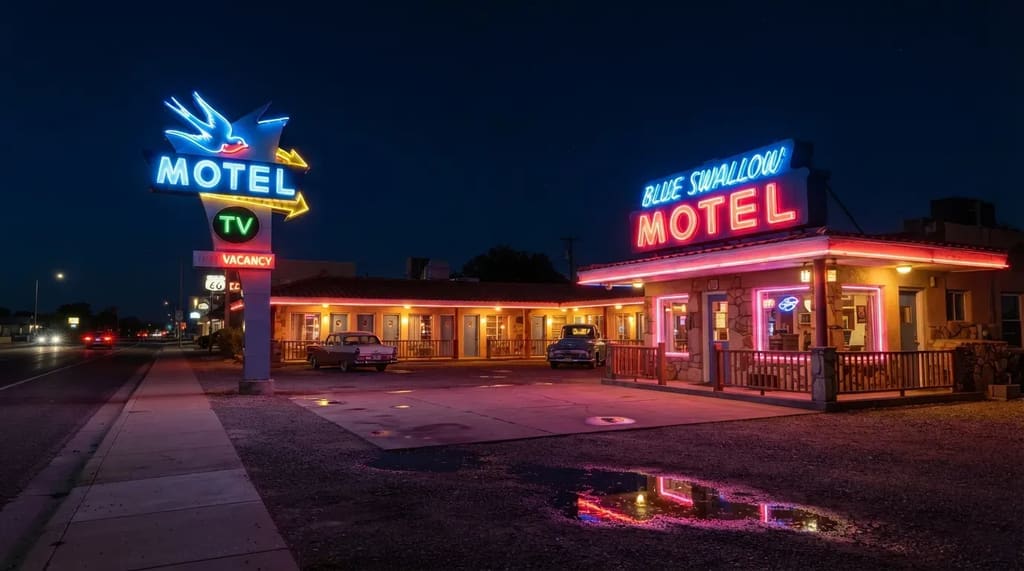
Tucumcari, New Mexico, is where Route 66’s neon era is most intact, and the vintage motel signs are at their best after dark. The town’s best-known place to sleep is the Blue Swallow Motel. That makes Tucumcari an overnight stop rather than a lunch stop, because a midday visit shows you the signs without the glow.
Worth Knowing
- The Blue Swallow Motel dates to 1939.
- It is listed on the National Register of Historic Places.3
- Arrive before sunset so you can check in and still catch the neon coming on.
- A walk along the strip after dinner costs nothing.
If your schedule allows only one night in New Mexico, this is a strong candidate. The neon is the show, and a short evening walk costs nothing. Staying over also puts you ahead of the next day’s drive. Since the neon belongs to the night, spend the morning on something that needs daylight, such as the clear spring in Santa Rosa.
#5 – A Santa Rosa Spring That Stays 62 Degrees All Year
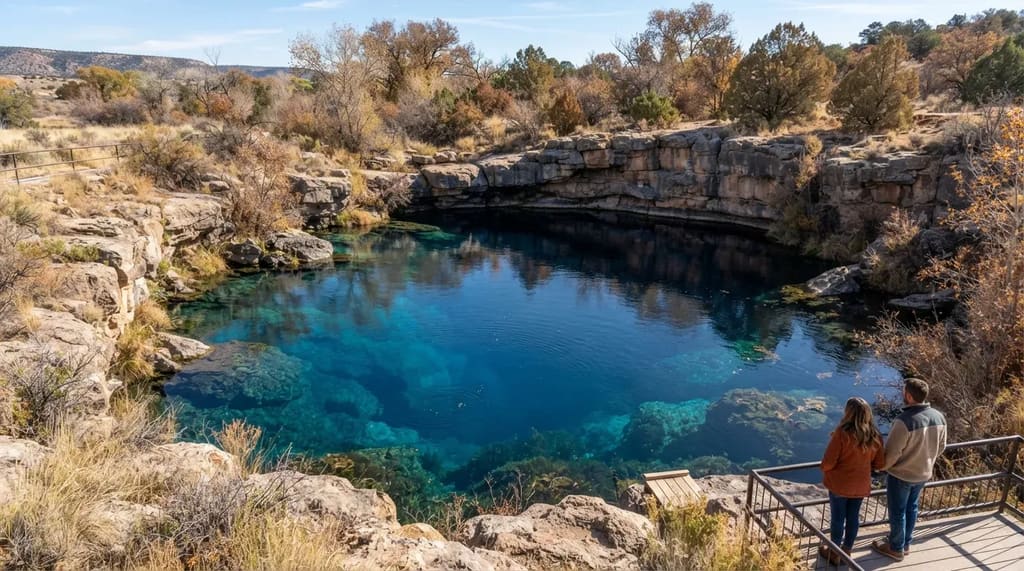
The Blue Hole in Santa Rosa is a clear, deep spring that doubles as a natural swimming hole. The water is spring-fed and stays around 62°F all year.4 For a driver passing through in late fall, that means the pool is chilly, but the view is the same as it is in July.
One practical warning belongs here. Old travel blogs often send people to cafés that have since closed, and a dark window is a miserable way to find out. Confirm any meal you plan around, and remember that even the Midpoint Cafe keeps its own hours. Santa Rosa is a good place to stretch your legs for a few minutes and look down into the water.
The Blue Hole is cheap to visit, but the crater in Arizona is a different kind of big hole, and it comes with an admission price.
#4 – The Giant Crater Near Winslow With a Steep Ticket
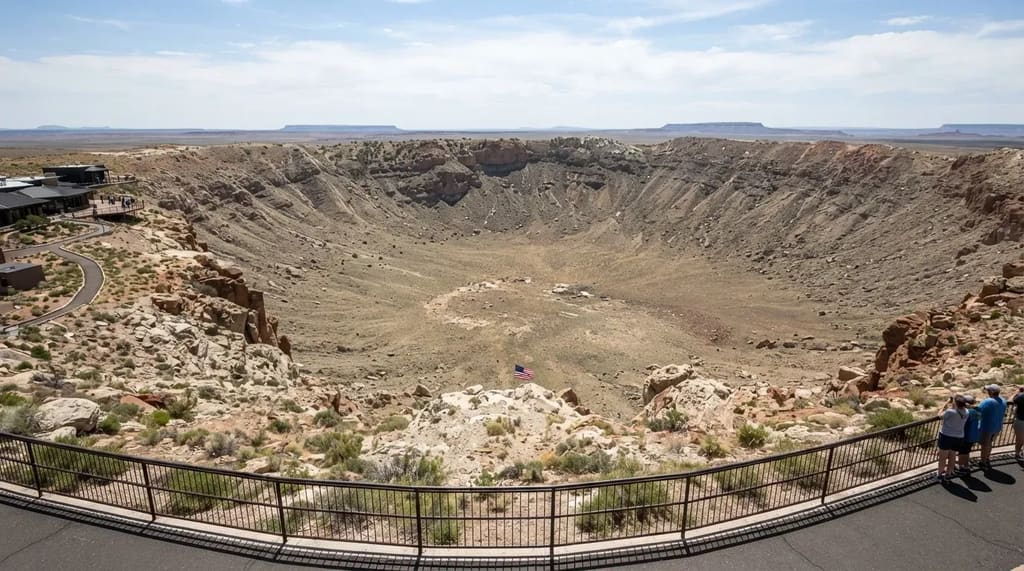
Meteor Crater was formed about 50,000 years ago by a meteorite impact, and it is roughly three-quarters of a mile across and more than 550 feet deep. It is a privately owned, paid-admission attraction, with its entry gate about six miles south of the interstate. NASA used it to train astronauts for the Apollo missions, so the place has a real space story behind it.5
Recent visitor guides list about $29 for adults and $27 for seniors 60 and over, so check the current price before you go.6 Most visitors take in the view from the rim, which is a lot to pay per person for a short look. My view is that it is a great stop for people who love science and an easy one to cut when the budget is tight.
#3 – A Pop Song Turned a Winslow Corner Into a Landmark
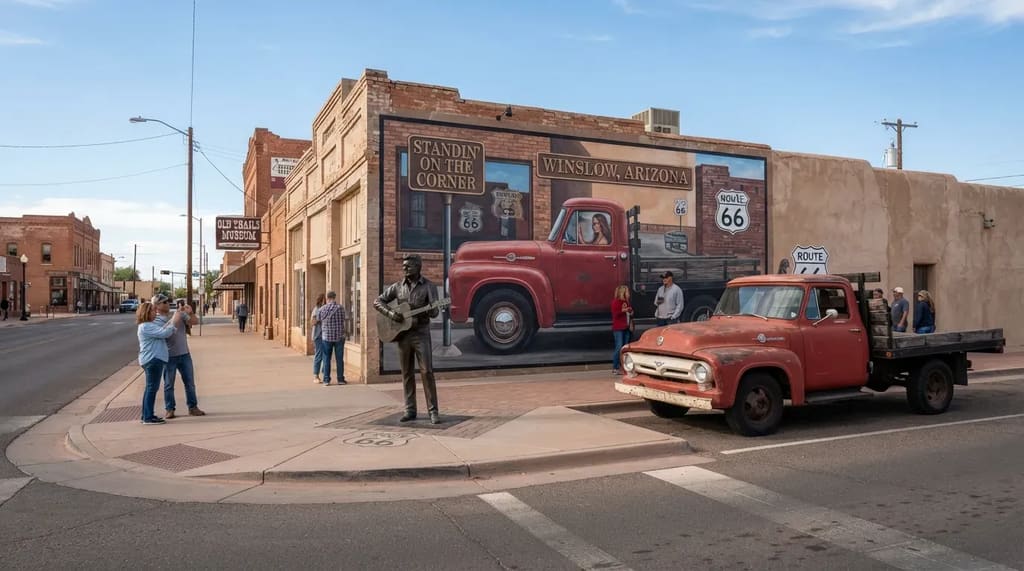
Standin’ on the Corner Park in Winslow is named for a line in the Eagles’ 1972 song “Take It Easy.” The corner sits at the intersection of Second and Kinsley Streets, and the park features a statue of a man with a guitar. Winslow is a very small town, so you can see the whole attraction on foot.
Why It Stands Out
- “Take It Easy” was co-written by Jackson Browne and Glenn Frey and was the Eagles’ debut single.
- The corner pairs a bronze statue with a mural and a flatbed Ford parked at the curb.
- La Posada, the nearby hotel, opened in 1930 and was designed by architect Mary Colter.
Give the corner a short stop and spend the saved time at La Posada, the historic hotel that visitors pair with it. The song is old, but the stop is not really about the music. It is about standing exactly where a famous line put you, which is a harmless pleasure at any age. Winslow has La Posada for a night’s sleep, though about thirty miles east, Holbrook offers rooms shaped like concrete teepees.
Related Stories From Travelbinger

#2 – Sleeping Inside a Concrete Teepee in Holbrook
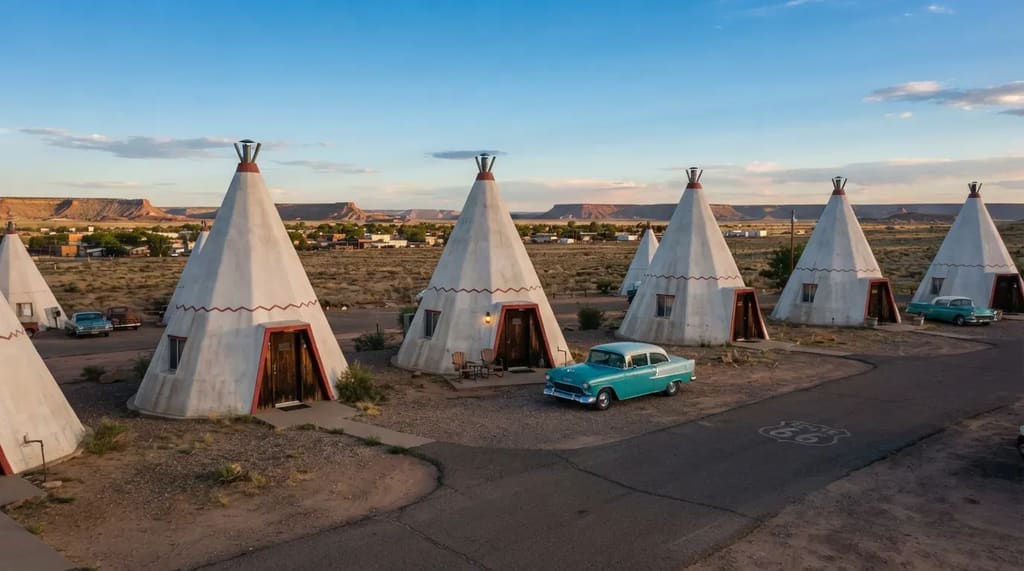
The Wigwam Motel in Holbrook is a Route 66 relic where guests sleep in a concrete teepee. The style belongs to the era when families drove west without a reservation, and the building itself is the attraction. The room is a novelty, not a luxury.
Book it for one night, as I would, and treat it as part of the trip rather than the place you expect to rest best. It pairs naturally with Winslow’s small-town charm a short drive away. Holbrook is also the closest town to a national park that holds a piece of the old road itself, about 26 miles east on Interstate 40.
#1 – The National Park Where Route 66 Runs Through
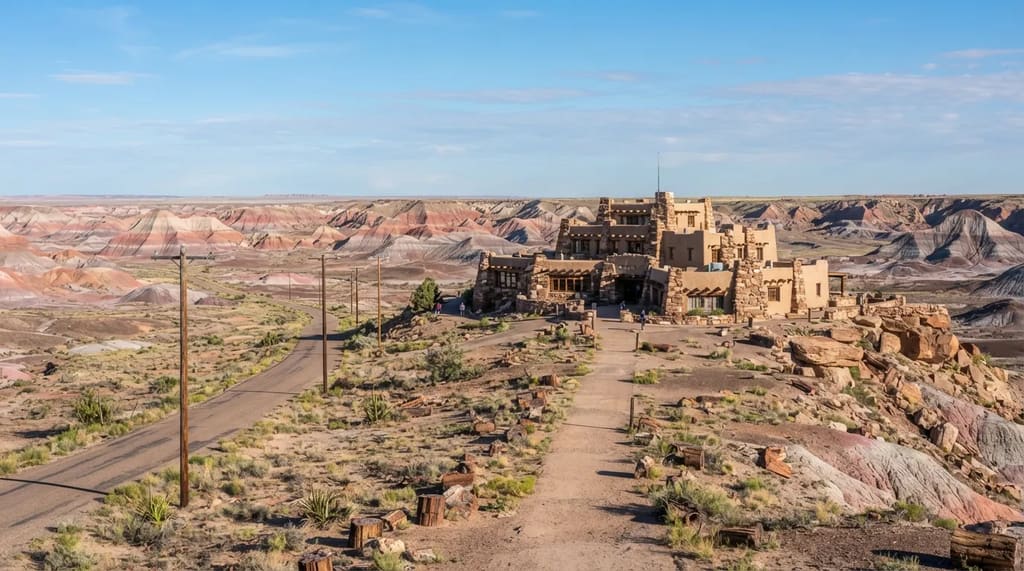
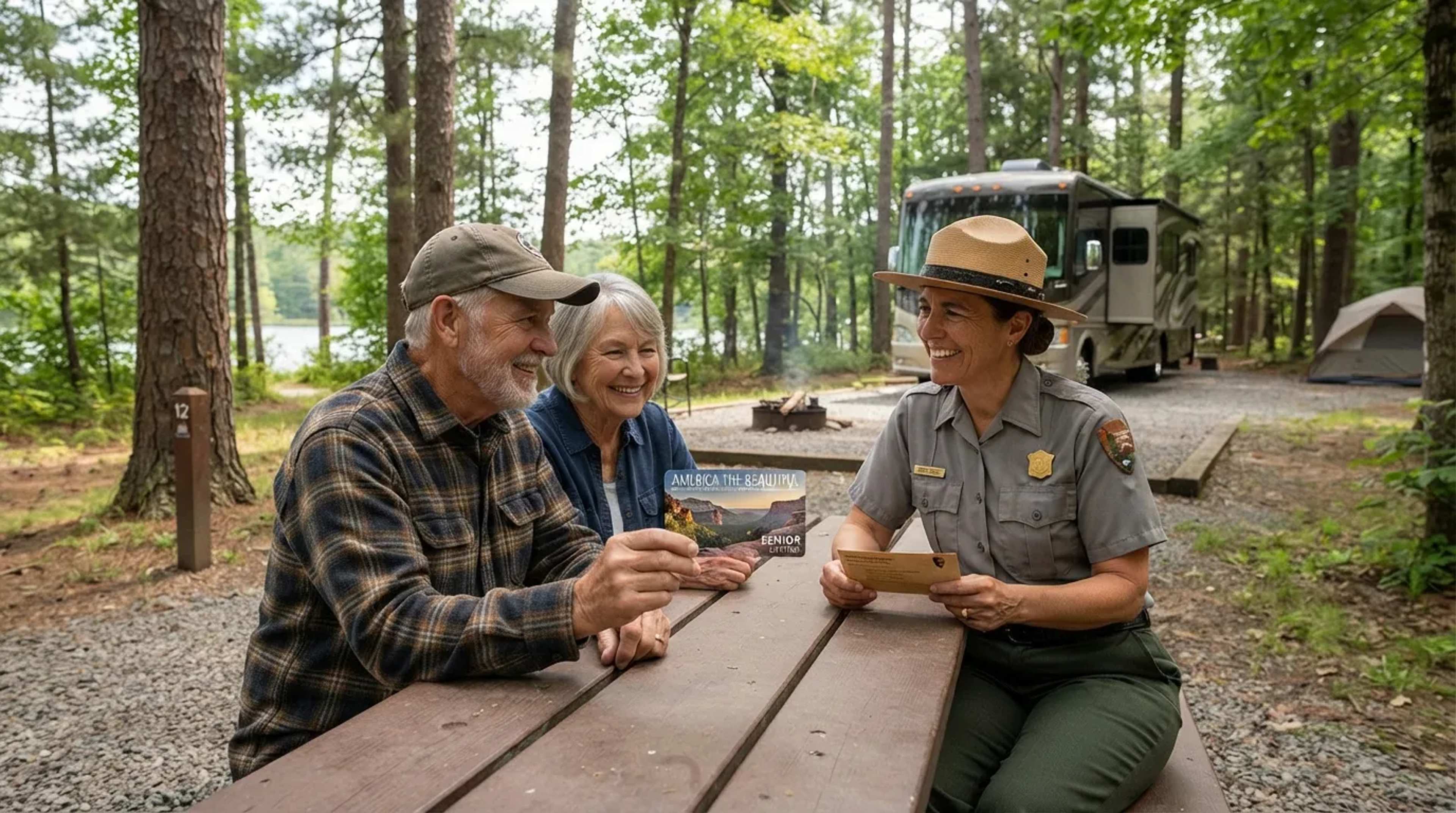
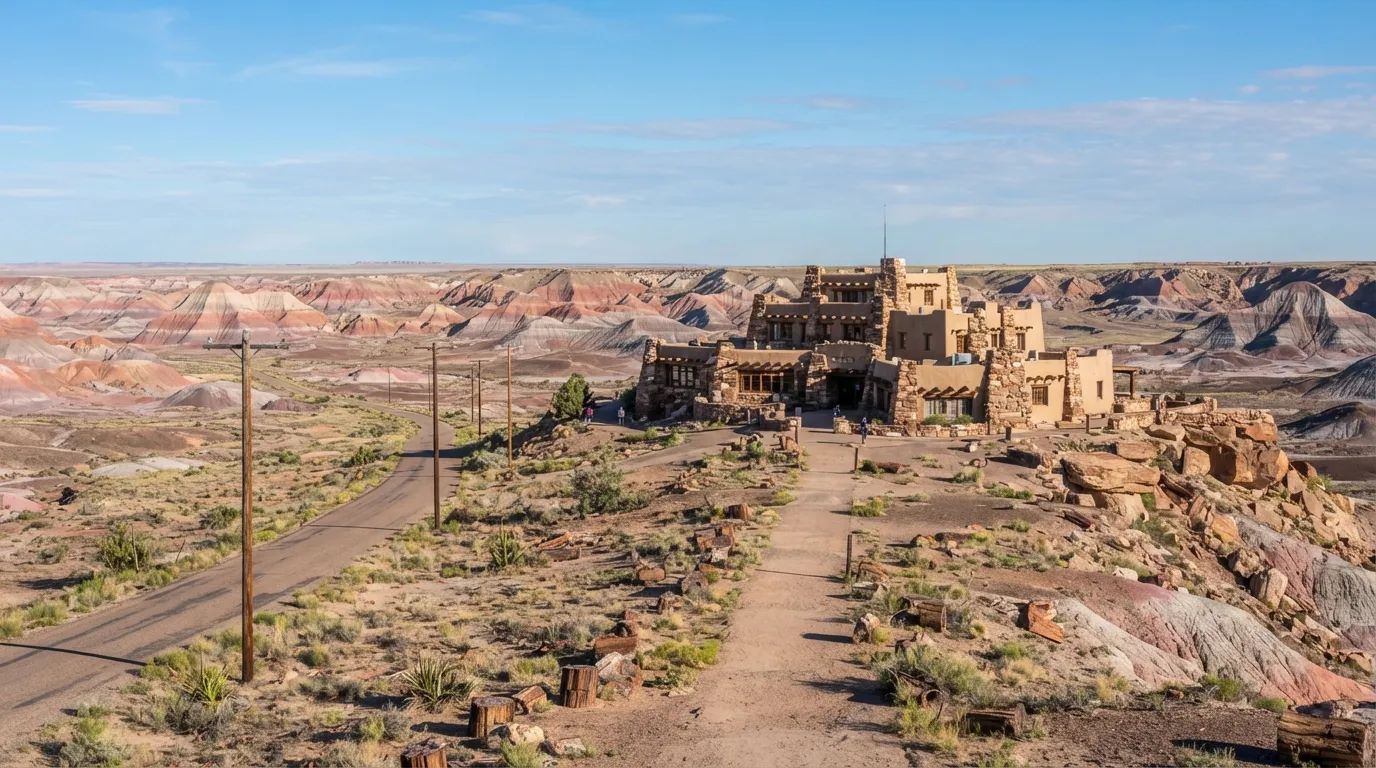
Petrified Forest is the only national park that includes and protects a section of historic Route 66. The National Park Service also protects the Painted Desert Inn, a National Historic Landmark with murals by Hopi artist Fred Kabotie. The park charges an entrance fee, but there is no additional fee to visit the inn, which now works as a museum and gift shop. Westbound drivers meet this park first, which makes it a smart opening morning in Arizona.
Here is the price comparison. Entry is $25 per vehicle, valid for seven days, there is no timed-entry reservation, and you pay at the gate, so bring a card.7 At the crater’s recent senior price of $27 a head, two travelers pay $54 there, against $25 for the whole car here. For a couple or a carload, this is the better value, and it holds more of the road’s history.
Looking back over the twelve stops, the free and cheap ones carry more of the trip than the famous ones that charge by the head. A sign, a mural, a pie, a neon street and a teepee motel cost little, and they are the pieces you will talk about at the next dinner. Plan the hours first and the admission fees second.
Which small-town stop on one of your own long drives beat the famous attraction down the road?
- Cadillac Ranch History: https://www.legendsofamerica.com/tx-cadillacranch/
- Midpoint Cafe Guide: https://www.chron.com/life/travel/article/midpoint-cafe-route-66-21941291.php
- Blue Swallow Motel: https://www.roadsideamerica.com/tip/10080
- Albuquerque Journal Blue Hole: https://www.abqjournal.com/lifestyles/making-a-splash-on-route-66/3070171
- Meteor Crater Visitor Guide: https://aztraveltips.com/blog/meteor-crater-arizona-guide
- Meteor Crater Admission: https://meteorcrater.com/product/adult/
- Petrified Forest Fees: https://www.gowanders.com/attraction/painted-desert-inn-within-the-park