You’d think the hard part of first seating is simply showing up by 5:30. It isn’t. The evening usually goes sideways over smaller things: a swimsuit cover-up, a table you can’t escape, a diet note nobody read.
The 13 mistakes below follow what cruise lines and cruise-dining guides repeatedly advise for fixed seating, ranked so the stakes climb. Stay for #1. It has nothing to do with money, and the fix takes about a minute at your first dinner. But first, what you’re wearing.
#13 – Walking In Dressed for the Pool
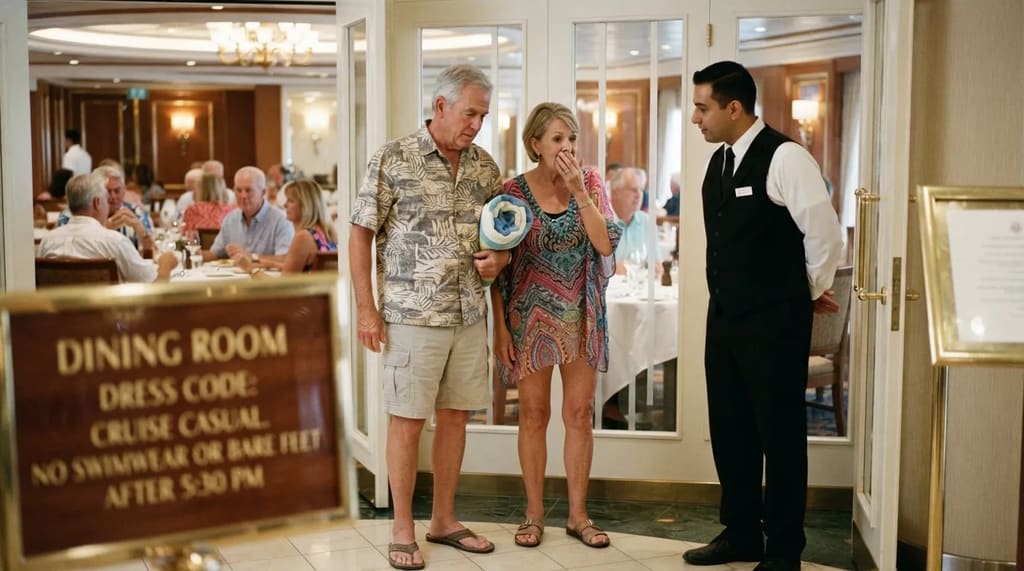
Cruise Critic notes that swimwear, even with a cover-up, and bare feet are typically banned from main dining rooms at all times.1 Because first seating can start as early as 5:30 p.m., the tempting shortcut is to go straight from a deck chair to the table.
The rest of the rules depend on your line. Carnival’s “cruise casual” covers most evenings and includes slacks, khakis, jeans without cut-offs, long dress shorts and collared shirts for men. Its “cruise elegant” nights, one or two per sailing, call for dress shirts and trousers, with a sports coat suggested.2 3
Quick Compare
- Carnival cruise casual: slacks, khakis, long dress shorts, jeans without cut-offs.
- Carnival cruise elegant: one or two nights, dress shirt and trousers.
- Celebrity: no shorts or swimwear in the main dining room.
- Any line: swimwear and bare feet are typically out.
That means a pair of shorts that passes on one ship can get you turned around on another. Check that night’s dress code in your daily program before you shower. Royal Caribbean also posts it in its app.
Skip the tuxedo. On mainstream ships, one good outfit covers the elegant nights, whether that’s a dress shirt with trousers or a cocktail dress. A collared shirt with slacks handles the rest.
Dressed correctly, you still have to arrive at the right time, and first seating doesn’t start at the same minute on every ship.
#12 – Guessing at Your Seating Time and System
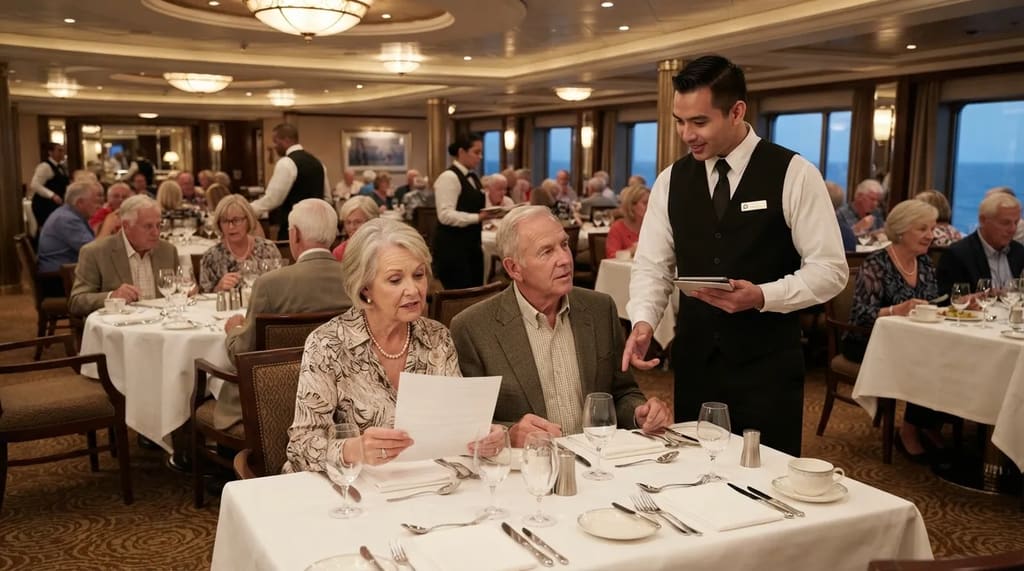
First seating, called early seating on most lines, isn’t one fixed hour. Carnival’s early seating runs 5:30 to 6 p.m., while Celebrity’s early and late times vary by ship and itinerary.
That’s why your booking confirmation matters more than your memory of the last cruise. Traditional dining gives you an assigned time and often the same table each night, while anytime dining removes the fixed time entirely.
The two systems punish mistakes differently:
- Anytime dining: no fixed seating, and arriving right when the room opens gives you the shortest wait.
- Traditional dining: an assigned time and often the same table, so a late arrival affects your whole table.
Confirm which dining system you booked before you board. The wrong assumption can cost you a seating, and you can’t fix that at the door.
Even a dining room that seats you promptly can’t hold the kitchen for a table that hasn’t shown up, and the cost lands on strangers.
#11 – Treating Your Seating Time as a Suggestion
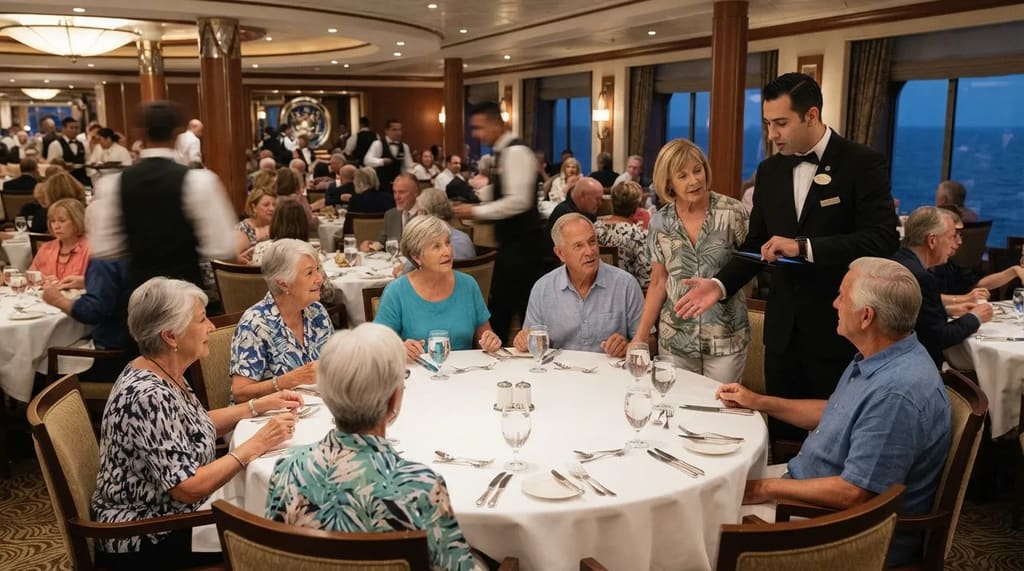
A fixed seating comes with a clock, and the whole room is built around it. Traditional dinners have a set time so waiters can serve every guest within a window.
On Royal Caribbean ships, three seatings run each evening, and meals are timed to get everyone in and out on schedule. One late table pushes against the group due in after you.
A few minutes late happens. Significant or habitual lateness, though, delays your tablemates and the waitstaff. At a shared table, that means strangers wait for their first course because of you. Leave your cabin early enough to be seated at your seating time.
If a shore excursion or a delayed elevator will put you well behind, tell the head waiter or maître d’ before your seating starts, not after it has ended.
If tonight’s menu has nothing you want, a short list of dishes is on offer every night, and most guests never ask for it.
#10 – Settling for a Dish You Don’t Want
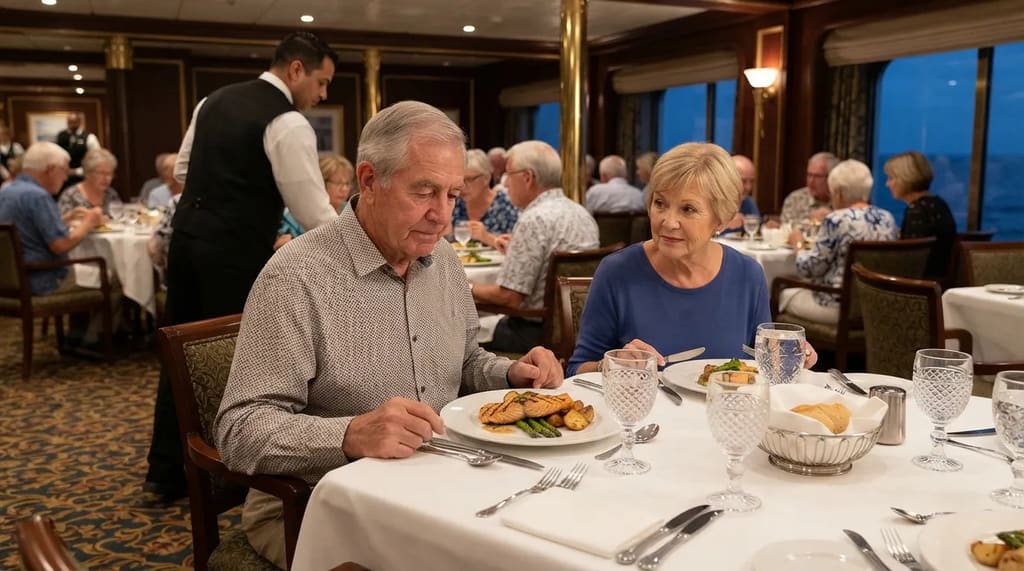
Dinner menus in the main dining room usually change daily, but staples such as grilled chicken, salmon and Caesar salad usually remain available. Grilled chicken, salmon and Caesar salad usually stay available every night.
That matters because the dining room is the part of your fare you’ve already paid for. Carnival describes a three-course meal with choices from salads to steaks and desserts. Specialty restaurants, meanwhile, add their own cover charge.
If you like to plan, ask whether you can see upcoming menus early. One cruise guide suggests visiting the concierge early for a preview, since each meal is planned well in advance. The worst outcome is a polite no.
The menu is fixed, but your table isn’t, as long as you ask before the room fills.
#9 – Waiting Until Dinner to Ask for a Table
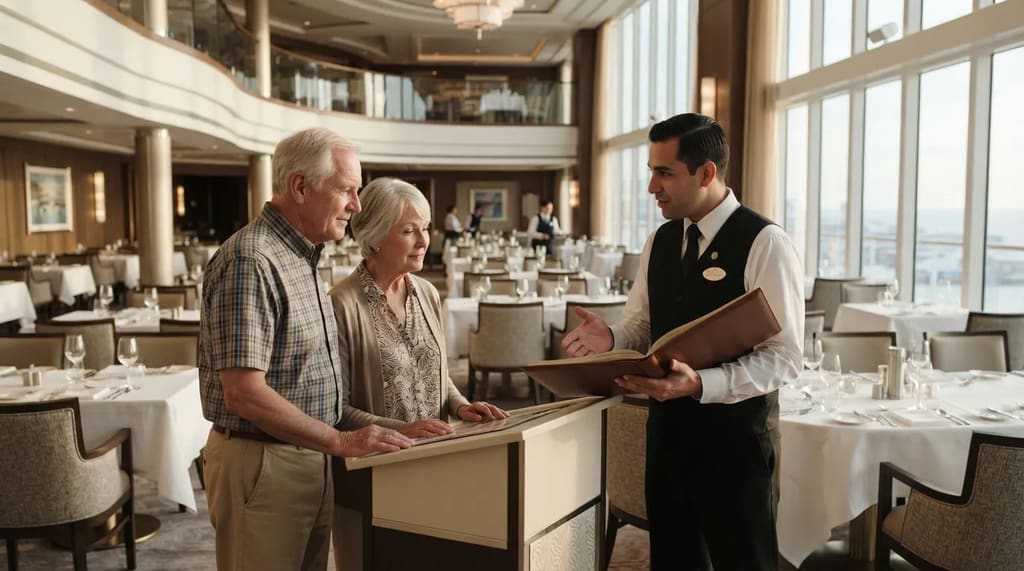
A cruise dining room feels set in stone because the seating chart is built before you walk in. A request made at the table on night one is already late.
Visit the dining room on embarkation day, before the first evening rush. The chart is easiest to change before the room has filled with first-night diners.
Planning earlier helps more, and the timeline is shorter than most people expect.
Worth Knowing
- About 50 days before sailing: Royal Caribbean’s blog says a group on traditional dining can request a table allocation.
- Two to three weeks ahead: email to ask for a smaller table.
- Embarkation day: stop by the dining room before the first-night rush.
- Night one at the table: already late for changes.
Remember that a request is not a promise. Many lines let you request a table size but make clear it isn’t guaranteed. On some lines, the cheaper saver fares carry no choice over dining time or table size.
Say you do get the table you wanted. If you asked for a big one, you’ve also signed up for the same company at every dinner.
#8 – Picking a Big Table Without the Fine Print

A larger table means the same tablemates every night for the length of the cruise. Choose a bigger size, and you’re seated with those same people for the duration.
Match the table to what you want from dinner:
- Privacy as a couple: ask for a table for two, and treat it as a request, since some lines can’t promise it.
- Company: shared tables come with fixed seating, so choose it at booking.
- A party of more than four: traditional dining is probably better, because it lets you plan seating together.
If company is the goal, ask for six or eight instead of four. A table for eight gives you more chances to find people you like, while a table of four leaves little room for a poor match.
If the fit is wrong after the first night, speak discreetly to the maître d’. That’s the sensible route when a fixed table isn’t working. It’s the same visit you’d make for a table request in #9.
A good table also gives you something no seating chart can: a waiter who sees you every night, if you let him learn anything about you.
#7 – Giving Your Waiter Nothing to Remember
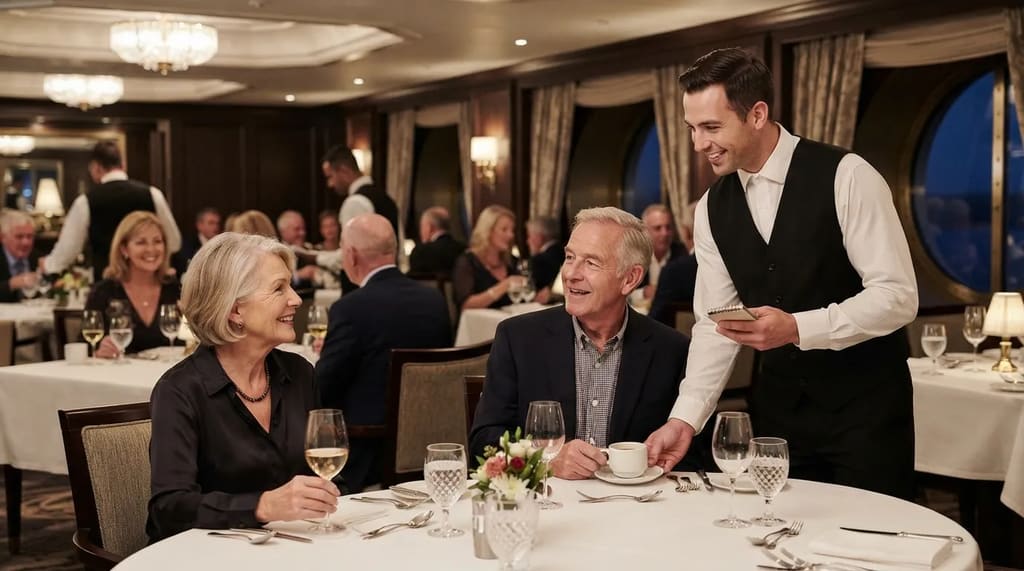
Traditional dining means the same table and the same waiter all week. Anytime dining means different servers and some waiting in line.
That consistency only pays off if you use it. Mention an allergy or a favorite drink early, and your main dining room team can carry it through the entire sailing. That memory is worth far more when it belongs to one waiter who sees you every night.
Tell your waiter your usual drink, your pace and your dislikes on night one. A waiter who greets you and starts your coffee unasked makes a room of hundreds feel smaller.
If you chose anytime dining, you can still ask for the same server. There might be a wait if you request one particular person.
That relationship is largely paid for already, by a daily charge on your account, and adding cash on top of it deserves a second thought.
#6 – Tipping Twice Without Meaning To
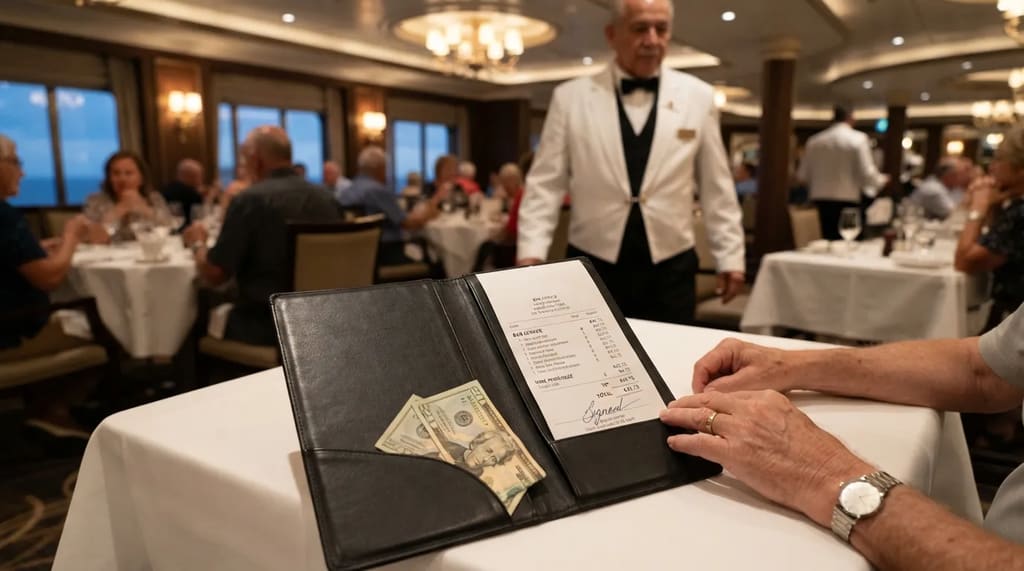
Frommer’s suggests planning $16 to $23 in gratuities per day for each passenger, or $112 to $161 per person on a seven-day cruise.4 That daily charge covers dining room staff, your stateroom attendant and several others.
The Points Guy points out that automatic gratuity charges on cruise ships are per person, not per room.5 For a couple, the charge doubles, and the dining room staff’s share is already inside it.
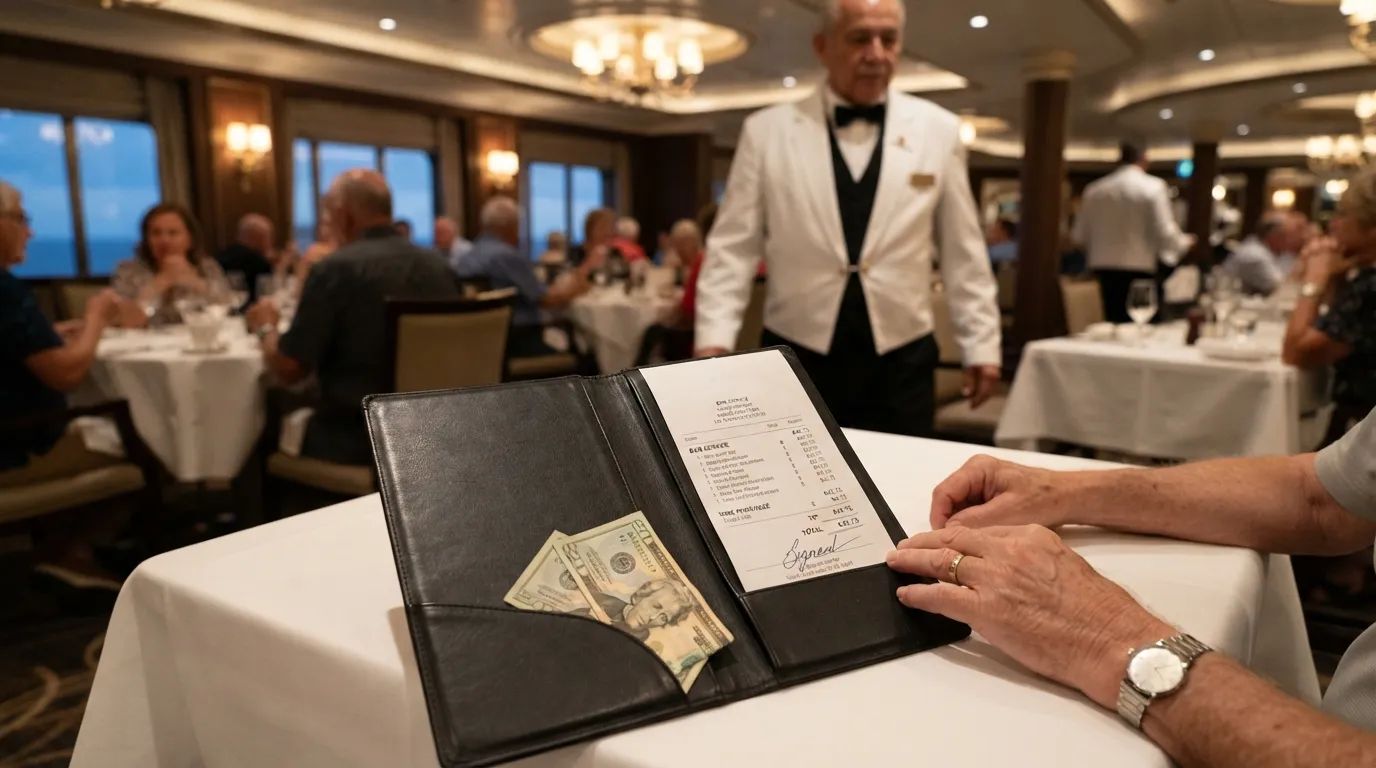
Extra cash is a gift, not a requirement. If you’ve kept the daily service charge in place, you’re not obligated to tip more. Save any additional tip for service that stands out, and hand it over on the last evening instead of every night.
Bar and wine checks add another layer. Some lines add 20% to bar bills and dining room wine purchases. Look at your onboard account before you hand over any extra cash.
All of that assumes your line adds the charge at all, and at least one major line leaves the decision entirely to you.
#5 – Assuming Your Line Adds the Tip
Disney doesn’t add an automatic gratuity charge, but it suggests $16 per day in total for dining staff and room attendants in most cabins.6 Leave that to chance, and the people who served you each night go unpaid.
Other lines go the opposite way. Several European lines, including AIDA Cruises, P&O Cruises and TUI Cruises, include gratuities in the base fare. Tipping on top there is a choice, not a charge.
Packages can blur the picture. Royal Caribbean’s dining-and-drinks package covers tips only for restaurant and bar staff, not housekeeping. The daily service charge still lands on your account unless you buy a gratuities package.
At a Glance
- Disney: no automatic charge, about $16 per day suggested.
- AIDA, P&O, TUI: gratuities built into the base fare.
- Royal Caribbean: daily service charge, unless you buy a gratuities package.
Find out before you sail whether gratuities are in your fare or charged daily. It’s usually on your booking confirmation, and a promotional fare can change the answer.
The mistakes from here on involve your health, not your wallet, and they begin with a kitchen that has never heard of your doctor’s limits.
#4 – Expecting the Kitchen to Guess Your Diet
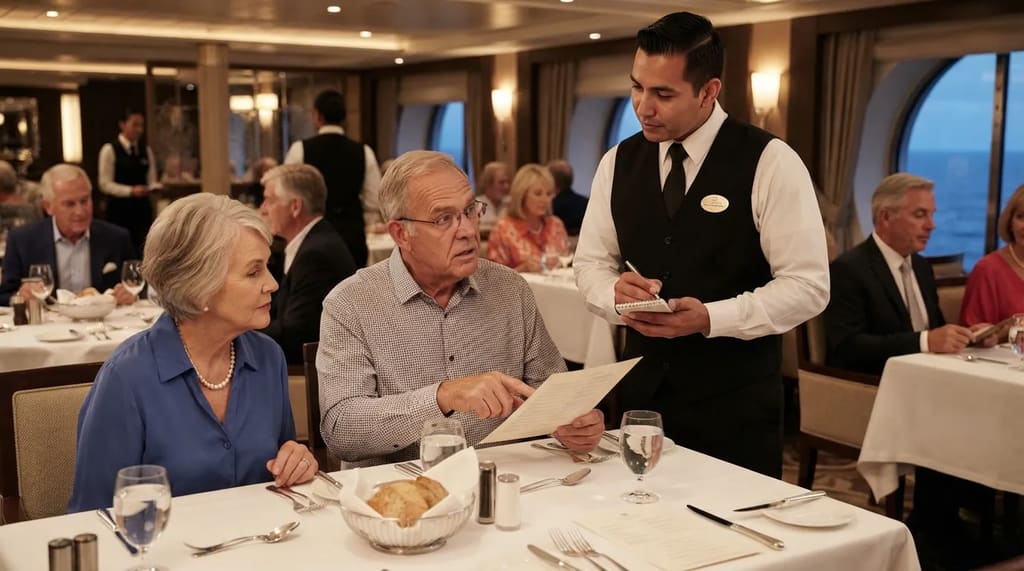
A kitchen can’t season a dish to your doctor’s plan unless it knows the plan. That applies to low-sodium, low-fat and diabetic-friendly plates alike.
Send your dietary limits to the cruise line before you sail. Check your own limits with your doctor first, then repeat them at the first dinner. Meals are planned well ahead, so late notice leaves the galley less room to adapt.
Some items can’t be improvised. Certain foods won’t be aboard unless the galley was told weeks ahead. Think back to the staples in #10: grilled chicken on the menu helps you only if the kitchen knows how it must be prepared.
Sending the note ahead is only half the job, and the deadline for it isn’t the same from one line to the next.
#3 – Missing the Notice Deadline for Special Diets
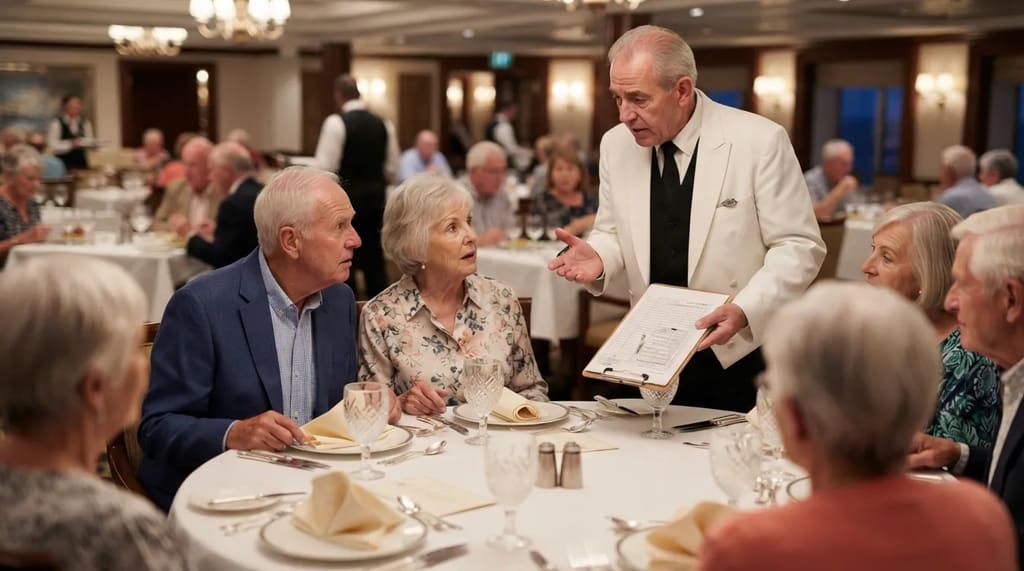
Notice rules vary. Some lines ask for 60 days or more.7 Disney asks for allergy and dietary requests at least 30 days before sailing.
Special meals can need even longer. Food Allergy Research & Education’s survey of cruise lines lists one line that wants Kosher for Passover meal requests 90 days in advance. A late request there can mean no accommodation at all.
Fast Facts
- Some lines: 60 days or more of notice.
- Disney: at least 30 days before sailing.
- Kosher for Passover on one line: 90 days in advance.
- Best habit: send the request when you book.
Send your request when you book, even if a line says it handles requests onboard. The line typically sends the ship a report of passengers with dietary needs, but a written confirmation in your hand is worth more than an assumption.
Related Stories From Travelbinger


Treat any form as the start of the process. A request in writing gives you something to show if the first dinner doesn’t go as planned.
A filed request is built around the dining room. The buffet runs on different rules, and an allergy gets less protection there.8
#2 – Trusting the Buffet With an Allergy
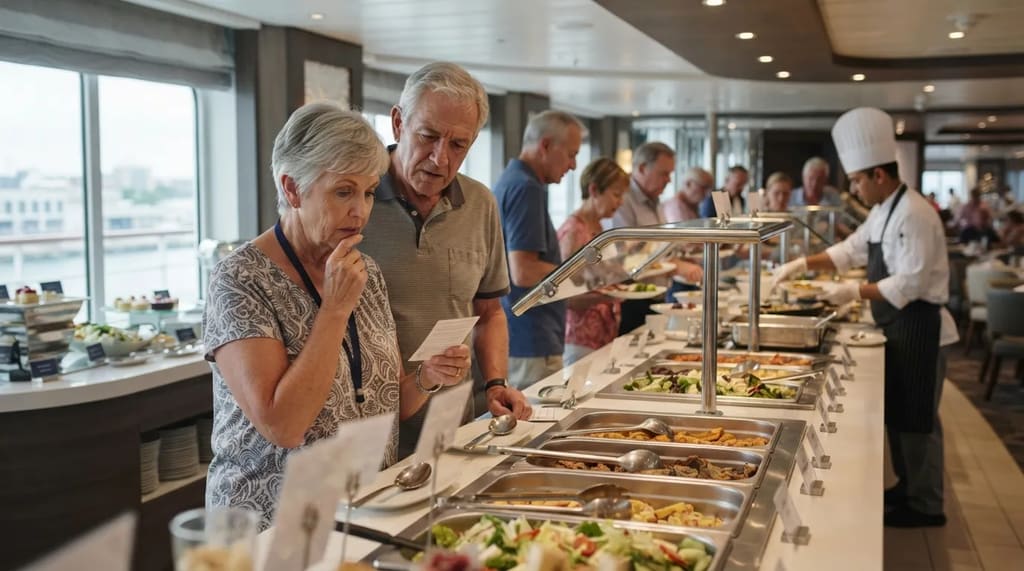
The main dining room is considered the safest place to eat with an allergy, because meals are made fresh instead of served from a buffet line. Lines tell diners with allergies that requests are easiest to meet in the main dining rooms and specialty restaurants.7
First seating keeps you in that room each evening. The gap comes at lunch. Main dining rooms are typically open for breakfast and dinner daily, with lunch only on sea days. On a port day, the buffet may be your default.
Plan port-day lunches, because many main dining rooms serve lunch only on sea days. If you do eat at the buffet, speak with the senior dining staff there.
The biggest mistake on the list sits underneath all of these steps, and it’s the one a perfectly filed form can’t fix.
#1 – Trusting the Form and Staying Quiet at Dinner
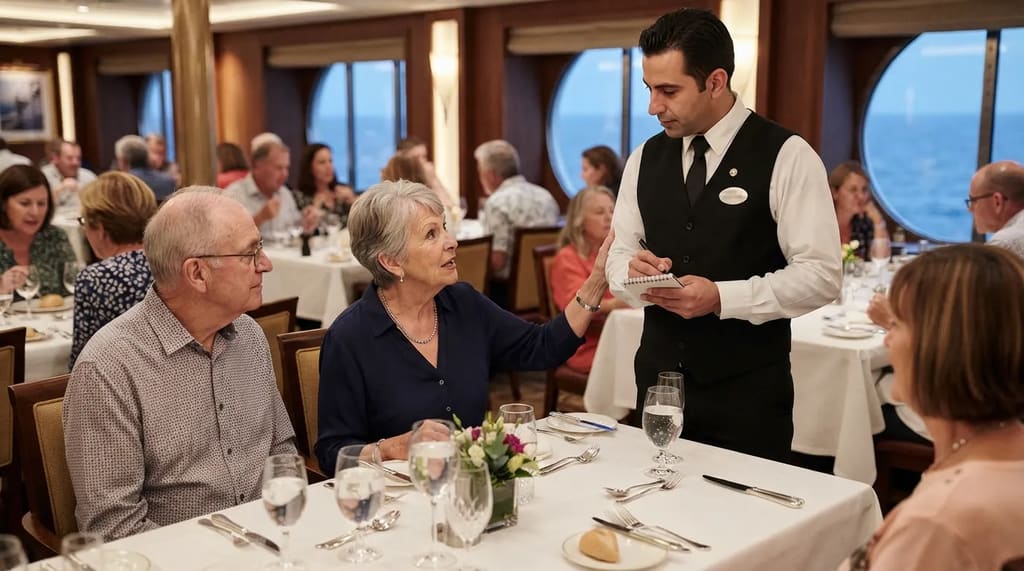
A filled-out form and a quick word at booking do not guarantee everything will be fine. Paperwork gets your request into the system. Only you can make sure the person holding your plate knows about it.
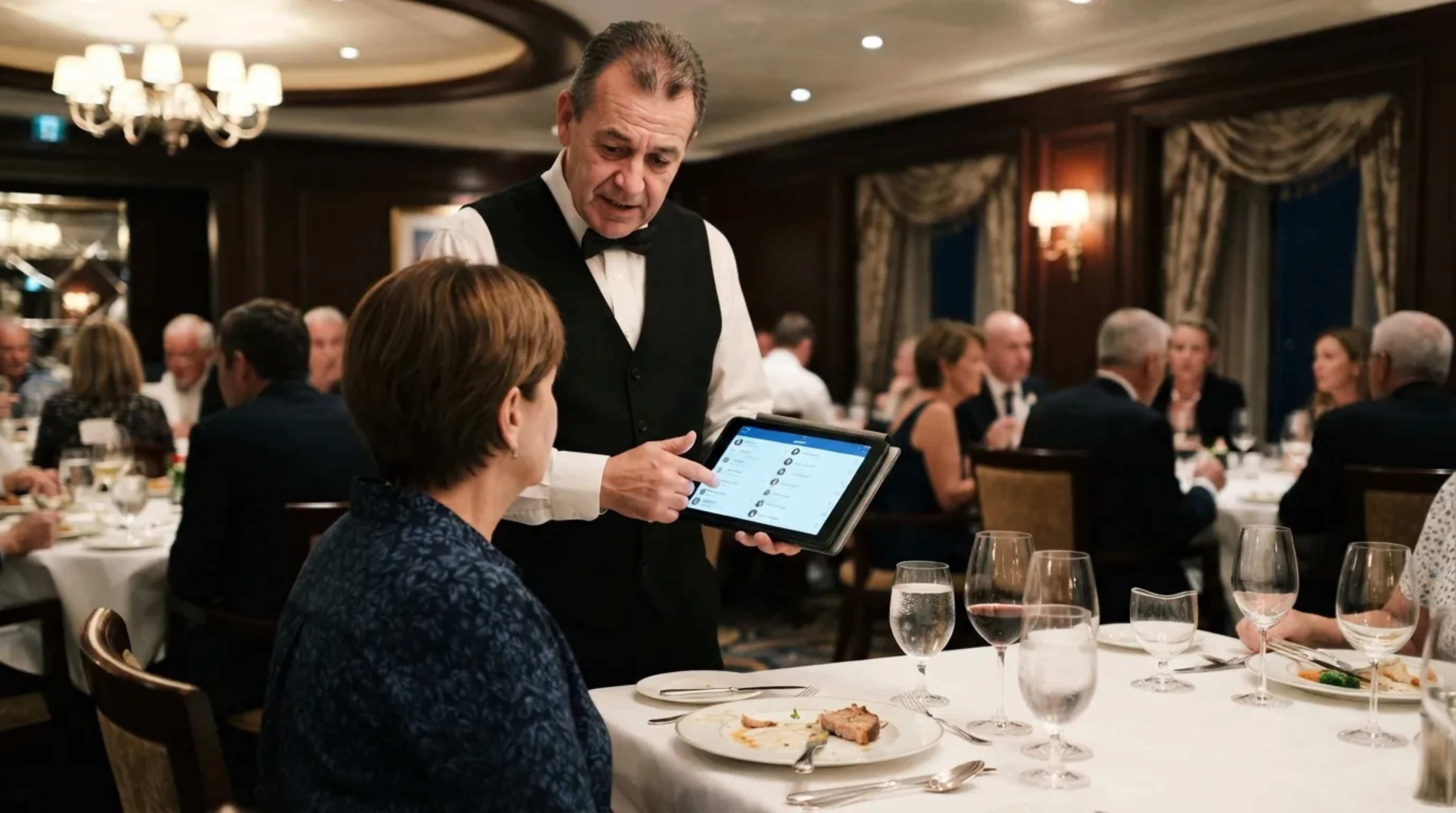
Across cruise lines, the allergy guidance reads almost the same: confirm your request with the head server at dinner on the first night, and remind your server at each meal. Say it aloud at first dinner and again at every meal after.
Training doesn’t replace your voice. Most dining crew receive training on food allergies and special diets, but the dining team can only carry forward what you’ve told them, and the first evening is when they’re listening for it. First seating puts you in front of the head waiter early, with the rest of the room still arriving.
- Night one: tell the head waiter or maître d’ in the main dining room.
- Every meal: remind your server before you order.
- Point to the specific dish and ask what the kitchen can do about it.
If your allergy is severe, talk with your doctor and your cruise line before you book. Every earlier item, from the embarkation-day visit in #9 to the written confirmation in #3, works because you spoke up early and kept speaking.
Here’s the quiet truth behind the whole list: the dining room is largely decided before you sit down. The seating chart, the diet list, the gratuity charge and the waiter assignment all exist by the time the first dinner begins.
So spend ten minutes on the afternoon you board. Confirm your time, make your table request, introduce yourself to the maître d’ and say your restrictions out loud. After that, the nightly routine takes care of itself.
Have you ever asked to switch tables after the first night, and what finally made you do it?
#14 – The Bonus Tip Nobody Shares
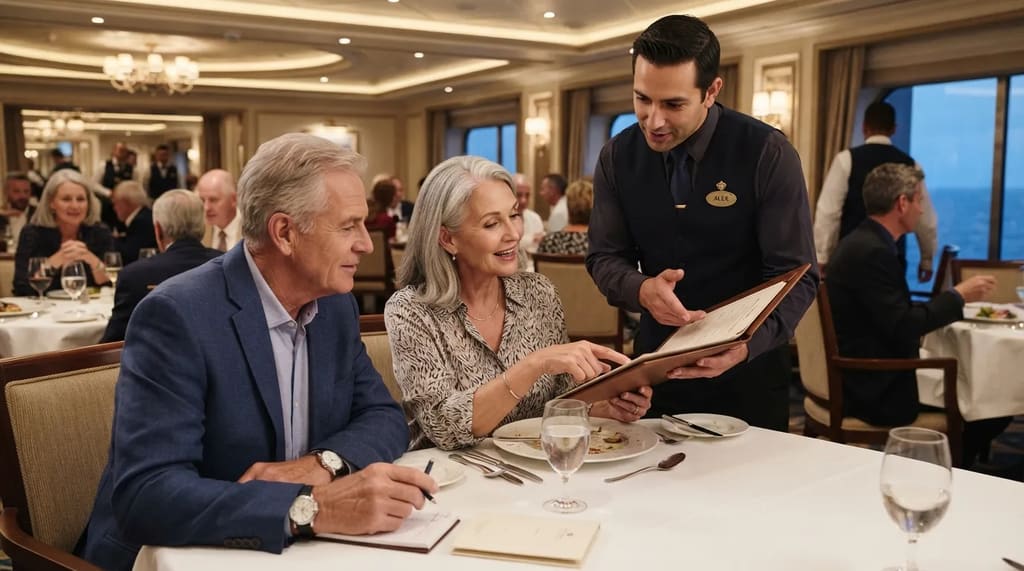
Order tomorrow’s dinner tonight. On many ships, the dining team will let guests with dietary needs or allergies preview and choose the next evening’s meal ahead of time. It’s an easy request to make, and plenty of guests never think to make it.
Do it before dessert, when your waiter isn’t rushing between tables:
- Ask your waiter or the head waiter: “Could I see tomorrow night’s menu and choose my entrée now?”
- Name your restriction again, then ask whether the chef can review your pick.
- Ask which dish they’d steer you toward, since the people who cook it every night know it best.
Why it works: your dish gets planned for instead of improvised during a busy seating. Even without a restriction, you skip the “nothing looks good” moment at the table. If your ship doesn’t offer previews, ask for the next day’s menu anyway. You may get at least a look at the staples.
- Cruise Critic Main Dining Room: https://www.cruisecritic.com/articles/what-to-expect-on-a-cruise-the-main-dining-room
- Carnival Dining Room Attire: https://www.carnival.com/cruise-food/dining-room-dinner
- Carnival Cruise Elegant Guide: https://www.carnival.com.au/behind-the-seas/cruise-tips/what-to-wear-on-a-cruise-dress-code-for-day-night-formal-night/
- Frommer’s Cruise Gratuities: https://www.frommers.com/tips/cruise/a-guide-to-cruise-gratuities-has-cruise-tipping-gone-overboard/
- The Points Guy Cruise Tipping: https://thepointsguy.com/cruise/cruise-ship-tipping
- Disney Cruise Gratuities: https://plandisney.disney.go.com/question/gratuities-day-cruise-634316/
- Travelguard Cruise Food Allergies: https://www.travelguard.com/travel-resources/travel-tips/how-to-manage-food-allergies-on-a-cruise
- FARE Food Allergies at Sea: https://www.foodallergy.org/media/767/download