SITA’s latest count puts about 24 million bags worldwide as delayed, misrouted, damaged or lost, which works out to 4.9 bags for every 1,000 passengers.1 Yet watch a baggage hall for five minutes and you’d swear every suitcase on earth is about to vanish.
Look past the shoving, though, and a few people are doing something different. They drift back, glance up, and look strangely unbothered while the crowd leans in.
No survey sorts these habits by age, so treat this as a field guide, not a study. Each habit comes from published airline-industry data or standard airport advice, and the one that explains all that calm is saved for last.
1. They Stand a Step Back From the Belt
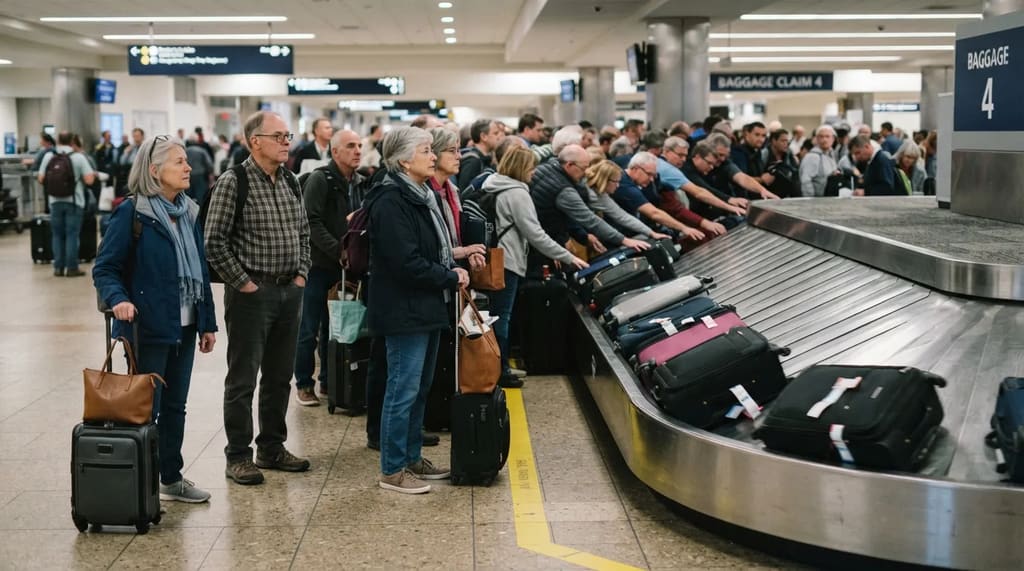
Most people press against the carousel like a crowd at a parade, toes touching the edge. Seasoned flyers hang back and let everyone else do the pushing.
Etiquette advice is blunt on this point: don’t crowd the carousel, so other people can reach forward for their bags.2 A step or two of distance also gives you a wider view of the whole belt, not just the patch in front of your shoes.
A suitcase you can see coming is far easier to meet than one that has already slid past your knees. From the second row, you spot it several bags away and step in at exactly the right moment.
Plenty of travelers call this passive. In truth, the front row sees one stretch of belt while the second row sees the whole loop.
Why It Stands Out
- You see the whole loop, not one patch of belt.
- Other passengers get room to reach for their bags.
- You step in only when your bag is close.
- No bumping, no leaning, no toes at the edge.
But where you stand means little if you’re watching the wrong belt, which is the next thing the old hands settle.
2. They Read the Screen Twice
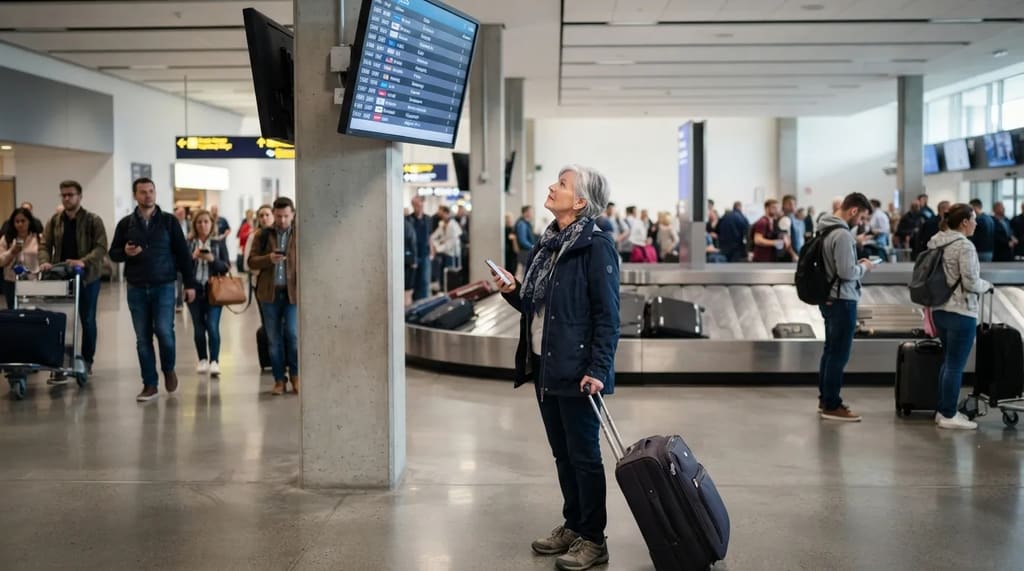
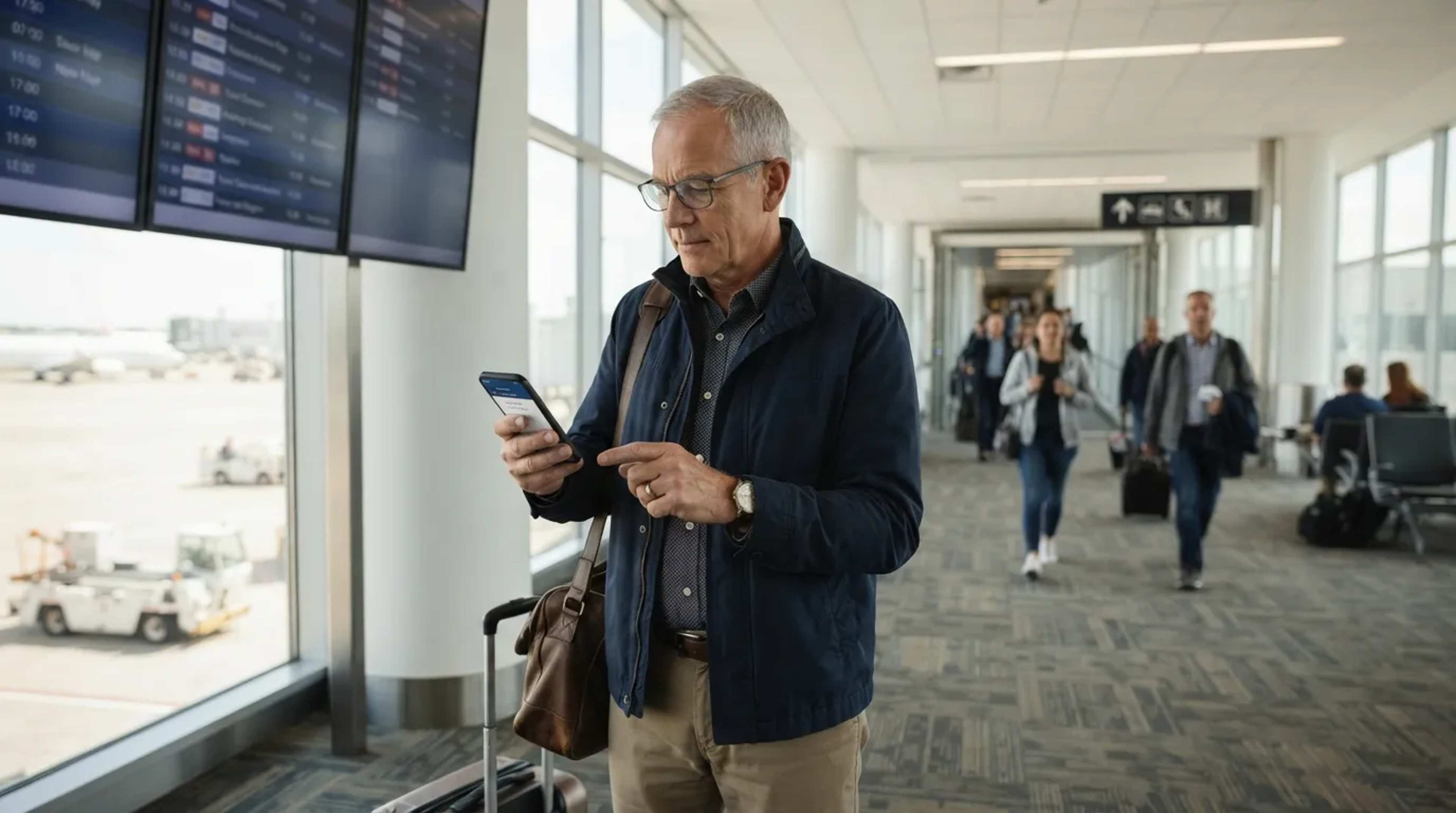
They check the arrivals monitor once in the terminal and again when they reach the baggage hall. Hardly anybody else bothers with the second look.
Travel writers point out that finding the right carousel can mean checking a screen in a crowded area, then rechecking it in case your carousel has changed.3 That is exactly how a perfectly good morning ends with a person standing at the wrong belt.
A belt crowded with luggage is not necessarily your belt. Experienced flyers match the flight number on the display above the carousel to the one on their own trip details.
The whole habit takes about ten seconds. It spares you a long walk back across the hall while your suitcase circles without you.
Once they’re at the right belt, they do something with their eyes that most of the crowd never thinks to try.
3. They Watch Where the Belt Begins
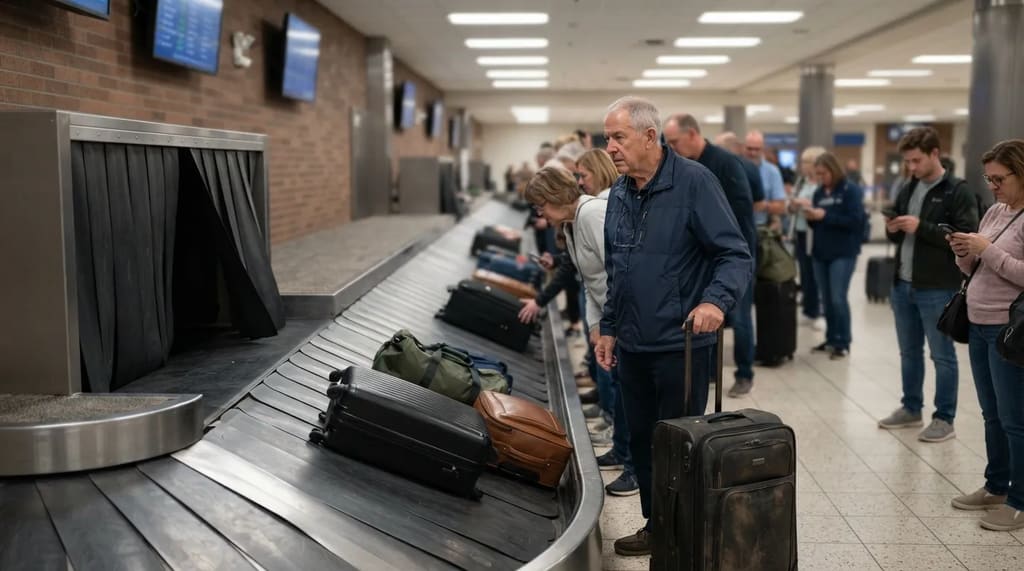
Look at the crowd and you’ll see every head pointed at the middle of the belt. The old hands look toward the spot where bags first appear.
The logic is simple. A bag is easiest to judge from a distance, before it is level with you and you have to lunge for it.
They also scan for shapes, colors and handles, not for tags. Reading every label as the suitcases slide by is slow, and the tag check comes later, once a likely bag is in hand.
Here is the contrarian part: staring hard at every case is actually the slowest way to find yours. Knowing exactly what you’re hunting for does most of the work.
Which raises a question: how do they know exactly what they’re hunting for before the belt even starts?
4. They Know Their Bag Before It Appears
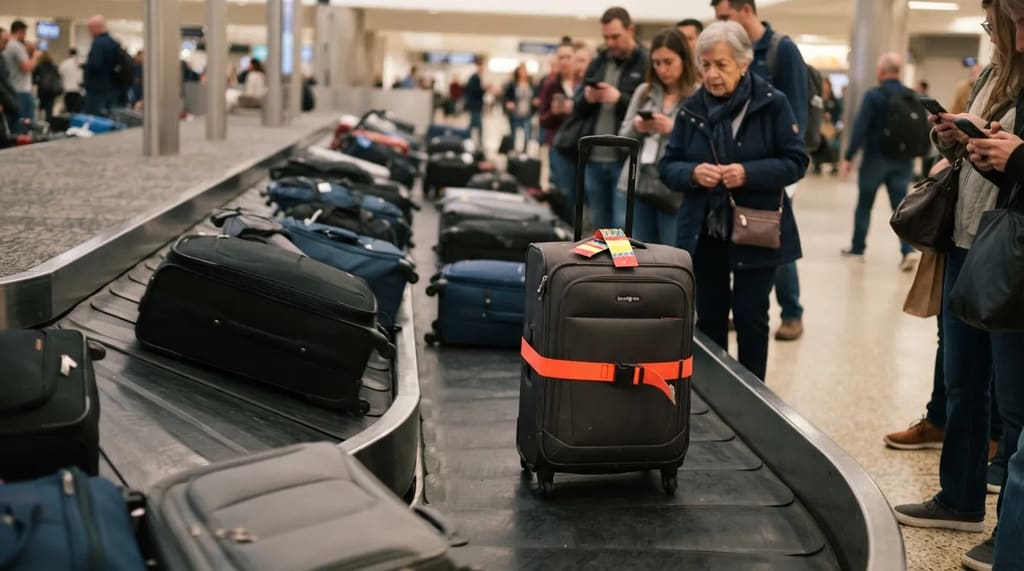
Ask most travelers to describe their suitcase at the carousel and you’ll get a shrug. Experienced flyers can give you size, color and brand without thinking.
The advice for the carousel agrees: before approaching, mentally note your bag’s size, color and brand. A plain black case is the hardest kind to pick out of a crowd.
So the old hands mark their bags. A bright tag, ribbon or contrasting strap makes a bag recognizable on a crowded carousel and lowers the chance someone grabs it by mistake.4
A ribbon does not replace the tag check, though. It only gets your eyes to the right bag a few seconds sooner.
Of course, spotting your bag early only helps if you can move it easily, and that’s where the next habit comes in.
5. They Get the Cart Before the Bags Come
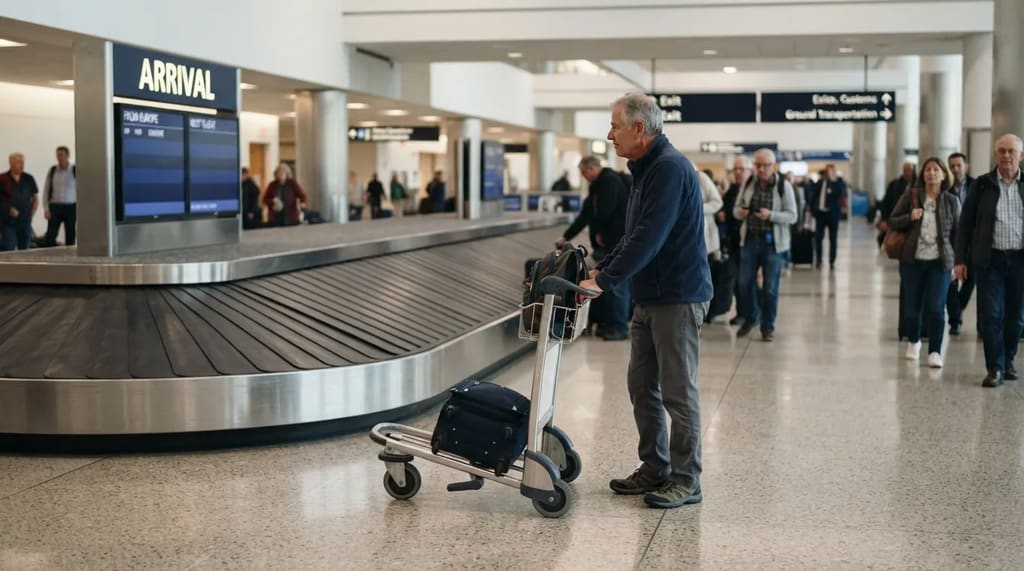
Some of them have a cart waiting beside the belt before the first suitcase drops. Everyone else is still hunting for one while their luggage circles past.
Where carts are offered, the best time to fetch one is while the belt is still empty. Once the bags arrive, the hall fills up and every second counts.
A cart changes the whole job. You lift a bag once, set it down, and stop hauling anything across the floor.
Quick Compare
- Cart before the bags: an empty hall, an easy pick, and a parking spot a little back from the crowd.
- Cart after the bags: a crowded search while your suitcase passes by without you.
Some travelers call a cart a nuisance in a packed hall. The old hands park it a little back from the crowd and wheel in only when their bag is within reach.
But a cart is no help at all if the clock is against you, which brings us to the habit that matters most on a tight trip.
6. They Watch the Connection Clock
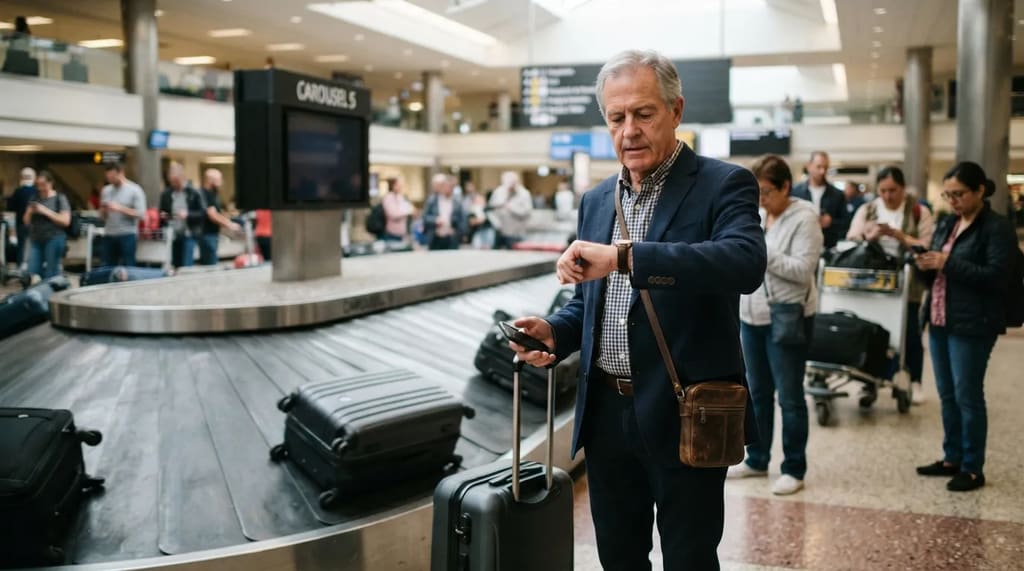
When another flight is waiting, they check the time before the belt starts moving. They do not stand there hoping it all works out.
The data explains why. Luggage is more likely to be misdirected on a journey with several legs, because each transfer adds another chance of mishandling.
Some itineraries require you to collect a bag and hand it back. Experts advise looking for signs reading “Connecting Flights” or “Bag Re-Check”, and seasoned flyers spot them on the walk in.
Most mishandled bags are delayed, not gone for good, which is why a plan beats panic.5 They decide before they reach the carousel how long to give the belt before moving on.
Time pressure also makes heavy suitcases harder to manage, and the old hands have a polite answer for that.
7. They Ask for Help With Heavy Bags, Politely
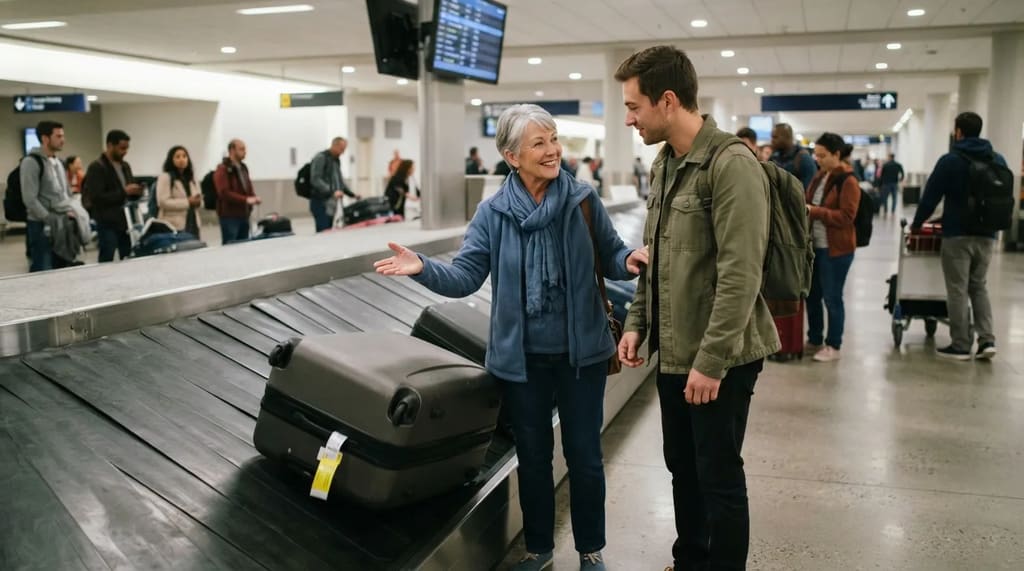
A heavy bag comes off the belt more smoothly if you ask first. The old hands ask early, with a smile and a short sentence.
The request is specific. They point out the bag, say roughly when it will pass, and say thanks afterward.
They do not wait until the suitcase is right beside them. A request made a few seconds early gives the helper time to set their feet and plant their hands.
Plenty of travelers think asking a stranger is awkward. Experienced flyers think a dropped bag, and a sore back on the first day of a trip, is worse.
Help gets the bag off the belt, but the next habit is about what they did long before any bag came off at all.
8. They Photograph the Bag, Not Just the Beach
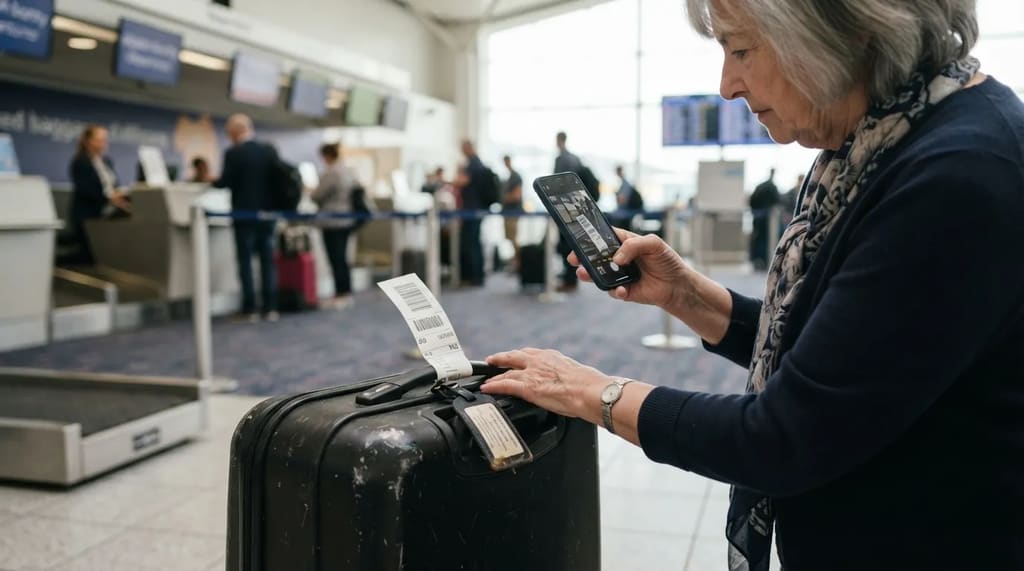
They take a picture of the bag and the tag before any trouble can start. It takes seconds, and they do it by habit.
Travel guides recommend it: take photos of your bag before you check it. Another suggests you photograph your bag tag along with your trip details.
A photo of a plain black bag shows scuffs, straps and handle wraps. Those details are what you reach for when two cases look identical at the belt.
Some flyers also drop a small tracker into the case. AirTag, Tile and Samsung SmartTag are the trackers named in travel guides.
Photos help you describe a bag, but the quickest test happens in your hands, the moment you grab it.
9. They Read the Tag Before They Trust the Suitcase
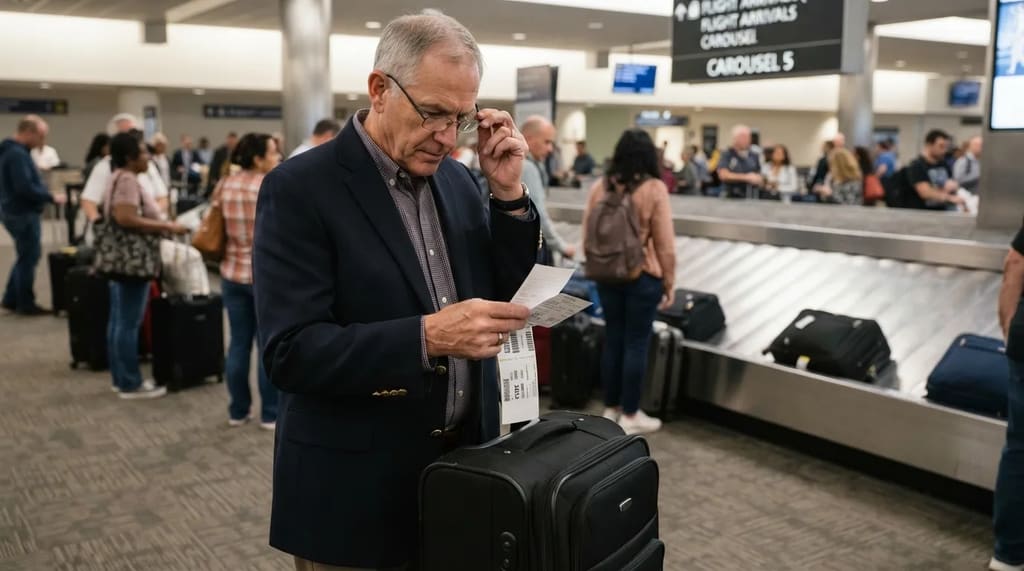
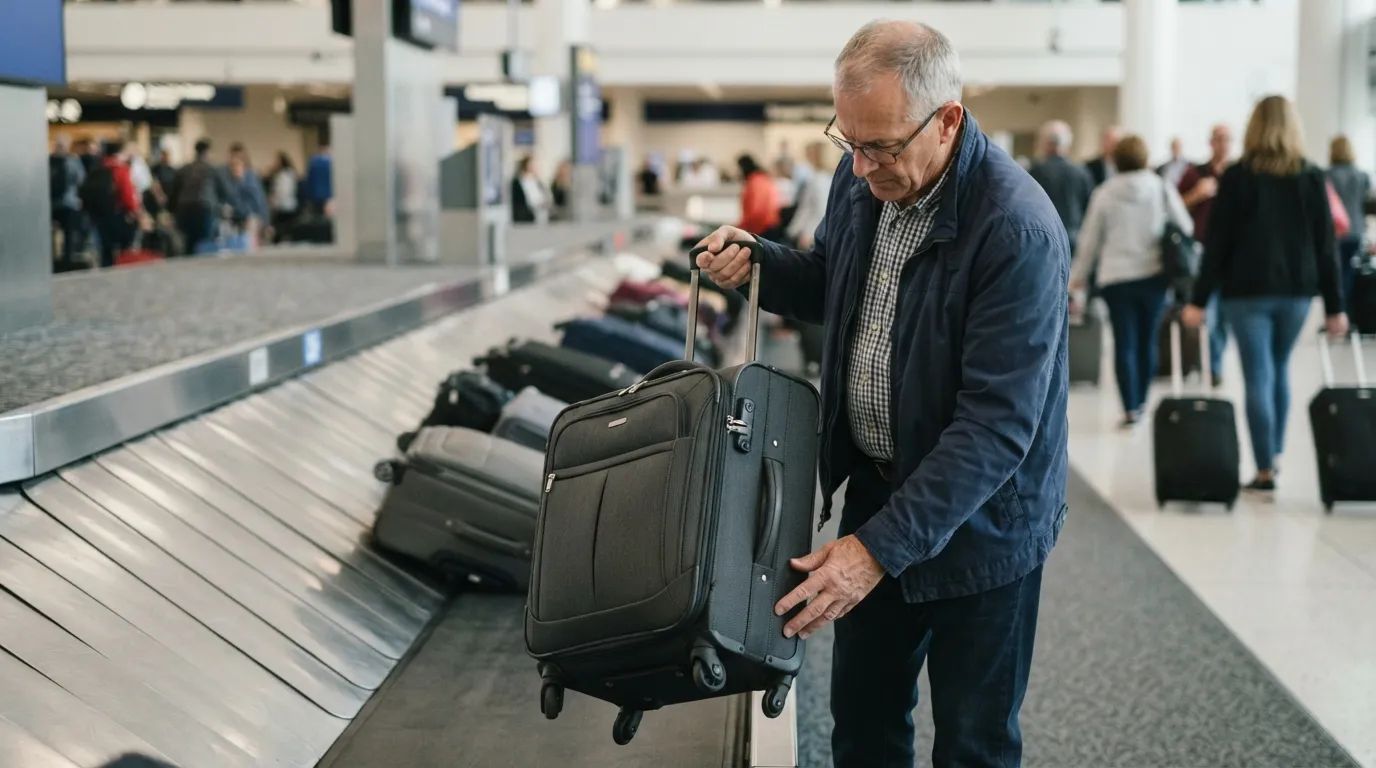
Once a bag is in hand, they read the tag before walking away. Most people grab and go.
The check is to match the destination code and flight number on the tag to your claim ticket.6 Etiquette experts say the same thing: confirm the bag is yours before you leave the claim area, not later.2
They also pay attention to weight. If a bag feels lighter or heavier than you expect, they double-check the tag.7
Black bags look alike, and a quick glance is really a gamble. Reading the tag turns a hunch into a fact.
That tag check leans on one small slip of paper, and the old hands treat it with more respect than you’d expect.
10. They Hold On to the Claim Ticket
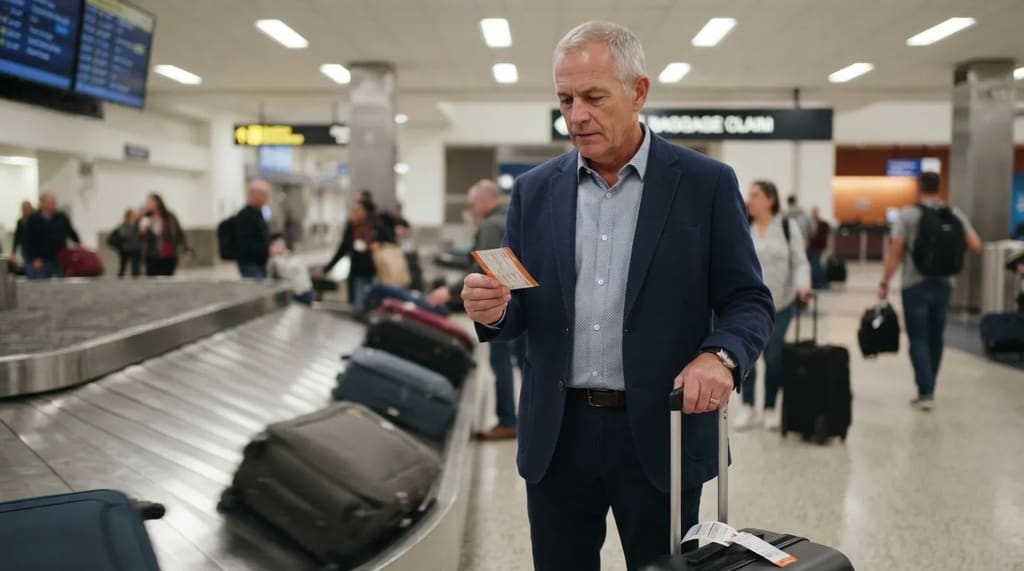
They keep the claim ticket until they are completely done with the baggage hall. Many people toss it the moment a bag lands in their hand.
Guides advise you to keep your baggage tag until you’ve collected your belongings completely. The same source says to keep the baggage claim ticket accessible.
They tuck it in the same place every trip, a coat pocket or a passport sleeve. That way the stub is never buried at the bottom of a bag they’ve just packed away.
Worth Knowing
- The stub is matched against the tag number on your bag.
- Some airport exits have agents who check tags against bags.
- A habitual pocket means no digging at the last minute.
- Keep it until you are fully out of the baggage hall.
Passengers identify bags by appearance and by matching tag numbers to the stub issued at check-in. The stub matters at every step, not just at the carousel.
Tossing it early is a common slip, and an easy one to avoid. Next comes the last look at the bag itself.
11. They Look at Every Side of the Bag
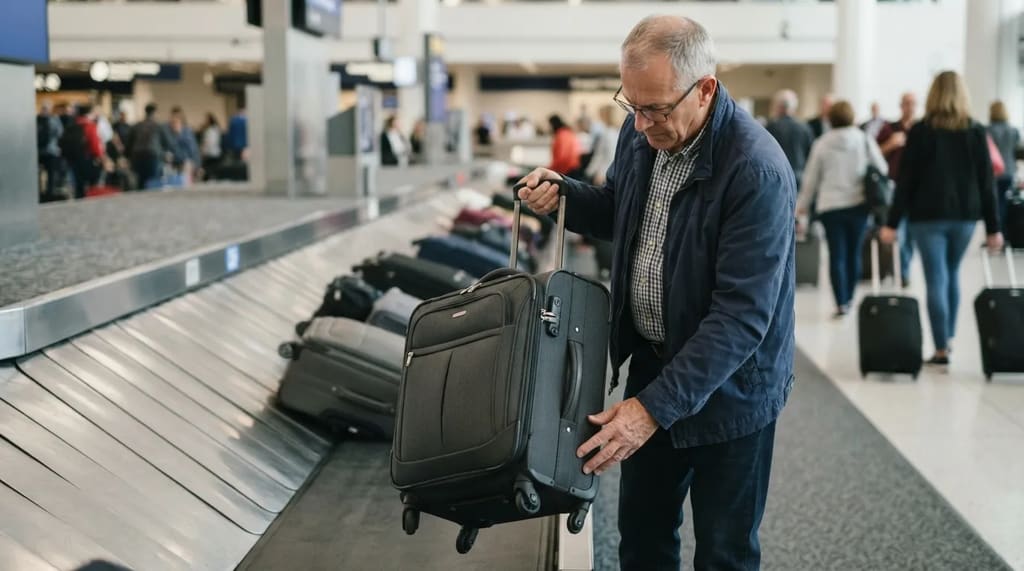
They turn the bag around once before leaving. Wheels, handle, zippers, corners.
The advice is plain: check the bag for damage or signs of tampering before you leave the baggage claim area.6 All this habit asks for is a look.
They also check that the zipper pulls and any lock are as they left them. It’s a half-minute job, done standing right where the bag came off the belt.
Some travelers think this is fussy. The old hands think it takes ten seconds and settles the question for good.
With the bag checked, they handle it in a way most travelers never consider, and it starts with a bit of space.
12. They Move Bags Back as Fast as They Pull Them Off
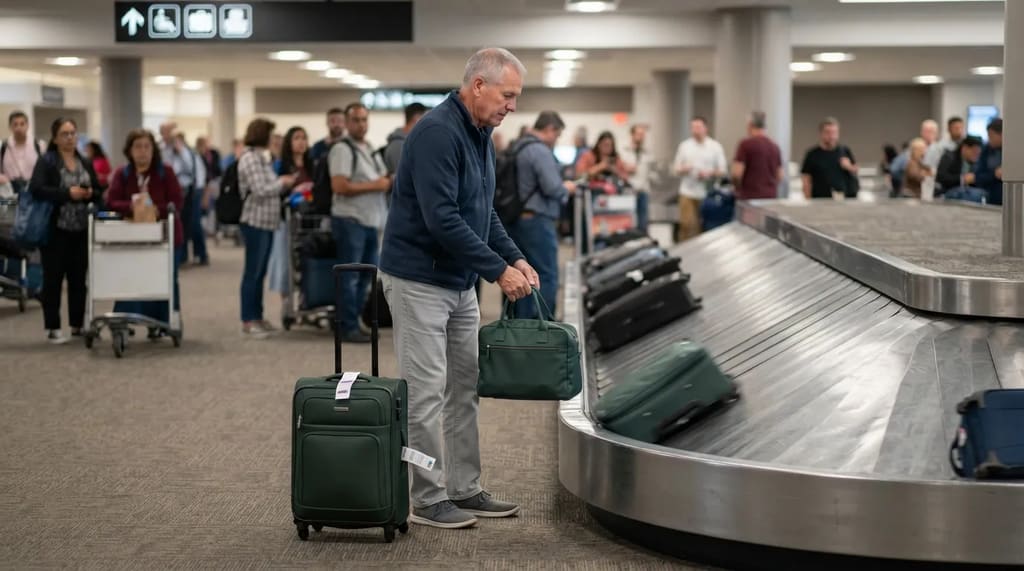
With several bags, they move each one back from the belt as it comes off. A growing pile at the carousel’s edge blocks everyone behind them.
Related Stories From Travelbinger

Etiquette writers say to move each bag you collect back and away from the carousel so you don’t block space for others.2 It’s a simple rule that most people forget in the rush.
They line the bags up beside the cart or their feet, handles up and tags visible. That makes the final check quick, and it keeps the belt clear for the next passenger.
At a Glance
- Step back with each bag as it comes off.
- Line them up beside the cart or your feet.
- Handles up, tags visible.
- Leave the belt edge open for the next person.
Heaving bags around does not speed anything up, and etiquette experts say being overly aggressive with your bags won’t hurry the process.
Tidy bags are ready to roll, and the old hands already know which way they’re rolling.
13. They Know the Exit Before the Bag Arrives
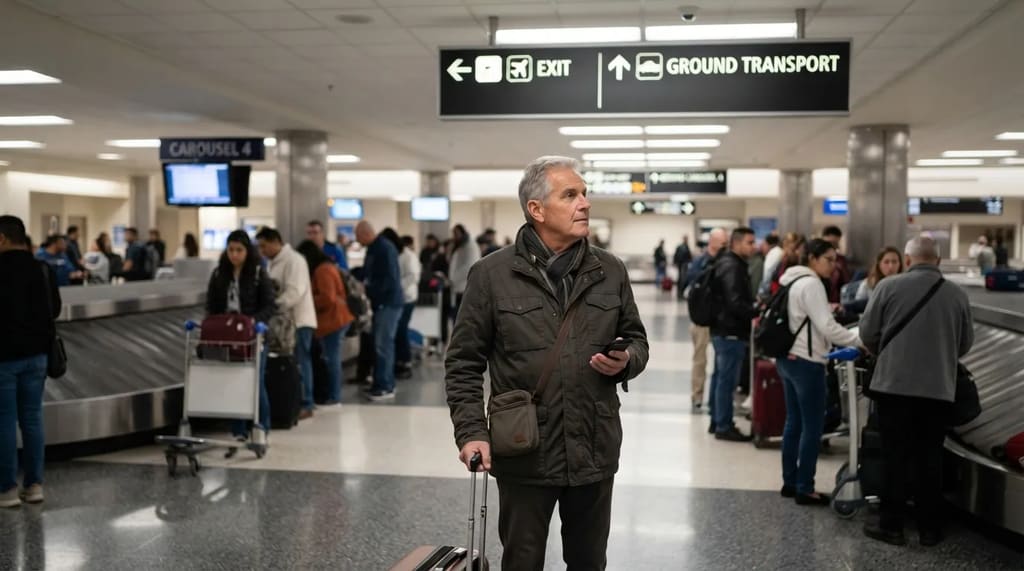
They know which way they’re walking before the first suitcase appears. The exit, the ground transport or the meeting point is chosen while they wait.
Some airports add one more checkpoint. Agents at some exits check claim tags against bags, so that slip of paper matters here too.7
Seasoned flyers read the overhead signs while the belt is still empty. That’s how they leave in a straight line instead of circling the hall.
Many people only look up for directions once they have the bag, with a cart in one hand and a phone in the other. That is the worst possible moment to start reading signs.
That plan leads straight to the last habit, the one that separates the old hands from everyone else.
14. They Leave Before the Cluster Forms
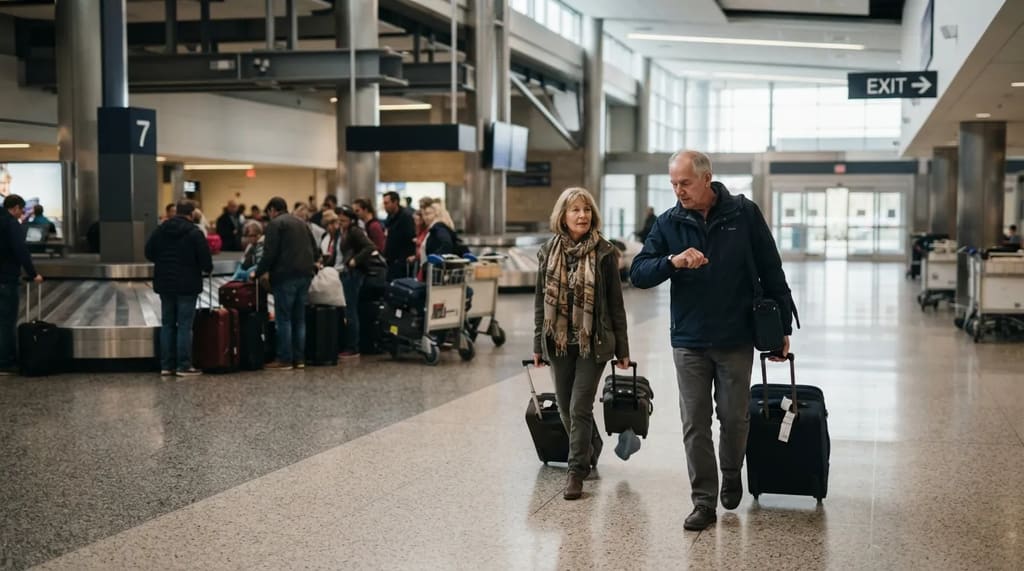
The final habit is timing. They collect the bag, run the checks, and they’re gone.
A cluster forms when late arrivals, stacked bags and carts all meet in the same few feet of floor. The old hands see it coming and walk out ahead of it.
They don’t linger to chat or rearrange their packing at the belt. They finish the tag check, get moving, and repack somewhere else, away from the carousel.
Here is the truth behind all that calm. According to SITA’s latest report, mishandling has fallen below pre-pandemic levels for the first time, with the rate dropping 23 percent to 4.9 per 1,000 passengers.1 5
For nearly every traveler, the bag does arrive. Good habits, not hurry, are what get you out of the hall first.
Closing Thoughts
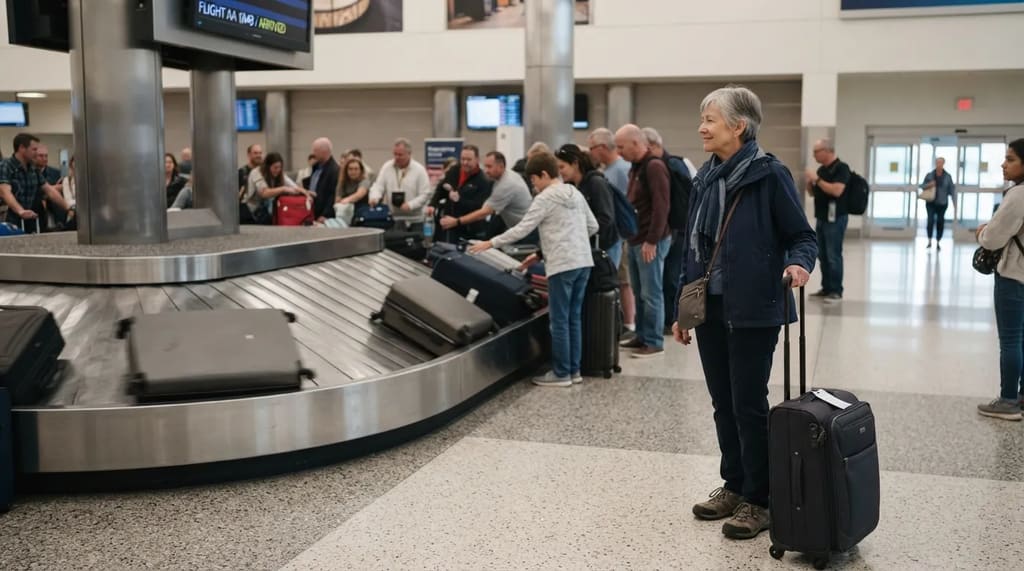
None of these fourteen small habits are secrets, and none need special gear. They come down to standing, looking, checking and leaving in the right order.
The numbers back the calm approach: the vast majority of bags arrive, and most of the work is done before the belt even starts. Try one or two on your next trip and watch the hall change around you.
Bonus: The Insider Trick Nobody Tells You
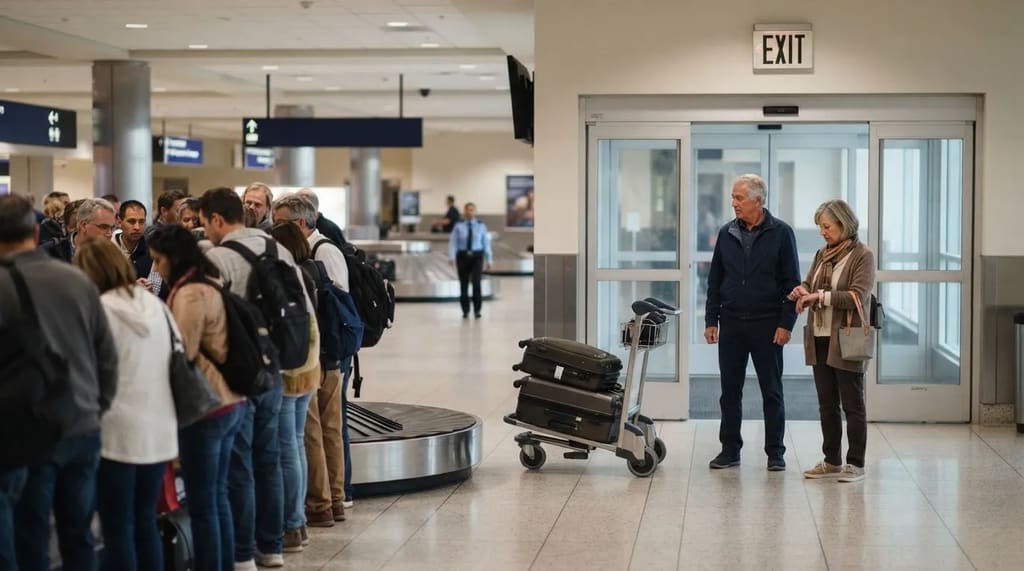
Pick your spot by the exit, not by the belt. Most carousels are a loop, so you can stand almost anywhere along it and still see your bag pass more than once.
The old hands use that to their advantage. They choose the stretch of the loop that sits closest to the door they plan to use.
- Step 1: Before the belt starts, find your exit sign, then stand a step back from the part of the carousel that faces it.
- Step 2: Park your cart on that side, angled toward the door, so every bag you pick up is already pointed the right way.
- Step 3: Let the first pass go by if the spot is crowded, and grab your bag on the second lap when the hall thins out.
- Step 4: Do the tag check on the spot, then walk straight out without doubling back through the crowd.
Before you walk in, text whoever is meeting you the carousel number and the door you’ll use. Nobody has to hunt for anyone, and you never stop to wander.
- SITA Baggage Report Release: https://www.globenewswire.com/news-release/2026/06/30/3319453/0/en/Tech-drove-down-mishandled-bag-rates-by-23-in-2025-but-mishandling-still-costs-the-industry-6-3-billion-a-year.html
- The Points Guy Etiquette: https://thepointsguy.com/guide/etiquette-baggage-claim
- The Points Guy Baggage Tips: https://thepointsguy.com/guide/baggage-claim-tips
- Protocol School Etiquette: https://protocolschooloftexas.com/2020/03/02/baggage-claim-etiquette/
- Yahoo Travel Baggage Odds: https://travel.yahoo.com/advice/safety/articles/bag-far-more-likely-missing-214600062.html
- Valet Connections Claim Tips: https://www.valetconnections.com/how-to-get-through-baggage-claim-quickly/
- Airport Baggage Claim Guide: https://www.airtravelquestions.com/first-time-flyers/how-to-claim-your-luggage-at-the-airport