Mission San Diego de Alcalá, the subject of a recent ([1])travel guide, has a stronger claim to historical weight than most stops in Southern California. It was the first of the state’s Spanish missions, and it remains an active parish more than 250 years after its founding. For visitors, it offers a rare mix of frontier history and a working church, all within a short drive of downtown San Diego.
A Modest Start on Presidio Hill
Franciscan friar Junípero Serra founded the mission on July 16, 1769, and dedicated it to Saint Didacus of Alcalá. The first structure was a simple building of brush and thatch on Presidio Hill, above what is now Old Town. ([2])The site was shared with a new military post, part of the Portolá expedition that established the Presidio of San Diego that same year. ([3])
The early years were difficult. Within five years, the mission moved about six miles upstream to a location near the San Diego River. Its new site offered a dependable water supply, better farmland, and proximity to Kumeyaay villages, which the Franciscans hoped to reach with their message. ([4])The relocation shaped the mission’s growth, and it is still the site visitors reach today.
Conflict, Decline and a Return to the Church
The mission’s history includes some dramatic turning points. Its story is often summarized through a handful of dates:
- 1775: A raid by Native people damaged the mission, and Padre Luis Jayme was killed while trying to calm the attackers. He is regarded as the first Christian martyr in California. ([4])
- 1834: The Franciscans stopped administering the church, and the mission began a long decline. ([6])
- 1846 to 1862: The U.S. Army occupied the compound, and the church was turned into a barracks. ([5])([7])
- 1931: Restoration work began after detailed research, aiming to return the mission to its 1813 appearance. ([6])
The occupation ended in 1862, when President Abraham Lincoln formally returned 22 acres of the property to the Catholic Church. ([7])The mission’s standing was later formalized in 1976, when Pope Paul VI designated it a Minor Basilica. ([13])
What Visitors See Today
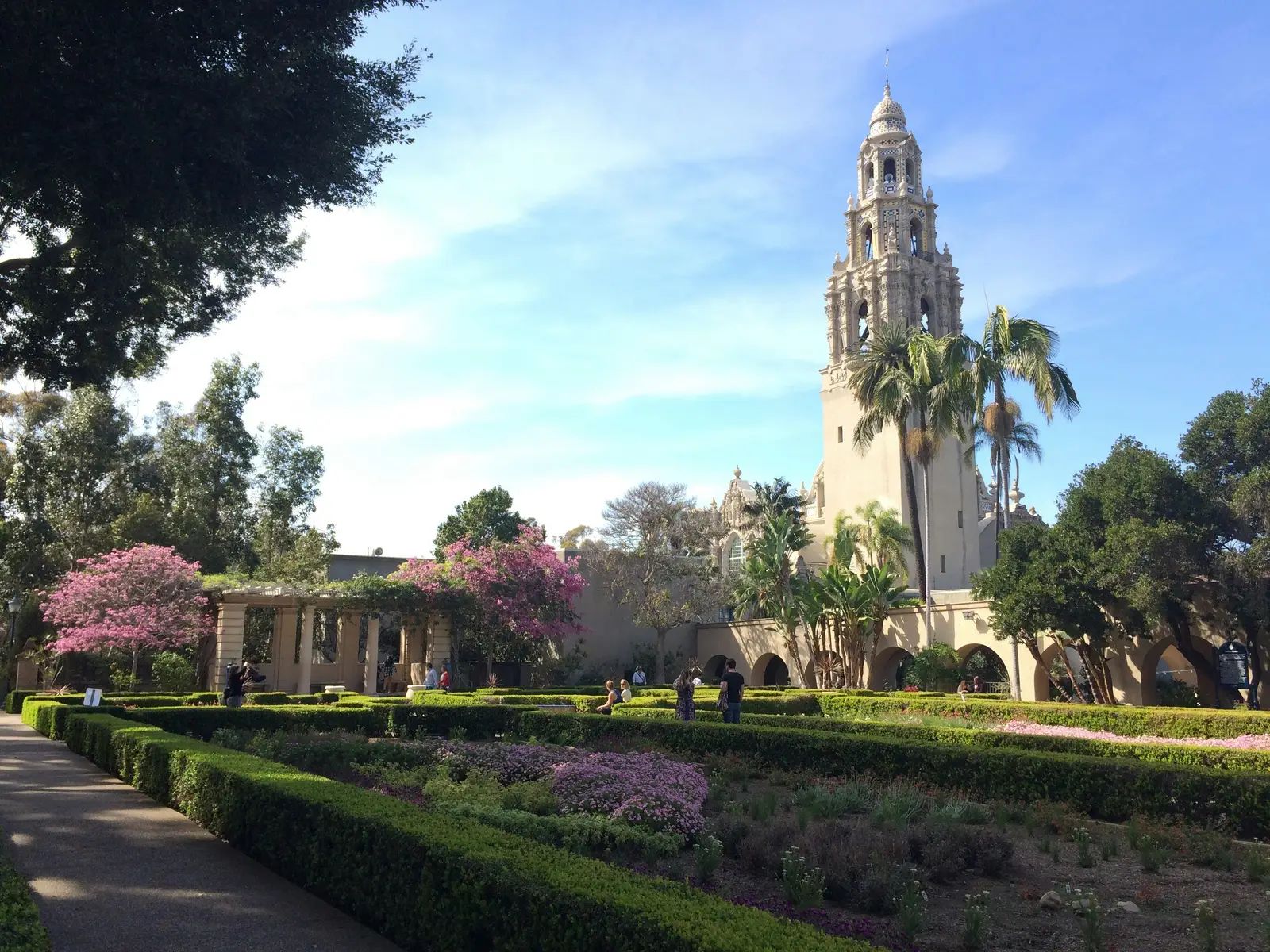
The mission church is a simple white adobe building with a five-bell tower and an enclosed portico. It sits on a small knoll overlooking Mission Valley. ([2])Its setting is quiet enough that the grounds feel removed from the surrounding roads, which is one of the reasons travel writers recommend slowing down here. ([8])
Several highlights stand out for a first-time visitor:
- La Casa de Padre Serra, built in 1774, where the mission’s founder once slept ([5])
- The gardens and shaded grounds, which invite a slower walk
- The Junipero Serra Museum, located atop Presidio Hill, the mission’s original site ([3])
- The mission’s status as a National Historic Landmark, a designation that reflects its role in Southern California’s settlement ([8])
Planning a Visit
The mission is located at 10818 San Diego Mission Road, about nine miles from downtown San Diego, or roughly a 15-minute drive in normal traffic. ([8])Public transit is also an option, as the San Diego Trolley Green Line and several bus routes stop nearby. Parking on site is free, although spaces can be limited during major events. ([10])
Published hours vary from one source to another. One guide lists daily hours from 9 a.m. to 4:45 p.m., ([5])while another gives 9 a.m. to 4:30 p.m. daily and tours on weekdays only. ([9])Other listings show weekend hours that differ, or weekend closures, so checking the mission’s official site before a trip is the safest step. Grounds are generally free to enter, while the museum and guided tours require a ticket. ([10])
Related Stories From Travelbinger


What matters now: Confirm current hours and admission before going. Weekday Mass is typically held at 7:00 a.m. and 5:30 p.m., so visitors who want a quiet moment can plan around services. ([9])
The mission’s value lies in how clearly it connects the state’s origins to the present day. Its first home was a modest hut, and its later years included raids, decline and military use. Today it serves a parish and welcomes visitors, a reminder that California’s history did not begin with a single event but with a long, uneven process that continues to shape the place.