In January the average high in Las Cruces is about 59 degrees, and the average low sits near 30.1 That gap between a sunny afternoon and a frosty dawn is the number worth checking before you pick a winter home.
Some of these towns are warm but sleepy, others have the galleries but colder mornings, and one builds its whole day around a soak in hot mineral water. The town that balances all of it best is waiting at #1, but we start with a farm village famous for one crop.
#12 – Hatch, the Chile Village Along the Rio Grande
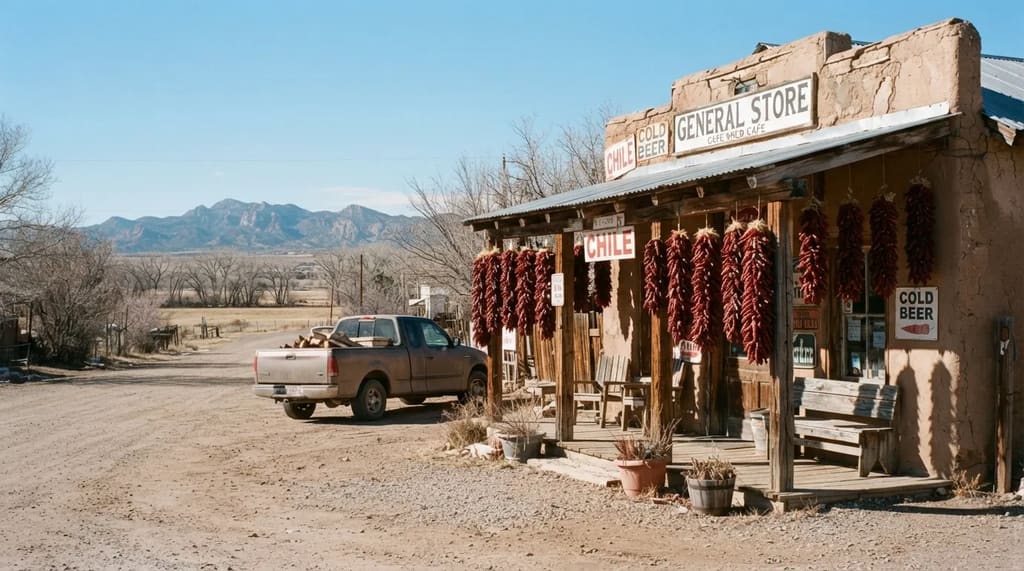
Hatch is a farming village in the Rio Grande valley, about forty miles north of Las Cruces, and it is famous for its chile peppers. The harvest and roasting come in late summer and early fall, so a winter visit misses the busiest weeks.
In January the fields are bare and the pace is slow. What you see are ristras, the strings of dried red chile hung outside shops and cafes.
The big yearly event, the chile festival, falls on Labor Day weekend, which is the hot end of summer and not the season you would be wintering here. The valley floor itself is low enough to share the mild southern winter.
A village this small has few of the services a household needs, so Hatch works better as a day trip from a larger town than as a place to settle. Treat it as a very good lunch stop.
Anyone who wants the same dry southern winter along a busier highway can follow Interstate 10 west to Deming.
#11 – Rock Hunting in the Florida Mountains Near Deming
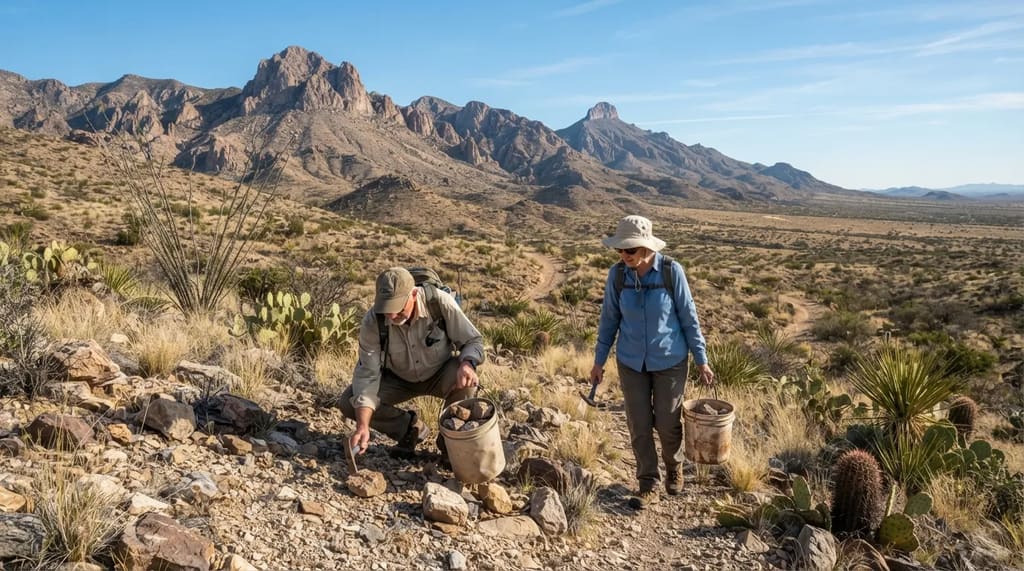
Deming sits on Interstate 10 in the flat desert of southwestern New Mexico, with the Florida Mountains rising to the southeast. Its best-known draw is the ground itself.
Rockhound State Park, in the foothills of those mountains, lets visitors gather rocks and carry a limited amount home. Check the current limits and fees before you go, because the state sets both.2
- Winter afternoons are mild in this low desert, though nights can drop below freezing.
- The Deming Luna Mimbres Museum covers local history in a historic armory building.
- The Great American Duck Race is held each August, so it falls in the hot season.
Rock hunting fills winter mornings cheaply, since all you need is a bucket, sturdy shoes and a hat. It is a hobby that asks for no reservations and no schedule.
Deming is a town for rock hunters and for anyone who likes a plain main street and a slow week. It is not a gallery town, so if monthly art evenings matter to you, you can cross it off.
#10 – Roswell’s Museums Beyond the Flying Saucers
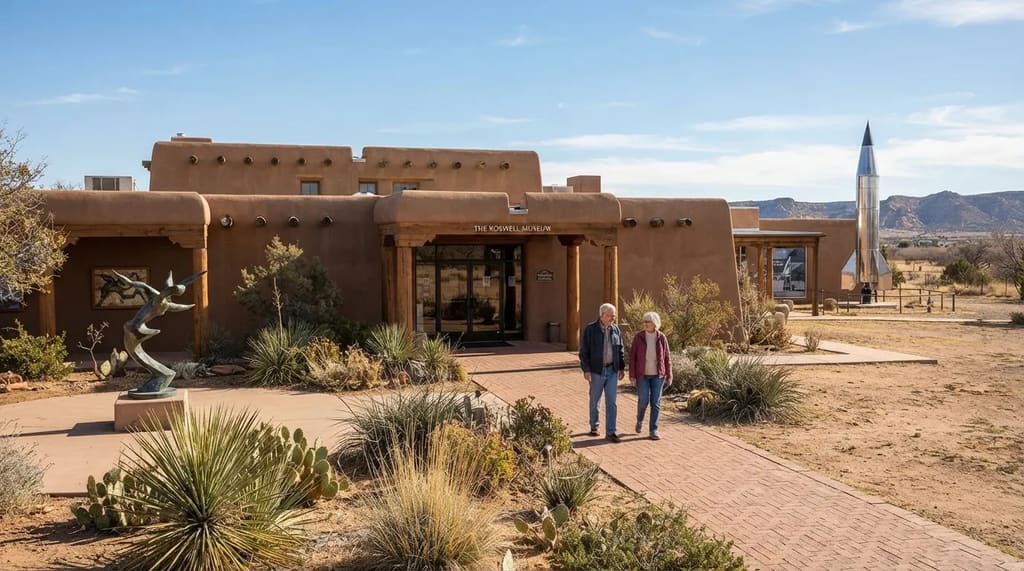
The Roswell Museum pairs regional art with an exhibit on Robert Goddard, the rocket pioneer who did his early test work near the town in the 1930s. For a retiree, a museum like that makes a good weekly habit, and the flying saucers can stay in the gift shops.
The town also runs a long-standing artist-in-residence program, which has brought working artists to live and make art here for decades. That gives Roswell a steady, if quiet, creative community.
Roswell lies in the Pecos Valley on the plains, where winter afternoons are mild but cold fronts can bring hard freezes at night. Compare it with the Rio Grande towns before you commit.
Worth Knowing
- Roswell’s creative side is museum-and-residency driven, not a strip of gallery doors.
- Goddard’s 1930s rocket tests near town give the museum a story most places cannot match.
- Plains cold fronts mean the overnight low is the number to ask about.
- When you tour rentals, ask whether the garage is heated and the pipes are insulated.
If your plan is to be outdoors every morning in January, the night-time lows matter more than the afternoon highs. A town can look warm on paper and still need a heated garage.
The Rio Grande valley farther west offers more variety in scenery, though the higher stretches near Albuquerque pay for it with colder winters.
#9 – Corrales, Cottonwoods Under the Sandia Mountains
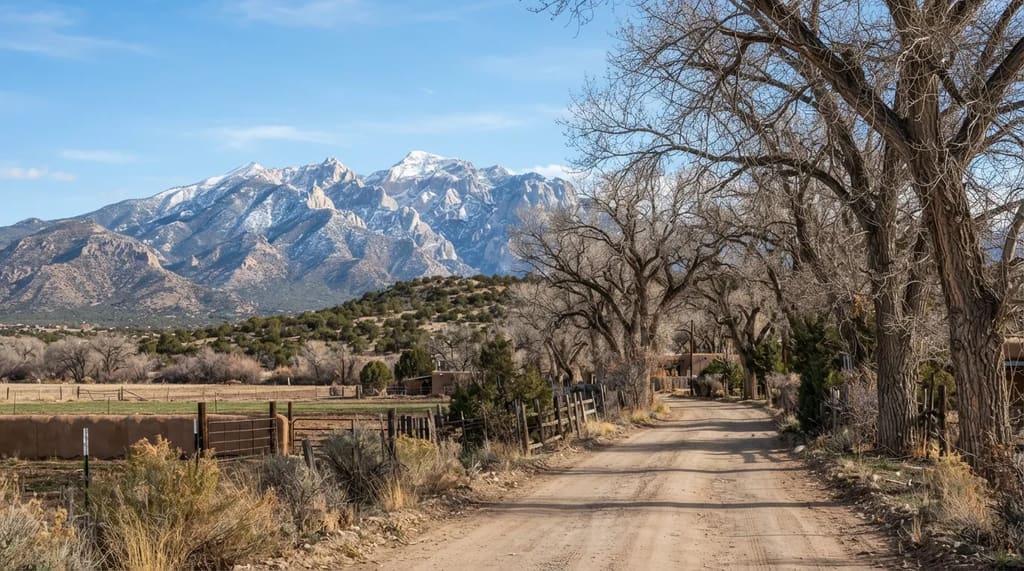
Corrales is a village on the Rio Grande just north of Albuquerque, where cottonwood-lined ditches and farm fields look toward the Sandia Mountains. It feels like a country lane with a big city parked next door.
Part of the appeal is that Albuquerque’s medical centers and airport are a short drive away. The village itself stays rural, with orchards, a growers’ market and a fall studio tour where artists open their workspaces.
Winter is the weak point. Corrales sits at roughly 5,000 feet, so January afternoons run noticeably cooler than in the low desert towns near the Mexican border, and the nights are colder still.
If a mild winter is your first requirement, Corrales is the wrong pick, and the towns two hours south will serve you better. If you want four seasons and quick access to a big city’s doctors, it is a good one.
#8 – The Winter Cranes South of Socorro
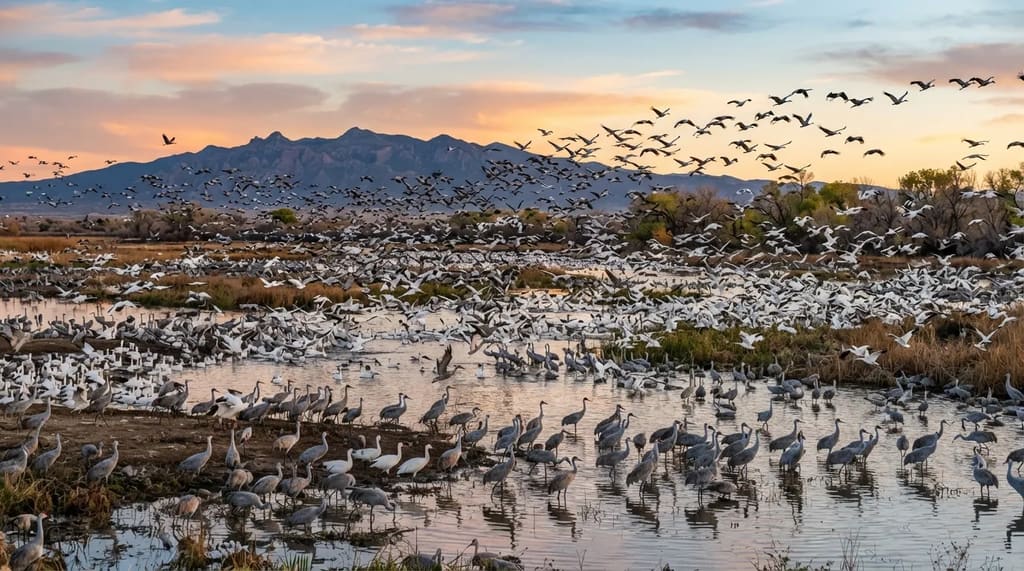
Each winter, thousands of sandhill cranes and snow geese settle at Bosque del Apache National Wildlife Refuge, a short drive south of Socorro.3 4 That makes Socorro a winter town in the best sense, because its main attraction peaks when many other places go dull.
A crane festival is usually held in November, and the refuge keeps its birds well into the new year.4 The refuge charges a modest entrance fee, so check the current price.
Socorro also has New Mexico Tech, a small engineering university that brings lectures and campus events to a town of under 10,000. The old San Miguel Mission church sits near the plaza.
The Very Large Array, a field of giant radio telescopes, lies about fifty miles west and makes a good day trip. Check the visitor center’s hours before you drive out.
Bird watching fills the cool mornings but leaves the afternoons open, and a cave that holds one temperature all year is a good use of them.
#7 – Carlsbad Caverns and a Constant 56 Degrees
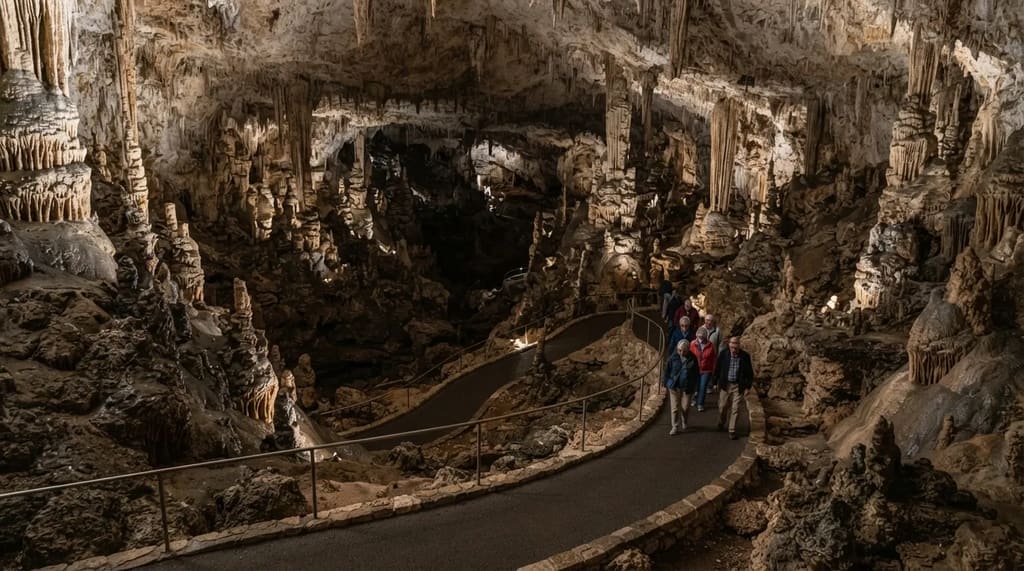
Carlsbad Caverns National Park lies southwest of the city of Carlsbad, in the foothills of the Guadalupe Mountains. Its caves hold a steady temperature all year, which makes them a dependable outing when the weather on the surface turns raw.
Closer to town, the Pecos River and the Living Desert Zoo and Gardens State Park give you places for daily walks. The city sits in the southeast corner of the state, a long drive from the Rio Grande towns.
- The federal senior pass for age 62 and over covers national park entrance fees, so check the current price.
- Oil activity in the region can push up rents and traffic, so read local listings before you sign a lease.
- Summer here is hot, so the cave is also a fair refuge if you stay year round.
The caverns are worth seeing once, and the senior pass makes return visits cheap. They are a day out, however, and not a reason to choose a town.
The Pecos is a narrow river, so retirees who want open water for boats have to head west to a reservoir on the Rio Grande.
#6 – Elephant Butte Lake in the Off Season
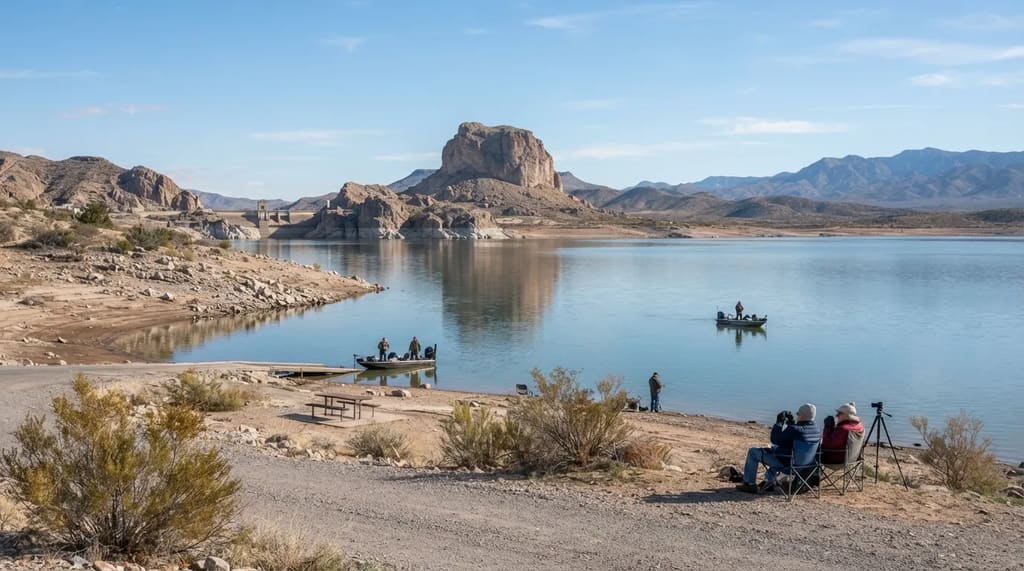
Elephant Butte Lake is the largest reservoir in New Mexico, formed by a dam on the Rio Grande that was finished in 1916.5 The lake and its state park sit beside a small town of the same name, where boats, fishing and campgrounds shape the year.
Winter is the quiet season. Boating slows, and fishing and bird watching fill in for it.
The water level rises and falls with rainfall and irrigation releases, so views and boat ramps change from year to year. Look at the lake in person before you buy a home for its view.
At a Glance
- Size: the biggest reservoir in the state, behind a dam completed in 1916.5
- Winter mood: fewer boats, more anglers and birders.
- Watch out for: shifting shorelines and ramps that depend on the water level.
- Best fit: retirees who want quiet water views and do not mind driving for errands.
Lakeside living here is rural. You will drive a few minutes to a neighboring town for bathhouses, galleries and most everyday errands.
That neighbor has a far stranger name and a far stranger story, and it ranks higher on this list.
#5 – Alamogordo, Where Winter Afternoons Meet the White Sands
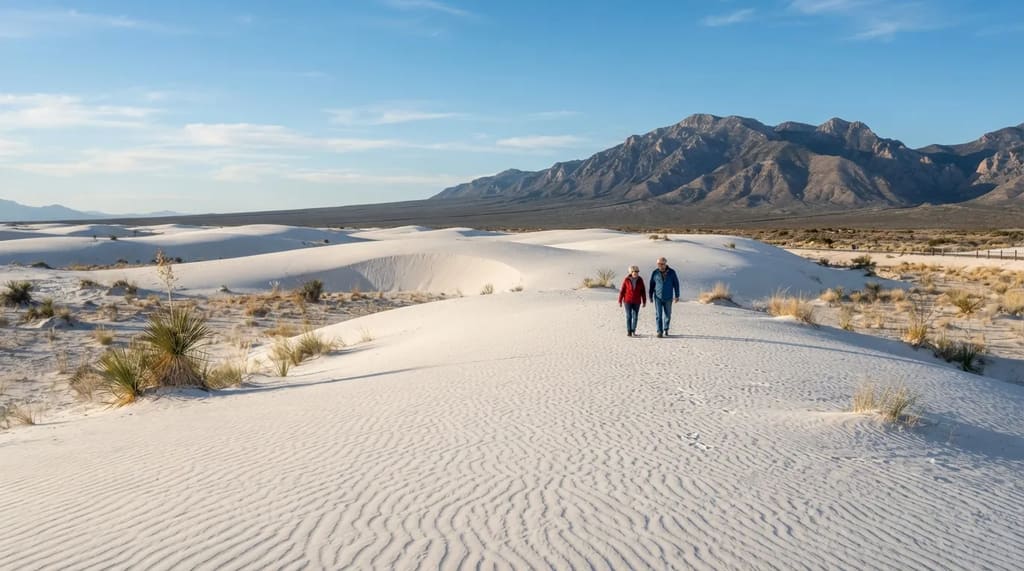
Alamogordo sits in the Tularosa Basin at about 4,300 feet, with the Sacramento Mountains rising right behind it. About fifteen miles southwest lies White Sands National Park, a sea of gypsum dunes that glows like snow in a place that rarely sees any.
Winter days here are mild and bright, which is exactly when walking the dunes is a pleasure. In summer that same sand can be punishing underfoot.
The New Mexico Museum of Space History gives a gray or windy day an indoor plan. The city also has a small zoo, and Oliver Lee Memorial State Park sits at the foot of the mountains to the south.
White Sands has offered special evening events around the full moon, so check the park’s calendar for current dates. Watching pale dunes turn silver after sunset is the kind of outing that retirees tend to repeat.
The mountain village of Cloudcroft, far higher up the slope, is much colder and can have snow when Alamogordo does not. That makes it an easy day trip for a taste of real winter before you drive back down to your warm porch.
Alamogordo is more about scenery than gallery crawls, so art lovers should keep reading. The next town trades some warmth for a lot more studio doors.
#4 – Silver City, the Mountain Art Town With a Cooler Winter
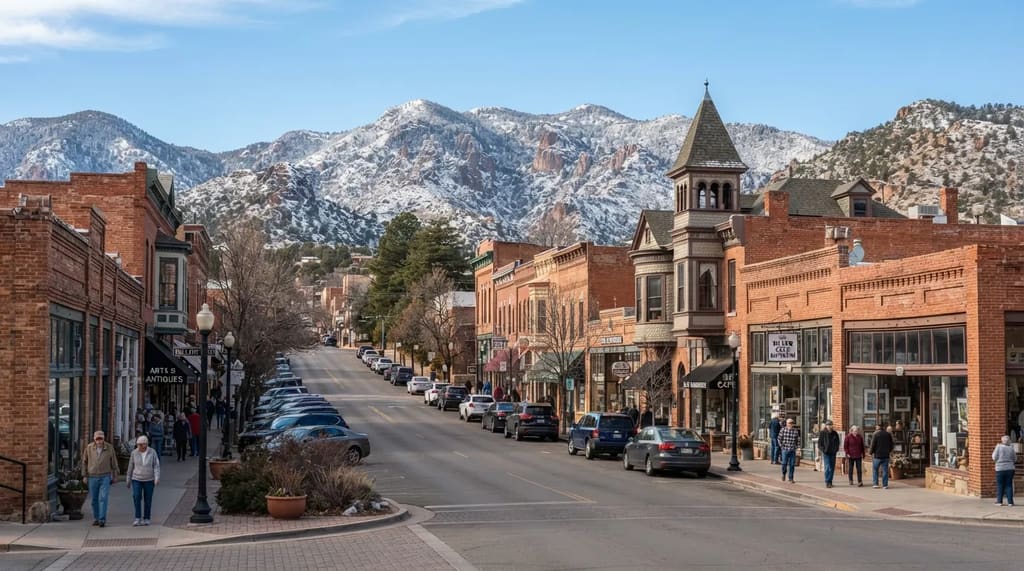
Silver City sits near 5,900 feet on the edge of the Gila National Forest, and that altitude has a price. Winter here brings frosty nights and the occasional dusting of snow, which the low desert towns mostly avoid.
What you get in exchange is a walkable historic downtown of old mining-era brick, packed with galleries, bookstores and cafes. Western New Mexico University adds exhibits and concerts, and the town museum is housed in a Victorian-era home.
Quick Compare: The Elevation Ladder
- Las Cruces and Mesilla: about 3,900 feet, the warmest floor on this list.
- Truth or Consequences: about 4,200 feet, mild days and cool nights.
- Alamogordo: about 4,300 feet, bright winter afternoons.
- Corrales: roughly 5,000 feet, noticeably cooler.
- Silver City: near 5,900 feet, the frostiest of the group.
Main Street here has a strange past. Floods in the 1890s and early 1900s tore through the old street and carved a deep channel, which is now a park called the Big Ditch.6
You can walk down into it today, standing where shoppers once strolled on the sidewalk above. Few small towns have a main street that fell into its own cellar.
Gila Cliff Dwellings National Monument lies north of town along a long, winding drive. Check road conditions and hours before you go in winter.
Silver City suits retirees who are happy to wear a sweater and trade a little warmth for a lot of character. Check the downtown gallery calendar for evening openings, because schedules change from year to year.
The next stop drops about two thousand feet back into the warm valley, onto a plaza that looks like it belongs to another century.
#3 – Mesilla, an Adobe Plaza With an Outlaw’s Courtroom
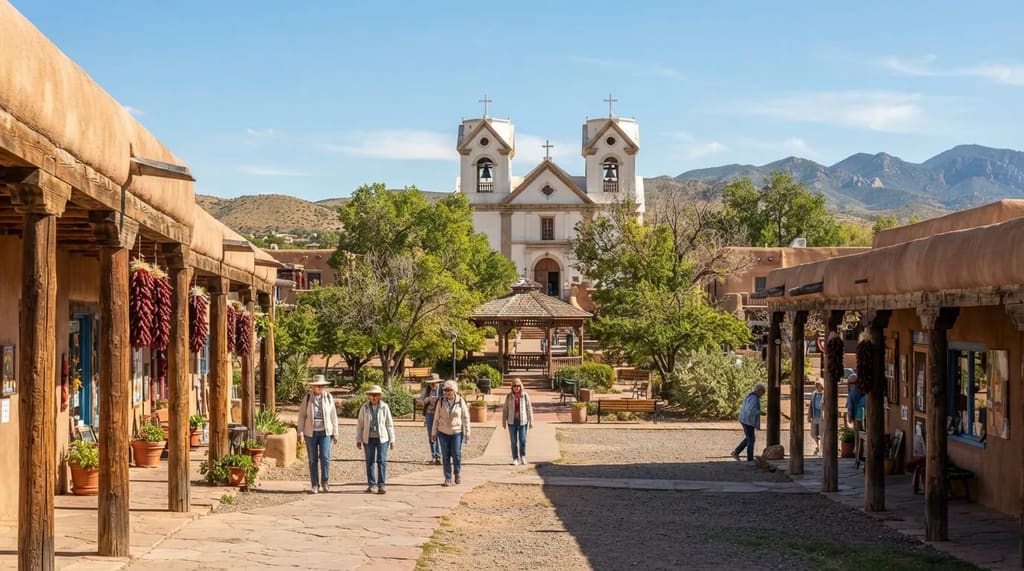
Mesilla is a small village just south of Las Cruces, built around a plaza of adobe buildings that look little changed from the 1800s. It sits at about 3,900 feet on the warm floor of the Rio Grande valley.
The plaza is lined with galleries, restaurants and shops selling pottery, jewelry and weavings, many tucked into old adobe rooms. The San Albino Basilica faces the square, and its twin towers make a natural meeting spot.
Mesilla also has an outlaw story. Billy the Kid was tried here in 1881 and sentenced to hang, and the building where the trial took place still stands in the village.7
He escaped from custody in Lincoln County before the sentence could be carried out. Locals still enjoy telling the part about the trial.
Check the village calendar for festivals and markets, since the plaza is a favorite place for them. Winter evenings here are cool but pleasant for a slow walk after dinner.
Mesilla is tiny, so people who live here depend on neighboring Las Cruces for hospitals and big grocery runs. The next town is smaller and weirder, and its main street sits on top of hot water.
Related Stories From Travelbinger
#2 – Truth or Consequences, Where the Day Starts With a Hot Soak
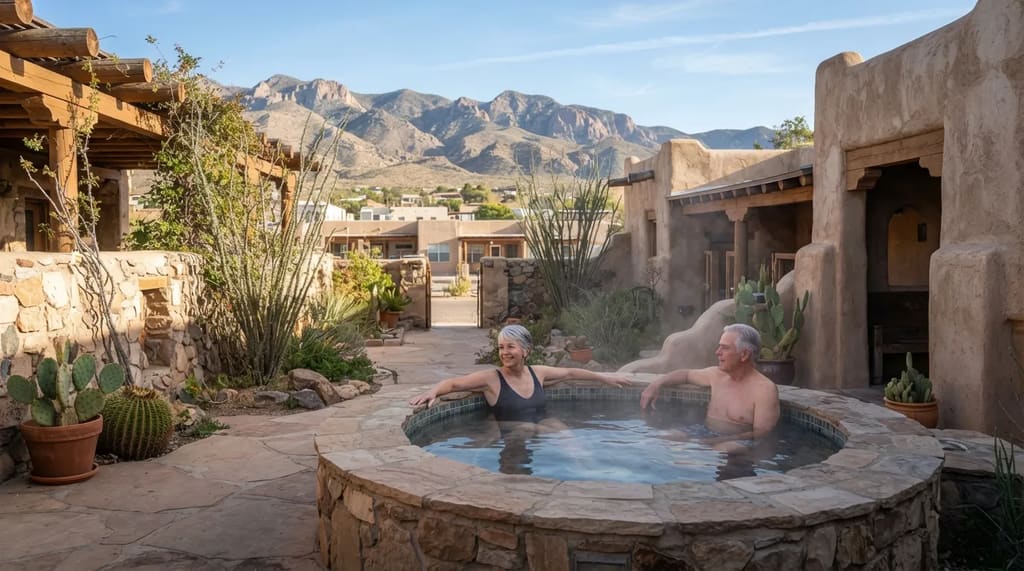
Until 1950 this town was called Hot Springs. That year it renamed itself after a radio quiz show, answering a challenge from host Ralph Edwards, and the nickname T or C has stuck ever since.8
People came for the mineral hot water, and downtown bathhouses still offer soaks in private tubs. Check rates and hours, but it is easy to see how a morning soak turns into the rhythm of an entire day.
The town sits at about 4,200 feet in the Rio Grande valley, with mild winter afternoons and cool nights. Elephant Butte Lake is only minutes away, so fishing and bird watching come with the address.
T or C also has an art scene far bigger than its size, with galleries and studios scattered through its old downtown. A monthly evening art hop has long been a local tradition, so confirm the date before you plan a visit.
The Geronimo Springs Museum covers local history, and Spaceport America lies in the desert about thirty miles away and offers tours. Check availability, because the schedule changes.
The tradeoff is size. There is a small local hospital, but bigger medical care means driving about seventy-five miles south.
That drive leads to the place that comes closest to having everything.
#1 – Las Cruces, Where Mild Winters, Art and Real Hospitals Meet
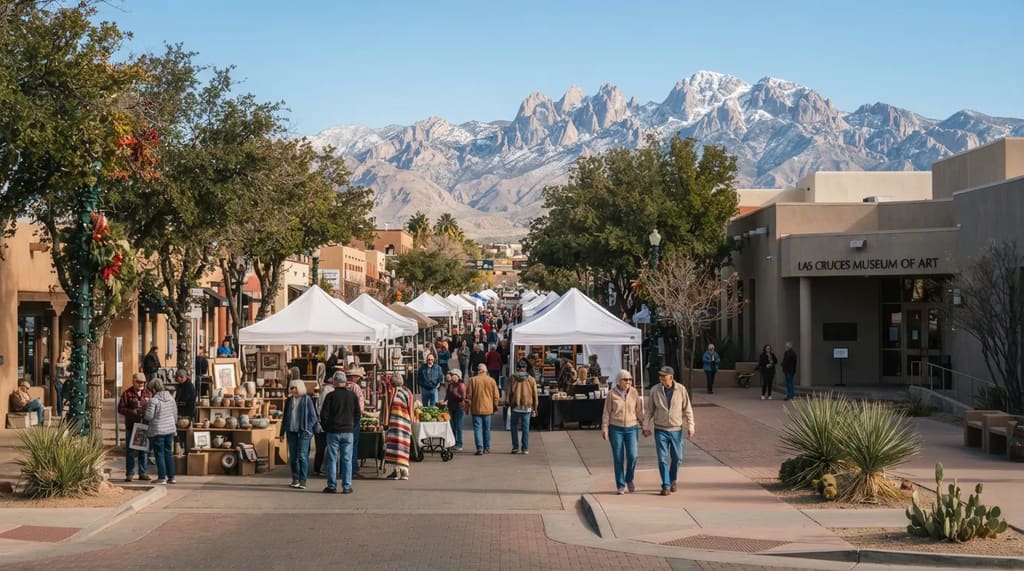
Las Cruces is the second-largest city in New Mexico, sitting at about 3,900 feet with the jagged Organ Mountains to the east. Remember the January numbers from the top, with a high near 59 and a low near 30.1
Mornings can be frosty, but by lunchtime it is usually patio weather. That is the sort of winter day most retirees mean when they say mild.
Downtown has the Las Cruces Museum of Art and a farmers and crafts market that runs twice a week along Main Street. New Mexico State University adds gallery shows, concerts and lectures all winter long.
Next door is Mesilla, so the plaza, the galleries and the old adobe courtroom are minutes away. Check local calendars for monthly gallery nights, since dates and formats change.
Organ Mountains-Desert Peaks National Monument, created in 2014, gives walkers trails minutes from town. The trail to Dripping Springs is a popular winter outing.
Las Cruces also has the services other towns lack, including hospitals and an airport in El Paso about an hour away. From here, Hatch, Deming and T or C all fit into day trips.
That is why it takes the top spot. The twelve towns together make a map of the state’s warm southern winter, but this one lets you actually live on it.
No town on this list is perfect, and the right one depends on how you feel about cold mornings. Visit in January before you commit, and judge the place by the one thing the thermometer cannot measure, which is whether you want to walk out the door.
- Las Cruces Climate Report: https://lascruces.gov/wp-content/uploads/2024/06/Climate-of-Las-Cruces-CLIMAS-Report.pdf
- NM Tech Rockhound Park Guide: https://geoinfo.nmt.edu/tour/state/rockhound/home.html
- USFWS Bosque del Apache Cranes: https://www.fws.gov/media/cranes-and-geese-bosque-del-apache-national-wildlife-refuge
- Bosque del Apache Visitor Listing: https://www.newmexico.org/listing/bosque-del-apache-national-wildlife-refuge/363/
- NM Tech Elephant Butte Tour: https://geoinfo.nmt.edu/tour/state/elephant_butte/home.html
- Atlas Obscura The Big Ditch: https://www.atlasobscura.com/places/the-big-ditch-new-mexico
- Mesilla Billy the Kid Marker: https://www.hmdb.org/m.asp?m=126893
- T or C Name History: https://www.torcnm.gov/explore-play/about-us/history-of-the-name/