You think you’re just ordering a drink. The bartender across the counter already has you half figured out.
Before you’ve even chosen a cocktail, they’ve clocked your posture, your accent, and your patience – and quietly decided how the rest of your night will go. Here’s exactly what gives you away, starting with the cue most travellers never notice.
#17 – Your Posture the Second You Walk In
Your body is talking before your mouth ever opens.
More than ninety per cent of customers who want to order position themselves directly at the bar and turn straight toward it. Those who don’t want service keep their distance and turn away, often mid-conversation with a friend.
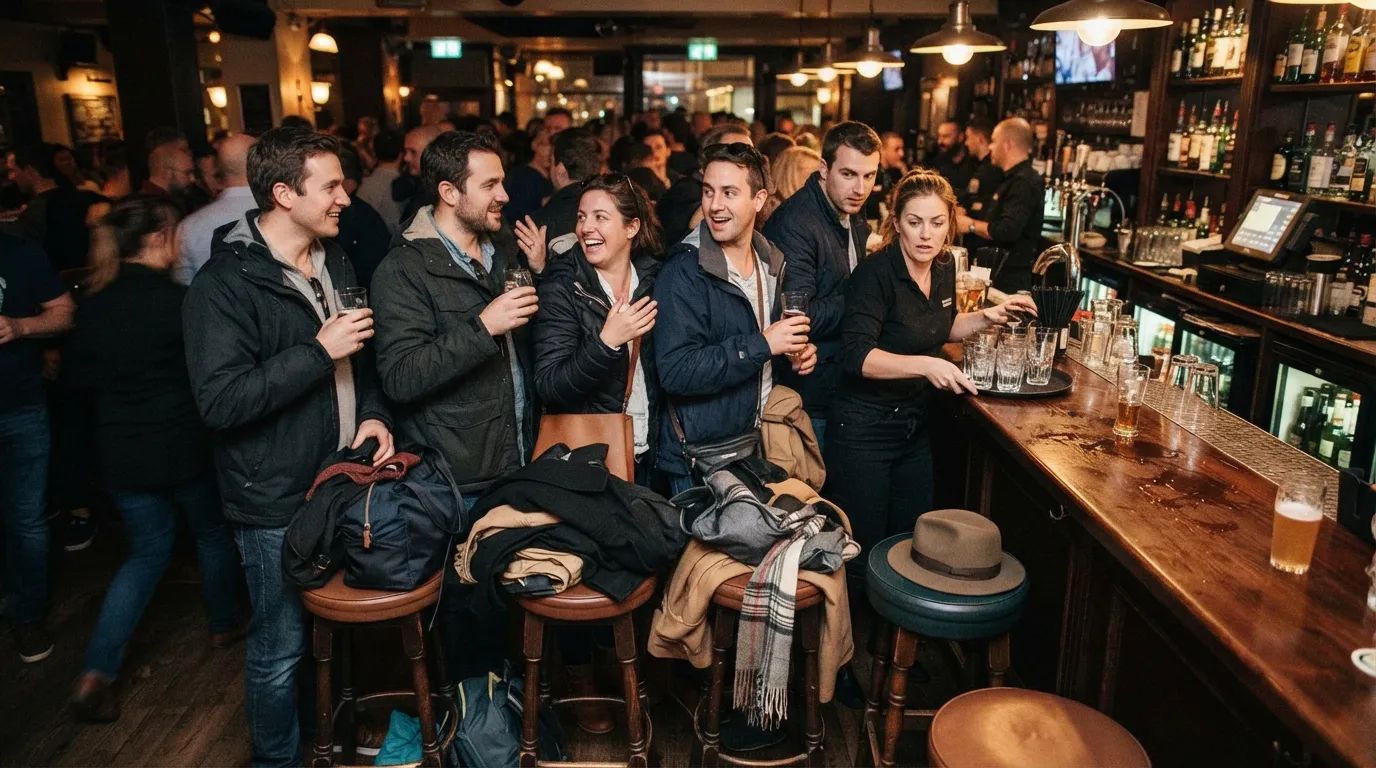
Travellers are trickier to read because they often arrive mid-chat with luggage still on their backs. Staff scan fast for the forward lean that says “I’m ready” versus the sideways stance that says “just passing through.”
Lean in a little and you signal you’re ready to order. Spread out with elbows wide and bags on stools, and it reads as territorial, especially in a tight space.
The verdict forms in about three seconds. That’s just the start of what they clock next.
#16 – Whether You’re Settled or Restless
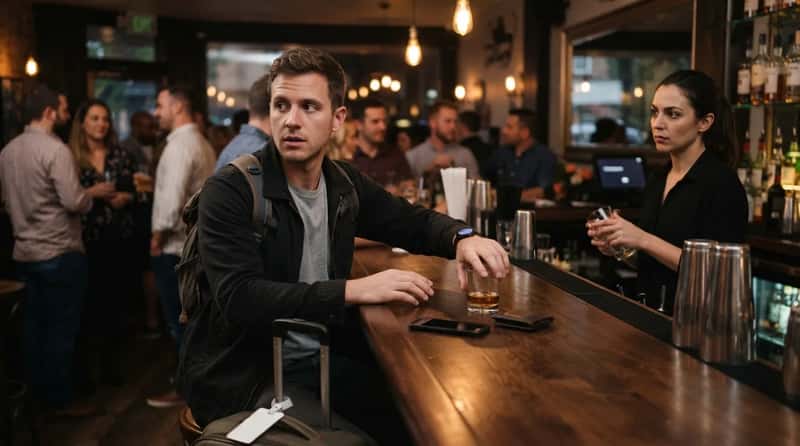
Still fidgeting? Staff already noticed.
Constant shifting and scanning can signal you’re waiting for someone, or that you might bolt any second. Calm, grounded body language tells them you’re staying a while.
For travellers, restlessness is common – a flight to catch, a connection to make, a group waiting outside. Bar staff adjust your entire service pace based on this one cue alone.
They’re reading vocal tone, eye contact, and small tells like checking your watch or touching your face, all at once. It’s a full profile assembled in seconds.
And wait until you see what your eyes give away next.
#15 – Your Eye Contact (or the Lack of It)
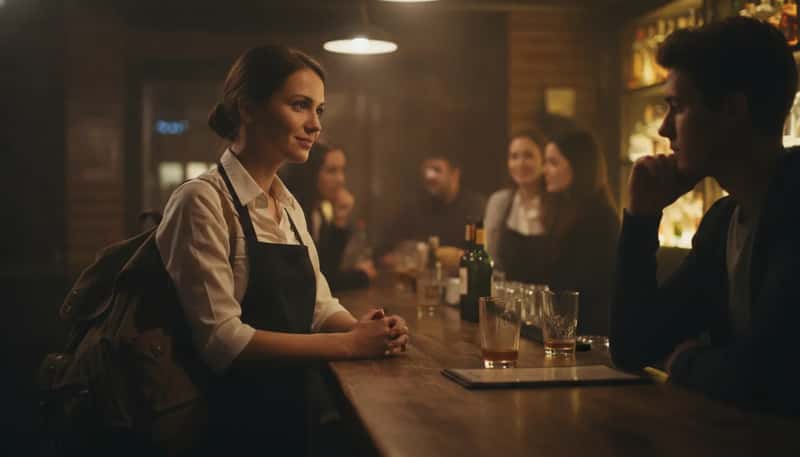
This one is more precise than most people realise.
When you walk up, the bartender glances your way on purpose – it’s their way of saying “I see you, I’m coming.” Look away too soon, and you’ve just told them you’re not ready to order yet.
Seasoned travellers tend to hold that eye contact with confidence – it’s practically a universal bar signal. First-timers often break the gaze early, stalling their own service without ever realising why.
Fast Facts
- A single glance across the bar means “I’ve seen you, hang tight” – no words required.
- Breaking eye contact within a second or two often delays your own order.
- Regulars typically hold a bartender’s gaze a beat longer than first-time visitors.
- Confident eye contact works as a near-universal service cue in bars worldwide.
Confident eye contact is the fastest way to get served in a busy bar anywhere in the world.
Drink orders, though, reveal even more than your eyes ever could.
#14 – What You Order (and How Confidently You Order It)
The drink itself is a data point. How you ask for it is an even bigger one.
What you choose, how you phrase it, whether you hesitate – it’s rarely just about flavour. It’s often a tiny, unintentional confession about who you are that night.
Order a martini or an Old Fashioned, and staff assume you know exactly what you want. Order a margarita, pina colada, or daiquiri, and you’ve just announced full vacation mode.
“How you drink says as much or even more about you than what you drink. It’s not just the particular drinks they order, which comes into play, of course, but how they order them.”
Derek Smith, bar manager, Root Down DIA, Denver International Airport
Next: the one order that makes bartenders across an entire continent raise an eyebrow.
#13 – Ordering a Vodka Soda in Europe
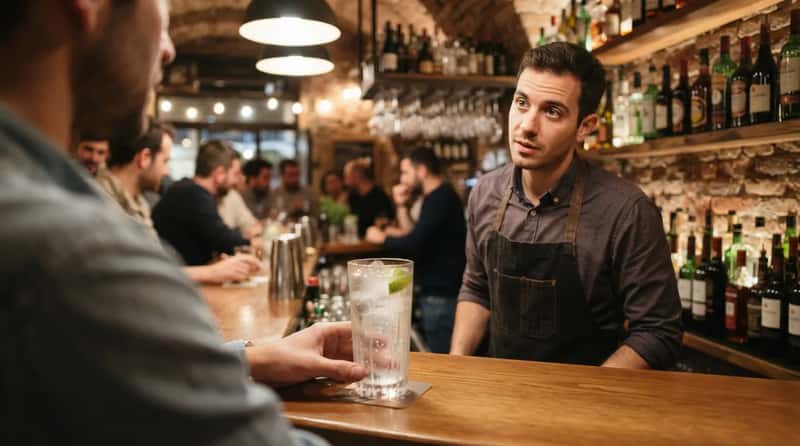
This one is a near-perfect tourist detector in certain cities.
Ask bartenders in almost any European capital, and vodka soda comes up constantly. It’s a safe, forgettable order back home, but it barely exists as a go-to outside North America.
In cities where cocktail culture leans toward wine, amaro, or local spirits, that request can land oddly plain. Bartenders in Rome and Madrid say they’ll often ask a quick follow-up question, just to be sure they heard you right.
It’s not a crime to order what you like – but it does instantly tell staff you’re from out of town. Follow it with a very specific ice request, and things get even more obvious.
#12 – Asking for “Extra Ice”
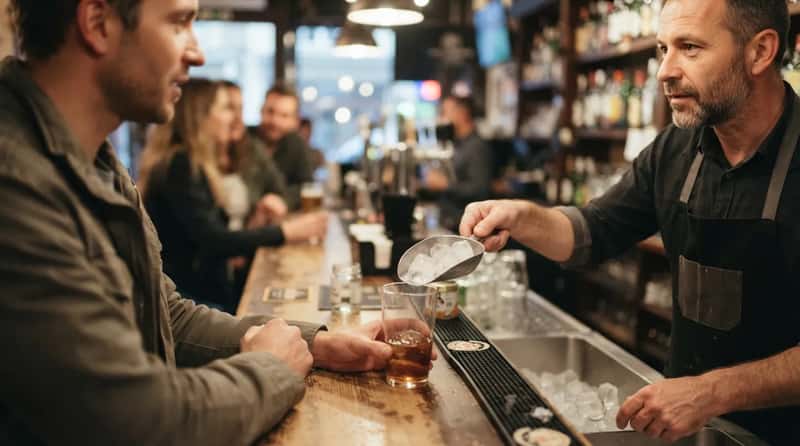
One of the most reliable nationality tells in the business.
Travellers from the U.S. grow up with giant ice machines and drinks that are practically half-frozen, so asking for extra ice feels automatic. In much of Europe and parts of Asia, one small cube – or none – is standard, so the request marks you as a visitor instantly.
Quick Compare
- United States: a full glass of ice is the default, even for soda.
- Much of Europe: one or two cubes is considered generous.
- Parts of Asia: room-temperature drinks are still common in traditional bars.
Bar staff don’t judge it, but they do clock it. Combined with your other signals, it helps them build a working profile of where you’re from and what kind of service to expect.
A traveller asking for extra ice in a Spanish tapas bar is almost never a local. What comes next is even more revealing.
#11 – The “Shaken, Not Stirred” Phrase
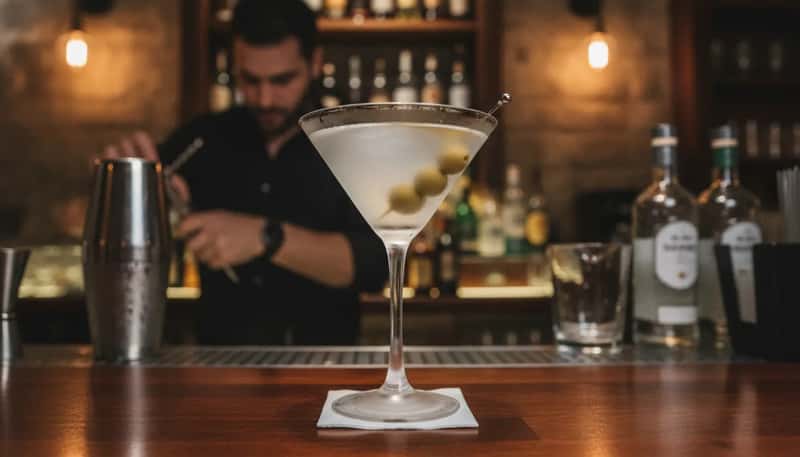
Bar staff have heard it thousands of times – and it tells them something specific every time.
American tourists often order “an extra dirty vodka martini, shaken, not stirred.”
Valeria Tummolo, head bartender, Il Vizio, Rome
Most traditional martinis in Europe use gin, but American travellers usually prefer vodka – smoother, more familiar. The “shaken, not stirred” line, popularised by James Bond, gets used for the cool factor even though it’s not the best technique for a clear martini.
It’s one of the most internationally consistent tourist signals that exists. But what about travellers who try to sound like locals instead?
#10 – Mispronouncing the Local Drink
Trying to order a local spirit by name is a lovely gesture. Mispronouncing it is a near-instant tell.
Order a mezcal neat, by agave varietal, no ice, room temperature, and staff assume you’ve travelled Mexico extensively or genuinely know your spirits. Fumble the pronunciation of the same word, and it signals you read it on a travel blog that morning.
Staff in destination cities hear every variation, and most won’t mock it – they’ll just quietly adjust their recommendations. Nail the pronunciation, and you’ll often get a different, better recommendation than the tourist menu default.
The next signal is one most travellers never even think about.
#9 – How You Treat the Bar Space Around You
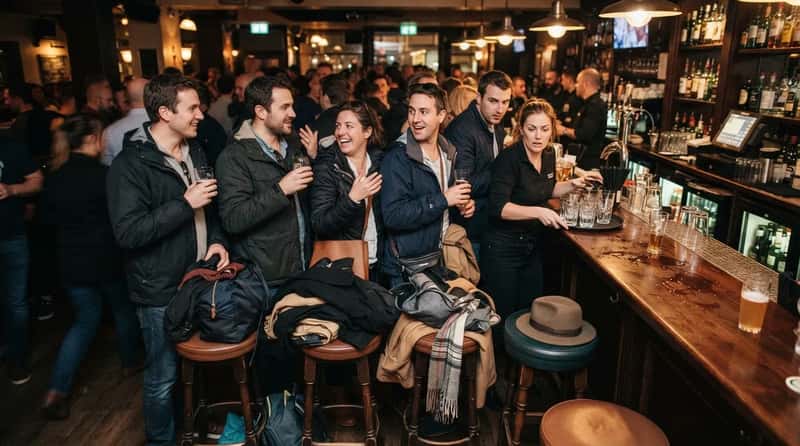
It’s not just about you – it’s about the square footage you occupy.
Form a wall at the bar’s edge with your group, and every server and guest has to squeeze past you. Tour groups arriving en masse are notorious for this.
Holding a seat for a friend is fine. Holding four stools for thirty minutes during rush hour creates real tension.
Spatial awareness at a bar is one of the clearest markers separating experienced travellers from first-timers. How you handle the bill is even more telling.
#8 – How You Handle Tipping (or Don’t)
This one has genuine financial consequences for bar staff in tourist-heavy destinations.
In most countries outside the U.S., tipping isn’t baked into the culture, or it’s already folded into the price. Staff often assume guests with a foreign accent won’t tip beyond whatever’s pre-included.
Worth Knowing
- United States: 15-20% is the standard expectation, on top of the bill.
- Much of Europe: a service charge is often already included.
- Japan: tipping is uncommon and can even feel out of place.
- Latin America: a small extra tip is appreciated but rarely required.
Start a tab, leave a generous cash tip early, and you’ve just told your bartender you’ll take care of them. Tipping early and in cash is the fastest way a traveller gets quietly bumped to the front of a busy bartender’s mental queue.
And that mental queue is very real.
#7 – Whether You Want to Talk or Be Left Alone
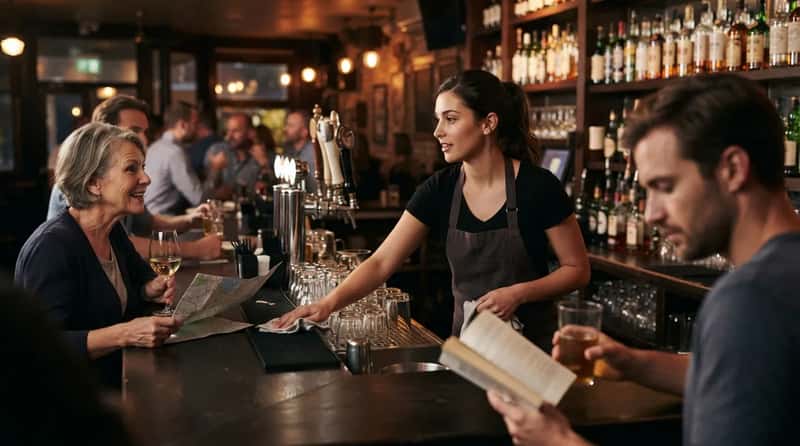
Experienced bar staff read this within sixty seconds – and they say most travellers get it wrong.
Short answers, a nose in a book – they’ll respect that and back off. Questions about the neighbourhood or local life – they know they’re in for a good conversation.
The common mistake is travellers forcing conversation with a bartender who’s clearly swamped, or going quiet and seeming rude when they’re actually just exhausted. The emotional labour bartenders perform is nearly as much work as the tending itself.
Reading the room goes both ways. What’s next gets more personal.
#6 – Your Patience Level Under Pressure
This one is remembered long after you leave.
A patient customer gets served before an impatient one, almost every time. Acknowledge that a bartender is swamped, and you’ll usually be the first person they check on once things calm down.
Travellers who are stressed – running late, jet-lagged, over-scheduled – often project that onto bar staff without realising it. The irony is that impatience reliably slows your service down, not speeds it up.
A good tip never fixes a bad attitude. Something even more surprising is coming next.
#5 – Your Group’s Social Dynamic
Bartenders aren’t just reading you – they’re reading everyone at your table at once.
They watch for who’s the decision-maker, who wants another drink but hasn’t said so, and who’s clearly had enough. Lean back mid-conversation, and it signals you’re done talking and already know your order.
Lean in, and the bartender leans in too – you might be sharing something you don’t want the whole bar to hear.
The person in a group who makes the briefest eye contact with staff is almost always the one who ends up getting the bill. Then there’s the clue that comes from just listening.
#4 – Your Accent and Phrasing
You haven’t said a word about where you’re from. You don’t need to.
Walk into a bar in Lisbon, Prague, or Bangkok, and staff can often guess your nationality before you finish ordering. It usually comes down to phrasing, or a small habit locals simply don’t share.
At a Glance
- Americans: vodka martinis, “shaken, not stirred,” and extra ice.
- Brits: quick, no-fuss orders like lager or a gin and tonic.
- Australians: easy small talk with the bartender right away.
- First-time visitors generally: hesitating over local spirit names.
Bartenders in tourist-heavy neighbourhoods say the patterns are remarkably consistent, and it has little to do with accents or clothing. It’s the specific requests that give you away, shaped by habits that feel normal at home and stand out everywhere else.
Seasoned staff in international cities build a running mental map of which nationalities drink what, tip how, and behave which way. What comes next is more surprising still.
#3 – How Experienced a Drinker You Actually Are
This is one bartenders rarely admit publicly – but they all do it.
“The longer you work this job, the better you get at reading people – and the more important you realise it is,” says one bartender at a fine-dining restaurant.
Order a Negroni, and you’re either an experienced drinker or trying hard to look like one. Order a vodka martini with no vermouth, and one beverage director puts it bluntly: someone “trying to get their booze in as efficiently as possible” – who’ll likely order a second within minutes.
A traveller’s drink choice gets treated as a full personality assessment within about thirty seconds. What’s next gets closer to what bar staff never say out loud.
#2 – How You’ve Treated Other Staff Tonight
Bartenders talk to each other – and to the floor staff – more than guests ever realise.
“Understanding the customer helps us serve you better, and it’s fun getting to know people. It’s also somewhat of a legal requirement, since we can’t over-serve someone who’s already had too much – so yes, we’re watching how you walk, talk, and act.”
Be curt with a host or dismissive to a server, and that information travels behind the bar faster than any drink order. Staff notice instantly whether you greet them like a person or a vending machine.
How you treat the lowest-ranked person in the room is the most reliable character read bar staff have. Experienced travellers often forget that bar teams are one tight, communicating unit.
But the #1 thing they read in a traveller? Almost nobody expects it.
#1 – Whether You’re Actually Present
This is the one that separates memorable guests from forgettable ones.
What sets a regular apart is simple: they treat the bartender like a whole person, maybe even a friend, not just staff. Friendly conversation is where that relationship starts.
The travellers bar staff remember years later are rarely the biggest spenders or the loudest table. They’re the ones who put the phone down, made real eye contact, and treated the bar like an actual place instead of a backdrop for a story to post later.
Being truly present – curious, unhurried, human – is the one thing no travel hack can manufacture. Bar staff spot it instantly, and they remember it long after the drink is gone.
The Bottom Line
Bar staff build a working profile of every traveller within minutes, sometimes seconds. Posture, drink order, ice preferences, patience, and how you treat the people around you all feed into a read that happens faster than you’d believe.
The travellers who get the best service aren’t the biggest tippers or the loudest talkers. They’re the ones who show up like human beings – present, patient, and paying attention to the room they just walked into.
Bonus: The One Question That Unlocks Off-Menu Treatment
Bartenders rarely volunteer this, but nearly every one of them lights up when a guest asks it: “What do you actually like to drink yourself?”
It flips the whole dynamic – instead of you guessing what sounds good, the person mixing your drink gets to show off something they’re genuinely proud of.
- Ask it early, right after your first straightforward order, not before you’ve ordered anything at all.
- Say yes to whatever they suggest, even if it’s unfamiliar – that’s the whole point of asking.
- Mention if you like things stronger, sweeter, or more bitter so the pour is tailored, not generic.
- Tip in cash on that round specifically – it’s the clearest signal you valued their pick over the standard menu.
Do this once and most bartenders will remember you the next time you walk in – and start pouring before you even ask.