We had read the brochures, scrolled the forums, and watched more Costa Rica retirement videos than we care to admit. None of that prepared us for how ordinary the biggest changes would feel once we actually settled in. The shifts weren’t dramatic lifestyle overhauls so much as small, steady adjustments that quietly rewired our days, one habit at a time.
Mornings without an alarm clock

Back home, mornings started with a phone alarm and a mental checklist before our feet even hit the floor. Here, the sun does most of the waking, since Costa Rica sits close enough to the equator that daylight arrives around the same time year round and doesn’t wander much by season. That consistency turned out to matter more than we expected, because our bodies stopped negotiating with clocks and started following light instead.
Coffee still happens first, but it’s slower now, usually on a porch instead of rushed at a counter. There’s no snow to check for, no commute to time against traffic reports. The morning simply opens up rather than demanding anything of us.
Grocery shopping turned into a weekly ritual

In our old routine, groceries meant one big trip to a supermarket, a cart, and a list scrolled through on a phone. Now a good portion of our food comes from the local feria, the weekly farmers market that most Costa Rican towns hold, where fresh produce, fish, and eggs sell for a fraction of what we used to pay. It’s genuinely a different way of eating, built around what’s ripe that week rather than what’s stocked on a shelf.
Cooking at home has become the default rather than the exception, partly because eating out every night adds up quickly even in a place known for being affordable. A modest grocery budget for a couple who cooks most meals typically lands somewhere in the few hundred dollar range monthly, which is a fraction of what the same habits cost in a typical American city. The routine change wasn’t really about saving money, though that helps, it was about the market becoming a social stop instead of a chore.
Healthcare stopped being a monthly worry

This is probably the single biggest shift in our weekly headspace. As legal residents, we’re enrolled in the Caja, Costa Rica’s public healthcare system, and Costa Rica offers universal healthcare through a government run system that charges residents a low monthly fee based on income, covering doctor visits, medicines, and surgeries. The contribution is calculated as a percentage of declared income, and all residents contribute to CAJA through a monthly payment, with retirees paying between seven and eleven percent of income each month.
What changed in our routine is subtle but real: we no longer spend time comparing insurance plans, arguing with claims departments, or budgeting for surprise deductibles. Many retirees, including us, pair the public system with private care for shorter wait times, since numerous private clinics and hospitals also offer high quality care at prices lower than in the U.S., and many retirees supplement Caja coverage with private healthcare for shorter wait times and more personalized services. That combination replaced a source of constant background stress with something closer to routine maintenance.
The commute we no longer have

We used to lose close to an hour a day just getting to and from work, plus the mental energy spent dreading it. That entire block of time simply vanished, and it took months to figure out what to do with it. Some days it becomes a walk, other days it’s an extra hour of reading, and some days it’s nothing at all, which felt strange at first for people used to filling every gap.
Owning a car here comes with its own routine now, since vehicles carry high import duties and the associated costs add up. Between the marchamo, the annual road permit and mandatory insurance, and comprehensive coverage, car ownership requires its own yearly rhythm of paperwork that didn’t exist for us before. It’s a trade we accepted gladly, since the absence of a daily commute changed far more about our stress levels than the presence of car maintenance costs ever could.
Our relationship with money changed

Budgeting used to be about maximizing a paycheck. Now it’s about stretching a fixed retirement income across a cost of living that, for most categories, sits well below what we paid before. Numbeo data from 2025 put the average cost of living in Costa Rica, minus rent, at around $892.90 per month for an individual retiree, and broader estimates suggest a single person can live on between $1,600 and $2,000 a month, while retired couples often live well on $2,000 to $3,000, covering housing, transportation, medical care, utilities, food, and entertainment.
That range gave our weekly routine a different shape. We check prices at the feria instead of scanning for sales online, and we plan larger purchases like flights or furniture around currency exchange timing rather than credit card points. It’s a more deliberate kind of spending, less automatic than it used to be, and honestly more grounding than we expected.
The weather rewrote our schedule
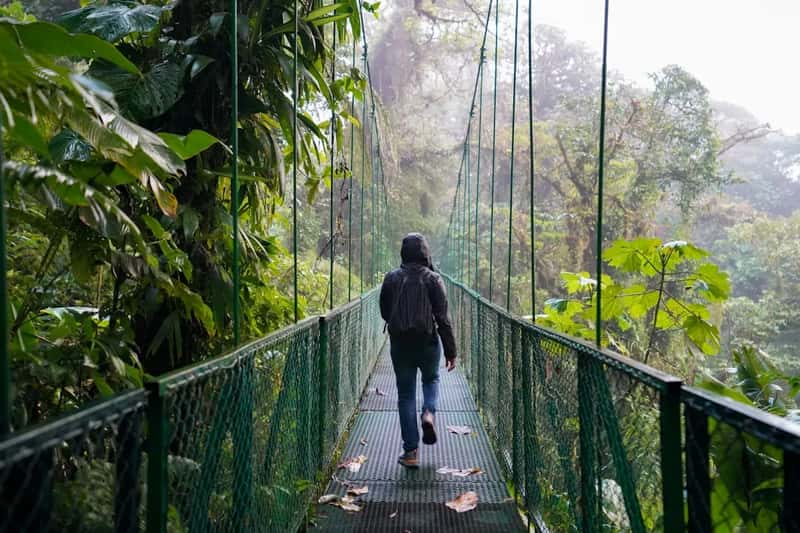
Costa Rica’s consistent warmth and mild seasonal changes allow retirees to live outdoors, enjoy nature, and maintain an active, healthy lifestyle year round. That single fact quietly restructured our days more than almost anything else. Outdoor time that used to be seasonal, something we squeezed into a few warm months, is now just part of the routine every week.
We plan errands and hikes around the rainy season rather than around a work calendar, and afternoon downpours during the wetter months simply became a built in pause rather than an inconvenience. The country’s biodiversity plays into this too, since rainforests, highland plains, and wetlands here shelter around five percent of the world’s unique species, which makes even a short walk feel worth taking. Our routine now bends around nature instead of around a schedule someone else set.
Building a new kind of social life

Friendships used to form around coworkers and neighbors we’d known for years. Here, they form faster and often across nationalities, since roughly 120,000 Americans, many of them retirees, live in Costa Rica, alongside sizable Canadian and European expat communities in towns popular with retirees. Coffee mornings, community boards, and neighborhood gatherings replaced the more scheduled social calendar we used to keep.
What’s different is the pace of forming these connections. People here tend to be more open with newcomers, partly because so many residents were once newcomers themselves. Our weekly routine now includes informal check ins with neighbors that never existed in our old suburban life, where waving from a car was often the extent of contact.
Errands now require more patience
Paperwork here moves at its own pace, and the retirement visa process itself set the tone early. The Pensionado program requires a guaranteed lifetime pension of at least $1,000 per month from approved sources, and grants temporary residency status for two years, renewable indefinitely, with eligibility for permanent residency after three years of maintaining that status. Getting there involved document apostilles, translations, and more waiting rooms than we’d experienced in years.
That same rhythm carries into ordinary errands now, from utility appointments to bank visits. Lines move slower, forms multiply, and rushing rarely helps. Our routine adapted by building in buffer time for anything involving an office, a habit that would have felt wasteful in our old life but feels necessary here.
Evenings look completely different

Evenings used to mean decompressing from work, often in front of a screen out of sheer exhaustion. Now they tend to start earlier and involve more actual conversation, partly because the tropical sun sets around the same time year round and the day naturally winds down with it. Dinner happens earlier, and the after dinner hours feel longer and less rushed than they ever did before.
Streaming shows and scrolling didn’t disappear entirely, but they compete now with porch time, short walks, and the simple habit of sitting outside while it’s still warm enough to do so comfortably. It’s not a dramatic transformation, just a quieter one. The routine simply has fewer things pulling at it after dark.
What stayed the same

Not everything changed, and it’s worth saying so plainly. We still read the news every morning, still call family on the same schedule, still argue over small things the way any couple does after decades together. The core of daily life traveled with us, even as the setting around it shifted.
What moved were the edges, the small hinges a routine swings on: how we shop, how we get places, how we handle a doctor’s visit, how we spend an evening. Those edges turned out to matter more than we expected when we first started planning this move.