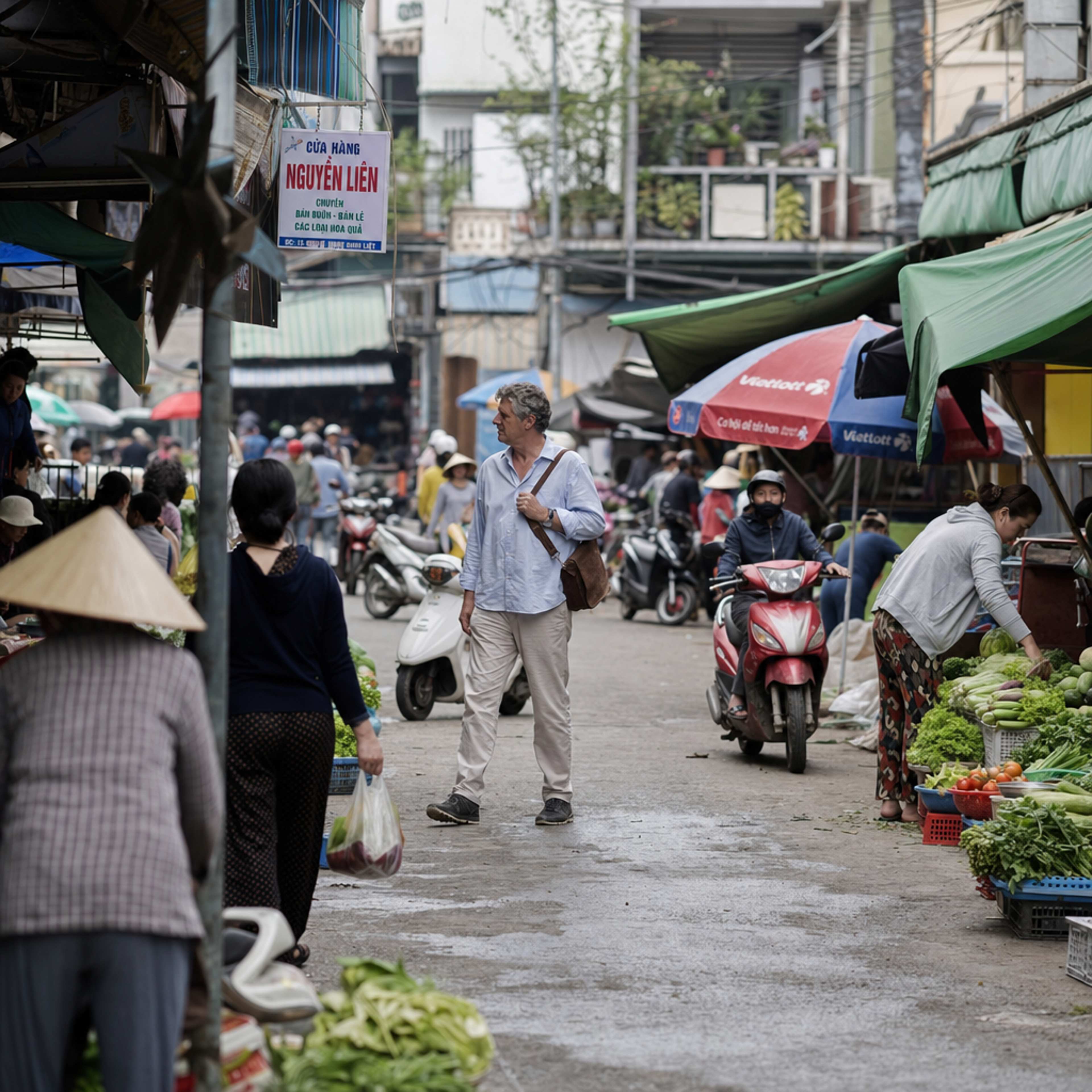

What are the best churches in Saigon, and which ones are actually worth visiting? Ho Chi Minh City is often associated with street food, motorbikes, and modern high-rises, but its Catholic heritage runs surprisingly deep.
French colonial influence, local Vietnamese craftsmanship, and even Chinese architectural elements all shape the churches here. Some are famous and photographed daily, while others are quieter, tucked into neighbourhoods most tourists never reach. After visiting these five churches myself, here are the ones that stood out, not just for their appearance, but for their atmosphere and setting.
1. Tan Dinh Church (District 3)
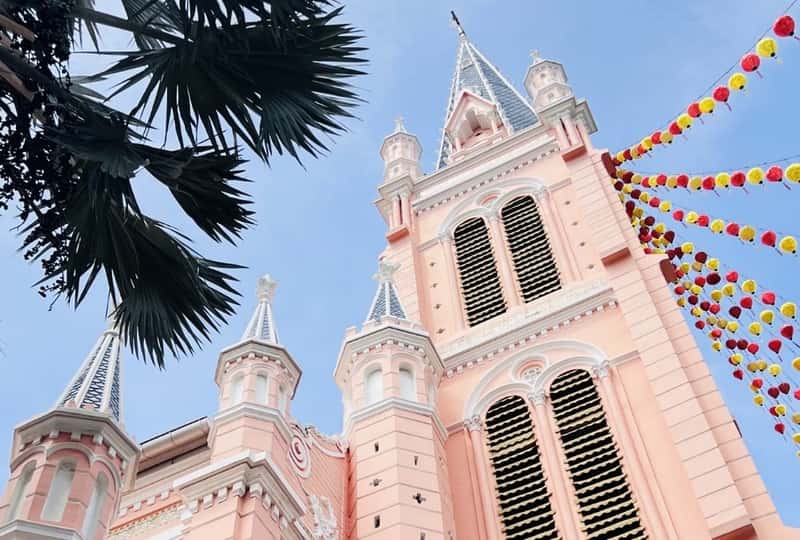
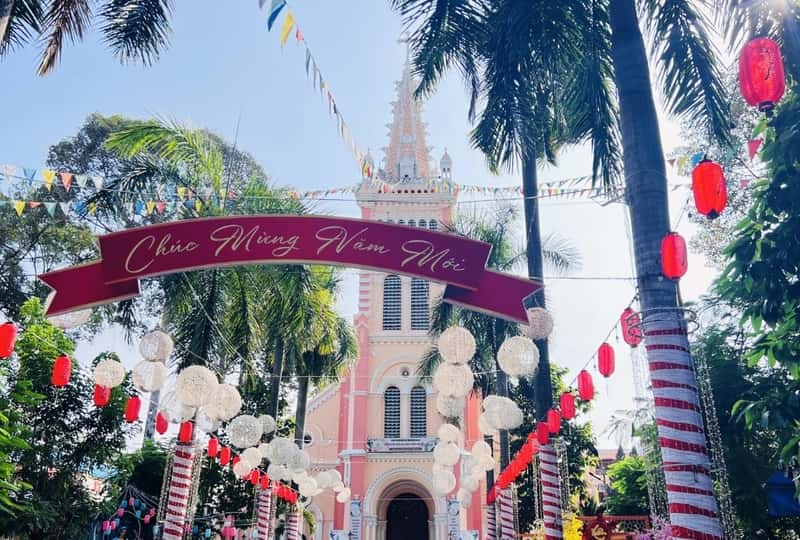
Tan Dinh Church is easily the most photographed church in Saigon. Painted in a bold shade of pink, it stands out immediately along Hai Ba Trung Street in District 3. Built during the French colonial period in the late 19th century, it features a Romanesque-Gothic design, a layered façade, and a tall bell tower, making it one of the most distinctive religious buildings in Vietnam.
When I visited, only about 20% of the grounds were accessible as the garden area was blocked, and movement inside was limited. The church is managing tourism carefully. Despite that, it remains visually impressive from the outside.
I visited it for the first time in 2017, and it’s unfortunate to say that the pink exterior of the church has lost much of its vibrancy. Now it’s a lot more dull and washed out, which might disappoint a few people, but the interior is still as vibrant as ever, and despite being a little duller than it once was, it still has a unique charm you won’t want to miss.
Because of its central location near Tan Dinh Market, it’s easy to combine with other District 3 stops. Even if you don’t go inside, it’s worth seeing up close. Also, if you’re feeling the heat, there is a Highlands Coffee and some Bingsu Shops (Korean-style ice cream) to help you cool down and relax.
2. Huyen Sy Church (District 1)
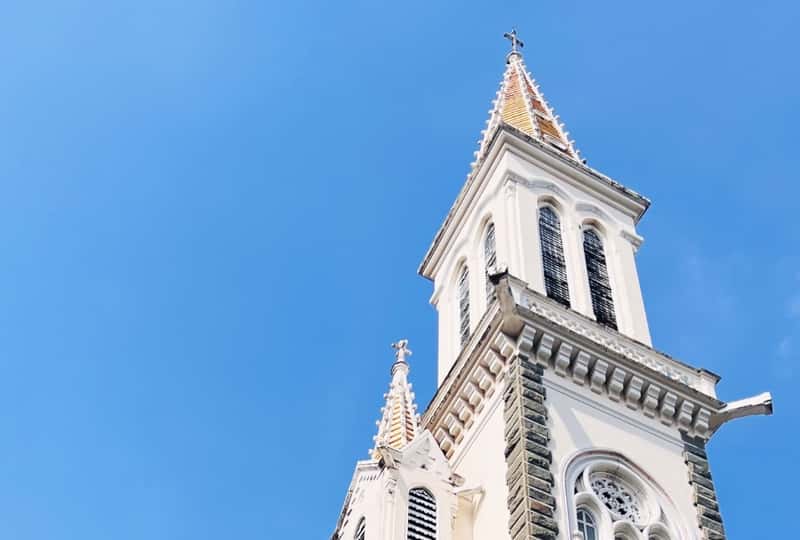
Huyen Sy Church feels different from the busier landmarks of District 1. Built in the early 1900s by a wealthy Vietnamese Catholic family, it is one of the oldest Catholic churches in the city. The Gothic architecture is clear in its pointed arches and symmetrical towers, but there’s a subtle local character to it as well.
Despite being located near busy streets, the interior feels calm. It doesn’t draw the same crowds as more famous churches, which makes it easier to appreciate the details. When I stepped inside, the contrast between the noise outside and the stillness within was noticeable. It’s not flashy and doesn’t rely on bright colours; instead, it carries a quiet sense of history.
3. St Francis Xavier Church (Chinatown, District 5)
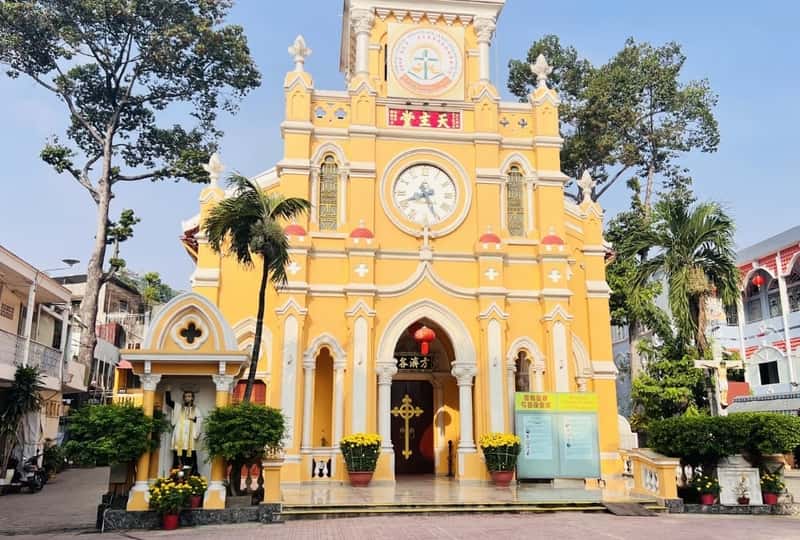
St Francis Xavier Church may be the most unexpected church in Saigon. Located in Chợ Lớn, the city’s Chinatown district, it sits in an area dominated by Buddhist temples and traditional Chinese shophouses.
Architecturally, it’s unique. The design includes strong Chinese elements with its curved rooflines, red detailing, and decorative features that wouldn’t look out of place in a temple. Seeing a Catholic church integrated so naturally into Chinatown feels rare.
What struck me most was the contrast. Step outside and you’re surrounded by incense smoke and temple courtyards. Step inside and you’re in a Catholic space. It’s a reminder of how layered Saigon’s religious landscape really is. If you’re already exploring District 5, this church is worth making a deliberate stop for.
4. Cho Quan Parish Church (District 5)
Cho Quan Parish Church stands out not just for its architecture, but for its layout. Located directly in front of a primary school, the entire church area is enclosed within its own gated grounds.
This gives it a structured, almost self-contained feel, and unlike churches that open directly onto the street, Cho Quan feels separated from traffic and daily noise. The gate adds an extra layer of security and uniqueness.
When I visited, a sense of organisation stood out. The space felt purposeful and community-focused, less about visual drama and more about how the church functions within its neighbourhood. Because it’s not heavily promoted as a tourist attraction, it retains a local character.
5. Fatima Parish Church (Binh Trieu, Thu Duc)
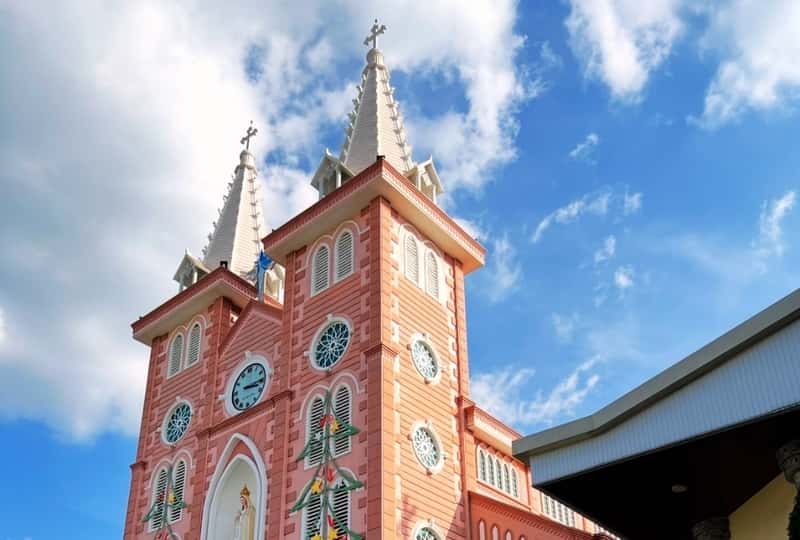
Fatima Parish Church in Binh Trieu carries a different kind of reputation. In the early 2000s, many locals reported witnessing tears on a statue of the Virgin Mary here. The story spread widely at the time and drew large crowds of believers. Whether faith or folklore, the story remains part of the church’s identity.
What I noticed most, though, was the setting. The church sits near a river, and the air feels noticeably fresher than in the central districts. It’s peaceful, quieter, and less rushed.
Compared to the busier churches in Districts 1 and 3, Fatima Parish Church feels reflective. There were no crowds when I visited. Just open space, light wind from the river, and a calm atmosphere.
It may not be architecturally dramatic, but the environment gives it character.
Which Church Is the Most Beautiful?
It depends on what you’re looking for.
If you want colour and photographs, Tan Dinh is unmatched. If you’re interested in history, Huyen Sy carries weight. For something architecturally rare, St Francis Xavier in Chinatown is the most distinctive. For structure and community setting, Cho Quan stands out. For peace and atmosphere, Fatima Parish Church offers a calm experience.
Each one reflects a different side of Saigon.
Practical Tips for Visiting Churches in Saigon
When visiting churches in Ho Chi Minh City:
- Dress respectfully
- Avoid entering during mass unless attending
- Some areas may be restricted
- Photography rules vary
- Morning or late afternoon offers better light and fewer visitors
Not every church is fully open to tourists, as I experienced at Tan Dinh. It’s worth checking access before planning your visit.
Final Thoughts
Saigon’s churches reveal a side of the city that often goes unnoticed. Beyond cafés and markets, there’s a strong Catholic history intertwined with French colonial architecture and local Vietnamese identity. Some churches are famous, others are nearly empty. Some sit in Chinatown surrounded by temples, while others overlook rivers or hide behind gated grounds.
Visiting them isn’t just about architecture – it’s about understanding how different influences shaped the city. If you take the time to step inside rather than just photograph the façade, you’ll see a quieter, more layered side of Ho Chi Minh City.