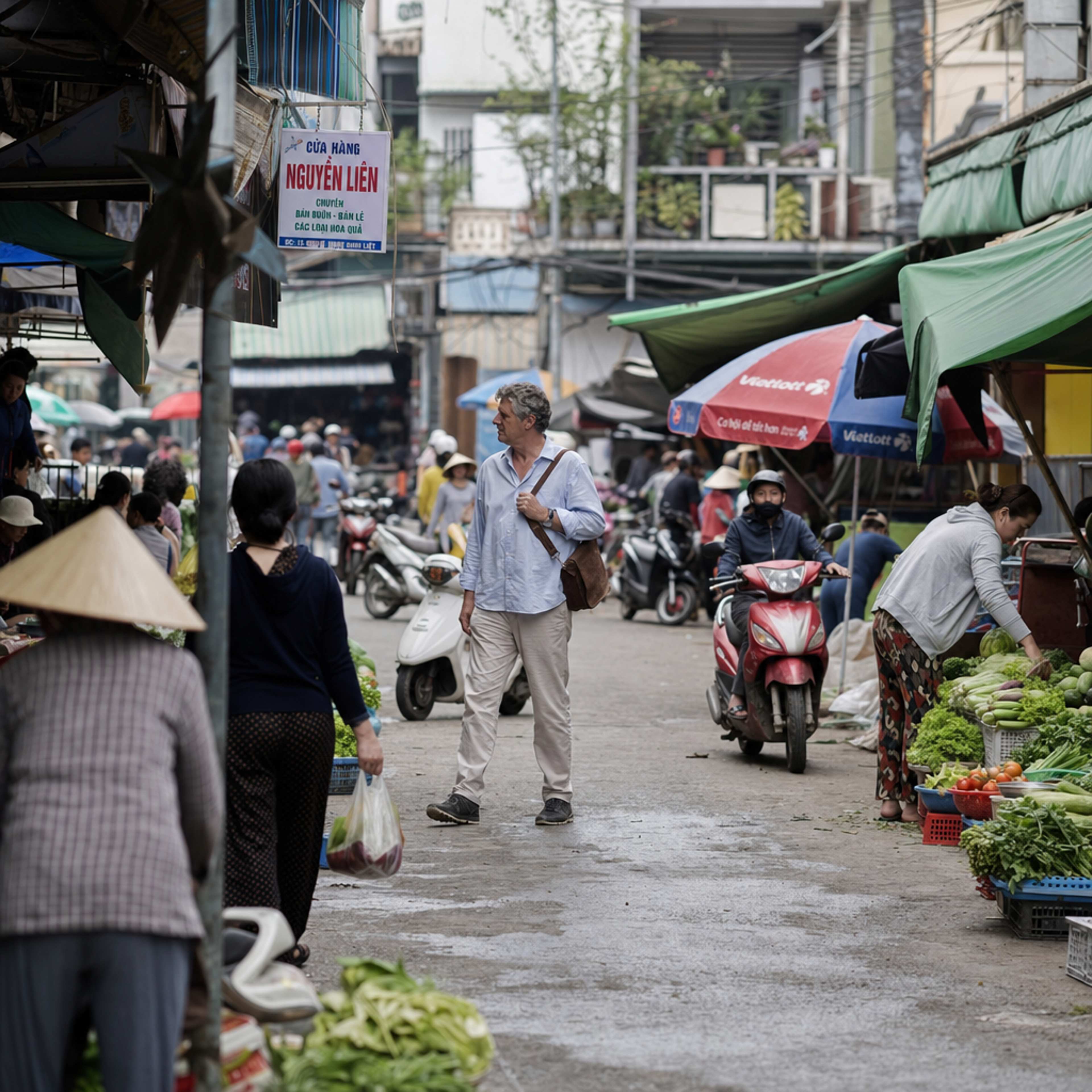

Most people associate Mui Ne with its sand dunes, and while they’re impressive, once you’re actually there, you realise the experience is more layered than that.
Mui Ne isn’t just one attraction. It’s shifting light, coastal wind, fishing boats, long roads, and quiet moments between tourist stops. These were the places that felt most worth our time.
White Sand Dunes (Đồi Cát Trắng)
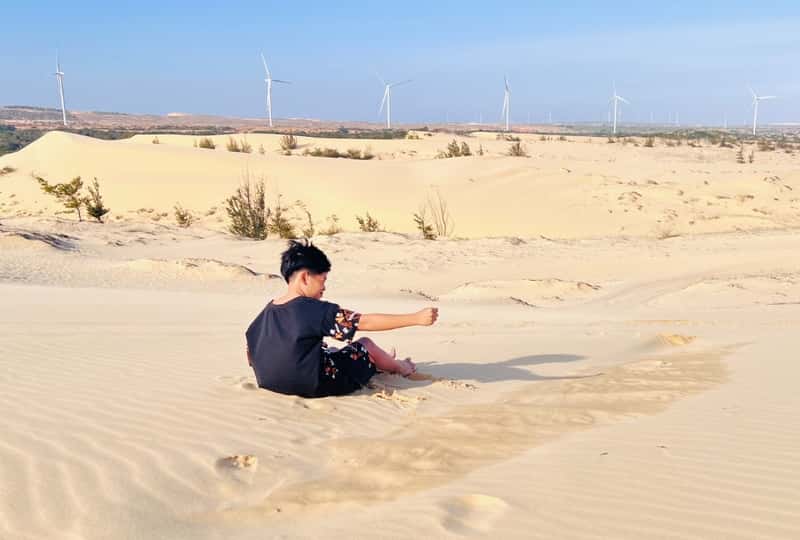
The White Sand Dunes are the image most people have in mind when they think about Mui Ne – rolling hills of pale sand that look almost misplaced against Vietnam’s coastline.
We visited in the late afternoon for sunset, which felt much calmer than I expected. The jeep tours still arrive in clusters, and ATVs buzz across certain sections, but if you walk a little further away from the main drop-off point, the space opens up quickly.
The sand shifts constantly with the wind, which makes the landscape feel less static than photos suggest. It’s not silent as there’s always movement, but there’s enough openness to stand still and take it in.
Is it worth it? Yes, but only if you manage expectations. It’s not the Sahara or an untouched wilderness. It’s a scenic, semi-organised stop that’s best appreciated when you step slightly away from the crowd.
Mui Ne Fishing Village
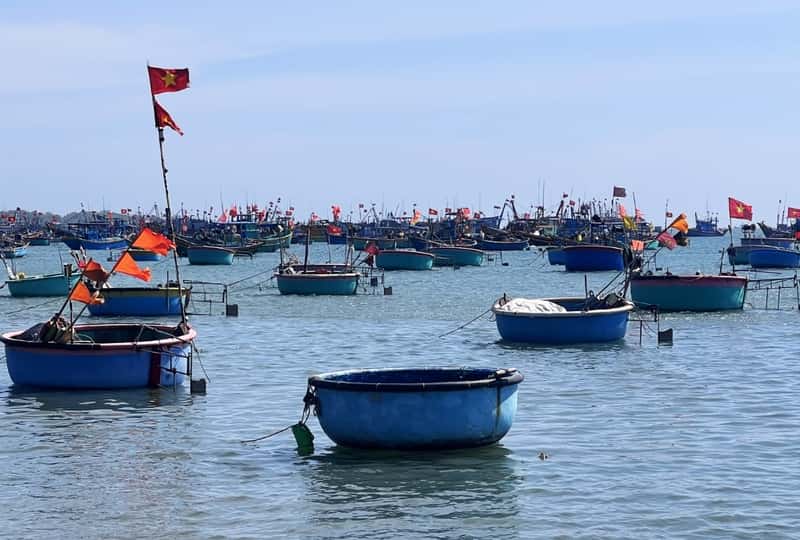
If the dunes feel dramatic, the fishing village feels real.
Colourful round basket boats float just offshore, and larger fishing vessels anchor in loose patterns across the water. Depending on the time of day, you’ll see fishermen sorting nets, unloading catches, or simply sitting and talking along the edge of the harbour.
At sunset, the light turns the water bronze and the boats look almost painted against it. It’s quieter than sunrise, less chaotic, but still active enough to feel authentic.
This isn’t a curated attraction – it’s a working place. That’s part of what makes it worth visiting. Just don’t treat it like a backdrop. Move slowly, keep a respectful distance, and observe rather than interfere.
For me, this stop felt more memorable than the dunes.
Mui Ne Wind Turbines (Wind Farm Road)

The wind turbines were one of the more unexpected highlights for me.
They’re not always listed as a “must-see,” but the road leading toward them feels cinematic – long stretches of asphalt, dry hills on one side, glimpses of coastline on the other. Then suddenly, the turbines rise into view.
Up close, they’re massive. Slow-moving, steady, almost mechanical in contrast to the dunes’ shifting sand. Depending on the time of day, the light can make this stop feel either stark and harsh or surprisingly beautiful. Near sunset, the shadows stretch across the road, and the white blades catch the last light in a way that feels quieter than the dune area.
There isn’t much to “do” here in the traditional sense. You stop, look, take a few photos, and feel the wind that powers the whole thing.
It’s a short visit, but it adds a different dimension to Mui Ne – less desert, more open landscape.
Fairy Stream (Suối Tiên)
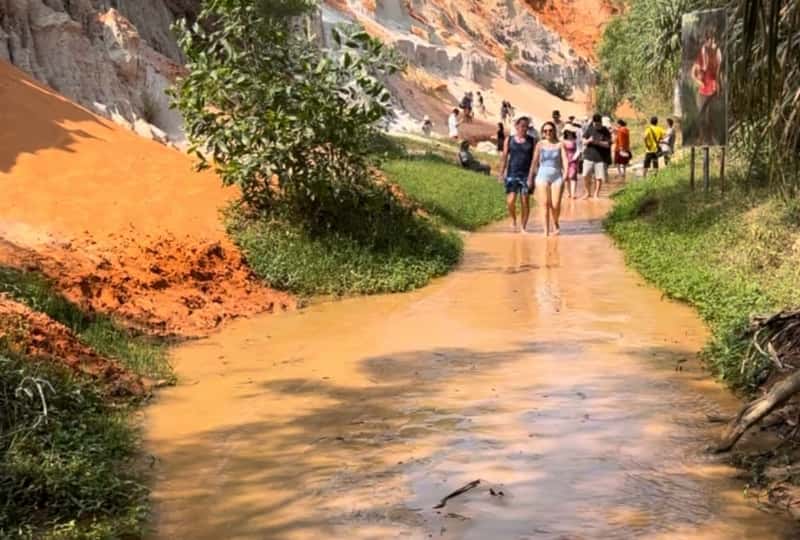
The Fairy Stream is one of those places that sounds underwhelming until you actually walk it.
It’s a shallow stream you walk through barefoot, winding between red and white rock formations that look almost canyon-like in parts. The water only reaches your ankles, and the sand beneath your feet is soft and cool.
Yes, it’s tourist-friendly. Yes, there’s a small entrance fee. And yes, you’ll likely see other visitors taking photos. But once you move a little further along the stream, it becomes quieter and more atmospheric.
The cliffs change colour as you walk, shifting from pale to deep rust tones. In certain sections, it feels surprisingly secluded. In others, more open and social.
It doesn’t require much time – 45 minutes to an hour is enough. But it’s different from the dunes and different from the coast. It breaks up the day nicely, especially if you’re doing a jeep tour with multiple stops.
It’s simple, but unexpectedly enjoyable.
Ride Along the Coastal Roads
One of the best things to do in Mui Ne isn’t a stop at all – it’s the ride between stops.
The coastal roads here are long, open, and often surprisingly quiet once you move away from the main resort strip. On one side, dry hills roll into the distance. On the other hand, flashes of blue sea appear between curves.
If you’re on a scooter, this is where Mui Ne feels the most expansive. There’s no entrance fee, no parking chaos, no schedule. Just wind and light.
Late afternoon is when it’s best. The sun drops lower, the heat softens, and the road takes on that golden tone that makes even simple stretches of asphalt feel cinematic.
It’s easy to rush from attraction to attraction. But slowing down and letting the road itself be part of the experience made the day feel less like a tour and more like travel.
Relax on Mui Ne Beach (With Realistic Expectations)
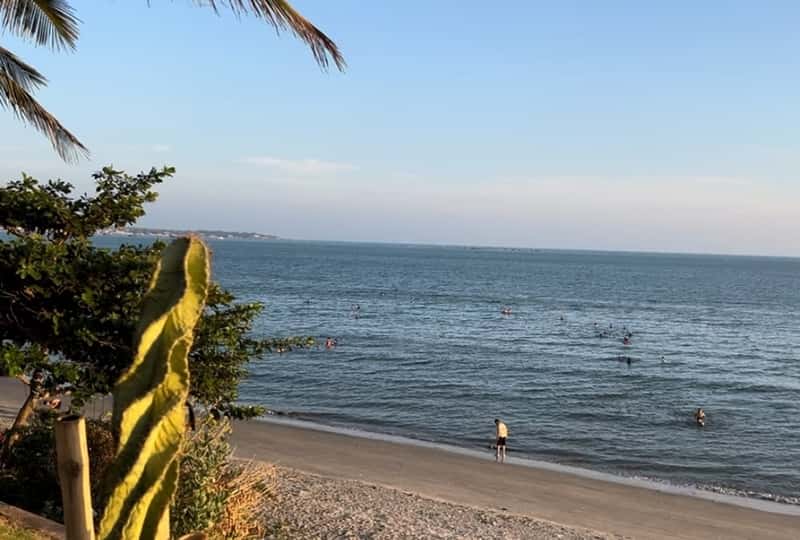
Mui Ne Beach isn’t postcard-perfect in the way some travellers expect. It’s often windy. The waves can be choppy. Some sections of the beach are covered in discarded plastic, and certain sections near large resorts feel more private than public.
But that wind is exactly why Mui Ne has become a kitesurfing hub. On breezier days, the sky fills with colour as kites arc above the water. Even if you’re not participating, watching from the sand is entertaining in its own way.
There are calmer periods too, especially toward sunset, when the wind drops slightly, and the light becomes softer. That’s when the beach feels more reflective than active.
If you come expecting Maldives-level calm water, you might be disappointed. If you come expecting a working coastal town with strong winds, long stretches of sand, and a mix of local life and tourism, it makes more sense.
Sometimes the best way to end the day in Mui Ne is simply sitting on the sand, doing very little.
Should You Book a Jeep Tour or Explore Independently?
The Case for Booking a Jeep Tour

Jeep tours might sound efficient, but they can come at a cost.
In a few hours, you’ll cover the White Sand Dunes, the fishing village, the wind turbines, and the Fairy Stream without worrying about directions or timing. If you’re short on time or don’t feel comfortable navigating unfamiliar roads, it’s the simplest option.
The drivers know the routes, they know where to stop, and they’ll help you purchase your tickets for the dunes.
It’s a structured experience where you move on someone else’s schedule. And at the dunes especially, you’ll likely arrive with other groups.
However, on the negative side, if your driver is anything like mine, expect some reckless driving, with a heavy reliance on the horn for prolonged, obnoxious periods, making the drive more stressful than it needed to be.
For a detailed breakdown of pricing, what’s included, and how to avoid overpaying, I’ve written a separate guide on the Mui Ne sunset jeep tour.
The Case for Exploring by Scooter
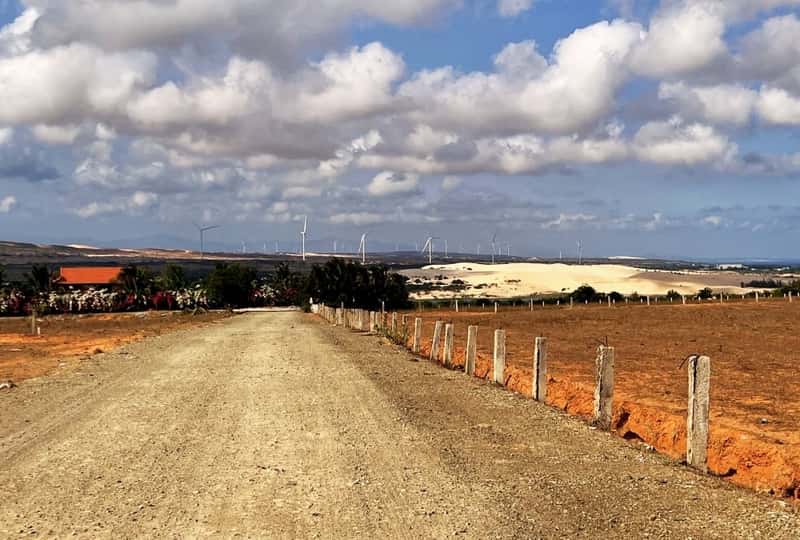
If you’re already comfortable riding, especially after coming from Saigon by motorbike, exploring independently feels more natural.
You can linger longer at the wind turbines. Skip a stop if it feels too crowded. Return to the fishing village at a different hour. Pause along the coastal road without anyone waiting for you.
It requires a bit more planning and confidence, but it turns the day into something less packaged and more personal.
For us, having our own transport made Mui Ne feel less like a checklist and more like a landscape.
Is Mui Ne Worth Visiting
Mui Ne isn’t dramatic in the way Ha Long Bay is. It isn’t chaotic like Ho Chi Minh City. And it doesn’t try to overwhelm you with culture at every corner.
What it offers is space.
Space in the dunes. Space on the road. Space between fishing boats drifting just offshore.
If you’re looking for luxury beach resorts and calm turquoise water, you might find parts of Mui Ne underwhelming. The wind is strong. The landscape is dry. Some areas feel built for quick tours rather than slow discovery.
But if you appreciate contrast – desert-like sand meeting coastline, working fishing villages beside tourist jeeps, long stretches of road where you can feel the air change – then Mui Ne has its own quiet character.
For us, it worked best as a short escape. Two days felt right. Enough time to see the dunes at sunset, ride the coastal roads, and sit by the water without rushing.
Mui Ne isn’t about spectacle. It’s about texture.
And sometimes that’s enough.