Most flyers assume the person standing at the front of the cabin is there to enforce rules, not bend them. You buckle up, you wait your turn, and you don’t ask for much because you’ve already decided the answer is no. But cabin supervisors and pursers say yes to quiet requests far more often than passengers think to make them, and the pattern behind it is almost always the same.
Ask politely, ask specifically, and ask like a human being instead of a customer filing a complaint. None of this gets announced over the PA system, and some of it only works because almost nobody bothers to ask. Here’s the full list, counted down to the one request crews say matters more than any perk in the cabin.
#23 – The Full Can, Not the Tiny Cup
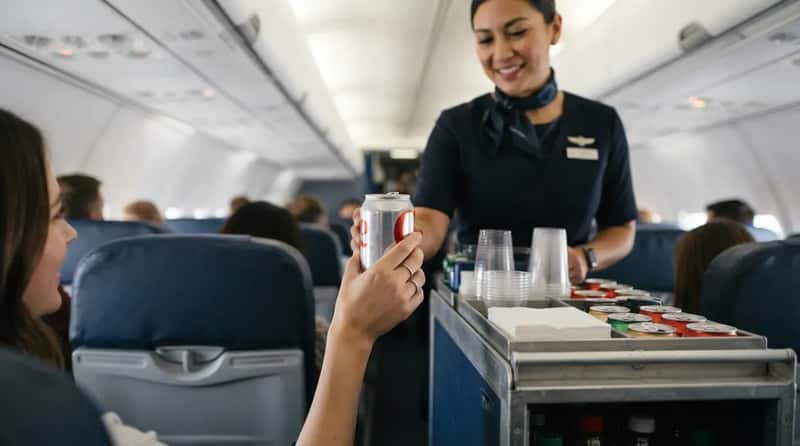
Most economy passengers accept a half-filled plastic cup without ever questioning it. What almost nobody realizes is that a full stash of cans is sitting right behind that cart, out of sight for the entire flight.
Crews aren’t hiding the cans out of stinginess – pouring is just faster during a rushed beverage service. Asking for the whole can instead costs the airline nothing, since it was already loaded for the flight, and passengers who ask are almost never told no.
#22 – A Second Pass With the Snack Basket
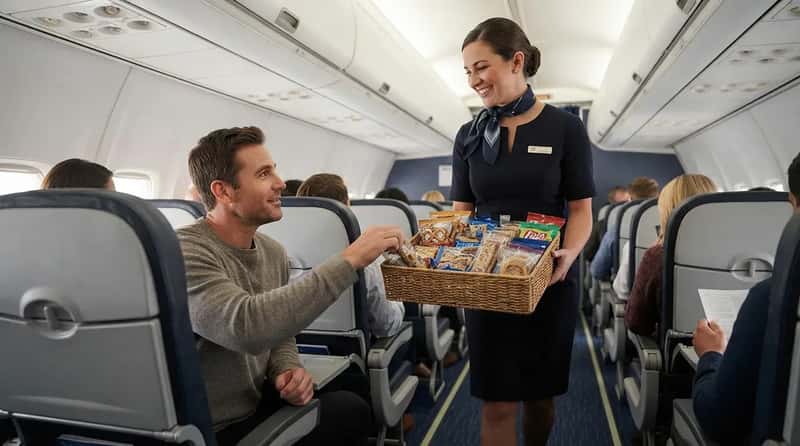
The snack basket usually only rolls down the aisle once, and most passengers assume that’s the end of it. It isn’t – crews typically keep backup stock tucked away in the galley for exactly this reason.
That reserve exists for people who missed the first round or simply want seconds. A polite flag-down after the cart has passed still has a real shot, even though almost nobody realizes the basket can come back around.
#21 – Bottled Water Instead of Tank Water
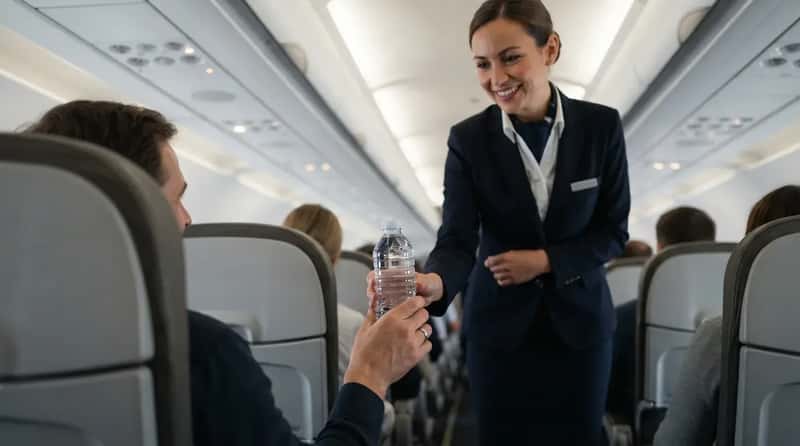
Frequent flyers have quietly known this trick for years, and it’s finally spreading: bottled water, canned soda, and juice all come from sealed containers, never from an onboard tank.
Coffee and tea are the only drinks made from tank water, which only gets refilled between flights instead of deep-cleaned. This isn’t a secret crews guard closely – many will recommend the switch themselves if you simply ask, and they rarely push back.
Worth Knowing
- The federal Aircraft Drinking Water Rule (ADWR), in place since 2011, requires airlines to provide safe drinking water onboard.
- Airlines are required to disinfect and flush each aircraft’s water tank four times per year, or alternatively, an airline may choose to disinfect and flush once a year if it tests monthly.
- That same tank water is where the water used for hand washing in the lavatories and for making beverages like tea and coffee comes from.
#20 – A Fresh Stack of Napkins or a Hot Towel
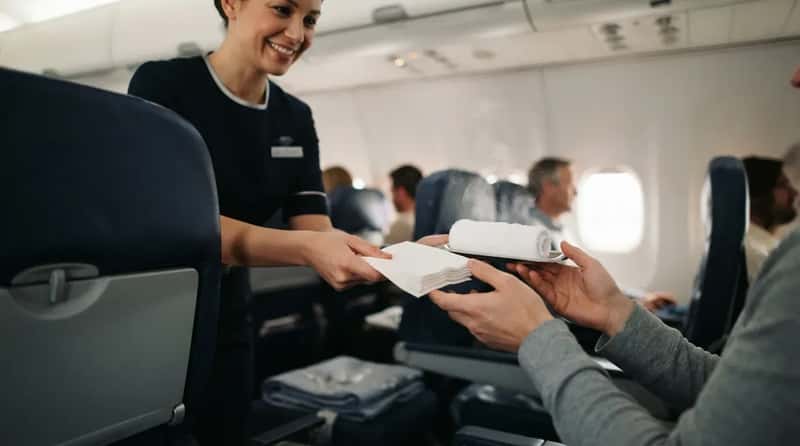
Spills happen constantly on planes, and most passengers just dab at the mess with the single napkin they were handed. Asking for a small stack “just in case” is one of the fastest yeses in the entire cabin.
Some international carriers even hand out hot towels proactively before meal service. On domestic routes, crews will usually produce one anyway if you simply ask – it’s a tiny request that almost never gets refused, yet most passengers never think to make it.
#19 – Someone to Lift the Bag Into the Overhead Bin
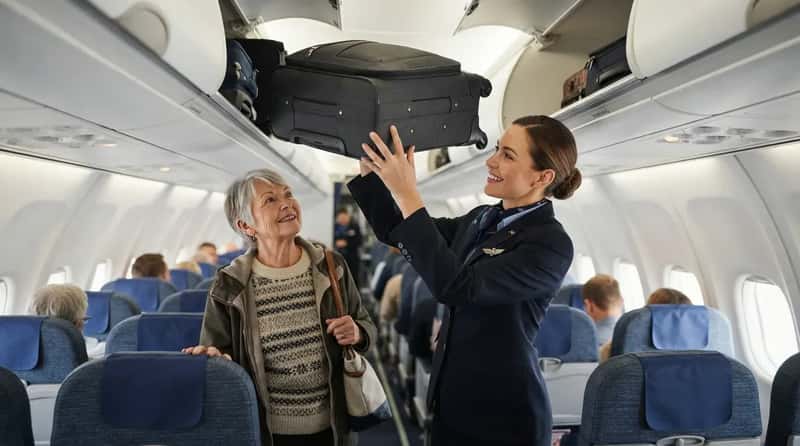
Officially, stowing your own carry-on is your job, not the crew’s. In practice, that rule bends constantly for the right passenger – one veteran flight attendant says she’s always happy to help anyone who genuinely needs it.
The catch is how you ask. Crews say older travelers who request help upfront, instead of struggling silently or demanding it, get assisted first and fastest – silence and entitlement both get ignored, but a simple ask rarely does.
#18 – A Quiet Pack of Tissues, No Questions Asked
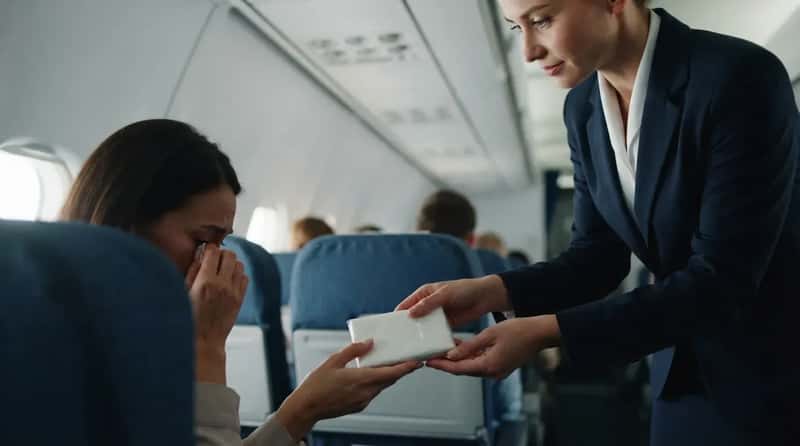
Cabin crew carry more than snacks and safety cards. One veteran flight attendant explained that some passengers are terrified to fly, while others board crying because they’ve just lost or left someone behind – and she always keeps a pack of tissues in her kit for exactly that moment.
Nobody has to explain why they’re upset to get one. The request gets granted instantly, with zero follow-up questions, making it one of the most consistently approved comfort requests on any flight – precisely because crews expect it.
#17 – A Seat Swap So a Parent Sits Next to Their Kid
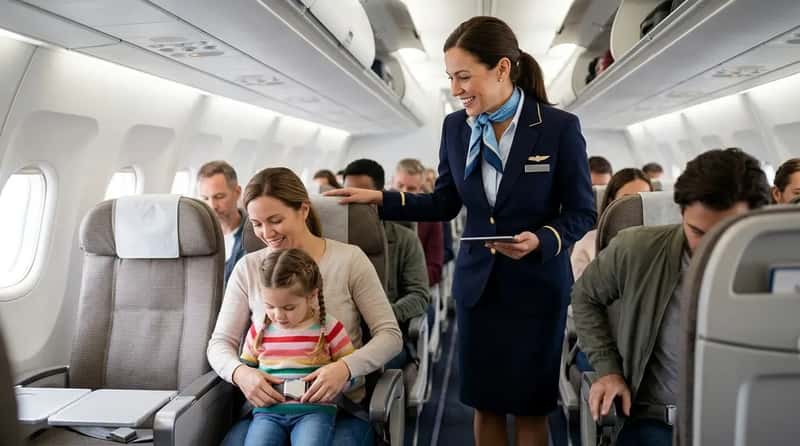
Nothing triggers a faster yes from a supervisor than a parent separated from a young child. Seat-swap requests are among the most common things crews hear on every single flight, whether it’s a family trying to sit together or friends hoping to land in the same row.
“It’s in our interest to get people together, because you don’t want the grief of people being separated,” one flight attendant says. Crews will almost always try to reunite a parent with a young child whenever the seat map allows it – availability isn’t guaranteed, but the effort almost always is.
#16 – Reuniting a Split-Up Family Across the Cabin
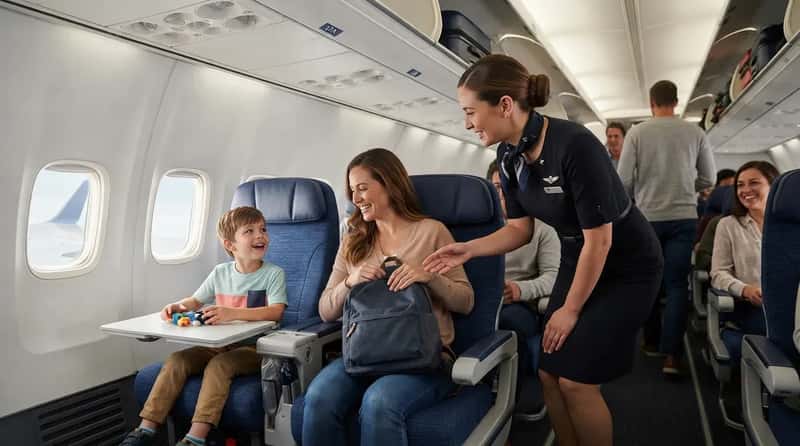
It’s not just parents and kids. Groups scattered by a booking glitch get the same quiet priority, and flight attendants will often shuffle seats before boarding even finishes to fix a family split or resolve a duplicate seat assignment.
Crew members scan the seat map early, looking for an easy fix. They can’t force other passengers to move, but travelers are often happy to swap once they understand why – and most of these reunions happen before the seatbelt sign ever comes on.
#15 – A Meal Swap for Dietary or Religious Needs
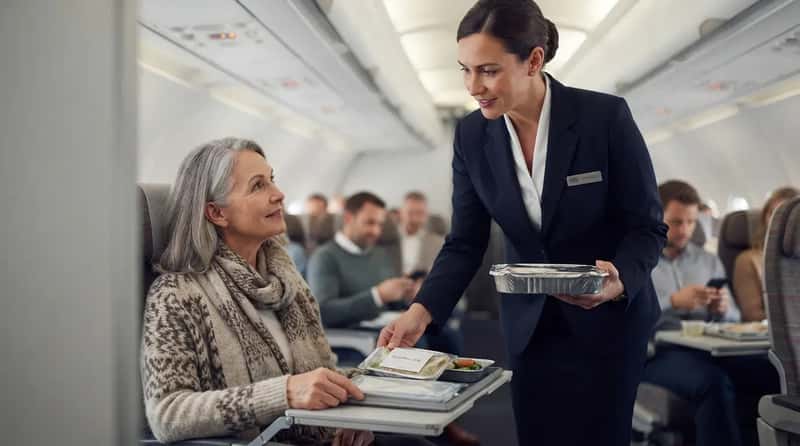
Special meals ordered in advance sometimes don’t show up, and passengers assume they’re stuck for the rest of the flight. That’s rarely the actual outcome – passengers who pre-ordered for dietary, religious, or medical reasons are rarely refused a swap once the mistake is caught.
Crews treat these requests differently than a simple menu preference, because a missed special meal is treated as an operational failure, not a passenger inconvenience. The swap gets approved almost automatically once a flight attendant realizes what went wrong.
#14 – A Discreet Upgrade Check Before Boarding Closes
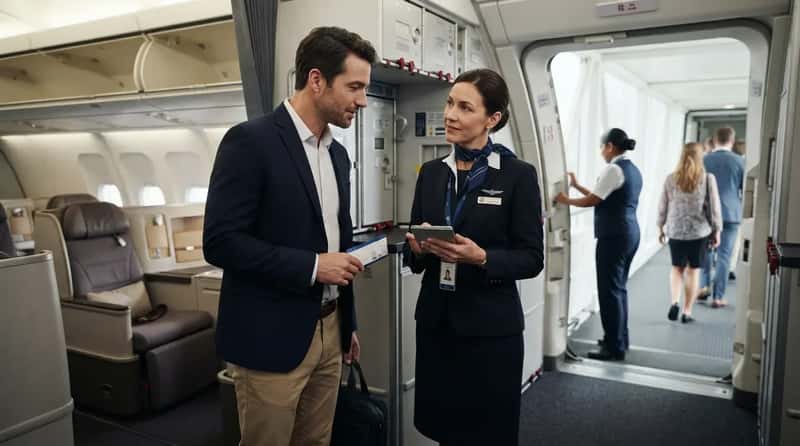
Most passengers think upgrades only happen at check-in through miles or cash. Cabin crew see it differently once the doors are about to close, even though most airlines strictly prohibit arbitrarily upgrading passengers already seated on the plane.
Still, asking politely if there’s room in business or premium rarely hurts – your odds improve if you’re dressed neatly, traveling solo, the flight isn’t full, and you board last. The pattern is specific, but it’s real: solo, polite, and last onto the plane beats loud and early almost every time.
Quick Compare
- Solo traveler asking quietly vs. a group asking loudly – solo wins almost every time.
- Dressed neatly vs. dressed for comfort only – appearance still nudges the odds.
- Boarding last and asking discreetly vs. asking first thing at the gate – last works better.
- A flight with empty seats up front vs. a full cabin – empty seats are the real deciding factor.
#13 – Borrowing a Phone Charger From the Crew
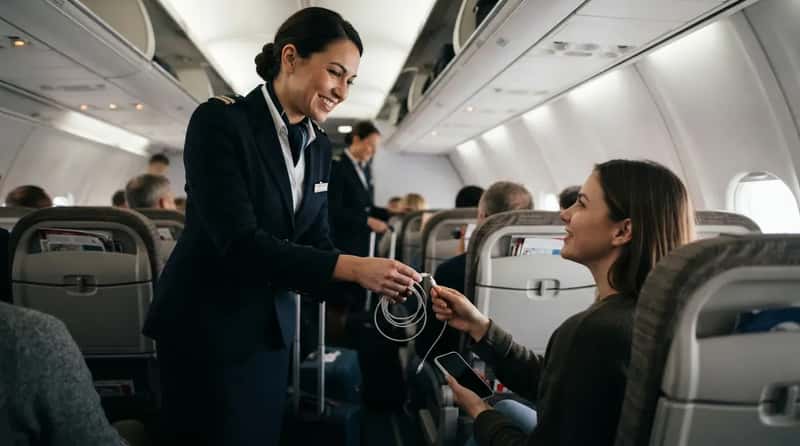
A dead phone before a long flight feels like a small emergency, and crews know it. Most flyers never think to ask because it feels like an imposition – it rarely is.
If you need to borrow a charger or swap seats to reach an outlet, the request goes a lot smoother if you’re already on good terms with the crew. Crews remember who said “please” during boarding far longer than passengers expect, and that goodwill pays off later.
#12 – An Extra Blanket or Pillow on the Overnight Flight
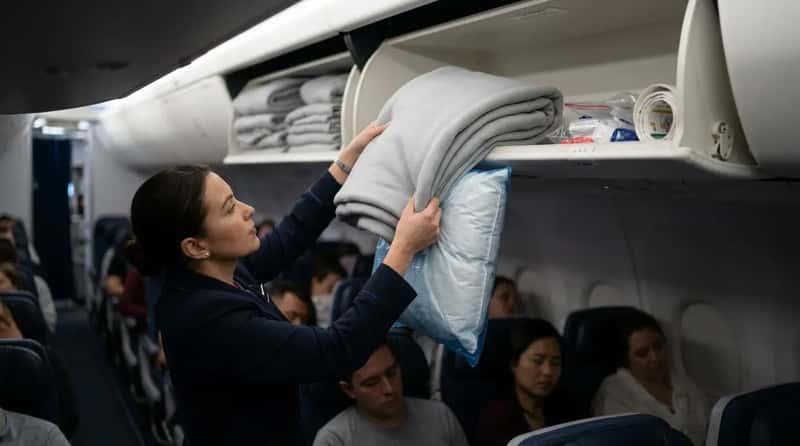
Red-eye flights load extra blankets for a reason, but the visible supply on the cart often runs out fast during boarding. What most passengers don’t realize is that a backup stash usually still exists in a closet or overhead bin.
Crews will go dig for one if asked directly, rather than letting a shivering passenger struggle through a six-hour flight. It’s a low-stakes request with an almost guaranteed yes – the trick is simply knowing to ask instead of assuming the cart already ran dry.
#11 – Personal Rebooking Help During Mass Cancellations
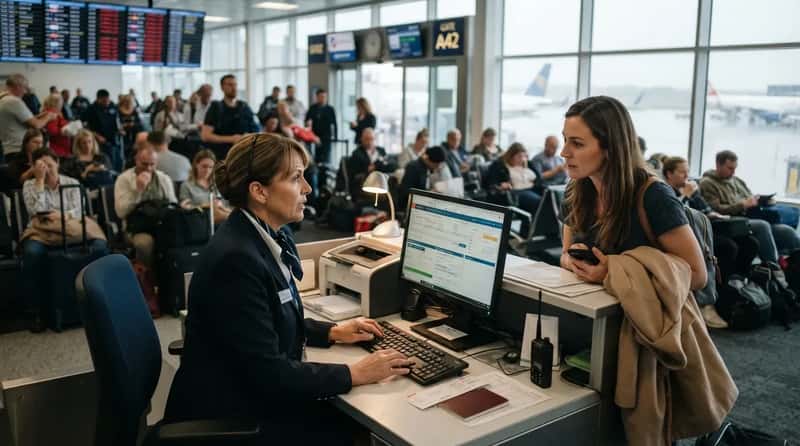
When a storm grounds dozens of flights at once, most passengers assume their only option is a two-hour hold with a call center. That’s often not true at the gate or aboard a delayed aircraft.
During a mass disruption, supervisors are frequently granted temporary authority to rebook passengers onto partner airlines and alternate routes – but that authority never gets announced over the intercom. Passengers who ask a supervisor directly, instead of waiting in a phone queue, often get resolved faster, because the fix exists the whole time.
#10 – Mobility Aids Stored in the Cabin Closet, Not Cargo
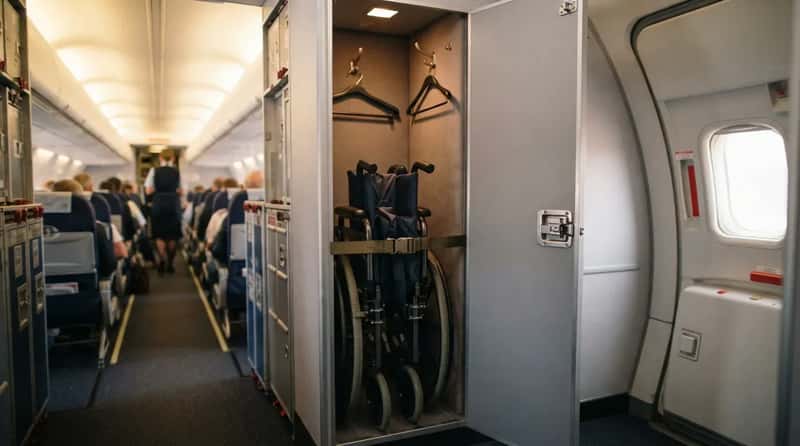
Folding wheelchairs, walkers, and other mobility equipment don’t automatically have to ride below in cargo. For smaller folding aids, gate agents and flight attendants can approve storage in an onboard closet instead of sending the equipment down with checked luggage – dramatically cutting the risk of damage.
This isn’t guaranteed on every aircraft, since closet space varies by plane, but experienced travelers say asking specifically for closet storage changes the outcome more often than airlines let on. It’s a request most passengers with mobility needs don’t even know exists, let alone ask for by name.
#9 – Service Animal Placement Without the Usual Fight
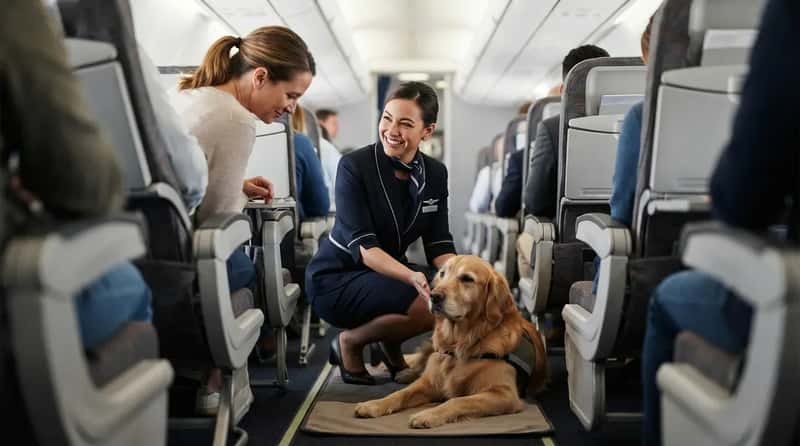
Passengers with service animals often brace for a drawn-out verification process at every checkpoint. That fear is usually outdated by now.
In practice, agents move fast here because the legal framework leaves little room for debate. Cabin placement gets sorted quickly, and the process ends up smoother than most passengers expect – precisely because crews have less discretion, not more.
Fast Facts
- Since the Department of Transportation’s Air Carrier Access Act final rule took effect in January 2021, US airlines may require exactly one document from service dog handlers: the US DOT Service Animal Air Transportation Form.
- For flights of 8 hours or more, they may additionally require the Relief Attestation Form.
- Service dogs still fly free in the cabin, no questions asked beyond a one-page form.
- Emotional support animals no longer qualify for the same protected cabin access under the rule.
#8 – A Word to the Captain to Radio Ahead
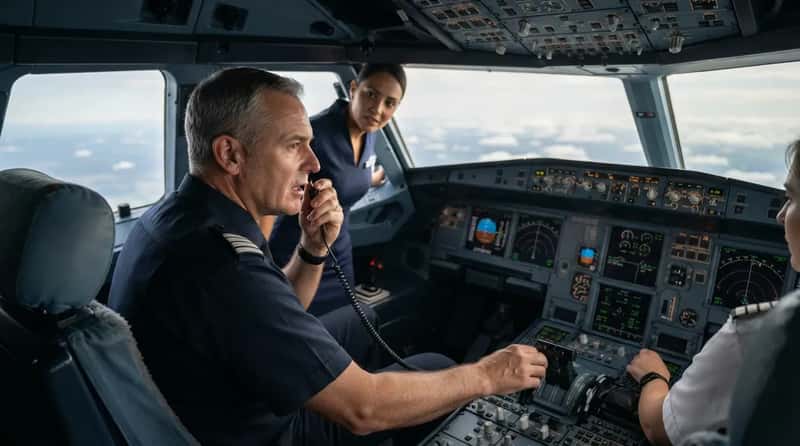
Some requests never show up on any official list because they’re handled quietly, cockpit to ground. When a family emergency unfolds mid-flight, crews have more reach than passengers assume.
In one widely shared account, a flight attendant offered to call the airport after landing – only for the passenger to later learn the captain had already radioed ahead so the destination airport knew the situation before the plane even touched down. Nobody advertises this option, because it’s meant for genuine emergencies, not convenience, but crews rarely hesitate to pass the message along when it’s asked for sincerely.
#7 – A Second Lap of the Duty-Free Cart
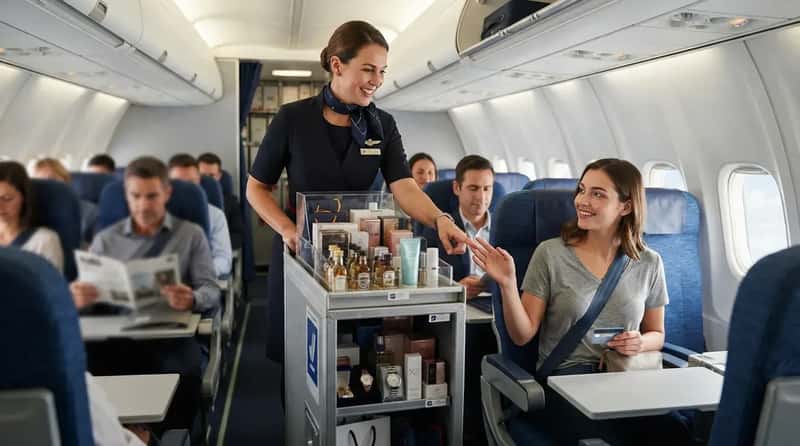
Duty-free carts usually make one slow pass, and passengers who miss it assume that’s the end of shopping for the flight. It usually isn’t.
A polite flag-down before landing prep begins often brings the cart back around, because crews would rather make one more trip than deal with a disappointed passenger after landing. It’s a small, low-priority request, but it’s one that almost never gets a flat no if there’s still time left in the flight.
#6 – An Extra Ice Refill Without Waiting for the Cart
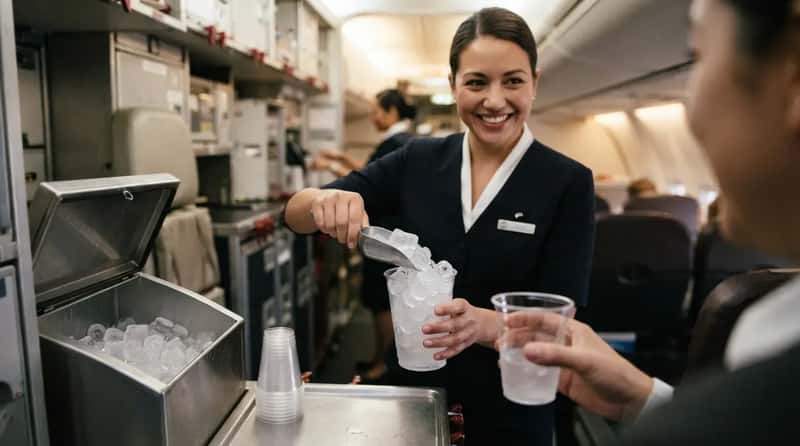
Ice runs out fast on longer flights, and most passengers just accept a lukewarm drink for the rest of the trip. What they don’t realize is that crews keep more in the galley than what makes it onto the cart.
Asking directly, instead of waiting for the next pass, usually gets a refill topped off within minutes. It’s a minor comfort, but it adds up on a five-hour flight in a warm cabin – most passengers just never ask twice.
#5 – A Reset After a Broken Headset or Screen
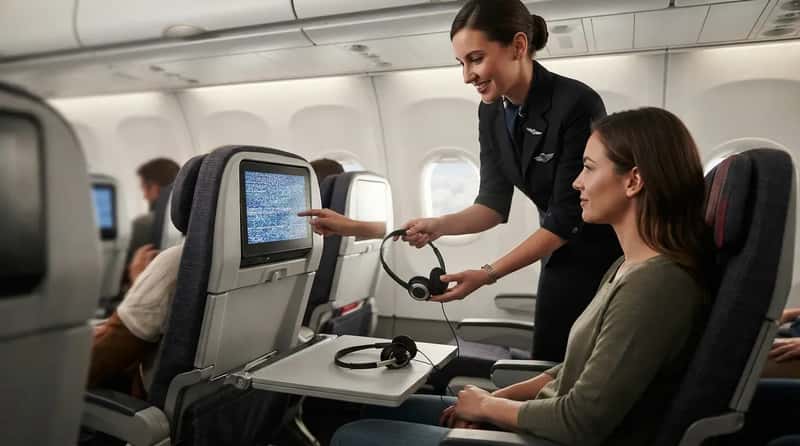
Entertainment systems glitch constantly, and most passengers shrug it off rather than flag a crew member mid-flight. That’s a missed opportunity, because a quick reset or a swapped headset is one of the easiest fixes crews handle.
It costs the airline nothing and takes seconds to resolve. Crews would rather solve a small tech complaint on the spot than deal with a frustrated passenger filing a complaint later – a five-second ask usually beats a five-minute sulk.
#4 – Priority Off the Plane for a Tight Connection
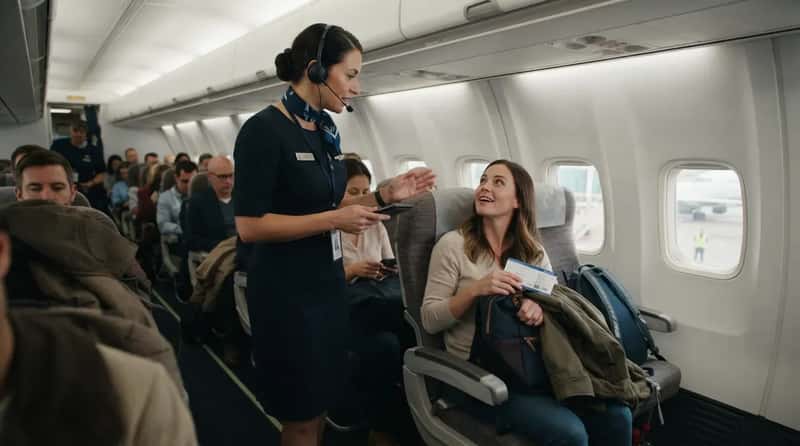
Passengers with a short connection window often sit in silent panic instead of saying anything, assuming there’s nothing the crew can do. Speaking up earlier in the flight changes the outcome more than most people realize.
Crews can quietly rearrange who deplanes first when a genuinely tight connection is flagged in advance, rather than announced at the last second while everyone’s already standing. It’s not guaranteed, but a calm heads-up mid-flight gets far more cooperation than a frantic ask at the gate.
#3 – A Comped Drink When the Delay Is the Airline’s Fault
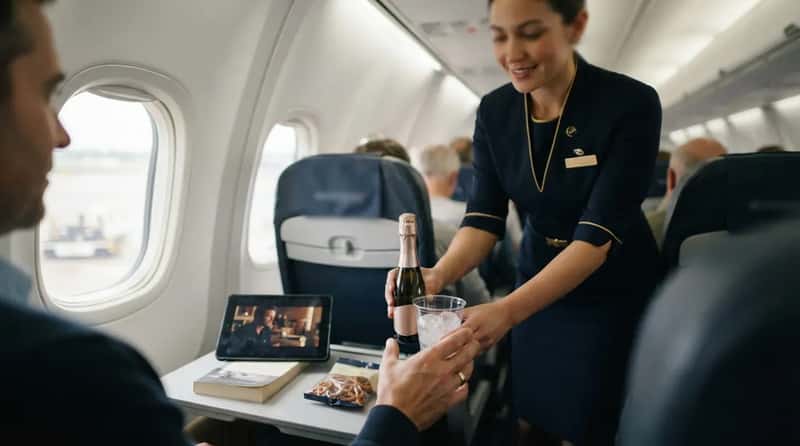
Weather delays rarely come with apologies from the crew, but mechanical or scheduling delays get treated very differently. Crews recognize almost instantly when a delay is the airline’s fault rather than the sky’s.
That distinction matters because crews have some discretion when the airline itself caused the inconvenience. Passengers who mention the delay calmly, rather than angrily, often get offered something without even asking outright – tone changes the outcome more than the complaint itself.
#2 – Moving a Frightened Flyer Closer to the Crew
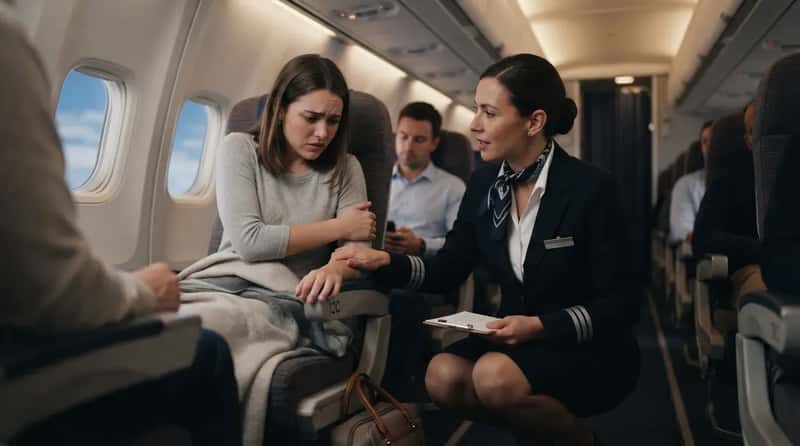
Nervous flyers rarely announce their anxiety out loud, and most suffer through takeoff in silence. Crews notice more than passengers assume, and a quiet request to move somewhere calmer is taken seriously.
It’s not always possible depending on the cabin layout, but crews will often check what’s available rather than dismissing the request outright. The goal isn’t comfort for its own sake – it’s keeping a nervous passenger from spiraling mid-flight, which benefits everyone in the row.
Why It Stands Out
- Most of the requests on this list involve an object – a can, a blanket, a charger.
- This one and the next are different: they’re about noticing a person, not solving a logistics problem.
- Crews describe these moments as the ones they remember long after the flight number is forgotten.
#1 – The Quiet Human Moment No Policy Requires
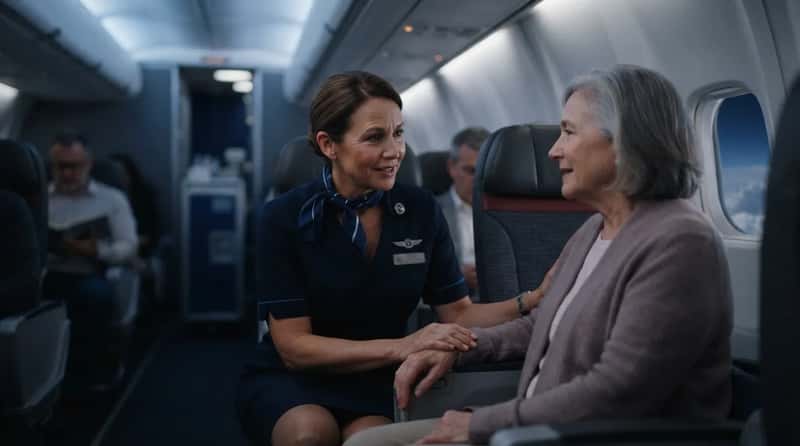
Every request on this list has a logistical shape to it, except this one. The biggest things crews grant aren’t logistical at all – they’re deeply, quietly human: a hand on the shoulder, a few extra minutes of conversation, a promise to check in before landing.
None of these favors require elite status, a fat tip, or a first-class boarding pass. What they require is exactly what crews keep repeating – patience, specificity, and basic manners. It’s the one request that was never really about the plane at all.
None of these approvals show up in a passenger handbook, and none of them require status, money, or luck. What they all share is a simple pattern: crews respond to specificity and courtesy far more than most flyers assume. The passengers who fly the same routes for years already know this, while everyone else just keeps accepting the small cup, the single napkin, and the seat they were given.
The next flight you take, try asking for one thing on this list instead of assuming the answer is no. Which one are you trying first? Drop it in the comments.