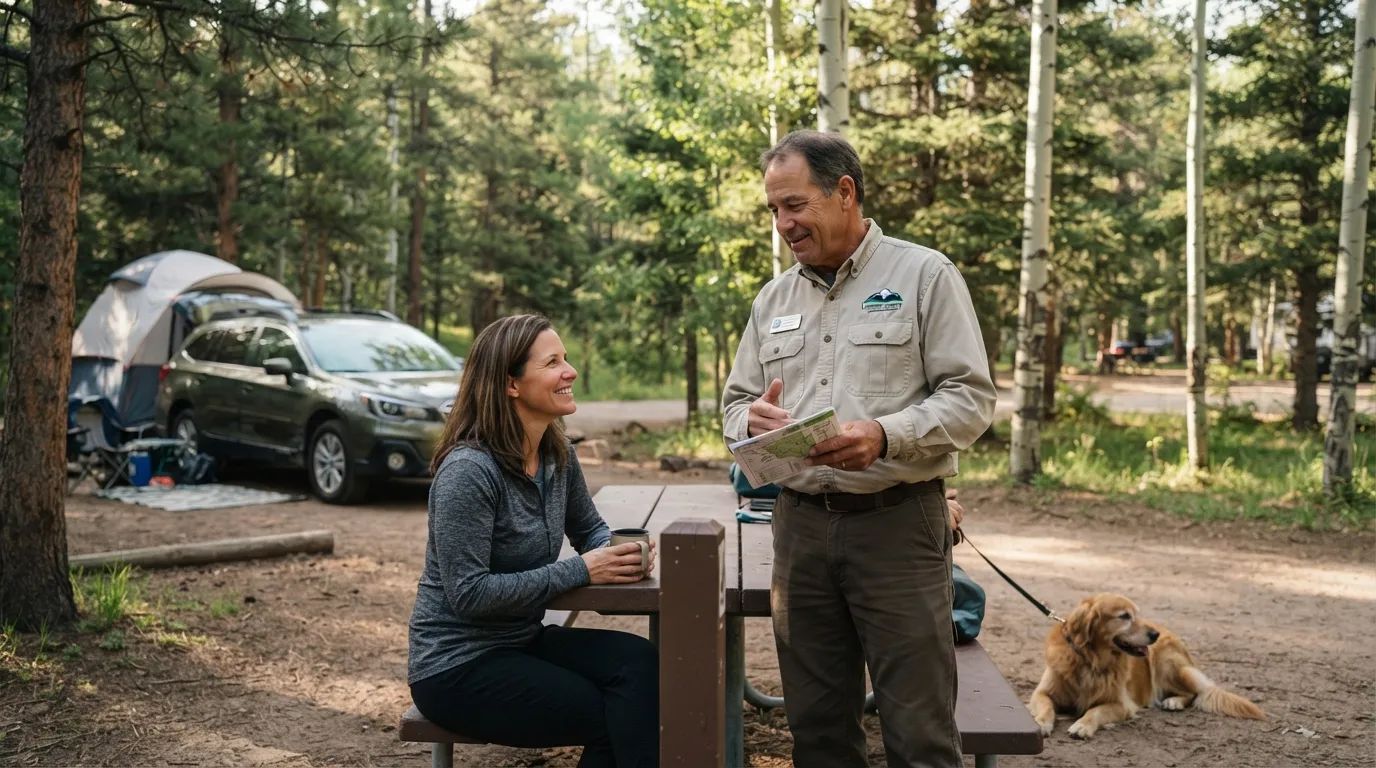
You’ve waved at the campground host a hundred times and figured that was the whole job. A friendly face, a golf cart, maybe a clipboard. Then you read an actual park host duty list and realize the real shift starts while the loop is still quiet, the fire rings are still gray and the first car is nowhere in sight.
Here are 17 things hosts handle before your tires touch the gravel, drawn from real duty lists at county and state parks. Some look dull on paper. A few are the quiet reason your weekend doesn’t fall apart. And the one waiting at #1 explains how every other item on this list actually holds together.
#17 – The Radio Check Nobody Hears Happen
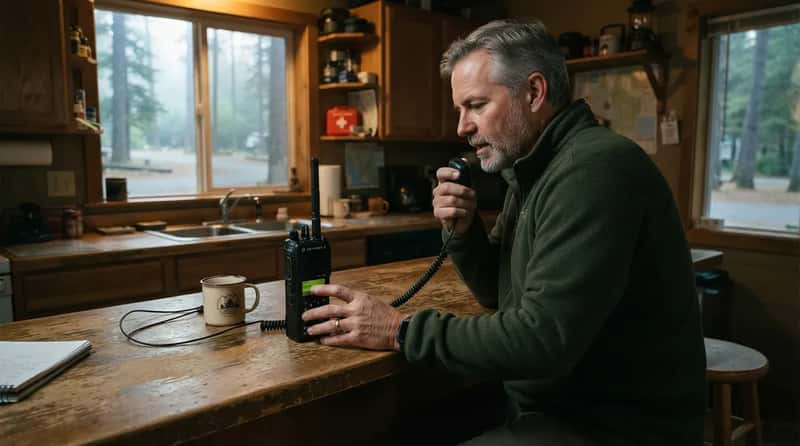
Before a single tire hits the gravel, many hosts are already plugged into the park’s communication line. Host duty lists at some parks include answering the phone, voicemail and the two-way park radio. That means the day’s first “all clear” often travels by radio, not by a wave across the loop. Most visitors never see it happen.
A host who can’t reach staff can’t fix anything. A dead battery or a muted handset on a Saturday morning can turn a small problem into a long wait. So the quiet test happens early, and it happens every time. The most important tool in the campground is often a radio sitting on a kitchen counter.
But that’s nothing compared to what hosts do with the keys on their belt in #16…
#16 – Unlocking the Buildings You Assume Are Always Open
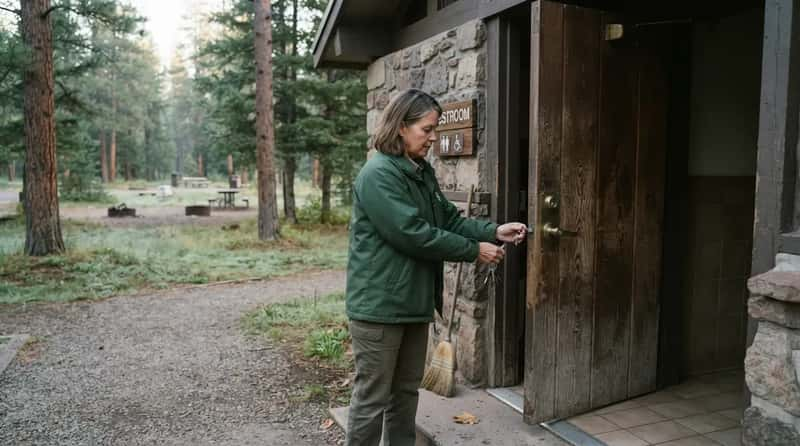
That restroom door didn’t open itself. Some park host job lists include locking and unlocking buildings. In plenty of places, a person walks over at an early hour, turns the key and checks what’s inside before you ever reach for the handle.
That early look is the whole point. A host who unlocks a building also sees what happened overnight, from a burned-out light to a fallen branch near the door. The same key that lets you in is also the first inspection of the day. If something looks wrong, it gets reported before your first car even parks.
Worth Knowing
- Unlocking is only step one. The real task is looking around once the door swings open.
- Overnight surprises tend to show up first at buildings: dead bulbs, debris, damage.
- Anything that needs repair usually goes to park staff, not a host’s toolbox.
- Doors and locks vary by park, so some properties split this job between hosts and staff.
Next up is a spot hosts check that parents rarely think about…
#15 – The Playground Inspection Before the Kids Run Out
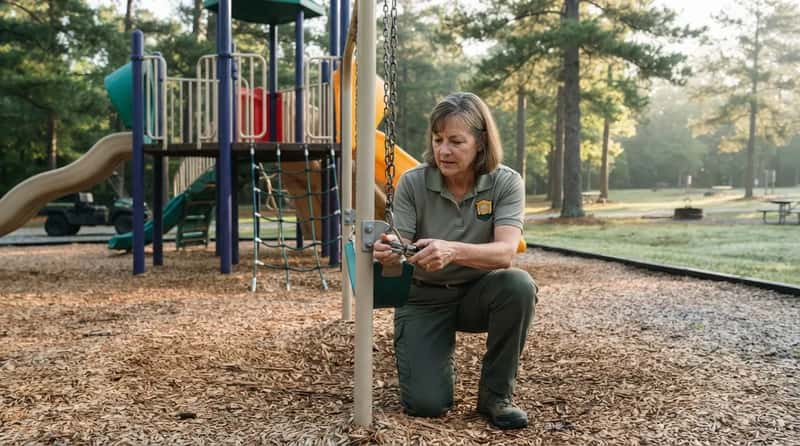
Swings and slides get checked before the first kid sprints toward them. One county park’s host duties include inspecting the playground area daily. It’s a quick walk, but it can catch loose hardware, broken pieces or debris that wasn’t there yesterday.
Here’s the catch most parents miss. Hosts generally don’t repair equipment themselves. The same duty list says to notify park staff of equipment malfunctions. The host’s real job is spotting the problem early and getting it to the people who can fix it. That small handoff keeps a minor wobble from becoming a bad day.
And the next one is a chore that never ends, no matter how clean the loop looks…
#14 – The Litter Sweep That Never Really Stops
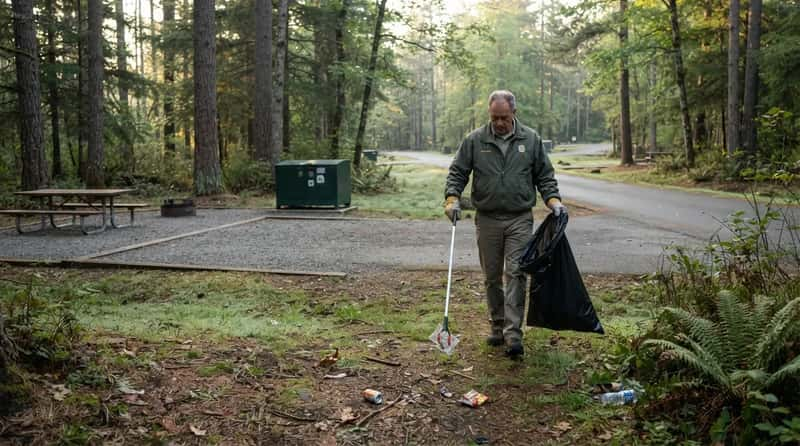
Trash is the one thing that returns every single night. Park host lists call for picking up trash throughout the campground as needed. Wrappers blow out of overfilled bins. Bottles hide under picnic tables. A host’s first lap often looks like a slow scavenger hunt.
Here’s the part that surprises people. The loop looks clean at check-in because someone cleaned it, not because the last crowd left it that way. A spotless campground is usually the result of work you never saw. Every scrap that stays out of the loop is a few more minutes a host can spend on everything else on this list.
But the pad under your tent is where the real detail work happens in #13…
#13 – Raking the Pad Like It Was Never Used
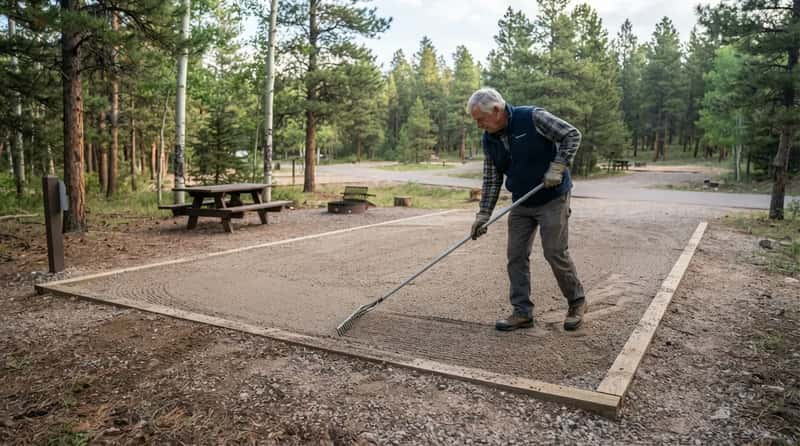
The spot you pulled into was likely prepared for you. Larimer County’s host description mentions checking the sites of campers who have left to make sure they’re usable for the next camper, including raking the camp pad as needed. That means smoothing, clearing and picking up whatever the last group left behind.
It sounds trivial until you’ve pitched a tent on a pile of someone else’s cigarette butts. A good host walks the site like an inspector. Your “fresh” campsite was probably someone’s second pass. A flattened tent area or a cleared parking spur is often the difference between a smooth arrival and a grumpy one.
Next, a tag that decides whether your site is truly yours…
#12 – The Reservation Tag That Keeps Your Spot Safe
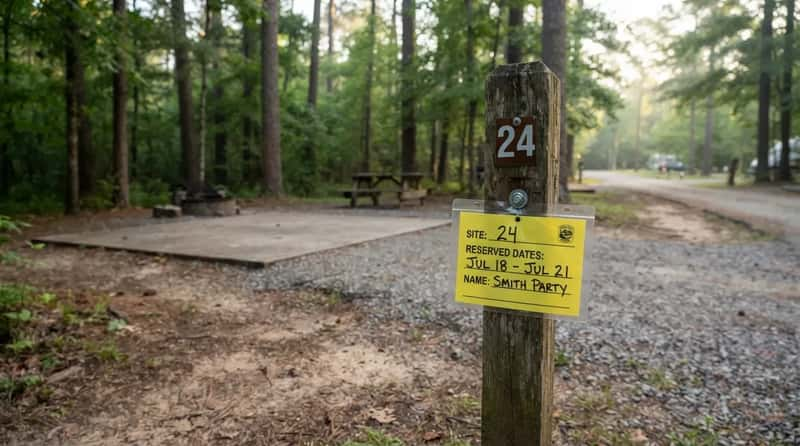
Those little tags on posts are doing real work. Hosts at some parks place reservation tags as part of the onsite reservation process. Without them, an arriving family might pull into a site that someone else already paid for, and an awkward standoff begins at sundown.
Hosts do this early so the loop is readable before cars roll in. A single missing tag can send two parties to the same site. Apps and printed confirmations help, but a visible marker on the post settles the question before anyone has to argue about it.
But the next item involves the people who don’t show up on time, and it gets interesting…
#11 – Spotting the Camper Who Never Paid
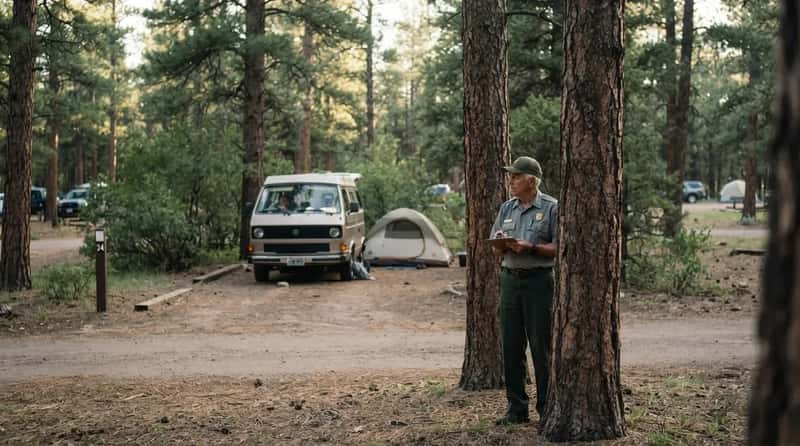
Someone is quietly counting vehicles. Some host duties include reporting unpaid or late-arriving guests to staff. That’s not a confrontation. It’s a note passed to the people who handle fees and enforcement.
The reason matters. If a site sits occupied but unpaid, a paying camper might be turned away from a spot that looks empty, or a legitimate arrival might find the pad already taken. Hosts usually report; they don’t punish. It’s a surprisingly delicate role, and it explains why a friendly host can still be the one who knows exactly who’s missing from the roster.
Coming up, a job that starts at first light, whether anyone’s awake or not…
#10 – Opening the Gate at Dawn
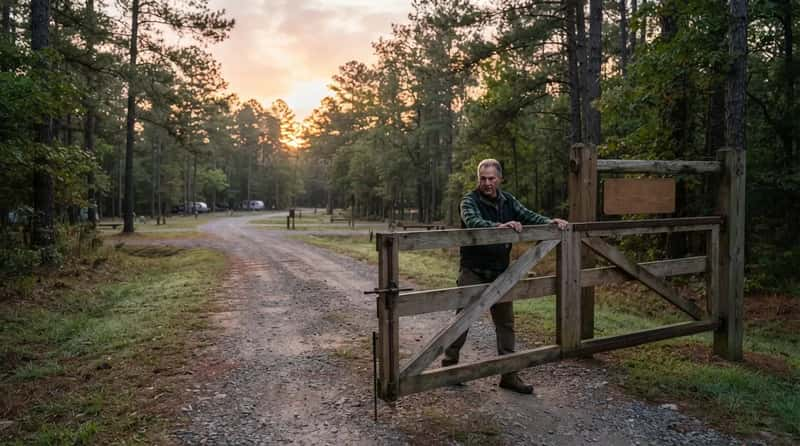
At some parks, the day literally begins with a gate. One county park lists opening the gate at dawn and closing it at dusk among host duties. Others split gate work between hosts and staff, depending on the property.
It sounds simple, but it comes with a catch. That same park asks hosts to walk the grounds before closing to confirm guests have left. The gate is the start and end of a daily loop that most visitors never notice. And if you’ve ever wondered why someone appears near your site around closing time, now you know.
But the next stop is the spot every camper judges a campground by…
#9 – The Shower House and Pit Toilet Reality Check
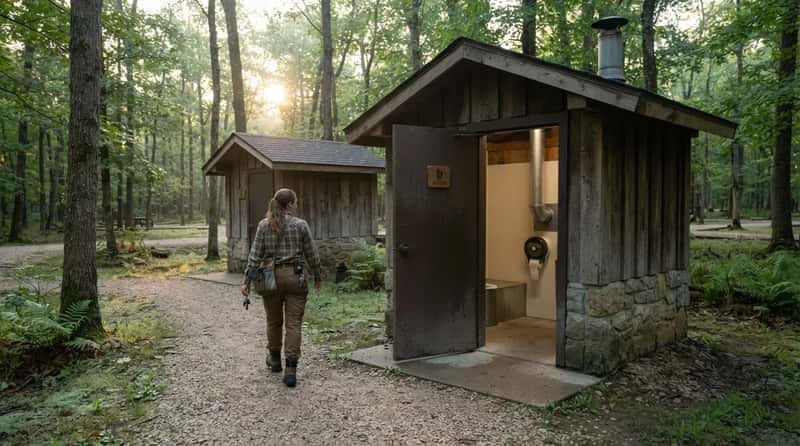
Everyone judges a campground by its bathrooms, and hosts know it. Indiana’s program descriptions list checking shower houses and pits for cleanliness and toilet paper. It’s a daily ritual, and it’s one of the biggest reasons campers walk away happy.
Here’s the truth most campers never realize. A restocked roll of toilet paper isn’t luck. Someone walked to a pit toilet at dawn to make sure you wouldn’t be stuck. Camping bathrooms have a reputation for being rough, but a host’s morning loop is the reason they’re usually better than you’d expect.
Quick Compare
- What campers notice: A stocked roll and a decent floor.
- What a host did: Walked out early to check cleanliness and supplies.
- What happens if skipped: A small gripe becomes the review everyone remembers.
And speaking of things people expect to be ready, the next one involves fire…
#8 – Clearing the Fire Ring Before You Strike a Match
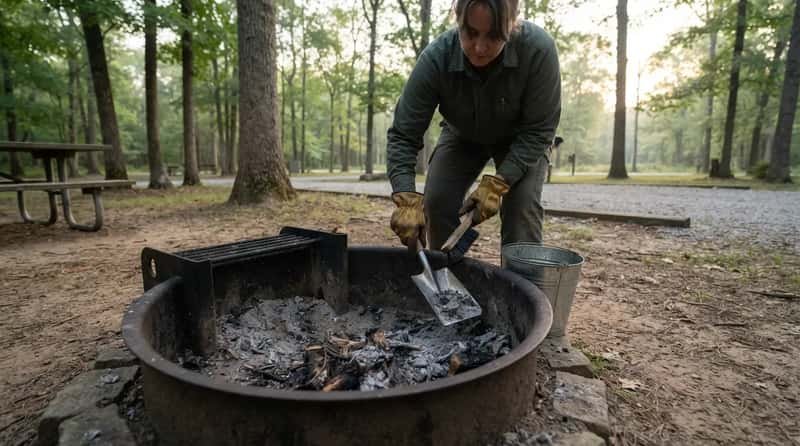
The charred mess from last night’s group is gone before you arrive. Host duties at Indiana properties include cleaning out fire rings after campers leave. It’s a grimy job, and it happens at dawn, with no applause.
There’s a safety angle too. Larimer County’s list includes checking fire pits to make sure the fire is out. A smoldering ring left by an earlier camper is exactly the kind of thing hosts are there to catch. If your fire ring looks suspiciously clean, that’s a host’s work, not coincidence.
Next, the firewood question that divides campers…
#7 – The Firewood Stash You Didn’t Have to Haul
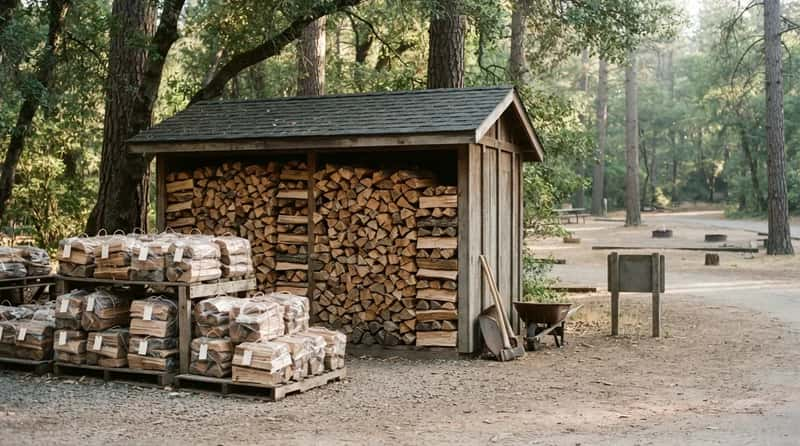
Hosts often sell the wood you were about to drag from home. California State Parks lists firewood sales among duties at some host positions. Stocking and organizing that supply happens before arrivals, so a bundle is ready when you are.
Here’s the opinion that starts arguments: plenty of campers say buying firewood at the campground is a ripoff. Plenty of hosts would say it’s the opposite, because the wood is nearby, convenient and sold to benefit the park. Hauling logs from home isn’t always the bargain campers think it is. Check your park’s own rules before you load the trunk.
But the next item is the one hosts take most seriously in bear country…
#6 – Bear Boxes and Food Storage Walk-Throughs
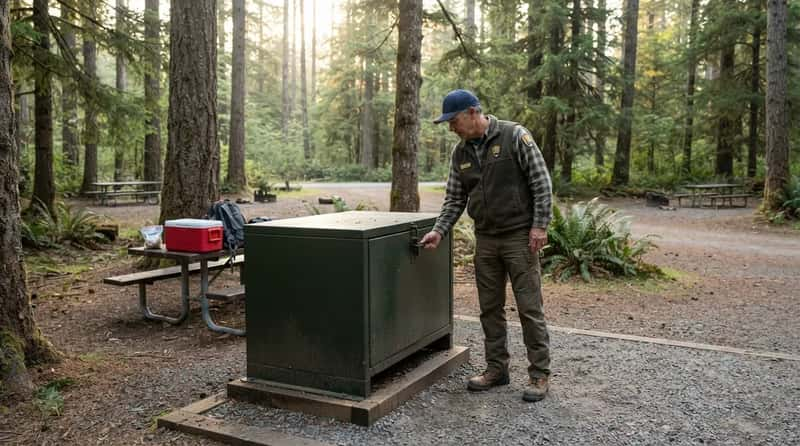
In some campgrounds, a host’s early walk includes checking the storage lockers. One county’s campground-specific duties mention checking bear boxes. A broken latch or a lid left open can turn a quiet morning into a wildlife problem.
The wider rule is bigger than most visitors realize. Many parks require food to be stored in lockers, hard-sided vehicles or bear boxes. That includes pet food, trash and scented items, not just the cooler. A host who spots an unlatched box early is protecting the campers and the animals at once.
Fast Facts
- Approved storage in many bear-country parks: lockers, hard-sided vehicles or bear boxes.
- Pet food, trash and scented items count right alongside groceries.
- A bent latch or open lid is exactly what an early host walk is meant to catch.
- Rules differ by park, so the posted campground rules are the final word.
That’s serious, but the next one happens when the crowd arrives all at once…
#5 – Friday Evening Traffic Planning
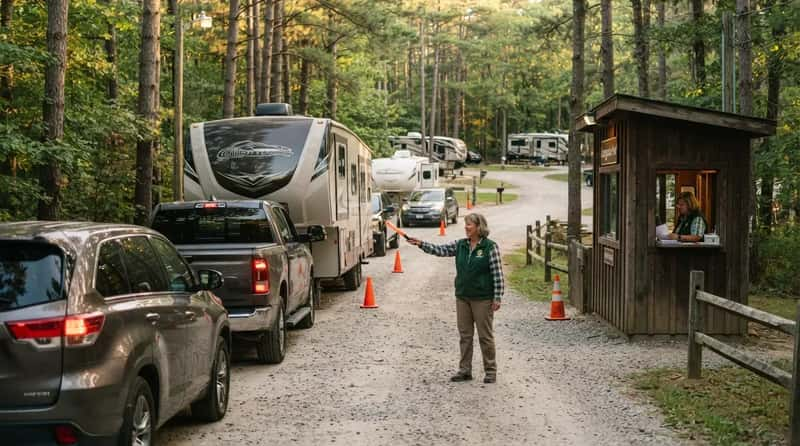
Friday at 5 p.m. can look like rush hour in a pine forest. One Indiana host program assigns helping gatehouse attendants with registration and traffic control on Friday evenings. Another lists traffic control on Friday evenings and Sunday mornings.
The prep happens beforehand. Hosts figure out where lines will form, which loop fills first and where large rigs might get stuck. The calm arrival line you drive through is usually a plan, not luck. Waiting at the gate is no fun, but without someone directing traffic, it would almost certainly be worse.
But the next item comes with a sky you can’t control…
#4 – The Storm Plan Hosts Rehearse in Silence
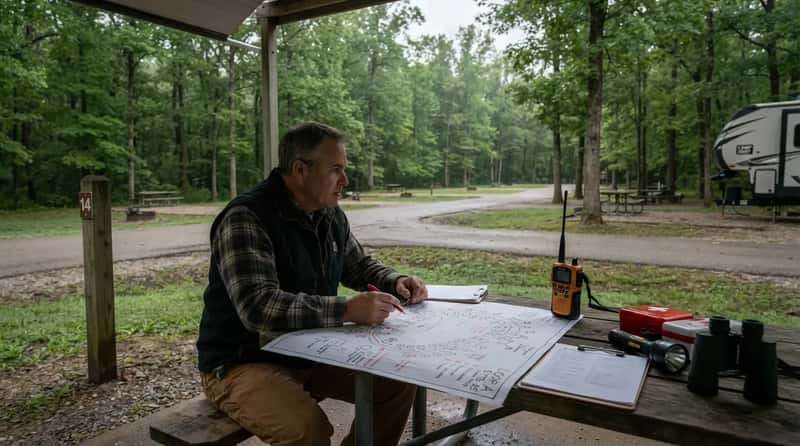
Hosts think about weather before you check the forecast. One Indiana property lists assisting with severe weather procedures among its host duties. That can mean knowing where shelter is, how to alert campers and who to call.
Nobody puts it on the welcome sign, but it’s one of the heaviest responsibilities on the list. The friendly person at the host site may also be the first to carry a storm warning to the loop. It’s the reason many hosts keep a radio close and know their loop like the back of their hand.
And the next one is the problem that quietly costs parks the most…
#3 – The Little Hazards They Report Before They Become Big Ones
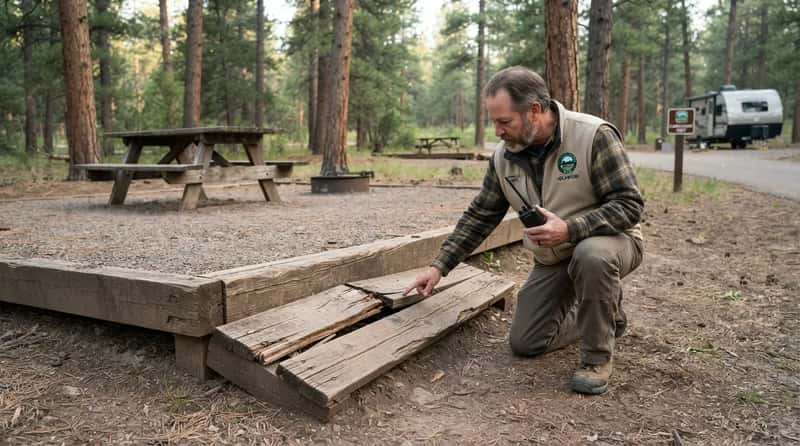
A leaning tree, a cracked step, a broken light. Hosts spot them early. Larimer County’s host duties include daily communication with rangers about guest or maintenance issues, safety hazards and emergencies. The report is often just a short radio call.
Skip that call, and a small issue grows. Many of the best campground fixes begin with a host’s two-minute note. It’s not glamorous, but it’s the reason that wobbly picnic table is gone by the time you arrive. Maintenance can feel invisible, and hosts are the eyes that make it possible.
But the next item may change how you think about the host’s entire role…
#2 – The Friendly Conversation That Replaces a Ticket
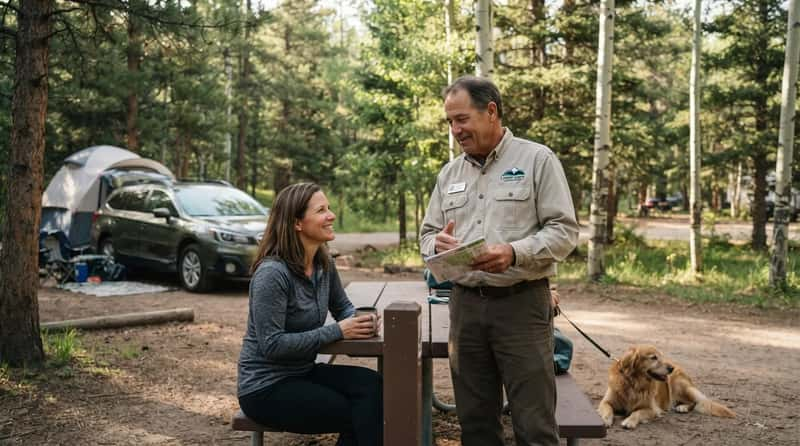
Hosts are there to chat, not chase. Larimer County says hosts educate campers about rules through courtesy contacts, while enforcement belongs to rangers. That’s a deliberate line, and it shapes how they spend their mornings.
So that early word about quiet hours or leashed pets isn’t gossip. It’s the first step in keeping rules from turning into citations. Some campers wish hosts would be tougher. The duty lists suggest the job is designed around gentle reminders and quick handoffs, not policing.
And now for the one that holds the whole list together…
#1 – The Quiet Loop Walk Before Anyone Else Is Awake
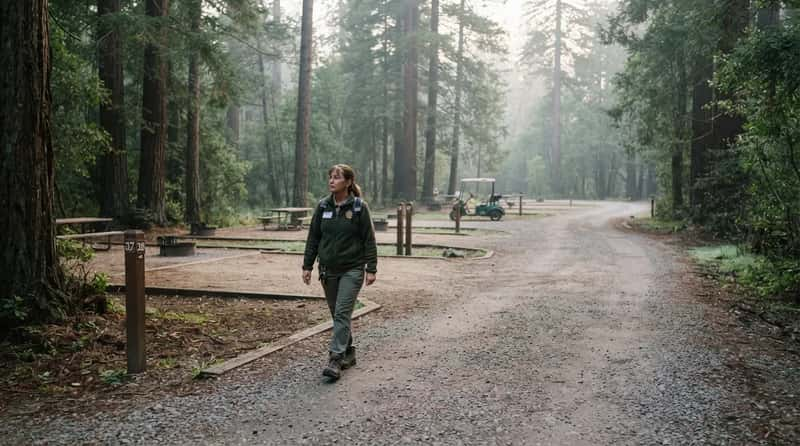
The most valuable thing a host does is also the least visible. One California state park lists campground checks at 0800 and 1800 hours. Those walks notice lights, vehicles, litter and anything that looks off.
Other parks make the same twice-daily check part of the job. Idaho’s host template, for example, lists complete campground checks twice a day. Everything else on this list is stitched together by that one slow walk. The restrooms, the fire rings, the hazards and the tags all reveal themselves when someone simply walks the loop and pays attention.
At a Glance
- One California state park lists checks at 0800 and 1800 hours.
- Idaho’s host template calls for complete campground checks twice a day.
- What the walk catches: lights, vehicles, litter and anything that looks off.
- Where it leads: the radio call, the cleanup and the quick fix.
So the next time a host waves from a golf cart, remember they may have been up and walking before the first light hit your tent. The gate was open, the radio was checked, the toilet paper was stocked and the fire ring was cold, all before you rolled in.
A smooth camping trip is built early and quietly, mostly by someone you’ll never see doing it. Next time, wave back like you know.