Some churches make you whisper automatically, as you look from astonishment of how magnificent they look. Others make you crane your neck skyward until it hurts, trying to comprehend how humans managed to build something that seems to defy both gravity and logic. A few make you question whether you’ve accidentally stumbled into a fairy tale, while others feel so otherworldly you wonder if angels moonlight as architects.
These aren’t just buildings where people gather to worship, they’re places where human creativity reached for the highest levels in order to worship God. From Gothic cathedrals that took centuries to complete to modern marvels that look like they arrived from the future, these churches prove that when faith meets artistic vision, the results can literally take your breath away.
Whether you’re deeply religious, architecturally obsessed, or simply someone who appreciates beauty in its most ambitious forms, these churches will make you understand why people have spent lifetimes and fortunes creating spaces that bridge the earthly and the eternal. Prepare to have your definitions of “impossible” and “beautiful” permanently expanded.
Sagrada Família, Barcelona, Spain

The Sagrada Família doesn’t just bend architectural rules, it invents entirely new ones. Antoni Gaudí’s masterpiece transforms Gothic tradition into something that looks like it grew from the earth rather than being built by human hands. The forest-like interior columns branch toward vaulted ceilings that mimic tree canopies, while colored light filters through stained glass windows creating an ever-changing kaleidoscope of sacred illumination.
After 140+ years of construction, the church continues evolving according to Gaudí’s original vision, with each facade telling different biblical stories through stone sculptures that seem to move with dramatic life. The Nativity Facade celebrates birth and joy through organic forms, while the Passion Facade depicts crucifixion through angular, stark geometry that conveys suffering.
Notre-Dame de Paris, France

Notre-Dame represents Gothic architecture at its most influential, with flying buttresses, rose windows, and vertical proportions that influenced cathedral design worldwide for 800+ years. The western facade tells biblical stories through stone carvings so detailed they functioned as books for medieval populations who couldn’t read.
The recent fire and ongoing restoration efforts provide unique opportunities to witness both the fragility and resilience of medieval craftsmanship. Meanwhile, climbing the towers offers close encounters with the famous gargoyles while providing panoramic views over Paris that contextual the cathedral’s role in the city’s spiritual and cultural life.
Cologne Cathedral, Germany

Cologne Cathedral’s twin spires soar 515 feet skyward, creating one of Europe’s most recognizable silhouettes while housing artistic treasures that span eight centuries. The Shrine of the Three Kings, said to contain relics of the Biblical Magi, represents medieval goldsmith work at its most elaborate.
The cathedral survived World War II bombing that destroyed much of Cologne around it, becoming a symbol of resilience while preserving stained glass windows that create one of the world’s most spectacular displays of medieval and modern glass artistry. Meanwhile, the facade cleaning revealed Gothic stone carving details that had been hidden under centuries of industrial pollution.
Chartres Cathedral, France

Chartres Cathedral preserves the most complete collection of medieval stained glass in the world, with 176 windows that create sacred storytelling through colored light. The famous blue glass, known as “Chartres blue,” uses techniques that modern glassmakers cannot fully replicate, creating luminous effects that seem supernatural.
The labyrinth inlaid in the nave floor provides a medieval pilgrimage experience that visitors can still walk today, while the sculpture programs on the facades represent some of the finest examples of High Gothic stone carving. Meanwhile, the cathedral’s preservation means experiencing Gothic architecture and art in their original context rather than restored approximations.
Chapel of the Holy Cross, Sedona, Arizona, USA

Built directly into red sandstone cliffs, the Chapel of the Holy Cross appears to emerge organically from Sedona’s dramatic rock formations. The modernist design, completed in 1956, features a massive cross integrated into the facade while floor-to-ceiling windows frame the surrounding red rock landscape like a living altarpiece.
The chapel’s minimalist interior focuses attention on the natural beauty visible through the windows, creating sacred space where architecture serves as a frame for God’s creation rather than competing with it. Meanwhile, the approach to the chapel provides increasingly dramatic views of both the building and the landscape it celebrates.
Hallgrímskirkja, Reykjavik, Iceland

Hallgrímskirkja’s distinctive facade mimics the basalt columns created by volcanic activity throughout Iceland, transforming geological formations into architectural inspiration. The concrete construction, completed in 1986, creates a modernist interpretation of Gothic verticality while reflecting the unique natural heritage of its location.
The church’s 244-foot tower provides panoramic views over Reykjavik and the surrounding landscape, while the interior’s soaring spaces and dramatic organ create acoustic conditions perfect for Iceland’s rich musical traditions. Meanwhile, the building serves as both religious center and cultural landmark that defines Reykjavik’s skyline.
Even on a stopover, you can take some time to visit this beautiful church, and then hop back on your plane to your next destination.
Brasília Cathedral, Brazil

The Brasília Cathedral represents modernist architecture applied to sacred space through Oscar Niemeyer’s revolutionary design that eliminates traditional walls in favor of 16 concrete columns that curve skyward to support a glass crown. The underground entrance creates dramatic approach experiences where visitors emerge into soaring spaces filled with colored light.
The suspended angels, created by sculptor Alfredo Ceschiatti, appear to float in the sacred space while stained glass by Marianne Peretti creates rainbow effects that change throughout the day. Meanwhile, the building’s integration into Brasília’s modernist urban plan demonstrates how contemporary architecture can create new forms of sacred space.
La Sainte-Chapelle, Paris, France

La Sainte-Chapelle transforms architecture into jewelry through walls that consist almost entirely of stained glass, creating sacred space that seems to be constructed from colored light rather than stone. Built by King Louis IX (Saint Louis) to house Christ’s Crown of Thorns, the chapel represents royal patronage applied to creating earthly paradise.
The upper chapel’s 49-foot-high windows tell biblical stories from Genesis through Christ’s resurrection in 1,113 panels that create the most complete stained glass narrative cycle in existence. Meanwhile, the lower chapel, originally for servants, demonstrates how medieval social hierarchy was expressed through architectural magnificence.
Salt Cathedral of Zipaquirá, Colombia

Built 600 feet underground in a former salt mine, the Salt Cathedral of Zipaquirá creates sacred space from industrial architecture through cathedral spaces carved directly from salt deposits. The stations of the cross lead through tunnel spaces toward the main cathedral, where salt formations create natural altarpieces illuminated by colored lighting.
The cathedral demonstrates how industrial spaces can be transformed into sacred architecture while preserving the industrial heritage that gives the space its unique character. Meanwhile, the natural properties of salt create acoustic conditions and atmospheric effects that cannot be replicated in traditional above-ground architecture.
Temppeliaukio Church, Helsinki, Finland

Temppeliaukio Church, known as the Rock Church, was excavated directly from solid granite bedrock, creating sacred space that preserves the natural rock formations as architectural elements. The copper dome allows natural light to filter through while the rough-hewn rock walls create acoustic properties that make the church one of Helsinki’s premier concert venues.
The church demonstrates how modern architecture can work with rather than against natural geological formations, creating sacred space that feels both ancient and contemporary. Meanwhile, the preservation of natural rock formations within the architectural space creates textural and visual interest that cannot be achieved through conventional building materials.
Chapel of Silence, Helsinki, Finland

The Kamppi Chapel of Silence provides sacred space in Helsinki’s busiest commercial district through curved wood construction that creates acoustic isolation from urban noise. The chapel serves all faiths and none, providing meditation space where architecture creates sanctuary through material choice and spatial design rather than religious symbolism.
The all-wood interior, crafted from Finnish spruce, creates warmth and acoustic dampening that transforms urban space into contemplative environment. Meanwhile, the building’s integration into Helsinki’s urban fabric demonstrates how contemporary architecture can create sacred space within secular contexts.
Mont-Saint-Michel Abbey, France

Mont-Saint-Michel Abbey rises from a rocky island that becomes inaccessible during high tides, creating one of Europe’s most dramatic religious sites where Gothic architecture appears to float on water. The abbey’s construction required building techniques that could withstand both structural weight and tidal forces while creating soaring Gothic spaces.
The abbey church crowns a complex that includes monastery buildings, defensive walls, and the medieval village, all integrated into the natural rock formation. Meanwhile, the tidal phenomenon creates constantly changing approaches and views that enhance the abbey’s otherworldly character.
Borgund Stave Church, Norway

Borgund Stave Church represents medieval Scandinavian architecture through wooden construction techniques that created Christian sacred space using Viking shipbuilding skills. Built around 1180, the church demonstrates how local building traditions adapted to create unique forms of Christian architecture.
The multiple-tiered rooflines and dragon-head decorations create architecture that feels both Christian and Norse, while the interior wooden construction creates acoustic and visual warmth that contrasts with stone church traditions. Meanwhile, the preservation of original medieval wooden architecture provides rare opportunities to experience how most medieval European churches originally looked and felt.
Gergeti Trinity Church, Georgia
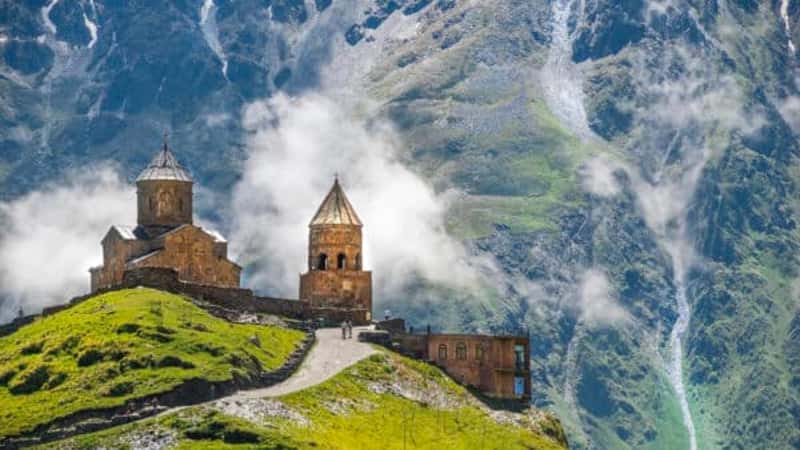
Gergeti Trinity Church sits at 7,200 feet elevation on a dramatic mountain peak with Mount Kazbek providing an epic backdrop that makes the small stone church appear to sit at the top of the world. The 14th-century church requires a challenging hike or 4WD drive to reach, creating pilgrimage experiences that reward visitors with some of the world’s most spectacular mountain views.
The church’s simple stone construction contrasts with the dramatic landscape setting, demonstrating how architectural modesty can be enhanced rather than overwhelmed by spectacular natural backdrops. Meanwhile, the remote location preserves authentic Georgian Orthodox traditions away from tourist influences.
Saint Basil’s Cathedral, Moscow, Russia

Saint Basil’s Cathedral creates one of the world’s most recognizable religious buildings through nine chapels topped with onion domes painted in colors that seem to have been chosen by someone with access to a supernatural art supply store. Built in the 1550s, the cathedral represents Russian Orthodox architecture at its most exuberant and distinctive.
Each dome features different patterns, colors, and architectural details that create visual complexity while maintaining overall harmony through traditional Russian Orthodox proportions and symbolic meanings. Meanwhile, Red Square setting provides dramatic urban context that enhances the cathedral’s role as both religious center and national symbol.
Las Lajas Sanctuary, Colombia
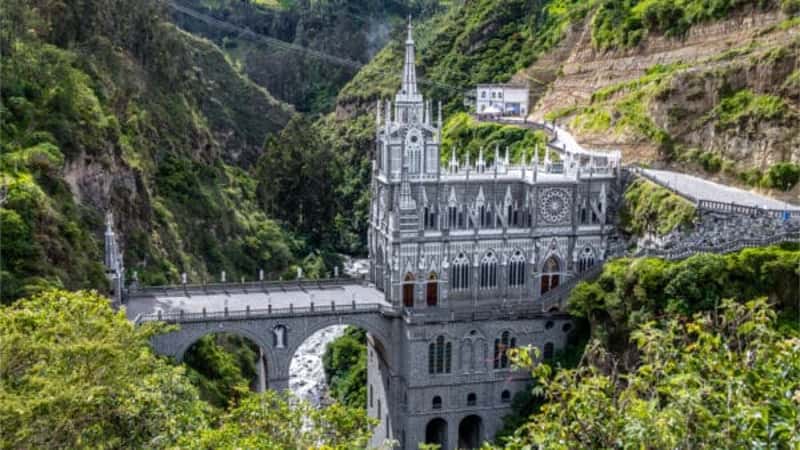
Las Lajas Sanctuary spans a river gorge through a Gothic Revival bridge-church that creates one of the world’s most dramatic religious settings. Built between 1916-1949, the sanctuary commemorates reported Marian apparitions while creating architecture that integrates dramatically with the natural canyon landscape.
The church’s position spanning the gorge creates interior spaces where worshippers are surrounded by natural canyon views while the Gothic architecture frames the landscape through pointed arch windows. Meanwhile, the pilgrimage route includes multiple levels and viewpoints that reveal different perspectives on both the architecture and the natural setting.
Church of San Juan Parangaricutiro, Mexico

Only the bell tower and altar of San Juan Parangaricutiro Church remain visible above the lava field that buried the entire town when Parícutin volcano erupted in 1943. The surviving church elements create one of the world’s most surreal religious sites where human architecture emerges from volcanic destruction.
The lava field walk to reach the church ruins provides direct encounter with volcanic power while the preserved architectural elements demonstrate both the destructive force of nature and the symbolic power of religious architecture to represent hope and continuity. Meanwhile, the site attracts both religious pilgrims and geological tourists interested in one of the youngest volcanoes on Earth.
Heddal Stave Church, Norway
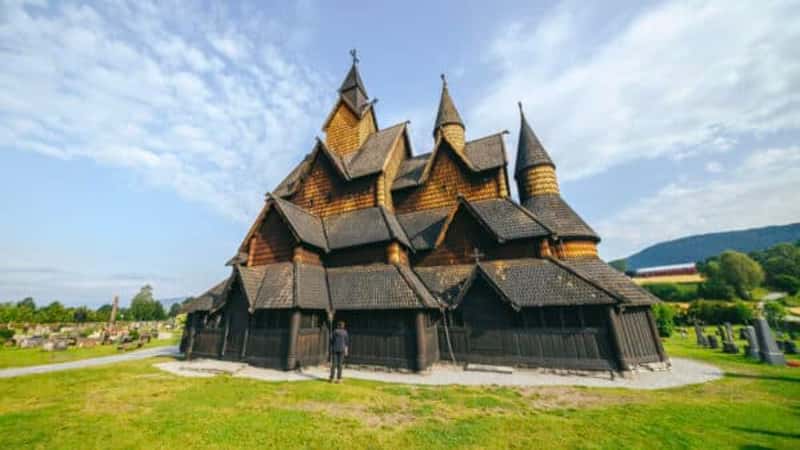
Heddal Stave Church represents medieval Scandinavian wooden architecture at its most ambitious through three-tiered construction that creates cathedral-scale sacred space using traditional Norwegian building techniques. Built around 1250, the church demonstrates how wooden construction could achieve the vertical aspirations typically associated with stone Gothic architecture.
The intricate wood carvings throughout the interior and exterior showcase medieval Scandinavian decorative arts while the structural system demonstrates sophisticated understanding of wooden joinery and load distribution. Meanwhile, the church’s continued use for worship provides authentic cultural experiences within its historical architectural context.
Wooden Churches of Maramureș, Romania

The Wooden Churches of Maramureș represent traditional Romanian Orthodox architecture through eight UNESCO World Heritage churches that demonstrate regional building traditions adapted to create sacred space. Built between the 17th and 19th centuries, these churches showcase how local materials and construction techniques created distinctive forms of Christian architecture. It truly takes great vision and craftsmanship to create these churches in Romania.
The churches feature tall wooden towers, painted interior murals, and hand-hewn construction details that demonstrate traditional Romanian craftsmanship while creating sacred space that reflects local cultural identity. Meanwhile, the rural settings preserve authentic cultural landscapes where traditional architecture continues to function within its original context.
Church of Light, Osaka, Japan

The Church of Light transforms minimalist concrete architecture into profound sacred space through a single dramatic cross-shaped opening that allows natural light to create a living crucifix on the interior wall. Tadao Ando’s design eliminates decorative elements to focus attention on the essential relationship between light, shadow, and spiritual contemplation.
The building demonstrates how contemporary architecture can create sacred atmosphere through spatial proportion, material choice, and light manipulation rather than traditional religious symbolism. Meanwhile, the integration of Japanese aesthetic principles with Christian function creates unique sacred space that reflects cultural fusion through architectural expression.
The Architecture of the Sacred

Whether you’re drawn to medieval craftsmanship, modern innovation, or simply appreciate spaces designed to inspire awe, these churches offer encounters with architecture that reaches beyond mere function to touch something deeper in human experience. We now have the ability to go and see these worldly pieces of art. They remind us that when artists, architects, and communities unite around common vision, the results can literally take your breath away and restore your faith in human creativity.
Pack your sense of wonder, bring your camera, and prepare to understand why these sacred spaces have inspired pilgrims, artists, and travelers for centuries. In a world increasingly dominated by utilitarian architecture, these churches prove that humans still possess the ability to create buildings that nourish the soul while showcasing the absolute best of our creative capabilities.