Most people assume cruise directors spend their days hosting trivia and belly-flop contests, but the ones who’ve worked the industry longest say their real job happens quietly, off-stage, with the guests over 60 who never ask for help out loud. They notice who struggles with fast announcements, who hesitates at the gangway, and who just needs someone to say the quiet part clearly for once.
What’s surprising is how much of what actually helps older cruisers has nothing to do with the brochure, the muster drill script, or the daily program slipped under the door. It’s smaller, stranger, and a lot more specific than “pack comfortable shoes.” Here’s what cruise directors and crew actually say when the cameras are off.
#16 – The Safety Drill Isn’t Optional, But Nobody Tells You It Can Bend
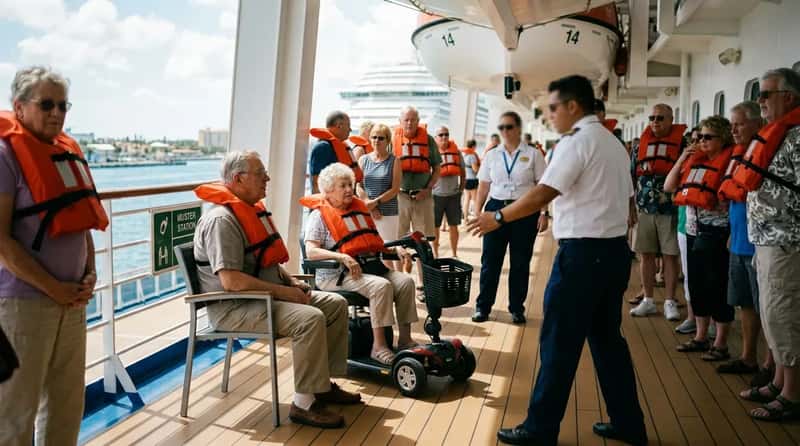
Cruise directors want older guests to know upfront: the pre-departure safety briefing is mandatory for every single passenger, every single sailing, no exceptions for age or how many cruises you’ve taken. It’s a coast guard regulatory requirement, and all guests must attend even if they’ve sailed a hundred times before. That part isn’t negotiable, and no amount of status or charm changes it.
What most older travelers never think to ask is that the drill can flex around a real physical limitation. If a guest has a medical condition that makes standing difficult, crew members will quietly arrange for them to participate in the most comfortable way possible. Directors say almost nobody mentions this to staff ahead of time, and it’s a five-second conversation that changes the whole experience.
#15 – Skipping the App Download Can Wreck Your Entire Boarding Day
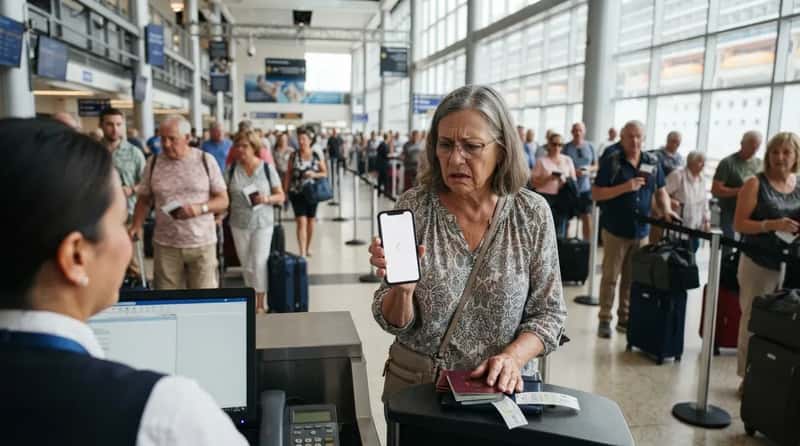
Cruise directors say the single most avoidable disaster on embarkation morning isn’t a missed flight, it’s a phone that won’t load the boarding pass. Guests panic at check-in when the pass won’t open, and with the terminal WiFi gone and no screenshots saved, their early boarding slot vanishes right in front of them. That’s not a rare glitch story; it’s a pattern crew see on nearly every sailing day.
The fix directors recommend is boring but effective: download the cruise line’s app and screenshot your documents days before you ever reach the port, while you still have reliable WiFi at home. Terminal WiFi is often overloaded on embarkation morning, with thousands of people trying to do the same last-minute check-in at once. The guests who screenshot everything in advance simply never have this problem at all.
#14 – Your Regular Health Insurance Quietly Stops Working at Sea

One of the most misunderstood facts among older cruisers involves Medicare, and directors say it trips up first-timers on nearly every voyage. Medicare doesn’t cover medical care on cruise ships unless the ship is in U.S. territorial waters, in port, or less than six hours from a U.S. port. Once you’re a full day out from land, that safety net is simply gone.
This isn’t a scare tactic; it’s just how the coverage is written. Most seniors need supplemental cruise insurance to fill that specific gap, and directors quietly wish more guests understood this before boarding rather than after an onboard clinic bill reveals it the hard way.
Fast Facts
- Medicare only applies within U.S. territorial waters, while docked in a U.S. port, or within six hours of one.
- Once the ship sails past that window, standard Medicare coverage stops working entirely.
- Supplemental cruise insurance is the fix most crew quietly recommend before boarding.
- Directors say this gap surprises first-time senior cruisers on nearly every sailing.
#13 – Cash Still Talks Louder Than Any Compliment You Can Offer

Crew members are diplomatic about it in public, but privately they’re blunt: nothing shows appreciation like cash in hand. Longtime crew describe working 12-hour days on split shifts, starting around 7 a.m. and finishing past 10 p.m., which is exactly why a genuine tip lands harder than a heartfelt thank-you ever could.
Older guests, directors say, are often the most generous with words and the most hesitant with cash, worried it might feel impersonal. It’s actually the opposite. A folded bill handed quietly to a steward means more to crew than any handwritten card, and it’s remembered for the rest of the cruise.
#12 – The Crowded Lounge at 4 p.m. Is a Trap, Not a Party
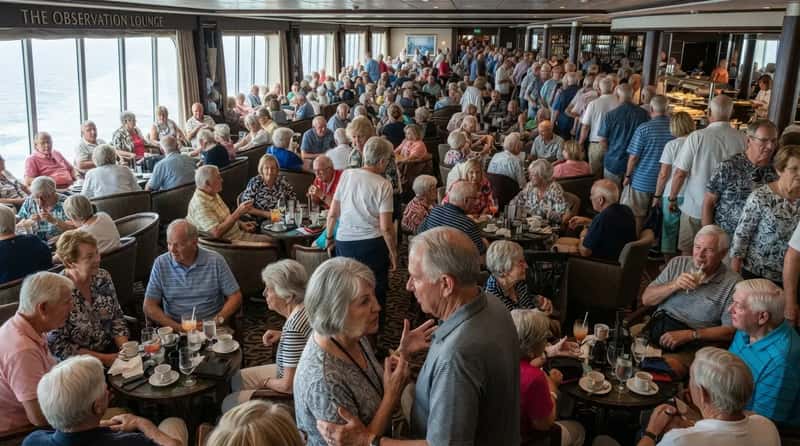
Cruise directors say the biggest scheduling mistake older guests make is following the crowd instead of avoiding it. Passengers who think like everyone else on board end up in the exact same crowded spaces at the exact same predictable times. Long lines, slow service, and packed elevators aren’t bad luck, they’re herd behavior playing out on a schedule.
Veteran cruisers learn to shift their timing by even thirty minutes to dodge the wave entirely. Directors quietly steer curious guests toward off-peak hours for the pool deck, the buffet, and the elevators. The ship feels like a completely different place an hour before or after the rush.
#11 – That Paper Menu You Miss Is Still Sitting in a Drawer
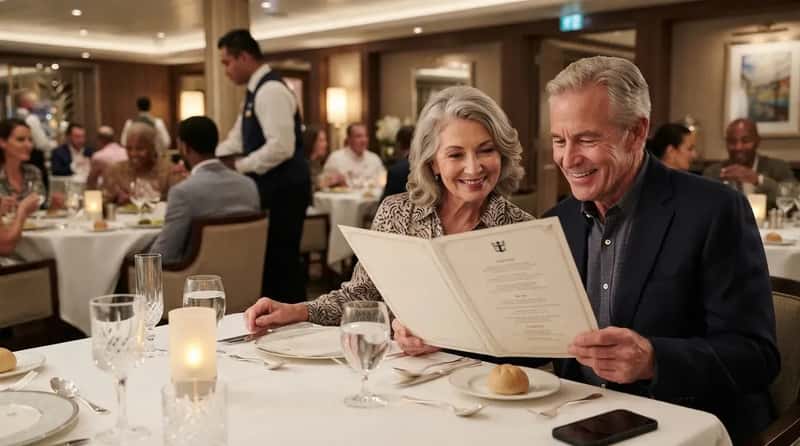
Many older guests assume dining rooms have fully abandoned printed menus for QR codes, and quietly give up trying to squint at a tiny phone screen at dinner. That’s not actually the reality onboard. Even on ships that lead with QR code menus, a printed one is almost always available if you simply ask your waiter or the maître d’, and you are not the only one asking.
Crew say this is one of the easiest requests they fulfill and one of the least asked for. Directors wish more guests understood that asking isn’t an inconvenience, it’s an expected, everyday request. The paper menu never actually disappeared, it just got harder to find without asking for it.
#10 – Patience Gets Rewarded More Than Anyone Realizes
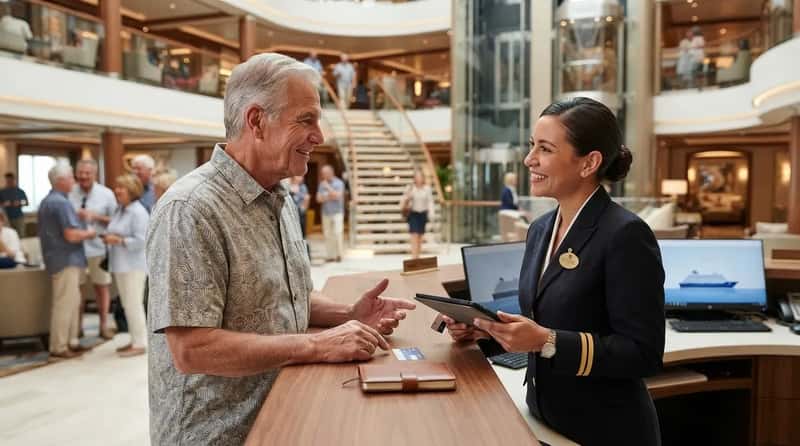
There’s a quiet pattern crew notice across sailings, and it has nothing to do with tipping amount or loyalty tier. Older guests who never push for an upgrade are often the ones who quietly get moved to a better cabin, and the common thread isn’t status or a big tip, it’s patience and a warm first impression.
Cabin attendants and guest services staff talk among themselves about which guests they want to help, and a demanding tone rarely makes that list. Directors say the guests who ask during a calm moment, rather than a frustrated one, consistently get more done. Kindness functions like currency onboard, and most people never spend it.
#9 – A Real Travel Agent Can Unlock What the Website Hides

Cruise directors regularly hear guests say they booked directly online to save money, unaware that a step they skipped could have gotten them more for the same price. Booking through a travel agent costs nothing extra, but trusted agents have access to a ton of freebies and perks for older travelers that never appear on cruise line websites.
This isn’t a secret crew are hiding on purpose, it’s just information most passengers never think to ask about. It comes up constantly on cruise forums that senior travelers get better deals booking through an agent than going it alone online.
Worth Knowing
- Booking through a travel agent typically costs the same as booking directly online.
- Agents often have access to onboard credit, cabin upgrades, or perks not listed on cruise line sites.
- These extras are rarely advertised, so most guests never think to ask about them.
- Cruise forums are full of senior travelers who say an agent got them more for the same price.
#8 – Older Ships Hide Their Age in the Cabins, Not the Lobby

A common assumption among older cruisers is that an aging ship will look tired everywhere, but crew say the wear is far more selective than that. Older ships can feel like time capsules, maintained so well in public areas that they almost feel new despite looking dated in design.
The real difference shows up behind closed doors. Individual cabins can show wear and tear that guests don’t expect, even though the same ship still looks polished in the places everyone photographs. Directors say checking recent cabin reviews matters more than checking the ship’s launch year.
#7 – Cobblestones Can Undo an Otherwise Perfect Accessible Cruise

Ships have gotten dramatically better for older and mobility-limited guests, but directors say the ports themselves are the part nobody warns you about. Cobblestone streets in European ports, steep gangways at tender stops, and uneven terrain at many destinations are genuine challenges that catch guests off guard.
The mistake older travelers make is researching the ship’s accessibility and stopping there. Directors recommend researching each specific port on the itinerary before booking, not after, because a beautifully accessible ship can still drop you into a port that’s nearly impossible to navigate with a walker.
At a Glance
- Cobblestone streets are common in many European ports and rough on wheels or unstable footing.
- Tender stops can require navigating steep, narrow gangways instead of a smooth walkway.
- Ship accessibility says nothing about what waits on shore at each individual port.
- Directors recommend researching every port on the itinerary, not just the ship, before booking.
#6 – Announcements Are Secretly Slowed Down, and You’ve Never Noticed
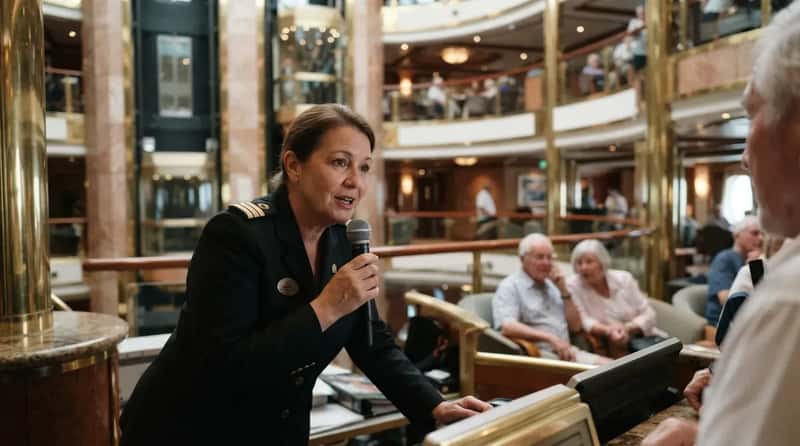
Here’s something almost no passenger ever picks up on: experienced cruise directors quietly change how they deliver information depending on who’s listening. They repeat key details like muster times, elevator closures, and tender schedules a beat slower and a touch louder than the script actually requires.
It isn’t laziness or a coincidence of timing. It’s a habit built from years of watching who struggles to catch fast-paced PA messages the first time around. Directors say this small adjustment is one of the most invisible forms of care they give older guests every single day of the cruise.
#5 – Complimenting a Performer Mid-Song Can Ruin Their Whole Routine

This one causes real friction backstage, even though it comes from genuine affection. Interrupting a performer mid-song to shout a compliment sounds like a nice gesture, but performers notice it from the stage, and it can throw off their timing or energy for the rest of the number.
Cruise directors say older guests are often the most enthusiastic audience members, which is exactly why this happens more than anyone expects. The fix is simple: save the praise for after the bow. A performer thrown off mid-song can lose the thread of the entire routine, and it’s harder to recover than most guests realize.
#4 – Formal Night Isn’t the Strict Ritual Older Guests Remember
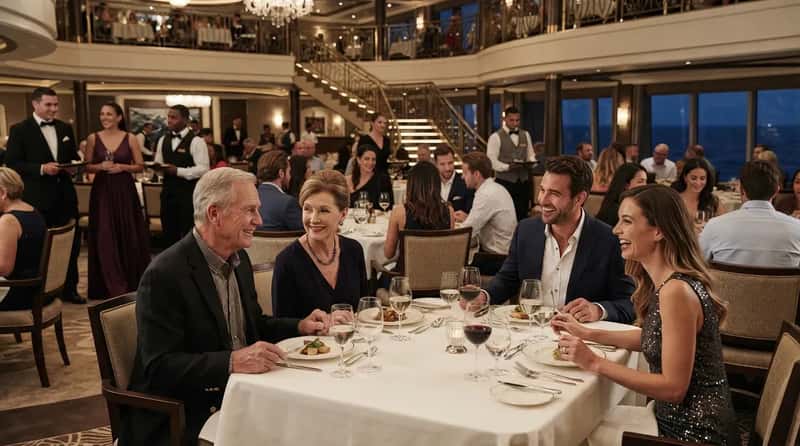
Longtime cruisers who sailed decades ago often pack for formal night like it’s still 1995, expecting a rigid tuxedo-and-gown standard enforced at the dining room door. Cruise directors say the mainstream lines have relaxed that enforcement considerably over the years, and dress codes today lean more toward encouragement than requirement.
This creates a strange split onboard: some older guests overdress out of habit, while others skip formal night entirely, assuming it no longer exists. Directors say the truth sits in the middle. It’s still there, it’s just far more relaxed than the memory most returning cruisers are packing for.
#3 – The Insurance Gap That Matters Most Isn’t the One Most Guests Buy

Older travelers are often diligent about buying travel insurance, but directors say most people insure the wrong risk. According to the CDC, medical evacuations can cost upward of $250,000, yet Squaremouth found that 35% of travelers are underinsured for medical evacuation, carrying less coverage than that figure demands.
The gap gets worse specifically for retirees. Seniors represent the largest demographic on cruise ships, which is exactly where this coverage gap is most dangerous, since original Medicare does not cover medical care or evacuation outside the United States. Directors say emergency medical coverage alone isn’t enough; it’s the evacuation number that actually protects you at sea.
Quick Compare
- Typical medical evacuation cost: can run upward of $250,000, according to the CDC.
- Travelers found underinsured for evacuation: 35%, according to Squaremouth.
- Standard Medicare coverage at sea: none, beyond U.S. waters or a six-hour window from port.
- Recommended fix: supplemental insurance with a high evacuation limit, not just a basic medical add-on.
#2 – The Loudest Guest Almost Never Gets the Upgrade
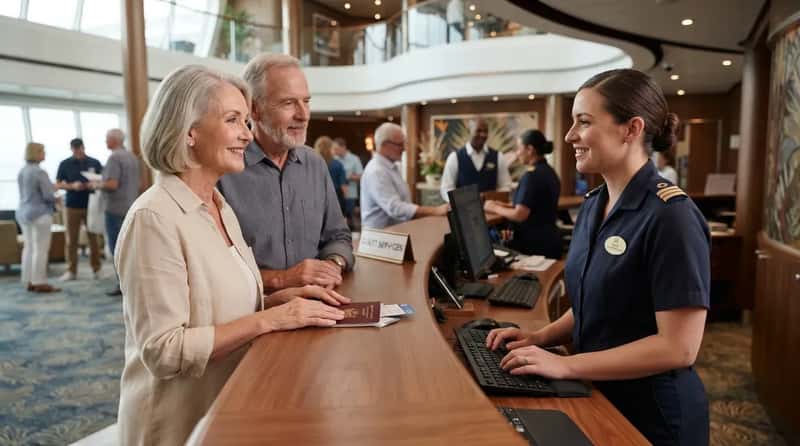
There’s a persistent myth that pushing hard at the front desk gets results, and cruise directors say it’s almost backwards. A pattern keeps surfacing across cruiser forums: the older guests who never push for an upgrade are often the ones who quietly get moved from an inside cabin to a balcony room.
Crew notice tone before they notice tenure. The common thread isn’t loyalty status or a fat tip, it’s patience, a warm first impression, and asking during a calm moment instead of a demanding one. Directors say this single behavioral shift changes outcomes more than any status card ever will.
#1 – The Quiet Ask, at the Right Moment, Is What Actually Gets Remembered
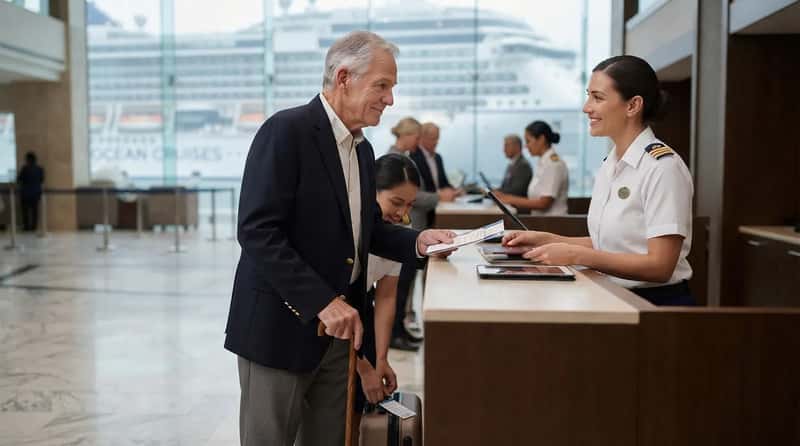
Of everything cruise directors wish older guests understood, this is the one they bring up first when asked directly: timing and tone beat everything else combined. One veteran cruiser showed up at check-in with a cane, and the staff offered boarding assistance, then quietly helped with every bag after that, before he could even wave them off.
Nobody asked for that treatment. It simply happened because the moment was calm, the request was small, and the guest wasn’t demanding anything at all. Directors describe this as the real, unwritten rule of cruising for older travelers: the ship notices quiet dignity long before it notices a raised voice, and it responds accordingly, every single time.
The guests who ask quietly are usually the ones we remember longest.
Longtime cruise ship crew member
None of these sixteen truths show up in a welcome-aboard folder, and that’s exactly the point. They live in the small, unscripted moments between crew and passengers that never make it into a brochure. The guests who ask early, stay patient, and travel with the right paperwork tend to have the smoothest sailings of anyone on the ship, regardless of cabin category or loyalty tier.