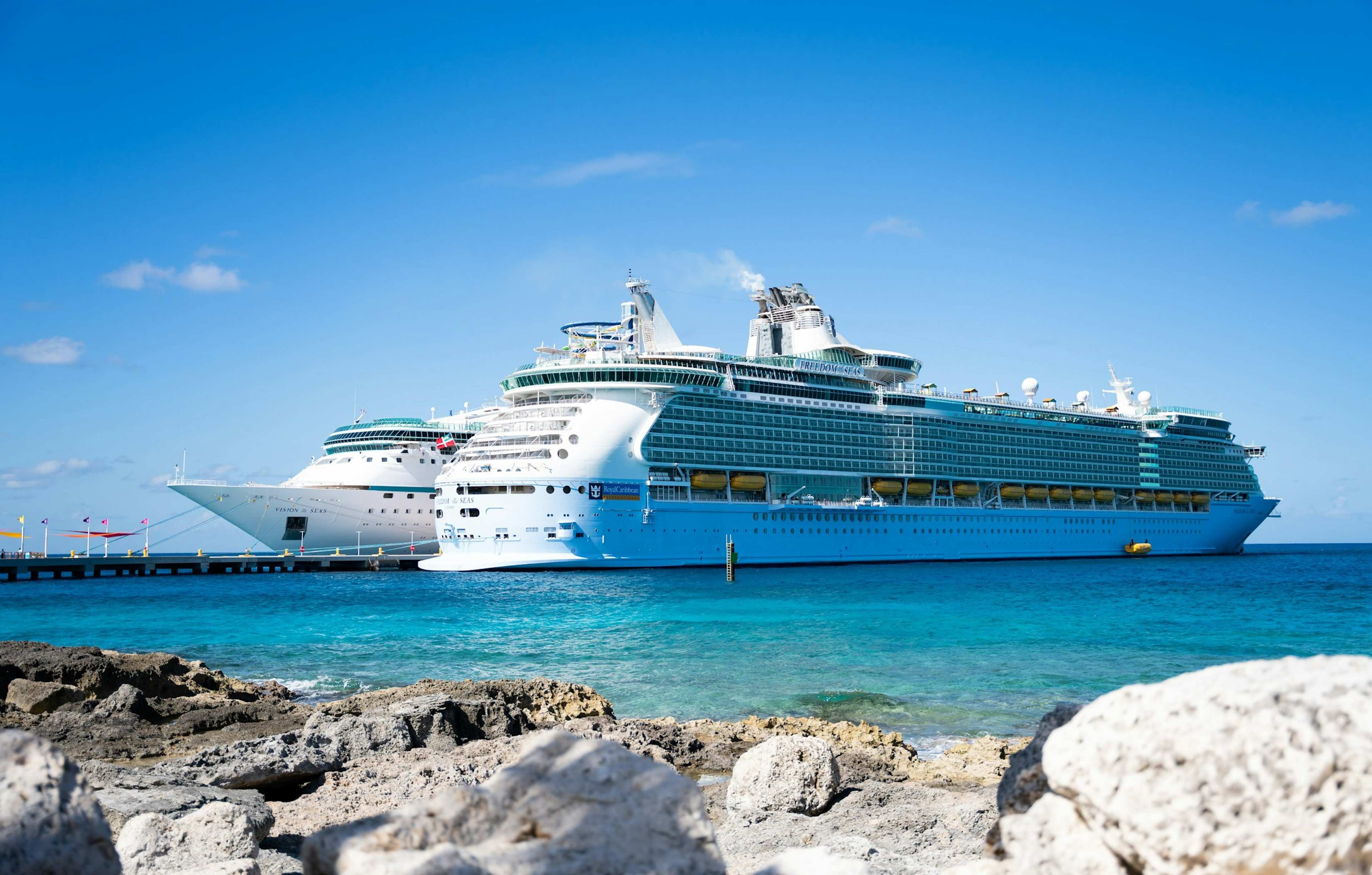
A cruise ship’s medical center looks reassuring on the deck plan. It has a doctor, nurses, a pharmacy, and a door that’s open when the rest of the ship is asleep. What the deck plan doesn’t show is how the billing works.
Prices in this area vary a lot by cruise line, time of day, and the kind of care involved. The figures below come from 2025 and 2026 guides and cruise line pages, and most are estimates rather than official price lists.
Who Staffs the Ship’s Medical Center

Cruise lines that belong to the Cruise Lines International Association must have at least one onboard medical professional available around the clock, plus two medical rooms, one of them for intensive care[1]. From 2026, ultrasound capability is also mandatory on member vessels.[1] Many large ships carry more staff than that, though this comes down to company policy rather than legal requirements[1].
Staffing scales with ship size. Carnival says its staffing runs from one physician and three nurses up to two physicians and five nurses[2]. The same page notes that the doctors on board are independent contractors[2], which helps explain why the clinic runs as its own business.
Why Treatment Isn’t Part of Your Fare

Medical services aren’t bundled into a ticket price. On Royal Caribbean, for example, medical services are not included in your cruise fare and are charged separately[3]. That pattern holds across the industry.
Cruise lines typically operate their medical facilities as fee for service operations, so passengers are billed directly for consultations, treatments, medications, and diagnostic tests[4]. Charges usually post directly to your onboard account, and you’ll almost always pay before you walk off the ship[5].
What a Doctor Visit Typically Costs

For a basic consultation during clinic hours, guides generally land between about $100 and $300. One source puts it at roughly $100 to $200 during office hours[6], while another says a basic consultation costs $150 to $300[7]. A third reports a lower figure, around $100 during medical center opening hours[8].
Timing changes the price. Some estimates show that after hours or in cabin visits can run $300 to $600 just for the consultation, before tests and treatment[6]. A more modest source lists around $165 outside opening hours and up to $205 when a doctor visits the cabin[8]. Treat any single number as a rough guide.
Tests, Medications, and Procedures Add Up Fast

The consultation is often the smaller part of the bill. One 2026 estimate table lists X rays at $150 to $400, IV fluids at $100 to $250 per bag, and stitches or wound care at $200 to $500[7]. The same table puts fracture splinting at $500 to $1,500.
Its worked example is a broken wrist, with X rays, a splint, pain medication, and a follow up check. That adds up to about $1,300[7]. Another guide says that with diagnostics such as an X ray or blood work, the bill can easily climb to $500 to $1,000[8].
Seasickness and Minor Ailments

Small problems are the cheapest to deal with, but they aren’t always free. Some ships hand out basic anti nausea tablets at no charge, though you may need to pay for the consultation first if you need the seasickness injection[9]. That injection is listed at $100 to $200[7] in one 2026 estimate.
For colds, mild infections, and similar issues, one guide suggests $50 to $150, depending on severity and medications required[10]. The ship’s doctor can also prescribe antibiotics immediately if they judge you have an infection[9]. Expect to pay for both the visit and the pills.
Infirmary Stays and Serious Conditions

Observation beds are where costs diverge the most. One guide puts an overnight infirmary stay at $1,000 to $3,000 per day[11], while another lists $200 to $500 per day for an observation bed, separate from treatment charges[5]. The gap is wide enough that you should ask about rates if you’re admitted.
For heart attacks or strokes, one source notes that onboard teams use oxygen, IV medications, and defibrillators to stabilize patients, and evacuation to a land hospital is typically required[10]. It estimates $1,000 to $5,000 for onboard treatment[10] in those cases. Norwegian Cruise Line is blunt about the limits too, saying onboard care is limited and must not be compared to a U.S. shoreside hospital[12].
The Real Budget Risk: Medical Evacuation
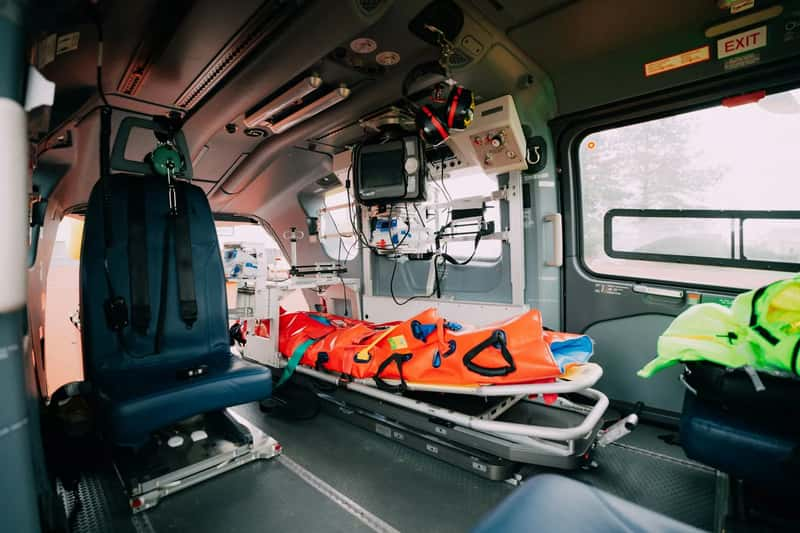
Getting off the ship for hospital care is the part that can dwarf everything else. One 2026 guide says it can cost anywhere from about $15,000 for short range helicopter lifts to well over $200,000, depending on distance and method[13]. Another gives a range of $25,000 to $150,000[14].
Location drives the price. A Caribbean transfer to a Florida hospital is estimated at around $20,000[11], while a helicopter rescue in remote Alaska or the South Pacific can run $50,000 to $150,000[11]. These are industry estimates, not fixed tariffs.
Why Regular Health Insurance Usually Falls Short

Many travelers assume their domestic plan follows them aboard. According to one cruise guide, in most cases regular health insurance, including Medicare, will not be accepted at a cruise ship medical center, even if you bought travel insurance through the cruise line[11]. You typically pay out of pocket at the time of service and file for reimbursement afterward, if your policy covers it at all[11].
Employer plans and government programs often do not cover medical care received on a cruise ship[4]. Reading your policy’s out of network and overseas sections before you sail is worth the few minutes it takes.
How Medicare Treats Care at Sea
Medicare does have one narrow exception. According to a federal fact sheet, it may cover medically necessary services if the doctor is allowed under certain laws to provide care on the ship, and the ship is in a U.S. port or no more than six hours from one[15]. The same document states that Medicare doesn’t cover services you get when the ship is more than six hours away from a U.S. port[15].
Supplemental coverage may fill some of the gap. Some Medigap plans provide coverage for emergency care received outside the U.S.[16] Some Medicare Advantage plans offer travel benefits as well, though availability and extent vary from plan to plan[17].
Cruise Line Plans Versus Standalone Travel Insurance

The plan sold at checkout isn’t always generous. Squaremouth, a travel insurance comparison site, reports that Carnival covers only up to $20,000 of medical expenses and $50,000 for medical evacuation[18]. For Princess, it lists $20,000 for illness, $20,000 for injury, and up to $100,000 for evacuation[18], and notes that the plan excludes pre existing conditions[18]. Since Squaremouth sells insurance, treat its recommendations as one perspective.
Independent plans are not expensive compared with the risk. The same site reports average prices of $102 for medical only coverage and $540 for comprehensive coverage[19]. It recommends $100,000 of emergency medical and $250,000 of medical evacuation coverage for cruises[19], while another agent’s guide suggests $500,000 or more for a cruise or any trip far from a major hospital[20].
Practical Points to Check Before You Sail
Confirm three things: whether your policy pays medical providers directly or reimburses you, what its medical evacuation limit is, and whether pre existing conditions are covered. Also check whether your Medicare or supplemental plan has any overseas or at sea provisions. If your plan reimburses later, expect to front the cost, since the ship will want payment first.
Keep every receipt and record from the ship’s medical center, because claims are filed after the fact. A ship’s doctor can stabilize you and arrange transfer, but the bill, whether $100 or well into six figures, lands with you unless your coverage says otherwise.