Picture a packed main dining room, six waiters gliding between forty tables at once, memorizing allergies, birthdays, and drink orders without ever writing a thing down. Most passengers assume the biggest mistakes onboard happen in the buffet line or at the pool. Turns out, according to the people actually serving your dinner every night, the real drama unfolds at the table, seat by seat, plate by plate.
What looks like harmless small talk or a quick photo request to you can quietly wreck a server’s entire rotation. Here’s what cruise waiters actually say happens behind that professional smile.
#27 – The Speakerphone Show: Video Calls at the Table
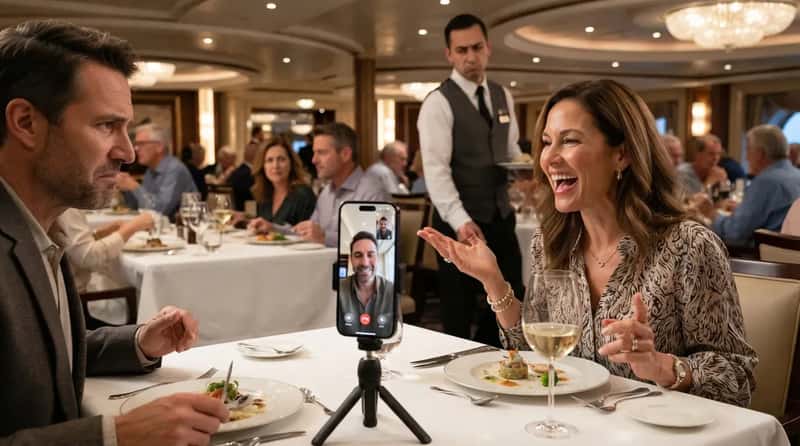
Nothing tests a server’s patience like a guest running a full video call between courses. Waiters say this habit has exploded in recent years, turning quiet dinner tables into impromptu conference rooms full of ringtones and speakerphone echo.
One Carnival passenger even asked the cruise line to ban phones from dining rooms entirely. It’s not the call itself that bothers servers, it’s the volume that carries across five neighboring tables trying to have their own conversation. A quick step away from the table solves it every time.
#26 – Mocking the Accent
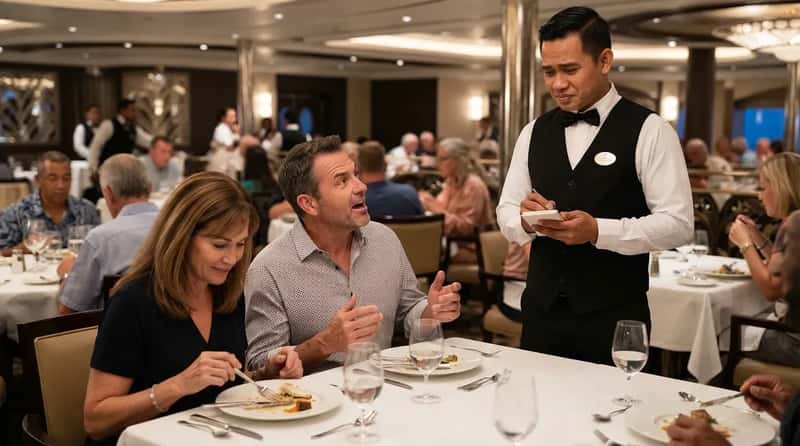
Cruise dining rooms are staffed by crew from dozens of countries, and waiters say passengers who imitate their accents cross a line fast. It happens more than guests realize, often disguised as a joke between courses.
Since English is often a second or third language for many crew members, making fun of how they sound or pronounce a word is one of the rudest things a guest can do without even meaning to. Waiters say a little patience goes further than any joke ever could. Most guests would never mock a coworker’s accent back home, yet somehow the dining room feels like a free pass. Repeating a request slowly and kindly works every single time.
#25 – The Late Arrival That Holds Six People Hostage
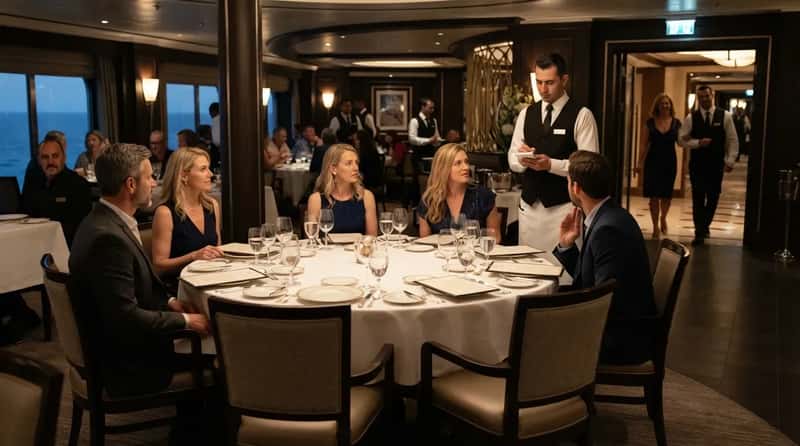
Traditional dining tables seat six or eight, and one late couple can stall the entire group. Waiters say this is one of the most quietly resented habits at sea, and everyone at the table feels it.
If the rest of the table shows up on time except one couple, the waiter has to wait until everyone is seated before taking orders, leaving the punctual guests stewing over the pair who strolled in fifteen minutes late. It’s not the lateness itself, it’s that six strangers now share the frustration together. Servers can’t fire courses to a half-empty table, so everyone’s meal shifts later, night after night, for the whole cruise.
#24 – Skipping Dinner Without a Word
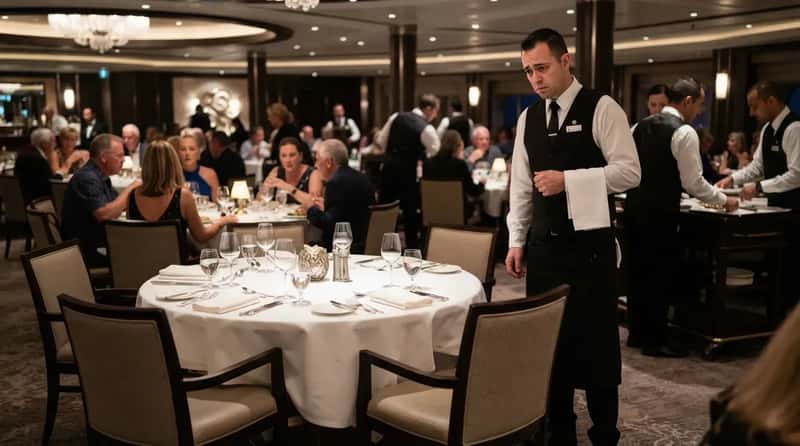
Disappearing from assigned dining without notice creates more chaos than passengers assume. Waiters plan courses around a fixed headcount, and one empty chair throws off the entire rhythm of service.
Proper practice is to let tablemates know the night before, or at least give the Maitre’d a heads-up before dinner starts. Most guests have no idea their empty seat gets noticed and discussed at the wait station. Servers hold food, delay pacing, and sometimes get quietly blamed by supervisors for a table that never fills. A quick text or word in the hallway costs nothing and saves real stress backstage.
#23 – “We’re Ready” (Then Nobody Is)
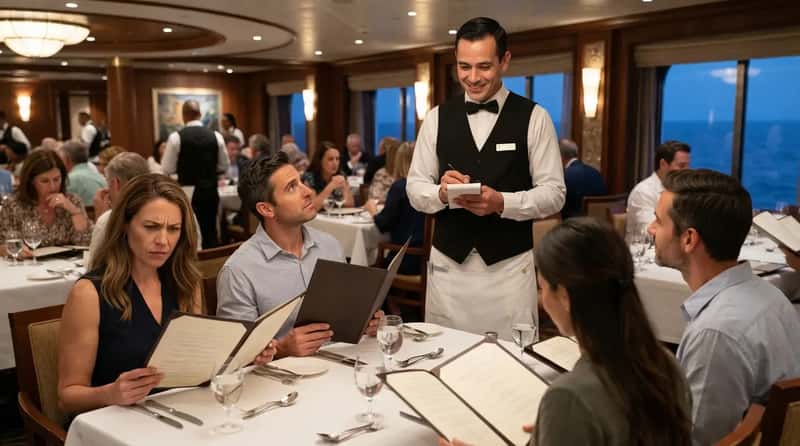
Calling a server over before actually deciding is one of the sneakiest table habits, and it happens constantly. Waiters say it looks polite but wastes far more time than it saves for everyone at the table.
A crew member arrives ready to help the moment one person says they’re ready, only to find nobody actually knows what they want, with one guest re-reading the menu and another still weighing drink options. The server stands there smiling through the confusion, watching other tables wait their turn. Deciding as a group before waving someone over keeps the whole dining room moving smoothly.
#22 – Digging In Before Everyone’s Plate Lands
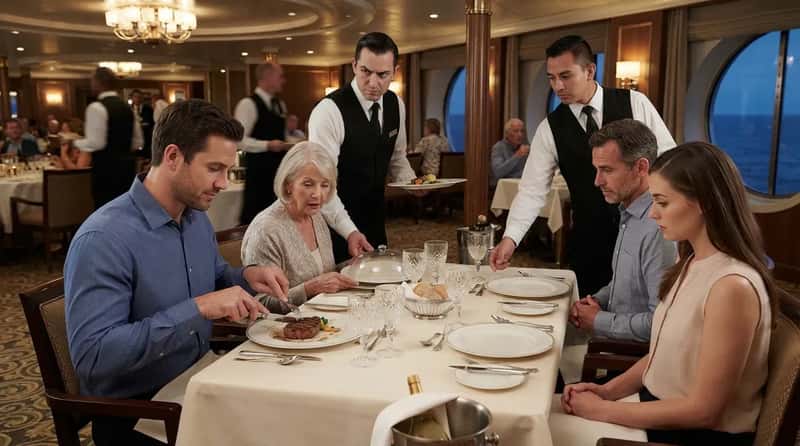
Picking up a fork the second your food arrives, while three tablemates still wait, is a bigger faux pas than most guests realize. Waiters notice exactly who does this every single night of the cruise.
Dishes come out staggered depending on the kitchen, and though it’s tempting to dig in the moment a plate lands, polite guests wait until everyone has their food before starting. It seems small, but servers say it changes the entire mood of a table. The rushed eater finishes early, gets restless, and often flags the waiter down again before others have even touched their entrée.
#21 – The Politics-and-Religion Landmine
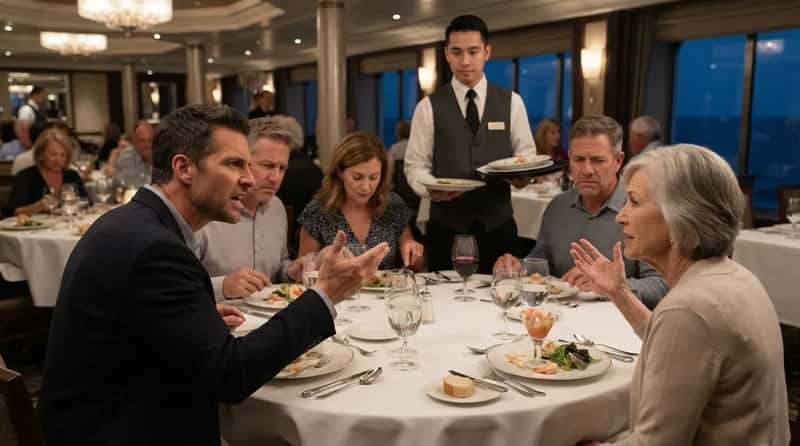
Shared dining tables put strangers together for a full week, and certain topics can poison that arrangement fast. Waiters have watched entire dinners go cold over one bad conversation choice made over appetizers.
Politics and religion are the classic culprits that spark arguments at cruise dining tables, and bringing them up is one of the biggest etiquette mistakes a guest can make. Once the temperature rises, the server becomes the only neutral person left at the table. Smart guests stick to travel stories, hometowns, and cruise history instead, and the whole table, waiter included, stays far more relaxed.
Worth Knowing
- Hometowns and past cruises are the safest icebreakers at a shared table.
- Favorite ports and shore excursions almost always spark friendly comparison, not conflict.
- Travel bucket lists keep the mood light without touching a nerve.
- If a conversation turns tense, servers say a well-timed dessert menu is the classic subject-changer.
#20 – Food-Shaming Tablemates
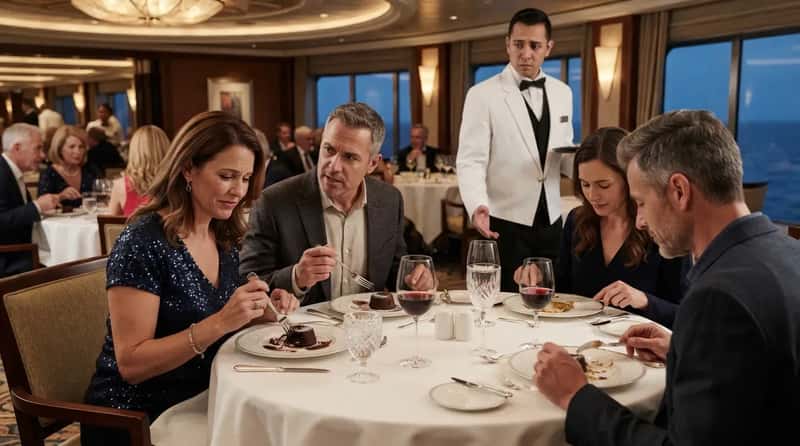
Commenting on someone else’s order, portion size, or dessert choice is one of the most cringeworthy table habits waiters describe. It turns a relaxed dinner into an uncomfortable standoff nobody signed up for.
Food-shaming a fellow guest is a hard no at the cruise dining table, according to nearly every server who’s watched it happen. Servers say the shamed guest often orders less for the rest of the week just to avoid comments. Nobody paid thousands of dollars for a cruise to be judged over a second dessert, and waiters notice the awkward silence that follows even when they say nothing themselves.
#19 – Flirting With the Wait Staff
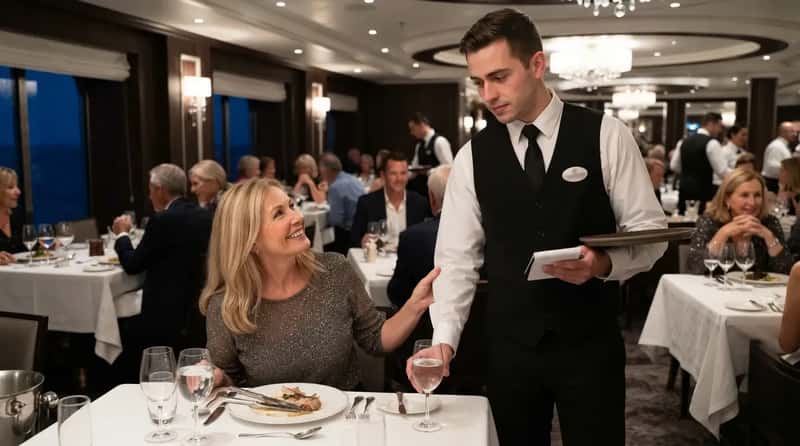
Friendly service gets misread as personal interest more often than passengers think, and waiters say it puts them in an impossible spot. A remembered drink order is just good service, not an invitation.
When a server smiles or remembers a favorite cocktail, the interaction can start tipping into flirtation territory, and that’s an uncomfortable place for crew to be stuck. Cruise lines actually have strict policies around this exact situation. Many lines enforce firm rules about relationships between crew and passengers, so what feels playful to one guest can create real professional trouble for the other.
#18 – Formal Night, Casual Outfit
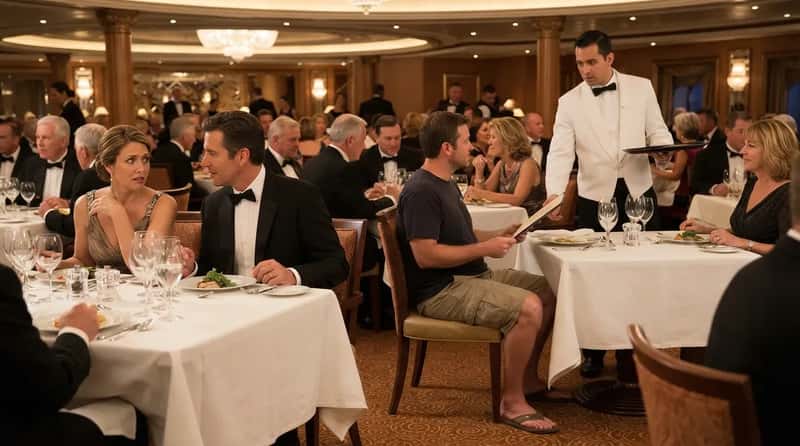
Showing up to formal night in shorts and a t-shirt does more damage than guests expect, especially for the couples celebrating anniversaries a few tables over. Waiters see the disappointment on other faces before the guest even sits down.
Dress codes vary by ship, but the main dining room stays fairly formal on those designated nights, and it’s a tradition many passengers look forward to all cruise long. Photos taken on formal night often become the only professional-looking pictures of the entire trip. Guests celebrating a special occasion won’t appreciate someone else’s flip-flops photobombing their anniversary shot. It’s a small ask for one or two nights out of an entire week.
At a Glance
- Most 7-night sailings on Royal Caribbean and Carnival schedule two formal nights, usually one midweek and one near the end.
- Shorter 3 to 4 night cruises typically get just one formal night.
- Longer 10-plus night voyages often add a third.
- The buffet stays open and casual on formal nights for anyone who’d rather skip dressing up.
#17 – Snapping Fingers to Get Attention
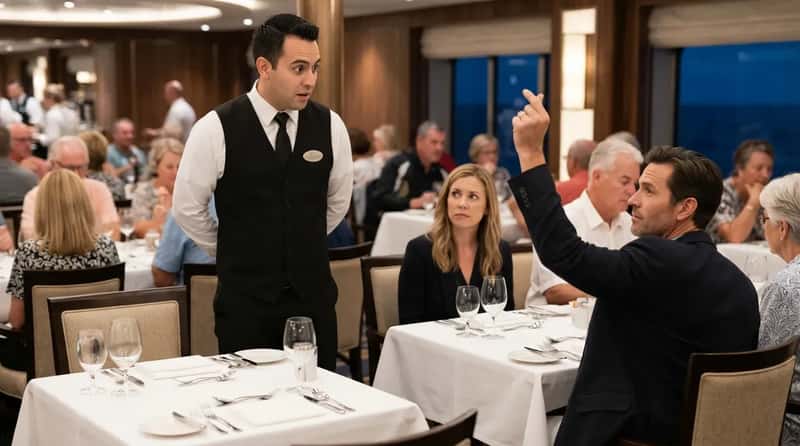
Waiters rarely say anything in the moment, but finger-snapping or loud whistling to flag them down is remembered for the rest of the cruise. It’s one of the fastest ways to end up at the back of the service line without ever knowing why.
Most servers are actively scanning every table already, since that’s literally the job. A raised hand or simple eye contact works every time, without embarrassing anyone at neighboring tables. Waiters say it’s a habit guests would never try at a restaurant back home, yet somehow feel free to do at sea, and it rarely gets the faster service the guest was hoping for.
#16 – Ordering Five Entrées “Because It’s Free”
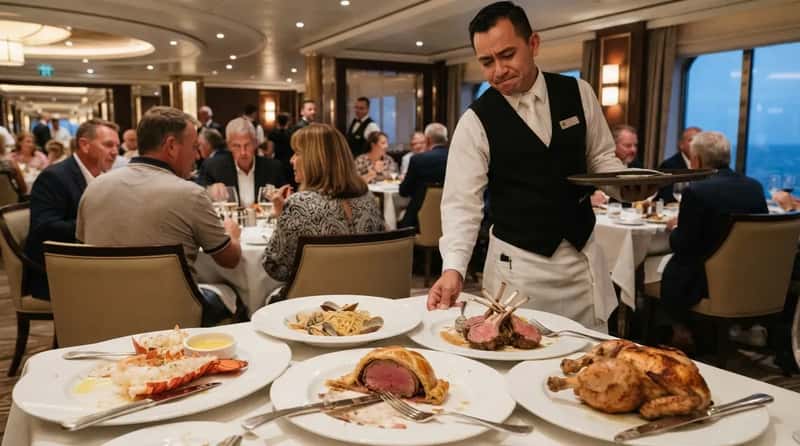
Main dining rooms let guests order multiple entrées at no extra charge, and some passengers treat that as a personal challenge. Waiters say the real issue isn’t the ordering, it’s the waste that follows every night.
Kitchens prep every dish fresh, and half-eaten plates of five different entrées pile up fast. Most servers don’t mind bringing extra portions of something a guest genuinely loves. What frustrates them is a table ordering everything on the menu just to say they did, then sending most of it back untouched while other tables wait on the same kitchen.
#15 – The Stacked-Plate “Helper”
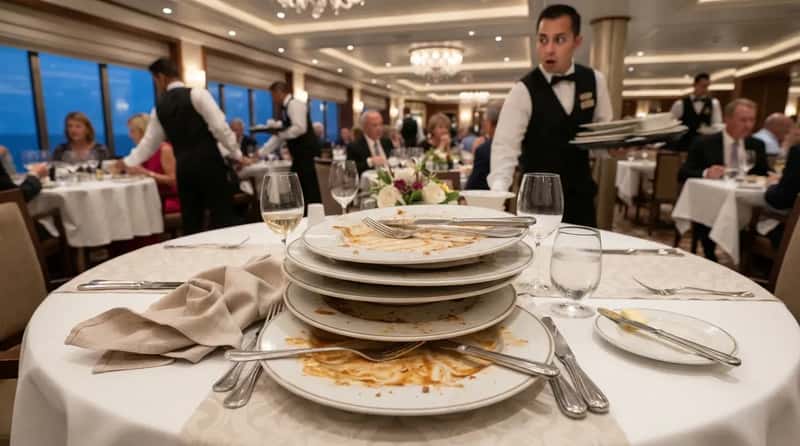
Guests who stack their own dirty plates think they’re being helpful, but waiters say it usually backfires. What feels considerate at the table can cause real problems behind the scenes.
Stacking plates can actually get a server in trouble, since it can look to a supervisor like they’ve fallen behind clearing tables, when really the guest just beat them to it. There’s actually a universal signal servers are trained to watch for instead. Placing your fork and knife together on the plate is the widely recognized cue that you’re finished, and it works far better than any DIY plate tower.
Quick Compare
- Fork and knife together, angled across the plate: you’re finished, come clear it.
- Fork and knife crossed or spread apart: you’re just pausing, leave it be.
- Fork resting alone on the plate: still eating, more coming.
- Stacked plates or gathered dishes: skip it, let the server handle the clearing rhythm.
#14 – Turning the Waiter Into a Referee
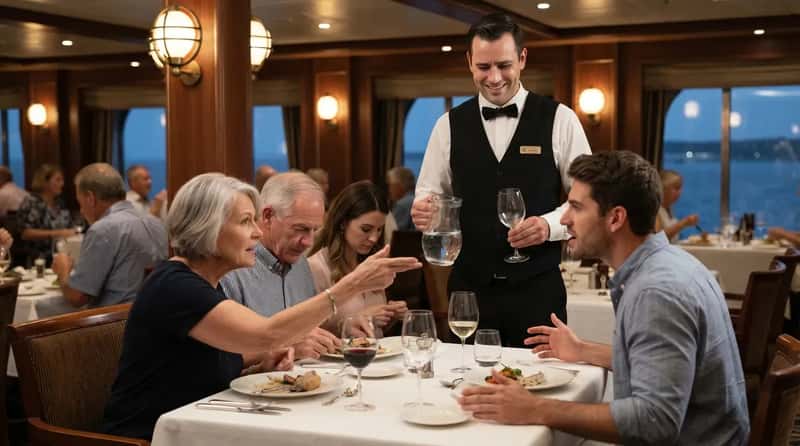
Couples and families sometimes forget the server is standing right there mid-argument. Waiters say getting pulled into a tablemate dispute is one of the most awkward parts of the entire job.
The server is often asked to “settle” who’s right, which puts them in a no-win position. Take a side, and the other guest tips less or complains later. Stay neutral, and both parties can feel unsupported. Experienced waiters have learned to smile, refill the water, and quietly disappear until the tension passes on its own, a skill nobody teaches in training but every long-time server develops fast.
#13 – Asking for a Manager Over Small Stuff
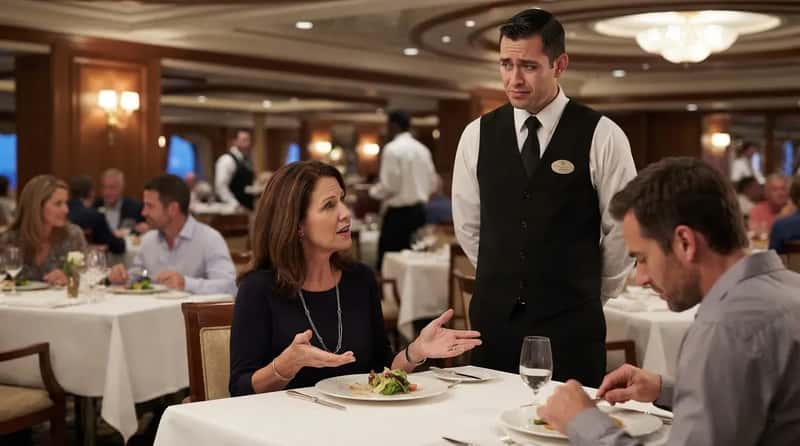
Requesting a manager for a slightly cold appetizer or a slow drink refill happens more than passengers think, and waiters say it rarely fixes the actual problem any faster. Most timing or kitchen issues can be solved right at the table with a quick, direct request.
The better move is resolving small snags with the front desk or your own server rather than escalating in front of the whole dining room, which just makes everyone else uncomfortable too. Escalating immediately can also unfairly follow a server’s performance record for weeks. A calm word to your actual waiter almost always works faster than waiting for a manager to arrive.
#12 – The Loud Toast That Hijacks the Room

Celebrating a birthday or anniversary is part of the cruise dining experience, but waiters say some toasts get out of hand fast. Standing on chairs, prolonged speeches, and repeated clinking can disrupt every table nearby.
Servers actually love celebrating with guests, that’s part of what makes the job fun. The frustration comes when one table’s celebration drowns out conversation for twenty other tables who didn’t sign up for it. A quick, warm toast gets remembered fondly. A ten-minute speech gets remembered by the neighbors for entirely different reasons.
#11 – Sneaking Buffet Food Into the Dining Room
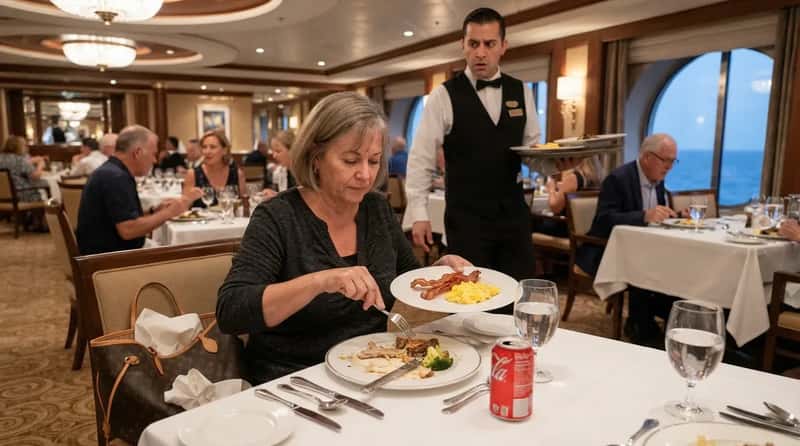
Bringing a plate of buffet bacon or a smuggled soda into the formal dining room happens more often than guests admit, and waiters notice every time. It creates confusion about what’s actually been ordered and served at that table.
Servers end up cleaning up food and containers that never went through their own kitchen. It also puts them in an awkward spot if a supervisor assumes the outside food came from their section. Most dining rooms already have plenty of menu variety, so there’s rarely a real need to bring anything in from upstairs.
#10 – Letting Kids Run Laps Around the Table
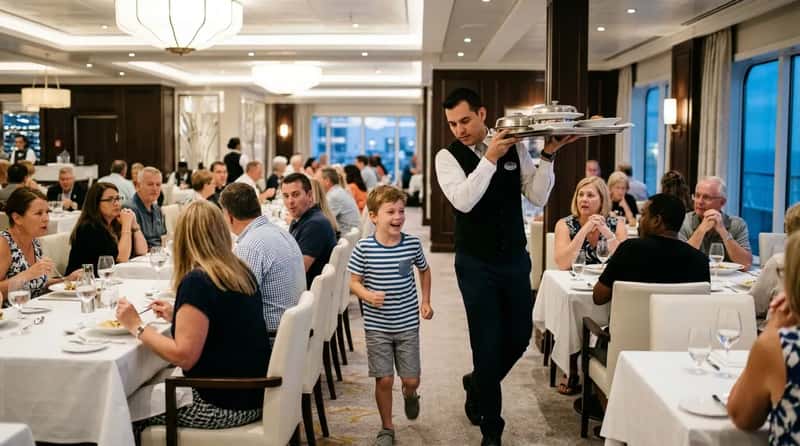
Family dining is a huge part of cruise culture, but waiters say unsupervised kids weaving between servers carrying hot trays is a genuine safety issue. It’s one of the few table habits that can lead to real injuries, not just annoyance.
Leaving children unsupervised near the wait stations is one of the mistakes etiquette-minded cruisers are warned about before their first sailing. A single collision with a loaded tray can end a server’s entire shift. Most kids do great at dinner when a parent keeps a light hand on the situation, especially during the busiest windows when multiple courses go out at once.
#9 – The Endless Substitution Request
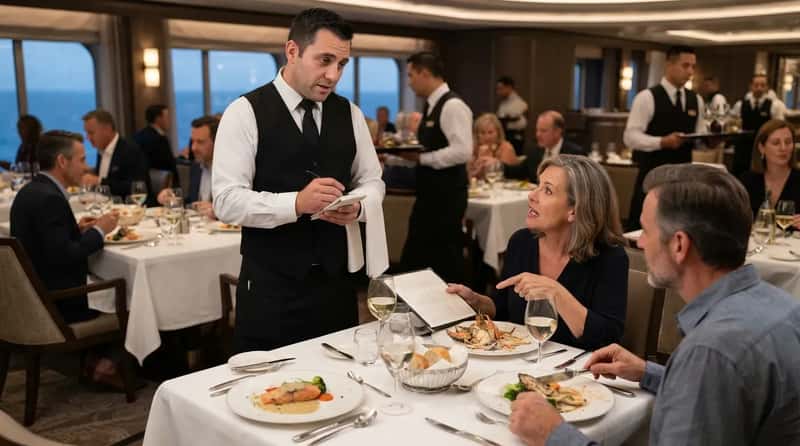
A reasonable dietary swap is normal and expected, but waiters say some guests treat the menu as a rough suggestion every single course. Constant substitutions on every dish slow the kitchen down more than passengers realize.
Cruise lines are usually accommodating with dietary restrictions or allergies, especially when guests flag them in advance through the cruise planner or with the Maitre’d once onboard. Requests made ahead of time move through the kitchen far smoother than surprise swaps at the table. Waiters genuinely want to help with real needs, they just notice the difference between a documented allergy and a nightly game of menu roulette.
#8 – The Selfie Ambush
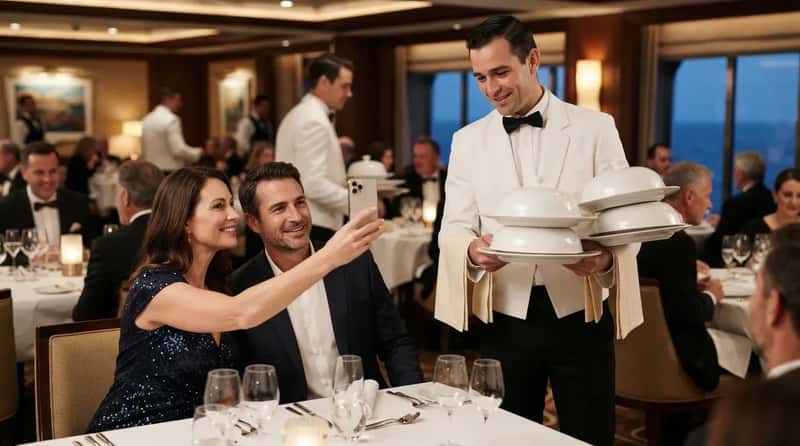
Asking a server to stop mid-service for a quick photo happens constantly, especially on formal nights, and waiters say one request often turns into five retakes. It’s a tiny moment for the guest but a real interruption for someone balancing four hot plates.
Most servers are happy to pose for one genuine photo request per table, per cruise. The trouble starts when the same table asks again the next night, and the next, treating the server like part of the ship’s photo backdrop rather than someone mid-shift. Waiters say the guests who ask once, and mean it, always get the warmest smile in the picture.
#7 – Complaining to Every Passenger But the Right Person

Venting about a table issue to everyone except the person who can actually fix it is one of the most common, and most pointless, dining habits. Waiters say it spreads frustration without solving anything at all.
The better approach is going straight to the front desk, the Maitre’d, or the server itself, since complaining to fellow passengers just makes an already uncomfortable moment worse. Word travels fast on a ship, and a loud complaint at one table can sour the mood at three others. A direct, calm conversation resolves things faster than an entire dining room hearing about it secondhand.
#6 – The Never-Ending “One More Thing” at Closing Time
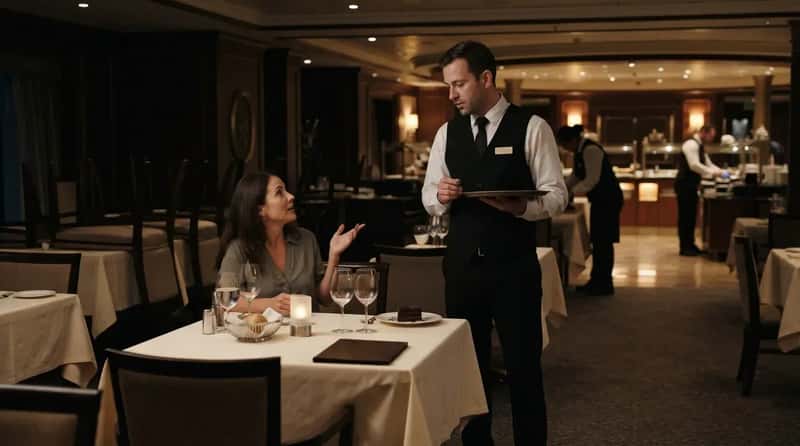
Dining rooms run on tight windows, with a new seating often waiting right behind the current one. Waiters say the “one more thing” request, right as the kitchen is closing, is one of the toughest moments of a shift.
Servers can’t say no without seeming rude, even when the kitchen has already shut down for the night. A dessert request minutes before close means someone has to track down a chef who’s already cleaning stations. Ordering a little earlier in the meal almost always solves it without anyone having to say no to a paying guest.
#5 – No Thank You, No Eye Contact, No Name

Some guests go an entire week without ever using their server’s name or making eye contact during service. Waiters say this quiet habit stands out far more than any single complaint ever could.
A server can serve three meals a day for seven straight days and still feel invisible to certain tables. It’s not about extra tipping, it’s about basic acknowledgment. Waiters say the guests who ask their server’s name on day one, and actually use it, get remembered fondly for the rest of the cruise.
#4 – The Interrogation About Home and Family
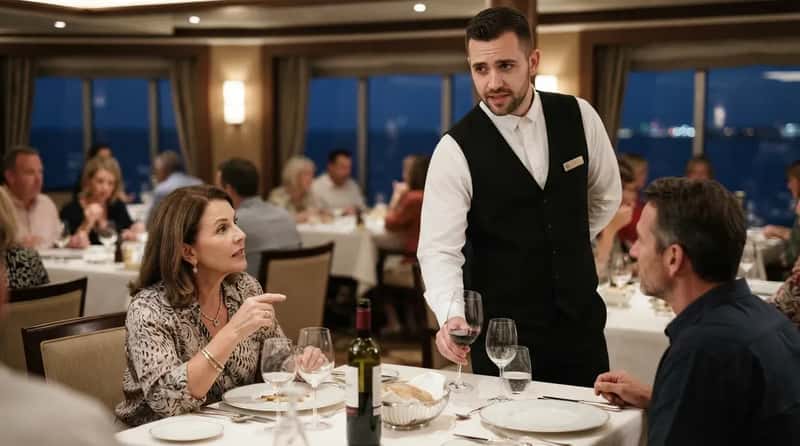
Curious guests love asking servers where they’re from and how often they see their families, and most crew genuinely enjoy sharing a little. But waiters say repeated, probing questions about income, home life, or contract length cross into uncomfortable territory fast.
Many crew members work months-long contracts far from home, and the topic can be genuinely heavy. A light, respectful question is always welcome. A dinner-table interrogation about salary or homesickness, night after night, is not. Waiters say the best tablemates ask once, listen, and let the server steer how much they want to share.
#3 – Treating the Wine List Like a Dare
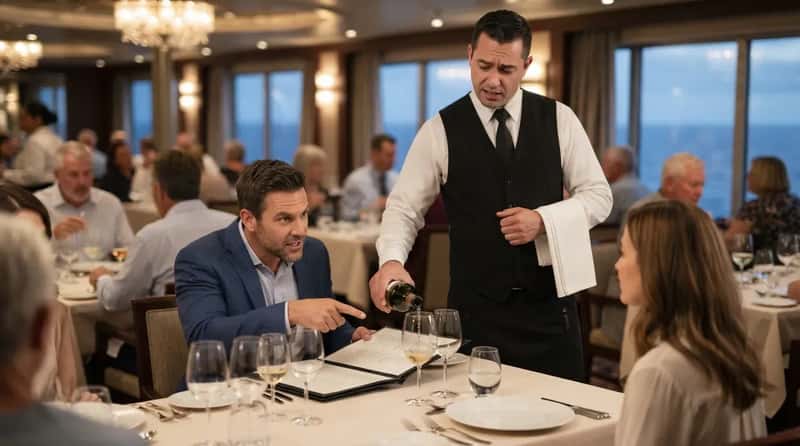
Ordering round after round while pushing a server to keep pace is a habit waiters know all too well, especially on longer sailings. It’s not the drinking itself, it’s the pressure to serve faster than safely possible.
Servers are responsible for pacing alcohol service throughout the night, not just taking orders. Pressuring a server to speed that up puts them in an awkward spot with both the guest and their own supervisors. Most nights go smoothly when guests simply order and let the server manage the timing, one of those small trust exchanges that makes dinner easier for everyone.
#2 – The Tip Conversation Nobody Wants to Have
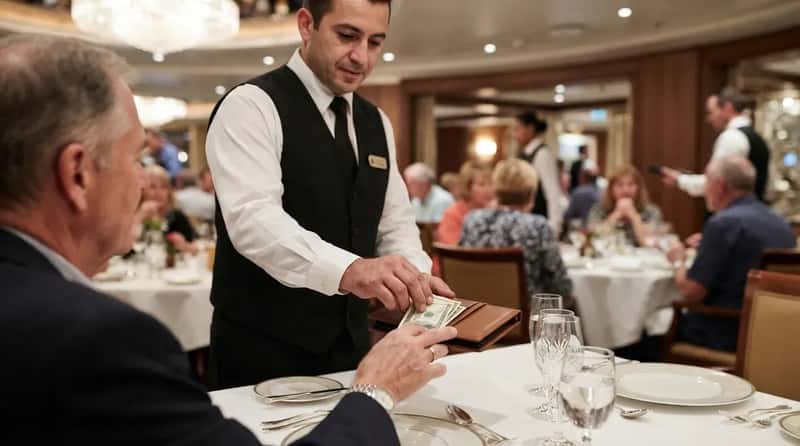
Gratuities remain one of the most sensitive topics at the cruise dining table, and waiters say guests handle it very differently from one another. Some remove the automatic charge entirely, others add extra on top, and the difference is felt immediately by service staff.
Whether a guest prepaid gratuities or pays the daily crew appreciation charge automatically, tipping remains a genuinely touchy subject onboard, and extra tips beyond that are always optional. Removing the automatic gratuity is allowed, but waiters say it directly affects their take-home pay for the week. Most crew never mention it out loud, they simply notice which tables understood the system and which didn’t.
Fast Facts
- Royal Caribbean currently charges around $18.50 per person, per day for standard cabins, and $20.50 for suites.
- Carnival’s standard daily gratuity sits near $17 per person, rising to about $19 in suites.
- Princess Cruises charges roughly $18 to $20 per person, per day depending on stateroom category.
- On a seven-night cruise for two, that automatic charge alone can add up to well over $250 before a single extra tip is added.
#1 – Walking Away Without Saying Goodbye After a Week Together
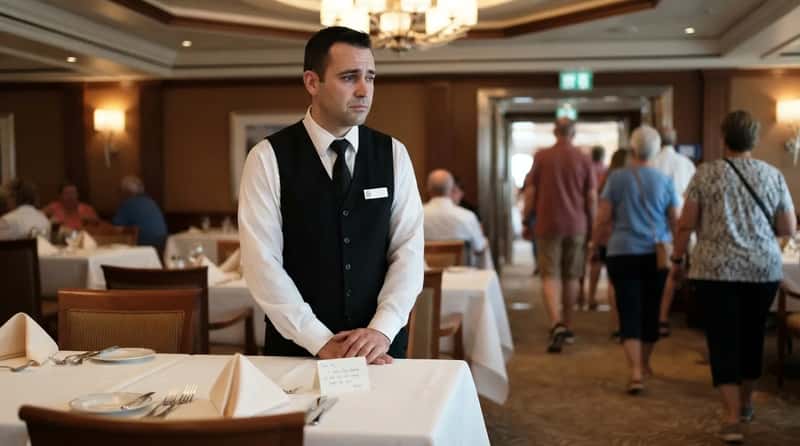
After seven straight days serving the same table, learning names, allergies, and inside jokes, some guests simply vanish on the last night without a word. Waiters say this is the habit that stays with them longest, more than any complaint or difficult request ever could.
A server who spent a week memorizing your coffee order rarely gets a proper goodbye in return. The guests who do stop by, shake a hand, or leave a short note are remembered for years, sometimes literally pinned up in crew break rooms. It’s a small gesture that costs nothing but means everything to someone who spent a week making your vacation smoother.
None of these habits will get a guest kicked off a ship. But collectively, they’re what separate a table the crew remembers fondly from one they’re quietly relieved to see go.
A little awareness, a bit more patience, and one genuine “thank you” on the last night go further than most passengers ever realize.