Most travelers assume a bad wait at customs is just bad luck – wrong day, wrong flight, wrong officer. But agents who work the booths every day tell a different story: the biggest slowdowns are almost always caused by the same predictable, avoidable habits, repeated by thousands of passengers a day.
Some of these mistakes look completely harmless. A sandwich. A dead phone. A hurried signature. Yet each one can turn a five-minute walk through the airport into a forty-minute ordeal for everyone standing behind you. Here’s what customs insiders actually say.
#26 – Skipping the App That Was Built to Save You Time
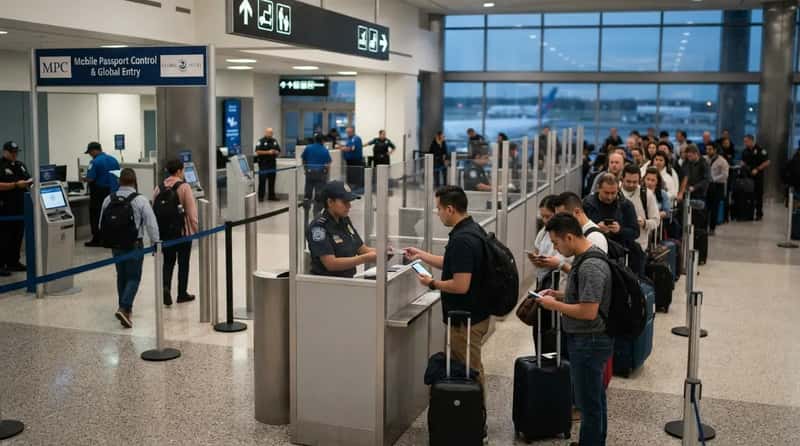
Plenty of travelers still walk up to a CBP booth cold, with no idea that free tools exist to speed things up. Programs such as Global Entry and Mobile Passport Control can expedite the overall process, but even participating passengers aren’t exempt from random stops in the interest of protecting national security. That last part surprises people – enrollment isn’t a guarantee, just a head start.
The mistake isn’t using the app wrong – it’s never opening it at all. Officers say a huge share of arriving passengers never bother to check whether they qualify for expedited screening before their flight lands. That single oversight adds unnecessary minutes to lines that didn’t need to be that long. But that’s nothing compared to what we found about #25.
#25 – Waiting Until You’re Standing in Line to Start the Form
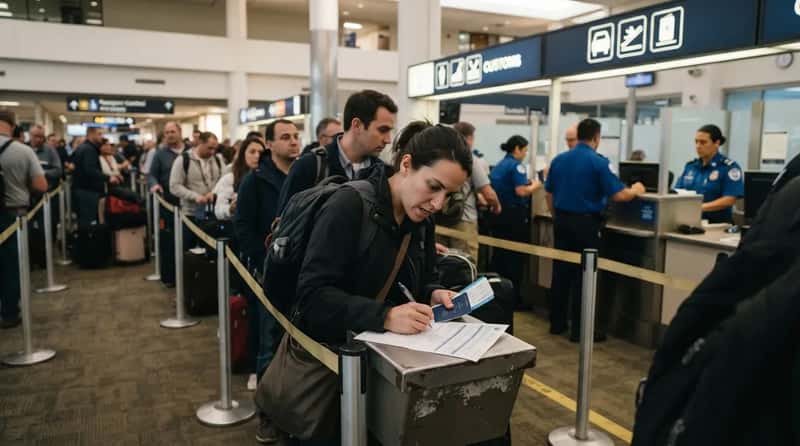
Every long-haul flight has hours of dead time, yet officers say most delays start with passengers filling out paperwork at the worst possible moment: while already standing in line. Digital and paper declaration forms are designed to be completed calmly, seated, before the plane even lands.
The rush itself is what causes the errors that follow. A form filled out standing up, balancing a bag and a boarding pass, is far more likely to have blanks or shaky handwriting an officer has to stop and question. That single habit alone creates a ripple effect down the entire line. But #24 is a mistake almost nobody realizes they’re making until it’s too late.
#24 – Guessing Instead of Asking a Simple Question
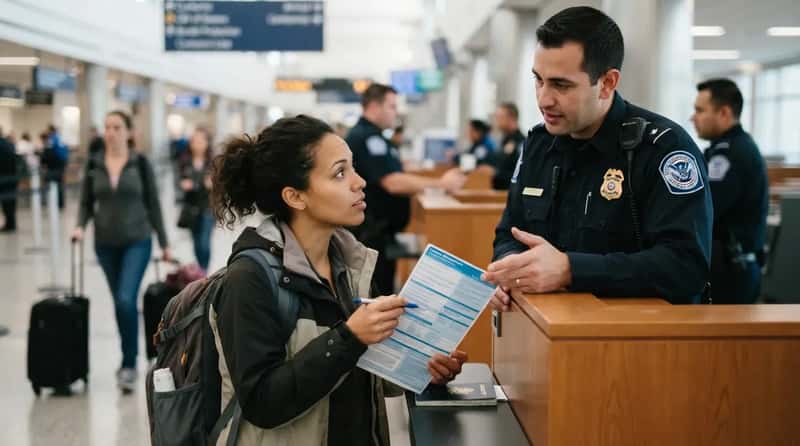
Confusion over declaration wording is one of the most common – and most avoidable – reasons travelers get flagged for a closer look. Should something feel unclear while working through the form, reach out. Customs officers or airline personnel can step in, and getting clarity early keeps errors from slipping in by accident.
Silence is genuinely where most mistakes begin. Passengers who quietly guess rather than ask a flight attendant or officer end up submitting forms with inaccurate answers, which almost always triggers extra questions on the ground. A ten-second question in the air can save ten minutes on the ground. But #23 involves a line switch that trips up even frequent flyers.
#23 – Walking Into the Wrong Lane on Autopilot
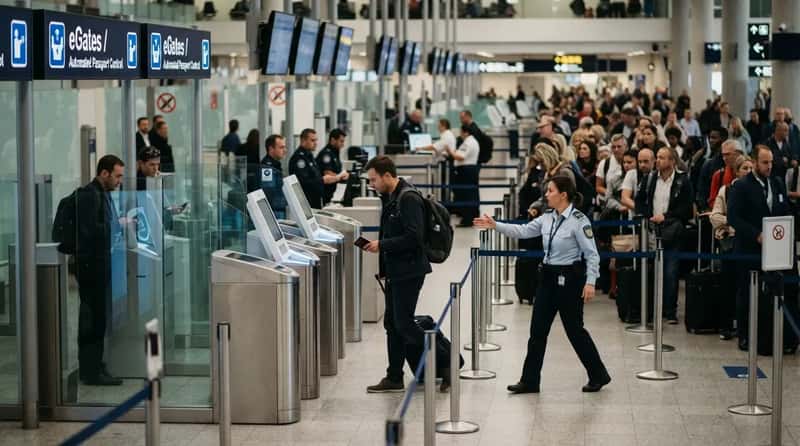
Not every traveler qualifies for the expedited kiosk lane, yet plenty walk straight toward it out of habit or hope, only to be redirected – and sent to the back of a slower line. This single wrong turn is one of the most common self-inflicted delays at any international arrivals hall.
It’s a five-second mistake with a fifteen-minute consequence. Airports rarely make enrollment status obvious at a glance, so travelers assume the fastest-looking line is open to them. Officers say checking your documents before you approach any lane would eliminate this entirely. But #22 is a mistake people make with something as small as a snack.
#22 – Assuming a Leftover In-Flight Sandwich Doesn’t Count
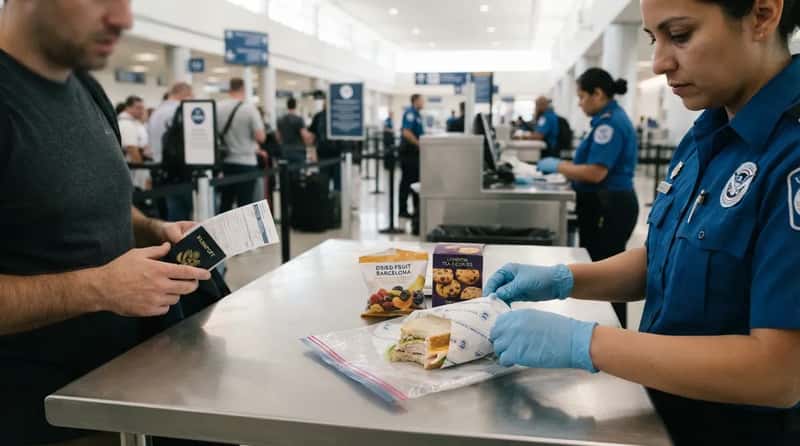
It sounds absurd, but it’s one of the most repeated errors at any international arrival point. That leftover sandwich from your international flight? It counts. So does the bag of dried fruit you picked up at a market in Barcelona, the box of tea cookies from London, and the snack mix you stashed in your carry-on for the plane ride home.
Nearly every undeclared food item is treated the same, no matter how small. U.S. Customs and Border Protection requires travelers to declare all food items, no matter how small or harmless they seem, because the agricultural inspection process exists to keep invasive pests and diseases out of the country. But #21 involves something almost every traveler carries and almost nobody thinks to prepare.
Fast Facts
- Civil penalties may be assessed for failure to declare prohibited agricultural products and may range up to $1,000 per first-time offense for non-commercial quantities.
- If the violation is more serious or involves willful conduct, the maximum civil penalty rises to $50,000 per individual and can reach $1,000,000 for all violations in a single proceeding.
- CBP explicitly warns that failure to declare food products can result in up to $10,000 in fines and dismissal from the Global Entry program.
#21 – Landing With a Dead Phone Battery
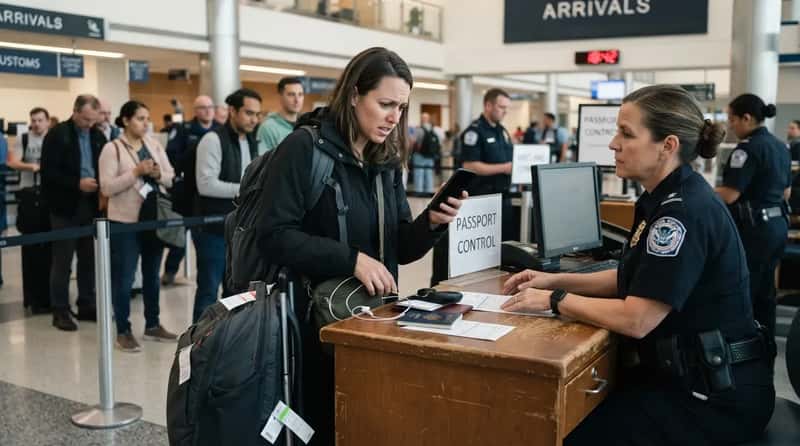
Digital boarding passes, mobile customs apps, and proof of accommodation are now routinely requested at arrival – and a dead phone turns a routine check into a stalled one. Officers frequently see travelers scrambling for a charger the moment they’re asked to show something on-screen.
One practical fix eliminates an entire category of delay. Simply making sure all devices are fully charged before landing solves it. It sounds obvious, yet it remains one of the most repeated pieces of advice from people who work these lines every single day. But #20 involves shopping bags that quietly turn into a legal problem.
#20 – Calling Bulk Shopping “Personal Use”
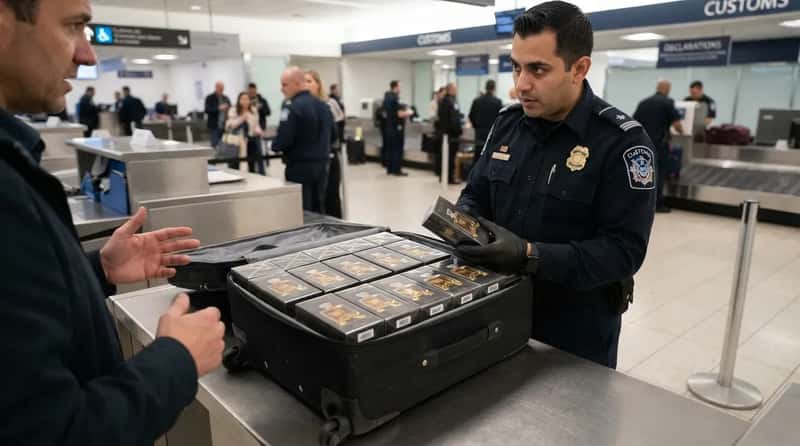
Duty-free zones make bulk buying feel harmless, but customs officers see this pattern constantly. Travelers sometimes carry bulk items, like ten bottles of perfume, and mark them as personal use, but customs may classify this as a commercial import, requiring duty and a proper declaration.
A stack of identical items is a visual red flag before an officer even asks a question. Quantity alone can shift an item from “personal” to “commercial” in an officer’s eyes, regardless of intent. It’s a distinction most shoppers never even consider until they’re stopped. But #19 is a number almost every traveler assumes is higher than it actually is.
#19 – Not Knowing the Real Duty-Free Limit
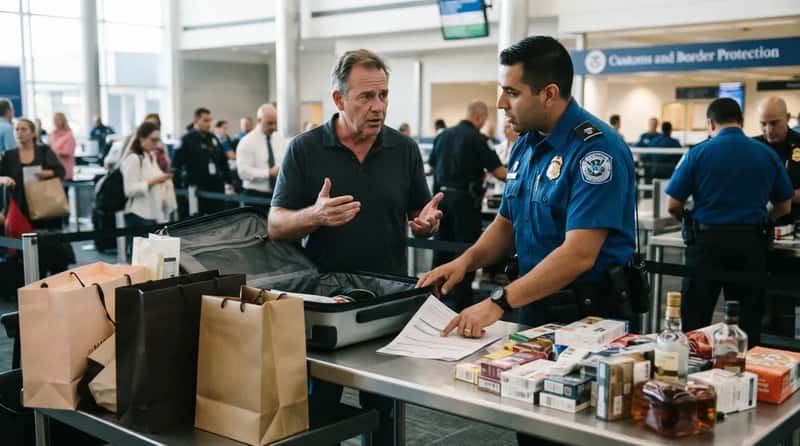
Travelers routinely overestimate how much they can bring back without paying anything extra. The U.S. personal exemption is typically $800 per traveler, and anything beyond that amount needs to be reported and may be subject to duty.
Most people find out about this limit the hard way, mid-inspection. Because the number isn’t printed clearly anywhere travelers actually look before shopping, plenty walk into the arrivals hall thousands of dollars over the line without realizing it. That single gap in awareness causes entire families to be pulled aside. But #18 is a mistake specific to traveling in groups.
#18 – Letting Only One Person in the Group Declare Cash
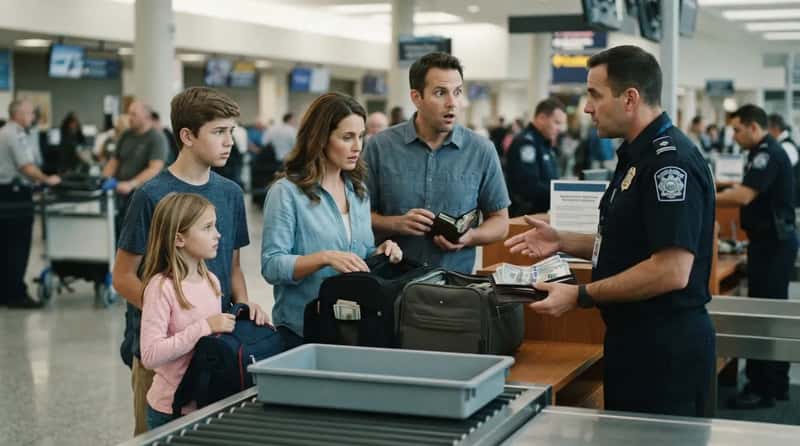
Families and travel groups often assume each person’s cash is tracked separately. It isn’t. The rule is based on the group’s combined total, yours and your travel companions added together, not each wallet on its own.
Combined family totals cross the reporting threshold far more often than people expect. A family of four each carrying a modest amount of spending money can unknowingly cross the federal reporting line as a household, even if no single person is carrying much. Officers say this single miscalculation causes more unnecessary secondary screenings than almost anything else. But #17 involves medication that most people pack without a second thought.
#17 – Packing Medication Without Proof
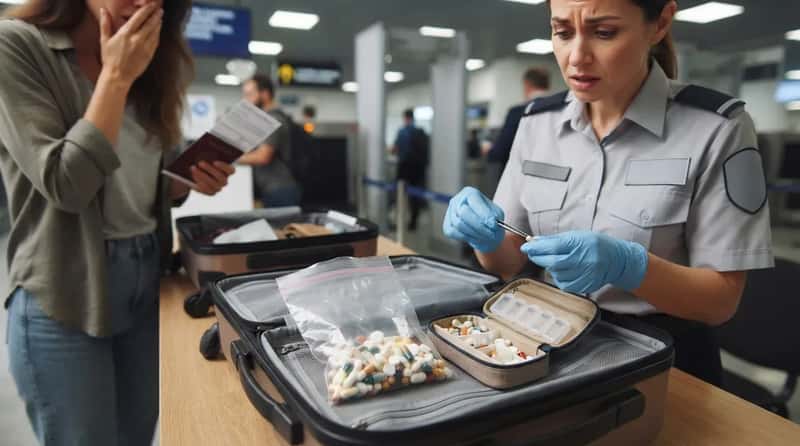
This one has produced some of the steepest penalties on record. One documented case involved a traveler penalized $11,780 for carrying more medication than indicated on their customs form, while another faced a $2,000 fine for undeclared prescription drugs.
A missing pill bottle label can cost thousands of dollars. Keeping medications in original packaging with documentation is the simple fix. Travelers who transfer pills into travel organizers for convenience often don’t realize they’ve just removed the exact proof an officer needs to wave them through quickly. But #16 is a paperwork problem hiding in plain sight.
#16 – Rushed Handwriting That Creates a Second Look
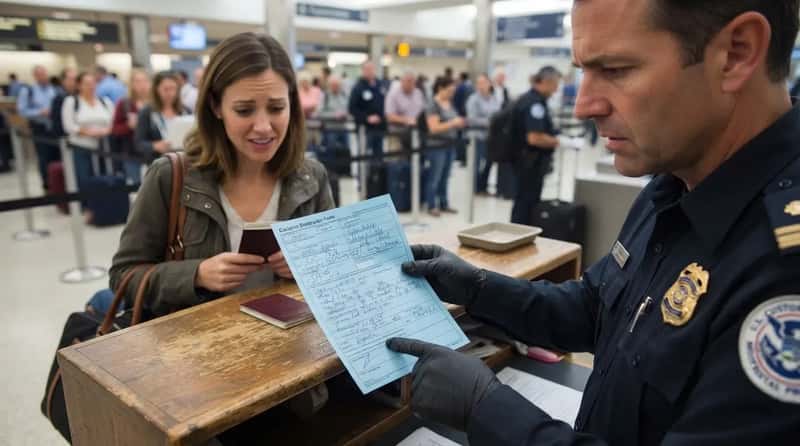
Paper declaration forms still trip people up constantly, especially on busy overnight arrivals. Forms filled in a hurry often include mistakes, missing signatures, wrong quantities, or incomplete descriptions, and these errors can cause delays at customs.
A single missing signature can hold up an entire line behind you. Officers can’t process an incomplete form the same way they process a clean one, which means one rushed traveler can bottleneck several people waiting behind them. It’s a small detail with an outsized ripple effect. But #15 is a phrase officers say they hear constantly – right before something goes wrong.
#15 – Thinking “It’s Just a Gift” Excuses the Declaration
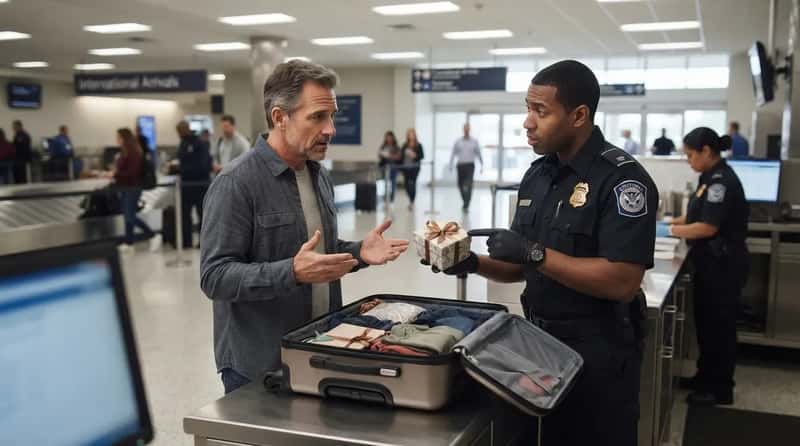
This phrase shows up in customs violation cases more than almost any other. The single most common mistake is the traveler deciding something does not need to be declared: “it was only a gift,” “it was only a sandwich,” “the money was legal.”
The item is rarely the problem – the silence around it is. The issue is often not the item itself; the issue is the failure to declare it. Travelers assume good intentions matter more than paperwork, but officers are trained to weigh the omission, not the excuse. But #14 flips a common assumption completely upside down.
#14 – Over-Explaining Things That Never Needed Mentioning
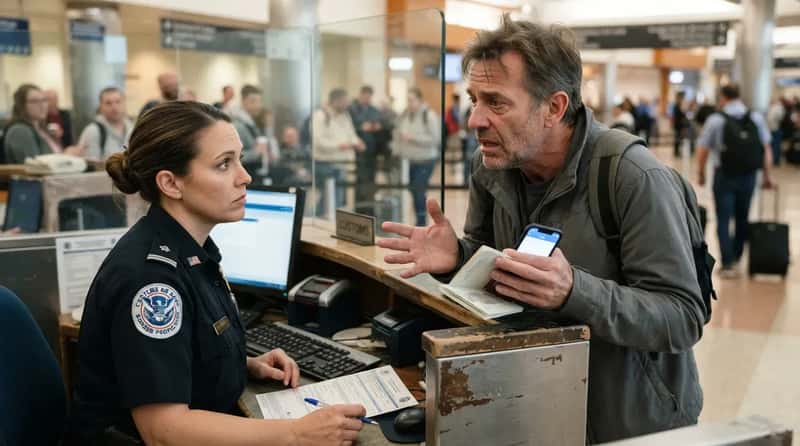
Here’s a myth worth busting: not everything digital needs a declaration, and travelers who over-explain waste real time. Digital-only purchases like software downloads or subscriptions are not typically subject to declaration at all.
Some travelers slow themselves down by confessing things that were never a customs issue. Nervous over-sharing at the booth – mentioning streaming subscriptions or app purchases – adds confusion an officer then has to sort through unnecessarily. Clarity moves faster than caution here. But #13 is a physical reaction almost nobody can fully control.
#13 – Sweating and Fidgeting Like You’ve Got Something to Hide
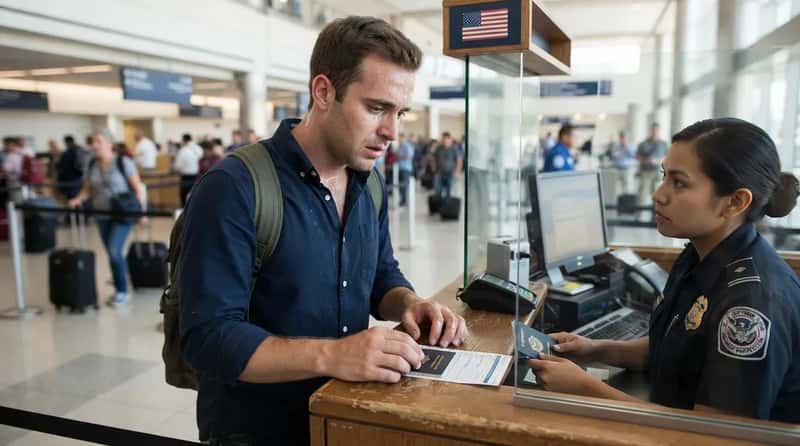
Ordinary travel fatigue and genuine anxiety can look identical to an officer trained to notice the difference. Visible sweating, trembling hands, cracked voices, or an inability to make eye contact all register as flags, because officers are watching for the shift from ordinary travel fatigue to situation-specific anxiety.
Innocent nerves can accidentally mimic the exact behavior officers are trained to catch. Most people are mildly on edge at customs regardless of guilt, but a sudden spike in visible stress right at the booth is what actually draws a second look. It’s an unfair pattern, but a documented one. But #12 is a habit that officers say makes things measurably worse.
#12 – Venting Loudly About the Wait
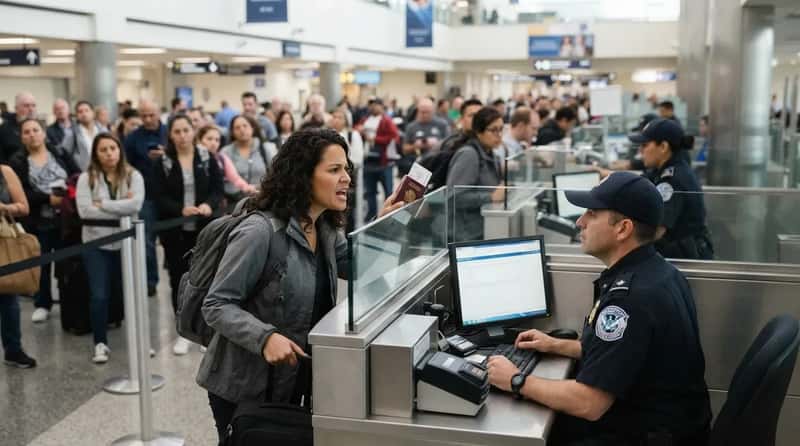
Complaining at the booth feels satisfying in the moment, but it accomplishes nothing productive. Long lines are genuinely frustrating, and officers know it, but that doesn’t mean loud complaints move anything faster.
The frustration is almost never the traveler’s fault to begin with. Slow crossing times are often tied to staffing shuffles or officers unfamiliar with a specific port’s daily rhythm, not traveler impatience. Yet the traveler who complains loudest is the one who gets remembered – and not in a way that helps them. Venting loudly at the booth doesn’t speed up the process, it just makes you the story an officer tells at the end of their shift. But #11 involves a device most people would rather not hand over.
#11 – Refusing to Unlock Your Phone on Request
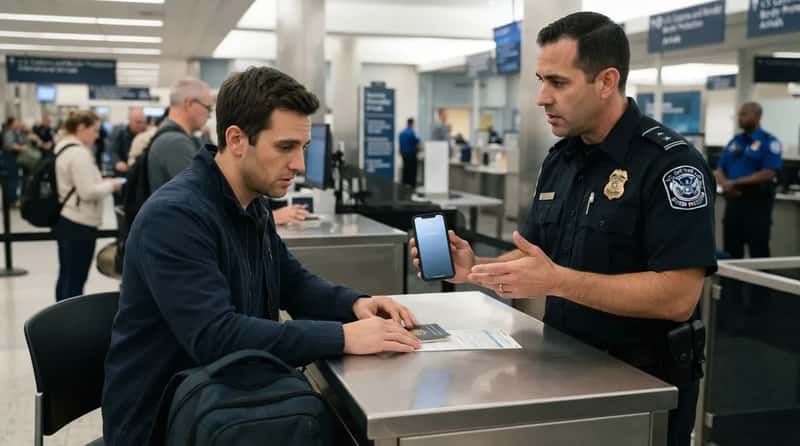
This is a legal gray area most travelers don’t understand until they’re standing in it. CBP officers have the legal authority to inspect electronic devices at ports of entry, including phones, laptops, tablets, and cameras, and a basic manual inspection can happen without any suspicion at all.
Refusing doesn’t protect your phone – it just delays getting it back. You are not legally required to provide your password, but refusing can lead to your device being confiscated for days while agents attempt to access it. Citizens cannot be denied reentry for refusing, but the process can cause significant delays and stress. But #10 is a pattern buried in your passport’s page count.
Worth Knowing
- CBP officers searched 47,047 devices in fiscal year 2024, rising to roughly 55,318 in fiscal year 2025 – still a tiny slice of the more than 420 million travelers processed each year.
- Basic manual searches can happen without any suspicion at all, while deeper forensic “advanced” searches require reasonable suspicion of a law violation or a national security concern.
- Searches of American citizens’ own devices have climbed sharply, from 8,657 in 2023 to 13,590 in 2025.
#10 – A Passport That’s Almost Full or Freshly Renewed
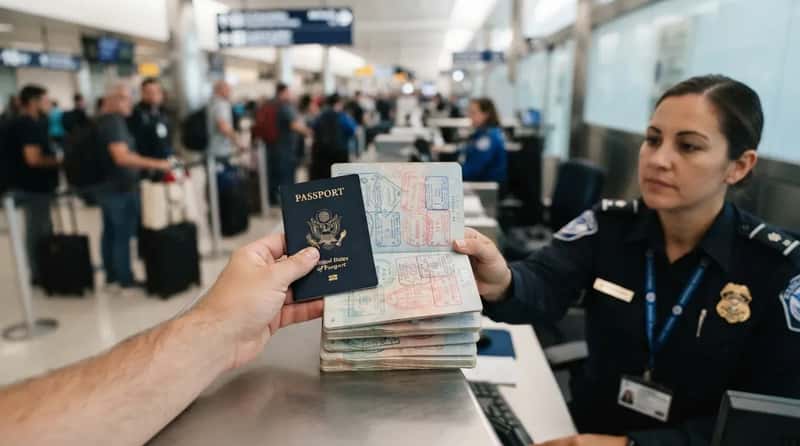
Something as ordinary as travel frequency can quietly work against you at the booth. A passport that’s almost full, or recently renewed after a short period, signals significant travel volume, which is itself a factor in risk algorithms.
Heavy travelers get flagged for the exact thing that makes them experienced. It’s a strange irony: the more you fly, the more your passport itself starts to look statistically interesting to a screening system, regardless of your actual history. Frequent legitimate travelers often enroll in Global Entry or TSA PreCheck specifically to offset this. But #9 is about the reason you give, not the document you carry.
#9 – Giving a Reason for Your Trip That Doesn’t Match Your Visa
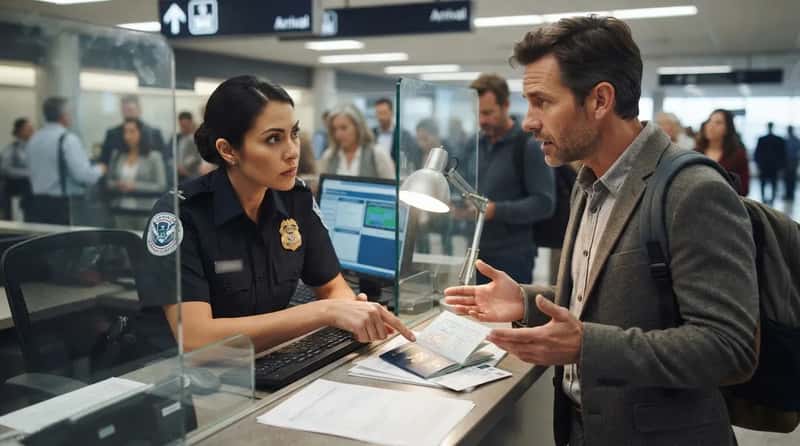
This mismatch is one of the fastest ways to end up in a longer conversation. Arriving on a tourist visa while telling the officer you’re attending business meetings is a contradiction officers are specifically trained to probe.
One casual word choice can undo an otherwise clean entry. Travelers rarely intend to misstate their purpose – it’s often a slip of language, not deception – but officers can’t tell the difference from behind the glass. That single word swap can trigger a round of follow-up questions nobody wanted. But #8 hides inside your passport’s stamp history.
#8 – A Passport Full of Visa Stamps but Missing Entry and Exit Stamps
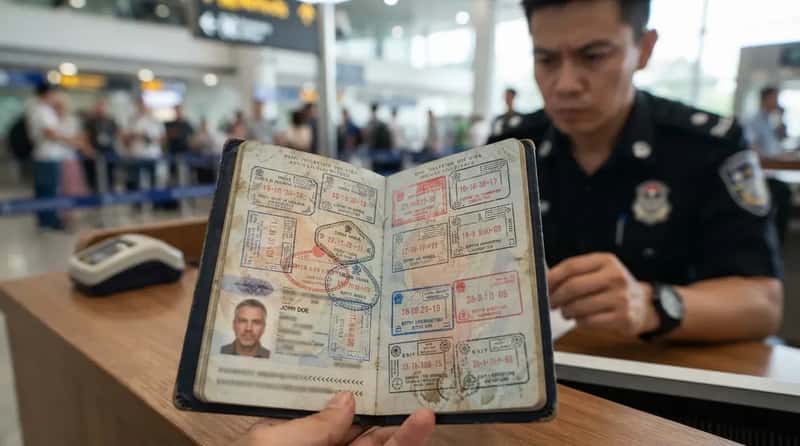
Stamp patterns tell a story, and an incomplete one raises questions fast. Many visa stamps but few entry or exit stamps can suggest extended stays or overstays in countries where you obtained visas.
A gap in your paper trail speaks louder than anything you say out loud. Officers are trained to read passports almost like a timeline, and any missing chapter invites a question meant to fill it in. This is one mistake travelers rarely realize they’re making until years of stamps pile up. But #7 is about the suitcase itself.
#7 – Packing a Bag So Full It Can’t Be Checked Quickly
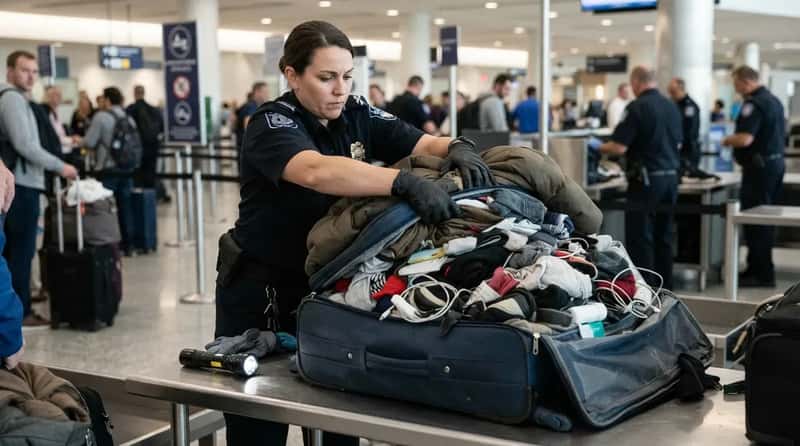
Overpacked luggage is a quiet but constant source of delay at inspection tables. When a bag is stuffed to capacity, a manual check that should take thirty seconds can stretch into several minutes.
A bag that won’t zip shut smoothly signals more searching, not less. Officers say bags packed with obvious organization – separated liquids, visible food items, accessible documents – move through inspection dramatically faster than tightly crammed suitcases. It’s a small packing choice with a real time cost. But #6 involves something nobody should ever try to sneak through.
#6 – Carrying an Undeclared Weapon Replica
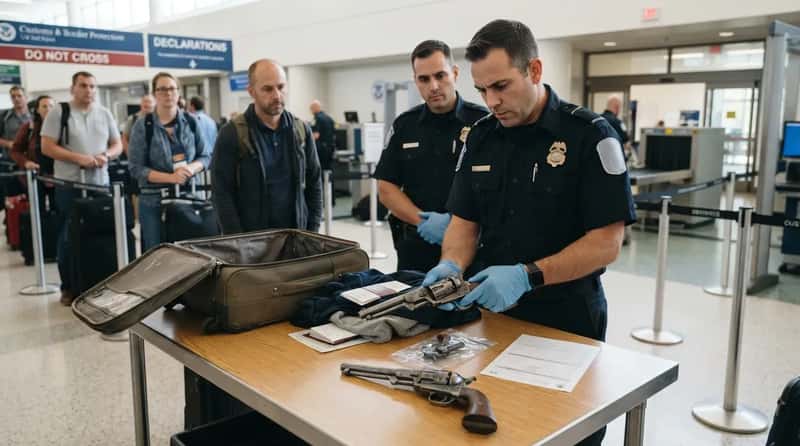
This one seems obvious, yet it happens more than most travelers assume. Firearms, even replicas, are definitely reportable, and pretending otherwise never ends well.
A prop or souvenir can trigger a full security response if left off the form. Novelty items bought abroad – decorative knives, toy weapons, or replica firearms – are treated with the same seriousness as the real thing until an officer confirms otherwise. That confirmation process alone can stall a line significantly. But #5 has nothing to do with the traveler at all.
#5 – System Outages That Have Nothing to Do With You
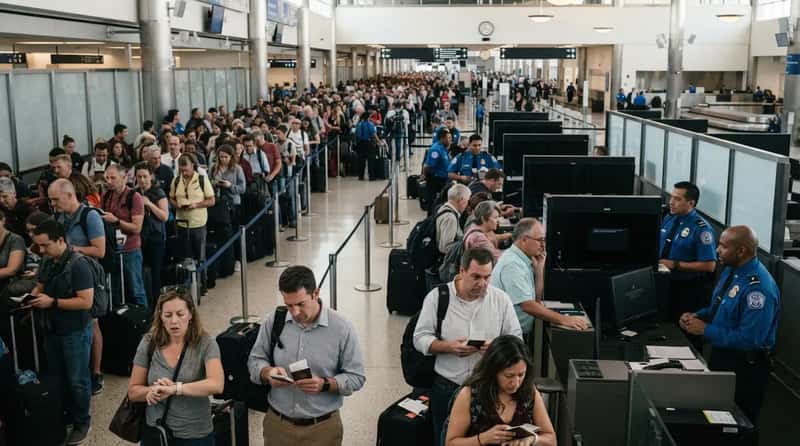
Sometimes the slowdown isn’t a traveler mistake at all – it’s the system itself. U.S. Customs and Border Protection’s processing systems have gone down before for stretches lasting around four hours across various airports, creating widespread delays and frustrated travelers with nothing they could have done differently.
Even a short outage can back up an airport for hours afterward. CBP officers have described outages at major city airports lasting close to an hour, and even short outages can lead to backups at some of the world’s busiest terminals. Nothing about your paperwork caused this one – but knowing it happens can save your patience. But #4 is a category of souvenir almost everyone forgets to mention.
At a Glance
- Some outages have stranded entire terminals for stretches close to four hours.
- Others last closer to an hour but still create hours of backup afterward.
- None of it reflects anything on your form – it’s CBP’s own network catching up, not a personal flag.
#4 – Forgetting That Souvenir Snacks Count as Food, Too
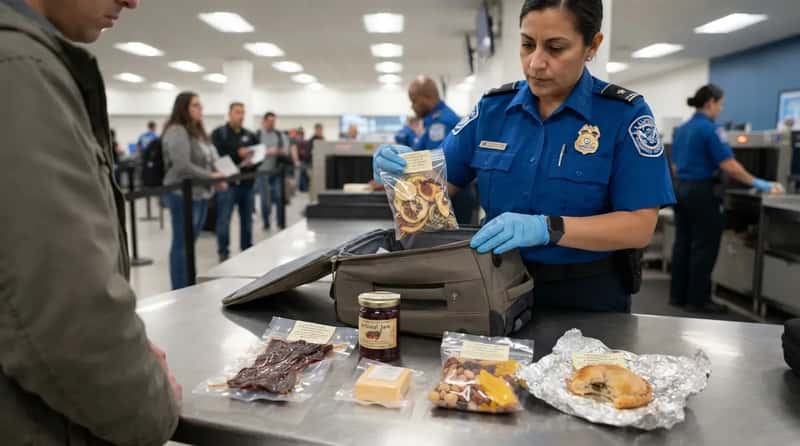
It isn’t just meals – small souvenir snacks are just as reportable, and just as commonly missed. The most commonly seized food items at U.S. ports of entry include fresh fruit, meat products like beef jerky and cured meats, rice, seeds, and homemade meals carried off international flights.
A bag of seeds or a block of cheese can trigger the same fine as anything else. Travelers rarely think of a jar of jam or a bag of trail mix as “food” in the customs sense, but officers do. If you’re not sure whether something needs to be declared, declare it anyway, since there is no penalty for over-declaring. But #3 is a story that ended a trusted traveler’s entire status.
#3 – Losing Trusted Traveler Status Over a Few Pounds of Rice
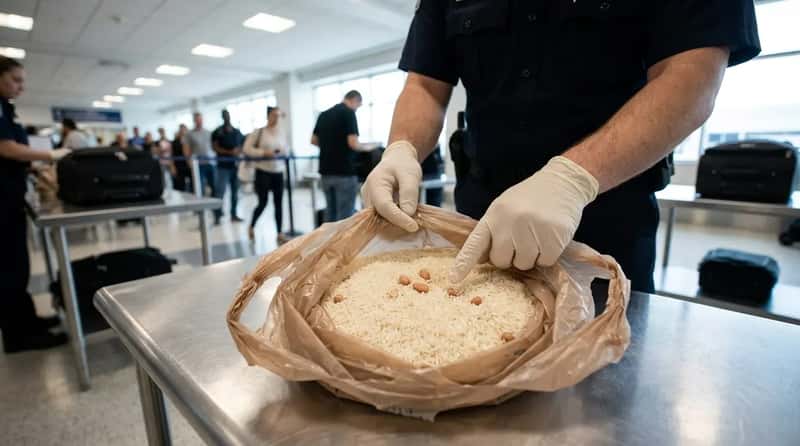
This is one of the most repeated cautionary tales in customs circles, and it’s real. CBP has publicly documented cases where a traveler lost their Global Entry membership over undeclared rice and peanuts weighing just a few pounds.
Years of trusted-traveler status can vanish over a snack that weighed less than a bag of flour. Some of the most common reasons for Global Entry revocation involve failure to declare purchases, undeclared food items, and agricultural violations, because Global Entry is fundamentally a trust-based program that asks whether a traveler can be counted on to comply going forward. But #2 is the mistake officers describe as legally the most serious of all.
#2 – Signing a False Declaration Form
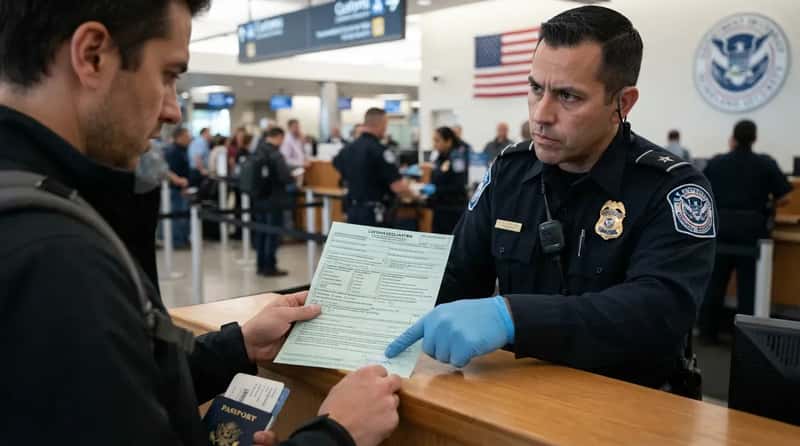
This one crosses from inconvenience into criminal territory. It is a federal crime to file a false declaration with the customs declaration form, and a traveler convicted of deliberately providing false or misleading information may be fined, imprisoned, or both.
A signature on a small form carries the same legal weight as a sworn statement. The customs declaration form is a legal document, and a lie on it, even an inadvertent one, creates real legal exposure. Most travelers treat the form like paperwork; officers treat it like testimony. But #1 is the mistake that puts cash itself on the line.
#1 – Not Declaring Cash Over $10,000
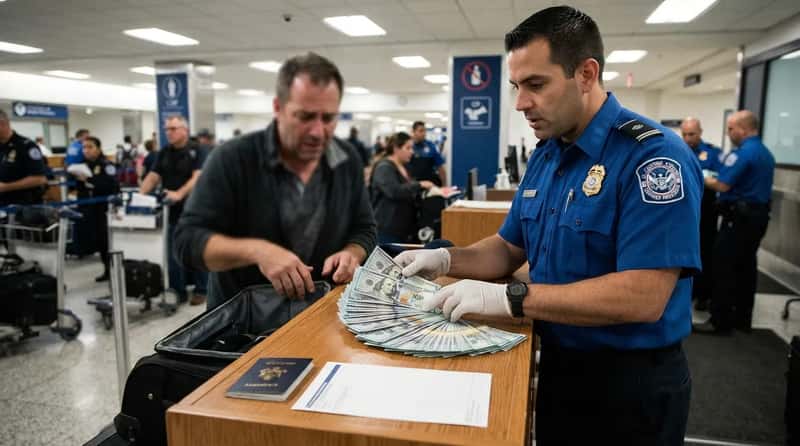
This is the single mistake that carries the steepest real-world consequences of the entire list. Anyone entering or leaving the United States with more than $10,000 in currency or monetary instruments must file a declaration with CBP, full stop.
Carrying the cash was never illegal – hiding it is what turns into a federal case. Carrying large sums of money isn’t illegal, but failing to declare cash above the federal reporting threshold is treated as a serious red flag. Officers view an undeclared stack of cash very differently than a declared one, even when every dollar is completely legitimate. Travelers who assume “it’s my legal money, so it doesn’t need reporting” are often the ones who lose it to seizure proceedings, simply for staying silent on a form.
Quick Compare
- Declared cash over $10,000: a quick form, a signature, and you’re on your way.
- Undeclared cash under $10,000: usually a non-issue if nothing else raises a flag.
- Undeclared cash over $10,000: can mean full seizure, even when every dollar is completely legal.
Almost none of these 26 mistakes involve anything illegal to carry, own, or bring home. The real pattern is silence – over food, over cash, over a form filled out in a rush. Officers say the fix is almost always the same one-line rule: when unsure, declare it, ask the question, and slow down for the sixty seconds that actually save you twenty minutes later.
Which one of these have you seen happen in a customs line? Drop it in the comments – we’ll bet at least one of you has a story that beats all 26.