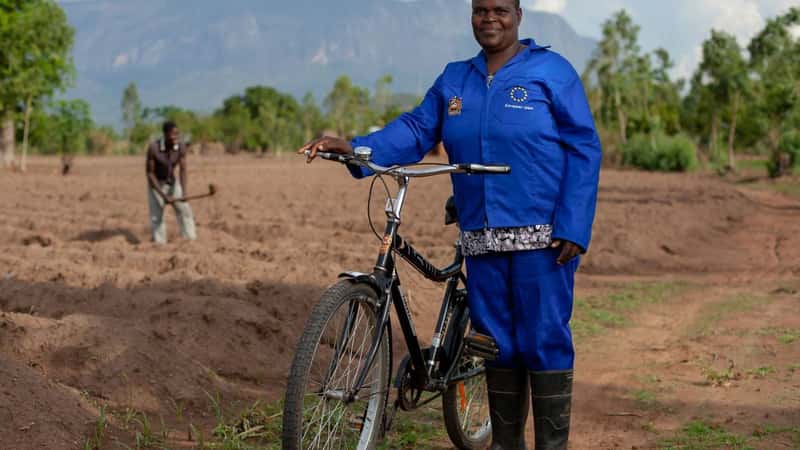
How one woman’s farm is a model for small-scale farmers in Malawi – Image for illustrative purposes only (Image credits: Unsplash)
Chiradzulu, Malawi – Diana Sitima has spent more than three decades refining a 3.5-hectare farm that now serves as a practical reference point for small-scale producers across her district. What began as a part-time effort to supplement her office salary has grown into a diversified operation that blends crops, livestock, and aquaculture while maintaining nearly full organic standards. Her results show how secure land rights combined with integrated farming methods can deliver consistent revenue and local employment in a region where many households still depend on maize monoculture.
From rented plots to owned land
Sitima launched her farming activities in 1993 while employed as an office assistant. She used small loans to access scattered parcels and gradually expanded her plantings. The decisive shift came in 2006 when she purchased her current property outright. Ownership removed the uncertainty of annual rentals and allowed longer-term investments in soil improvement and infrastructure. Over the following years she added permanent features such as fishponds and livestock housing that would have been impractical on leased ground.
Integrated systems that reduce external inputs
The farm now produces a mix of fruits, vegetables, fish, and livestock on the same acreage. Manure from the animals feeds a biodigester that generates biogas for cooking and supplies power to an egg incubator. Aquatic ferns grown in the ponds provide additional feed, closing nutrient loops and cutting feed costs. Sitima reports that these connections among enterprises keep the operation close to 100 percent organic and limit reliance on purchased fertilizers. Government extension officers have supplied technical guidance for two decades, helping her refine rotations and pest-management practices that protect long-term soil fertility.
Weekly revenue and steady local jobs
The diversified output generates roughly 1,200 dollars in sales each week. Six full-time workers maintain daily operations, providing reliable income in an area where seasonal agricultural labor is more common. Because the farm sells directly into local markets, neighboring households gain access to a wider range of fresh produce than maize-focused operations typically supply. Sitima’s record of consistent production has also attracted buyers who value the reduced chemical residues associated with her methods.
Sharing knowledge beyond the fence line
Beyond her own fields, Sitima chairs the local chapter of the Rural Women’s Assembly, a network that reaches nearly 200,000 small-scale women farmers in eleven countries. She hosts visits from other producers who want to observe how integrated systems function on a modest landholding. The emphasis remains practical: record-keeping, gradual diversification, and the advantages of secure tenure. Her example illustrates one workable path for farmers seeking to move beyond single-crop dependence while staying within the scale and resources available to most rural households in southern Malawi.