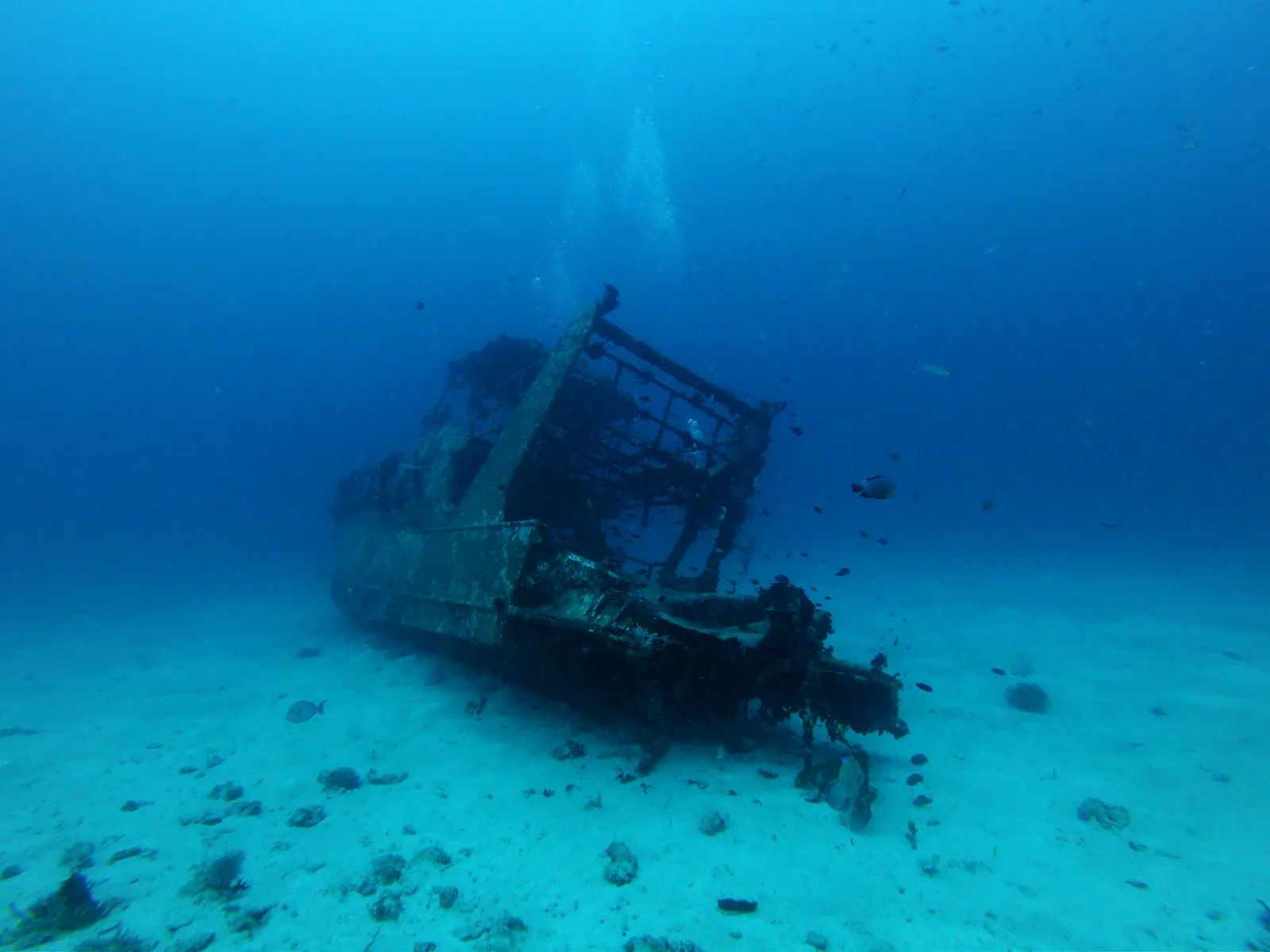
Travelers seeking something beyond natural reefs often turn to sites deliberately placed or preserved underwater by human hands. These locations range from decommissioned aircraft to entire submerged cities, creating scenes that feel both familiar and entirely out of place beneath the surface. One early example that caught attention involves plane wrecks positioned off Aruba, where the structures now serve as artificial habitats and exploration points.
A Shift Toward Engineered Underwater Destinations
Operators and governments have long recognized the value of placing objects on the seafloor to draw visitors while easing pressure on fragile natural reefs. The approach creates new dive opportunities in areas where traditional coral systems may be limited or recovering. Over time, these additions also support marine growth as organisms colonize the surfaces, turning static installations into living environments. Divers report a distinct experience compared with open-water reef dives. The geometry of planes, statues, or building foundations stands out sharply against the seabed, offering clear reference points and a sense of discovery that feels more like exploration than wildlife spotting. Many of these sites appear in underwater footage that highlights the contrast between the man-made forms and the surrounding water.
Concrete Examples That Stand Out
Several locations illustrate the range of what has been achieved. Off the coast of Florida, the Neptune Memorial Reef incorporates cremated remains into cement structures designed to form an artificial reef and memorial space. Visitors can descend to about 12 meters to view roadways, benches, and statues that were intentionally placed there. In Mexico, the Museo Subacuático de Arte near Cancún and Isla Mujeres features hundreds of life-size sculptures installed starting in 2009. Some sections sit shallow enough for snorkelers, while deeper galleries require scuba. The figures gradually acquire coral coverage, altering their appearance over the years. Bahrain’s Dive Bahrain project centers on a decommissioned Boeing 747 submerged as the focal point of what is described as the world’s largest underwater theme park. Additional elements such as replica structures are planned for later phases. In Italy, the Christ of the Abyss statue, placed in 1954 near San Fruttuoso, stands roughly 2.5 meters tall at a depth of 17 meters and has inspired replicas elsewhere, including one off Florida. These examples share a common thread: each was positioned or preserved with a specific purpose, whether memorial, artistic, or touristic. Access often requires standard diving certification, though some locations impose additional permits or seasonal restrictions.
Planning a Visit and What to Expect
Practical arrangements vary by site. Operators in Cancún and Miami typically offer guided trips that include equipment and briefings on local conditions. Depths generally remain within recreational limits, though visibility and currents can change with weather. Travelers often combine these dives with surface activities. In Florida, a day at the reef can pair with time in Miami or further exploration of the Keys. In Mexico, the underwater museum sits near beach resorts and Maya archaeological zones, allowing a balanced itinerary. Costs depend on the operator and whether the trip includes multiple dives or boat travel. Safety considerations remain standard for any scuba outing. Participants should confirm current conditions with local dive centers and ensure their certification covers the planned depth and environment.
Why These Sites Continue to Attract Attention
Man-made underwater attractions provide a measurable alternative when natural reefs face stress or when destinations seek to expand their offerings. They create repeatable experiences that can be documented and shared, helping sustain interest in diving as a travel activity. Over the longer term, the installations demonstrate how deliberate placement can serve multiple ends at once: tourism revenue, habitat creation, and cultural preservation. As more locations adopt similar approaches, the underwater landscape continues to reflect human decisions as much as natural processes.
– Focus on one or two sites per trip to allow proper acclimation and surface intervals.
– Check permit requirements in advance, especially for archaeological zones.
– Combine with land-based activities for a fuller itinerary.
– Review recent diver reports for visibility and marine life updates.