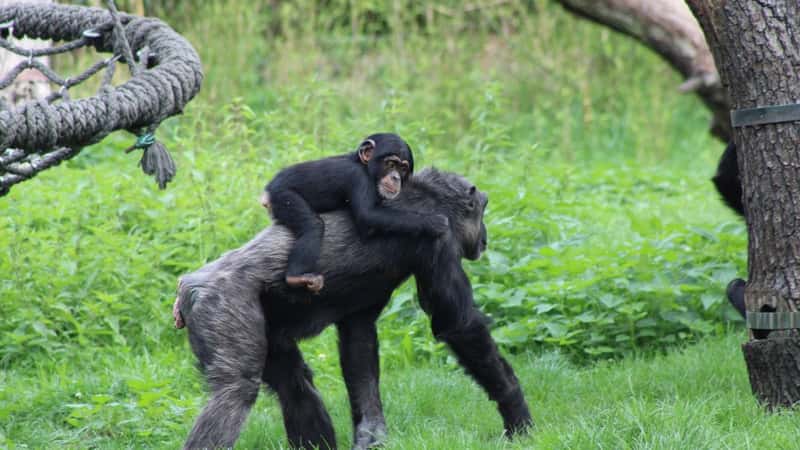
Before tourists can see bonobos, trackers must earn their trust – Image for illustrative purposes only (Image credits: Unsplash)
Salonga National Park in the Democratic Republic of Congo holds one of the last strongholds for wild bonobos, yet seeing them remains far from simple. Researchers and local trackers are guiding a group of roughly 60 of the endangered apes toward habituation, a deliberate process that lets the animals grow accustomed to limited human presence. The goal is first to support detailed scientific study and later to open carefully controlled tourism. Success depends on years of consistent, low-impact contact rather than any quick breakthrough.
The Daily Routine That Builds Familiarity
Trackers leave their camp well before dawn, often around 3 a.m., to reach the bonobos’ previous night’s nesting site ahead of the animals’ first movements. They then shadow the group through the dense forest for the entire day, staying close enough to be noticed but never intrusive. By evening the apes construct new nests, and the trackers note the location before returning to camp. This pattern repeats without variation in personnel or behavior. The approach relies on repetition and restraint. The same individuals appear each day, moving calmly and avoiding direct interaction. Over time the bonobos begin to treat the humans as a neutral part of the landscape rather than a threat. Early encounters often ended with the apes fleeing at the first sign of people. More recently, observers have remained with the group for two or three hours at a stretch.
Progress Measured in Small Tolerances
Habituation advances in tiny increments. Two visitors can now be accepted without triggering flight, yet three or four still exceed the current comfort level. Felix Bofeko, an assistant researcher involved in the effort, described the core principle: the team meets the group every day in a very friendly, non-interactive way so the bonobos accept them as part of the forest. Consistency in people, behavior, and timing proves essential. Even modest gains deliver immediate scientific value. Habituated animals allow closer observation and the collection of fecal and urine samples. These materials support genetic studies, pathogen monitoring, and dietary analysis that would otherwise be impossible. Salonga contributes data to the broader Bonobo Diversity Project, which gathers standardized information across multiple sites in the Democratic Republic of Congo.
Why the Process Cannot Be Rushed
Tourism remains a distant prospect. The same steady routine that produces research opportunities must continue long enough for the apes to tolerate larger groups without stress. Any acceleration risks reversing hard-won progress and could harm the animals’ welfare. Trackers therefore maintain strict protocols that prioritize the bonobos’ pace over external timelines. The work also underscores the human commitment required. Trackers endure early starts, long hours on foot, and the physical demands of the forest while maintaining the calm demeanor the apes need to see. Their presence becomes predictable, which gradually reduces the apes’ wariness.
What Comes Next for Access and Protection
Once habituation reaches a stable point, limited tourism could generate revenue that supports both the park and surrounding communities. At present the focus stays on research and protection. Continued monitoring will reveal whether the group can eventually accommodate small visitor parties without behavioral changes that might affect their survival. The effort illustrates a wider reality in wildlife tourism: the most memorable encounters often rest on years of unseen preparation by dedicated local teams. In Salonga that preparation continues one quiet day at a time.