
For one week a year, Mexico City transforms into a place of celebration and remembrance, honoring those who have come before and appreciating the beauty of life. Dia de Muertos, or Day of the Dead, is my favorite time to be in Mexico, when colorful celebrations and festivities laugh in the face of death and remind you of how magical it is to be alive. Throughout the city, parades, parties, and ofrendas (altars to remember loved ones) appear on every corner, with shops, businesses, and homes setting up decorations.
The Parade on Paseo de la Reforma
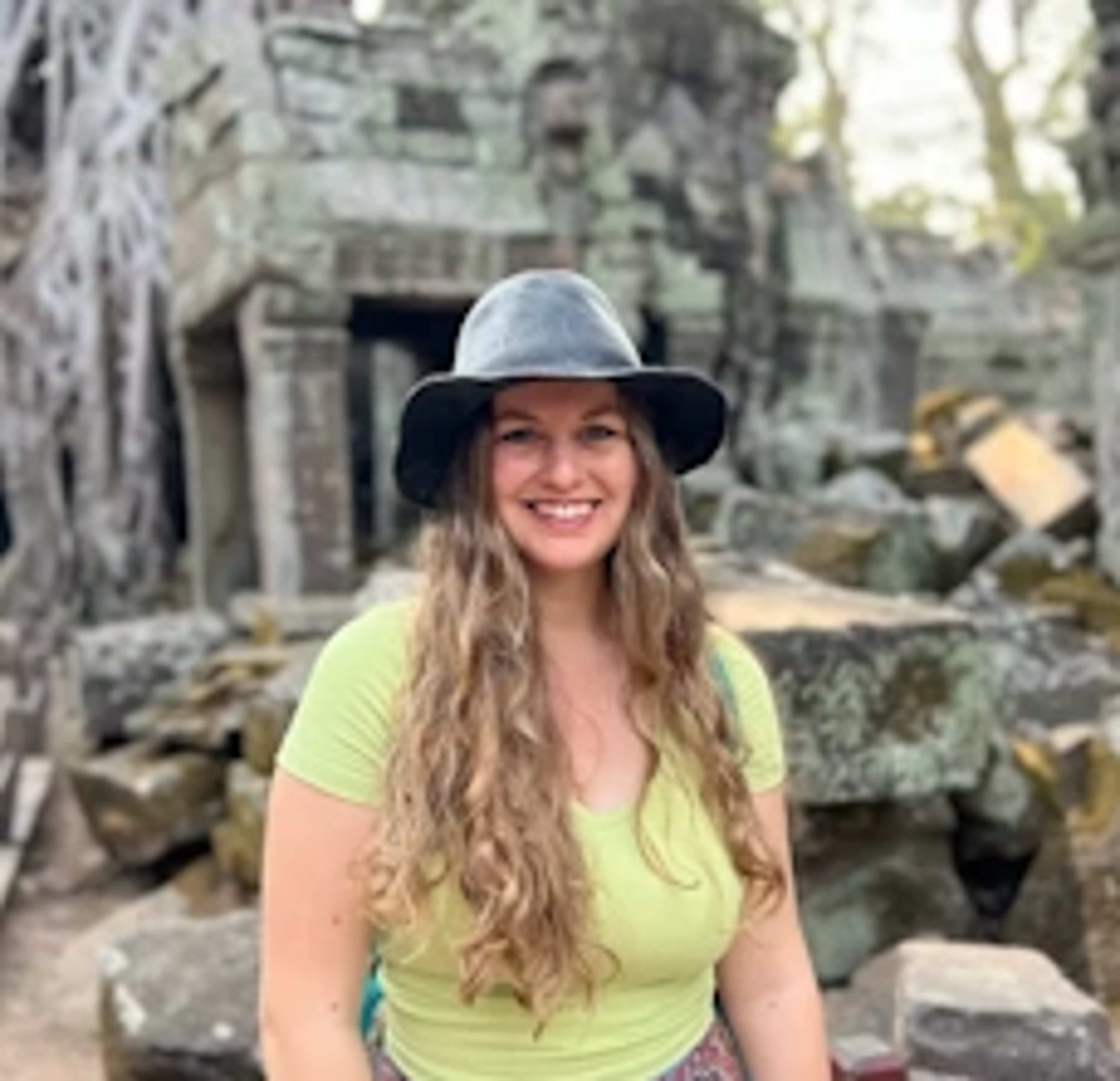
On the afternoon of the parade along Paseo de la Reforma, I stood in a Catrina headpiece and makeup, surrounded by families and visitors dressed the same. Children, grandparents, and everyone in between were gearing up, dressed in skull costumes, Catrina dresses, and colorful clothes. Why skulls? Because Dia de Muertos is a celebration in the face of death. It is a time in the country when families can honor their loved ones and spend time with them, believing that on the night of November 1st, their loved ones return to the land of the living.
As the sun began to set behind the tall skyscrapers of Reforma, the parade arrived, beginning with dancers in traditional Aztec attire, blowing conch shells to create an echo across the crowd. With incense burners, painted faces, and shells bouncing up and down tied to their legs, they arrived carrying the banners of the cities that took part in the parade from across the country.
Float after float, dancers in elaborate skull makeup, embroidered dresses, and women dressed as La Catrina danced by. La Catrina is an emblem of the holiday, an elegant skeletal woman inspired by Posada’s artwork and popularized by muralist Diego Rivera. While she was created as a satirical portrait of class imitation of 19th-century European fashions, she is recognized today as the go-to character of the holiday, with a separate parade held the week before.
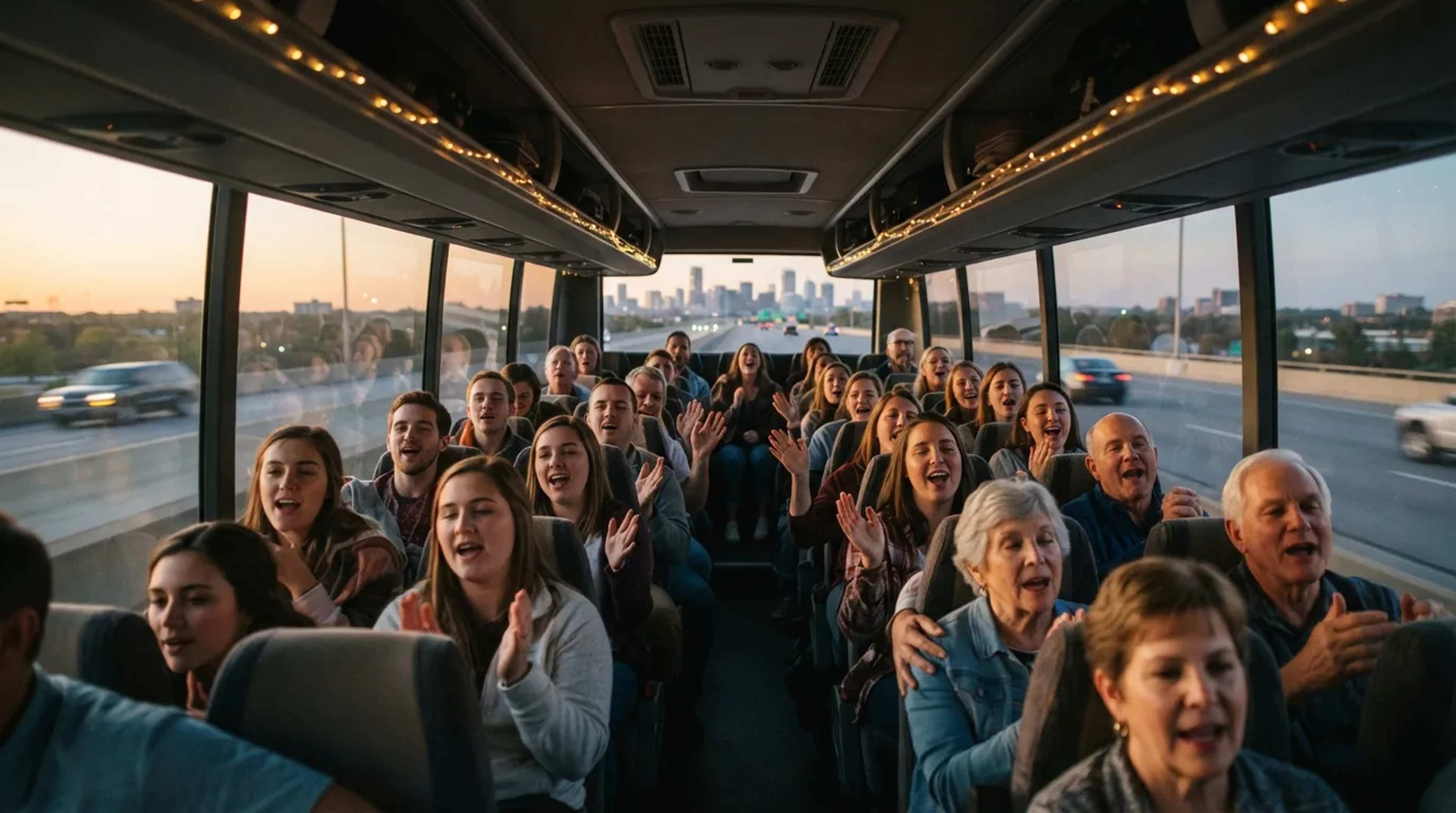
As darkness fell, the twinkling lights set up across the street turned on, blanketing the crowds in gold and orange, resembling the cemapushil flower. Families sang to the popular songs blasting from the floats, people cheered and waved, and there was an atmosphere of celebration and joy.
The Ofrendas of The Zocalo and Cathedral
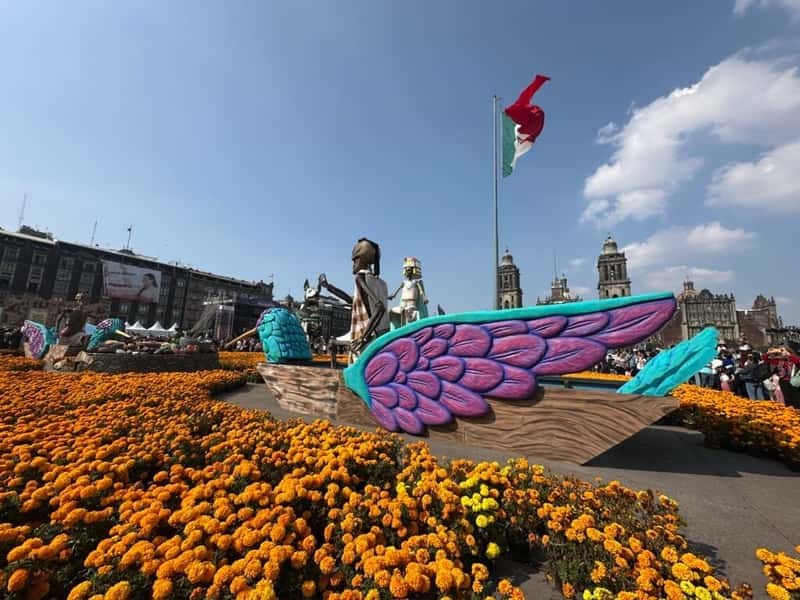
The next day, I found myself in the Zocalo, the historic heart of the city and once the ceremonial center for Tenochtitlan, the Mexica capital. Hundreds of thousands of cempacuchil flowers covered almost the whole square, with vibrant petals creating a sea of gold. Rising out from the flowers were large statues of skeletons and Aztec figures, paying homage to the city’s pre-Hispanic roots. As I wove in between the flowers, I made my way towards the Cathedral. With its Spanish colonial architecture and layers of gold, this church is a reminder of the brutal empire that was established in these lands and its controversial legacy.
One of the most beautiful displays in the Cathedral was an ofrenda to past popes, where food and drinks were left out for them in front of their photos. In front of a picture of Pope Francis, a cup of coffee, a sugar skull, a bottle of wine, and a pan de muerto were laid out. White candles filled every available space, with the golden flowers scattered around the table. Celebrating Dia de Muertos for anyone who is nostalgic is powerful, as it is a collective experience of so many people at once, pausing to remember the past.
Xochimilco Canals Spooky Stories
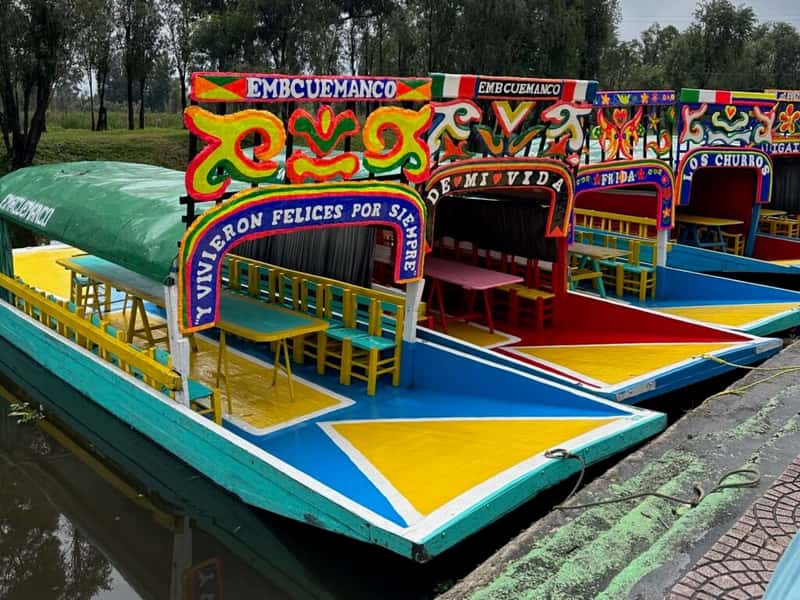
There are countless legends of La Llorona, the Weeping Woman, who, according to legend, drowned her children and wanders in a white dress haunting those who hear her cries. In Mexico City, her story is retold on the canals of Xochimilco. Visiting the ancient canals on a trajinera, a colorful boat, I could immediately understand why her story is tied to this place. In between little islands of flower fields and green, the maze of canals spread endlessly. These chinampas, agricultural islands that existed when Mexico City was still a town on a lake, were filled with flower beds and seasonal decorations. With skeletons placed in abandoned, falling-apart boats, there was already a sense of mystery.
Gliding past the La Llorona show set-up, the sun was starting to set. The dark surface of the water reflected in the light of dusk, creating an eerie atmosphere as the boat slowly rocked back and forth. While the show was not going to take place under the sun was well asleep, it was intriguing to see how her legend was recounted with lights, special effects, and actors.
Colorful Markets and Ofrendas
While the party happens out in the streets, the reverence happens in homes, with each family, business, and shop setting up ofrendas. Public parks set up ofrendas for pets that have passed, restaurants have ofrendas for the families of the employees, and museums have ofrendas for the famed artists who have passed. Everywhere you go, the city collectively reminds its citizens of their ancestors and the people who built it into what it is today.
The mercados turn into an explosion of color, with decorations hanging from the ceilings and ofrenda items stacking the shelves. White candles, papel picado, skull candies, and pan de muerto are common during this time of year, with locals hurrying through to buy everything they need before the night of the 1st.

A New Perspective Through Travel
As someone who was heavily influenced by the American perspective on death, witnessing Dia de Muertos is a powerful reminder that those we lost can still be with us in spirit. Traveling to Mexico transformed my perspective on life and death: rather than fearing it, I came to see it as something to celebrate and laugh at. If it is coming for us one way or another, then why worry so much about it? This is why travel can be such a powerful tool in seeing the world through other perspectives, especially when we open ourselves up to understanding how others truly see the world.