Everyone assumes walking onto a ferry is the “easy” way to travel – no parking, no gas, no waiting behind a line of trucks. But talk to actual ferry crew and dock staff, and a different picture emerges: foot passengers are often the ones who get caught off guard, stuck at the wrong door, or scrambling because they assumed the rules for drivers also applied to them.
Some of what trips people up sounds almost too small to matter – a knife rule, a shoe choice, a booking quirk – until it’s the reason someone misses their sailing entirely. Here’s what ferry insiders actually say happens once you show up without a car.
#22 – You Still Walk Through the Vehicle Deck, Not a Separate “People Door”
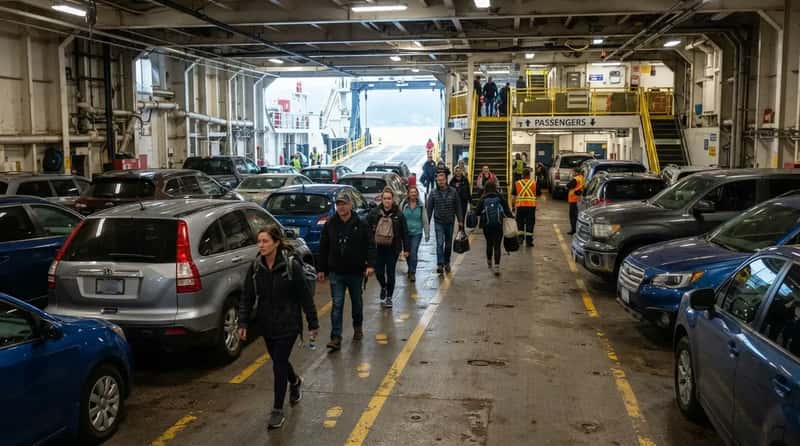
Most foot passengers picture a clean, car-free walkway straight onto the ship. In reality, on many ferry systems you check in at a foot passenger counter, then walk directly through the vehicle deck alongside the cars and trucks to reach the passenger areas.
Crew say this catches first-timers off guard because it feels backwards – pedestrians weaving past idling engines and exhaust fumes right before boarding. It’s not dangerous, just unexpected, and it’s exactly why staff tell people to follow signage instead of guessing. Skip the confusion and you’ll walk on like a regular.
#21 – Your Check-In Window Is Shorter Than You Think
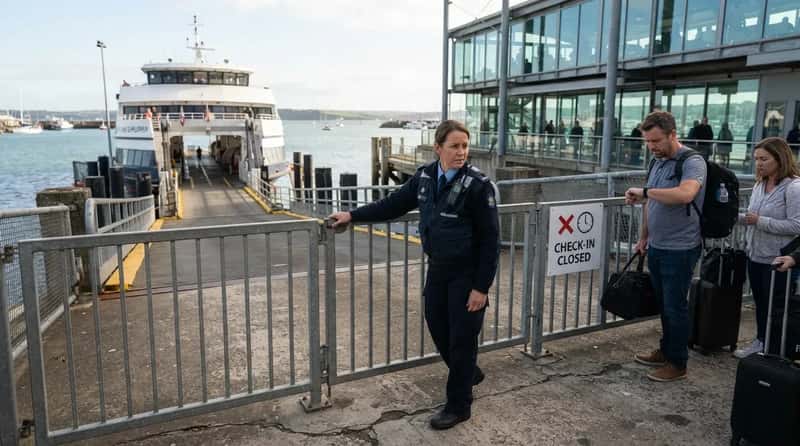
Foot passengers often assume they can stroll up minutes before departure since there’s no parking or loading to worry about. Crew say that’s the fastest way to watch a ferry pull away without you.
Foot passengers generally have a shorter check-in window, but arriving at least 45 minutes early is still advisable. That window exists precisely because staff need time to process walk-on tickets, direct people to holding areas, and organize boarding. Unlike drivers stuck in a physical line, a late foot passenger can simply be locked out of the terminal gate. Arriving “just in time” is a myth ferry staff wish more people understood.
#20 – There’s No Weight Limit on Your Bags – But No Help Carrying Them Either
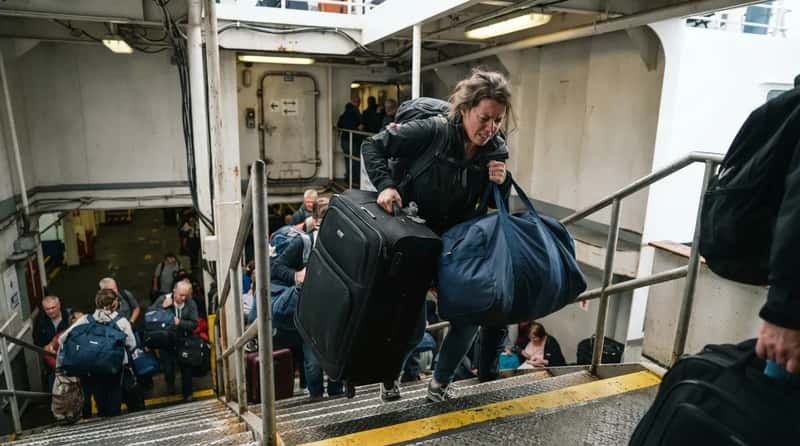
Foot passengers often expect airline-style restrictions on luggage. Ferries don’t work that way at all.
Unlike air travel, most ferries don’t have a strict luggage allowance for foot passengers, and there’s generally no weight or size restriction. The catch: you’re required to transport your bags on and off the vessel yourself, without assistance. That freedom sounds great until someone shows up with three oversized suitcases and no porter in sight, struggling up a stairwell with bags they never should have packed alone. The lack of a limit is a trap disguised as a perk.
Fast Facts
- No weight or size limit applies to foot passenger luggage
- Bags must be carried on and off the vessel by the passenger
- No porter or luggage-assistance service is provided
- Packing light is a smart choice, not a requirement
#19 – Your Bike Might Ride Free, But Only If You Say So First
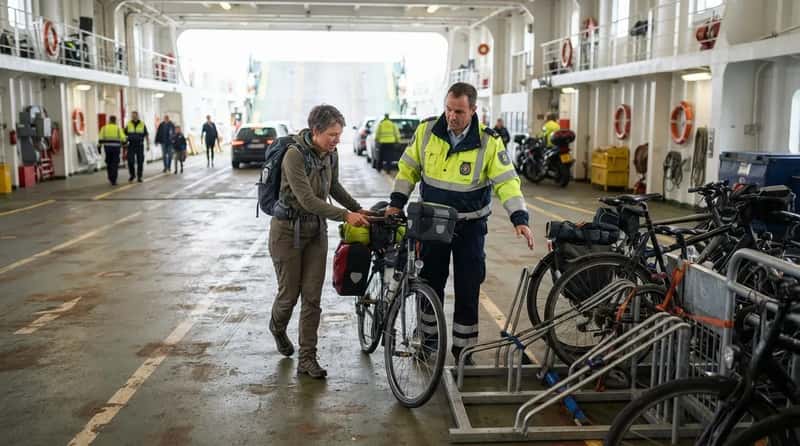
Bringing a bicycle as a foot passenger feels like a simple, cost-free upgrade. It usually is – but only if you plan ahead.
You can bring your bicycle along for free when you’re travelling as a foot passenger, but you do need to let staff know in advance since space on board is limited. Some systems even charge a small fee for other gear, though bikes stay free. Crew say the real issue isn’t cost, it’s travelers who show up with a bike nobody knew was coming, only to be told there’s no rack space left. A two-minute declaration at booking avoids the entire headache.
#18 – Some Ferries Ban Pocket Knives for Walkers That Drivers Can Carry Freely
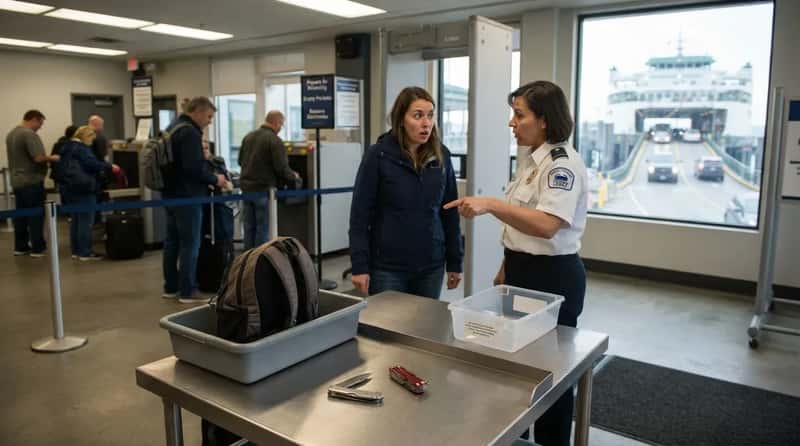
This one genuinely surprises frequent travelers: the same item can be legal in your car and confiscated at your feet.
Some operators don’t allow foot passengers to bring knives of any kind, even small multitools, while drivers can carry whatever they want in a vehicle since there are no checks between the car deck and passenger decks. It’s a rule built around how security screening actually works – walkers pass through a checkpoint, drivers often don’t. The inconsistency isn’t a mistake; it’s just how the checkpoints are built.
#17 – On Some Crossings, Foot Passengers Aren’t Allowed at All
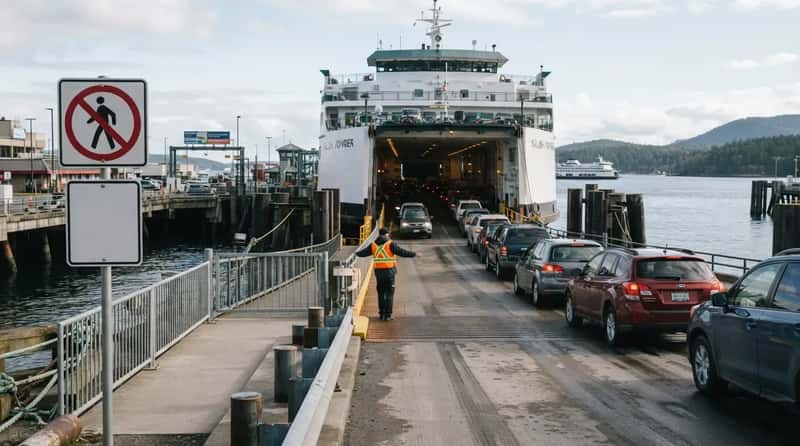
People assume every ferry route welcomes walk-on travelers. That’s simply not true on several major crossings.
One major operator only allows foot passengers on three of their daily crossings on a popular route, while another doesn’t allow foot passengers to travel at all on two of its routes. Space for pedestrians is treated as a limited, secondary allocation on some ships, not a guaranteed option the way a car booking is. Travelers who assume “ferries always take walkers” sometimes discover the opposite at the ticket counter.
#16 – Some Routes Require You to Check In Two Hours Early Just for a Bus Ride
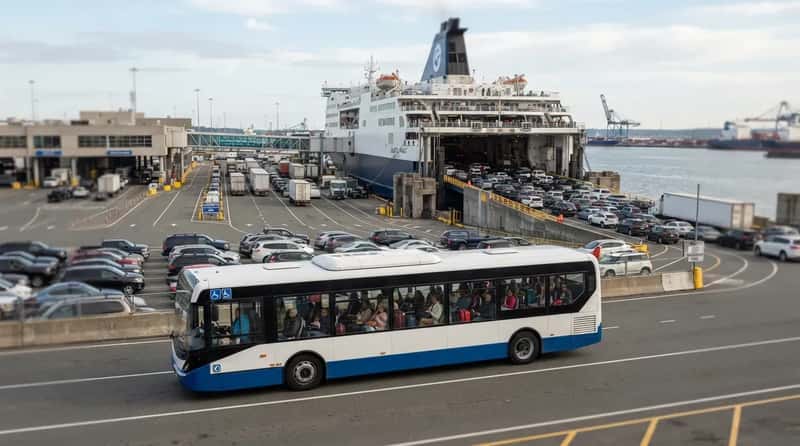
It sounds excessive until you understand the logistics behind it. On certain long-haul or ocean routes, foot passengers don’t walk straight onto the ship at all.
Foot passengers must check in two hours before scheduled departure and are directed to a designated area to meet a shuttle bus, which transports them to the ferry during the loading process. That extra time isn’t bureaucratic padding, it’s built around how vehicles get marshalled onto the deck before people can safely be shuttled aboard. Skipping that flight-style cutoff means missing the boat entirely.
#15 – The Wrong Shoes Are the Real Reason People Slip on Deck
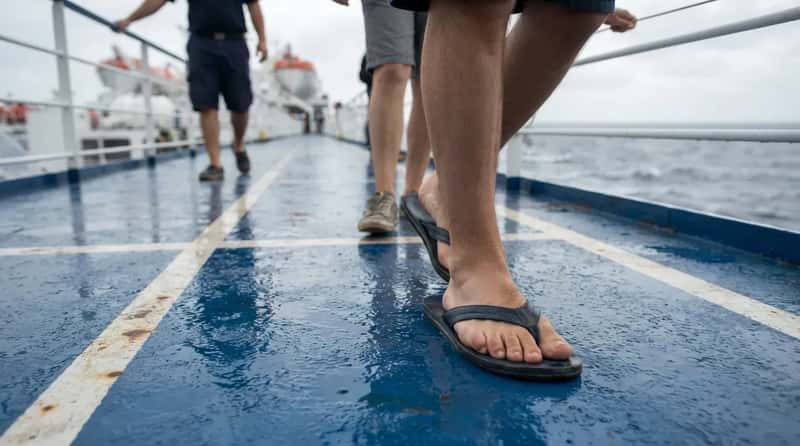
Nobody thinks about footwear until they’re gripping a railing on a wet deck. Crew say it’s one of the most preventable mishaps they see.
Rubber-soled or boat shoes are recommended for safe footing, while high heels, leather soles, and backless shoes like flip-flops should be avoided since decks get slippery when wet. It’s not a style suggestion, it’s a genuine slip hazard once sea spray or rain hits a metal or painted surface. The most common footwear mistake isn’t fashion, it’s function.
#14 – Not Every Ferry Sells Food, and Crew Watch People Go Hungry
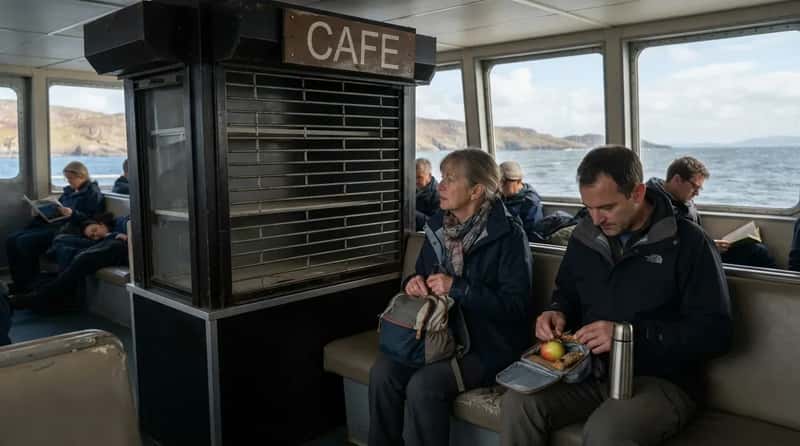
Assuming every ferry has a snack bar is a rookie mistake that experienced travelers learn to avoid. Smaller vessels frequently have nothing on offer at all.
Depending on the operator, foot passengers might buy food and drinks onboard since many ferries have canteens, cafes, and shops. But it’s not uncommon for smaller ferries to have no food service whatsoever, so packing your own snacks avoids disappointment. Crew say the complaints they hear most on short, no-frills crossings are about hunger, not weather or seating. A packed granola bar solves a problem most people never see coming.
At a Glance
- Larger ferries: canteens, cafes, and onboard shops
- Smaller ferries: often no food service at all
- Smart move: pack snacks no matter the vessel size
- Top complaint crew hear on bare-bones crossings: hunger
#13 – The Best Part of the Trip Might Happen Before You Even Board

Foot passengers tend to treat the terminal as a waiting room to rush through. Crew and terminal staff say that’s backwards on routes built with real amenities.
While a crossing itself might only take about 85 minutes, many travelers make the most of their time in the terminals, enjoying food, drinks, live entertainment, and waterfront parks before and after sailing. Some terminals are destinations in their own right, with views and food better than anything onboard. Rushing straight to the gate skips the part locals actually show up early for.
#12 – International Routes Add a Passport Check Most Walkers Forget
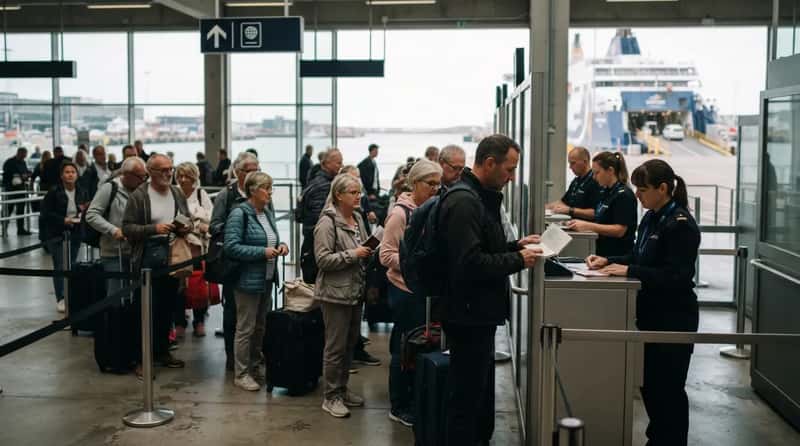
Foot passengers crossing international borders sometimes assume boarding is as casual as a domestic bus ride. It isn’t.
For international sailings, travelers pass through passport control and sometimes security screening, and extra time should be allowed for these steps, especially in high season. Unlike a same-country hop where a ticket alone gets you through, cross-border routes add a document check that can bottleneck fast during peak travel months. The passport stamp is the step people remember packing for, and still forget to budget time for.
#11 – Foot Passengers Can Book a Private Cabin, Even Without a Car
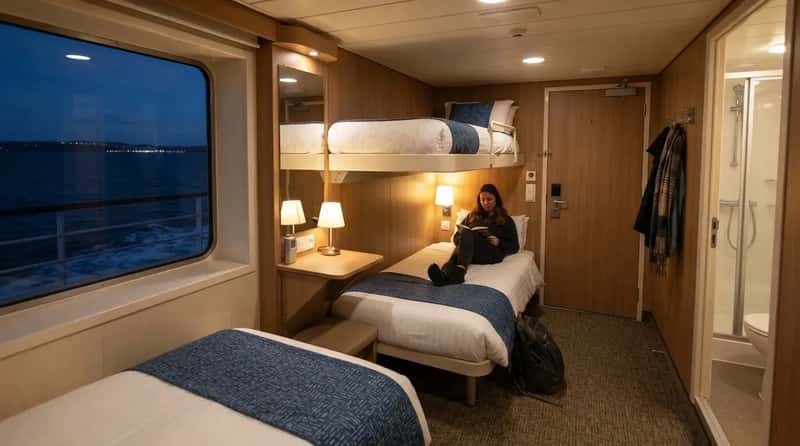
People assume cabins are a “vehicle traveler” perk reserved for road-trippers with overnight bookings. They’re not.
On overnight sailings, booking a cabin is highly recommended since it’s far more comfortable than sleeping in a passenger lounge. A foot passenger can reserve the same private room a driver would, complete with a bed instead of a reclining chair. Most walkers never even check that the cabin option exists for them.
#10 – A Quiet, Upgraded Lounge Exists That Most Walkers Never Ask About
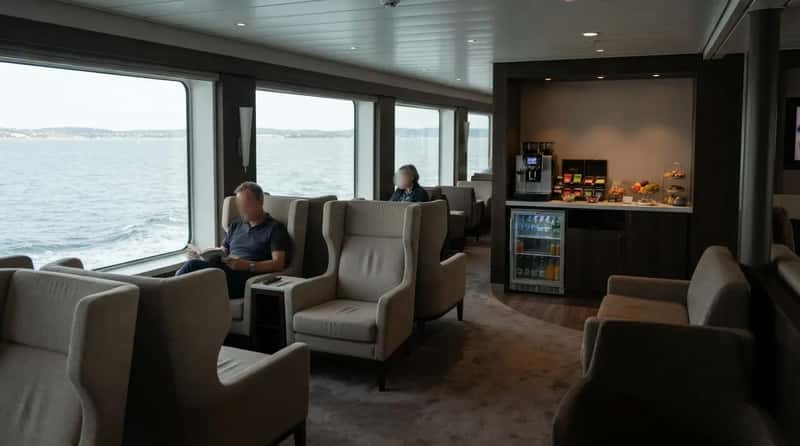
Most foot passengers head straight for the general seating area without checking what else is available. On many operators, there’s a paid upgrade hiding in plain sight.
Some ferry operators offer premium lounge access with quieter seating and complimentary refreshments for a small add-on fee. It’s the kind of option that gets skipped entirely by walk-on travelers who assume premium seating is reserved for vehicle bookings. The upgrade nobody asks about is often the cheapest one available.
#9 – Accessibility Help Has to Be Requested Ahead of Time
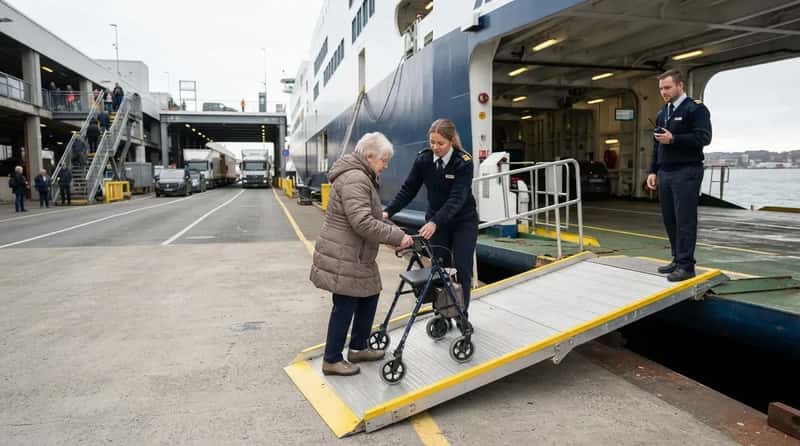
Travelers with mobility needs sometimes assume help will simply be available on the day. Crew say that’s a risky assumption.
If you have reduced mobility or a specific accessibility requirement, operators urge you to notify them in advance. Staffing for ramps, lifts, or assisted boarding is planned around advance notice, not last-minute requests at the gate. Showing up unannounced can mean the accommodation simply isn’t ready.
#8 – Boarding Opens for Hours, Then Slams Shut Fast
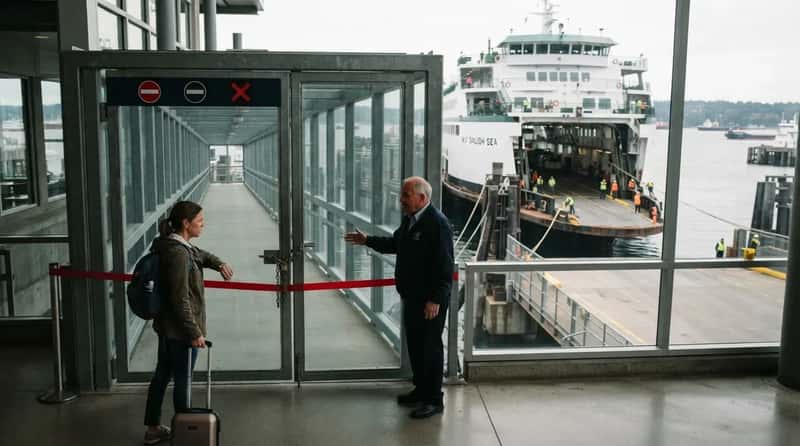
People picture boarding as a single, generous window. It’s actually a wide-open door that closes abruptly.
Boarding can open up to three hours before departure and often closes around 30 to 45 minutes before sailing. That gap between “wide open” and “closed” is exactly where late foot passengers get stranded – they assume there’s still time, and the gate is already locked. The generous opening window makes the sudden cutoff feel even more brutal.
Quick Compare
- Boarding opens: up to 3 hours before departure
- Boarding closes: roughly 30-45 minutes before sailing
- The gap in between: feels wide open until it suddenly isn’t
#7 – A Phone Screenshot Is Often Enough – No Printer Required
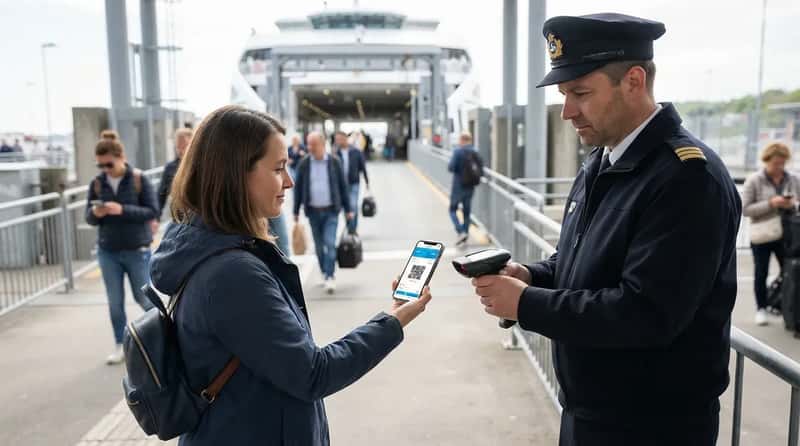
Plenty of travelers still print tickets out of habit, assuming paper is required. Most operators moved past that years ago.
Mobile tickets or printed booking confirmations are both generally accepted, and staff scan a QR code off a phone screen just as easily as a paper slip. The printer stress so many people carry into travel day is completely unnecessary.
#6 – Ride-Share Drivers Can Actually Meet You Right at the Dock
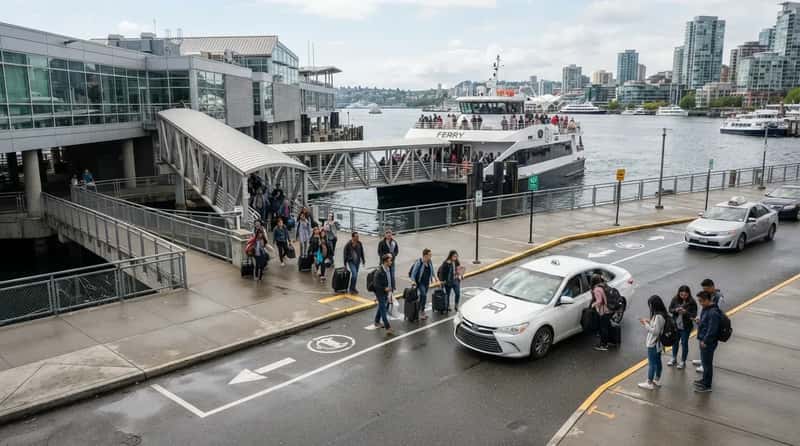
Foot passengers often assume they’re on their own for the “last mile” to and from the terminal. Several major terminals have quietly built this in.
Ride-sharing services like Lyft and Uber, along with taxis, are available at some ferry terminals using regular pick-up and drop-off areas. It’s not advertised loudly, so plenty of walk-on travelers pay for an unnecessary shuttle or hike further than they need to. The ride-share pickup spot is often steps from where you disembark.
#5 – Crew Quietly Route You a Different Way Than Drivers
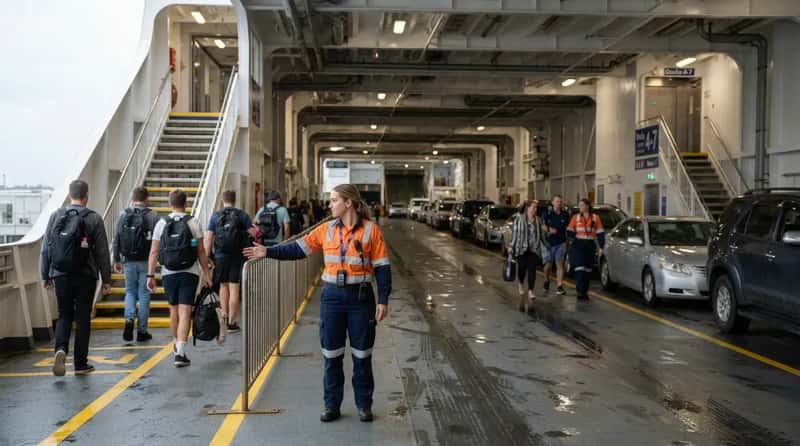
Vehicle passengers and foot passengers rarely take the same path once onboard, and most people never notice the split happening.
Once parked and the handbrake is applied, vehicle passengers make their way up to the passenger decks via stairs or lifts, while foot passengers are guided a different route directly by crew from the moment they step off the vehicle deck. The separation is intentional, not random.
#4 – Kayaks and Canoes Carry a Hidden Small Fee
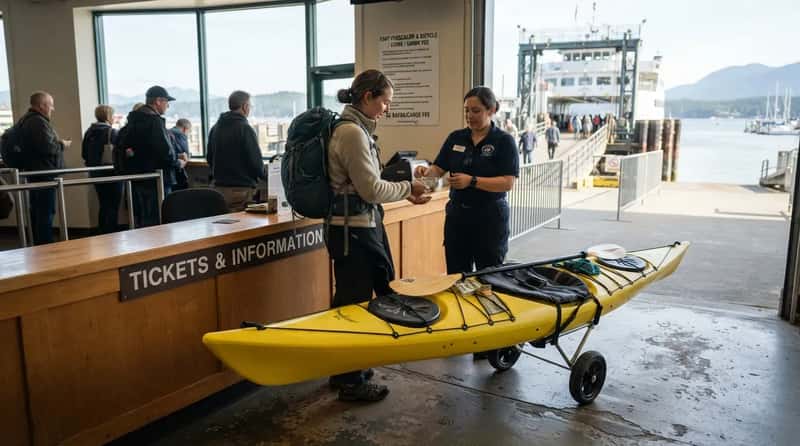
Travelers assume gear like bikes and paddling equipment fall under the same free-of-charge rule. They don’t always.
There’s no fee for a bicycle, but a $2 fee applies for a kayak or canoe. It’s a tiny charge in the grand scheme, but crew say the surprise at checkout is real for people who never expected any fee at all as a foot passenger. Two dollars doesn’t sound like much until you’re the one caught off guard by it.
#3 – Some Routes Run a Passenger-Only Boat That Beats the Car Ferry for Speed
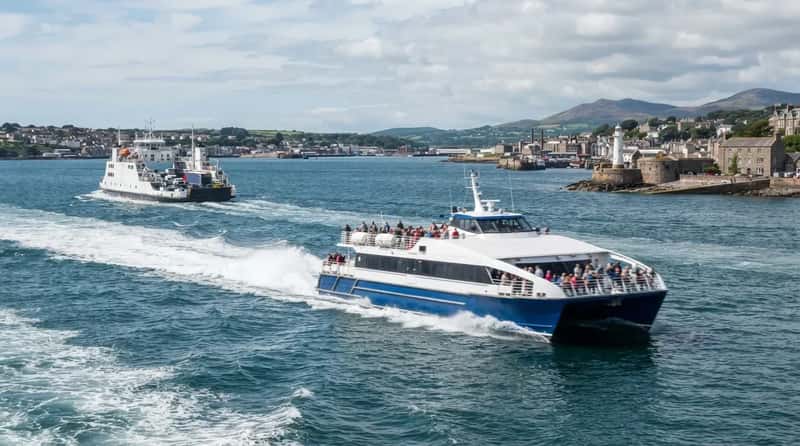
Most people assume the vehicle ferry is the only option and the foot-passenger experience is just a slower version of the same trip. On some routes, it’s actually the fast lane.
Many foot passengers choose a dedicated passenger fast-cat service, connecting two ports with crossing times of just 22 minutes on a high-speed catamaran, often quicker than the standard vehicle ferry covering the same stretch of water. Drivers stuck loading and unloading a car deck simply don’t have this option. Going carless can genuinely mean getting there faster.
Why It Stands Out
- Passenger-only fast-cat crossing: as quick as 22 minutes
- Standard vehicle ferry: same route, but slower going
- Drivers loading a car deck don’t get this shortcut
- Going carless can be the faster way to arrive
#2 – Smoking Bans Apply Even Inside Your Own Parked Car
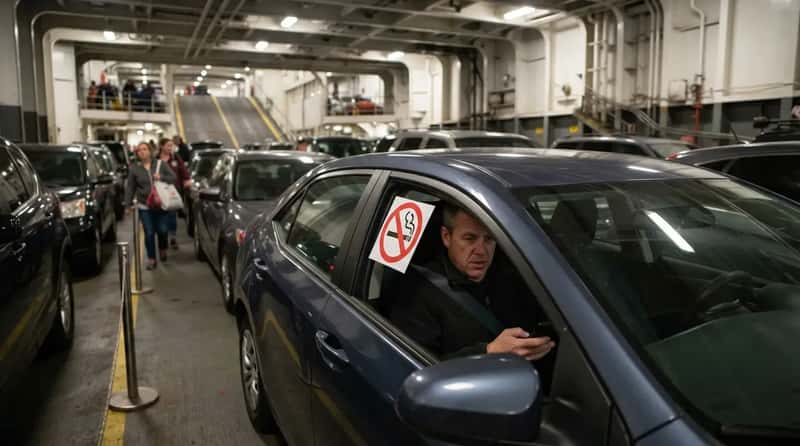
People assume a personal vehicle is private space where the rules loosen a little. Several operators explicitly close that loophole.
Smoking, including e-cigarettes, isn’t allowed anywhere on the ferries or while waiting in your vehicle to depart the ship, and at ports smoking is only allowed in dedicated smoking areas. Foot passengers waiting in a queue don’t get a private car to duck into, so the rule hits them just as visibly, if not more so. “It’s my own car” isn’t the exemption most people assume it is.
#1 – A “Sold Out” Foot Passenger Booking Doesn’t Mean the Ferry Is Full
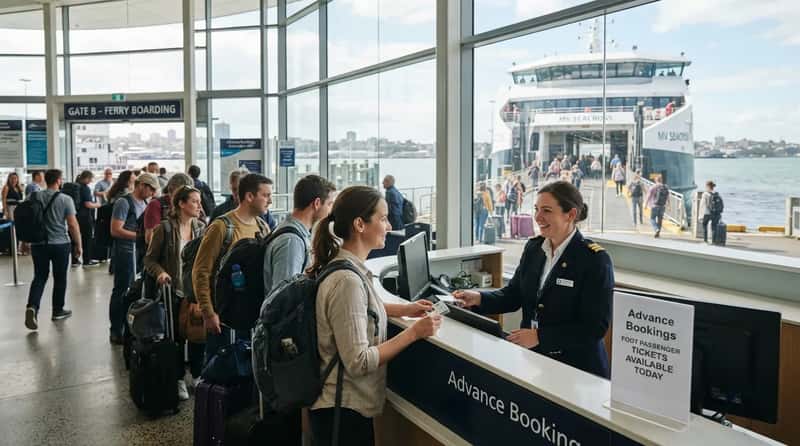
This is the one that frustrates travelers the most, and crew say it’s almost never explained clearly. Seeing “no advance foot passenger spots available” makes people assume they’re locked out entirely, and it’s often not true at all.
A fully booked advance foot passenger allotment doesn’t mean there’s no space on the ferry itself – operators simply cap the amount of space available for advance booking, and you can often still arrive at the terminal and buy a foot passenger fare on the spot. That distinction, between a capped advance-booking pool and actual ship capacity, is the single most misunderstood rule in foot-passenger travel. Travelers cancel trips over a “sold out” message that was never the full story.
None of these are secrets crews are hiding on purpose – they’re just details that never make it into the glossy brochure. From the vehicle-deck walk-on to the “sold out” booking that isn’t really sold out, the pattern is the same: foot passenger travel looks simple on the surface and gets complicated the moment you skip the fine print.
The travelers who move through terminals the fastest aren’t the ones with the least luggage – they’re the ones who called ahead, checked the shoe advice, and never assumed a rule for drivers also applied to them. Which one of these caught you off guard on your last trip? Drop it in the comments.