When people picture the driest place in the country, cracked desert floors and cactus-studded horizons usually bring Arizona or Utah to mind. Both states certainly earn their reputation for aridity, but neither one actually claims the title of driest state in the union. That distinction belongs to Nevada, a state whose glittering casinos and neon skylines mask just how little water falls from its skies each year.
The numbers are almost hard to believe once you see them side by side with the rest of the country. While most Americans live somewhere that receives close to thirty inches of precipitation annually, Nevada residents get by on a fraction of that. It is a place shaped almost entirely by drought, mountains, and geography, and understanding why takes a closer look at what makes this state so uniquely parched.
The Numbers Behind Nevada’s Dry Crown
Nevada is the driest state in the nation, and the only state to average less than ten inches of rain per year, compared with a national average of around thirty inches. Nevada is the driest state in the nation, and the only state to average less than 10 inches of rain per year, while the national average is about 30 inches. Different sources put the exact figure anywhere from roughly nine to just over ten inches, depending on the time period measured, but the conclusion never changes.
Federal climate data backs this up with impressive consistency. Nevada is the Nation’s driest state, with statewide annual average precipitation from 1895 to 2020 of only 10.2 inches. Some regional analyses push the figure even lower, noting that Nevada precipitation averages only 7 inches statewide, making it the nation’s driest state. Whichever number you use, Nevada sits in a league of its own when it comes to dryness.
Blame the Sierra Nevada Rain Shadow
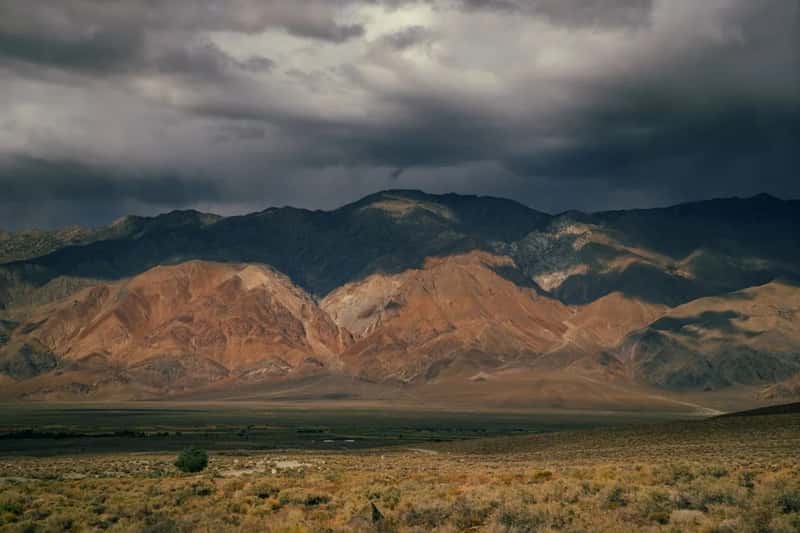
Nevada’s extreme dryness is not random. It comes down to basic geography and the towering wall of mountains sitting just to its west. The Sierra Nevada Mountains flank the state on its western border with California, creating a barrier for moist air trying to move over the mountains, and as the jet stream travels eastward from the Pacific Ocean, the mountains wring out most of its moisture before it reaches Nevada. By the time weather systems clear that range, there is almost nothing left to give.
Meteorologists call this a rain shadow, and it is one of the most powerful forces shaping climate in the American West. This “rain shadow” effect is a common feature of the most arid U.S. states and prevents Nevada from seeing more rainfall. It explains why a state bordering California, home to lush redwood forests and coastal fog, can feel like an entirely different planet just a few hundred miles inland.
Las Vegas, Reno, and a State of Contrasts
Nevada’s size means the dryness is not spread evenly across the map. Because of Nevada’s size, being the seventh-largest state by square miles, and its geography, precipitation varies quite a bit between its different regions, with the southern part of the state, including Las Vegas, receiving less rain and snowfall than the northern part, home to Reno and Elko. That is a meaningful gap for a state most people assume is uniformly desert everywhere.
Las Vegas itself is astonishingly dry even by Nevada standards. Las Vegas typically only has about four inches of rainfall every year, while Reno’s average rain and snowfall jumps to 7.4 inches annually, Elko averages about ten inches, and Great Basin National Park gets the most moisture in the state at just over fourteen inches a year. It’s a reminder that “driest state” doesn’t mean uniformly dry everywhere, just uniformly short on water compared to the rest of the nation.
Life Inside the Great Basin
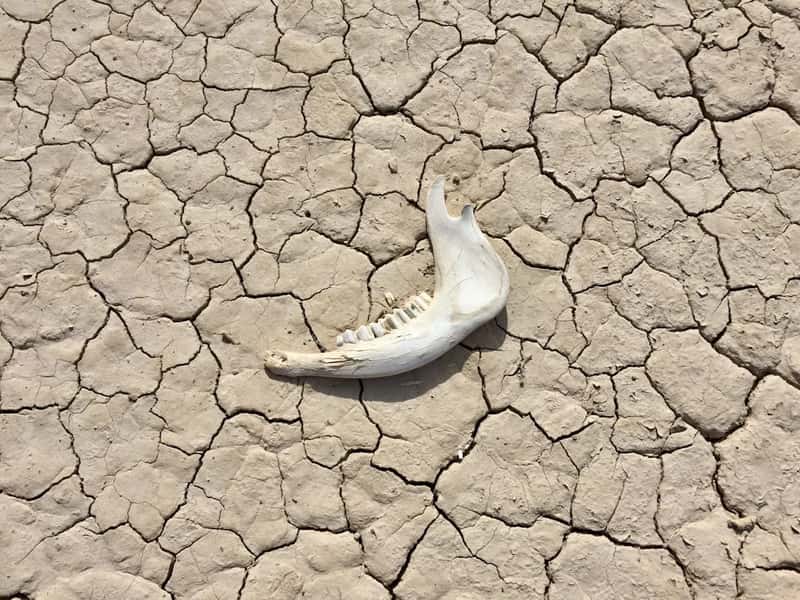
Much of Nevada sits within a vast geographic feature called the Great Basin, and that setup only adds to the dryness. Over 300 named mountain ranges and 35 mountain peaks that reach heights of more than 10,000 feet help shape the extreme weather across the state, and while most of Nevada is part of the Great Basin, meaning any water that flows into the state has no outlet to the ocean, the lack of precipitation keeps it unbelievably dry. Water that does fall has nowhere to go but evaporate or sink into the ground.
This basin-and-range terrain, alternating mountains and valleys, creates a patchwork of microclimates unlike almost anywhere else in the country. Much of the state lies within the Great Basin, a region between the Rockies and the Sierra Nevada, encompassing numerous small mountain ranges and high-elevation desert valleys. Every valley essentially becomes its own dry pocket, cut off from whatever moisture might have made it that far east.
How Nevada Stacks Up Against Arizona and Utah
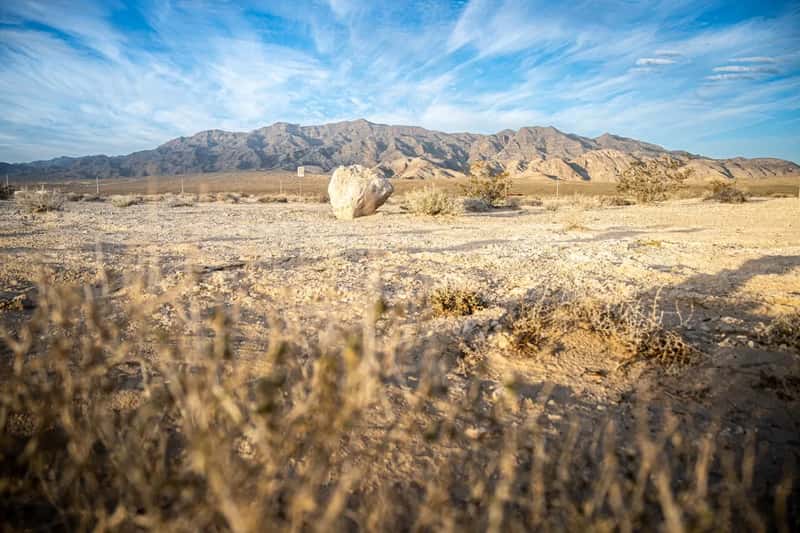
It’s easy to see why so many people assume Arizona or Utah takes the crown. Both are genuinely dry, but neither comes close to Nevada’s numbers. Arizona and Utah receive around 12.2 inches of annual rainfall each, meaning they both come up well below the national average, too, but still get noticeably more precipitation than the Silver State. That two-to-three-inch gap might sound small, but in arid climate terms, it’s substantial.
Rankings can shift slightly depending on the dataset and years measured, but Nevada consistently lands on top. Utah is generally considered the second-driest state, at about 12.2 inches a year, though its exact rank is close enough to shift with the dataset used. Arizona typically follows close behind, sometimes even trading places with Utah or New Mexico depending on the source, but Nevada’s lead at the very bottom of the list rarely changes.
Mountains, Microclimates, and Unexpected Green Spaces
Despite its reputation, Nevada is not one endless stretch of barren sand. Its elevation swings dramatically from desert floor to alpine peak, and that creates pockets of surprising biodiversity. Despite being the driest state in the country, the wide variation in elevations across Nevada, created by the mountainous terrain, allows many unique plant and animal species to exist, with peaks and valleys creating microclimates where flora and fauna must adapt to live in everything from deserts to alpine forests. It’s a strange kind of beauty, deserts and snow-capped mountains within the same state lines.
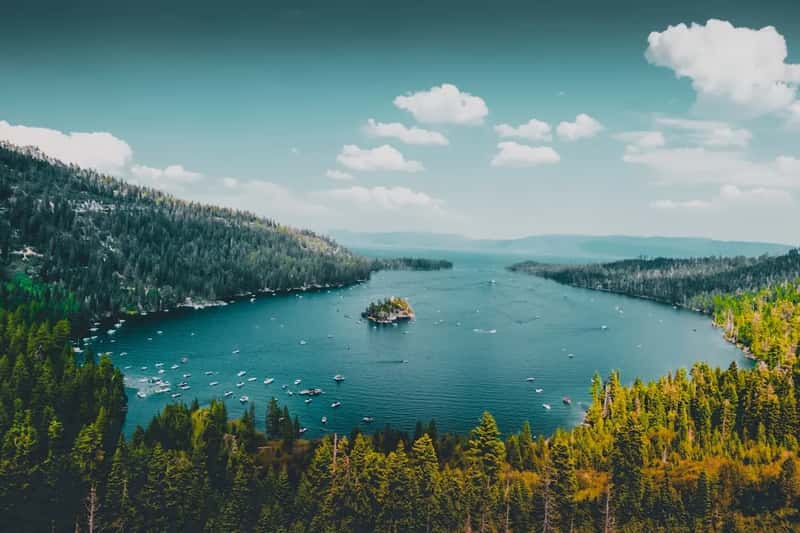
Water does exist here, just not in the form most people expect. This doesn’t mean you can’t find water in the state if you want to, though. Nevada actually has one of the best hidden hot springs hikes in America, and Lake Tahoe, one of America’s coldest lakes and the largest alpine lake in North America, is quite a sight to behold. These pockets of water are the exception that proves the rule, rare and precious in a landscape defined by scarcity.
Drought and a Warming Climate Make Things Worse
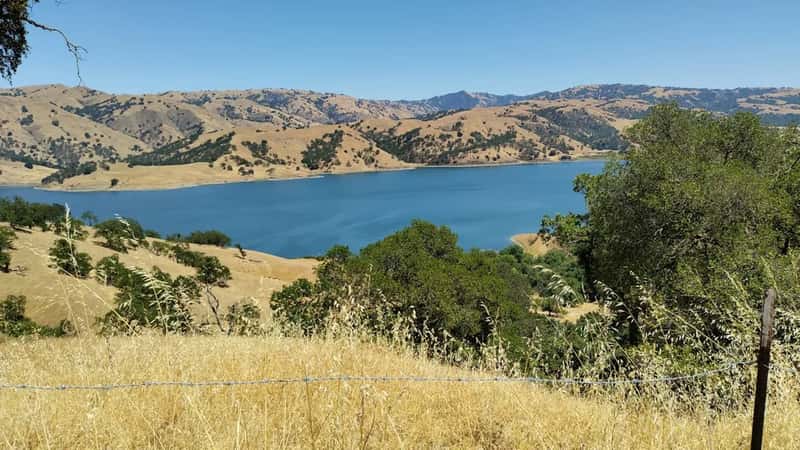
Nevada’s baseline dryness has always been rough, but recent decades have not been kind either. Because of this natural scarcity of rainfall, along with overuse of reservoirs and hotter, dryer conditions brought on by climate change, Nevada has experienced drought in the majority of years since 2000, when the U.S. Drought Monitor began collecting data. That’s not a short dry spell, that’s a generation of below-average water years.
Temperature trends aren’t helping the situation either. Temperatures in Nevada have risen almost 2.4°F since the beginning of the 20th century. Warmer air means faster evaporation, thirstier soil, and less water making it into reservoirs like Lake Mead, which millions of residents across the Southwest rely on.
Where Nevada’s Water Actually Comes From
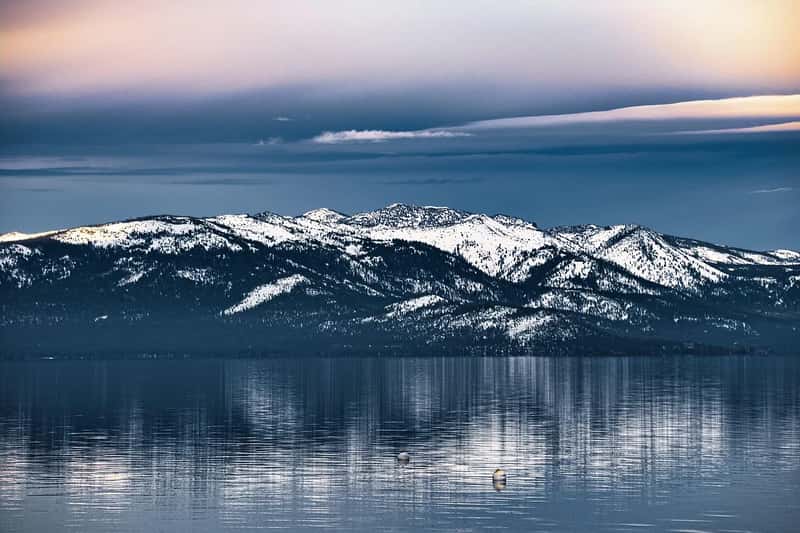
Given how little rain falls, it’s fair to wonder how nearly three million people manage to live here at all. The answer lies in concentrated urban planning built around a couple of reliable water sources. Due to the climate and rugged mountainous terrain, much of the land is sparsely populated, and the majority of residents live in two concentrated urban areas, the Las Vegas and Reno-Sparks metro areas, which are supported by water from Lake Tahoe and the Colorado River respectively. Outside those two hubs, Nevada is largely empty high desert.
That reliance on distant water sources is part of why droughts hit so hard here. When the Colorado River runs low, as it has repeatedly in recent years, southern Nevada feels it immediately. It’s a fragile arrangement, one that depends heavily on snowpack hundreds of miles away rather than rainfall within the state’s own borders.