Mexico City doesn’t really have a single signature meal. It has thousands of small ones, sold from steel carts, market stalls, sidewalk comals and restaurants that have been serving the same recipe for decades. On a first visit, that abundance can feel like a test you didn’t study for.
A short list helps. The nine dishes below cover breakfast, street snacks, comfort food and one seasonal classic, and each one says something about how the city eats.
Tacos al Pastor
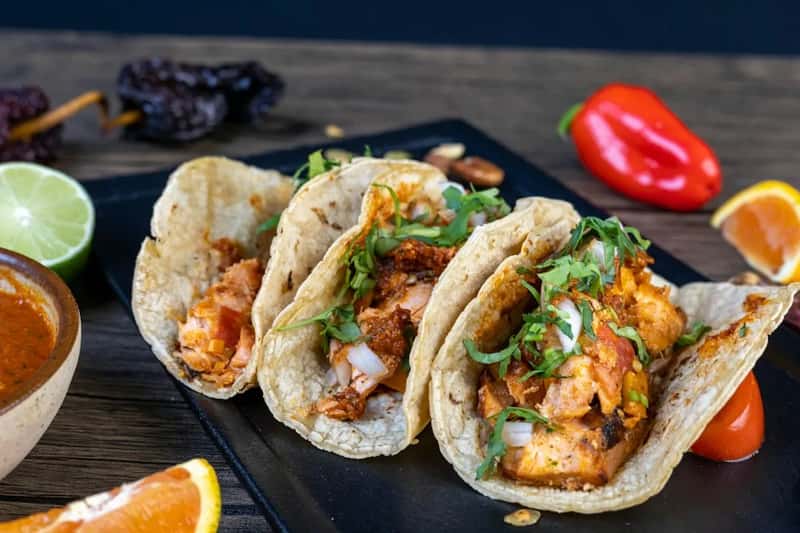
Start here, because almost everyone does. At Mexico City’s sidewalk stands, crisp-edged pork topped with a charred pineapple rotates on vertical spits.[1] The taquero shaves thin slices straight into a warm tortilla, then adds onion, cilantro and salsa.
The story behind it is a good one. Lebanese migrants arrived in Mexico in the late 1800s with vertical spits for roasting lamb shawarma, and cooks who couldn’t find much lamb switched to pork and used tortillas instead of flatbread.[1] An early version called tacos árabes appeared in Puebla in the 1930s, served on a flour tortilla or pita.[2] Al pastor is what that idea became once it settled in the capital.
The Gaonera Taco at El Califa de León
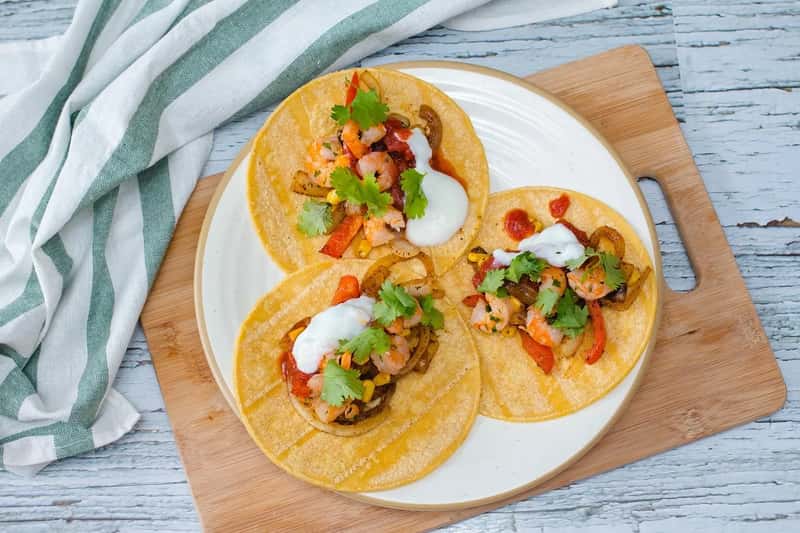
Some tacos are worth a queue. This one, from a tiny stand in the San Rafael neighborhood, made news in 2024. It was among the establishments awarded a star in the first ever Michelin Guide Mexico, making it the first Mexican taco stand to receive the honor.[3] Sources disagree on when it opened, though most point to 1968.
The menu is refreshingly short. Besides the gaonera, you can order bistec, chuleta or costilla tacos.[4] The gaonera is thinly sliced beef filet cooked to order and seasoned with only salt and a squeeze of lime.[3] There’s no seating, just a metal shelf for plates, so expect to eat standing up.[5] It’s also the taqueria’s only brick and mortar location, so you’ll have to make the trip to San Rafael.[4]
Tlacoyos
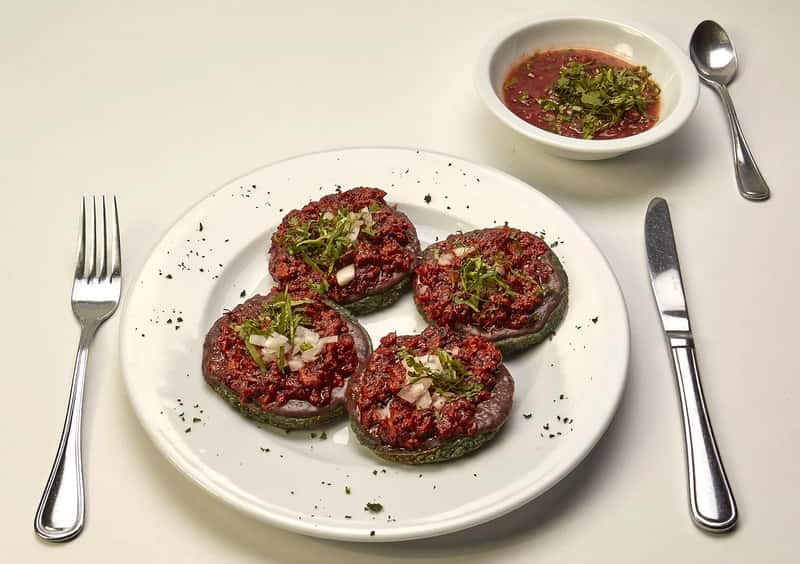
If tacos are the city’s headline act, tlacoyos are the older, quieter cousin. They’re thick corn dough tortillas, oval or rhomboid in shape, usually filled with beans, pork cracklings or fava beans.[6] They’re usually pressed by hand on the street and cooked on a comal.[7] Most come topped with cactus, salsa, cheese and cilantro.
The name comes from Nahuatl, and the dish predates both the Spanish conquest and the concept of the taqueria.[8] Most of the women who sell them in the city today come from Nahua communities in Milpa Alta and Xochimilco, where blue corn farming is still active.[8] If you spot a bigger, foot-sized version, that’s a huarache, which usually gets a generous topping of carne asada.[9]
Chilaquiles
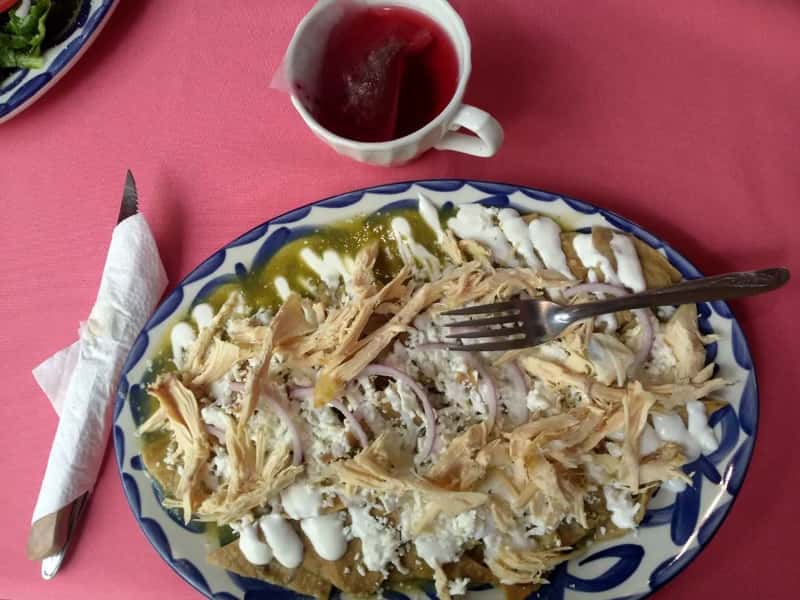
Chilaquiles are the breakfast that makes a late night forgivable. Fried tortilla pieces are simmered in red or green salsa until they soften but don’t quite collapse. Then they’re finished with crema, crumbled cheese and raw onion.
Many places add a fried egg or shredded chicken on top. Ordering them in the morning is the safest move, since that’s when the tortillas are freshest and the salsa has just been made. Red versions tend to taste deeper and smokier, while green ones are brighter and tangier. Try one of each if you’re staying a few days.
Pozole
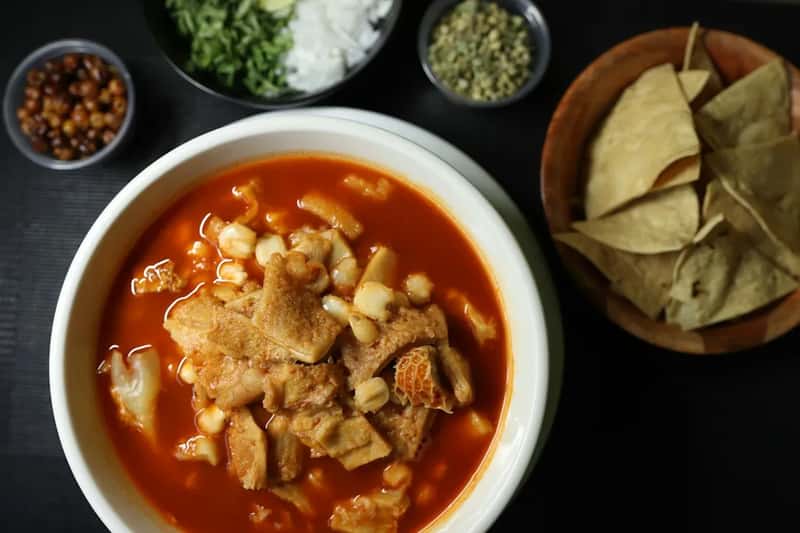
Pozole is a big bowl of hominy, meat and broth, and it’s what many locals order when they want something restorative. The corn kernels are the point. They’re treated so they swell and turn tender, and they give the soup its slightly chewy body.
You’ll usually find it in red, green or white versions, most often made with pork. It arrives with a plate of garnishes: shredded lettuce or cabbage, radish, onion, dried oregano and lime. Add them as you go, because the bowl changes with every spoonful. It’s traditionally a dish for celebrations, but plenty of casual spots serve it any day of the week, and many do so late at night.
Tamales
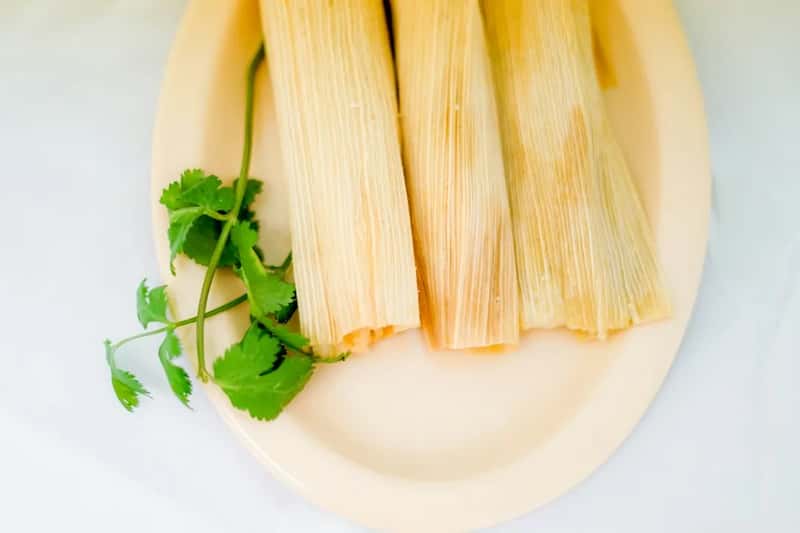
Tamales are masa, sometimes with a filling, wrapped in corn husks or banana leaves and steamed. In the morning you’ll often see vendors selling them from big steaming pots on street corners, usually alongside atole, a warm corn based drink. The pairing is a classic breakfast for a reason.
Fillings vary widely. Pork in red or green salsa, chicken, cheese with chile strips and sweet versions with raisins are all common. Banana leaf tamales, often associated with Oaxaca, are softer and more fragrant than the husk wrapped kind. Peel the wrapper back and leave it behind, since it isn’t meant to be eaten.
Esquites
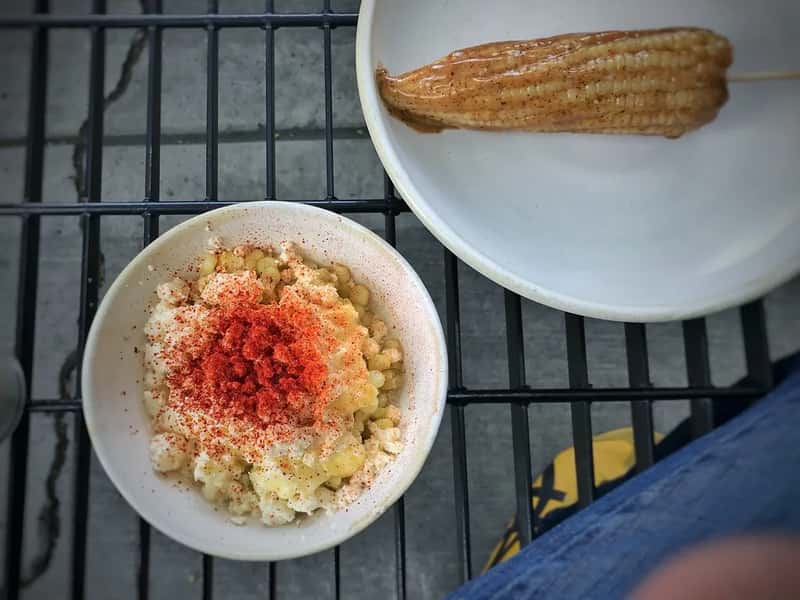
Esquites are the snack you eat while walking through a park at dusk. Corn kernels are simmered with epazote, an herb with a sharp, earthy flavor. They’re served warm in a cup with mayonnaise, cheese, chile powder and lime.
The same flavors appear on elotes, which are whole ears of corn on a stick, but the cup is easier to manage. Ask for the chile on the side if you’re unsure about heat. It’s inexpensive, filling enough to bridge a gap between meals, and a good introduction to how much Mexican street food comes back to corn.
Quesadillas, Mexico City Style
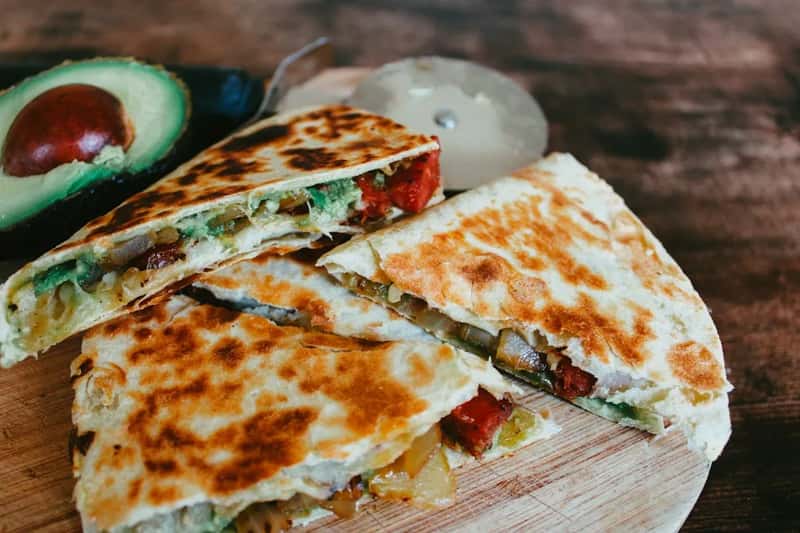
This one surprises first time visitors. A quesadilla here is often a folded masa turnover, fried or griddled, and in many places it doesn’t automatically include cheese. If you want it, ask for it with cheese.
The fillings are where the fun is. Traditional options include poblano chile strips with cream, squash blossoms, huitlacoche, chicharrón, spicy beef tinga and mushrooms with cheese.[10] For a good place to sample them, Mercado de Medellín in Roma Sur has one of the most reliable tlacoyo and quesadilla corridors in the city.[8]
Chiles en Nogada
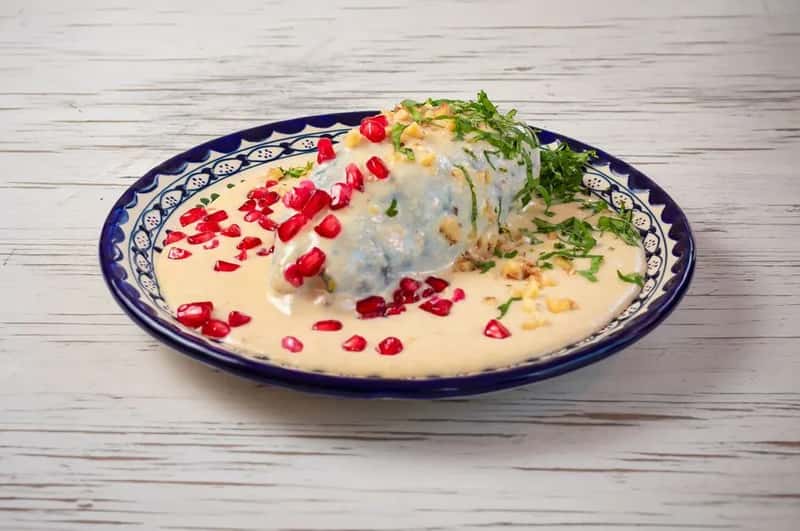
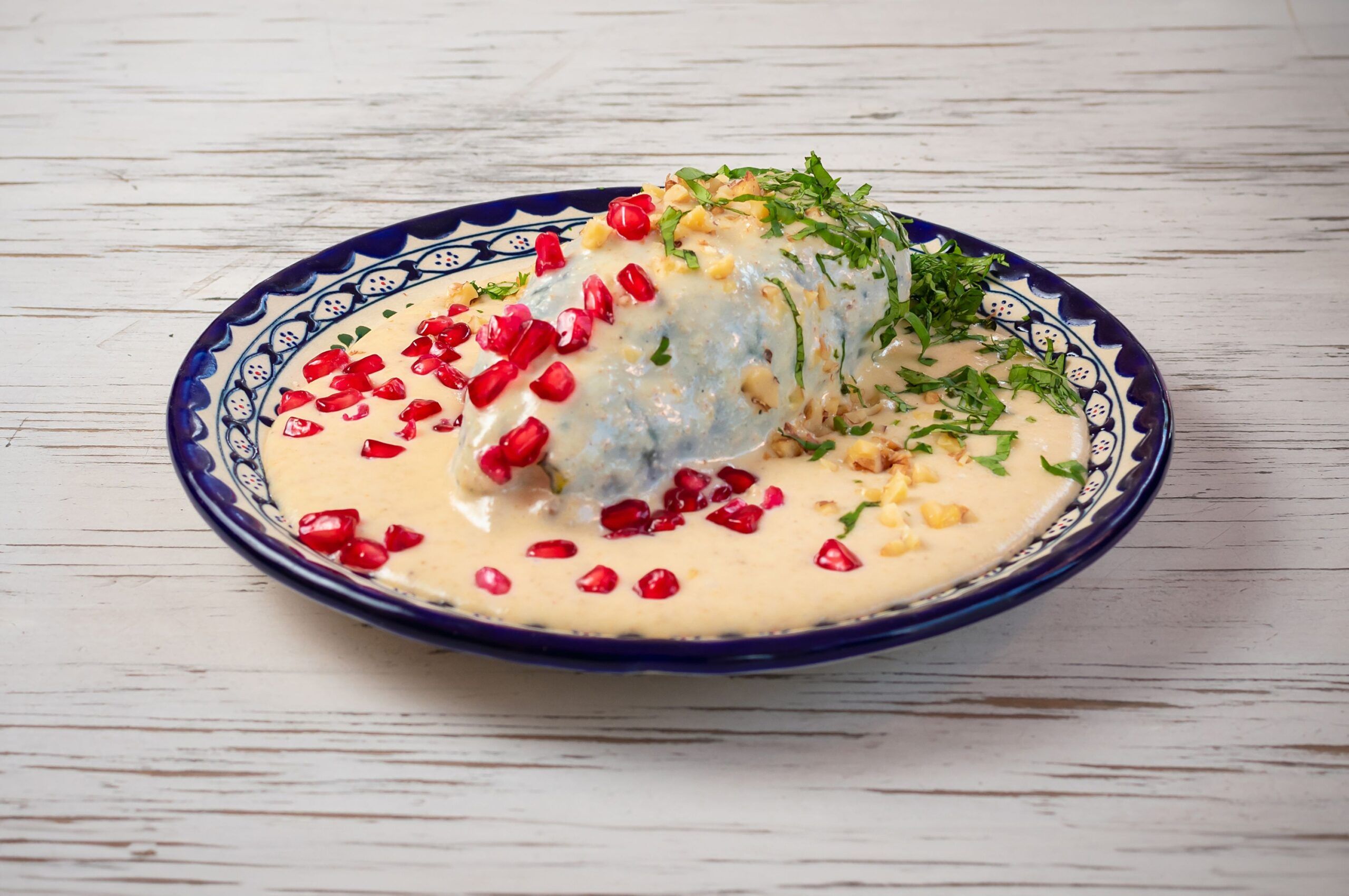
This is the seasonal dish, and it’s worth planning around. A poblano chile is stuffed with a mix of meat and fruit, covered in a creamy walnut sauce and topped with pomegranate seeds. The purist filling includes panochera apple, lechera pear and criollo peach.[11]
Timing matters. Most Mexican restaurants serve it between July and mid September, when the ingredients are fresh.[12] The Castilla walnut, the heart of the sauce, is harvested fresh in those weeks and peeled by hand.[12] The most widely accepted origin story begins in Puebla in August 1821,[13] and the dish was declared intangible cultural heritage of the state of Puebla in May 2024.[11] The 2026 season is essentially over, so for a first trip in another month, save this one for a return visit in late summer.