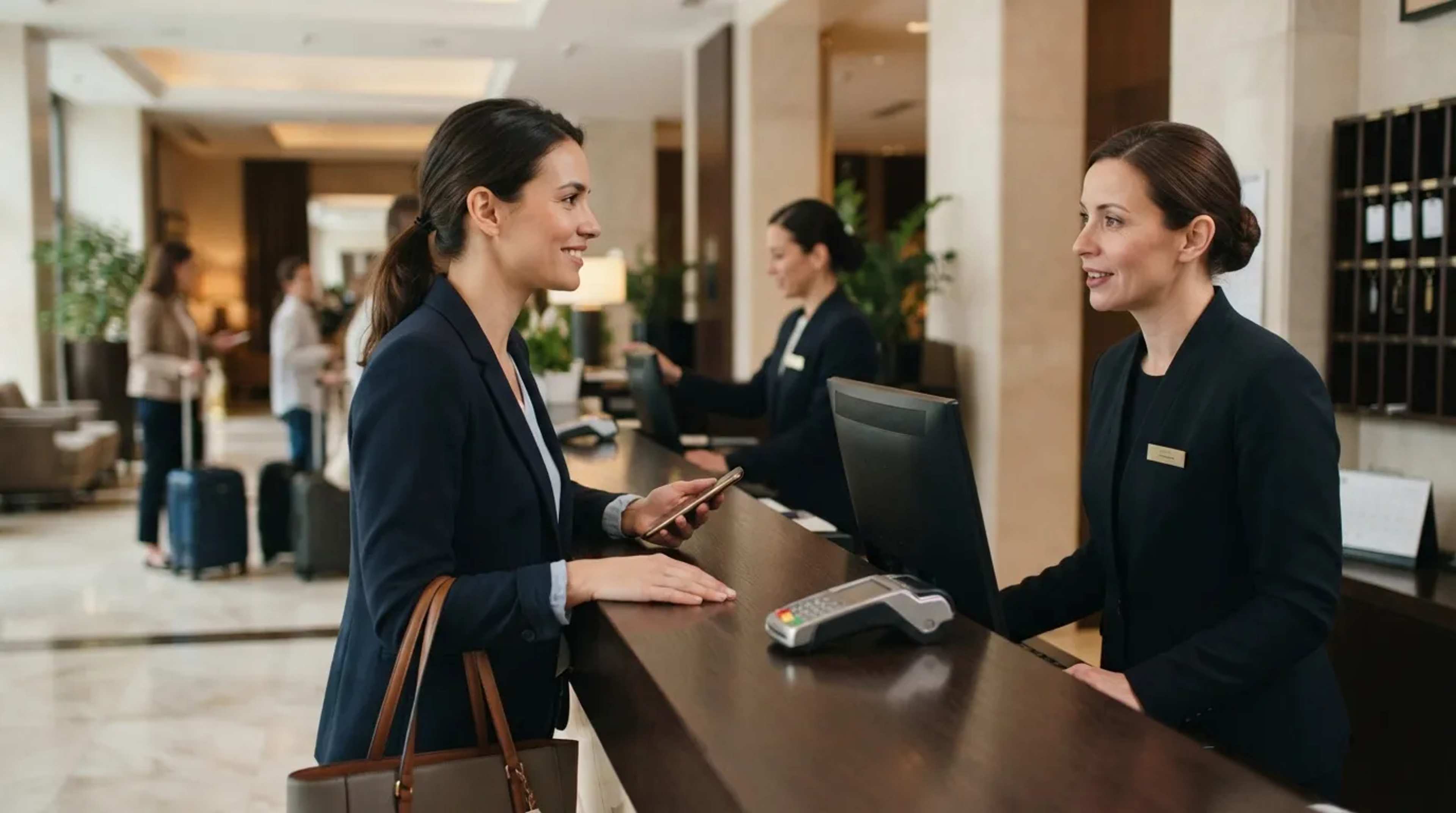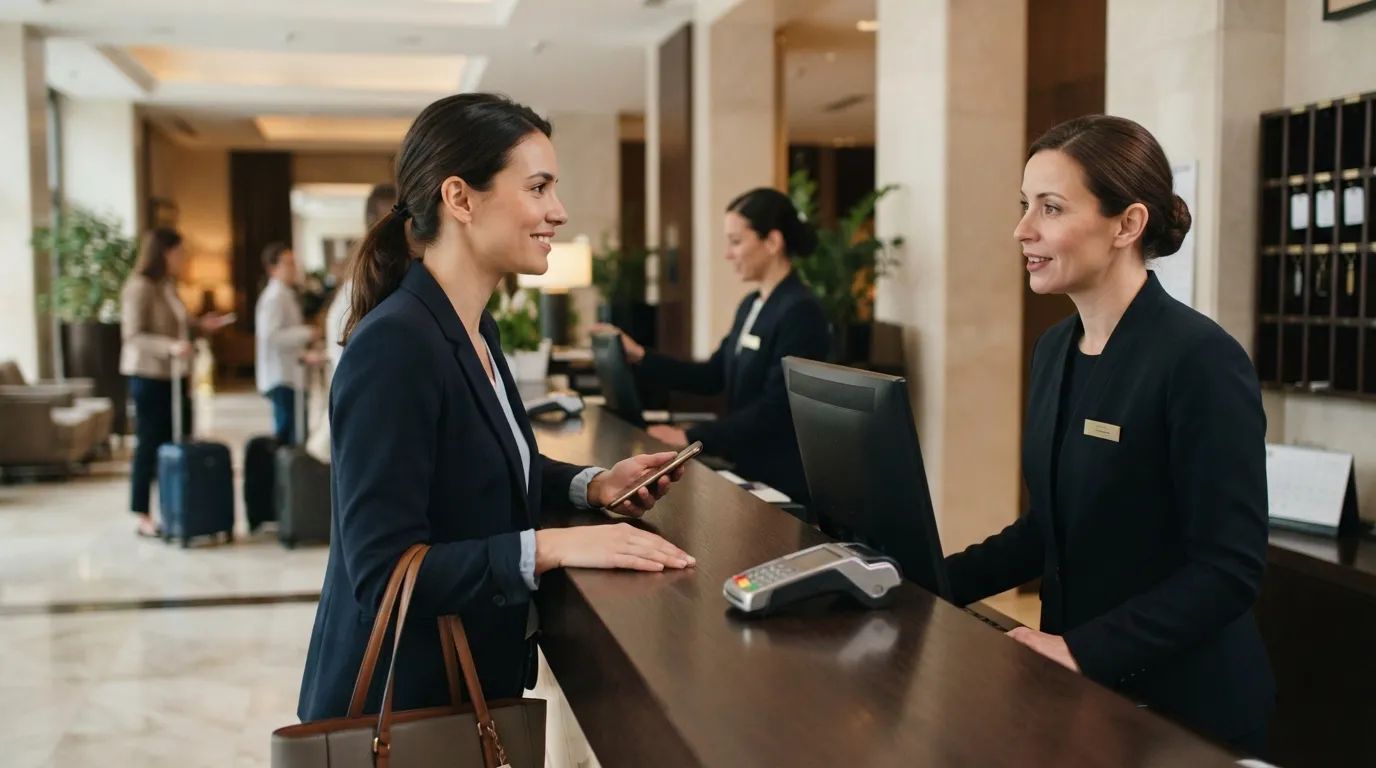
You haven’t said a word yet, and the front desk may already have a read on you. It starts the second the lobby door swings open. Your pace, your luggage, the phone pressed to your ear and your first three words all get quietly filed away.
Nobody is being cruel. It’s pattern recognition built from thousands of check-ins, and it’s startlingly fast. Some of these snap reads are oddly specific, and a few can decide whether your night goes smoothly or sideways. The one waiting at #1 catches more guests off guard than any of the others.
#17 – The Wallet Scramble That Lands You in the “Slow Lane” Pile
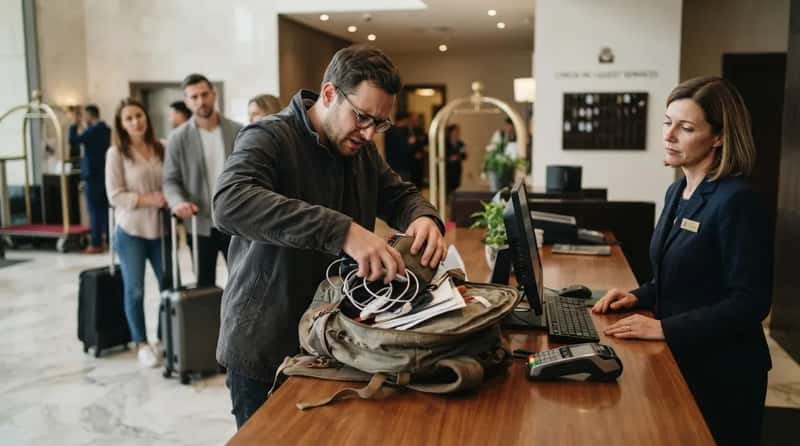
Check-in almost always comes down to a photo ID and a payment card. Guests who walk up with both already in hand get filed as quick, easy and low-drama. That sets a friendly tone before a single question is asked.
Guests who start digging through a backpack while a line forms behind them get a different read. The desk shifts into patient, step-by-step mode. The result is a longer check-in and fewer little extras offered along the way.
But the next judgment is about a decision you made weeks before you arrived.
#16 – Your “Great Deal” Booking Site Gets Noticed Before You Say Hello
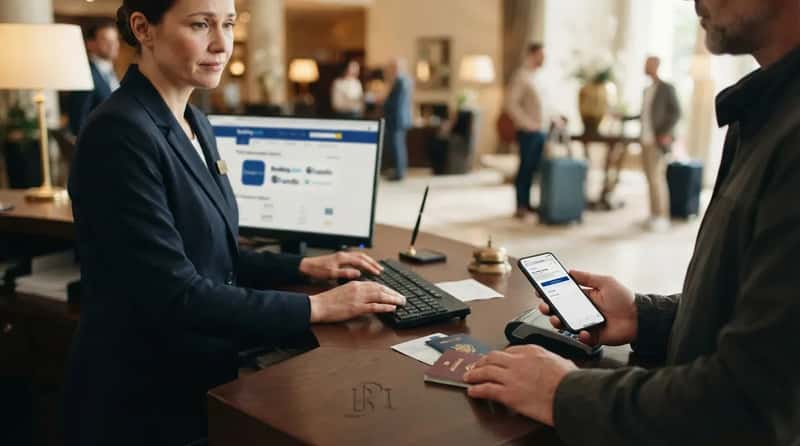
The desk can usually see how a reservation was made. Booking through a third-party travel site is extremely common and perfectly fine. The catch is that changes to those reservations often have to go back through the site, not through the hotel.
That’s where the quiet frustration starts. A guest who expects the desk to fix anything on the spot may discover the hotel has far less control than they assumed. Staff often feel that conversation coming the moment they see the booking source.
At a Glance
- Booked direct: the desk can usually adjust dates, room type or requests on the spot.
- Booked through a travel site: many changes have to be routed back through that site.
- Either way: the desk can see the booking source as soon as your name is typed in.
- Best move: have your confirmation email ready before you reach the counter.
The truth is the desk isn’t judging your frugality. It’s bracing for the “why can’t you just change it?” talk.
#15 – The First Sentence That Sets the Mood for the Whole Stay
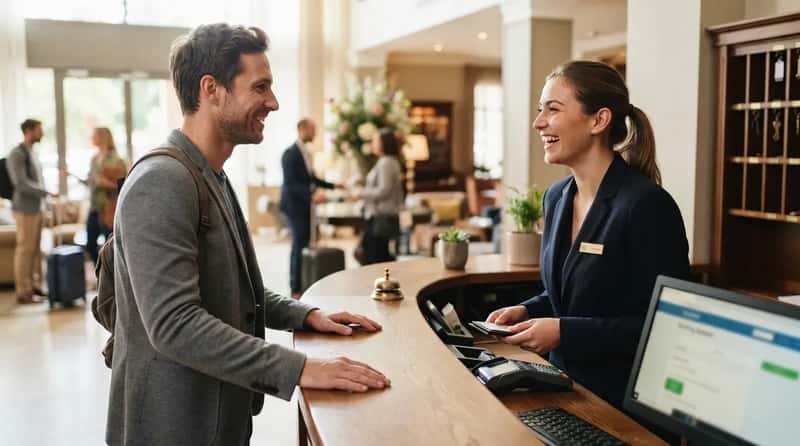
“Reservation under Miller” lands very differently from “Hi, how’s your day going?” Neither is wrong. But the second one sounds like a person, not a transaction. Desk staff are human, and that opener tells them how the next five minutes will feel.
This matters more than most guests realize. J.D. Power measures hotel guest satisfaction across seven dimensions, including check-in/check-out and staff service. Both are shaped by this one tiny exchange.
Wait until you see what a single early-morning request says about you at #14.
#14 – The 9 A.M. “Any Chance My Room’s Ready?” Test
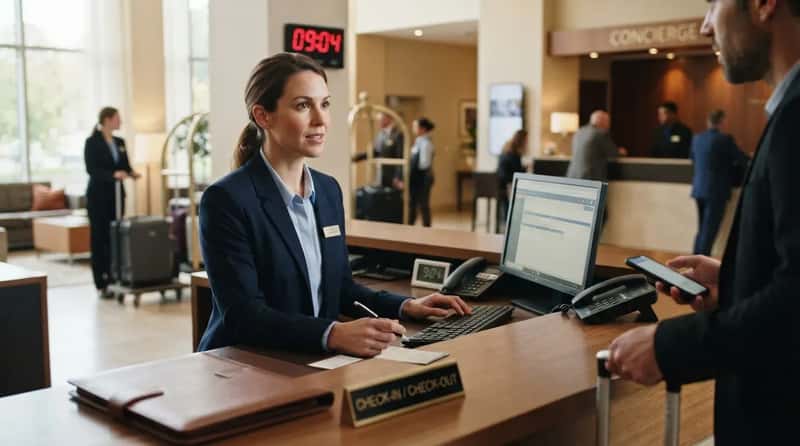
Standard check-in is typically mid-afternoon. Rooms have to be cleaned after checkouts, and the desk knows exactly where the housekeeping queue stands. So an early arrival gets sized up fast: is this a hopeful question or a demand?
“Is there any chance, and could you text me when it’s ready?” gets a very different response from “I paid for tonight, so I’m entitled.” The first makes the desk want to help. The second makes them reach for the policy sheet.
Fast Facts
- Rooms can’t be turned over until the previous guests have checked out and housekeeping has finished.
- The desk knows which rooms are cleaned first, so a polite ask can be answered honestly in seconds.
- Many hotels will hold your bags so you can head out and explore while you wait.
- Asking for a text when the room is ready keeps you off the lobby couch.
Turns out the phrasing matters more than the timing. And the next one is all about what you’re doing with your hands.
#13 – The Guest Who Checks In Entirely on Speakerphone
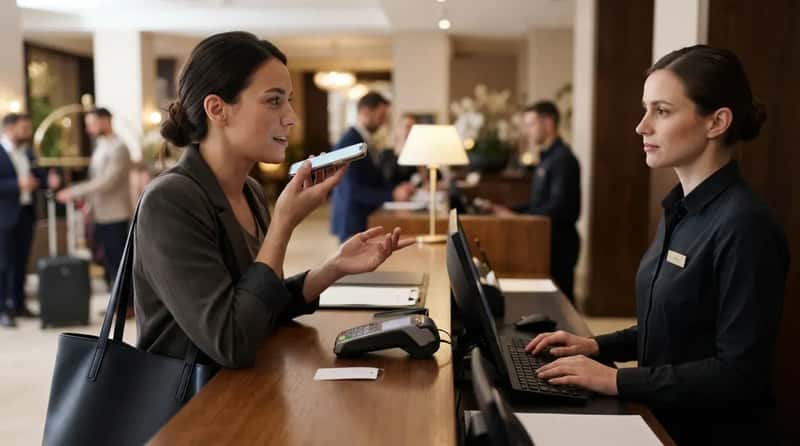
A guest on a call during check-in is read as distracted within seconds. Distracted guests tend to miss the important bits, like the Wi-Fi details, the checkout time and which elevator goes to their floor.
The consequence shows up later. Desk teams often field a call twenty minutes after check-in from a guest asking for information they were already given. The earbud may feel efficient, but it creates extra work for everyone, including the guest.
The next judgment has nothing to do with the desk at all.
#12 – How You Treat the Bellhop Is Already Being Reported Back

Front desk teams don’t work alone. Bellhops, valets and housekeepers all share the same small hallway of gossip. How you speak to them gets noticed, and it travels faster than you’d think.
Guests who are curt to the person holding their bags often get filed as “tricky.” Guests who are decent get quiet goodwill. That goodwill can show up as a better-located room or a faster answer on a slammed Tuesday night.
Most people don’t realize check-in isn’t a one-person audition. It’s a whole team watching. And one loyalty-program phrase gets noticed even faster.
#11 – The “I’m a Top-Tier Member” Opener That Backfires
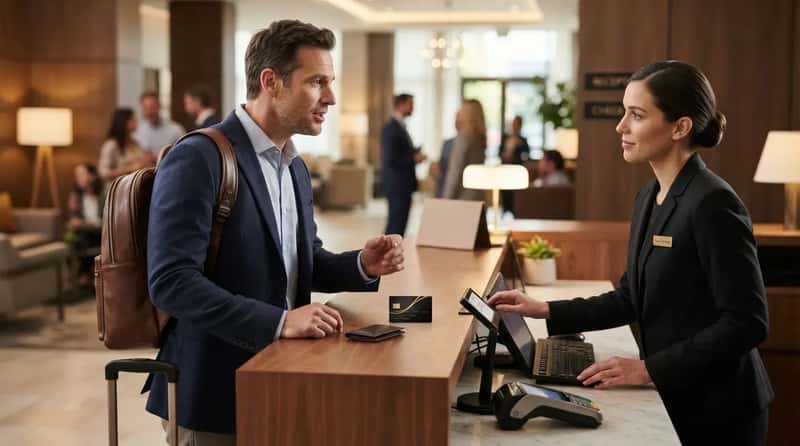
Loyalty status is real, and it can unlock perks. But leading with it before saying hello can sound like you’re here to negotiate. Many staff members hear it as a sign the guest expects a freebie.
Here’s the controversial part. Plenty of hospitality workers argue that status is overrated as a bargaining chip at the counter. Upgrades usually depend on what’s actually open that night, and no amount of name-dropping changes the inventory.
Still, even that is mild compared to what your luggage gives away at #10.
#10 – Your Suitcases Are Telling the Desk Why You’re Really Here
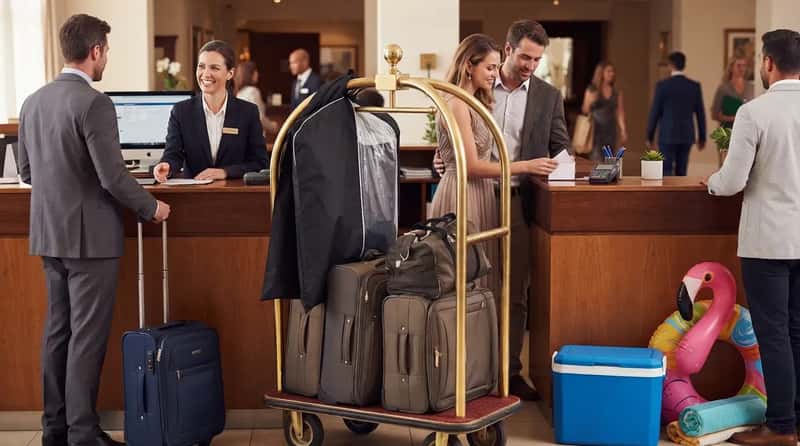
One small bag usually signals a business trip or a quick overnight. Garment bags and a rolling cart of big suitcases suggest a wedding or event. A cooler and a pile of pool floats point to a leisure group with a plan.
Staff use those clues to guess what you’ll need before you ask. The wedding crowd might want an iron and late-night directions. The pool crowd probably wants ice and a heads-up on where the quiet hours begin.
Quick Compare
- One small bag: probably a quick trip, so expect speed and a short walk to the elevator.
- Garment bags and a luggage cart: likely an event, so expect questions about irons and timing.
- Cooler and pool floats: likely a leisure group, so expect ice and pool-hours tips.
It’s a guess, not a verdict. But the desk is often right. Next up is a question that makes staff quietly adjust their entire approach.
#9 – The “How Much for Tonight?” Walk-In Who Gets Read Like a Poker Player
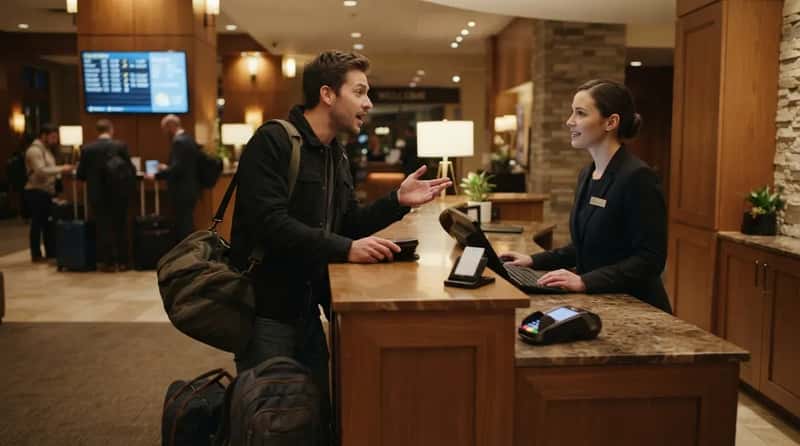
Walk-ins asking about price are usually read as bargain hunters. That isn’t an insult, since hotel pricing really does swing with demand. The average U.S. daily room rate hovered around $159 in 2024, among the highest on record, which is why so many travelers shop around.
Here’s a take that sparks arguments. Some desk veterans say haggling only works when a hotel is visibly half empty, and fails the rest of the time. If the lot is full, asking for a “better rate” just makes the quoted number sound firmer.
But the group arriving behind you may be judged even faster, as #8 shows.
#8 – The Late-Night Group Arrival That Triggers Extra Questions

A big cluster of guests rolling in at 11 p.m. gets noticed at once. Many hotels require the person checking in to be 18 or 21, depending on the property. Staff will often confirm exactly how many people are staying and who’s on the reservation.
The judgment isn’t personal. It’s a risk check built on past noise complaints, damage and unregistered guests. Still, it can feel like a lot when all you wanted was your bed.
The surprising part is how often a calm, clear answer ends the whole thing. A friendly “four of us, two rooms” can save ten minutes. And the next question might win you a better room.
#7 – “Can I See It First?” Is Weirdly Smart
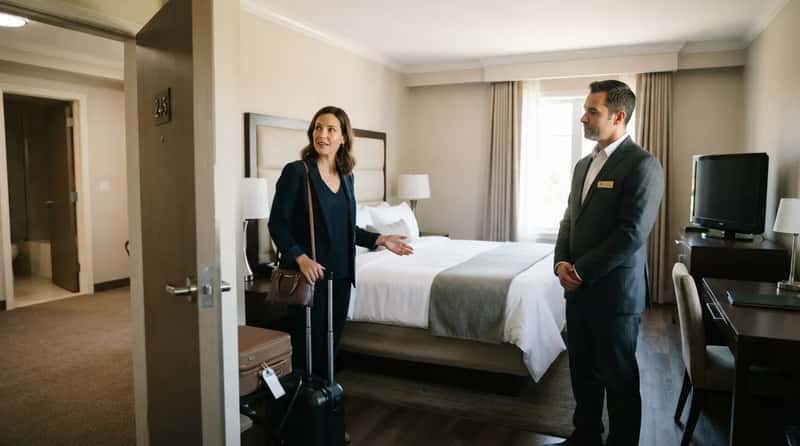
Some guests ask to look at the room before accepting it. Desk staff sometimes read this as pickiness. Many others quietly respect it as the move of an experienced traveler.
There’s good reason for it. Cleanliness is one of the most common things guests complain about. Catching a problem at the door is far easier than reporting it at midnight with your bags already unpacked.
Next, a tiny piece of tech that changes how the desk sees you.
#6 – The Phone App That Quietly Signals “Leave Me Alone”
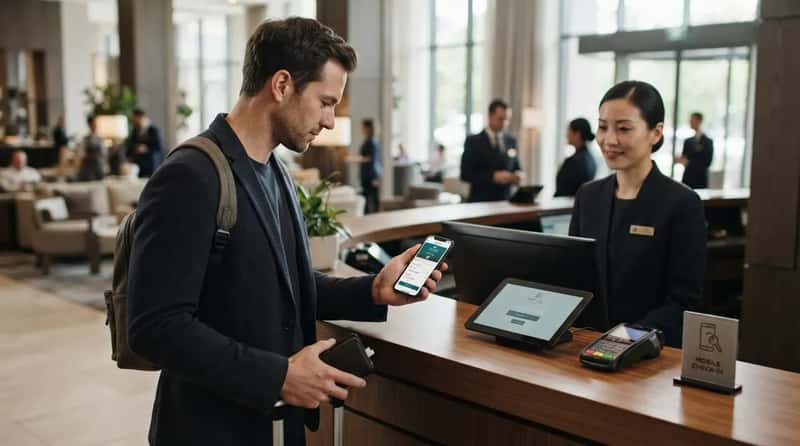
A guest who already has the hotel’s app is read as tech-comfortable. Staff often assume they want minimal chat and fast answers. Digital keys and mobile requests are built for exactly this kind of traveler.
J.D. Power’s hotel research has found that guests who use a hotel’s app tend to report higher satisfaction than those who don’t. That doesn’t prove the app causes the happiness, but it suggests these guests are having smoother stays.
The truth is that some guests want less interaction, and the desk learns to spot them. But what you do in the first few minutes of a problem may be the most telling judgment yet.
#5 – The Five-Minute Complaint That Sorts You Into One of Two Groups
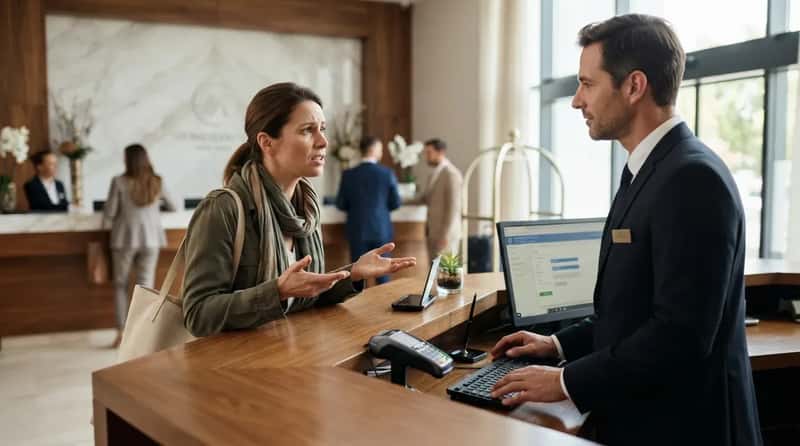
Problems are rare, but they define stays. In the stays J.D. Power evaluated, about 12 percent involved a problem such as an odd odor, noise or a check-in dispute. The desk is the first stop when one hits.
Here’s what’s at stake. When a problem occurs, satisfaction falls 217 points, from 677 to 460. So staff size up fast whether you want a fix or a fight.
The next judgment hinges on one specific request most guests never think to make.
#4 – The “Quiet Room, Please” Ask That Marks You as a Veteran
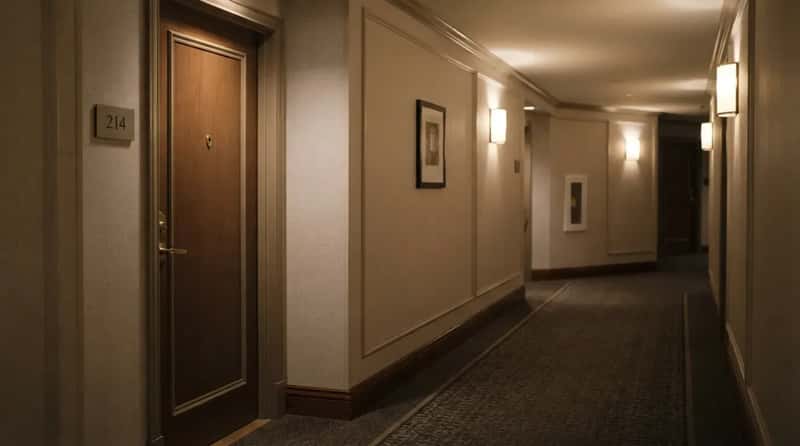
Asking for a room away from the elevator or ice machine signals experience. Staff recognize a guest who has been burned by thin walls before. It’s also a request they can often grant if the inventory allows.
Noise is one of the classic stay-ruiners. J.D. Power lists excessive noise among the common problems in its stay data. Smart guests dodge it by asking before they get the key, not after the 1 a.m. hallway party.
Worth Knowing
- Ask at check-in, while the desk can still choose from open rooms.
- Name what you want to avoid: the elevator, the ice machine or a busy stairwell.
- Keep it to one short, specific request instead of a list of demands.
- If the room still turns out loud, say so right away, before you unpack.
The hidden truth is that the room you get is often chosen in seconds, and a short, specific ask can steer it. Now for a judgment that costs you nothing.
#3 – The Guest Who Uses Names Tends to Get the Better Floor
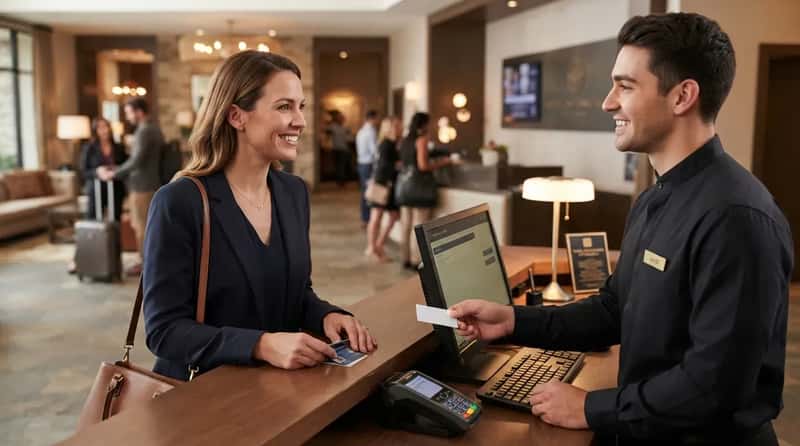
Eye contact, a thank-you and using the agent’s name read as respect. Desk staff remember those guests, usually in small, practical ways. A higher floor, a quieter corner or a quick answer on a busy night can all follow.
There’s no guarantee, of course. Staff can only work with what’s available, and rules still apply. But when two similar rooms are open, the kinder guest tends to get the better pick.
But one phrase can erase all that goodwill in seconds, as #2 reveals.
#2 – The Review Threat That Instantly Flips the Desk Into Defense
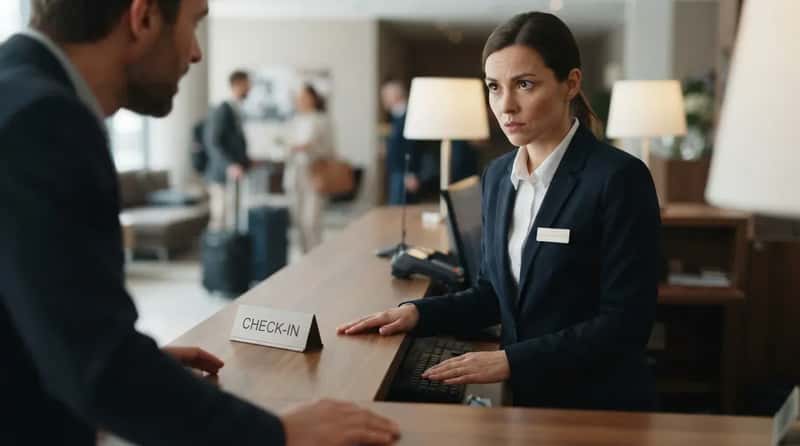
“I’ll leave a bad review” is a phrase desk teams hear far too often. The judgment is immediate: this guest is using leverage. From that point, many staff turn cautious, stick to policy and stop improvising favors.
The controversial opinion among many hospitality workers is that this tactic backfires more than it works. Managers often have set limits on what they can offer, and a threat doesn’t stretch those limits. It just makes the conversation colder.
It turns out a calm, specific complaint has a far better track record than a loud one. And the number one judgment is the one almost every guest faces.
#1 – How You React When the Room Isn’t Ready
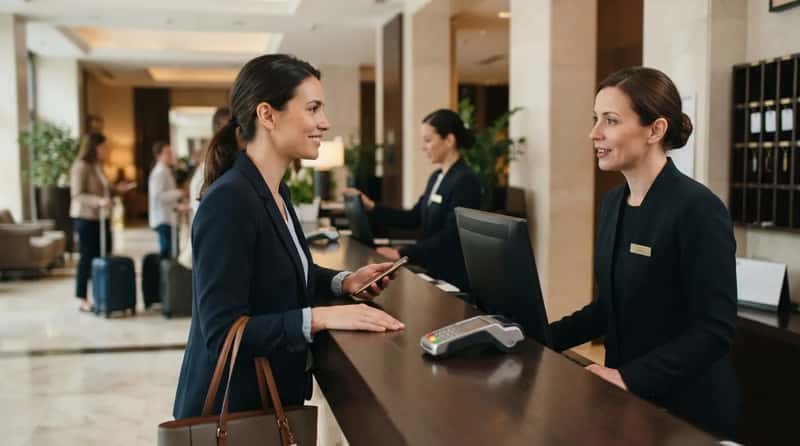
This is the moment desk staff watch most closely. Room delays are common, and the way a guest responds tells them everything. In seconds, the desk decides whether you’re a partner or an opponent.
The reaction matters more than the wait. The delay itself is rarely the real issue. What bothers people is the lack of a clear estimate, which is why a polite guest who asks for a text when it’s ready often gets the smoothest experience.
The judgment that matters most is rarely about your luggage or your status. It’s about how you act when things don’t go to plan.
The desk doesn’t need you to say much to form an opinion. It reads your pace, your tone, your phone and how you handle a delay. The good news is that nearly every one of these reads can be changed in under ten seconds. So which one have you caught yourself doing at a check-in counter?