Most travelers assume gate agents are just handing out boarding passes and reading the same tired announcements on a loop. In reality, they’re running a constant, invisible calculation on every single person in that waiting area, deciding who gets the extra seat, who gets rebooked first, and who gets quietly flagged for the next flight too.
Turns out, the calmest-looking passenger in the terminal usually gets treated completely differently than the one causing a scene, and the reasons why are a lot more calculated than “the squeaky wheel gets the grease.” Here’s what gate agents themselves actually admit happens behind that counter.
#15 – They Read the Room Before You Even Reach the Counter
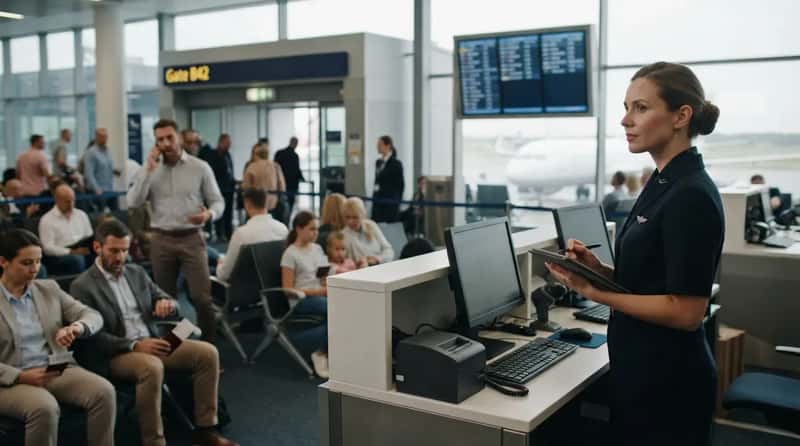
Gate agents start profiling the waiting area the second they open the podium. They’re scanning for who’s pacing, who’s on the phone yelling, and who’s calmly sitting with a boarding pass ready to go.
That silent read shapes how the next hour goes for you, whether you notice it or not. Airline staff are trained to spot potential problems early, long before anyone raises their voice, the same way flight attendants watch boarding passengers to catch trouble before it ever leaves the ground.
#14 – They’re Quietly Running a Script Called LEAP
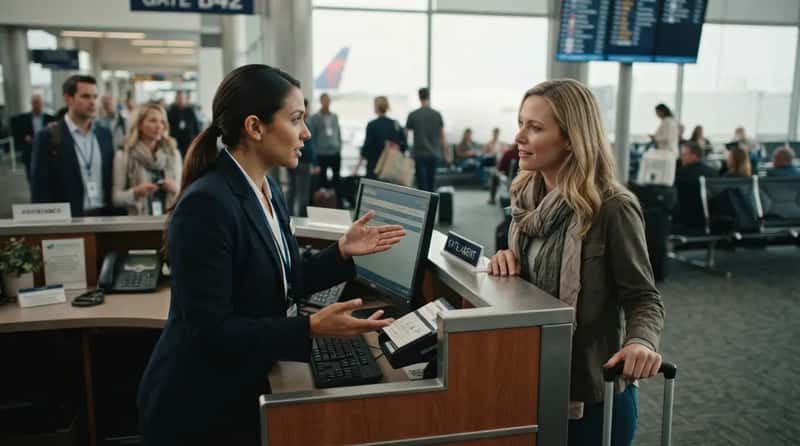
Airline employees aren’t winging it when they talk you down. They’re following a formula called LEAP, built specifically to defuse anger without making you feel dismissed.
The key move is offering options and choices, so the passenger feels more in control of the situation instead of powerless against it. The goal isn’t to win the argument. It’s to hand you back a sense of control so the tension drops on its own.
Fast Facts
- L – Listen to the complaint without cutting in
- E – Empathize with how the passenger feels
- A – Apologize for the experience, fault or not
- P – Propose a real, workable solution
#13 – They Let You Vent First, On Purpose
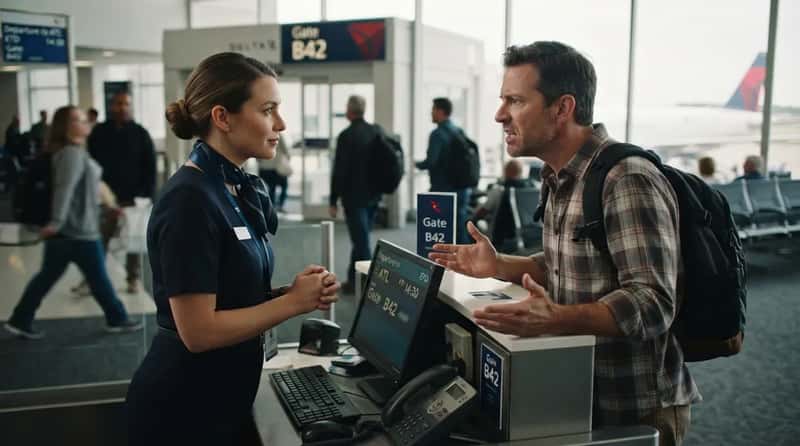
That awkward pause where the agent just lets you talk? That’s not them being slow. That’s the strategy.
Industry veterans openly admit the first move is simply absorbing the outburst: give the customer a minute to vent, apologize, and try to calm them down before doing anything else. Flight crews are told the same thing, that it’s important to let a passenger vent their frustrations first. Interrupting too soon almost always makes things worse.
#12 – They Say “I Understand Why You’re Upset” Instead of “Sorry”
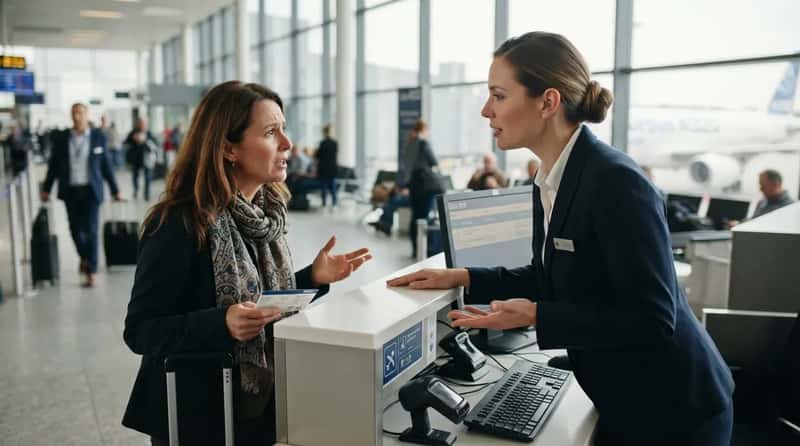
Notice how gate agents rarely apologize outright, even when the airline clearly caused the mess? That phrasing is intentional.
Crews are coached to use empathetic language that validates the passenger’s feelings without admitting fault, leaning on lines like “I understand why you’re upset.” It sounds like sympathy, and in a way it is, but it also doubles as a liability shield. The airline gets to look compassionate without legally owning the problem.
#11 – They Sit on Bad News Longer Than You’d Think
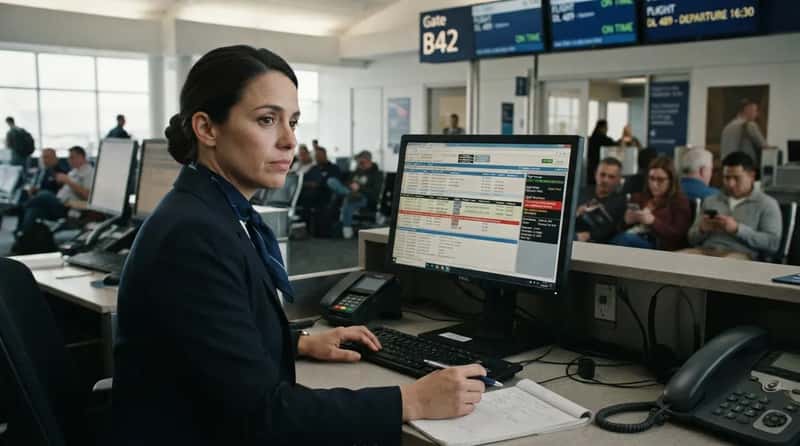
That delay announcement you finally hear over the PA? Agents likely knew about it well before you did.
By the time a delay is announced, gate agents have often known about it for 15 to 30 minutes, because operations has to confirm the exact reason and calculate new departure times before agents can say anything official. The silence isn’t neglect. It’s them refusing to give you a number they might have to walk back five minutes later.
#10 – They Hand You Choices Instead of Orders
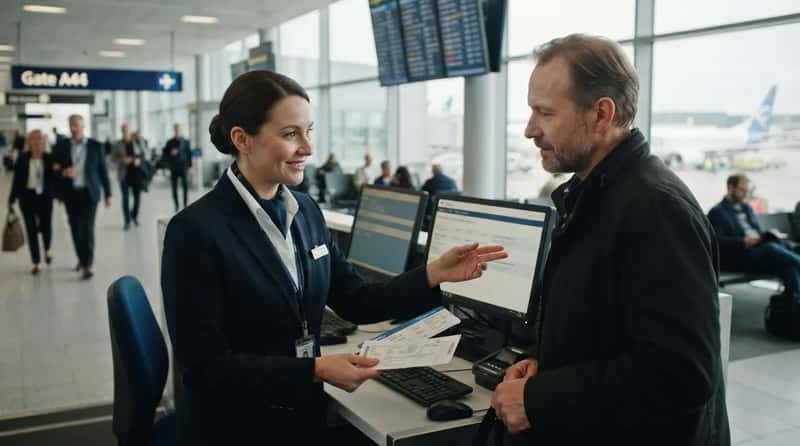
A calm-sounding gate agent isn’t being nice for no reason. They’re using a documented tactic to keep you from escalating.
Giving a frustrated traveler two or three options instead of one flat answer makes the person feel like a participant rather than a victim of the system. A calmer passenger is easier to rebook, easier to redirect, and far less likely to demand a supervisor.
#9 – They Quietly Track Who Stays Calm, and Who Doesn’t
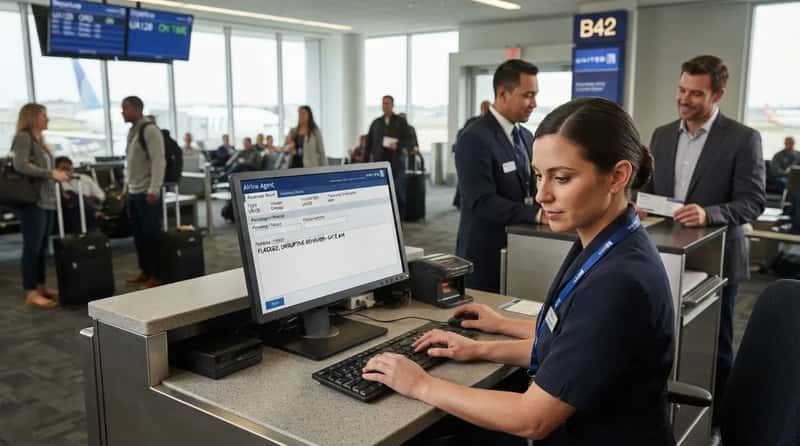
Here’s the part most travelers never think about: your meltdown at the gate today can follow you into your next trip.
Agents can and do make notes on a traveler’s record, and nasty behavior in the past can haunt you later, making you more likely to get bumped from future flights if you were genuinely disruptive. Meanwhile, calm, prepared, respectful passengers routinely get extra help, while those who shout or threaten often get the bare minimum. Staying composed isn’t just polite. It’s transactional.
At a Glance
- Calm, cooperative passengers: more likely to get rebooking help, upgrades, or flexibility
- Disruptive passengers: more likely to get flagged, bumped, or given the bare minimum
- Behavior notes can quietly follow a traveler into future flights
#8 – Sometimes They Give the Whole Terminal a Speech
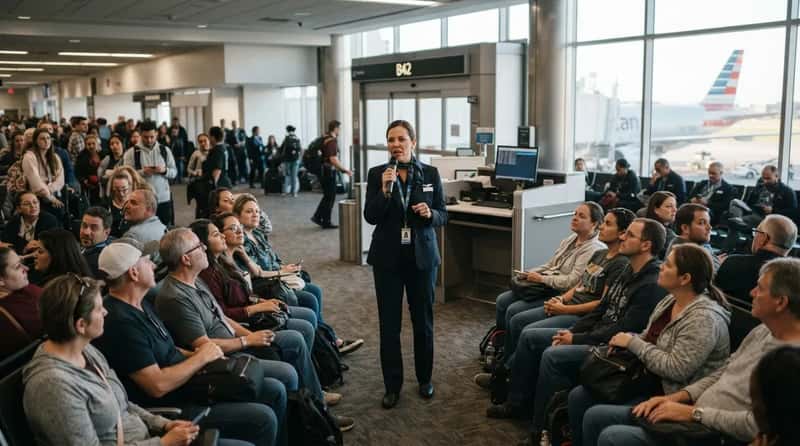
Every so often, a gate agent skips the individual pep talks and addresses the entire waiting area at once, and it actually works.
One American Airlines agent went viral for doing exactly this after a seven-hour delay, walking up to a room full of frustrated flyers and warning them not to get smart with the flight attendants once boarding began.
Be nice to them. They have a hard day just like we do.
American Airlines gate agent, viral video
Her reasoning was simple: the crew waiting to board that flight had likely been sitting through the same delay, or longer. A single group moment can reset the mood of an entire gate.
#7 – They Hold the Plane, But Rarely for the Reason You’d Hope
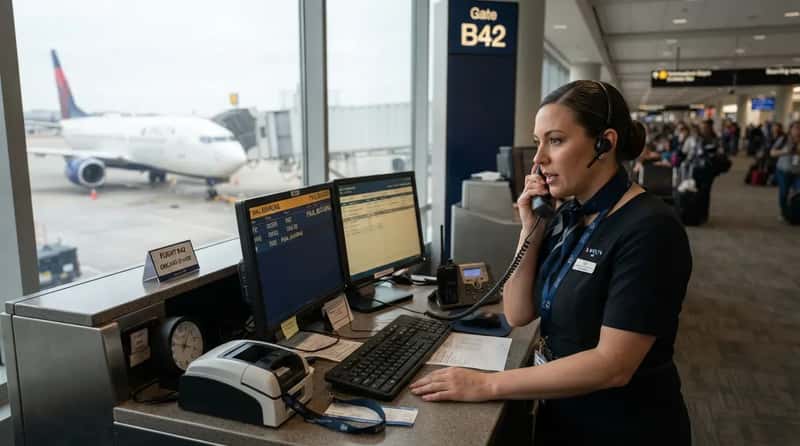
Most people assume a held plane means someone important pulled strings. Usually it’s a lot more procedural than that.
When a large group is delayed getting to a flight, agents might hold it, but they have to weigh whether the crew is about to time out, or whether they’d strand an unaccompanied minor or an elite frequent flier. Calm, cooperative passengers rarely get a plane held just for them, but they also rarely become the reason a hold gets denied for everyone else.
#6 – They Track Your Bag Before You Even Ask Twice
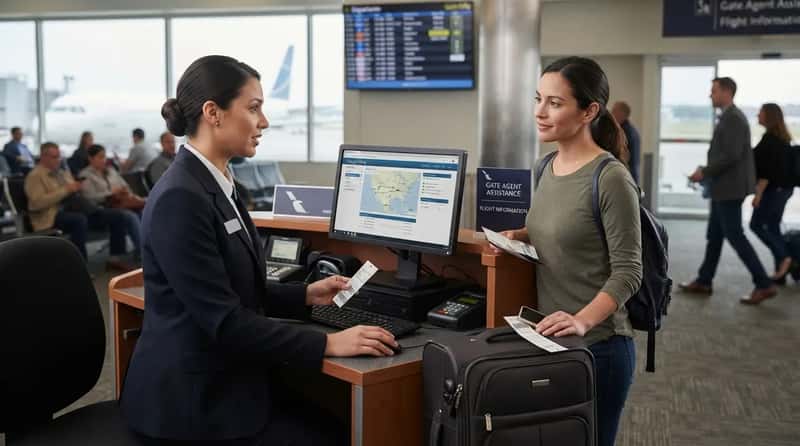
Lost luggage panic is one of the fastest ways a calm passenger turns into an angry one, and agents know it.
Gate agents aren’t officially responsible for lost bags, but they know how to trace them, checking their location and walking you through the claims process. A simple trick most travelers skip: snapping a photo of your bag before checking it in helps agents identify it faster and improves your odds of getting it back quickly. The calmer you stay while explaining, the faster this whole process tends to move.
Worth Knowing
- Snap a photo of your checked bag right before it disappears down the belt
- Hang onto your baggage claim ticket until the bag is back in your hands
- Report a missing bag before you leave the airport whenever possible
- A calm, detailed description speeds up how fast a bag gets traced
#5 – They Pay Willing Passengers to Stay Calm During Overbooking
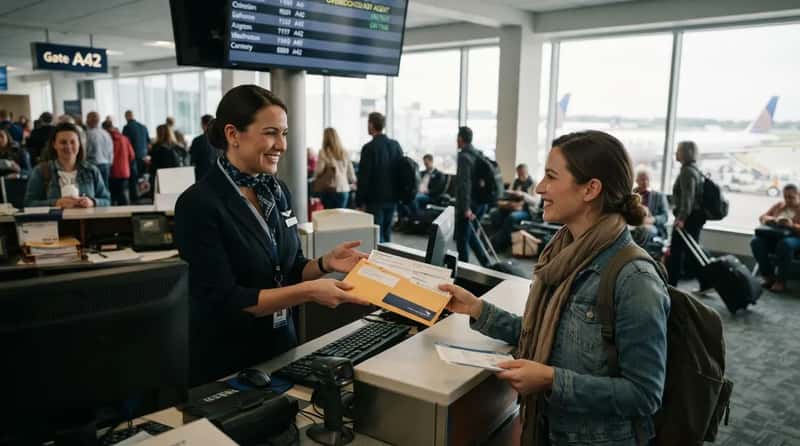
Overbooked flights aren’t chaos by accident. They’re a numbers game, and agents already have a playbook ready before you even notice something’s wrong.
Overbooking is standard practice, and gate agents know exactly how to manage it. If you’re willing to be bumped, you can score real compensation like travel vouchers, meal credits, or cash. The calmer and more flexible you appear, the more likely you are to get picked for that offer before the airline moves to involuntary bumps.
#4 – Calling Airport Police Is the Actual Last Resort
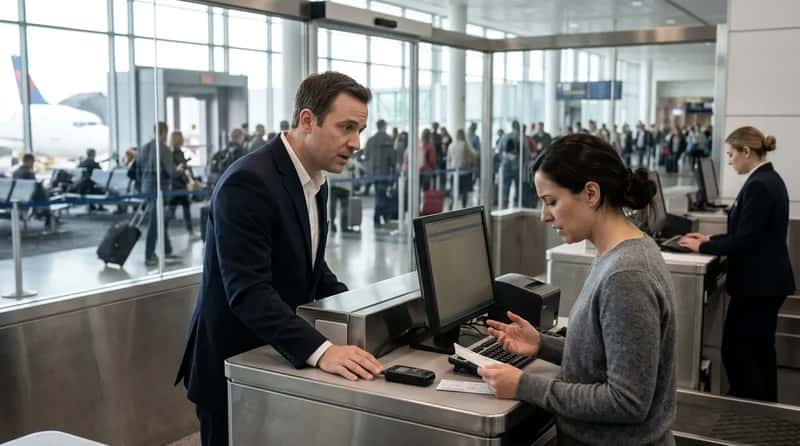
Contrary to how it feels in the moment, gate agents don’t want to call security. It’s disruptive, slow, and creates paperwork nobody enjoys filling out.
One longtime agent described the real sequence: give the customer a minute to vent, apologize, try to calm them down, and only call the police if that fails. If the person still won’t stop, they get pulled from the flight entirely. It’s a slow ladder, not a quick trigger, and staying calm early is what keeps you off it.
#3 – Showing Up Early and Calm Quietly Buys You Priority
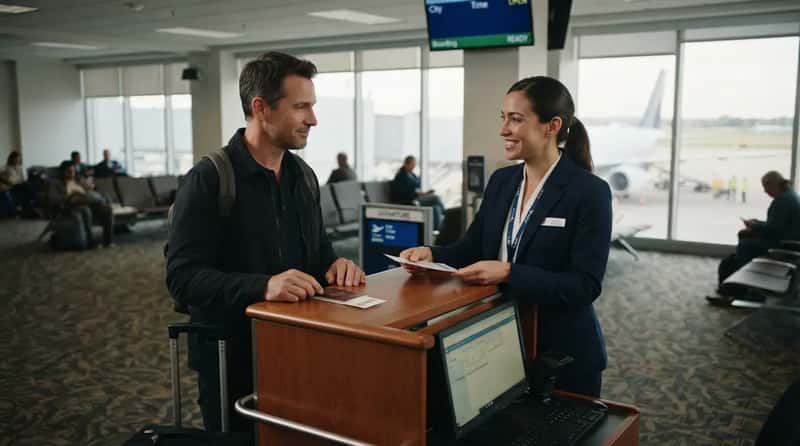
Here’s a controversial one: the “arrive right at boarding” crowd is doing themselves a disservice, and agents notice every time.
Passengers who check in the moment the window opens and get to the gate early tend to make a quiet impression before the rush starts. By the time a flight turns tight, agents already know who’s been calm, prepared, and physically present, which matters when standby seats or last-minute upgrades open up. The chaotic late arrival rarely gets that same benefit of the doubt.
Quick Compare
- Early and calm: a familiar face at the podium, first in line if standby seats open up
- Late and rushed: an unfamiliar face competing for whatever’s left
- Early and calm: more likely to get quiet exceptions when things get tight
- Late and rushed: rarely gets the benefit of the doubt
#2 – They Follow a “Kill Them With Kindness” Rule, Even When You’re Rude
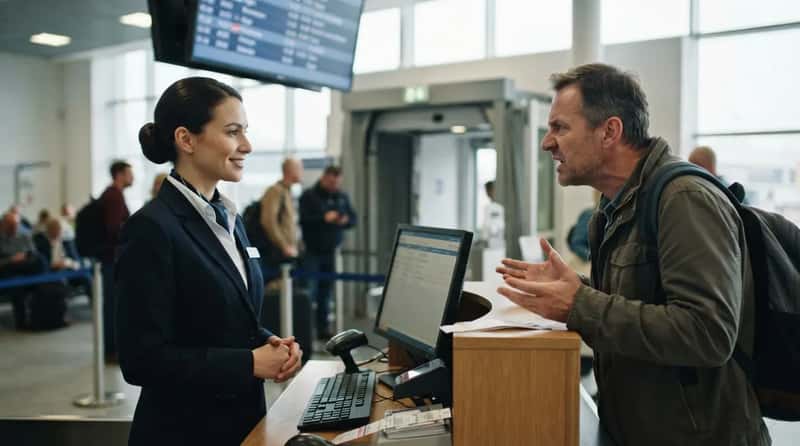
This is the one that surprises people most: agents are explicitly told to stay pleasant no matter how badly they’re treated, and most genuinely try to live it.
Airlines coach staff to “kill them with kindness,” meaning no matter how loudly a passenger screams, employees are trained to stay calm and smile back. It isn’t fake positivity. It’s policy, designed to keep one angry passenger from turning into a viral incident, or a second angry passenger.
#1 – They Treat the Whole Gate Like One Shared Emotional Room
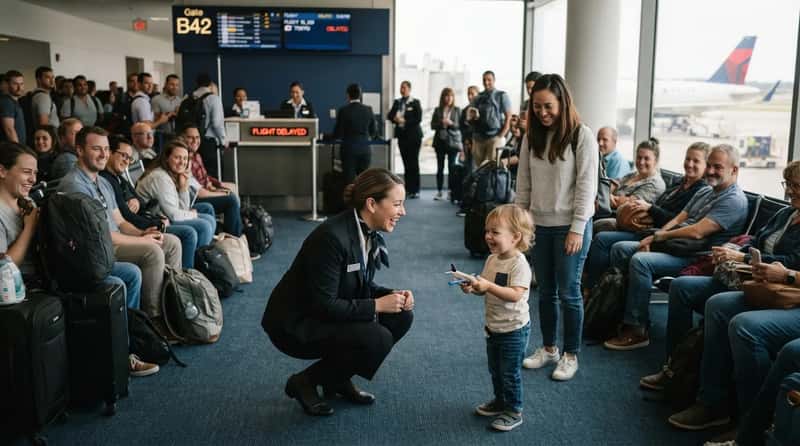
The biggest thing gate agents admit? They’re not just managing you. They’re managing the emotional temperature of dozens of strangers at once, and one person’s outburst raises it for everyone standing nearby.
That’s exactly why one viral agent stopped to address an entire delayed gate area, even pausing to joke gently with a toddler on the floor before boarding began. Flight delays are never fun, but she turned a cranky, exhausted room into something almost lighthearted, and social media applauded her for it. A calm room moves faster, boards faster, and gets treated better than a room full of individual fires, and agents know that better than anyone standing in line.
None of this means gate agents owe anyone a smile no matter what. But it does mean the calmest person in line is quietly winning a game most travelers don’t even know is being played.
Staying composed isn’t just good manners at the airport. It’s the single biggest lever passengers actually control when everything else is completely out of their hands.