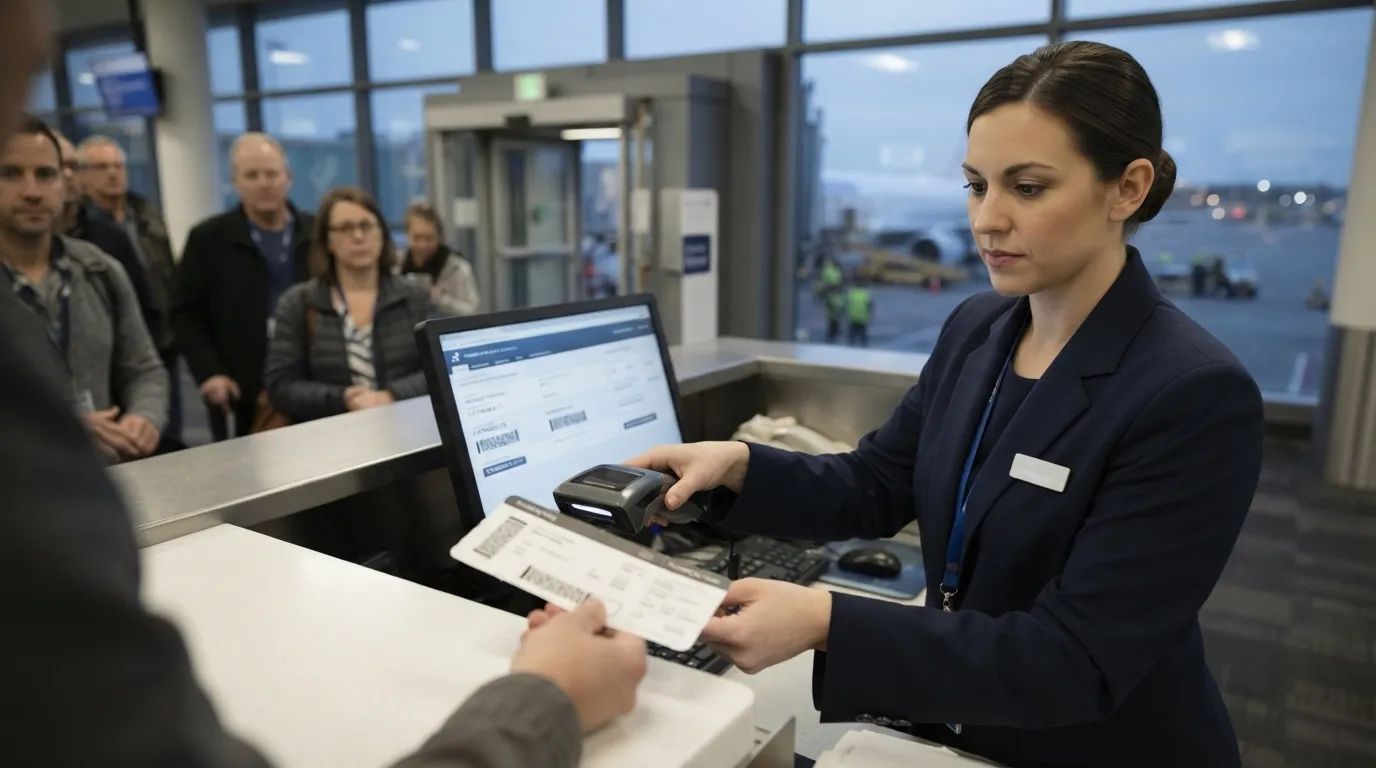
Most travelers think gate agents just glance at their boarding pass and wave them through. They don’t.
Gate staff read that document – paper or phone screen – the way a detective reads evidence. Every code, letter, and number on it can fast-track you to a first-class upgrade, flag you for extra screening, or quietly put you last in line for a bumped seat.
Most passengers hand it over without knowing half of what it says about them. Here’s what insiders actually notice the moment your boarding pass hits their scanner.
#15 – Your Full Legal Name (And Whether It Perfectly Matches Your ID)
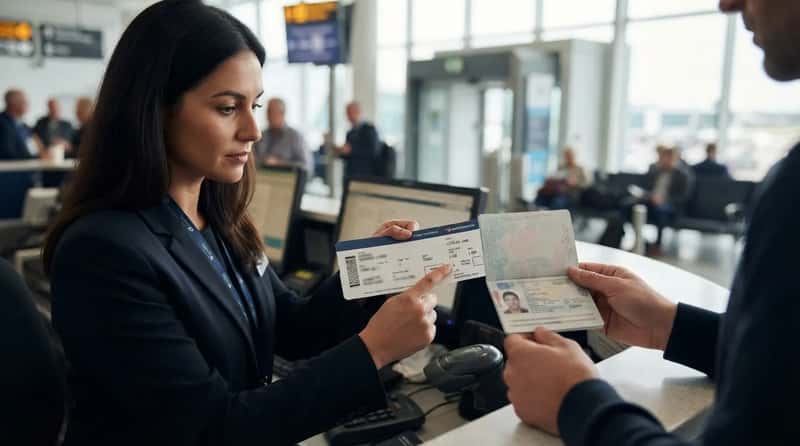
The very first thing gate staff check is your name – and they’re not just skimming it.
Your full name has to match your photo ID exactly. Even a missing hyphen or a swapped letter can trigger a flag.
A mismatch at the gate isn’t a paperwork hiccup – it can mean you don’t board at all. Agents are trained to catch it in under five seconds.
But your name is just the obvious one. What comes next is where things get interesting.
#14 – Your Flight Number (And Whether You’re Even at the Right Gate)
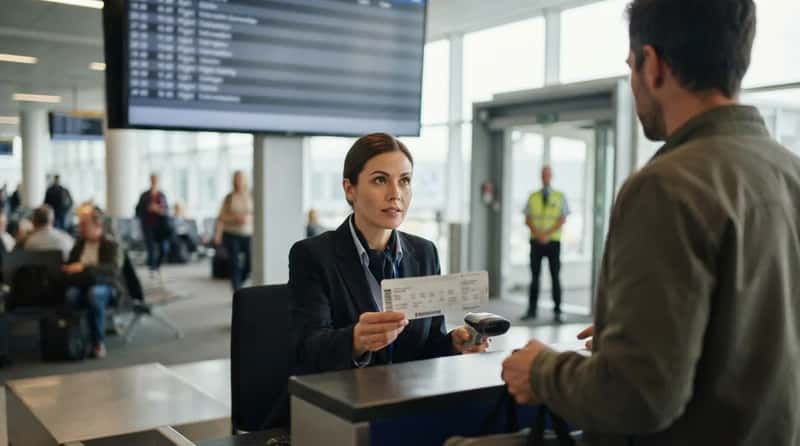
This sounds basic. It isn’t.
The flight number pairs an airline code with a route number, and gate staff check it every time because passengers show up at the wrong gate more often than airlines admit. A misread gate or a last-minute change, and suddenly someone’s trying to board the wrong plane entirely.
Agents are the last human check before you step onto an aircraft. And that connects directly to the next field: what gate you’re actually supposed to be at.
#13 – The Gate Number (Which May Already Be Wrong on Your Pass)
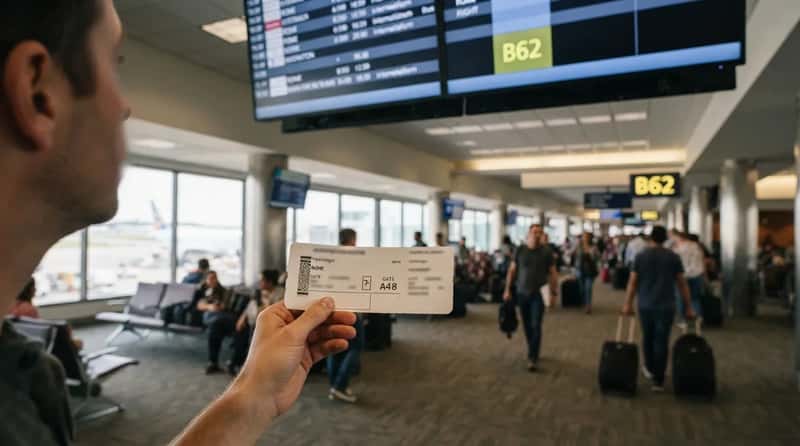
Here’s something airlines won’t advertise: the gate printed on your boarding pass isn’t always the gate your flight leaves from.
Gate changes happen constantly at busy airports, and the update doesn’t always reach you instantly. Travelers who trust only the printed number miss these swaps all the time.
When an agent glances at your gate number, they’re partly checking whether you should even be standing in front of them. Savvy gate agents quietly redirect dozens of confused passengers every single shift.
Worth Knowing
- The printed gate is a snapshot from check-in time, not a live update.
- Departure screens near security and at the gate area refresh faster than your printed pass ever will.
- International gates change more often, since customs and immigration space gets reassigned.
- When in doubt, trust the airport monitors over the paper in your hand.
The next item is something most passengers don’t even realize is on their pass – but gate staff see it immediately.
#12 – Your Seat Number (Which Is Tied to Your Checked Bags)
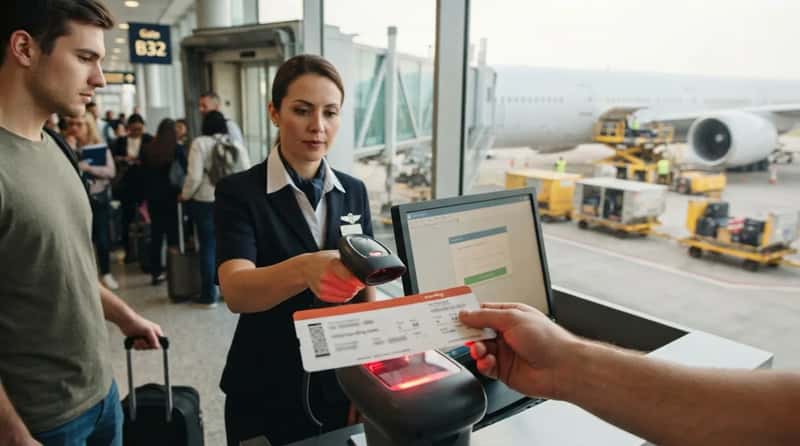
Your seat number isn’t just about where you sit. It carries more weight than that.
On wide-body planes, staff board by window, then middle, then aisle to avoid jam-ups – and your seat number tells them exactly where you belong in that sequence. Here’s the part passengers never think about.
Scanning your pass tells the system you’ve boarded, which keeps your checked bag on the plane. No scan, no bag.
If your pass never gets scanned, your suitcase gets pulled from the cargo hold before takeoff. That seat number is the thread connecting you to it.
#11 – Your Boarding Group or Zone (And Yes, They’re Watching)
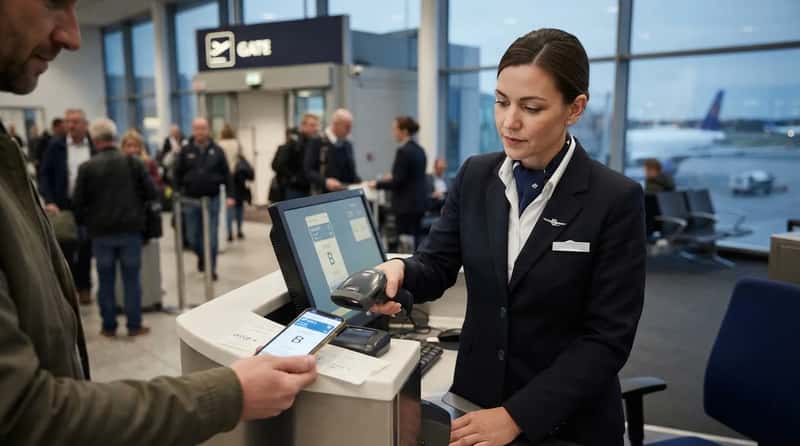
Almost every airline sorts passengers into boarding groups. Most travelers assume the system is loosely enforced – it isn’t.
Elite members and first- or business-class passengers board early, and that group assignment is one of the first things that appears on an agent’s screen. Every scan triggers a visual check and a computer verification, and the two have to match.
Trying to sneak into an earlier boarding group sets off an alert instantly. What comes next on the pass is something most passengers have never even noticed is there.
#10 – Your Boarding Time (Not the Same as Departure Time)
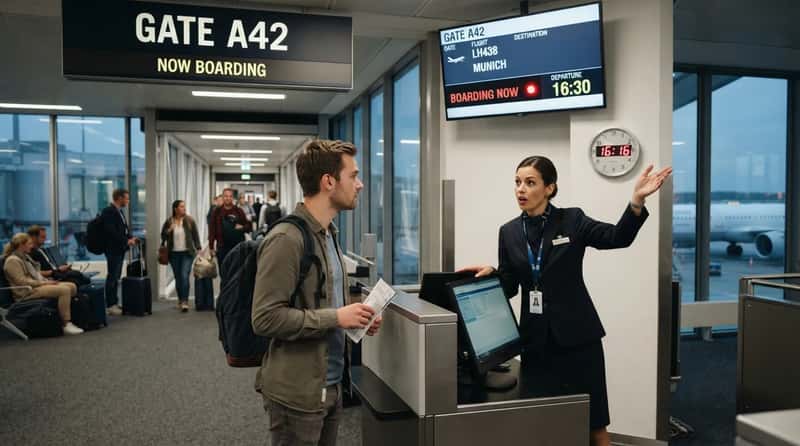
Passengers confuse these two constantly, and gate staff know it.
Boarding time is when you need to be at the gate – usually 30 to 60 minutes before departure – and it’s a completely different number from your actual departure time. When boarding is called, agents are tracking who’s already seated and who’s still sprinting from the terminal coffee shop.
Boarding typically closes 15 minutes before departure. Miss that cutoff and you miss the flight, even if you can still see the plane through the window.
Gate staff enforce it, and they’ve heard every excuse in the book. The next field quietly reveals whether you paid full price – or next to nothing.
#9 – Your Fare Class Letter (The Code That Determines Everything)
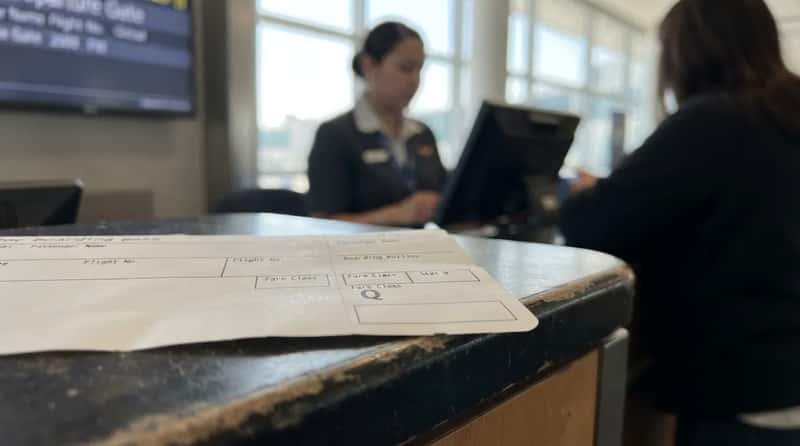
That single letter buried on your pass – Y, Q, K, B – is one of the most powerful pieces of information on the entire document.
F or A means first class, J means full-fare business, and Y usually means the most flexible, full-price economy seat. Cheaper, more restricted economy fares get their own letters, like Q.
When a flight is oversold, agents go straight to the fare class to decide who gets bumped first – and it’s not random. The passenger who bought the cheapest last-minute seat is statistically the first one asked to give it up.
Quick Compare
| Letter(s) | What It Signals |
| F / A | First class |
| J | Full-fare business class |
| Y, B, M | Full-fare economy – most flexible, easiest to change |
| H, Q, V, W, S, T, L, K, G | Discounted economy – cheaper, but fewer perks and stricter rules |
That single letter decides your fate on a full flight. And it connects directly to what comes next.
#8 – Your Frequent Flyer Number and Elite Status
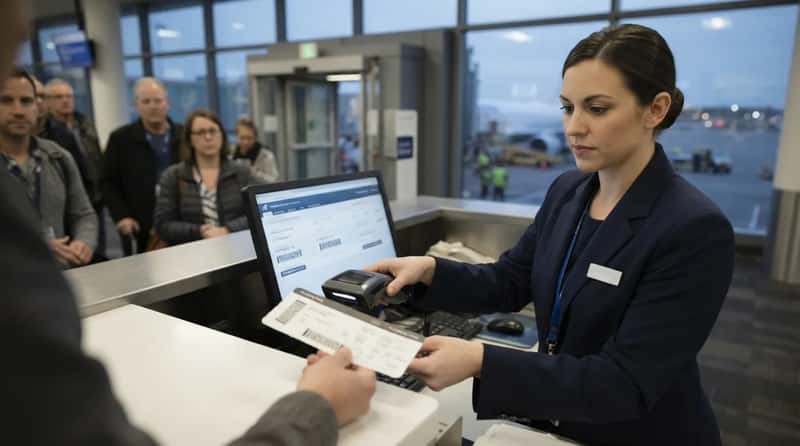
This field changes how an agent treats you before you even open your mouth.
If you’re enrolled in the airline’s loyalty program, your status level shows up right on the boarding pass, making it instantly clear whether you get to board early. But it goes further.
Scan a pass with top-tier elite status, and upgrades, standby clearance, and fee waivers all pop up on the agent’s screen automatically. A passenger with no frequent flyer number starts from zero in that queue, no matter how politely they ask.
Gate agents aren’t being unfair – they’re just following the data your own pass handed them. Next up is the six-character code most passengers have memorized for the wrong reasons.
#7 – Your PNR / Record Locator (The Key to Your Entire Booking)
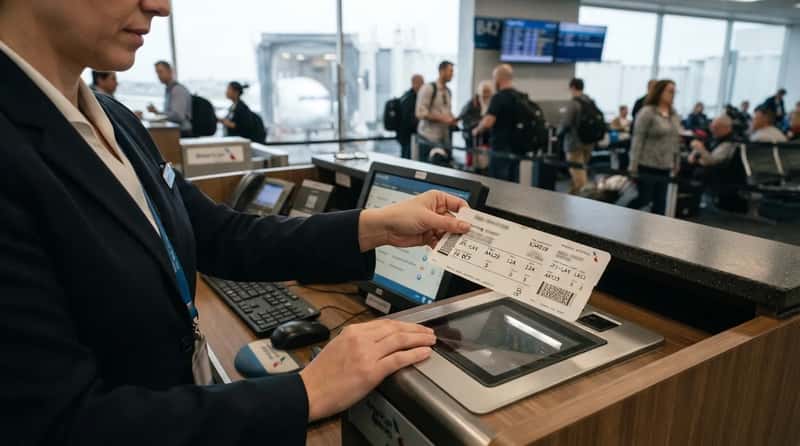
Most people know their PNR as the code they type into the check-in kiosk. Gate agents use it for far more.
That six-character code, buried in your barcode, unlocks your entire booking history – meal requests, seat changes, upgrade waitlist position, special assistance flags, connecting flight details, all of it. A gate agent who pulls your PNR knows your travel story in seconds.
That’s also why security experts keep repeating the same warning: destroy your old boarding pass the way you’d shred a credit card statement. The code carries your name, flight details, and frequent flyer number – exactly what someone would need to dig into your itinerary.
The next item is one that surprises even frequent flyers.
#6 – Your Sequence Number (Who Checked In First)
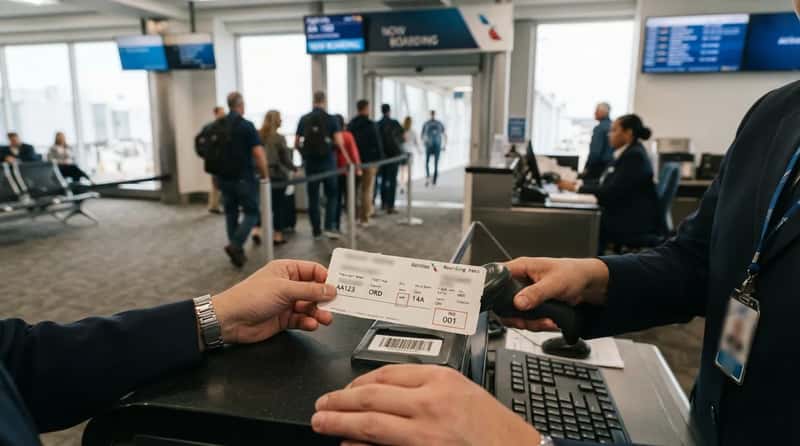
There’s a small number on your boarding pass most passengers ignore entirely. Gate staff don’t.
SEQ shows your check-in order, not your seat priority – SEQ 001 means you checked in first. It’s mostly used behind the scenes, but it can decide who gets asked to volunteer on an oversold flight.
The passenger who checked in last is often the first one approached when a flight needs volunteers. It’s not random – it’s sequential.
Fast Facts
- SEQ reflects check-in timing only – it has nothing to do with your assigned seat.
- A low number usually means you checked in early online or through the app.
- A high number often points to a day-of, last-minute check-in.
- On oversold flights, SEQ order can factor into who agents approach first for volunteers.
Don’t panic over your number; it’s an order, not a warning. But on a packed flight, being SEQ 087 instead of SEQ 001 tells a very different story.
#5 – Your Destination Airport Code (And Whether You’re Connecting)
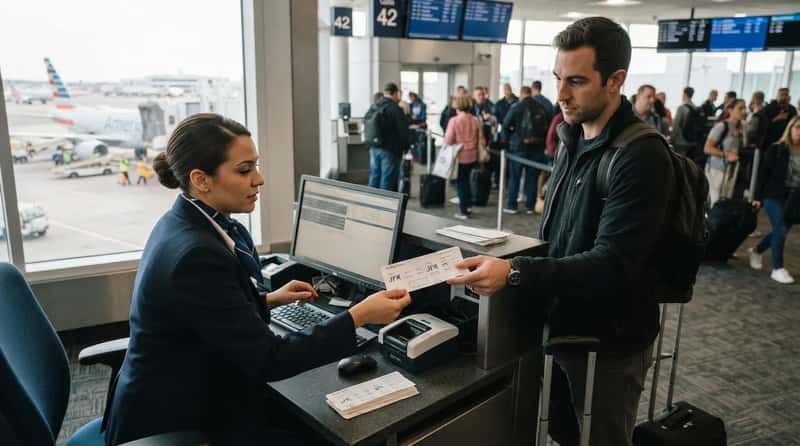
Those three letters representing your destination are more than a label. They shape how gate staff handle your entire boarding experience.
Agents check that code to flag connecting passengers immediately – a traveler with a tight connection gets boarded early or has the receiving gate alerted on their behalf. Every flight segment needs its own boarding pass, even on a technical stop that doesn’t involve changing planes, if the flight number changes.
Showing up with only one pass for a two-leg trip is a problem gate staff deal with constantly. The next field is one most travelers have never noticed – but gate agents see it on every single pass.
#4 – The Barcode Itself (A Digital File on Your Travel Life)
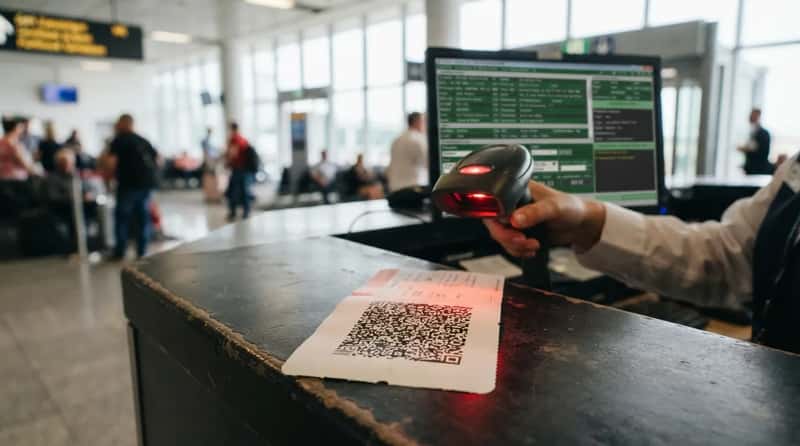
The barcode or QR code isn’t just a machine-readable copy of what’s printed. It holds significantly more.
This barcode format is used by over 200 airlines worldwide, built to strict international standards for size, readability, and fraud prevention. When it’s scanned, the agent’s screen fills with data well beyond what’s printed on the page.
That same scan automatically tells the system you’ve boarded and that your checked bag can stay on the plane. The barcode is doing the real work – everything else on the pass is just a human-readable summary.
And one of the most alarming fields follows right after.
#3 – The TSA PreCheck Indicator (And What Happens When It’s Missing)
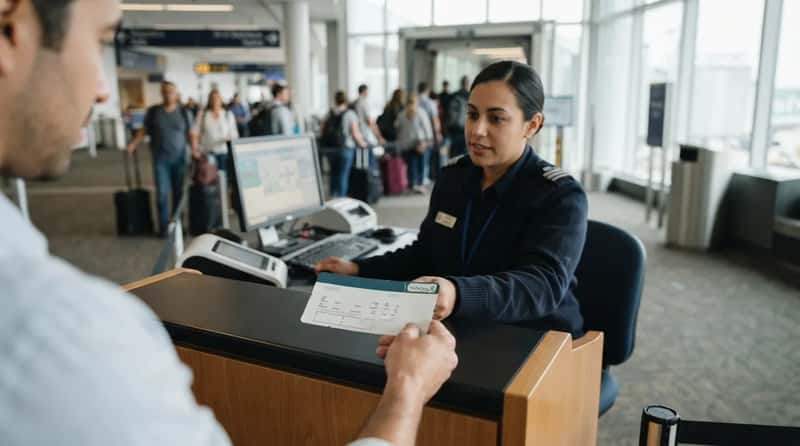
If you have TSA PreCheck or Global Entry, you expect to see it printed. It doesn’t always show up – and that gap is something gate staff notice.
If your Known Traveler Number isn’t properly attached to the booking, the indicator won’t print, and you won’t be sent to the expedited lane no matter how long you’ve been enrolled. Agents can see your PreCheck eligibility in the system, but a pass that didn’t show it already sent you through standard screening.
Many airports now also scan your ID against your flight details at the podium – but you still need that boarding pass in hand to get through the gate. The PreCheck indicator, or its absence, quietly tells the story of how your screening actually went down.
And what comes at #2 is the field most passengers have genuinely never heard of.
#2 – Stopover Codes (What Your Pass Reveals About Your Layover)
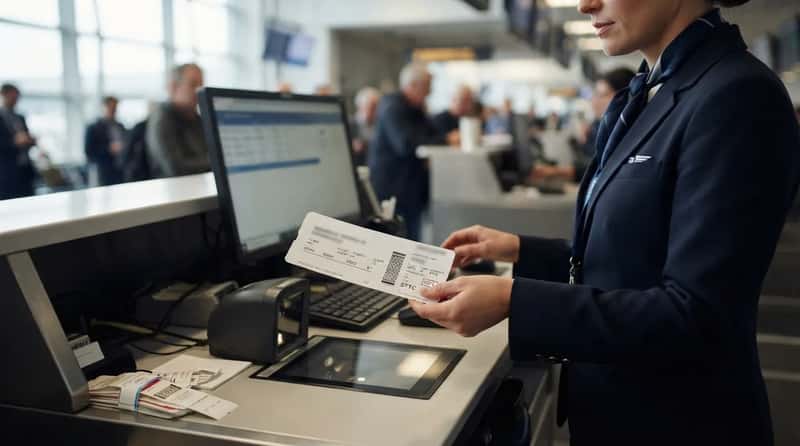
Most passengers on connecting flights miss the detail that their pass sometimes flags the nature of their layover.
S/O means Stopover – a layover somewhere along your route. SPTC means Stopover Paid by the Carrier, which signals a layover long enough that the airline may owe you a hotel room.
Gate agents who spot an SPTC code know that passenger is entitled to overnight accommodations if the delay is long enough. Most passengers with this code have no idea it’s even there – and never claim what they’re owed.
But the #1 thing gate staff notice? It’s the one that can stop your entire trip before it starts.
#1 – The SSSS Code (The Four Letters That Change Everything)
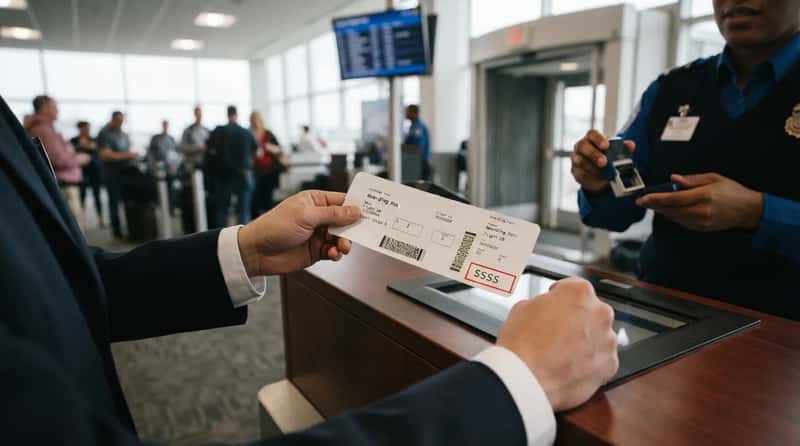
No field on a boarding pass carries more weight – or more anxiety – than four identical letters in the corner of the document.
SSSS means you’ve been selected for enhanced security screening, chosen by the TSA’s Secure Flight system, not by the airline or the gate agent. Selection looks random, though one-way tickets, last-minute bookings, and cash payments seem to raise the odds.
Gate staff spot it instantly the moment your pass comes into view, before the scan and before you say a word. After screening, a TSA agent stamps your pass to confirm you’ve been cleared.
At a Glance
- SSSS stands for Secondary Security Screen Selection.
- It’s assigned automatically by TSA’s Secure Flight system – never by the airline or the gate agent.
- One-way tickets, last-minute bookings, and cash payments appear to raise the odds of selection.
- A TSA stamp after screening is what actually clears you to board – no stamp means you’re not done yet.
No stamp, and you get held at the jetway until it’s sorted out. SSSS isn’t an accusation – it’s a flag – but at the gate, it’s the single most consequential mark on any boarding document.
The Bottom Line
Your boarding pass is not a simple entry ticket. It’s a dense data file revealing your name, fare class, check-in order, loyalty status, security history, and connection details – all before you say a word.
The fare class letter decides who gets bumped. The SEQ number shapes who gets asked to volunteer, and the SSSS code can ground your entire trip.
Gate agents read all of it in seconds, because they’ve done it thousands of times. Next time you board, take 30 seconds to actually read your own pass – there’s more on it than you think.
Did any of these surprise you? Drop your experience in the comments.