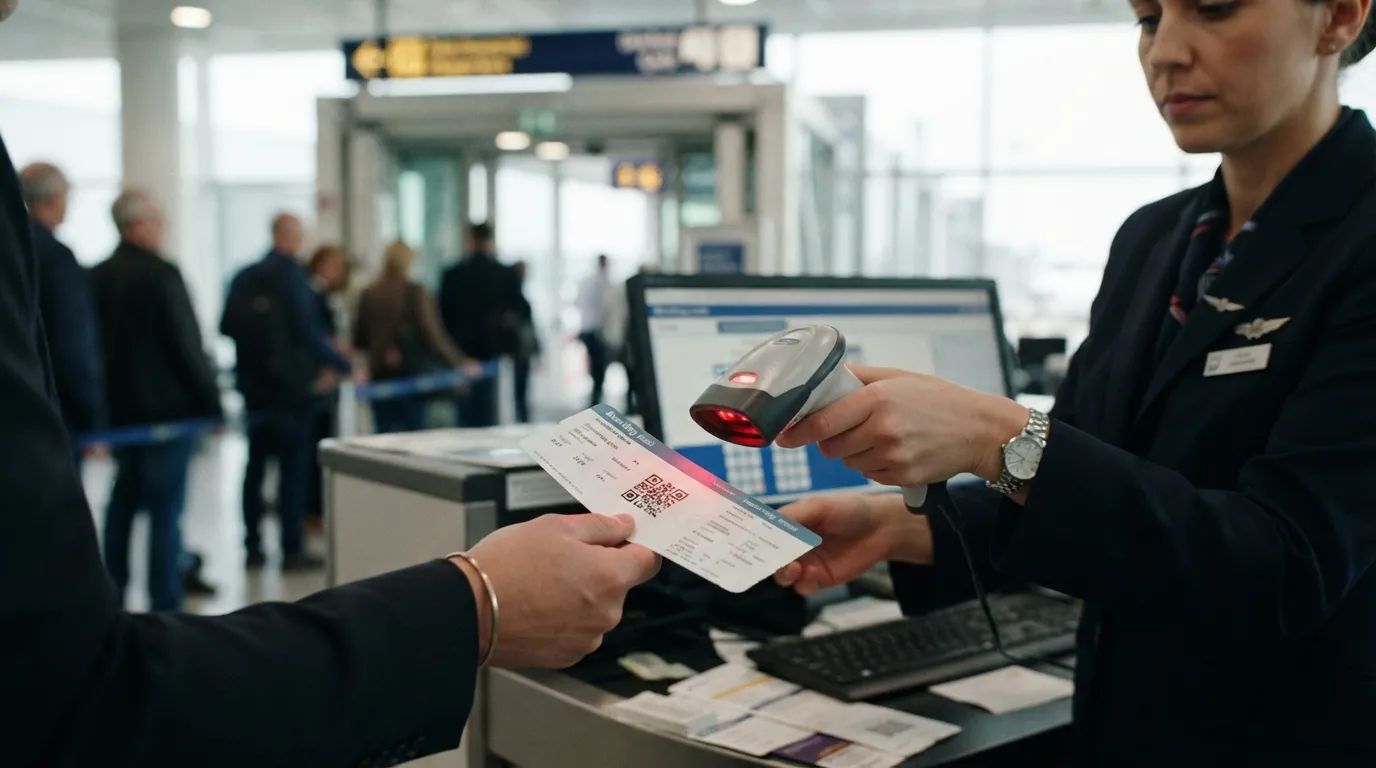
Most travelers glance at their boarding pass, find the gate, and shove it in their pocket. Gate staff do the opposite – they read that slip of paper, or that phone screen, like a detective reads a crime scene.
Every letter, number, and barcode on it can fast-track you, flag you, bump you, or quietly mark you for extra screening before you take a single step down the jet bridge. Here’s everything insiders actually see when they scan your pass – starting with the field most people assume is harmless.
#16 – Your Full Name (And Whether It Matches Your ID)
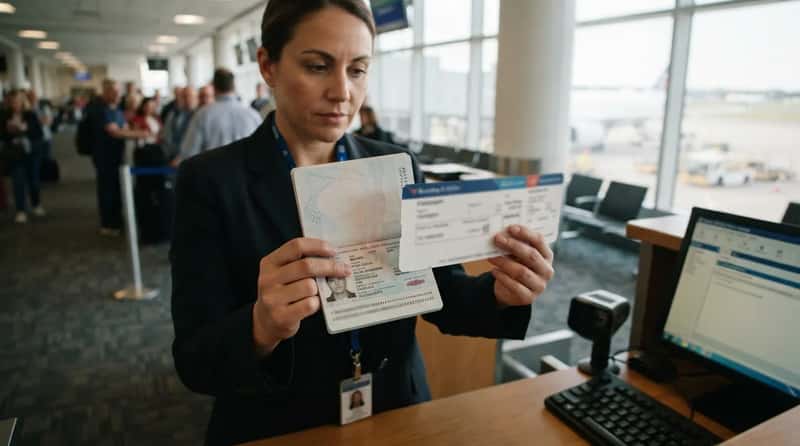
Gate agents check your name first, and they check it carefully. It has to match your ID or passport exactly – any mismatch is an immediate red flag at the podium.
A typo you never noticed at booking suddenly becomes very visible to the person standing between you and your seat. Even a reversed first and last name can cause a hold-up, especially on international routes where ID verification is stricter.
Fix name errors before you reach the gate, not while you’re holding up the line behind you.
But your name is just the surface. Wait until you see what #15 reveals about your entire trip.
#15 – Your PNR: The Six-Character Master Key
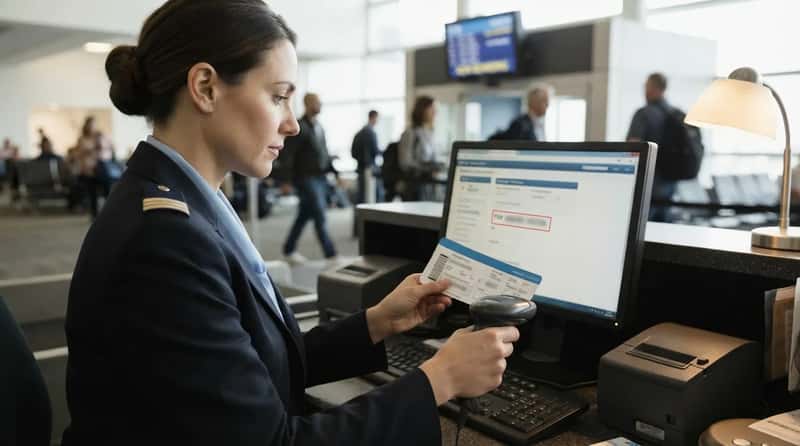
That short alphanumeric code printed in bold unlocks nearly everything about your trip. The PNR, or Passenger Name Record, is issued by the airline for your whole booking.
Gate staff can pull your full itinerary, contact details, and any special notes attached to your reservation just by scanning it. Anyone with access to the right lookup tools can see the same thing – which is exactly why security experts warn against posting boarding pass photos online.
An agent who pulls up your PNR sees everything, including whether you’ve had past issues with that airline. Keep it private, even after your flight lands.
And speaking of what’s hidden in plain sight – #14 is the field most passengers never even notice.
#14 – Your Flight Number and Airline Code
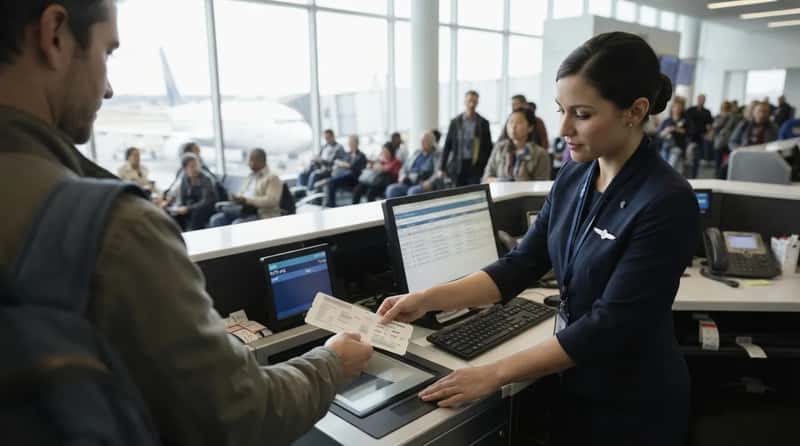
It seems obvious, but gate staff use this in ways passengers don’t expect. The airline code identifies the carrier; the number after it identifies your exact flight.
When a gate change happens, agents cross-reference this instantly to make sure no one from a different flight has wandered into the wrong line. If you have any type of problem at the desk, this is the first number an agent will ask for.
Passengers who know their flight number get served faster in a crisis – most travelers have to dig for it. Don’t be that person.
But the flight number is nothing compared to the single letter hiding underneath your cabin designation. That’s #13.
#13 – The Fare Class Letter That Decides Who Gets Bumped
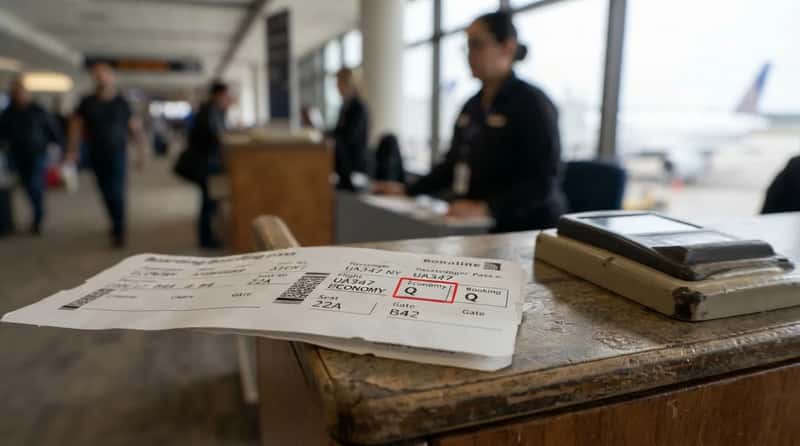
One letter. Enormous implications. Most passengers walk right past it.
That lonely letter next to your cabin – Y, J, F, Q, and dozens more – is your booking class, and it reveals what you paid relative to everyone else on the plane. Y is usually full-fare, flexible economy with the best upgrade odds; Q is typically a deep discount fare with far fewer protections.
Quick Compare
- Y is full-fare economy, J is full-fare business, F is full-fare first, and W is usually premium economy on most carriers.
- Q, T, or L fares mean discounted economy with limited change rights and reduced mileage credit.
- There is no global rulebook that says one discount letter must be cheaper than another – airlines set their own rules.
When a flight is oversold, agents go straight to fare class to decide who gets bumped first. Most passengers assume it’s random selection – it isn’t.
Check your fare letter before you get to the gate, because that letter is quietly telling your story.
What else does a trained eye spot in under three seconds? #12 has one that surprises even frequent flyers.
#12 – Your Seat Number Controls More Than You Think
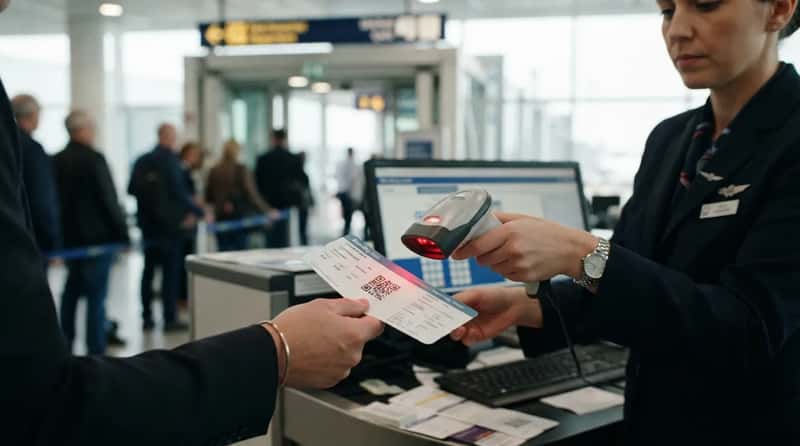
Gate agents don’t just glance at your seat assignment – they use it strategically. On wide-body aircraft, staff sequence boarding by window, then middle, then aisle to reduce jam-ups.
Here’s the part passengers rarely think about: your seat number is directly linked to your checked bags in the system. When your pass is scanned, the database updates to show you’ve boarded and your luggage can stay aboard.
No scan, no bag. That chain reaction is why a missing scan sets off a quiet, urgent process before the doors close.
Now here’s one most passengers have never heard of, and it’s printed right on their pass. See #11.
#11 – Your Sequence Number Puts You on a List You Didn’t Know Existed
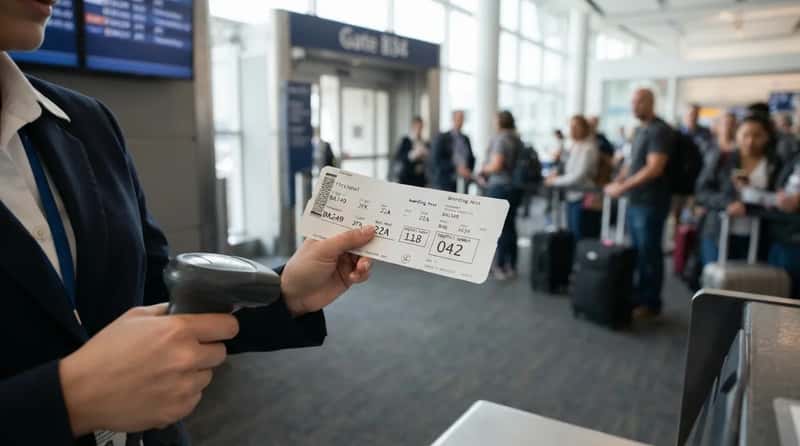
Printed as SEQ followed by a number, this simply tells you the order you checked in – SEQ 042 means you were the 42nd person. It sounds harmless.
It isn’t. On oversold flights, airlines sometimes use check-in order as one factor in deciding who gets bumped or asked to volunteer for a later flight.
A high SEQ number on a packed flight puts you closer to the bumping shortlist. Checking in early isn’t just about overhead bin space – it’s about protecting your seat when the numbers don’t add up.
The next one is even more operationally critical, and it’s hiding in the barcode. Here’s #10.
#10 – The Barcode Is a Data Vault, Not a Formality
The barcode isn’t a scan-and-go afterthought. Under IATA’s Bar Coded Boarding Pass standard, it encodes your name, flight details, seat, frequent flyer number, PNR, and more – all in one scannable string.
That’s why the scan is so fast: the agent’s screen lights up with your complete profile before you’ve finished lowering your arm. It even works with no internet connection.
The catch? That same data can be decoded by anyone with a free barcode-reading app. Shred or delete your boarding pass once the trip is done.
But what happens when that barcode throws up a red flag? #9 is the one most travelers dread.
#9 – The SSSS Code That Sends You Into a Separate Line
Four letters. Instant detour. Almost nobody knows what triggers it.
SSSS stands for Secondary Security Screening Selection, and it flags passengers for a more thorough TSA inspection. It’s usually printed in bold in a corner of the pass.
Buying a last-minute ticket, paying cash, or recently visiting a country the State Department flags as high-risk can trigger it – even for TSA PreCheck holders, whose trusted status gets overridden entirely. Selection comes from the TSA’s Secure Flight system, not the airline or a gate agent, and screening can happen at the checkpoint, a separate area, or right at the gate.
Fast Facts
- The process traces back to security measures introduced after 9/11.
- A blocked online or mobile check-in often forces travelers to see an agent in person just to print their pass.
- The flag can show up on both domestic and international itineraries.
- Travelers who get flagged repeatedly can seek relief through the DHS Trusted Traveler redress program.
And the codes don’t stop there. Gate staff also read one that quietly reveals your loyalty status. That’s #8.
#8 – Your Frequent Flyer Number Changes How You’re Treated
This field does more than collect miles – it changes how an agent responds to you before you even reach the podium. Elite members get flagged in the system in advance.
When an agent scans your pass and sees a top-tier status code, their response often shifts, consciously or not. Upgrades, standby clearance, and gate-checked bag waivers all flow through that number.
A passenger with no frequent flyer number on their pass starts from zero in that queue, no matter how politely they ask.
There’s one field that affects your boarding even more directly. It’s hiding in plain sight as #7.
#7 – Your Boarding Group Separates the Haves From the Have-Laters
This is the field that decides who gets overhead bin space and who doesn’t. Every scan includes a visual check against your printed group, and trying to sneak into an earlier one triggers an alert instantly.
Managing zone order is one of the gate team’s core jobs, and the scanner makes cheating nearly impossible. Airlines have tightened enforcement here because early boarding secures a genuinely scarce resource.
Agents who spot a group mismatch will send you back to wait – every single time.
Next up, a detail on your pass that reveals something about your connecting flight. Don’t miss #6.
#6 – Airport Codes Catch the Wrong-Gate Mistake Before It Happens
Two three-letter codes. Instantly readable. Critically important at connecting hubs.
At a busy hub, gate agents scan the destination code to confirm you’re headed to the right aircraft, not just the right terminal. Passengers rushing between connections sometimes wander to the wrong gate entirely.
A fast agent can catch a destination mismatch within seconds of scanning a pass. At mega-hubs like Chicago O’Hare, London Heathrow, and Frankfurt, similar-sounding destinations can depart from adjacent gates minutes apart – and this is the catch-net.
What they spot next is something gate staff use to make real-time decisions about the aircraft itself. That’s #5.
#5 – Your Checked Bag Count Starts a Silent Countdown
Passengers never think about this field. Ground crews think about it constantly.
The number of checked bags tied to your booking is cross-referenced at the gate right before the door closes. If you’re a no-show, your bags have to come off the plane – a strict aviation security requirement, no exceptions.
The moment your boarding scan fails to come through, a bag hunt may already be starting backstage. It’s why doors close exactly when they say they will.
Almost at the most revealing fields – here’s what #4 shows that most passengers never suspect.
#4 – The Hidden SSR Codes That Reveal Needs You Forgot You Mentioned
These tiny codes tell gate staff about needs you flagged months ago, and some you may not even know are on file. Wheelchair requests, special meals, and infant travel all generate SSR markers that alert ground staff before you reach the door.
Here’s the part that surprises most people: SSR codes can also include invisible disability markers, including designators indicating someone is on the autism spectrum. They exist to allow discreet, appropriate assistance – not surveillance – but they’re there, and agents are trained to act on them.
A passenger with a mobility SSR gets flagged to the jetway team before the boarding call even starts.
The next one is one that experienced travelers watch obsessively. Here’s #3.
#3 – The Two Times on Your Pass That Are Never the Same Number
Most passengers only look at one time on their pass – and that’s the mistake. Departure time is when the plane pushes back; boarding time is when the gate opens, and they are never the same number.
Domestic boarding typically starts 30 minutes before departure; international flights can start earlier. Gate agents count down to both times at once, managing the queue while tracking the manifest.
Quick Compare
- Most flights start boarding 30 to 50 minutes before scheduled departure, and boarding typically ends 15 minutes before takeoff.
- Boarding doors close 10 to 15 minutes before departure to avoid delays and extra costs.
- International flights often close the gate 30 to 60 minutes before departure to allow extra time for checks.
Showing up at “departure time” instead of “boarding time” is one of the most common reasons travelers miss flights at busy airports. By the time the clock hits departure, the door can already be closed and locked.
Down to the top two. These are the ones gate agents say matter most. Here’s #2.
#2 – Why Your Printed Gate Number Can Betray You
You checked it at home. That doesn’t mean it’s still correct.
Gate assignments can be made hours or even days before departure – and changed right up until boarding begins, often because of a last-minute aircraft swap. Gate agents deal with this more than almost any other passenger complaint: people arrive at the printed gate only to find a completely different flight boarding.
The boarding pass gate number is a starting point, not a guarantee. Always verify at the terminal monitors or the airline app before you settle in to wait.
And the #1 thing gate staff spot? It’s not what most travelers guess.
#1 – The Duplicate-Scan Alert That Exposes Stolen Passes
This is the detail that catches fraud, stolen passes, and screenshot tricks – and almost no passenger knows it exists. Some airline apps only display the barcode when the device is online, an anti-duplication measure built for exactly this.
If someone screenshots your pass and scans it before you do, the system flags a duplicate scan and alerts gate staff instantly. Two attempts on the same barcode stops both passengers cold until identity is verified.
This is also why “lending” a boarding pass to someone else is essentially impossible now. Once issued, a pass is tied to the named passenger and that specific flight – the scanner confirms identity and logs the boarding event in real time, no manual detective work required.
The Bottom Line
Your boarding pass is one of the most information-dense documents you’ll ever carry, and gate staff are trained to read it at a glance. Fare class and sequence number can decide who gets bumped; SSSS flags, SSR codes, and duplicate-scan alerts are all working quietly before you ever step on the plane.
The biggest mistake travelers make is assuming the boarding pass is just a ticket. It’s a profile – so check your boarding time against your departure time, protect your PNR, and never assume your gate is where it was when you checked in.
Did we miss something you’ve spotted on your own boarding pass? Drop it in the comments.