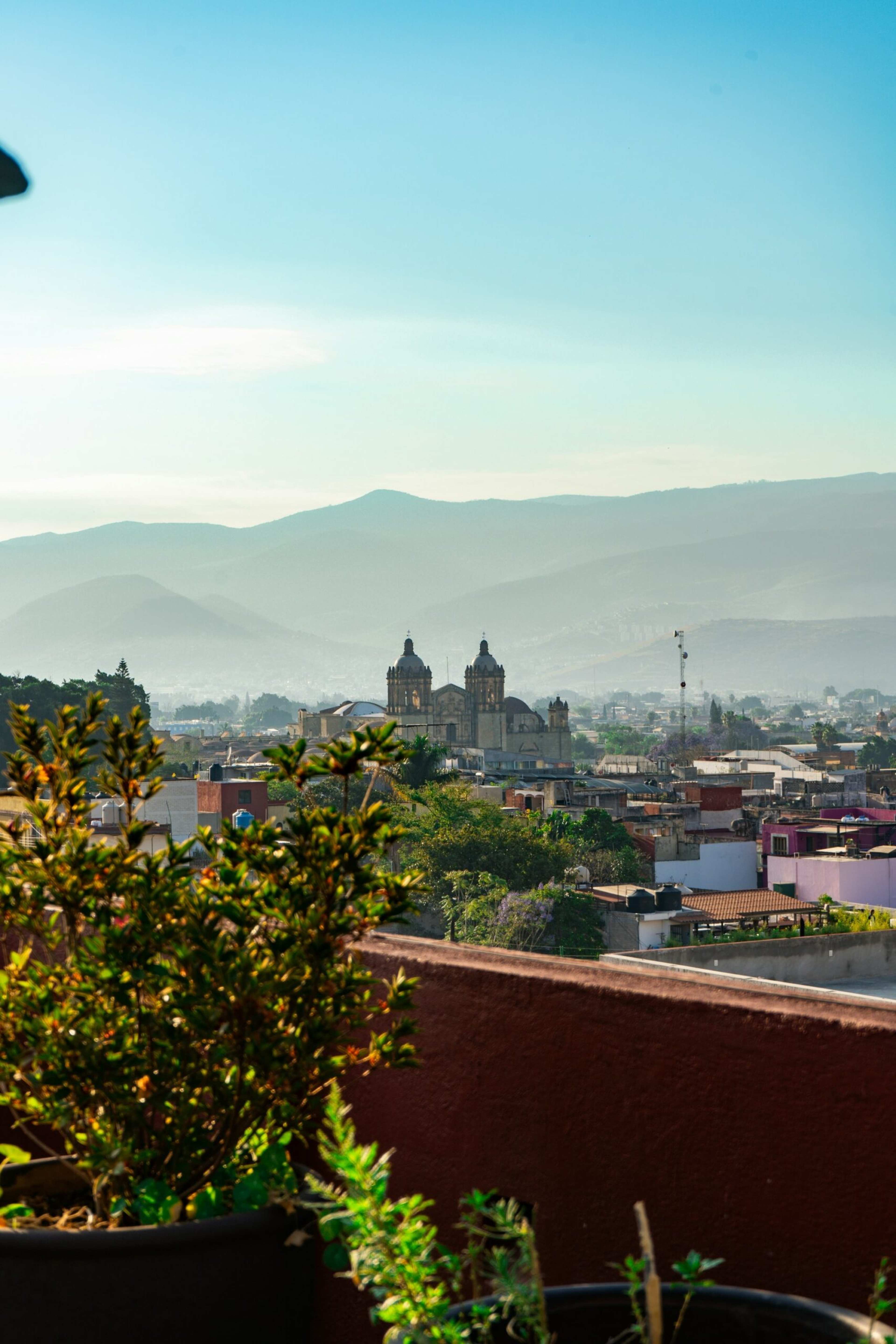
There’s something eerily captivating about an abandoned city. Empty streets that once bustled with life, crumbling buildings frozen in time, and the silent whisper of stories left untold. These places have a cinematic quality that even Hollywood can’t resist.
Some of these ghost towns were left behind after catastrophes. Others simply faded when the economy moved elsewhere. Whatever the reason, they now stand as haunting reminders of what once was. Their eerie beauty has transformed them into unexpected tourist destinations and actual film locations. Ready to step into these real life movie sets? Let’s take a tour through twelve of the most visually stunning abandoned cities on the planet.
1. Pripyat, Ukraine – The Chernobyl Time Capsule
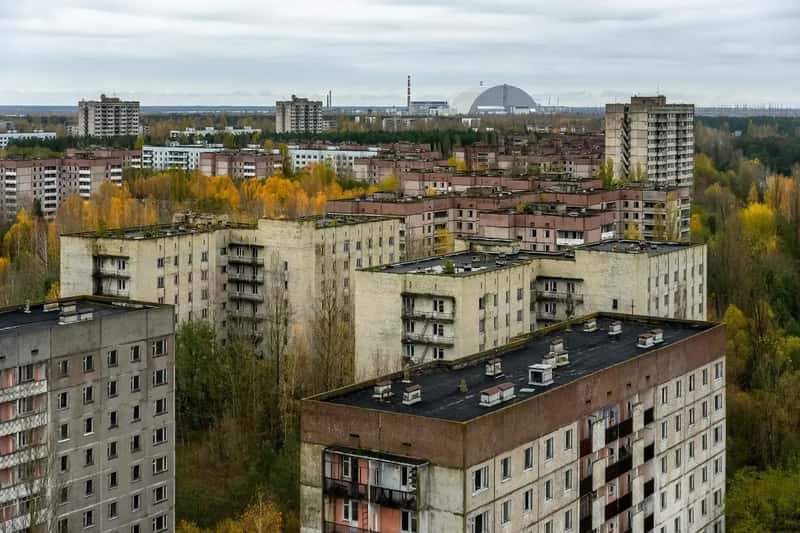
Pripyat had a population of 49,360 before it was evacuated on April 27, 1986, just one day after the Chernobyl nuclear disaster. Founded on February 4, 1970, the city was the ninth atomgrad in the Soviet Union, a closed city designed to house nuclear workers. Walking through Pripyat today feels like stepping into a dystopian film.
The long-abandoned Ferris wheel in the amusement park is now one of the most photographed landmarks, which had been scheduled to open five days after the disaster for May Day celebrations. More than three decades after the reactor meltdown, tours of the contaminated towns surrounding the reactor are gaining in popularity. Approximately 124,000 tourists visited Chernobyl last year, with about 100,000 coming from outside Ukraine, according to 2020 reports. Aerial views of Pripyat were shot and later edited to appear as a deserted London in the 2016 film The Girl with All the Gifts.
The city’s Azure Swimming Pool and Avanhard Stadium attract curious visitors. Every crumbling apartment block and decaying school tells a chilling story of lives interrupted.
2. Kolmanskop, Namibia – Where Diamonds Met Desert Sand
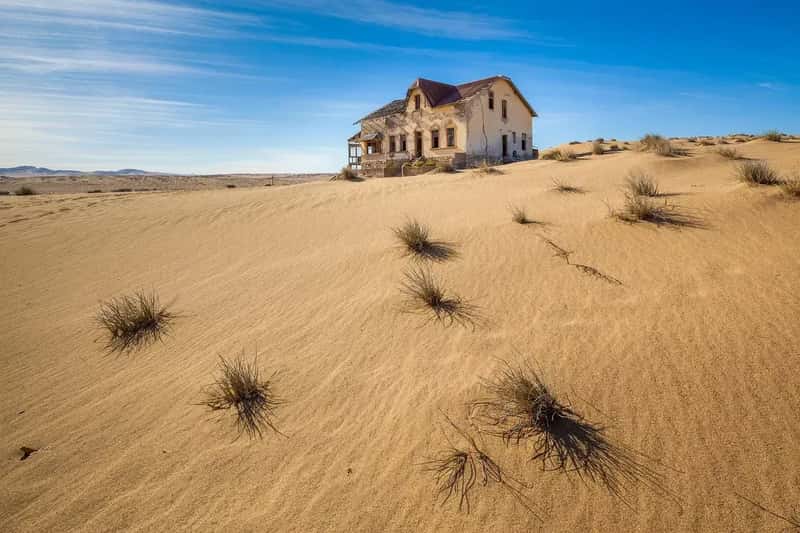
Once one of the wealthiest towns in Africa, Kolmanskop is now slowly disappearing beneath the Namib Desert’s relentless dunes. By 1912, the town was producing a million carats a year, or 11.7 percent of the world’s total diamond production. The discovery happened almost by accident when a railway worker found a shiny stone in 1908.
Today, as many as 35,000 tourists visit the site every year, wandering through sand-filled rooms where paint peels from walls and bathtubs sit half-buried. Kolmanskop is popular with photographers for its settings of the desert sands reclaiming this once-thriving town, and the arid climate preserving the traditional Edwardian architecture. Mining stopped altogether in 1950 and the final residents left the town in 1956. It has been abandoned ever since.
The visual drama of sand pouring through doorways and windows creates an almost otherworldly atmosphere. It’s like nature decided to stage its own art installation.
3. Hashima Island, Japan – The Concrete Battleship
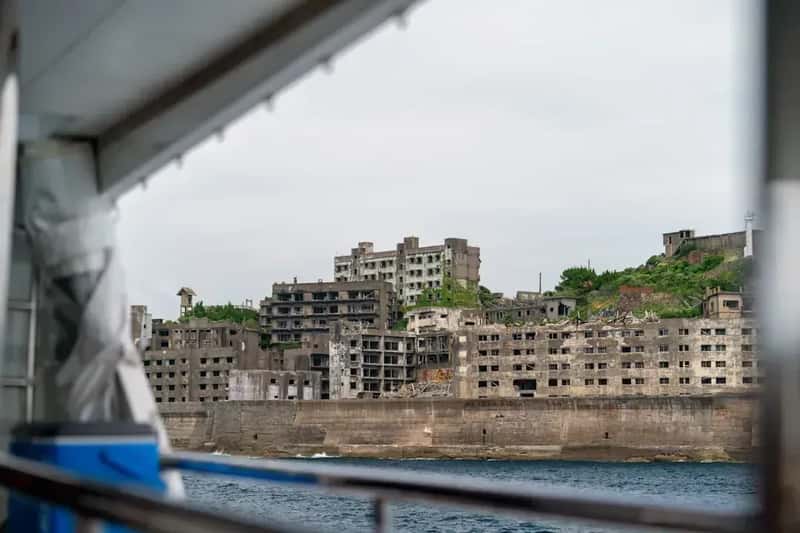
Hashima Island, commonly called Gunkanjima meaning “Battleship Island,” is an abandoned island off Nagasaki, lying about 15 kilometres from the centre of the city. The nickname comes from its resemblance to a warship when viewed from the ocean. This tiny island became one of the most densely populated places on Earth during its coal mining heyday.
The island reached a peak population of 5,259 in 1959. In 1974, with the coal reserves nearing depletion, the mine was closed and all of the residents departed soon after. Opening to tourists in 2009, Gunkanjima spawned an interest in abandoned ruins tourism and was later named a UNESCO world heritage site in 2015.
External shots of the island were used in the 2012 James Bond film Skyfall, though the actual filming took place elsewhere. Tours now allow visitors to walk on designated paths through this vertical ghost town, though many buildings remain off limits due to structural instability.
4. Craco, Italy – Medieval Ghost Town in the Badlands
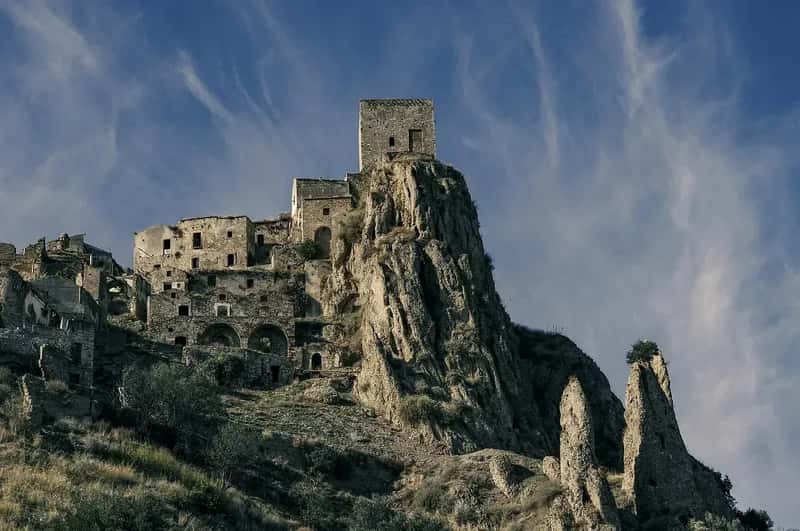
Perched dramatically on a cliff in southern Italy’s Basilicata region, Craco looks like it was designed specifically for cinema. After the 1980 Irpinia earthquake, the ancient site of Craco was completely abandoned. The town had already been evacuated starting in 1963 due to landslides.
Craco was chosen as the location for Mel Gibson’s The Passion of the Christ, with the ghost town serving as the backdrop for Judas’ scene of despair as he wanders through the desert plagued by feelings of guilt. Craco also makes an appearance in the James Bond film Quantum of Solace with Daniel Craig. The town has become one of Italy’s most sought after filming locations.
In 2010, Craco was included in the watch list of the World Monuments Fund. Today, visitors can explore the ruins on guided tours wearing hard hats, walking through streets where shutters still hang from windows and frescoes fade on palace walls.
5. Bodie, California – America’s Wild West Frozen
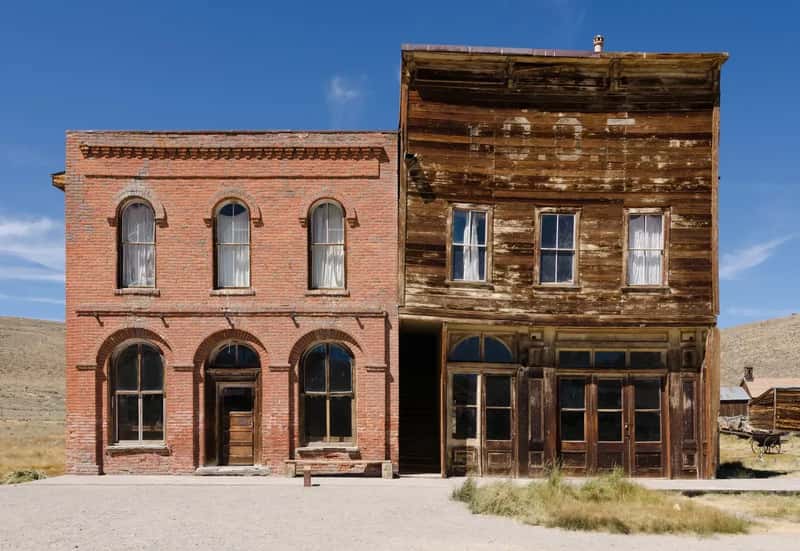
Bodie represents the quintessential American ghost town. This former gold mining settlement in California’s Sierra Nevada mountains became a boomtown in the late 1800s. At its peak, Bodie had a population of nearly ten thousand people, with dozens of saloons lining its dusty streets.
The town declined rapidly when the mines dried up. What makes Bodie unique is its state of “arrested decay,” meaning buildings are maintained exactly as they were left. Dishes sit on tables, goods remain on store shelves, and curtains hang in windows. It’s like everyone simply walked away mid afternoon.
The weathered wooden structures and mountain backdrop create an authentic Western atmosphere that feels lifted straight from a Hollywood set. The California State Parks system now protects the site, allowing visitors to peer into windows and imagine life during the Gold Rush era.
6. Oradour-sur-Glane, France – A Village Preserved in Tragedy
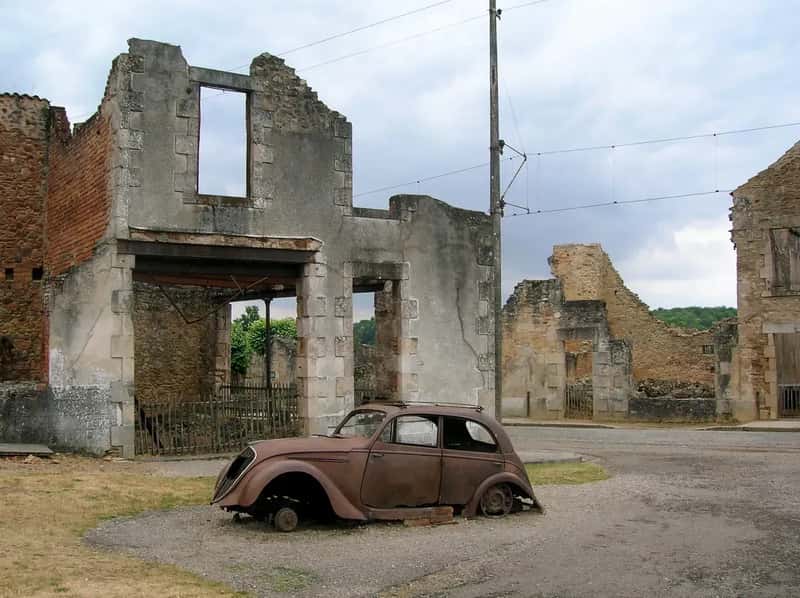
Unlike other abandoned cities left to decay naturally, Oradour-sur-Glane stands as a deliberate memorial. On June 10, 1944, Nazi forces massacred 642 residents and destroyed the village. After the war, French President Charles de Gaulle ordered the ruins preserved exactly as they were found.
Walking through Oradour-sur-Glane is a sobering experience. Rusted cars sit on streets, the burned out church still stands, and household items remain scattered where they fell. The French government maintains the site as a permanent reminder of wartime atrocities.
The village’s eerie preservation creates an atmosphere unlike any other abandoned place. Visitors move through in silence, confronted with the physical evidence of a community erased in a single afternoon. It’s powerful, haunting, and deeply moving.
7. Kayaköy, Turkey – The Greek Ghost Village
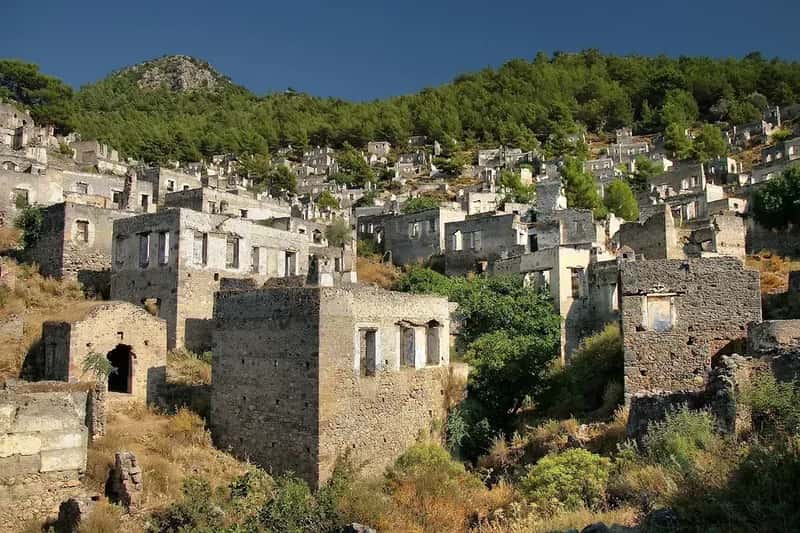
Nestled in the hills near Fethiye, Kayaköy was once a thriving Greek village called Levissi. Following the Greco-Turkish War and the 1923 population exchange between Greece and Turkey, the Greek Orthodox residents were forced to relocate to Greece. The village was left completely empty.
Today, roughly 500 stone houses climb the hillside, their roofs long collapsed and walls crumbling. Churches with faded frescoes still stand among the ruins. The honey-colored stone buildings create a hauntingly beautiful scene against the Turkish landscape.
The village has attracted photographers and filmmakers for decades. Its atmospheric ruins offer a glimpse into early 20th century Anatolian life. Walking the old stone paths between abandoned homes, you can almost hear echoes of the community that once called this place home.
8. Varosha, Cyprus – The Forbidden Beach Resort
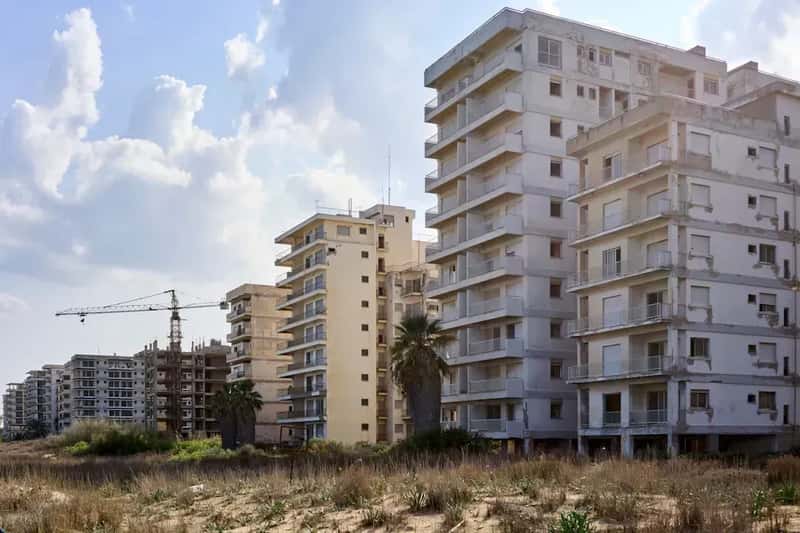
Varosha was once Cyprus’s premier tourist destination, boasting luxury hotels and pristine beaches along Famagusta’s coast. In 1974, when Turkish forces invaded Cyprus, the Greek Cypriot residents fled. The area was fenced off and remained a military zone for decades.
High-rise hotels stand empty along the beachfront, their windows shattered and balconies crumbling. Palm trees grow wild through cracked pavement. What was once a glamorous Mediterranean resort now resembles a post-apocalyptic film set. For nearly fifty years, Varosha was completely off limits.
In recent years, parts of the ghost town have slowly begun reopening, though most remains frozen in time since 1974. The contrast between its former glory and current decay creates a uniquely eerie atmosphere. It’s a bizarre time capsule of 1970s beach tourism.
10. Pyramiden, Norway – Soviet Arctic Settlement
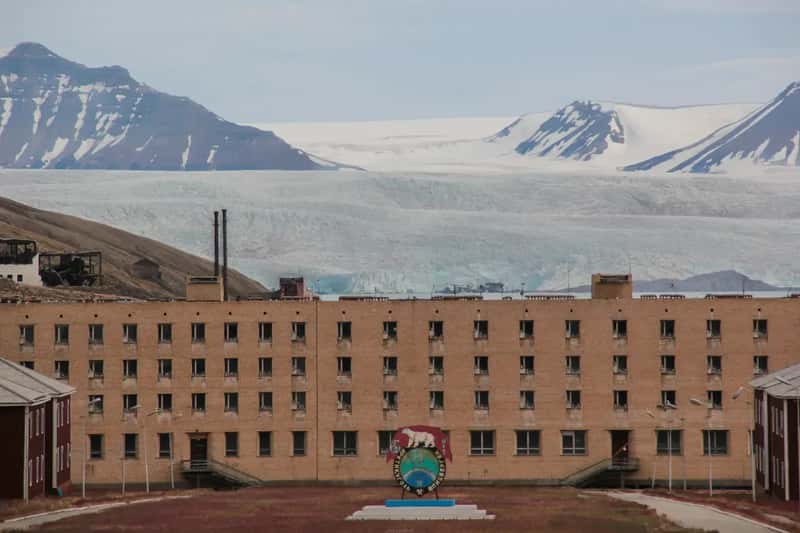
Pyramiden is one of the world’s northernmost ghost towns, located in the Svalbard archipelago. This Soviet mining settlement was established in the 1920s and operated until 1998. When the coal mining company decided operations were no longer profitable, they simply abandoned the entire town.
The Arctic cold has preserved Pyramiden remarkably well. Soviet-era buildings, propaganda posters, and even furniture remain largely intact. A cultural center, swimming pool, and library stand frozen in time. It’s like a museum of Soviet life, except nobody curated it.
The town’s remote location and dramatic Arctic setting give it an otherworldly quality. Polar bears outnumber the handful of seasonal workers who now maintain the site for tourists. Visiting Pyramiden feels like stepping into a Cold War time capsule preserved in permafrost.
11. Kolmanskuppe, Namibia – Diamond Town Devoured by Dunes
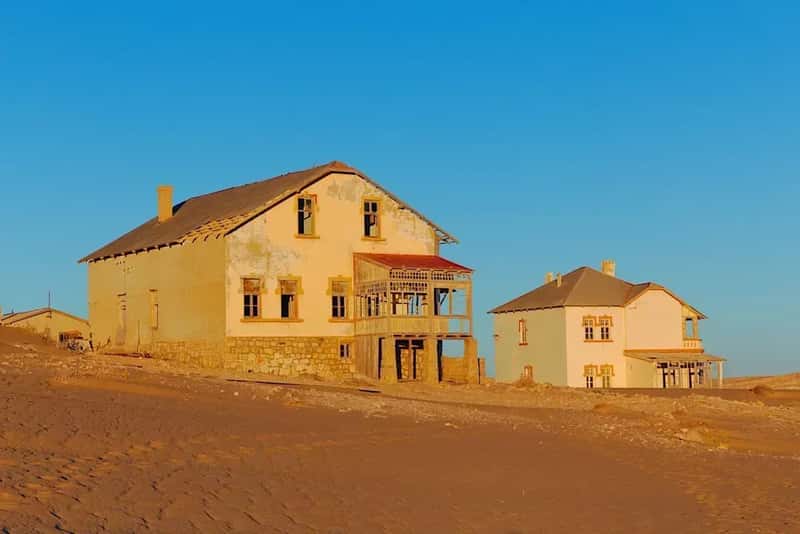
Similar to its neighbor Kolmanskop, Kolmanskuppe tells the story of diamond wealth that vanished almost overnight. When richer diamond deposits were discovered further south in 1928, residents abandoned their German-style homes and moved on. The desert wasted no time reclaiming the town.
Buildings that once housed a casino, bowling alley, and ballroom now sit filled with sand that pours through doorways like liquid. The contrast between the European architecture and African desert landscape creates surreal visual compositions. Photographers come from around the world to capture the interplay of light, sand, and decay.
The town represents the fleeting nature of fortune and the power of natural forces. Walking through rooms where sand has formed perfect dunes against peeling wallpaper is genuinely mesmerizing.
12. Humberstone, Chile – Saltpeter Mining Ghost Town
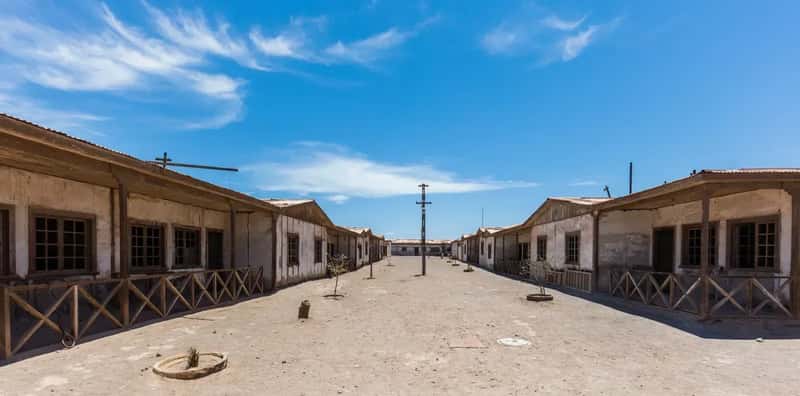
Humberstone and its neighboring town Santa Laura were bustling saltpeter mining communities in Chile’s Atacama Desert. These towns prospered during the late 19th and early 20th centuries when saltpeter was essential for fertilizers and explosives. When synthetic alternatives emerged, the industry collapsed.
The towns were abandoned in 1960, leaving behind an extraordinary collection of industrial buildings, worker housing, and public spaces. A theater, swimming pool, and company store all remain standing in the desert. The dry climate has preserved structures remarkably well.
In 2005, both towns were designated UNESCO World Heritage Sites. The rusted machinery, weathered wooden buildings, and vast desert setting create a hauntingly beautiful landscape. It’s a testament to the boom and bust cycles that shape human settlement patterns.
These twelve abandoned cities remind us that permanence is an illusion. Communities that once thrived can disappear within a generation, leaving behind only empty buildings and fading memories. Yet in their abandonment, these places have found new purpose as destinations for the curious and backdrops for storytellers. They’ve become living museums, cautionary tales, and strangely beautiful works of accidental art. What’s your take on these frozen fragments of history? Would you dare explore one in person?