Ecuador has spent years near the top of global retirement rankings, and the reasons are pretty simple once you look at the numbers. The country uses the US dollar, healthcare is remarkably affordable, and a modest pension can stretch further here than almost anywhere else in the Americas. But “affordable” means different things to different people, so the real question isn’t whether Ecuador is cheap. It’s what a genuinely comfortable retirement actually costs once you add up housing, healthcare, food, visas, and the small stuff that tends to get overlooked.
The figures below come from current cost breakdowns, visa filings, and healthcare pricing data circulating through 2026. Some numbers move year to year as Ecuador adjusts its minimum wage, so treat this as a realistic snapshot rather than a fixed price tag.
The visa income threshold you’ll need to clear first

Before budgeting for lifestyle, you need to know what Ecuador legally requires to grant residency. The retirement visa, known as the Jubilado or Pensioner visa, is pegged to three times Ecuador’s basic unified wage. The Ministry of Labor set the 2026 SBU at $482/month through Ministerial Agreement MDT-2025-195, effective January 1, 2026. That works out to a specific figure most applicants need to clear.
Any foreign citizen who receives a monthly pension or retirement income of at least $1,446 (3x Ecuador’s minimum wage / SBU) can qualify for the visa. Couples get some flexibility here, since couples can combine income to reach the threshold. If only one spouse has a qualifying pension, the second spouse attaches as a dependent for an additional $250/month above the base ($1,696/month total). Government fees on top of that are modest: $50 visa application + $270 visa grant = $320 total.
Housing costs vary more than you’d expect

Housing is usually the single biggest line item in any retirement budget, and Ecuador’s regional price differences are significant. In Cuenca, the country’s most popular retirement city, you can rent a modern, two-bedroom apartment with a terrace and mountain views for around $750 per month in one of the nicest parts of the city, and that often includes internet, building maintenance fees, and all utilities. Quito runs comparably, where it’s possible to find a three-bedroom furnished apartment in the heart of the city, close to restaurants and cafés, for around $800 per month.
Smaller towns push the numbers even lower. In Cotacachi and Otavalo, two Andean towns north of Quito with growing expat communities, you can rent in these towns for US$400 to US$500 per month, or you could invest in an apartment of your own for as little as US$45,000. Buying property in Cuenca itself typically starts around $150,000, according to regional listings, while rents overall in Ecuador are estimated to be 70 to 80% cheaper than in most major American cities.
Healthcare is where Ecuador really stands out

Healthcare costs are frequently cited as the single biggest financial relief for retirees moving to Ecuador. Legal residents can join the public system, IESS, and the monthly premium is calculated as 17.6 percent of your declared income, with a minimum basis of the 2026 Salario Básico Unificado of $482 – which works out to $84.83 per month at the minimum level. That single payment buys a lot, since IESS coverage comes with no pre-existing condition exclusions and no waiting periods.
Private care is just as reasonable if you’d rather skip the public system or want faster appointments. A specialist visit in Cuenca costs $40 to $80, a dental cleaning runs $30 to $50, and an MRI that would cost $1,500 or more in the US is $200 to $400 here. Many expats combine both systems, keeping total monthly healthcare spending in the $185-335 range for comprehensive coverage that would cost far more back home.
Groceries, dining out, and everyday food costs

Food is another area where the math works heavily in a retiree’s favor, particularly if you shop where locals shop. Food in Ecuador is both affordable and fresh, with local markets offering a wide variety of fruits, vegetables, seafood, and meats at reasonable prices. Eating out doesn’t break the budget either, since eating out is also inexpensive compared to the United States, with a meal at a local restaurant costing between $4 and $7, while dining at international restaurants may range from $12 to $25 per person.
The gap between local markets and imported goods can be wide, though. Retirees who lean on Ecuadorian produce, grains, and seafood tend to spend far less than those chasing familiar American brands at supermarket chains. It’s less about deprivation and more about adjusting habits, and most long-term expats say the local diet ends up tasting better anyway once they settle in.
Utilities and the small monthly bills that add up
Utility costs in Ecuador stay modest thanks to a mild climate that reduces the need for heating or heavy air conditioning in most regions. Utilities are generally affordable in Ecuador, and one detailed budget breakdown for a single retiree in a luxury two-bedroom apartment allocated just $155 per month for utilities, phone, internet, and TV combined.
Other recurring costs stay similarly low. That same budget table included $80 per month for weekly maid service, which is a line item many retirees in North America wouldn’t even consider affordable, let alone routine. Internet speeds in major cities have improved considerably over the past few years, making remote banking, video calls with family, and streaming services fairly seamless.
Transportation costs, with or without a car

Getting around Ecuador is cheap, and many retirees find they don’t need a car at all in cities like Cuenca or Quito, where taxis, buses, and walkable neighborhoods cover most daily needs. For those who do drive, one sample monthly budget set aside $140 for car maintenance and fuel, a modest figure by American standards.
Public transit fares remain low across the country, and retirees who qualify for senior discounts benefit further. Expats in Ecuador also enjoy the same rights as Ecuadorian citizens, meaning as foreign resident retirees, you’ll get the chance to benefit from halved prices on all public and private transport, including international flights. That last detail surprises a lot of newcomers, since discounted international airfare isn’t something most retirement destinations offer.
How Ecuador taxes retirement income
Tax treatment is often the deciding factor for retirees comparing countries, and Ecuador’s rules favor foreign pension income specifically. Ecuador does not tax foreign-source income that has already been taxed abroad, and US Social Security and pension income are not taxed in Ecuador. There’s an important caveat, though: there is no US-Ecuador tax treaty, so the exemption relies on Ecuador’s domestic rules rather than a formal bilateral agreement.
Income earned inside Ecuador is a different story. Ecuador taxes only Ecuador-sourced income at progressive rates up to 37%. Retirees whose income comes entirely from foreign pensions or Social Security generally avoid this bracket altogether, but anyone earning rental income or freelance pay from Ecuadorian sources should plan for it. American retirees should also remember that moving abroad doesn’t end their obligations back home, since moving abroad doesn’t eliminate your US tax obligations, and American citizens and permanent residents owe taxes on worldwide income regardless of where they live.
Comparing the best retirement cities
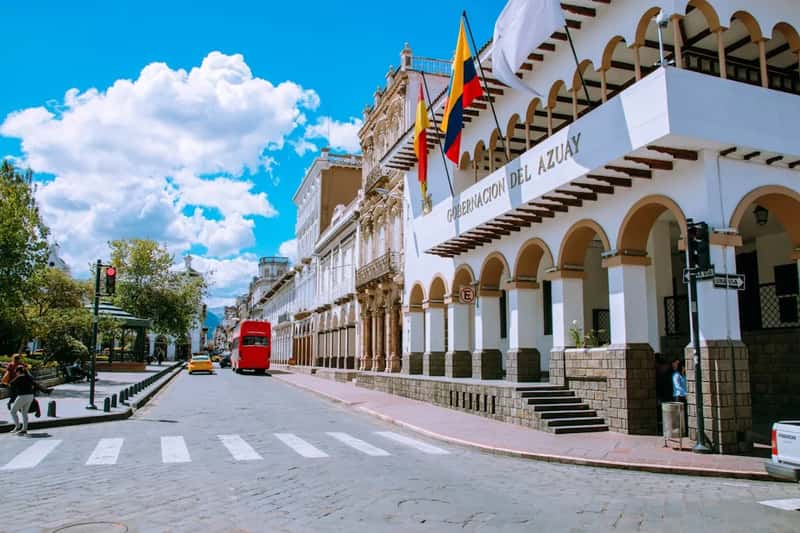
Where you settle changes the math considerably. Cuenca remains the top choice for most retirees, home to between 6,000 and 7,000 expats and known for its UNESCO-protected colonial architecture. Cuenca also has one of the largest English-speaking expat communities in Latin America, with thousands of American and Canadian retirees calling it home, which means English-speaking doctors, real estate agents, and social groups are readily available.
Coastal towns and smaller Andean communities offer a different pace of life at a lower cost. Manta, on the coast, allows a couple to live comfortably on $1,700 to $2,300 per month, while Quito appeals to retirees who want a bigger city with a mix of historic charm and modern infrastructure, including international hospitals, shopping centers, and direct international flights. Vilcabamba and Cotacachi, further off the beaten path, trade some conveniences for dramatically lower rents and a quieter lifestyle.
What a realistic monthly budget actually looks like

Numbers from multiple recent cost breakdowns tend to converge on a similar range. A retiring couple can live comfortably for about $1,800 per month, while a single person can retire well for around $1,400 per month. Other sources put the ceiling a bit higher for a more upscale lifestyle, noting that most American retirees live comfortably in Ecuador on $2,000 to $2,500 a month, which covers a nice apartment in Cuenca, regular dining out, healthcare through IESS, and enough left over to actually enjoy life.
Broader national averages back this up. Ecuador has an average cost of about $844 per month for a single person and just over $2,100 for a family, whereas the same profiles exceed $2,500 and $5,700 in the United States. For couples specifically, one detailed estimate puts comfortable living at less than $23,000 per year, or a little under $1,900 a month, which lines up closely with the figures above.
Final thoughts on the real cost of retiring in Ecuador

Add it all together and the picture is fairly consistent across sources: a single retiree can live comfortably on roughly $1,200 to $1,500 a month, a couple on somewhere between $1,800 and $2,500, depending on city and lifestyle choices. Housing and healthcare, the two expenses that tend to dominate retirement budgets elsewhere, are precisely where Ecuador offers the biggest savings.
None of this means retiring in Ecuador is effortless. Visa paperwork takes patience, tax rules require attention, and adjusting to a new culture and language takes time regardless of how favorable the exchange rate feels. Still, for retirees willing to do the homework, the numbers make a compelling case for why Ecuador keeps showing up on the short list of places where a modest pension can fund a genuinely comfortable life.