
Our group of two guides, myself, and two other clients had just spent the day doing the approach trek toward the summit of Volcán San José.
After plenty of ups and downs, winding through the valley, and climbing up rocky slopes, we finally arrived at our campsite for the night. A stretch of flat ground was the perfect size for just a handful of tents. Putting down our day packs, we sat for a quick break before getting to work setting up our camp.
Setting Up Camp at 3,500 Meters
I was already acclimated fairly well during this mountain expedition since I’d been in high-altitude mountains in the weeks prior. Even so, I could feel the altitude. Anytime I go above 3,000 meters (9,842 feet), I feel my face get a little puffy from the altitude—a mild altitude symptom called peripheral edema that I’m accustomed to. To help my body acclimate, I started drinking generous amounts of water as soon as we arrived at the camp.
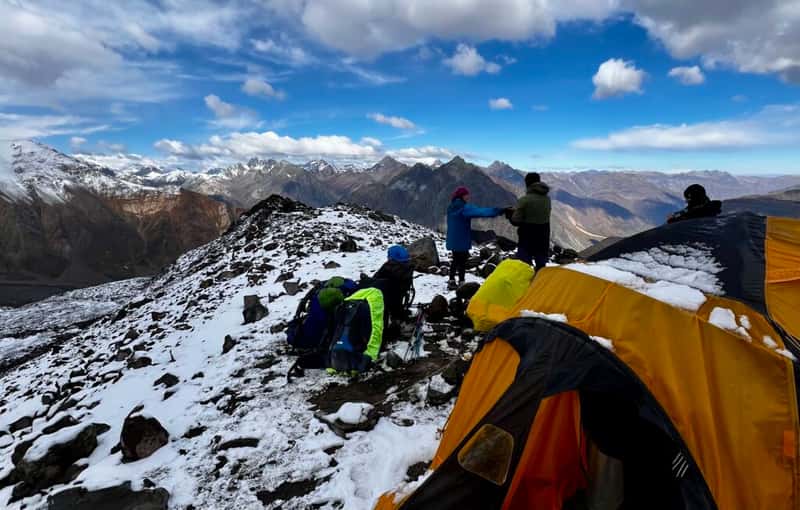
After resting for a few minutes, we started unpacking our expedition bags, including the tents, which our mules had dropped off earlier. This campsite already had designated spots to pitch tents; short, makeshift rock walls in semi-circle shaped offered some protection from the wind. Under a cloudless sky, we laid out the tent components and set up our two tents.

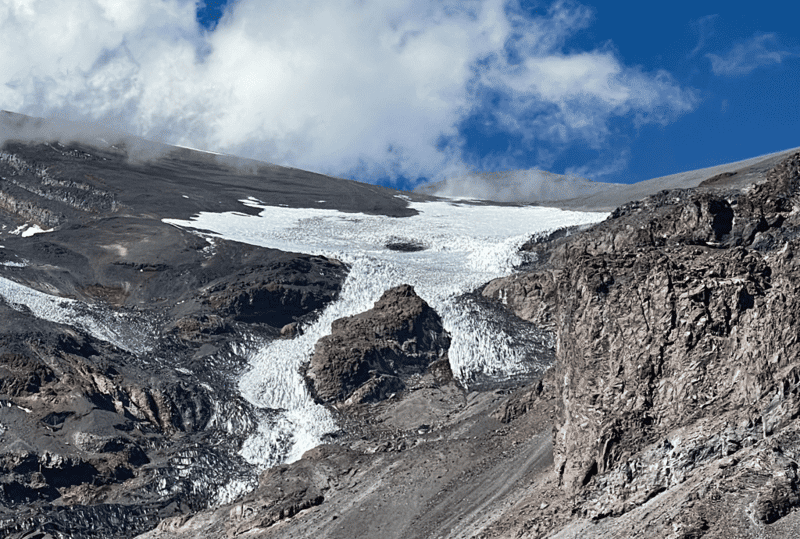
Meanwhile, one guide started to boil water for our dehydrated meals that would serve as an early dinner. After we finished setting up the tents, we poured the boiling water into our meal pouches and waited the ten or so minutes until they were ready. Our guide explained some of the scenery around us; amazingly, we already had a clear view of a famous glacier on the side of Volcán San José, called Glaciar La Engorda.
A Surprise Storm & Visitors
It was still only around 5:30 pm, and with plenty of free time, we simply enjoyed the mountain views. There’s something magical about being in the Andes. It’s the reason why I went on this expedition, and why I continue hiking in the Andes whenever I can. But then, as we lounged around outside our tents, we felt the temperature drop sharply as dark clouds rolled in. Right after retreating into one tent together, the sky began dumping snow on us.
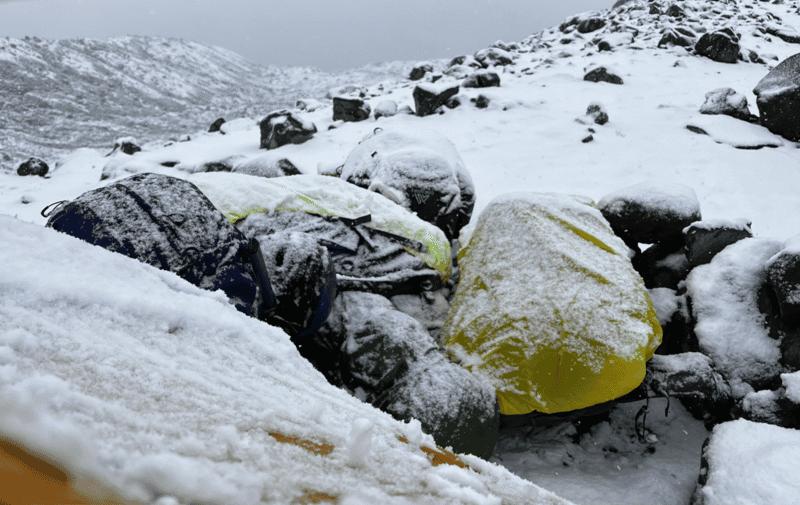
The afternoon changed in the blink of an eye. One moment, we were enjoying the relatively warm, sunny weather… And the next, we were huddling together, sheltering from the surprise snowstorm. The wind and snow hitting our tent were a sharp contrast to the peace and silence just moments before. We were just hoping that it would pass quickly and we wouldn’t be stuck inside the rest of the evening and night, but with limited information about the weather, we had no idea.
Suddenly, we heard voices outside. Two other climbers appeared, having just hiked up from the valley. They’d been caught utterly unprepared out in the storm, only wearing fleece jackets and sun caps. We welcomed them into our small tent, and they did their best to brush off the layer of snow from their clothes, caps, and boots before entering. They were freezing; one was shivering so violently that we handed her two down jackets and one more to cover her legs. They explained that they’d been on their way up when the storm hit. Rather than descending, they chose to push on to this campsite, thinking they’d be able to set up camp before the storm got too bad.
Calm After the Storm
I could hardly imagine setting up a tent, even with a climbing partner to help, in this type of storm. The wind was so strong that it’d be difficult to pitch—not impossible, but almost. And, combined with the fact that the two hikers were already freezing, wearing only thin gloves, it would’ve been painful, to say the least. In that moment, I was grateful that our group had the means to help these two.
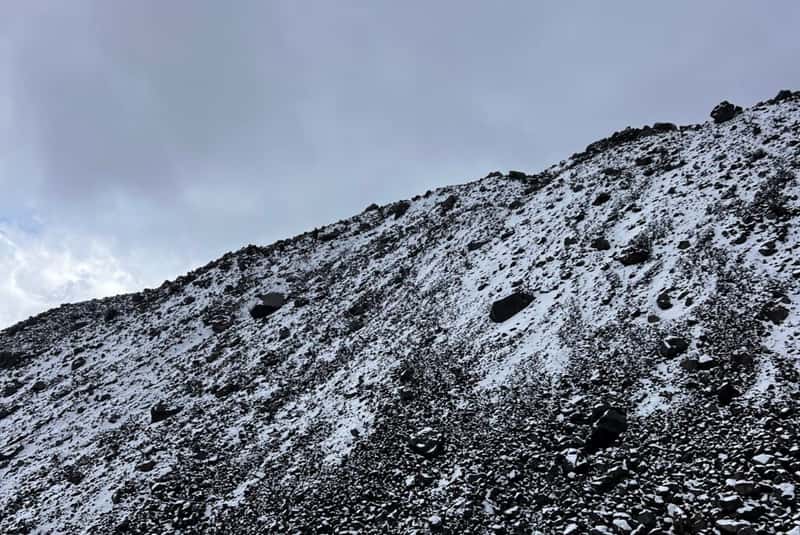
We spent the next hour or so hiding from the storm inside the tent, shoulder to shoulder in the small space. Then, at last, it quieted down outside, and we saw that the sun was shining once again. Tentatively, we crawled out of the tent to examine the outside world that had completely transformed. Snow blanketed our surroundings, and the air tasted even fresher than before. It felt tranquil and clean, and I loved how the white snow enhanced the beauty of these mountains.
The glacier in front of us no longer stood out clearly; instead, it blended in with the snow around it. As we walked around our campsite, I realized it might be easier to traverse the extremely rocky terrain now that the snow had evened it out. We had crampons as well, just in case the snow became too icy to walk on. Meanwhile, our two new friends set up their tent a short distance away in the same campsite. They were also keen on reaching the summit of this volcano and would follow the same itinerary as us over the next two days. We’d built a strong sense of camaraderie while huddling together in our tent, and I was grateful to have additional companions.
The Hardest Part of the Climb Awaits
We’d just braved an unexpected mountain storm. It was a long day, including the early morning drive from Santiago. That night, we rested well to prepare ourselves for the hike to the high camp the following day. In the Andes, we just never quite know what to expect. And if there’s one thing this mountain expedition taught me, it’s to always prepare for the worst. Even so, I tried to stay optimistic about our upcoming summit attempt, and I knew that no matter what, we’d try our best. (Continued in Part 3.)