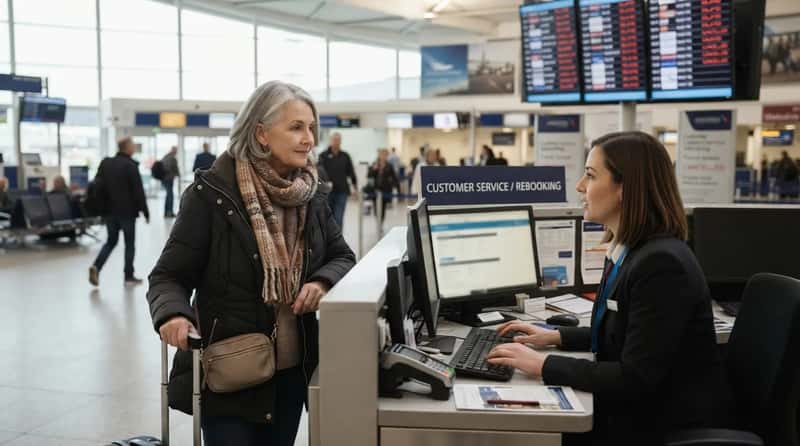
Most people assume the loudest passenger at the gate gets rebooked first. That’s the myth almost every waiting area seems to believe during a cancellation wave. In reality, gate agents have quiet discretion most flyers never see, and the passengers who benefit most aren’t the ones threatening to call corporate. They’re calm, prepared travelers, often over 60, who know exactly how and when to ask.
What actually happens behind that counter is stranger than most travelers realize. It involves hidden notes tied to your flying history, a narrow window of information most passengers never get access to, and a federal rule most people don’t even know exists yet. Here’s what agents, insiders, and the fine print actually say.
The Clean Record You Didn’t Know You Had

Every time you fly, more gets logged than your seat number. Airlines keep records, and agents can pull up comments tied to your profile right at the desk. Travelers who’ve flown the same carrier for years, staying calm and polite through every hiccup, often carry a clean – sometimes even positively flagged – history that quietly works in their favor before a single word is spoken.
The flip side is just as real, and it’s the part nobody wants to admit out loud. Documented disruptive behavior can make you more likely to get bumped from an oversold flight or pushed to the back of the line during irregular operations, because agents have real flexibility in how they prioritize passengers and escalate cases. That meltdown at the counter three years ago may still be quietly costing you today. But that’s nothing compared to the window that opens before the departure board even updates.
Fast Facts
- Airlines maintain passenger profiles noting past interactions, not just frequent-flyer miles.
- A calm, polite history can quietly flag you as low-risk during irregular operations.
- Documented disruptive behavior can affect boarding priority on oversold flights.
- None of this appears on your ticket – it’s internal, and agents can see it instantly.
The Narrow Window Before Everyone Else Finds Out
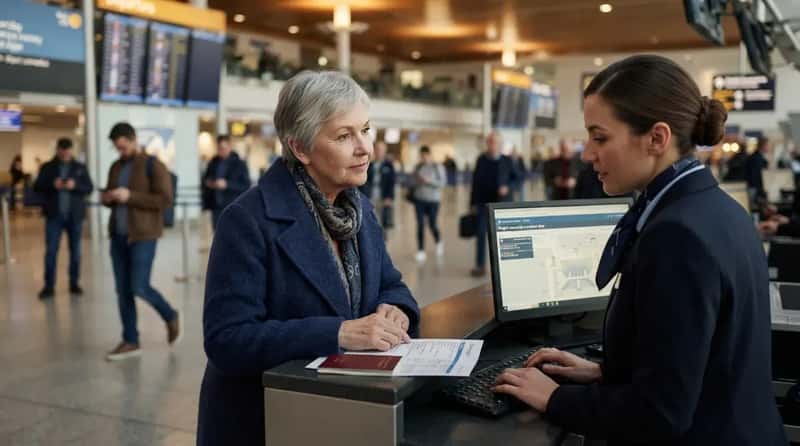
Here’s the part almost nobody knows: agents often see trouble coming before passengers do. Rebooking tools show incoming delay and cancellation data before it ever hits the departure board or the airline app. The gap between when an agent knows and when everyone else finds out is narrow, but it’s real, and it opens and closes fast.
That gap is exactly when quiet rebooking happens, and it rewards patience over panic. Experienced travelers who approach the desk early, with travel details ready and zero drama, often get rerouted onto better connections before the gate officially announces a problem. Everyone else joins the frantic line the second the board flips red. The record-keeping goes even deeper than a single interaction, though, and it explains why loyalty matters more than most flyers assume.
Why Decades of Flying the Same Airline Actually Pays Off
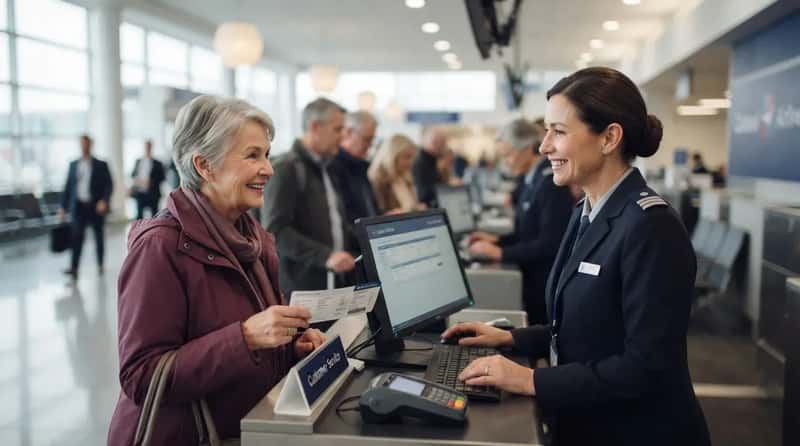
Frequent flyer miles aren’t the only thing quietly accumulating in the background. Travelers who’ve stayed loyal to one carrier for decades have effectively built equity with that airline without ever realizing it. That equity shows up exactly when it matters most, during irregular operations, when a supervisor is deciding in real time who gets bumped and who gets protected.
This is a controversial point, but it’s worth saying plainly. Many industry insiders now argue that elite status badges matter less at the gate than your tone during the last ten interactions ever did. A calm, low-friction history is arguably a stronger asset during a meltdown than a shiny status card with a complaint file attached to it. It’s an uncomfortable truth for travelers who assume status alone guarantees priority.
The Federal Law Most Travelers Have Never Heard Of
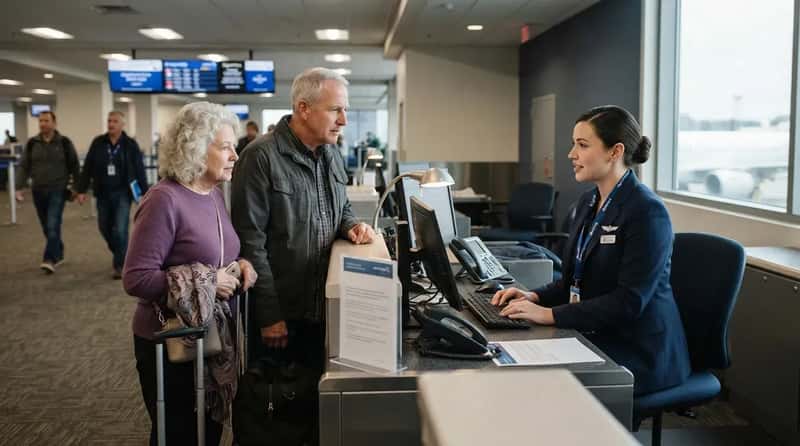
There’s a real legal backbone behind some of the extra flexibility older travelers get, and it has nothing to do with manners. The Air Carrier Access Act guarantees priority boarding and escort assistance for passengers with mobility needs, and many airlines quietly go further than the law actually requires. That extra room is exactly where an agent’s discretion lives.
That discretion extends further than most people expect. An experienced, empathetic agent will often let one travel companion board early without demanding a separate justification, especially on flights that aren’t full. The perk is rarely announced, but it’s almost always available when you ask clearly, early, and before the boarding crowd starts forming. Most travelers never ask, which is strange given there’s a second, lesser-known federal system working in the background too.
Worth Knowing
- The Air Carrier Access Act guarantees priority boarding for passengers with mobility needs.
- Many airlines extend courtesies beyond what the law technically requires.
- A travel companion can often board early without extra paperwork on flights that aren’t full.
- These perks are rarely advertised – travelers usually have to ask for them directly.
TSA’s Quiet Rule for Travelers 75 and Older
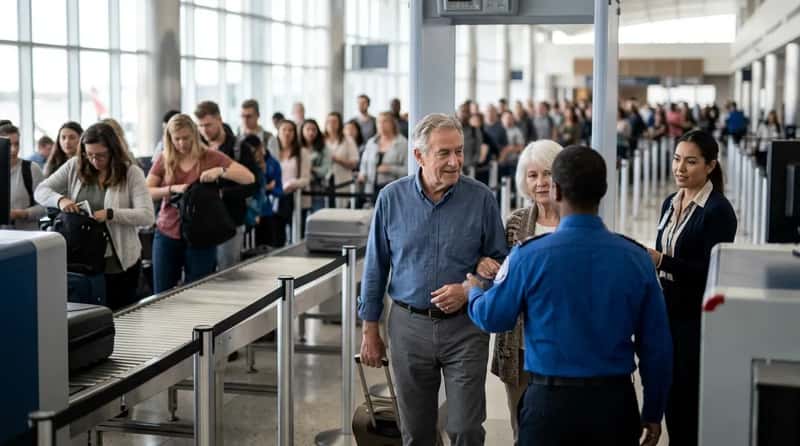
Most people think TSA treats every passenger identically. It doesn’t. Passengers 75 and older can receive some form of expedited screening through risk-based, intelligence-driven security, which lets TSA focus more resources on travelers who are statistically more likely to pose a risk, and quietly changes the entire security experience for older flyers.
The benefits go beyond a faster line. TSA offers dedicated resources for passengers 75 and older, and any traveler can request a Passenger Support Specialist trained to assist through screening, though the request should ideally be made at least 72 hours before departure. The reactions this program produces are apparently more emotional than most travelers expect.
We’ve had so many passengers literally go into tears because they are so happy with our team.
TSA program supervisor
It’s free, it’s underused, and almost nobody connects it to what happens later at the gate.
Why Yelling at the Counter Almost Always Backfires
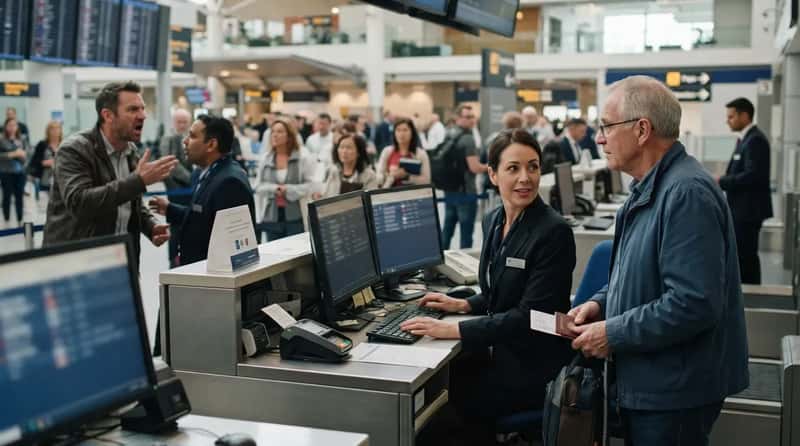
This is the part that frustrates a lot of travelers, but the pattern holds up. Agents must follow airline policy, yet they still have surprising flexibility in how they prioritize passengers, issue vouchers, and escalate cases to a supervisor. Passengers who stay calm, prepared, and respectful routinely get more help, while those who shout or threaten often get the bare minimum.
Frontline accounts back this up almost word for word. One flyer recalled watching a passenger threaten a gate agent, then getting quietly upgraded himself for doing nothing more than being polite in the same line: “I got an upgrade once, for no reason except being nice to a rebooking agent in exactly that situation. Didn’t even have to say anything. It was obvious.” It’s an uncomfortable truth for anyone who’s ever assumed volume equals leverage. But even calm passengers are leaving compensation on the table if they skip one simple step most people forget entirely.
The Federal Refund Rule That Quietly Changed Everything in 2024
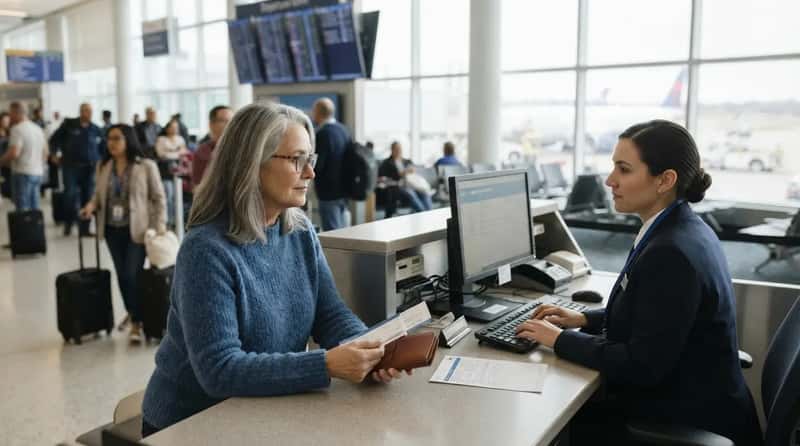
Here’s something most travelers still don’t fully understand two years later. The Department of Transportation issued a final rule requiring airlines to provide automatic cash refunds when they’re owed, making clear that passengers are entitled to cash when their flight is canceled or significantly changed and they no longer want to be rebooked.
The timeline matters, because enforcement rolled out in stages. Key automatic refund requirements took effect on May 16, 2024, when the FAA Reauthorization Act of 2024 was signed into law, and the remaining refund protections became fully effective on October 28, 2024. Most passengers still accept a voucher out of habit, never realizing cash was owed to them by law the entire time. That habit is exactly what gate agents are counting on when vouchers run short.
At a Glance
- May 16, 2024: Key automatic refund requirements took effect under the FAA Reauthorization Act.
- October 28, 2024: The remaining refund protections became fully effective.
- Cash refunds are owed automatically when a flight is canceled or significantly changed and a passenger declines rebooking.
- Many travelers still default to a voucher, unaware cash was the legal entitlement all along.
The Voucher Math Nobody Explains at the Counter
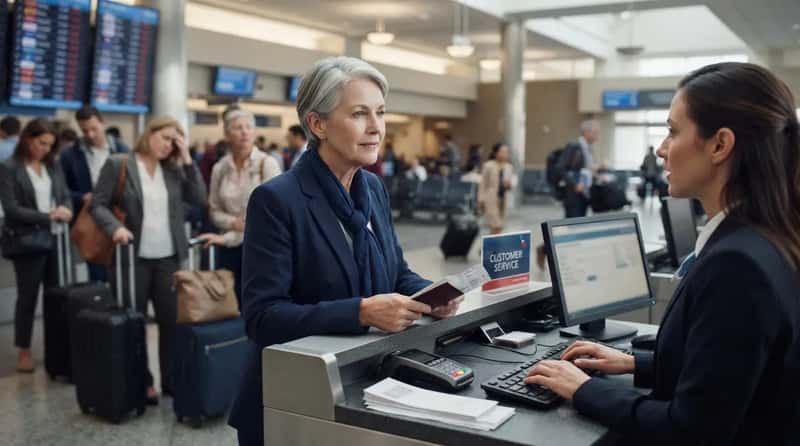
There’s a supply problem hiding behind every delay announcement, and agents rarely mention it out loud. Airlines only allocate a limited number of meal vouchers, hotel rooms, and rebooking seats, distributed on a first-come, first-served basis. Passengers who ask early get help, while those who wait often hear the same four words: “we’ve run out.”
That scarcity is quietly softened by commitments the biggest carriers already made. Under pressure from the DOT, the ten largest U.S. airlines have committed to rebooking stranded passengers at no additional cost and covering meals during airline-caused disruptions, and nine have committed to covering lodging and related transportation too. But those commitments are voluntary, not statutory, and that distinction matters more than most passengers assume.
The Paper Trail That Separates a Voucher From Real Compensation
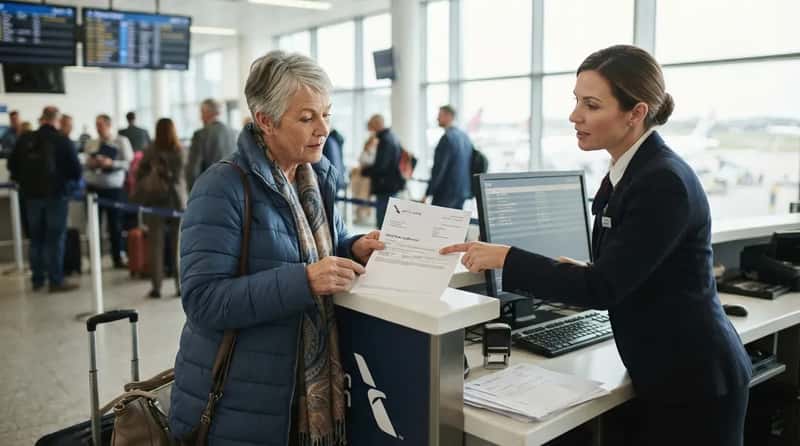
Most stranded travelers do one of two things during a long delay: complain loudly, or scroll their phone in silence. Neither works nearly as well as a third option almost nobody uses. Experienced travelers over 60 walk to the desk and ask for documentation, since agents can print delay confirmations, provide official time-stamps, or write a brief note on airline letterhead that becomes invaluable evidence later.
The habit sounds small, but it changes outcomes dramatically. Most passengers never ask for any of it, which makes claiming anything afterward far harder. The printed confirmation is often what separates a traveler who eventually gets compensated from one who gets a form letter and a token voucher instead.
The Rules Are Shifting Again, and Not in Travelers’ Favor
Here’s the twist most stranded passengers haven’t caught up to yet. Stronger federal compensation rules were on the table as recently as late 2024, but that momentum has stalled. Rules proposed in December 2024 would have mandated compensation, possibly including cash, for airline-controlled cancellations and delays, but those proposed rules were shelved in November 2025.
On top of that, enforcement itself has loosened in recent months. As of December 5, 2025, the Department is pausing enforcement of certain airline refund requirements for renumbered flights until June 30, 2026, while it reconsiders the very definition of a canceled flight. It’s a quiet shift that leaves more of the outcome back in the hands of the agent standing in front of you, which is exactly why staying calm at that counter matters more now than it did two years ago, not less.
Quick Compare
- December 2024: Proposed rules would have mandated cash compensation for airline-controlled delays and cancellations.
- November 2025: Those proposed rules were shelved before ever taking effect.
- December 5, 2025: Enforcement of certain refund requirements for renumbered flights was paused.
- June 30, 2026: Target date for regulators to reconsider what officially counts as a canceled flight.
The pattern holds up across every source close to the industry: calm, prepared, documented, and polite beats loud almost every time. Gate agents have real discretion over rebooking, vouchers, and escalation, and that discretion consistently flows toward the passengers with clean histories and zero drama. Add in protections like the ACAA, TSA’s 75-and-older screening benefits, and the 2024 refund rule, and the picture becomes clear.
The loudest passenger at the gate is almost never the one who ends up on the better flight. Have you ever watched a calm traveler get quietly rebooked while everyone else stood stuck in line? Tell us what happened in the comments.