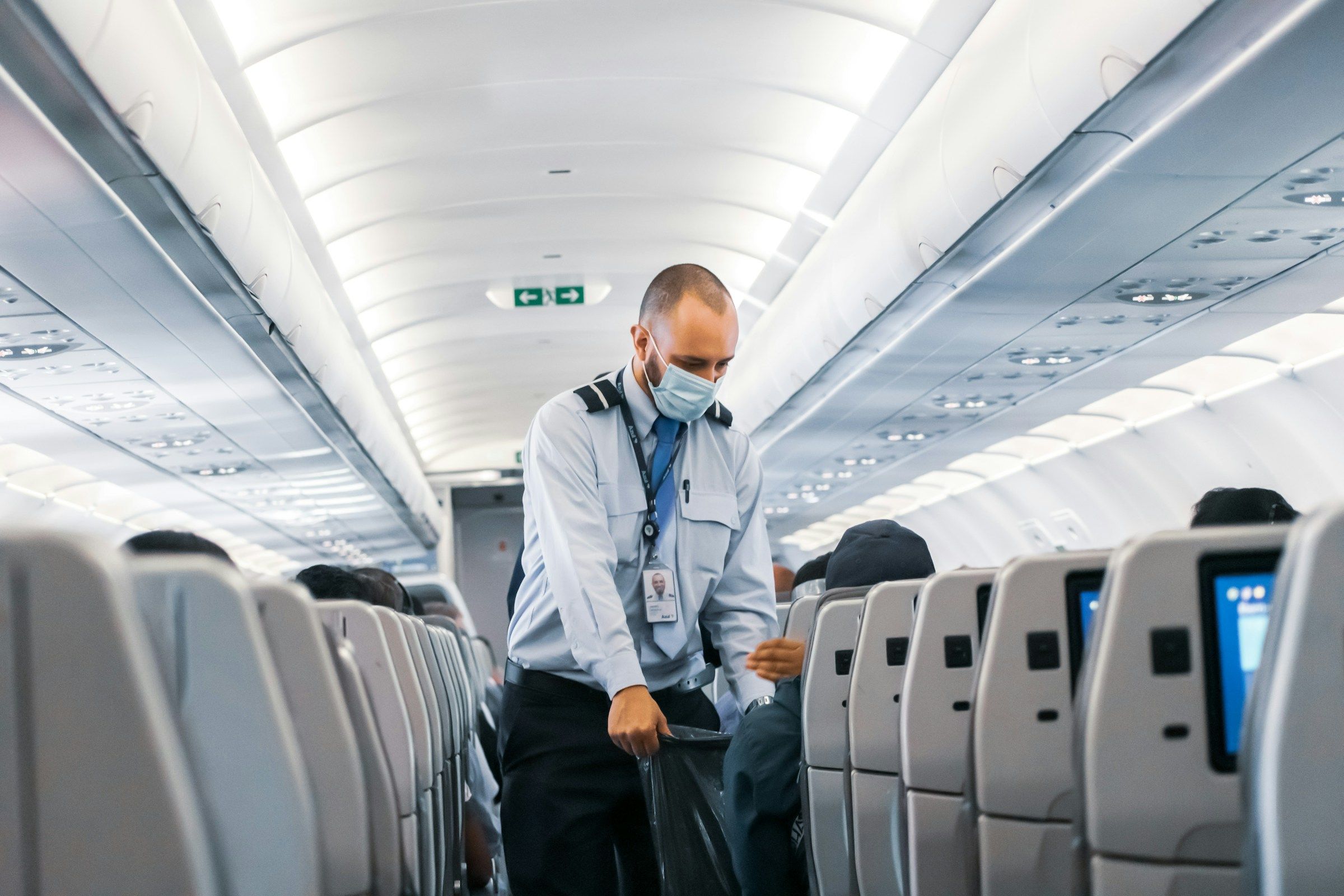
There’s a particular kind of exhaustion that comes from working a fifteen-hour flight, then landing in a city where it’s the middle of the night by your body’s clock but broad daylight outside the window. Passengers feel a milder version of this after one trip. Flight attendants live it on a loop, sometimes flying three or four long-haul sectors in a single week, across different hemispheres and different sleep schedules entirely.
What’s interesting is that most of what keeps them functional isn’t glamorous. It’s a set of small, repeatable habits, backed by airline policy and increasingly by aviation science, that add up to something that looks a lot like professional endurance training. Here’s how it actually works, section by section.
Following the sun instead of fighting it
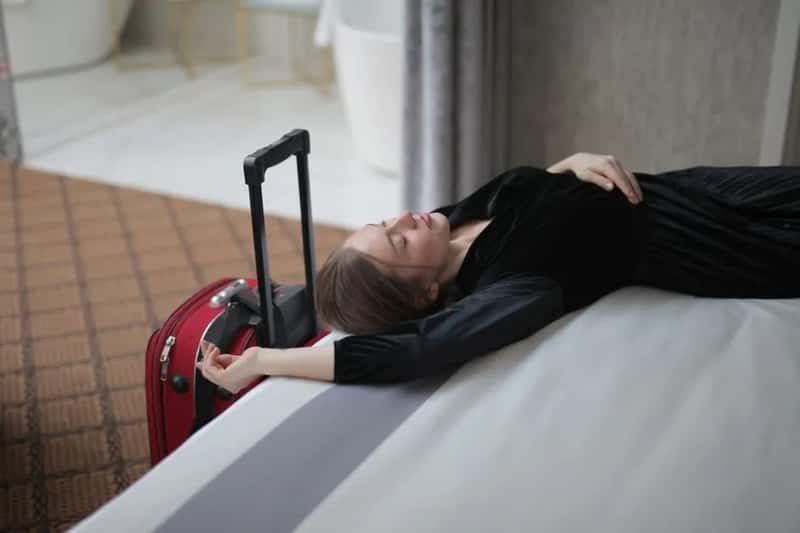
Cabin crew who fly internationally regularly talk about a simple rule: most flight attendants follow the sun, and if you land during daylight without covering too many time zones, it’s better to stay awake naturally and go to sleep at a normal time.[1] That single habit does more to prevent grogginess than almost anything else in their routine.
When staying awake isn’t realistic, they don’t try to force a full night’s sleep in the wrong time zone. A nap of between 45 and 90 minutes usually is enough to get some sleep, without reaching deep sleep,[1] which avoids the disoriented feeling of waking up from a deep sleep cycle at the wrong hour. Sleeping all day and waking up at night can be very confusing for the body and make it more difficult to recover,[1] so crews tend to treat daylight hours as off-limits for long stretches of rest, no matter how tired they feel.
Hydration as the unglamorous first line of defense

Ask any long-haul crew member what matters most, and water usually comes up before anything else. Staying hydrated is probably the most important thing a flight attendant can do, and it’s recommended as a minimum that you drink at least 0.25 liters per every hour in the air.[1] That’s roughly a small bottle every sixty minutes, which adds up fast on a fourteen-hour sector.
Coffee still has its place, but with a caveat. Flight attendants will drink coffee to help stay awake but drink more water to counteract the caffeine,[1] treating every cup as something that needs to be paid back in fluids. Airlines make this easier operationally, since they usually supply their crews with drinking water[1] rather than leaving hydration entirely up to individual initiative.
Structured rest in the bunks on ultra-long-haul jets
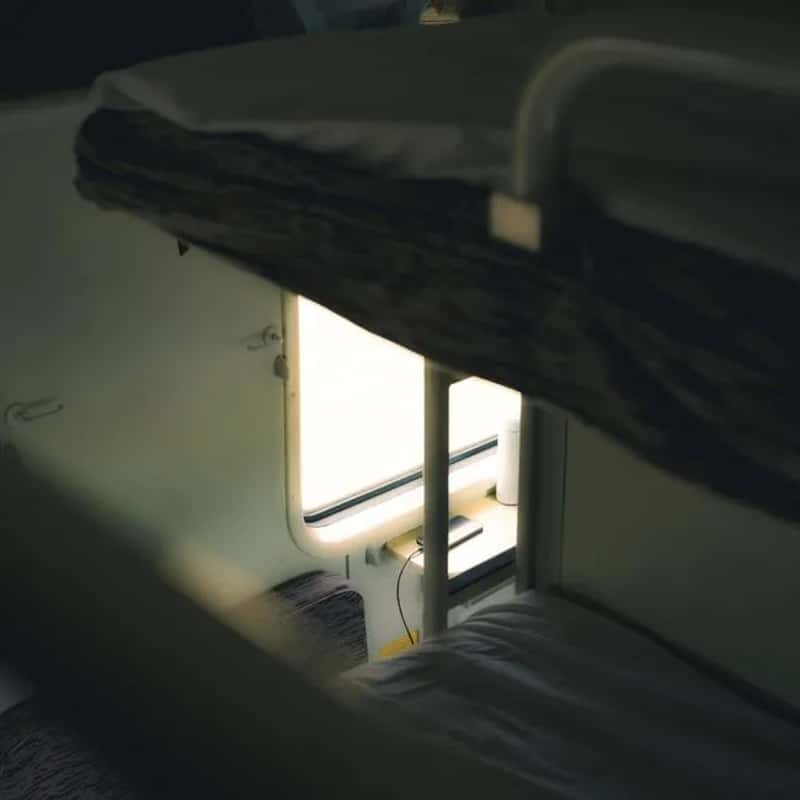
On the newest generation of long-haul aircraft, resting isn’t something crew squeeze in when they get a spare moment. It’s scheduled. Boeing 787s, A350s, and 777s usually include between six and ten bunks for cabin crew and two to three for pilots.[2] On some of the longest scheduled routes in the world, crew rest begins just a few hours after departure, with flight attendants rotating every two to three hours to maximize alertness and mitigate fatigue.[2]
The goal isn’t just to nap, it’s to get real recovery sleep. As long-haul flights extend to nineteen hours or more, regulatory bodies support longer, more structured rest periods that allow at least one complete sleep cycle, typically around ninety minutes.[2] On the very longest sectors, there may be multiple sleep cycles built into the schedule,[2] which is a level of planning that would have seemed excessive on a typical transatlantic flight a decade ago.
The regulatory backbone nobody sees
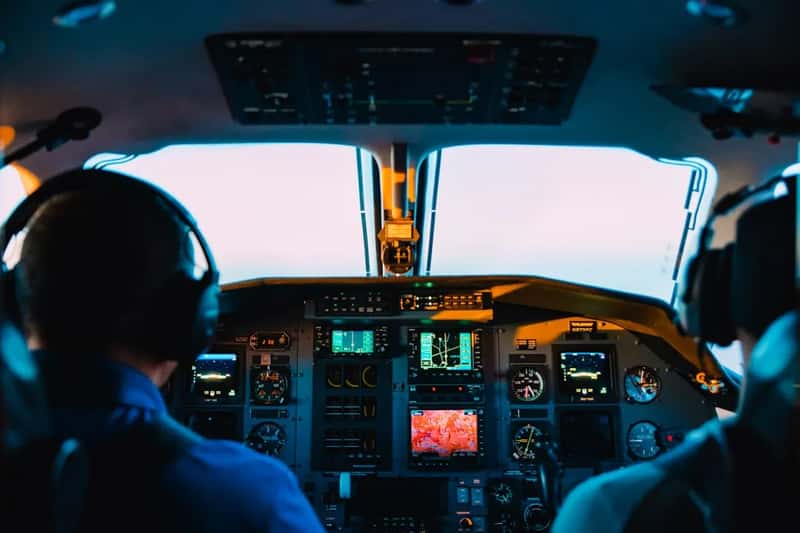
Behind every nap schedule sits a fairly technical piece of aviation infrastructure. Airlines now must have a Fatigue Risk Management System, and there are strict Flight Time Limitations for pilots and cabin crew.[3] These rules aren’t a suggestion; they set legally binding limits on how long someone can work and how much rest they need before their next duty.
Researchers have also been directly studying how well these systems actually work in practice. In a study of cabin crew flying an eighteen-hour-plus route with a two-day layover, fatigue and sleepiness were highest at top-of-descent and after landing, and were higher on the inbound flight than on the outbound flight.[4] The same research found something reassuring about the system’s design: for every hour of additional sleep in-flight, fatigue ratings at top of descent decreased noticeably, showing that the built-in rest breaks are doing real work.[4]
Napping on the ground with a hard stop
Once crew land, the instinct to collapse into bed for hours is strong, but many veteran flight attendants deliberately resist it. One recurring piece of advice: after long-haul flights, take a nap after arrival, but set an alarm and get up after no more than two hours, which reduces sleep pressure and makes it easier to stay awake until the evening.[5] The two-hour cap is the key detail. Sleep past that window and the body tends to slide into a deeper cycle that’s much harder to wake from cleanly.
There’s also a psychological piece to this that gets mentioned surprisingly often. It’s important not to stress if you find yourself awake at night, since stressing only makes it harder to rest.[5] Fighting insomnia with frustration tends to backfire, so the more experienced approach is closer to patience than force.
Eating light when the food on offer isn’t
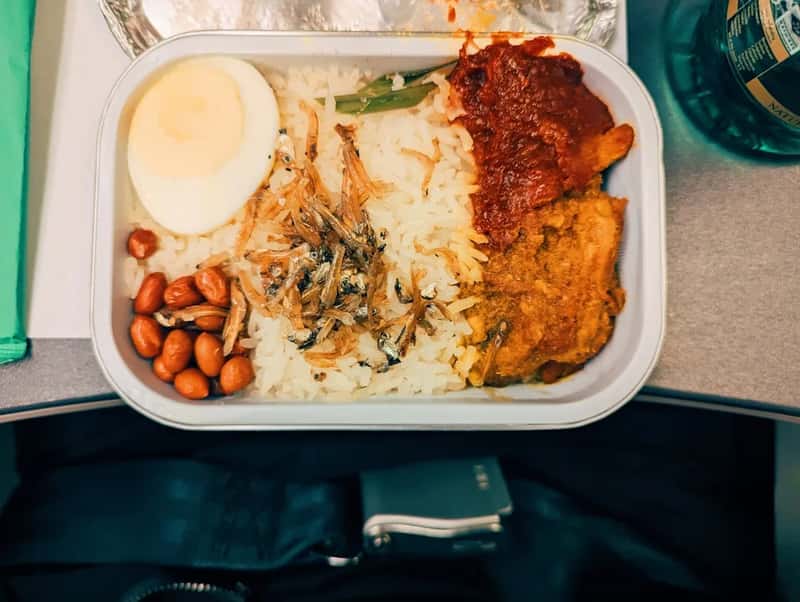
Crew meals have a reputation, and it’s not entirely undeserved. Flight attendants try to eat light both on and off the aircraft so the body can recover better from jet lag symptoms and bloating, even though crew meals can be quite heavy and salty.[1] That tension between what’s served and what actually helps recovery is one of the more practical challenges of the job.
The urge to reach for comfort food when exhausted is real, and crew aren’t immune to it. When you’re extremely tired, you tend to crave comfort food, which makes it even more difficult, but gentle, healthy and natural foods are the way to go to help the body replace essential nutrients lost while flying.[1] Some crew members go further, cutting meat almost entirely on trip days simply because eating light meals and avoiding meat helps prevent putting unnecessary strain on the body[5] during a stretch when digestion is already working against jet lag and altitude.
Staying on the move to beat swelling and stiffness
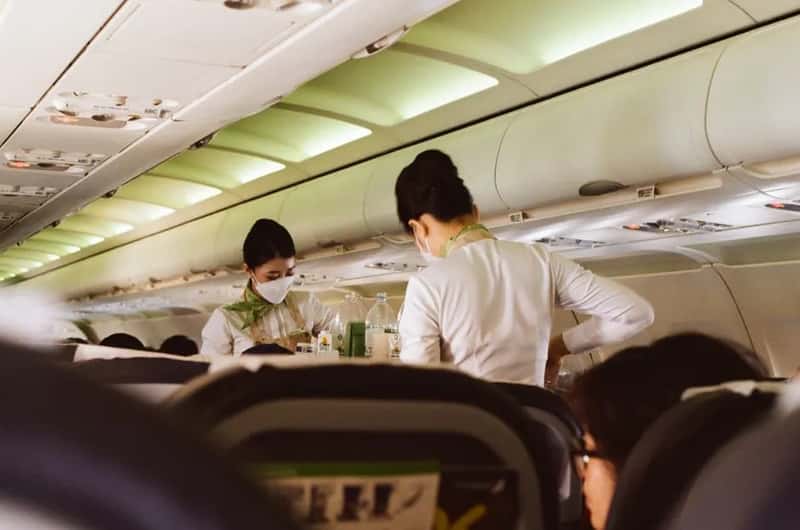
Sitting or standing in roughly the same spot for over a dozen hours does something to circulation that most passengers never think about. Cabin crew are told, and tell passengers in turn, to get up out of the seat at regular intervals to walk and stretch, doing exercises like toe raises, isometric exercises, and shoulder shrugs, which keeps blood flowing and prevents it from pooling at the extremities, a common phenomenon in pressurized cabins.[6] For crew who are already walking aisles for a living, this happens somewhat naturally, but the logic still applies during their own rest breaks.
Footwear turns out to matter more than people expect. Avoiding snug footwear like high heels or tight shoes matters because it’s quite possible feet will swell in transit,[6] which is one reason so many crew members switch into flats or slip-ons for the cabin service and change again once they’re off duty. Small adjustment, real difference by hour ten.
Defending the skin against the driest air most people ever breathe
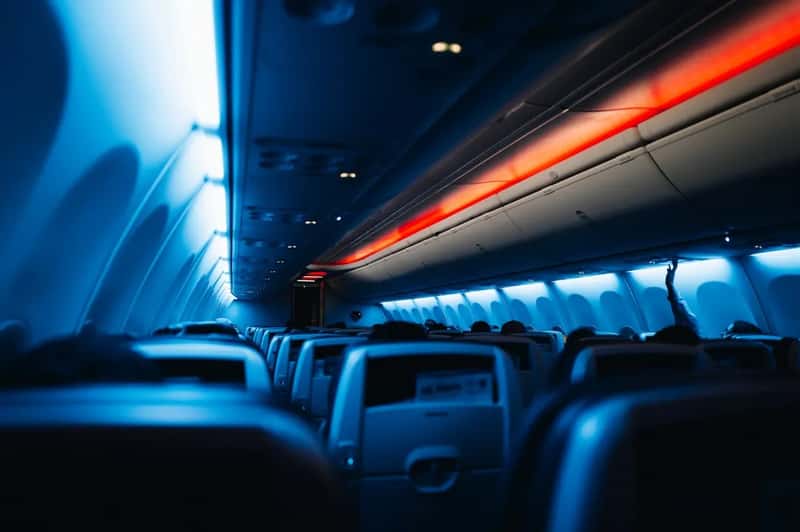
Cabin air is genuinely brutal on skin, and flight attendants deal with it several times a week rather than once a year. Humidity levels inside airplane cabins often drop below twenty percent, much lower than the forty to seventy percent range that skin actually prefers.[7] Over a long career, that repeated exposure adds up in ways that are hard to undo with a single good moisturizer.
The response tends to be layered rather than single-product. Dermatologists point long-haul travelers toward urea-based hand cream to counteract the cabin’s dehydrating atmosphere,[8] while many crew members also carry a thick lip balm, since lips and eyes are the first to show signs of dehydration.[8] There’s also a sun exposure angle that’s less obvious from the ground: melanoma cases are twice as common among airline pilots and cabin crew members, largely due to their higher exposure to ionizing radiation at high altitudes,[9] which is why sunscreen has become a standard part of many crew skincare routines, even on overnight flights.
Dressing for a job that spans time zones and temperatures
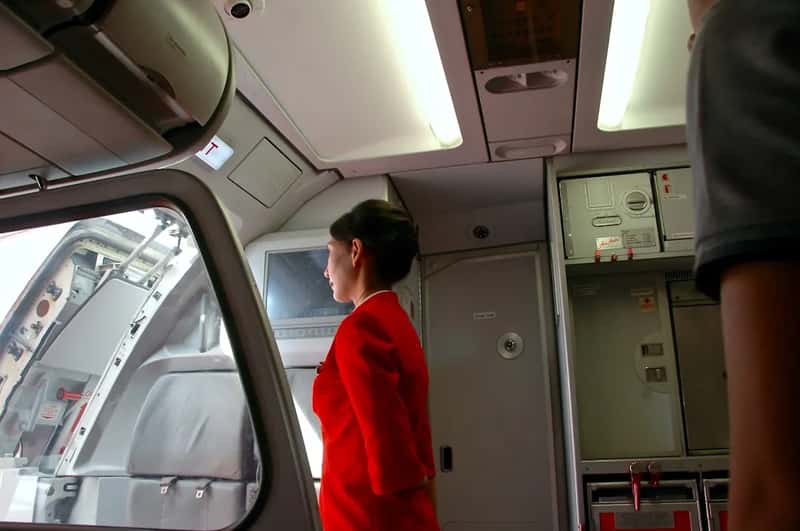
Uniform requirements aside, what crew wear underneath and around their shift matters more than it looks. The general logic that applies to any long-haul traveler applies doubly to someone working the flight: light layers, comfy socks, slip-on shoes, and something soft for a pillow and blanket during a rest break[10] are the practical basics. Temperature swings between a warm boarding gate, a cool cabin, and a hot or freezing destination make single-layer dressing a losing strategy.
Compression socks come up constantly in crew advice for a reason grounded in basic physiology rather than habit. Moving every so often and wearing supportive socks helps counter the ankle and leg swelling that comes from hours of reduced circulation at altitude, a problem that affects crew just as much as the passengers they’re serving. It’s a small piece of kit, but it’s one of the more consistently recommended ones across airlines and crew forums alike.
Managing the mental load, not just the physical one
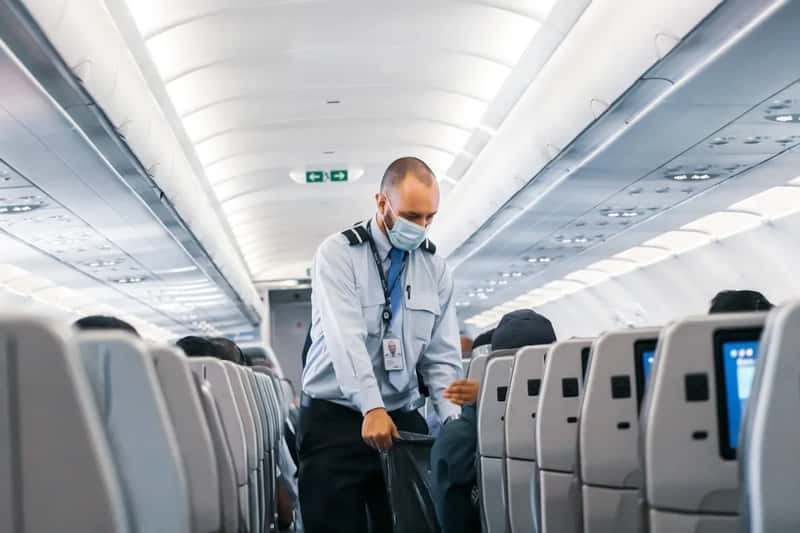
Fatigue on long-haul trips isn’t only about tired legs and heavy eyelids. It shows up cognitively too, and the data on this is fairly stark. Over seventy percent of flight attendants surveyed felt fatigued during flights at least three to four times during a thirty-day span, and only about nine percent felt no fatigue at all.[11] That’s not a minor inconvenience; it’s a near-universal part of the job.
What separates crew who cope well from those who struggle often comes down to how they handle the moments they’re wide awake in the middle of someone else’s night. If still awake in a hotel room at night, some crew play videos of airplane sounds, finding the soft humming noise incredibly calming.[5] It’s a small, slightly odd detail, but it captures something true about the job: the tools that work are often improvised, personal, and a little unglamorous, built through years of trial and error rather than a single official manual.
The takeaway

None of this amounts to a secret formula. It’s closer to a discipline, built from hydration schedules, timed naps, scheduled bunk rest, and a stubborn refusal to eat whatever’s easiest at 3 a.m. local time. What makes it work isn’t any single trick but the fact that crew apply all of it, trip after trip, until managing fatigue becomes as automatic as the safety demonstration itself.