Cancun keeps drawing millions of visitors every year, yet the question of safety has rarely felt more pressing than it does heading into spring 2026. A dramatic U.S. Embassy security alert in late February shook headlines worldwide, and travelers began scrambling for real answers. The picture that emerges from the data, official advisories, and on-the-ground reporting is more nuanced than either the panicked social media posts or the breezy resort brochures suggest.
The February 2026 Embassy Alert – What Really Happened

On February 22, 2026, the U.S. Embassy in Mexico issued a security alert covering widespread locations, including Quintana Roo State – home to Cancun, Cozumel, Playa del Carmen, and Tulum – citing ongoing security operations, road blockages, and heightened criminal activity. The advisory followed a major military operation in Jalisco that resulted in the death of the leader of the Jalisco New Generation Cartel. The retaliatory unrest spread quickly across multiple Mexican states, and Cancun was swept into the alert almost as a precaution rather than a direct result of violence on its own streets.
There were no highway blockades, airport shutdowns, or resort disruptions in Cancun or the Riviera Maya – the physical events occurred more than 1,200 miles from the Caribbean coast. By February 23, 2026, the situation had returned to normal in Quintana Roo, including Cancun, Cozumel, Playa del Carmen, and Tulum, according to U.S. Embassy Security Alert Update 4. The contrast with western Mexico destinations like Puerto Vallarta and Guadalajara, where flights remained disrupted for days, was stark and telling.
Crime Statistics – The Numbers Behind the Headlines
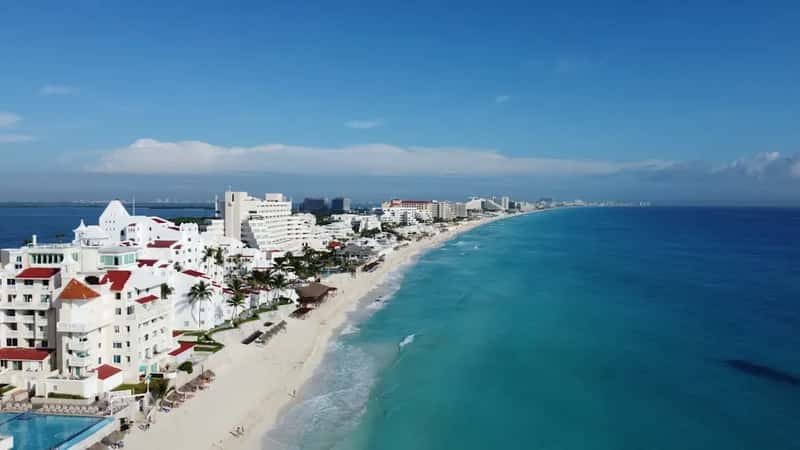
According to 2025 year-end reports, Cancun saw a 56% reduction in critical incidents city-wide, and audited tourist areas like the Hotel Zone maintained a zero-percent rate of violent incidents against international tourists last year. The murder rate for American visitors in Cancun stands at approximately 1.83 per 100,000 – lower than the rate for many U.S. cities – and over 99.9% of visits to Cancun’s resort areas occur without any incidents. These figures offer important perspective for travelers used to seeing Mexico portrayed uniformly in alarming news coverage.
In 2024, Quintana Roo state logged about 34 killings per 100,000 people – above Mexico’s national rate of 29, but well below cities like Tijuana or Ciudad Juárez, which sit above 80. Tourist areas within the state stood far safer, at roughly 4 per 100,000. According to Mexican government data from February 2024, the most common crimes in Cancun were robberies, which accounted for nearly 27% of all documented crimes, followed by domestic violence and property damage. For tourists, this matters because the crime profile is overwhelmingly opportunistic rather than targeted.
The Hotel Zone – A Different Safety Reality
At the core of Cancun’s tourist security is the C5 Command Center, a facility that integrates AI-driven surveillance and real-time monitoring. With over 1,200 cameras in the Hotel Zone and more than 450 strategically placed panic buttons, the C5 ensures a response time of under seven minutes for any security concerns. A statewide holiday deployment of roughly 7,000 personnel focused on tourist areas, highways, and high-traffic corridors meant that travelers noticed markedly more patrols in places like the Hotel Zone and near nightlife hubs throughout 2025.
Quintana Roo State is currently issued a Level 2 travel advisory “due to crime,” while only two Mexican states hold a Level 1 advisory – Yucatan and Campeche. Comparatively, states like Michoacan, Sinaloa, and Tamaulipas hold Level 4 advisories and are considered no-go zones. As of February 2026, the U.S. State Department’s travel advisory for Quintana Roo remains at Level 2: Exercise Increased Caution – the same designation given to countries like France, Italy, and the United Kingdom – reflecting ongoing safety considerations but not indicating extreme risk to tourists.
Practical Safety: What Travelers Actually Need to Know
Some parts of Cancun carry higher crime rates and deserve caution. Outlying neighborhoods outside the hotel strip and busy downtown zones have reported increased property crimes, particularly after dark, and visitors unfamiliar with local routes risk muggings if they wander into those areas. On-the-ground reports from travelers in 2025 show that police in the Hotel Zone are cracking down with a new “zero-tolerance” policy for offenses that tourists often dismiss – those days of Cancun as an anything-goes party town are over.
Drug organizations do operate in Quintana Roo, but they target rivals rather than tourists, and confrontations tend to happen in suburbs or rural zones, not on the hotel strip with its high-rise resorts. Staying within the Hotel Zone and established tourist corridors, using pre-booked hotel shuttles or vetted transportation rather than unlicensed taxis, and avoiding walking alone after dark in non-tourist neighborhoods are all straightforward steps that significantly reduce risk. Travelers are also advised to enroll in the Smart Traveler Enrollment Program before departure and purchase travel insurance, since U.S. domestic health coverage does not apply in Mexico.