
Mexico City is having its moment in the limelight, with an increase in visitors drawn to its energy, history, and reputation as one of the world’s premier food and cultural capitals. But after moving here and integrating into daily life, it’s become clear how easy it is to experience one narrow version of the city. Many travelers arrive chasing what is trending online, whether that is taco stands with long lines, expensive vintage shops, or neighborhoods curated for Instagram. Yet beneath the surface lies a city shaped by centuries of history, artistry, and creativity.
For travelers seeking a window into the real lives of chilangos, the city’s inhabitants, the following five experiences are a place to begin – opening the doorway to a richer understanding of Mexico City’s heritage and modern life.
1. Desierto Los Leones National Park
The first thing you notice is the silence. Just an hour outside of the chaos of downtown Mexico City, it feels as if you’ve stepped into another world. One of birdsong, a fresh breeze, and crisp mountain air. Once the perfect isolated location for a Spanish Carmelite convent, Desierto Los Leones is now a national park filled with tranquil pine forests, hiking trails, and shaded picnic areas – ideal for anyone craving a day removed from the rhythms of urban life.
Walking through the now-abandoned convent, there is a tranquil yet eerie feeling, heightened by the legends of ghost sightings and hauntings. My favorite pastime is hiking under towering trees, crossing small streams, and stopping at viewpoints that open to the valley below. Along the way, families speed by on mountain bikes, groups gather for carne asadas, and others relax at rustic restaurants serving antojitos – small, snack-sized dishes like sopes, quesadillas, and tacos.
For travelers seeking an escape to nature, Desierto Los Leones is about 40-minutes to an hour away by rental car or Uber.

2. The Ballet Folklorico of Amalia Fernandez at Palacio Bellas Artes
As the lights dim in the Art Deco theater under a crystal chandelier, an explosion of color and music begins, with dancers in elaborate dresses and traditional costumes taking the stage, stepping along in time to the music that rings through the hall. Experiencing the Ballet Folklorico for the first time was a gift for an ex-dancer myself, who has always loved cultural spaces that honor heritage and indigenous practices. It felt like journeying through the nation’s history, from the whimsical lace dresses of Veracruz to the famed Jarabe Tapatio twirls and songs of the Mexican Revolution. With hundreds of feet tapping in unison, mariachi ballads filling the air, and powerful voices singing songs of perseverance and love, it is hard not to be overcome by emotion and an appreciation for this elaborate art form.
Since pre-Hispanic times, Mexicans have practiced regional dances. Yet it wasn’t until the 20th century, with the creative ingenuity of Amalia Hernández, that the dance became a staple of national pride. Performances take place multiple times a week at the Palacio Bellas Artes, with tickets available for purchase online or at the ticket booth at the building’s entrance.

3. The Home of Emilio “el Indio” Fernández
The home, situated in the quaint neighborhood of Coyoacan, is an elaborate maze of interconnected rooms built from volcanic stone such as pumice and tezontle. Built in the 1940s, the house once belonged to Emilio Fernández, a legendary filmmaker of the Mexican Golden Age of Cinema. Moving through the space, I was struck by how closely the house reflects its former owner’s life, as none of the antique furniture has changed. With each room, a new story of his life was told – from the scariest moments in his cinematic masterpieces to the night Marilyn Monroe stayed.
The property extends beyond the main quarters to the servants’ homes and courtyards, which today house farm animals and props from past movie sets. An elaborate nativity scene sat in the center of the courtyard, the figurines sitting amongst piles of hay. Not only were there images of Fernandez’s films, but also of the 140 productions set here, from Frida to The Book of Stone and The Man on Fire. Walking through such an esteemed film set felt like you couldn’t tell what was real and what was fake, the home blending your mind into another made-up world far from reality.

4. Lucha Libre Experience in Arena Mexico
High-flying stunts, glittering masks, and shouting crowds are what first hit you at a lucha libre night inside Arena Mexico. From my seat, it became clear that the spectacle isn’t limited to just the ring, but also to the crowds of spectators cheering on their favorite luchadores. Families, couples, and longtime fans cheer, heckle, and laugh as they react to every exaggerated fall, acrobatic, and dramatic pause.
Renowned around the globe for theatrical performances, lucha libre is one of Mexico City’s most recognizable traditions. While it is slowly gaining popularity amongst visitors, many are still too intimidated by the process. However, attending a night at Arena Mexico is easy. Situated just at the end of the Roma Norte, it is within walking distance of neighborhoods such as Condesa, Roma, and Juarez. Once they pass a security check, travelers will be ushered to their seats, where they can buy snacks and enjoy the show.

5. Reforma Bike Sundays (Muévete en Bici program)
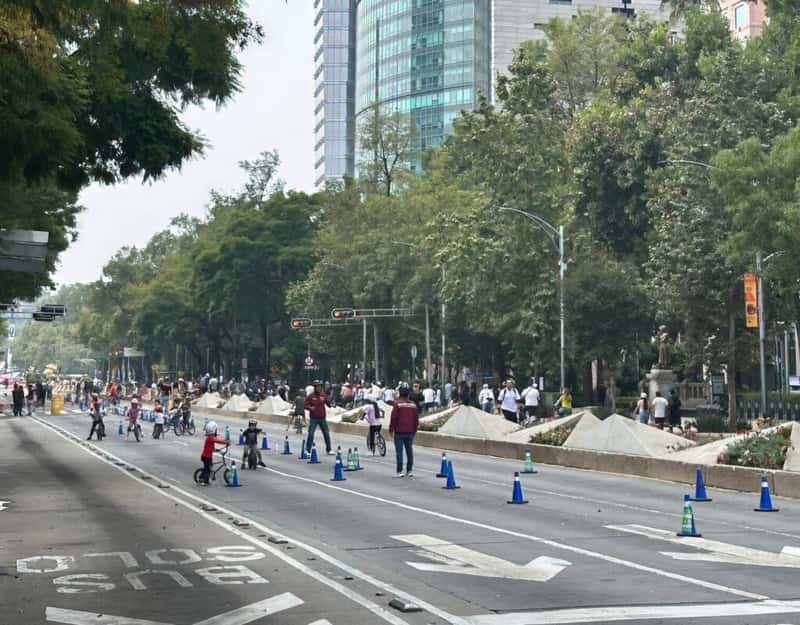
Every Sunday, 34 miles of main roads in the heart of Mexico City are closed to cars and open for people. The first time I experienced it, I was shocked by how many people flooded the streets, with thousands of bikers and runners coming from across town to enjoy a morning of exercise and community. As I ran along Paseo la Reforma, it became clear how much more was taking place than just cycling. Zumba classes were being held, professional instructors taught children how to ride bikes, and intense chess matches were taking place along the sidewalk.
There is a palpable sense of community in the air, enhanced by volunteers who help direct traffic, cheer people on, and offer a helping hand whenever needed. It reminded me of summer camp counselor energy, but on a city-wide level. From the historical downtown all the way to Chapultepec Park, an urban green space twice the size of New York’s Central Park, travelers can rent an e-bike and move through the city along with the locals.
Beyond the Bucketlist
Mexico City’s main destinations remain essential for understanding its history, whether that means hiking up to Chapultepec Castle or soaring high over the Teotihuacan archaeological ruins in a hot-air balloon. And unlike many global tourism hubs, even the most “touristy” locations are not overly curated for foreigners.
Yet living here has changed the way I see the city. While I spent years traveling the world chasing the “top 10 bucket list sites,” I have now come to find the best moments of cultural learning and exploration happen in smaller discoveries – whether that is taking part in daily activities, digging deeper into the facets of art and cinema, or trying hole-in-the-wall restaurants that locals swear by.
So now the question is, how do you want to travel to Mexico City in 2026? Are you ready to embrace cultural experiences that take you deeper into its stories and life?