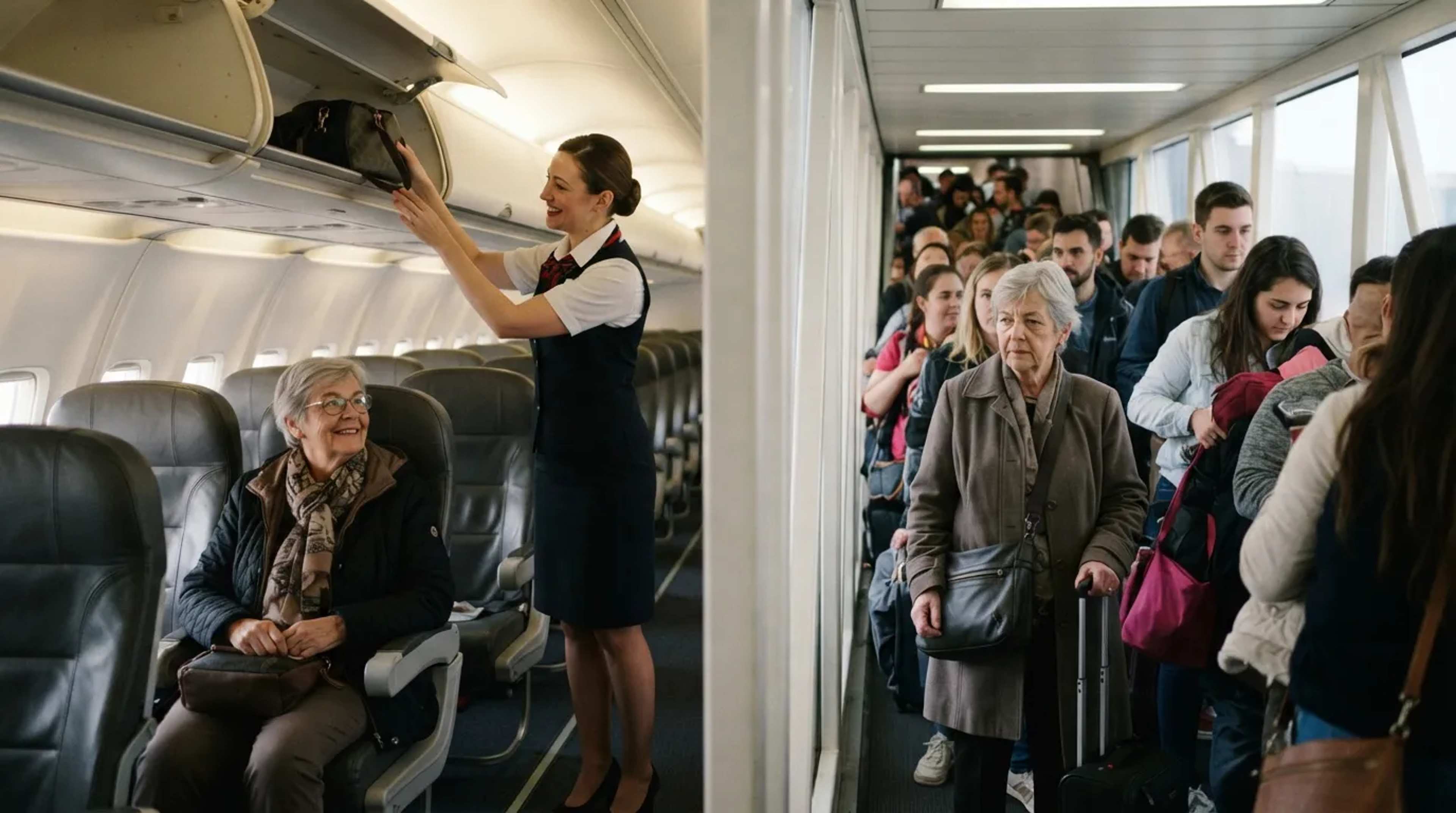
The terminal is humming at 4 AM.
You are already at the gate.
Not because the flight is early. Because you arrived early.
Because arriving early is the only thing that feels like control when everything else – the city, the itinerary, the person you traveled with – refuses to hold still.
There is a gap that lives inside every person who has ever unfolded a paper map in a foreign city, zoomed into satellite view before stepping out of the taxi, or memorized three alternate routes before leaving the hotel. It is not a gap between where you are and where you are going. It is a gap between the version of yourself you perform for the world – the confident navigator, the calm planner, the one everyone follows – and the raw, slightly frightened person underneath who is simply trying not to be left behind.
What we are really chasing, at the marrow of it, is identity enhancement – the proof that we are people who can make their way in a foreign setting. The map is just the prop we use to convince ourselves that’s true.
1. The Pre-Departure Ritual

You research the destination before you pack a single shirt.
You know the neighborhood. You know the exits. You know which side of the street the pharmacy is on.
This is not thoroughness. This is armor.
The unconscious logic runs deep: if you know what to expect, if things happen the way you think they should, then you will be okay. It takes the form of over-preparing and over-researching in pursuit of the “right” outcome. The ritual is less about preparation and more about quieting the voice that says something terrible is about to happen the moment you step into the unfamiliar.
The hotel is already reviewed. The restaurant is already booked. The backup restaurant is already found.
You tell people you are just organized. But organization, at this level of intensity, is a fear response with a very good filing system.
Recognize the ritual for what it is. Let it serve you. But ask, just once, what you are actually preparing for.
2. The Perimeter Scan
You walk into every new room and you clock the exits first.
Then the people near the exits. Then the people near you.
This is not paranoia. It is a survival habit that arrived before you had the language for it.
This is a state of high alert – constantly tense and on guard, always on the lookout for hidden dangers, both real and presumed. This state of increased awareness often manifests as a need to always scan your surroundings for potential threats. In a new city, that translated perfectly. The wiring that once protected you became the same wiring that makes it impossible to enjoy a crowded square in Lisbon without knowing where the nearest side street runs.
The perimeter scan is how you stay safe in the unknown. It is also how you stay permanently outside the experience.
You are watching the room. You are not in it.
3. The Contingency Architecture
You don’t just have a plan. You have a plan for when the plan fails.
And a plan for that failure, too.
You anticipate everything that can go wrong and create a plan for what you will do should each outcome occur. The unconscious thought behind this is that if you have a plan ready, then you will be okay. There is something quietly heroic about this architecture. It speaks to a mind that has been disappointed before. A mind that learned, in some ordinary room on an ordinary day, that safety is something you have to build yourself because no one else is going to do it.
The contingency architecture is your life’s work.
It is also the reason you cannot be fully present anywhere, because part of you is always in the alternate timeline, managing the disaster that hasn’t happened yet.
4. The Quiet Audit
While everyone else is looking at the view, you are doing math.
How long to get back. What time the last train runs. Whether the person you came with is actually fine or just saying they are.
This is the quiet audit, and it never stops running.
Your brain’s threat-detection system stays activated when it should be at rest, making you feel like danger is always just around the corner. The constant scanning, monitoring, and threat assessment drains your mental and physical energy, affecting relationships, work performance, and overall quality of life.
The audit is exhausting. You know that.
But the alternative – the idea of not knowing, of being caught without an answer – feels more dangerous than the fatigue. So you keep running the numbers. Over the wine. Over the meal. Over the sunset you technically watched but did not see.
5. The Anchor Object
Mine was a red notebook.
I carried it through eleven countries and four years of a life that refused to stay in one place. Every new city, I would write down the hotel address. The nearest hospital. The local emergency number. I told myself it was practical. And it was. It was also the one object that made me feel like myself when everything else – the language, the currency, the sense of who I was supposed to be – had dissolved into the anonymous gray of a foreign airport terminal.
Self-identity is not simply sought out; it is produced through moments of challenge, serendipity, and triumph. One does not acquire self-identity in an instant. The anchor object is the physical shorthand for that process. It is not the notebook. It is not the particular pen. It is the act of holding something that says: *you were here before, and you survived it, and you will survive this too.*
Find yours. Carry it without apology.
6. The Controlled Disclosure
You do not tell people you are anxious. You tell them you are “particular.”
You do not say you need to know the plan. You say you “like to be organized.”
This is controlled disclosure – the careful rationing of vulnerability to people you are still deciding whether to trust.
In many ways, we use travel to experiment with different aspects of our identity. We might try new activities, speak a different language, or find ourselves in a setting where we’re not defined by our usual roles. Travel offers the rare gift of a clean slate. But the person holding the map rarely takes it. They are too busy managing the perception of the person they’ve decided to be on this trip – capable, unflappable, already three steps ahead.
Controlled disclosure is wise. It is also lonely.
At some point, the person you are traveling with deserves to know what is actually happening in the room behind your eyes.
7. The Exit Strategy
You always know how to leave.
Any room. Any relationship. Any city that stopped feeling safe.
The exit strategy is not pessimism. It is the hard-won knowledge that the door you came in through is not always the door you’ll need to use.
It is common for those experiencing hypervigilance to develop avoidance behaviors that manifest as coping mechanisms. These coping mechanisms stem from a profound sense of injustice, victimization, need for survival, and need for safety or stability. These behaviors aim at avoiding or escaping the perceived threat. The exit strategy is the physical expression of that internal architecture. You have mentally rehearsed leaving before you have fully arrived.
The dark side of this habit is that it can become self-fulfilling.
You plan the exit so thoroughly that you begin manifesting the situation that requires one. You leave before you are left. You navigate out before anything has the chance to go wrong. And so nothing ever goes beautifully, unexpectedly right.
8. The Knowledge Buffer
Having more knowledge can increase an individual’s personal control over uncertain scenarios. When travelers think that they have more knowledge than others – and thus a greater ability to prevent and control risks – they are more likely to feel safe and capable.
This is the knowledge buffer: the habit of learning everything about a place before you arrive so that the place cannot surprise you.
You read the history. You watch the documentaries. You translate the menus in advance.
Knowledge, for the map-holder, is not intellectual curiosity. It is a moat. It is the thing you build between yourself and the raw, unfiltered experience of being somewhere you do not understand yet.
The buffer is valuable. It makes you a remarkable travel companion.
But somewhere inside all that research is a person who is terrified of looking lost. Who learned once – on some unremarkable street in some forgettable year – that not knowing made you a target. The knowledge buffer is just that lesson, grown up and wearing a very good jacket.
9. The Social Navigation
You read people the way you read maps.
Quickly. Constantly. Looking for the thing they are not saying.
Hypervigilance makes genuine connection difficult because you can’t fully relax and be present with others. You might interpret neutral comments as criticism, read too much into people’s facial expressions, or feel suspicious of others’ intentions. In a foreign country, this wiring has its uses. You can tell when a stranger’s warmth is genuine and when it is theater. You can sense the shift in a room before it becomes a problem.
But this same skill – the one that has kept you safe on dark streets in unfamiliar cities – is the one that makes intimacy a kind of low-grade performance review.
You are never just having dinner. You are assessing the dinner. You are cataloguing tone, cataloguing silences, filing away the moment someone’s eyes moved left when they said they were fine.
The social navigation habit protects you beautifully from being betrayed. It also ensures that you are never fully at the table.
10. The Identity Checkpoint
At some point in every trip – usually around day three, usually at the precise moment when the adrenaline of arrival has faded and the exhaustion of maintaining yourself has set in – there is a question that surfaces.
Quietly. Without warning.
Who am I when no one here knows me?
This is the identity checkpoint. It is the heaviest habit of all, because it is not a habit you choose. It chooses you. It arrives in the mirror of a bathroom in a hotel whose name you will not remember. It arrives on a bridge at dusk in a city that did not ask you to come and does not need you to stay.
Travel isn’t just an external journey. It’s an internal one, as well. As we venture into the unknown, we often encounter parts of ourselves we hadn’t fully explored before. The map-holder’s version of this encounter is particular. It is not the gentle wonder of the first-time traveler. It is something closer to negotiation. A reckoning between the person who planned every turn of this journey and the person who is standing here anyway, lost in the good way, surprised in the way that only happens when the contingency architecture finally runs out of contingencies.
Brain science tells us that travel experiences literally change the neural pathways in the brain. The brain undergoes tremendous growth throughout childhood. New experiences create new brain connections. But the identity checkpoint is not about the brain. It is about the self that lives beneath the planner, beneath the navigator, beneath the person who always knows where the exit is.
It is about the moment you put the map down. Not because you got lost. But because you finally realized you were never as lost as you thought you were.
There is a particular kind of exhaustion that belongs exclusively to people who have been in charge of the route for too long. It lives in the shoulders. It lives in the small, tight muscles behind the eyes. It is the fatigue of competence – the cost of being the person everyone turns to when the street sign is missing and the data has dropped and the sky has gone the color of a city that is no longer friendly.
These ten habits are not disorders. They are not pathologies to be corrected by a well-meaning professional with a soothing voice and a clipboard. They are the intelligent architecture of a person who decided, somewhere along the way, that knowing was safer than not knowing. That moving was safer than staying. That holding the map meant holding the only thing in the room that could not be taken from you.
The question that remains – the one that does not require a destination or a departure time – is simply this: now that you know you built all of this on purpose, are you willing to lay even one small piece of it down?
Not the whole map. Just the corner you’ve been gripping so hard your hand has forgotten what it feels like to be open.