Most people believe they’re reasonably good at finding flight deals. They check a site, see a price, and buy. Simple, right? The problem is, that entire approach is built on habits that the airline industry is specifically designed to exploit. There’s a whole system running behind the scenes, one built on artificial intelligence, behavioral data, and decades of pricing psychology, and it isn’t working in your favor.
The gap between what you pay and what you could have paid is often shockingly wide. It’s not bad luck. It’s the method. Let’s get into it.
You’re Booking at the Wrong Time – and It’s Costing You
Here’s one of the most persistent myths in travel: that there’s a magic day of the week to book flights. The Tuesday myth, specifically, has circulated for so long that most travelers just accept it as fact. Honestly, it has almost zero basis in modern data.
Research shows that the idea of a single cheapest day to book is a myth. There are some sweet booking windows when airlines lower prices, but no single golden day guarantees a deal. Meanwhile, Expedia’s data, for the third consecutive year, found that Sunday is actually the cheapest day to book flights.
Domestic travelers can save roughly six percent while international travelers can save up to seventeen percent compared to booking on a Monday or Friday. That’s real money. Booking on the “wrong” day isn’t just a minor inconvenience. For many international trips, it could mean paying the equivalent of a nice dinner out, just for the mistake of clicking “buy” on a Friday.
The most affordable booking window for domestic economy flights is fifteen to thirty days before departure, averaging roughly $130 less than bookings made more than six months out. International travelers, meanwhile, can save around $190 on average by booking thirty-one to forty-five days ahead instead of six months out. The old “book as early as possible” rule, passed down through generations like family wisdom, is largely outdated.
You’re Searching Destination-First Instead of Price-First
The normal way people search for flights is a three-step process: choose where to go, choose when to go, then check prices. By setting price as the last priority, it’s not terribly surprising that people end up with expensive flights. Think of it like going to a restaurant, ordering the most expensive item on the menu, and then asking if there are any specials.
Flipping that sequence sounds simple, but it genuinely changes everything. Instead, start by seeing what cheap flights are currently available out of your home airport, then choose a destination, then pick your dates. It requires a small shift in mindset, but for flexible travelers, it’s probably the single biggest behavioral change that saves money.
In 2025, travel experts widely agreed that booking and travel flexibility was the key to saving on a budget. As airlines adjust capacity more dynamically than ever, price swings depend less on a “magic booking day” and more on how flexible a traveler can actually be. Rigidity is expensive. Flexibility is its own kind of currency.
The Hidden Fee Machine Is Draining Your Wallet After You Book

Let’s be real: the base fare you see when you search is often a fiction. It’s the opening bid. The actual price of your trip is assembled afterward, piece by piece, during a booking funnel engineered specifically to extract more from you. In 2024, airlines globally collected a record $148 billion in fees. That number is staggering.
Covering 61 airlines worldwide, a major industry report highlights that total global ancillary revenue surpassed $148 billion in 2024, a sharp increased from the 2019 record of $109.5 billion. Low cost carriers continue to dominate this space, with some now earning more from extras like baggage and seat fees than from base fares.
Frontier claimed the top spot at sixty-two percent of revenue from ancillaries, breaking the sixty percent threshold for the first time in 2024. Spirit followed at nearly fifty-nine percent, Volaris at fifty-five percent. All of these airlines saw increases compared to 2023, now generating more from add-ons than from passenger fares. In other words, that “cheap” ticket isn’t really cheap once you need a seat, a bag, or basic dignity.
In 2024, Delta Air Lines reported $1.06 billion in baggage revenue, American Airlines reported $1.5 billion, and United reported $1.35 billion. Delta raised its checked bag fees to $35, while American and United raised theirs to $40 in 2024. Those numbers add up fast for a family of four.
Dynamic Pricing Is Watching You – And Pricing Accordingly
Airline ticket prices can feel like a guessing game, with costs rising at the exact moment you’re ready to book. This unpredictability is driven by “dynamic pricing,” where airlines adjust fares in real time based on demand, timing, and other factors. It’s not paranoia. The system genuinely responds to your behavior.
Flight prices can change multiple times a day. Airlines use complex algorithms to adjust fares based on demand, seat availability, booking trends, and external factors like fuel costs or major events. Think of it like surge pricing in a taxi app, except the surge can happen while you’re in the middle of filling out your payment details.
Nearly ninety percent of Americans have experienced dynamic pricing with airfare, and roughly four in ten have switched airlines or dates to dodge price hikes. Three in five Americans have felt tricked by sudden price increases while booking a flight. These are not fringe experiences. They’re the norm.
Only about one-quarter of all air ticket offers sold in the marketplace in 2024 were dynamically created. The system is still evolving, which means the pressure on travelers will only grow as airlines get more sophisticated in how they personalize pricing in real time.
Flying on the Wrong Day Is Just as Expensive as Booking Wrong

Here’s the thing: even if you book at the perfect time, flying on the wrong day can undo all your savings. According to a 2025 Google report, the cheapest days to travel are Monday through Wednesday, about thirteen percent cheaper than flying over the weekend. That’s not a small gap. It’s enough to cover airport lunch and then some.
The cheapest day to travel internationally is actually Thursday, while Sunday is the most expensive – a difference that can save you up to eight percent. Most people fly on Sundays out of habit, because the weekend feels like the natural time to travel. That instinct is working against their budget every single time.
Friday is now the cheapest day to book flights, while Tuesday is the cheapest day to fly domestically, averaging fourteen percent less than Sunday departures. It sounds counterintuitive, but the data across multiple major platforms is consistent on this point. The crowd, as usual, is going in the wrong direction.
Your Choice of Airport Is Quietly Inflating Your Ticket Price

Most travelers don’t think twice about which airport they fly from. You live near an airport, you search from that airport, done. But that default decision can be one of the most expensive habits in your entire booking process. It’s a bit like always shopping at the most expensive supermarket in your city simply because it’s closest.
Your departure airport can make or break the price. Fort Lauderdale, Las Vegas, and Orlando are among the most affordable mainstream U.S. departure airports, with average fares about twenty-five percent lower than the national average. Washington Dulles, San Francisco, and New York’s JFK are the most expensive airports to fly from.
Airfare costs are up seven point one percent over the past year. With prices already elevated, choosing a more affordable nearby airport where possible can be one of the few remaining levers that travelers actually control. A short drive can genuinely translate into hundreds of dollars saved, particularly on transatlantic routes or holiday travel.
I know it sounds like an inconvenience, but consider this: if a sixty-minute drive to a different airport saves you $200 per person on a family of four, you’ve just earned $800 for an hour of road trip. That math is hard to argue with.
Not Using Price Alerts Means You’re Buying Blind
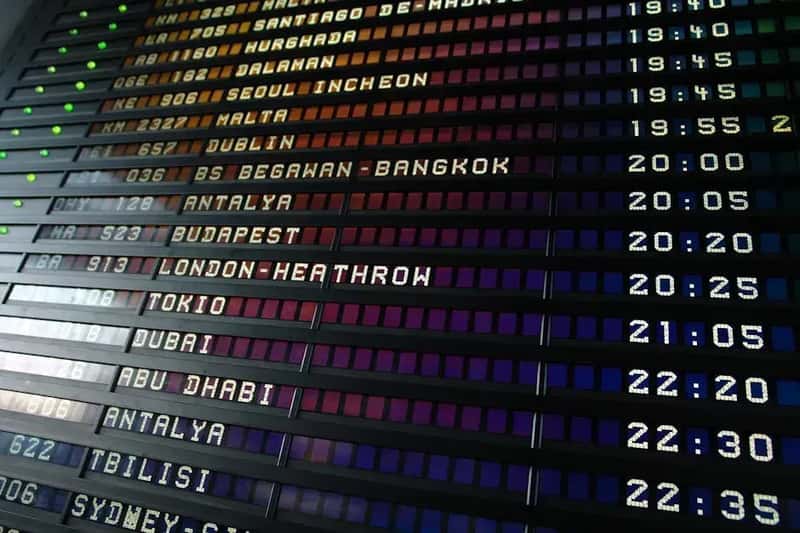
Perhaps the single most underused tool in the average traveler’s arsenal is the price alert. Price tracking tools simplify the hunt for lower airfare by keeping an eye on fare changes and alerting you when prices drop. This means you can find the best deals without manually checking prices every day. Many of these tools also offer insights into pricing patterns, helping you make informed decisions and avoid overpaying.
Checking a flight price once and booking immediately is like accepting the first salary offer you’re given without negotiating. As a flight fills up, airlines continuously change prices to maximize their potential profit, which means fares may not only change daily but can shift multiple times throughout the day. Knowing this, it’s almost irrational not to set an alert and wait.
Flight comparison tools like Google Flights, Kayak, and Skyscanner are key for manual research, offering price alerts and historical data. Google Flights is particularly effective for exploring broad date ranges and using its “Explore” feature to find cheap destinations worldwide. These tools are free. The information advantage they hand you is enormous.
Real booking behavior shows that the largest share of international economy bookings happen two to four months before departure. The data suggests aiming to book between sixty and one hundred twenty days before departure for the best mix of price and availability. Set your alerts early, track patiently, and buy when the number drops to where it should be.
The Way Most People Book Flights Is Exactly What Airlines Want

Booking flights shouldn’t feel like navigating a casino floor, but for millions of travelers, it effectively does. The habits we’ve inherited – booking early out of anxiety, always flying from the same airport, clicking “buy” the moment we find a reasonable price – are habits the airline industry has quietly depended on for decades.
February 2026 travel costs are up sixteen percent versus February 2020, the last full equivalent month before the 2020 pandemic. Prices are not going back to where they were. The only real protection a traveler has is knowledge – knowing when to book, which day to fly, which airport to use, and which fees to expect before they appear.
The difference between a savvy traveler and an average one often isn’t money. It’s just attention. What booking habits have you been running on autopilot? It might be time to check.