The terminal is cold at 5 AM.
You already know your gate number.
You check it again.
And again.
Something older than reason is running the show – and it has nothing to do with the flight.
There is a version of you that exists only in airports. Boarding pass in hand, eyes darting between the departure screen and the gate agent. Certain that something is about to go wrong. Certain, in a way that no amount of confirmation can quiet, that you are about to be left. Not just by a plane. By something larger, something that doesn’t show up on the departures board.
In psychology, liminal space is a threshold state – a pause, a transition, a space that can feel uncertain, uncomfortable, and even disorienting. It’s the space between the old story and the new one. It rarely comes with a roadmap and often comes with a feeling of being lost. The airport knows this about you. It is designed around this exact vulnerability.
The identity gap lives here. Between the composed professional who checked in online and printed their boarding pass two days early – and the person now white-knuckling a paper cup of airport coffee, scanning gate B7 for the fourteenth time. That gap is not a character flaw. It is a fault line. And in transit, it opens.
1. The Reassurance Loop
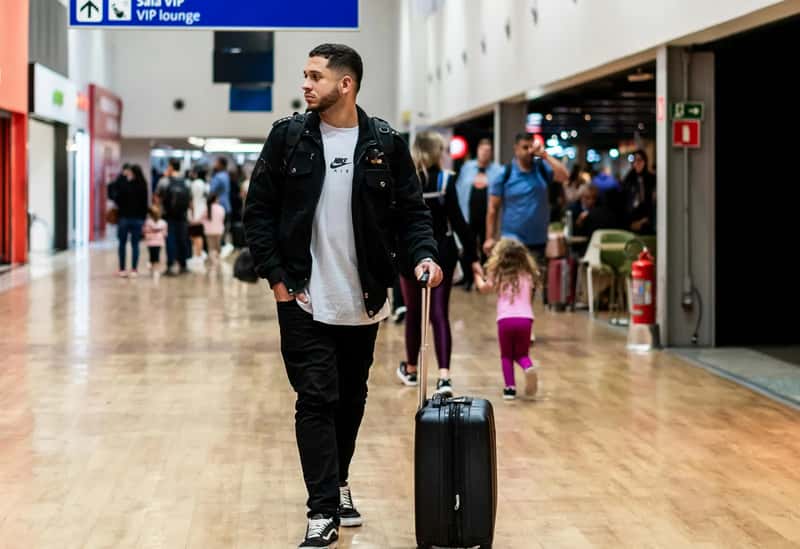
You look at the gate number. You feel better. Thirty seconds pass. You look again.
This repetitive checking isn’t about memory – it’s about anxiety. Psychologists call it compulsive reassurance-seeking. You’re trying to calm the fear of “what if” by physically confirming your information is still there.
The key word is “still.” As if the gate might vanish. As if reality itself is unreliable.
It works for about 30 seconds. Then the urge comes back, and you repeat the cycle.
This loop is not irrational. It is the brain doing exactly what it was built to do – scan for threats, seek confirmation, reduce uncertainty. The problem is that confirmation doesn’t satisfy a fear that was never really about gate numbers. It was about whether you belong somewhere. Whether someone will wait. Whether the world will hold your place while you are briefly, terrifyingly, between two versions of yourself.
The loop keeps spinning because it is answering the wrong question.
2. The Hypervigilance Perimeter
You know where the gate agent is sitting. You know which other passengers are already in their seats. You have quietly, almost unconsciously, built a perimeter.
Gate anxiety isn’t just about missing a plane. It taps directly into our brain’s oldest programming: avoid exclusion at all costs. For millennia, being left behind by your group meant danger – no food, no shelter, no protection.
The amygdala does not know the difference between a delayed Airbus and a disappearing tribe.
The brain becomes hypervigilant in this tiny window of travel where decisions matter most. It maps the room. It catalogues threats. It monitors everyone who looks purposeful, everyone who seems to know something you don’t.
The perimeter feels like preparation. It is, in fact, a survival instinct firing inside a building full of charging stations and overpriced sandwiches. The hypervigilance is not protecting you from the flight. It is protecting you from the ancient, bone-deep terror of being the one who got left behind when the group moved on.
3. The Premature Queue
Boarding hasn’t started. It won’t start for forty minutes. You are already standing near the barrier.
As soon as the gate attendant blows into a hot mic, people leap to their feet into pole position, blocking all pathways. A study found that as few as five people can influence a crowd of 100 to follow suit – at the gate, people leave their common sense to follow these Pied Pipers to a closed barrier twelve feet away, where they wait for the next announcement.
But you were already there before anyone else moved.
You cannot explain it in reasonable terms. Standing feels like doing something. Sitting feels like surrender. The queue becomes a physical argument against the fear – proof that you are present, ready, claimed. A seat in the line is a seat on the plane is a seat in the world.
The premature queue is not about efficiency. It is a ritual of belonging, performed in advance of the moment that belonging is confirmed.
4. The Phantom Gate Change
Gates do change. But yours hasn’t. It isn’t going to. You check anyway.
Coined by psychologist Ellen Langer in 1975, the illusion of control describes our tendency to believe we can influence outcomes that are inherently random. Paradoxically, while this belief doesn’t align with objective reality, it fulfills deep psychological needs – shaping how we cope with uncertainty and even maintain our mental health.
Checking for a gate change you have no power to prevent is the illusion of control in its purest form. If you watch it closely enough, the theory goes, reality will behave.
The screen refreshes. Nothing has changed. Brief relief. Then the quiet thought: but what if I stop watching?
The Phantom Gate Change loop is really a monitoring loop – a way of inserting yourself as a variable into an equation that was never asking for your input. It’s exhausting. It is also, in its own strange way, a love language. You are watching because something in you believes that watching is the same as caring. That attention is the same as control. And that control is the same as safety.
5. The Early Arrival Ritual
Your flight boards at 3 PM. You arrived at 10:45 AM.
Arriving super early isn’t just about avoiding traffic. It’s about eliminating every possible source of stress: long security lines, last-minute delays, the fear of missing your flight. While being punctual is good, extreme earliness often signals underlying anxiety. You’d rather sit at the gate for hours than deal with the discomfort of rushing.
I know this ritual intimately. I once arrived at Heathrow four hours before a domestic connection and spent three of those hours convincing myself it was the sensible thing to do. Sitting in the hard plastic chair near the gate, watching the departure board, I understood that the earliness was not about the plane at all. It was about having a place to be. About staking a claim on a seat, a space, a moment of legitimacy in a room full of people who all seemed to know exactly where they were headed.
The early arrival ritual is not a schedule hack. It is a hedge against the oldest fear: that if you arrive late, the world will have moved on without you.
6. The Social Conformity Scan
You watch the other passengers. You calibrate yourself against them.
Even travelers with no desire for status feel the need to adjust their behavior to the flow of the groups. It’s a classic example of social conformity pressure, but in an amplified environment. The gate turns into a giant, silent game of “Where do I belong in this order?”
You are looking for your people. Or looking for evidence that you are one of them.
When someone stands, you almost stand. When someone starts pulling out their boarding pass, you reach for yours. The herd logic is not stupidity – it is ancient social intelligence operating in a very modern context. One of the most profound psychological effects of airports is how they temporarily strip away our usual identity markers. In the international transit zone, national boundaries become fluid, and our usual social roles temporarily suspend.
Without your usual markers – your desk, your neighbourhood, your colleagues – you calibrate against strangers. You read their carry-on bags and their shoes and their posture. You are trying to establish whether you are the kind of person who belongs on this flight. In this terminal. In this life.
7. The Mental Rehearsal of Disaster
You know what you’d do if the gate changed. You know which direction you’d run.
A clinical psychologist notes “there has been a measurable uptick in clients who divulge anxiety about travel. Oftentimes clients will express worrisome thoughts about what could go wrong on their flight.” These types of cognitive distortions are “future tripping” thoughts.
The mental rehearsal of disaster is your brain’s way of trying to be ready. It has mapped every worst-case scenario in the terminal. Missed flight. Lost passport. Wrong gate. Closed door. Every one of these scenarios ends the same way – with you on the wrong side of something that has already departed.
Travel fever pulls us in two directions, combining the nervous anticipation of entering the unknown with uncertainty about what is being left behind. The disaster rehearsal is not pessimism. It is an attempt to pre-grieve the loss. To practice the abandonment so that it doesn’t catch you off guard. The psyche tries to immunize itself against pain by imagining the pain first. It never quite works.
8. The Document Inventory
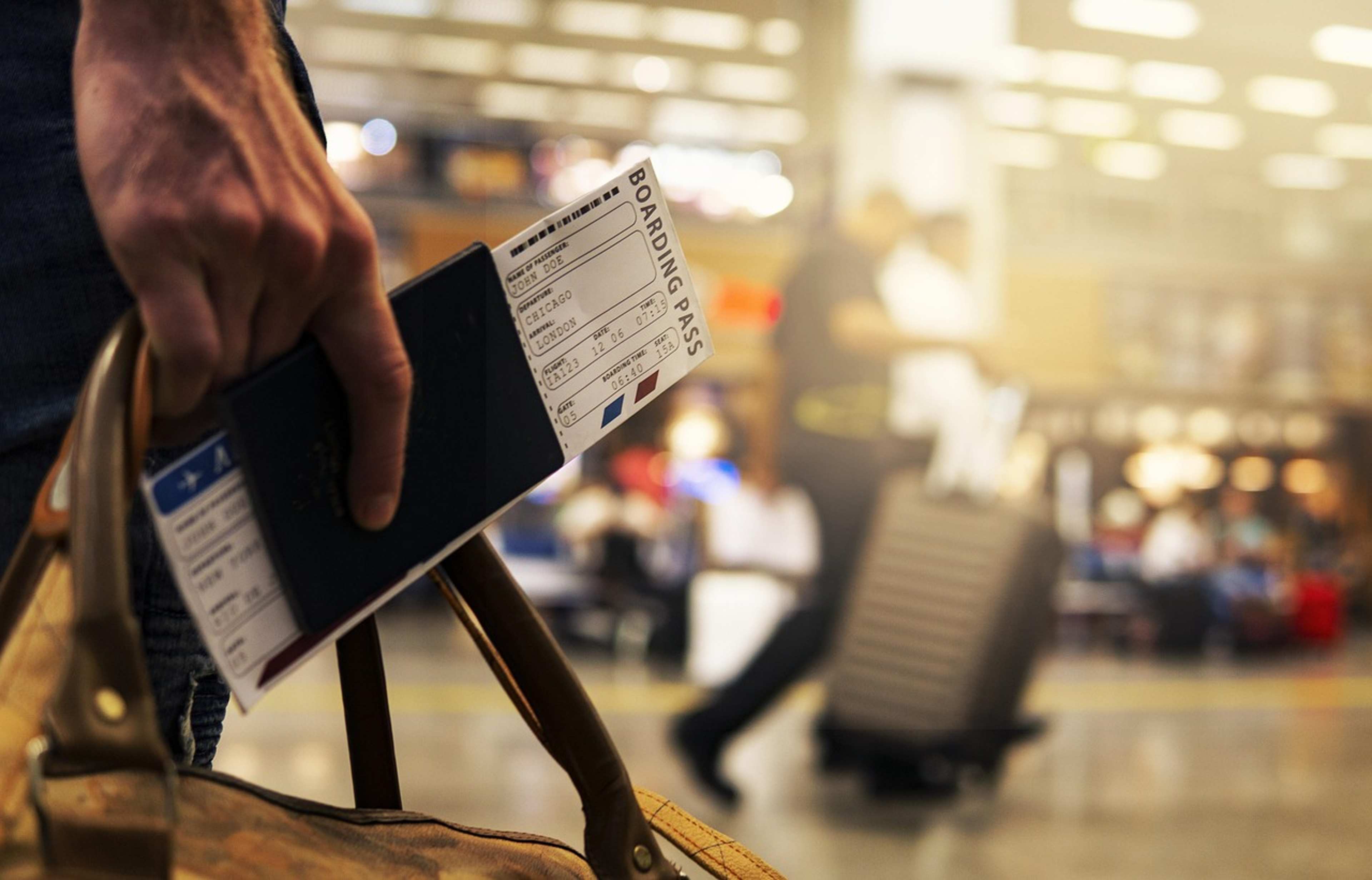
Passport. Check. Boarding pass. Check. Passport again. Check.
You have checked your passport four times since security. Nothing has changed. You check again.
The behavioral symptoms of travel anxiety include obsessively checking or double-checking travel plans, or engaging in repetitive “safety” behaviors. The document inventory is a tactile version of the reassurance loop – you need to feel the evidence, not just see it. The passport has weight. It has a cover that you can press your thumb against. It is proof, in the most physical sense possible, that you are a real and documented person who is allowed to go where they are going.
The deeper fear embedded in the document inventory is rarely about the document itself. It is about legitimacy. The passport says: you have permission to cross this threshold. You belong on the other side. Without it – without that small, laminated proof of identity – there is a version of you that cannot proceed.
And something in you has always suspected that version exists.
9. The Noise Sensitivity Spike
The gate agent’s voice cuts through the terminal. Your heart rate doubles before your brain processes the words.
Under the high-stakes pressure of a “Final Call,” the prefrontal cortex – responsible for emotional regulation – begins to fatigue. When an authority figure issues an arbitrary command, the brain, already depleted of cognitive load capacity, defaults to the amygdala. This is why a normally polite professional might suddenly erupt over a minor security rule.
The noise sensitivity spike is a physiological betrayal. Your body has decided that every announcement is a potential final call. Every crackling microphone could be the moment you are addressed directly – the moment the world says your name and you are not ready.
Being able to manage our time gives us a sense of control over our lives. Losing this may be another source of anxiety. The airport announcement system removes that control entirely. You do not know when the voice will come, or what it will say. You can only wait. The body, poorly suited to waiting while frightened, spends the silence already flinching.
10. The Identity Dissolution at the Gate
This is the one that matters. The one underneath all the others.
Due to the haziness of time and place, airports create a sense of disorientation. We define ourselves in terms of time and place. We know who we are in relation to our daily routines and our familiar environments.
At the gate, all of those anchors disappear.
When people travel, they experience a partial release from their everyday identities. The person who travels is subtly different from the person who commutes to work, attends school meetings, or manages household chores. Travel creates psychological permission to behave differently – to try new things, and step outside habitual patterns.
This release is supposed to feel liberating. For many, it does. But for those of us who use structure as a container for something more fragile – for those whose identity is held together by routine, by address, by role – the dissolution feels like disintegration.
The gate number checking, the queue-jumping, the document inventory, the hypervigilance – all of it is an attempt to reassemble the self in a place that has no use for your usual architecture. Environmental factors combine with psychological stressors to create a unique state of mind that some researchers have compared to mild dissociation – where people feel slightly disconnected from their normal sense of self and behavior.
You are not afraid of missing the flight.
You are afraid of the person you might be if the ground keeps shifting.
There is something quietly radical about admitting that. That the checking – the compulsive, exhausting, almost comedic repetition of already-known information – is actually an act of self-preservation. Not a quirk. Not a nervous habit. A small, desperate architecture built in real time, in a cold terminal, against the fear that without constant vigilance, the world will move on and you will not be on it.
The behavioral loops described here are not broken mechanisms. They are adaptive ones, forged in contexts far older than aviation. Gate anxiety is not a flaw. It’s a deeply human reaction to uncertainty, status cues, and the fear of being left behind – a survival instinct that hasn’t yet learned the difference between a departing Airbus and a migrating tribe. Understanding that does not stop the loop. But it changes the quality of your relationship with it. You stop fighting the anxiety and start listening to what it is actually trying to say.
The next time you find yourself on your fifteenth gate check, try putting the phone down for just a moment. Not because the gate won’t change – it might. But because the real question the loop is asking has never been about the gate at all. It has always been the older, quieter question: Is there still a place for me? Will someone leave a light on? If I arrive – truly arrive, in all my uncertainty and unfinished-ness – will I be let in? The answer to that question cannot be found on a departures board. But it is worth, at last, sitting still long enough to ask it.