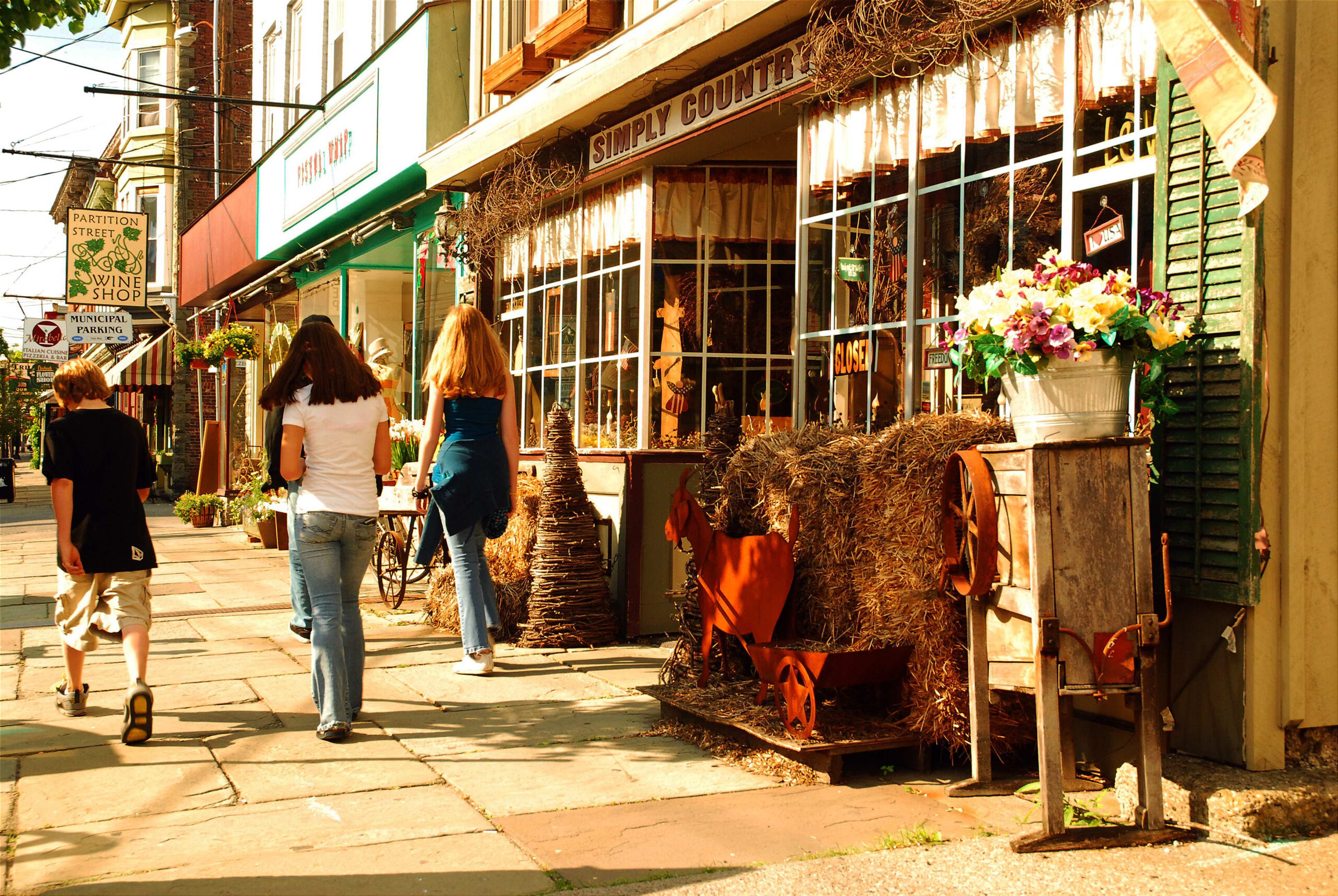
The crowd surges forward.
You turn around.
They are gone.
Just three feet away, probably. Looking at a jacket. Reading a menu. Completely fine.
But your chest has already caved in.
The person who panics when their partner disappears for forty seconds in a shopping center is not weak. They are not broken. They are not too much. They are the product of a past where disappearance meant something real, something formative, something the body filed away under critical information.
1. The Body Votes First

Before your brain has processed the word “gone,” your body has already filed its verdict.
Heart rate up. Jaw tight. Eyes scanning.
This is not a character trait. This is biology doing what it was trained to do.
Your thinking brain stores memories as narratives with beginnings, middles, and ends – it understands that traumatic events happened in the past. But your body stores memories differently, as sensations, muscle tension, and nervous system states. These body memories don’t come with timestamps. To your nervous system, the threat that happened years ago can feel like it’s happening right now.
The crowd didn’t cause your panic. It just provided the stage for a much older production.
Your body voted “danger” long before your rational mind had a chance to object. And it will keep voting that way until something deeper is renegotiated. Not argued with. Not overridden. Renegotiated.
That is the distinction that changes everything.
2. The Alarm That Never Got Turned Off
Somewhere, early on, you learned that being left alone was not a neutral event.
It was a threat. A verdict. An answer.
The amygdala – your brain’s alarm system – often becomes hyperactive after childhood trauma, creating chronic hypervigilance where your brain constantly scans for danger even in safe situations.
The alarm was installed for good reason. Back then, the danger was real.
But alarms don’t update themselves. They don’t read calendars. They don’t know that you are now an adult in a department store with a partner who simply got distracted by a display of coats.
The problem is that the war is over, but your nervous system hasn’t received the memo. You are still scanning the horizon for threats that no longer exist.
The alarm is loyal. That is its tragedy.
3. The Crowd as a Mirror
Public spaces are particular cruelties for people who carry this particular wound.
The noise. The movement. The sheer volume of bodies that are not the one you need.
People suffering from hypervigilance may become preoccupied with scanning their environment for possible threats. They might overreact to loud and unexpected noises, exhibit an overactive startle response, or become agitated in highly crowded or noisy environments.
A crowd strips you of the usual anchors. Familiar furniture. Familiar walls. The coordinates of home.
In a crowd, proximity is the only thing that registers as safety. And when that proximity breaks – even briefly, even innocuously – the system reads it as rupture.
Not inconvenience. Rupture.
The crowd didn’t make you fragile. It just made the old architecture visible.
4. What “Left to Fend for Yourself” Actually Looks Like
It doesn’t always look like abandonment in the cinematic sense.
It doesn’t require a parent who left. A door that slammed permanently. A dramatic exit.
Anxious attachment can be triggered by inconsistent parenting. Parents who act unpredictably might not always be there for their kids, either emotionally or physically. Parents who are not attuned to their child’s needs can also trigger anxious attachment.
Sometimes it looked like a parent who was physically present but emotionally somewhere else entirely.
A house full of people where you still had to figure everything out alone.
An adult who was supposed to be the answer, but kept turning into the question.
Emotional hypervigilance is a survival strategy learned in environments where emotional safety was unpredictable or threatened. Many people who experience it grew up in homes where love felt conditional, emotional responses were volatile, or boundaries were unclear.
You learned to fend for yourself. And part of you never stopped.
5. The Scan
I remember standing in a train station in a city I didn’t know.
My partner had walked ahead to check the board. Thirty seconds, maybe forty. And I felt something ancient and specific move through me – not worry, exactly. More like a tide going out. The sudden exposure of the seabed. The held breath of something about to be confirmed.
They came back, of course. They always came back.
But my body had already run the simulation. And in the simulation, they didn’t.
In complex trauma, hypervigilance takes on a specifically relational character: it’s not just environmental threat-scanning, but relational threat-scanning – the constant monitoring of other people’s emotional states, the reading of micro-expressions, the anticipation of disapproval or abandonment.
That scan is exhausting. It is also automatic. It runs below the level of choice, below the level of logic, in the oldest, darkest part of the operating system.
You didn’t choose it. You inherited it.
6. The Protest Behavior Nobody Names Correctly
When your partner returns and you snap at them, the world calls that controlling.
When your chest floods with relief so intense it almost looks like anger, the world calls that dramatic.
When you cannot explain why a simple separation in a public place dismantled you, the world calls that clingy.
The pattern is a cycle: hypervigilance, constantly monitoring for signs of impending abandonment; activation, where a trigger causes anxiety and fear; protest behaviors, actions taken to reestablish connection; and temporary relief, when the partner responds reassuringly and calm is briefly restored.
None of those labels are accurate.
Protest behavior is not manipulation. It is a nervous system trying to complete a circuit that got interrupted decades ago.
It is the body saying: I need to know you’re still there. In the only vocabulary it was ever taught.
7. The Nervous System’s Outdated Map
Your nervous system is running directions to a city that no longer exists.
When love or safety felt unpredictable earlier in life, your system learned to anticipate shifts before they happened. That sensitivity once helped you survive and keep connection.
That map was drawn under duress. Under real, legitimate, survival-level duress.
But maps age. Territories change. The roads that kept you safe back then now take you somewhere that looks, from the outside, like anxiety. Like overreaction. Like neediness.
Even brief or perceived distance from a loved one may trigger panic, as the system equates separation with abandonment or annihilation. Neurobiological research supports that perceived social disconnection activates the brain’s pain centers.
The map says danger. The street says safety. And you are standing at the intersection, paralyzed.
The map needs updating. Not shaming. Updating.
8. The Cost of Running This Program 24/7
You scan. You monitor. You calculate proximity at all times.
In a restaurant, you track where they went when they excused themselves. In a supermarket, you note the aisle. In a party, you locate them in the room before you can exhale properly.
A continuous state of hypervigilance significantly impairs our ability to concentrate on specific tasks and attend to other responsibilities, as a considerable portion of our cognitive capacity is devoted to scanning for potential threats.
This is not free. This costs something.
The physical cost of chronic hypervigilance is significant and often underrecognized – including elevated cortisol, immune dysregulation, cardiovascular stress, and increased vulnerability to autoimmune disease.
You are paying a physical tax on an emotional debt that was never yours to begin with.
The invoice was sent to the wrong address.
9. The Difference Between Clinginess and Survival Logic
Clinginess is a choice. A preference. A pattern someone could simply decide to change over breakfast.
This is not that.
This is not an overreaction. It is the nervous system responding as though emotional safety were as vital as physical survival.
Hypervigilance isn’t a character flaw or something you can simply think away. It’s your nervous system doing what it learned to do when safety wasn’t guaranteed.
The distinction matters because the intervention changes completely.
You cannot think your way out of a survival response. You cannot journal your way out of a nervous system that was shaped over years of unpredictable conditions. You cannot just decide to be more relaxed about it.
Healing anxious attachment is not just about changing thoughts – it’s about re-patterning the nervous system. Somatic Experiencing offers a gentle, body-based path toward that change.
Different problem. Different tools. Different timeline.
10. The Part Where the Body Finally Gets the News
At some point – not in an epiphany, not in a single session, not in a straight line – the nervous system has to receive information that the old world doesn’t still exist.
Not because someone told it. Because it felt it.
Since attachment patterns are stored in the body and nervous system, somatic body-based approaches can be particularly helpful in addressing the physical manifestations of anxious attachment.
Techniques such as breathwork and grounding exercises are commonly used to help clients reconnect with their bodies and feel more secure and present. Grounding techniques involve connecting the body with the earth to calm the nervous system, while resourcing identifies relationships, places, or things that make clients feel safe and calm.
This is the heaviest part. Not because healing is painful – though it can be. But because it requires something almost impossibly tender: allowing the body to be wrong about danger. Repeatedly. In small doses. Until a new pattern, quieter and less urgent, begins to form in its place.
Healthy attachment may feel unfamiliar, especially if your body is used to chaos. But it is recognizably different on a somatic level.
This is the work. Not the dramatic kind. The slow, deliberate, almost invisible kind. The kind that happens when your partner steps away in a crowd and your chest tightens – and then, instead of the full collapse, something steadier holds.
The body is not confused. It is faithful. Faithful to a version of the world that no longer applies, yes – but faithful with a loyalty that was, once, the only reason you survived intact enough to be standing here now, reading this, recognizing yourself in these words.
The work is not to silence the faithful part. It is to walk it, slowly and without shame, into the present tense – where the crowd is just a crowd, and the person who stepped away is already turning back around to find you.