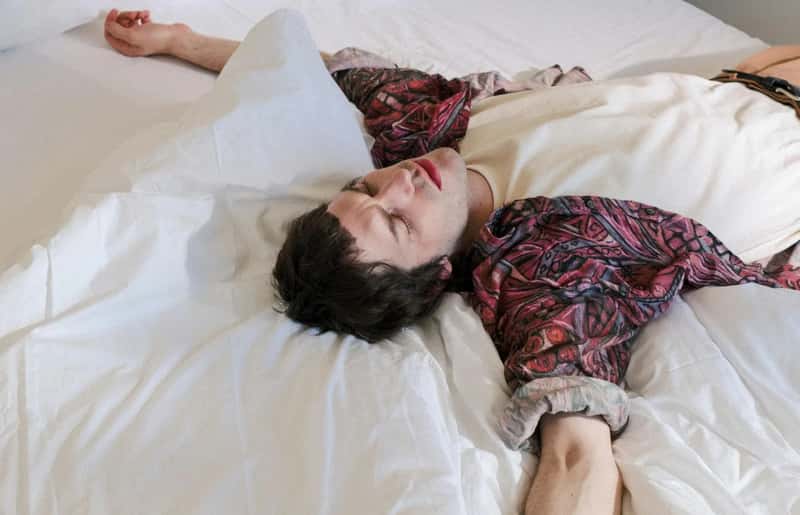
You closed the blinds.
You lay down.
And then – before your eyes even shut – the voice arrived.
You should be doing something.
That voice isn’t yours. Not originally. It was handed to you, quietly, over years of conditioning that taught you busyness is virtue and stillness is sin. The gap between the person you built for the world – the achiever, the grinder, the one who never wastes a moment – and the person lying in a hotel room at 2 PM trying desperately to exhale, is not a gap of laziness. It is a gap of identity.
1. The Installed Voice
Before you ever had a word for productivity, someone placed a measuring stick inside you.
Maybe it was a parent who worked two jobs and never sat still. Maybe it was a classroom that rewarded output over presence. Maybe it was a culture that decided, somewhere around the industrial revolution and never looked back, that your worth could be calculated in units of work completed.
Many of us were raised in homes where survival was the priority – where parents worked multiple jobs, navigated barriers, and carried weight without space to process it. In those environments, hustle equaled safety. Productivity meant worth.
The voice in your head on vacation is not a conscience. It is a recording.
It plays on the beach. It plays in the silence of a foreign afternoon. It plays loudest the moment your body tries to rest, because rest is precisely when the programming has no task to distract it. You didn’t choose this voice. But you keep obeying it.
And that’s the part worth examining.
2. The Morality of Motion
Somewhere in the American psyche, motion became a moral category.
Not just good strategy. Not just smart time management. Moral.
America loves “hustle.” We invented productivity guilt – feeling bad if we aren’t moving faster, even as we fill “rest” time with errands and extra logistics.
The result is a culture where a nap in the middle of the day – even on vacation, even with no obligations, even in a country where the afternoon siesta is a civilizational cornerstone – feels like a confession of weakness.
Modern society often rewards constant activity, making rest feel like a luxury instead of a necessity. But this is not a natural human condition. It is a designed one. It was built by systems that benefit from your perpetual motion. And it has been so thoroughly internalized that most people can no longer tell the difference between what they want and what they’ve been told to want.
The moral fog of productivity is the most effective cage ever constructed. It has no bars. It doesn’t need them. You carry it with you, on every flight, to every destination.
3. The Nervous System That Never Clocked Out
Here’s what the guilt actually is, underneath the narrative.
It’s not a value judgment. It’s a physiological alarm.
At its core, productivity guilt isn’t about laziness. It’s about your nervous system believing you must earn rest, justify rest, or avoid rest to feel worthy.
When your nervous system has learned that staying busy keeps you safe, slowing down feels threatening – not relaxing.
Think about that for a moment. Your body, on a sun-warmed afternoon in a city you saved for years to visit, reads stillness as a threat. Not because you are broken. Because you were trained. The nervous system is not ideological. It doesn’t know you’re on vacation. It only knows the patterns it was built around. And if the pattern was always move, produce, justify your existence through output – then the absence of motion registers as danger.
The guilt isn’t your conscience speaking. It’s your alarm system misfiring.
4. The Earned Rest Myth
There is a specific species of thought that infects the resting mind.
You haven’t earned this.
It implies that rest is a prize. A reward dispensed only after sufficient suffering. A thing you must qualify for through exhaustion, through output, through some invisible threshold of productivity that is never, ever actually reached.
Hustle culture quietly enforces these dangerous ideas: Rest is optional, not essential. If you stop, you risk falling behind. Your output defines your value. If you’re not producing, you’re not contributing. You can sleep when you’re dead. Rest becomes something to earn, not something you need.
The cruelty of this myth is its infinite loop. You cannot earn enough to feel deserving of rest, because the system that defines “enough” is the same system that profits from your perpetual striving. The vacation nap is not a reward you failed to earn. It is a biological requirement you have been gaslit into postponing.
5. The Scene I Keep Returning To
I was in Lisbon. A city built, it seems, specifically for the unhurried afternoon.
It was a Tuesday. The light was doing that particular Lisbon thing where it turns everything golden and slightly heartbreaking. I had a balcony. I had nowhere to be. I had – and I say this without exaggeration – fourteen unread work emails waiting on my phone.
I lay down. And immediately, the inventory began. The list of things not done. The mental ledger of justifications for stillness. The calculation of whether I had, in fact, worked hard enough in the preceding weeks to deserve this horizontal moment in a foreign city on a Tuesday afternoon.
I had. Of course I had. But the ledger doesn’t care about facts. Productivity guilt is a byproduct of hustle culture that convinces us we’re only valuable when we’re producing, achieving, or improving ourselves in some way. I lay there, in one of the most beautiful cities on earth, auditing my worthiness to close my eyes.
That is the cost. Not the nap. The cost is the inability to simply be inside a moment you built your life around reaching.
6. The Optimized Rest Trap
Here’s where it gets darker.
Because even when we give ourselves permission to rest, the idea that you should be “leveling up” your rest – turning your downtime into an opportunity for optimization – is a heavy, invisible weight so many carry without realizing it. Hustle culture has made it difficult for people to truly just be. It’s no longer enough to rest; we’re expected to rest well, rest productively, and emerge from every break as a more polished, efficient version of ourselves.
The meditation app. The breathwork. The “recovery protocol.” The sleep tracker that grades the quality of your unconsciousness.
We have taken the last frontier of unstructured human experience – the nap, the daydream, the aimless afternoon – and colonized it with metrics. Instead of rest being a radical, healing act of doing nothing for no reason other than you deserve to, it becomes a means to an end: a way to recharge so you can produce more later. And that’s not real rest.
Real rest asks nothing of you. Not even your improvement.
7. What the Brain Actually Needs
The science is not ambiguous on this point. It is simply inconvenient.
Scientifically, rest improves memory, decision-making, and creativity. Our brains process information better during rest than in overdrive.
The human brain is not designed for constant, unrelenting work. It thrives on balance, rest, and stimulation. When we push ourselves too hard for too long, the brain begins to suffer, leading to cognitive and emotional impairments that directly undermine productivity and well-being.
Our brains need time to be unfocused, such as during free time. This allows us to maintain functional problem-solving skills and creativity, which otherwise may take a hit. Additionally, giving the brain enough time to rest has been tied to lowering rates of depression and anxiety.
The vacation nap is not a detour from your best self. It is the road. The guilt you feel is not a signal to get up and do something. It is the residue of a system that built itself on your restlessness. Recognizing the difference between a biological need and an internalized command is one of the more quietly radical things you can do for yourself.
8. The Childhood Download
Nobody arrives at adulthood accidentally guilty about rest.
The programming begins early and runs deep.
These kids learn that being perfect and productive is the only way to stay worthy of affection and avoid criticism. The child who equates stillness with danger grows into the adult who cannot close their eyes on a Tuesday afternoon in Lisbon without running a moral audit.
Deep-rooted beliefs: Messages from childhood or past environments may have taught you that rest is lazy or unearned.
These are not character traits. They are inherited scripts. Passed down through family systems, cultural narratives, and an educational architecture that grades you on output from the age of five. These survival-based beliefs don’t just vanish as we get older. Instead, they become internalized voices: “You’re being lazy.” “Don’t be ungrateful.” “There’s no time to rest when there’s so much to do.”
The nap feels like a confession because it was framed as one, long before you ever booked a flight.
9. The Identity Cost of Never Stopping
There is a version of you that exists only in motion.
That version has a title, a inbox, a output, a schedule. It is the version that is legible to the systems around it. Comprehensible. Valuable in measurable ways.
But there is another version – quieter, older, closer to the bone – that exists only in stillness. That version doesn’t produce anything. It just exists. It watches the light move across a ceiling. It breathes. It notices things without cataloguing them.
This feeling is generated when you link your behavior, performance, and productivity with self-worth. With this belief system, being less productive becomes equivalent to a personal failure or flaw.
The tragedy is not that people are tired. It is that people have become strangers to themselves because they have never allowed themselves the stillness necessary to remember who they are outside of what they do. The anxiety from hustle culture convinces you that if you stop – even for a second – everything will fall apart. This fear-driven mindset actually reduces performance over time instead of enhancing it. The person on the other side of the nap is not the same person who lay down guilty. But you have to be willing to cross that threshold to find out.
10. The Permission You Were Never Given
Nobody is going to give you the permission you’re waiting for.
Not your employer. Not your inbox. Not the invisible tribunal of productivity culture that you keep appealing to, hoping for an acquittal that never arrives. The permission has to come from inside the system that was built to withhold it – from you.
Needing rest, or feeling demotivated when you are mentally exhausted, is not a moral failing but a condition of your psyche.
Rest is not a reward for productivity. Rest is your birthright. When we choose rest – especially when it feels unnatural – we’re breaking generational cycles.
Rest and connection aren’t the enemies of productivity; they’re the foundation. Taking time to pause, laugh, and rest isn’t “laziness”; it’s biological and spiritual intelligence. The afternoon nap in a sun-bright room, in a city you chose, in a life you built – that is not a moral failure. That is the point of all of it. The destination was never the productivity. The destination was always the ability to finally, fully, stop.
There is a particular quality of afternoon light that only exists when you are not moving. You cannot see it from a desk. You cannot capture it in a productivity metric. It arrives only when you are horizontal, unscheduled, breathing slowly, letting the world run without you for an hour.
The guilt will still come. For a while. It is well-trained and persistent. But guilt is just a feeling – not a directive, not a verdict, not a measurement of your worth. It is the last echo of a system trying to reclaim you from yourself. You are allowed to let it speak and still choose the pillow.
The nap is not what you’re recovering from. It’s what you came here for.