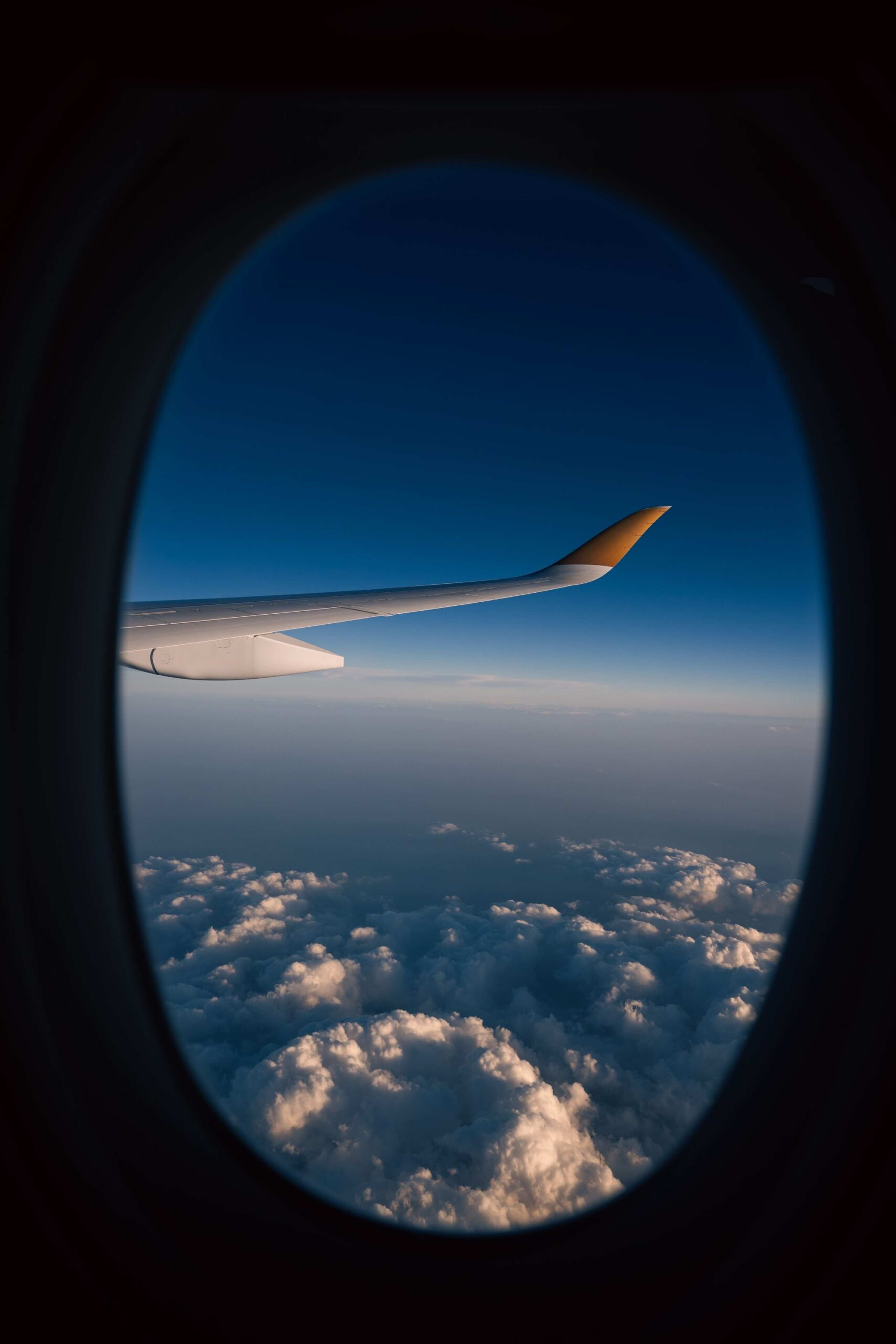
You book the flight six months in advance.
You repack the bag three times.
You land somewhere new and something – something you can’t name yet – loosens in your chest.
Back home, you are reliable. You are kind. You hold doors. You remember birthdays. You listen longer than most. And yet you leave every dinner party feeling like furniture. Functional. Unnoticed. Quietly there.
There is a specific kind of person who feels this way. Not broken. Not antisocial. Just misaligned. Feeling invisible is not a personal failure. It is a relational signal – pointing to unmet emotional needs, misaligned spaces, or learned survival patterns. The tragedy is that most people with this feeling never realize it isn’t about them. It’s about the rooms they’ve been standing in.
Travel, for these people, isn’t tourism. It’s revelation. Because introverts and highly sensitive people tend to be highly observant, travel can be enriching as they take in the details of their surroundings – and sometimes, when stepping into unknown territory, they feel greater permission to be themselves.
The distance between who you perform at home and who you quietly are shrinks the moment the plane leaves the tarmac. Abroad, no one has a script for you. No one expects you to be the version of yourself they’ve already decided you are. There is no history. No predetermined role. Just you, a cobblestone street, and the terrifying freedom of being a stranger.
1. The Unnamed Arrival
Nobody knows your name yet.
That’s not loneliness. That’s oxygen.
When you are home, surrounded by your culture and the people who know you, there are a lot of spoken and unspoken expectations. Your role is already cast. You are the reliable one. The quiet one. The one who doesn’t cause trouble. Abroad, that casting call hasn’t happened yet. The slate is genuinely blank.
This is the first quiet behavior: you arrive without your biography. You don’t lead with your job title or your history or your reputation. You arrive as a human being in a new city, moving at your own pace through a market, a metro station, a harbor at dusk. And the absence of context – the thing that felt suffocating at home – becomes space.
Real space. Breathable space.
The harder you try to belong, the lonelier you feel. Real belonging doesn’t require performance. It’s something that happens when you stop auditioning. Abroad, you stop auditioning by default. Nobody handed you a script. So you just… exist. And for people who’ve been performing their whole lives, that is radical.
2. The Slow Pace That Nobody Punishes
At home, your pace is a problem.
You linger too long. You think before you answer. You need a moment to process what just happened before you can respond to the next thing.
In a familiar social ecosystem, that slowness gets read as disengagement. As aloofness. As something wrong with you. Introverts live in a world that is heavily biased toward extroverts. We celebrate fast-talkers and busybodies. We also live in a culture of more – more stuff, more money, more activities. All of this is overwhelming for introverts who prefer a slower, more gentle approach to life.
Abroad, your pace becomes a philosophy.
You are the tourist who sits at the café for two hours. You are the one who takes the long way to see what’s around the corner. You move at a slower pace when you travel, so there are things you didn’t get to see the first time around. That isn’t a flaw. That’s depth. Locals can feel it. Other travelers can feel it. The person behind the gelato counter who watches a hundred tourists blast through per hour – they feel it when you actually stop, look them in the eye, and ask what their favorite flavor is.
Your slowness isn’t a deficiency. It was always a gift. You just needed an audience that recognized it as one.
3. The Eye Contact That Means Something
You notice people. That’s always been your thing.
At home, it goes unnoticed – or worse, it makes people uncomfortable. You see the cashier’s tired eyes and ask if she’s okay. Your coworkers look at you like you’ve said something strange. Emotional noticing, at home, is a social miscalculation. People are moving too fast to be seen that deeply.
Abroad, the calculation changes.
The fastest way to be seen is to see. People open up to those who make them feel understood. When you listen with real curiosity – not just waiting for your turn to talk – you become unforgettable. In a foreign country, where everyone else is checking their phones for directions and rushing past murals and monuments, you are the one making eye contact with the grandmother selling spices. You are the one who nods at the street musician instead of walking past.
That noticing – the quiet, careful, fully present kind – is received as extraordinary. Because abroad, it is. You are the rarity. The person who showed up with their whole attention.
4. The Genuine Curiosity That Finally Has a Room
You’ve always been deeply curious. But curiosity, at home, can feel like an imposition.
Ask too many questions about someone’s job and you’re intense. Want to know how something works and you’ve dragged the dinner conversation somewhere weird. Your intellectual hunger has always been slightly too much for the spaces you’ve been given.
Something as simple as going to the supermarket abroad becomes much more appealing than at home because it’s a chance to learn something new about the culture. It’s a curiosity more than a necessity.
Abroad, your curiosity is the correct response. It’s expected. Welcomed. A local who explains their city’s history to a genuinely fascinated stranger is having a meaningful Tuesday. They will remember you. You gave them something rare: the experience of being genuinely interesting to someone.
Novelty causes your brain to release a whole load of dopamine. It feels so good that it motivates you to search for more of that fix. But here’s the deeper truth – that dopamine isn’t just about newness. It’s about you, finally, being the right person in the right room. Your natural wiring finally fits the environment.
5. The Quiet That Reads as Confidence
I remember sitting at a bar in Lisbon once. Alone. Notebook open, wine half-finished, watching the light change over the Tagus.
The bartender asked where I was from. We talked for forty minutes about fado music and grief and why both things existed in the same tradition. He told me I was “a good kind of quiet.” I didn’t know what to do with that. Back home, my quiet had always been diagnosed as a problem.
This is the fifth quiet behavior – and perhaps the most psychologically significant. The invisible state at home is often created by overwhelm, anxiety, bloated obligations, daily expectations, and burgeoning routines that slowly erase the clarity of self. This invisible state is a phenomenon in which the authentic self recedes into the background due to other impacting issues.
Abroad, the obligations evaporate. What remains is just you – unhurried, uncluttered, present. And presence, in the absence of performance, looks like confidence. Not because you’ve changed. Because the noise that was drowning you out has finally gone quiet.
Your silence stopped being a deficiency. It became a statement.
6. The Deep-Listening That Strangers Notice Immediately
Most people don’t really listen. They wait.
You have always been a listener. A real one. The kind who tracks what someone said three sentences ago and asks about it. The kind who notices when a person’s voice changes key mid-story. At home, this is either taken for granted or mistaken for passivity.
Abroad, it is almost miraculous.
In a world where most people half-listen while scrolling, being genuinely engaged makes you shine like a lighthouse. A fellow traveler on a train in Japan, a guesthouse owner in Morocco, a retired architect at a hostel in Buenos Aires – they will all feel it. Your full attention is the rarest currency in the world. And you’ve been giving it away for free your entire life while the people back home were too distracted to spend it.
Abroad, they spend every penny. And they remember you because of it. We need to feel understood, recognized, and affirmed – and really, we just need to feel heard, by someone. You are that someone. You have always been that someone.
7. The Comfort With Solitude That Reads as Groundedness
You eat alone. Confidently.
You take day trips without a companion. You sit in cathedrals and just… breathe. At home, this behavior requires constant justification. “Why didn’t you bring someone?” “Don’t you get lonely?” “Isn’t that sad?”
Abroad, solo comfort is quietly respected.
Solo travel is perfect for introverts. There’s no obligation to commit to a group of people if you don’t feel comfortable around them. You can just leave if you feel left out or don’t enjoy the activities they’re doing. It’s both flexible and empowering.
But it’s more than logistics. There’s a psychological weight to watching someone be fully at ease in their own company. It signals security. Rootedness. Strangers are drawn to people who don’t seem to need them. It is the ultimate low-pressure invitation. You aren’t performing comfort. You have it. And because you have it, others want to be near it.
Not enough people take the time to reflect while they’re travelling, but for certain travelers it’s natural. They need that time or they go crazy. And travel is nothing if not a reflective time. Your solitude isn’t emptiness. It’s architecture. It’s the thing other people are desperately trying to find.
8. The Absence of Social Debt
Here’s a brutal truth about home: you owe people a version of yourself.
You owe your family the agreeable child. You owe your coworkers the professional. You owe your social circle the role you’ve held for fifteen years. These debts accumulate silently. And they are paid in the currency of self-suppression.
Abroad, the debt is cleared.
Your home country hasn’t changed – you have changed. It’s important to understand that you’ve adjusted your perspective and worldview. That shift in perspective is precisely what creates the relief. You realize, often for the first time, how much of your identity at home was a negotiation. How much of your behavior was a treaty.
In a foreign city, you make no treaties. You speak because you want to. You leave when you want to. You stay because it’s interesting, not because it’s obligatory. It’s okay to be seen and to take up emotional space. It’s okay to say, “This is who I am,” and let some people walk away. The ones who stay – they’re your people. Abroad, every connection is voluntary on both sides. That symmetry is the foundation of genuine recognition.
9. The Authentic Kindness That Doesn’t Expect Return
You are kind without keeping score. That’s always been true.
At home, in established social circles, kindness without reciprocity becomes invisible. It is absorbed into the architecture of who you “just are.” Nobody thanks the load-bearing wall for holding up the ceiling.
Abroad, your kindness arrives without history. It lands clean.
You help someone read a map. You let someone take the last bus seat. You smile at a child in a market without needing anything back. These small acts of unrequited generosity are noticed in a foreign context the way they’re never noticed at home. Perhaps you feel only seen and appreciated for what you can do, instead of for who you are inside. That is the exact dynamic that travel dismantles. Nobody knows what you can do yet. They only know how you made them feel in this moment. And for a person like you – someone who leads with warmth – that is everything.
The moment is the whole resume.
10. The Instinct to Go Deeper, Not Wider
You don’t need to see ten cities in eight days.
You need to understand one alleyway completely.
This runs counter to how most people travel. The social currency of tourism is volume. How many countries. How many stamps. If you feel invisible, you might think you need more people, bigger groups, wider circles. But quantity doesn’t solve disconnection – it amplifies it. You don’t need a crowd to feel seen. You need resonance.
Your travel instinct was always about resonance. You go slow. You return to the same café three mornings in a row because the owner started to recognize you on day two. You learn four words in the local language not for utility but for respect. You choose the one local bookshop over ten tourist attractions. As an introvert, travel has a deeper impact because you naturally observe, and see, and think. You take the time to take it all in.
And this is the secret: depth creates visibility. The person who returns to the same place twice gets a name. Gets a story. Gets seen. You were always playing the long game. You just needed a playing field that rewarded it.
11. The Weight Underneath Everything Is Lifted
None of this is really about travel.
It is about the architecture of environments – which ones suffocate who you actually are, and which ones finally give it room. You stop asking, “What is wrong with me?” and start asking, “Where am I not being seen?” Reclaiming visibility does not mean becoming louder or forcing attention.
It means choosing spaces where presence is valued, expressing yourself honestly, and allowing yourself to take up emotional space without apology.
The behaviors listed above are not travel behaviors, not really. They are your behaviors. They always were. The noticing. The depth. The patience. The quiet. The genuine warmth. The preference for one honest conversation over twenty polished ones. These were never the problem.
The problem was the rooms. The rooms at home had already decided what you were, and you kept showing up hoping they’d change their minds.
They didn’t. But the rooms abroad had no opinion of you at all. And in that neutral space, something important happened: when you begin to see yourself clearly and place yourself where recognition flows naturally, the mind slowly relearns that existence alone is enough – and that being seen starts from within.
The traveler who feels most alive in foreign cities is usually the person who was always most alive – just chronically placed in the wrong context.
Symptoms of re-entry can range from feeling like no one understands you or how you’ve changed to feeling panicked that you will lose part of your identity. That panic, upon returning home, is worth sitting with. Because it is not grief for a place. It is grief for a version of yourself that finally got to exist without apology. And somewhere in that grief is a question worth asking slowly, with honesty, in the quiet of a room that has no passport stamp to prove anything: what would it take to build that kind of space here?
Recommended Reads: