The bag is packed.
The car is waiting.
Your feet are still bare on cool grass.
You don’t want to put shoes on. You understand, dimly, that this resistance is not about the shoes.
There is a version of you that exists back home. He answers emails. She sets alarms. They commute, scroll, perform. That version has been running on autopilot – a ghost in the machine, a mind suspended in midair, barely tethered to a body that is simply along for the ride. And then you went to the retreat. You lay on the earth. You breathed. You moved. You felt things – in your sternum, behind your eyes, at the base of your throat – that you had forgotten were even there. Now someone is asking you to go back. And every cell in you is whispering: not yet.
1. The Body Has Been Waiting
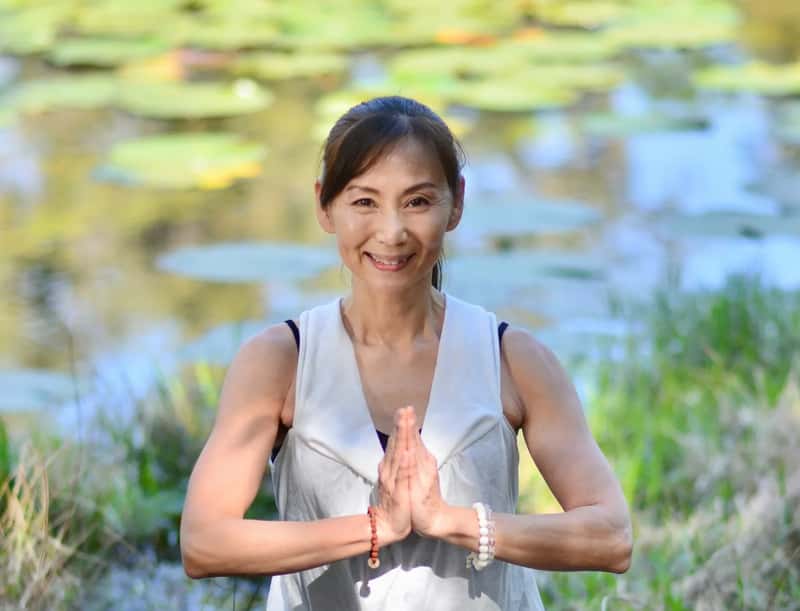
Trauma – and ordinary, daily stress – can register within our bodies on a cellular level.
Not just the big ruptures. The small ones too.
The meeting where you swallowed your real opinion. The Sunday afternoon you spent in your head rehearsing a conversation that never happened. Years of treating your body like a vehicle you occasionally take to the mechanic.
The visceral experience of fight, flight, freeze, or submit is stored in the body, so when those memories are triggered, we feel them there – possibly without conscious awareness that a memory was even triggered at all.
This is what the retreat cracked open.
Not a revelation. A return.
Your body was never the problem. It was just the place you stopped visiting. And now that you’ve been back – really back – the thought of leaving again feels like abandonment.
2. The Cognitive Default
Modern life is designed for the mind.
Screens. Deadlines. Abstractions. Strategy. The whole architecture of adult productivity is built on the premise that thinking is living.
Typical talk therapies engage only the mind, not the body, encouraging people to become aware of disturbing thoughts and behavior patterns and work to change them. And so does most of Western life, frankly.
We are rewarded for our cognition. Our eloquence. Our plans.
Nobody gives you a raise for noticing the tightness between your shoulder blades. Nobody promotes you because you finally located grief in your ribcage.
Therapy and work culture often emphasize “brain-based issues,” assuming the mind and thinking style to be causing psychological distress. But many times, it isn’t “just in your head.”
You have been overclocking a single processor for decades. The retreat handed you back the rest of the machine. No wonder you don’t want to go home to your desk.
3. The Permission Structure
Here is the uncomfortable truth beneath the discomfort.
The retreat gave you permission to feel.
Not in a vague, inspirational-poster way. In a structured, held, facilitated way. Somatic practice cultivates an awareness of bodily sensations and teaches people to feel safe in their bodies while exploring thoughts, emotions, and memories.
Safe. That word does a lot of weight-lifting.
Because your real life – your inbox, your family dinner table, your performance review – does not always feel like a safe container for sensation. So you learned, early and efficiently, to route everything through your head. Analysis instead of feeling. Narrative instead of sensation.
The retreat dismantled that routing.
And now you’re afraid of what happens when the container disappears and you’re back in a world that doesn’t know what to do with a person who is actually, fully, inconveniently present.
4. The Nervous System Doesn’t Lie
Your body registered the difference immediately.
The first morning of the retreat, something in your chest loosened. You probably didn’t even notice it happening. By day three, your shoulders had dropped half an inch. By day five, you were breathing from your belly without trying.
The autonomic nervous system shapes how individuals respond to stress and safety. Drawing from Polyvagal Theory, the vagus nerve regulates emotional and physiological states and supports returning to a “Resilient Zone” where optimal functioning occurs.
You were, for perhaps the first time in years, inside your Resilient Zone.
Your nervous system was not braced. Not performing. Not managing.
Going home means returning to the triggers that yanked you out of that zone every single day – the ping of the notification, the weight of the unspoken, the slow ambient hum of a life lived slightly too fast. Your nervous system already knows this. That’s the dread you’re feeling in your stomach right now. It isn’t weakness. It’s data.
5. The Week I Couldn’t Drive Away
I sat in the parking lot for forty minutes after my own retreat ended.
Engine on. Hands on the wheel. Going nowhere.
I told myself I was waiting for traffic to clear. I was not waiting for traffic to clear. I was waiting for something to tell me it was okay to carry this – this aliveness, this peculiar softness in my chest – back into ordinary life. Nobody came to tell me that. So I eventually just drove. And cried somewhere on the highway, not from sadness, but from the specific grief of re-entering a world that moves too fast to feel anything below the neck.
That parking lot moment was diagnostic. It told me exactly how far I had drifted from my own body before the retreat. And it told me, quietly, that the distance between who I was in that place and who I was required to be back home was not sustainable. That gap was the real problem. Not the packing. Not the traffic. The gap.
6. The Identity You Wore There
At the retreat, you were not your job title.
You were not your relationship status, your mortgage, your curated personality, your decade-long coping mechanisms dressed up as personality traits.
You were just a body in a room, learning to listen.
If talk therapy has reached its limits for a patient, somatic therapy holds that the body is a largely untapped resource for psychotherapy – including what can be learned from one’s gestures, posture, facial expressions, eye gaze, and movement.
What the retreat revealed was not a new identity. It was the one underneath the performed one. The one that exists before the resume. Before the reputation. Before the carefully constructed story of who you are that you tell at dinner parties.
Going home means putting that older, louder identity back on like a coat you’ve outgrown. Of course it feels wrong. It is wrong. The question is what you’re willing to do about it.
7. The Relapse Into Thinking
It happens fast.
Within 48 hours of returning, most people report that the clarity from a retreat has begun to calcify back into thought-loops. The old mental furniture rearranges itself. The anxiety about the future, the regret about the past – all of it reasserts its dominion.
The positive and euphoric feelings experienced during transformative time away, juxtaposed with the increased stress and responsibility upon returning home, can create a significant disconnect in the brain.
This disconnect is the relapse into thinking.
The body-knowledge you gathered doesn’t vanish. But it gets buried under the avalanche of cognitive demand. The to-do list wins. The calendar wins. The head wins – again.
The ability to influence participants’ health once they return home is dependent on many factors, including the type of experiences provided during the retreat program and the provision of follow-up activities. Without a bridge – a daily practice, a ritual, a structure – the body goes quiet again. And the mind reclaims its throne.
8. The Fear Beneath the Fear
Here is what nobody says out loud in the closing circle.
The real terror of going home is not that you’ll forget the retreat.
It’s that you’ll remember it. That you’ll carry the memory of what it felt like to be fully inhabiting your life – and then spend every subsequent Tuesday in fluorescent lighting aware of the precise distance between that aliveness and your current reality.
Travellers returning from a life-changing experience may experience post-holiday depression for a specific psychological reason – not because the experience was overwhelming, but because they miss the exhilaration of it.
The somatic retreat version of this is more precise. You don’t miss the place. You miss yourself. The version of you that was grounded, present, unhurried. The version that breathed before speaking. That ate slowly. That actually slept.
The fear is that version requires conditions you cannot replicate at home. And that might be true. Or it might be the story your exhausted, defended mind tells you to avoid the terrifying work of integration.
9. The Body’s Argument for Staying
Pay attention to where this feeling lives.
Not the intellectual reluctance – the one that says I need more time, the retreat was too short, I’m not ready. That’s your mind, doing what minds do: building a case, constructing a rationale.
The real argument for staying is physical. It is in the weight of your feet on the ground. The quality of your exhale. The absence of the tension headache that has been your constant companion for three years.
By focusing on and amplifying the sensations in your body, you begin to deepen your healing experience and allow for change that you can “feel” in your skin.
Your body is not being dramatic. It is being accurate.
It is telling you that the life it just experienced – slower, softer, more honest – is not a luxury. It’s a requirement. The question the drive home is really asking you isn’t do you want to leave. It’s asking you whether you’re willing to bring this body – this listening, breathing, feeling body – back with you into real life. Or whether you’ll leave it here, like a coat checked at the door.
10. The Return Is the Practice
This is the hardest thing anyone will tell you about somatic work.
The retreat was not the healing.
The retreat was the demonstration. It showed you that another state of being is possible. That you can inhabit your body rather than just operate it. Meaning – making sense of the connection between your body’s sensations and your emotional experiences – is where you begin to understand why you feel certain ways, and how the past has shaped your present. Finding this meaning helps integrate mind and body, allowing you to process your life more holistically.
The return is not the end of the retreat. It is the beginning of the actual work.
Because anyone can be embodied in a field with no Wi-Fi and meals made by someone else and no school run and no Slack notifications. The practice is being embodied in your kitchen on a Wednesday morning when everything is going sideways. The practice is pausing before you send the email. Noticing the constriction before it becomes a migraine. Breathing before you answer.
By acknowledging and listening to the body’s subtle cues, a person empowers themselves to live a more balanced and mindful life – proving that the path to enhanced somatic awareness is both a journey and a rewarding destination.
The retreat ends. The embodiment doesn’t have to.
There is a version of this story where you drive home, unpack the linen trousers, put them in a drawer, and by Thursday you’re back in the headspace you left. The emails get answered. The meetings get attended. The body gets forgotten again, fed at intervals, rested inadequately, consulted only when something goes wrong. Most people live this version. It is easier in the short term. It is the path of least resistance through a world designed to keep your attention above the neck.
But there is something that doesn’t fully close once it’s been opened. Something in the way you understand sensation now – the faint topography of emotion in your chest, the language your shoulders speak when they are carrying more than weight. You have been given the alphabet of a language your body has been trying to use for years. The question is not whether you go home. You go home. The question is whether you take this particular literacy with you – whether you remain someone who is in their life, or whether you drift back to someone who merely thinks about it from a comfortable distance.
The car is still running. The grass is still cool. Somewhere between here and home is the person you are deciding to become – and they are made not of plans and résumés and carefully curated self-concepts, but of breath, and weight, and the quiet, radical act of feeling exactly where you are.