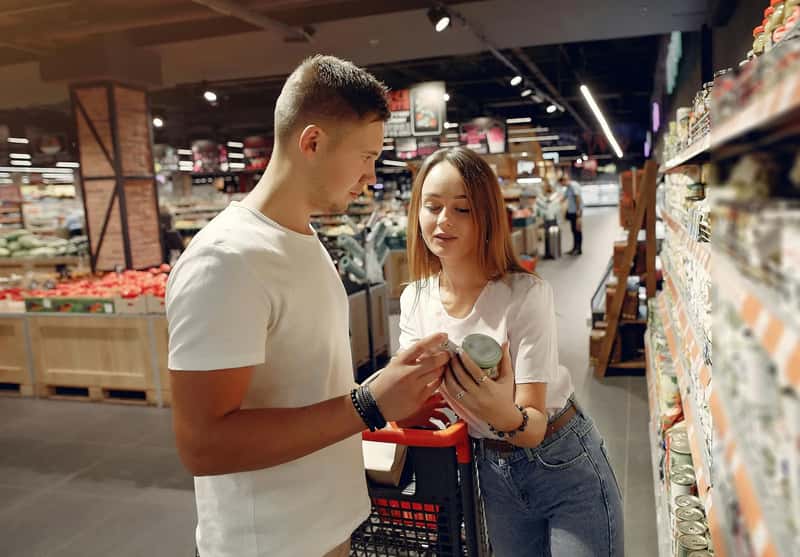
You are standing in a foreign grocery aisle at 9 AM.
You do not need what is in your hand.
You cannot read the label.
You buy it anyway.
There is a name for the gap between the person you became and the child who never got to linger. The child who was rushed past the produce. Who was told to stay close, stop touching, keep moving. Who learned early that the world of scent and color and texture was not for stopping in – it was for getting through. You grew up. You started traveling. And suddenly, in a market in Lisbon or a corner shop in Osaka, you find yourself doing something radical: you slow down. You touch the packaging. You smell the bread. You look at a bottle of local olive oil like it contains a secret you were always meant to know.
This is not tourism. This is archaeology. The traveler in the foreign grocery store is not performing for anyone. They are, for the first time in a long time, just a person who wants to feel something small and real.
1. The Permission to Slow Down
Your childhood home had a rhythm. And the rhythm was not yours.
Meals were scheduled. Shopping was functional. The grocery run was a task, not an experience. You were not invited to wonder at the color of a persimmon or the weight of an unfamiliar jar. Speed was the language. Efficiency was the love language.
People who love to visit grocery stores while traveling tend to exhibit strong characteristics of openness – curious, comfortable with unfamiliar environments, and likely to seek out new encounters. But openness is not a trait you were born with and others weren’t. It is a trait that was either given space to breathe, or quietly suffocated by routine.
When you stand in a foreign market and take your time, you are not being inefficient. You are healing an old impatience that was never really yours to carry. You are giving the child in you the permission that was consistently withheld. The fluorescent hum overhead is not a grocery store sound. It is the sound of time returning to you.
Slow down. This aisle belongs to you now.
2. The Texture of the Unknown
There is a specific joy in holding something you cannot immediately categorize.
A root vegetable with a name you cannot pronounce. A wrapped candy with a cartoon character you do not recognize. A can with illustrated waves on it – fish inside, probably, but you are not certain. The uncertainty is not threatening. It is nourishing.
People’s sensory experiences in food shopping changed over time as industrialization and standardization pushed for a bright, uniform look of food – but this came at a cost to the other senses and diminished more localized relationships with food. In your childhood home, the unknown was probably managed out of existence. The same brands, the same aisles, the same cart route every week. Familiarity was safety. But familiarity is also a cage with the door left open.
Your hands on a foreign product are your hands on a new vocabulary. You are not just shopping. You are learning to read a world that was always bigger than the one you were handed.
3. The Smell That Has No Name Yet
You round a corner and something stops you. Not a thought. A smell.
Warm bread, but not the bread you know. Spiced something. A fruit that smells like a color you cannot name. The five senses are an incredible catalyst for memory recall – familiar smells, sounds, or sights can instantly elicit vivid memories from the past. But here is the twist: unfamiliar smells can do something even more profound. They create new memory before the experience is even finished.
In the childhood home, certain smells were abundant. Others were absent. The absence is the wound. If no one ever cooked with cardamom, you grew up without that note in your internal sensory library. If the kitchen was closed, the smells were locked inside it.
The foreign grocery aisle is an open kitchen. Every scent is an invitation. Nostalgia is elicited by odors and tastes – but so is the construction of brand new emotional memory. You are not just remembering. You are writing new chapters in a language your body understands before your brain does.
4. The Visual Permission of Color
The packaging is outrageous. Brilliant red. Deep indigo. Gold foil on a black background.
You pick it up. You turn it over. You study it like a painting in a museum that costs nothing to enter. Even packaging colors have psychological effects – bright red or yellow often signal urgency or excitement, while green and earthy tones imply health and sustainability. But when you are a traveler unmoored from your own cultural conditioning, these signals don’t manipulate you. They simply delight you.
In the childhood home, color was often incidental. The walls were what they were. The plates were what they were. Nobody asked if the yellow kitchen was the right yellow. The form and function of material, emotional, and sensory memories of the spaces and places of childhood homes intersected in different ways with identity. The colors you did not get to choose shaped you anyway. The colors you now reach for in foreign markets are the colors of your own choosing, finally.
Let the gold foil be excessive. Let the indigo be absurd. You are making up for lost time, one aisle at a time.
5. The Quiet Act of Choosing for Yourself
I remember a market in a small Portuguese town. I was alone. It was raining lightly outside, the kind of rain that makes inside feel intentional. I stood in front of a wall of local honey – twelve varieties, each jar hand-labeled, each one a different amber depth. I bought three. I did not need three. I needed the experience of choosing three without anyone asking why.
This is the one nobody talks about. The childhood home was often a place where other people’s preferences ran the household. What was stocked in the pantry was not a democracy. You ate what was bought. You wanted what was available. Your preferences were, at best, noted and filed away for later.
During times of uncertainty or loss, nostalgia can become a sort of psychological anchor. But so can autonomy. The act of standing in front of twelve jars of honey and choosing three – not the cheapest, not the most practical, but the ones whose labels you simply loved – is an act of self-authorship. The traveler buying local groceries is not being indulgent. They are practicing the radical art of preferring things.
6. The Sound Architecture of a Different Store
Every grocery store has a sound.
The particular squeak of a cart wheel on a specific kind of tile. The crinkle of a bag style you have not encountered before. The way vendors speak to each other in a language that moves differently in your ears than your own. These are not background sounds. They are foreground experiences for the child inside you who grew up in a house with a very particular sonic personality.
Auditory priming sets the stage for the shopper to be subtly guided by an emotional undercurrent – much like strategic placement of essential items, the sonic soundscape encourages a leisurely stroll through the aisles. But in a foreign market, the sonic manipulation doesn’t land the same way. You are outside its system. The sounds become pure sensation rather than psychological levers.
If your childhood home was loud and overwhelming, a quiet foreign market is a revelation. If your childhood home was too silent, a bustling mercado is a homecoming you never expected. Either way, you are filling in a sound that was always missing from your internal architecture.
7. The Ritual of Looking Without Buying
Sometimes you pick up ten things and put them all back.
And that is enough. More than enough.
Food itself is sensory and immersive, so it becomes one of the most natural ways to understand a culture – and immersing oneself in another country’s supermarket system means you are a willing learner. But the learner does not always need to take the lesson home. Sometimes the point is the looking itself.
Children who grew up in scarcity-minded homes learned that touching meant committing. That interest implied obligation. That picking something up was the first step toward being told no and feeling the sharp sting of wanting. So you stopped picking things up. You stopped wanting loudly.
Nostalgia allows individuals to reconstruct alternate systems of meaning and value, which serve as references for defining self-worth and identity. The traveler who lingers and looks and does not buy is reconstructing a system where curiosity is its own reward. Where wanting does not have to end in acquisition or disappointment. Where the jar of unfamiliar pickled something is worth five full minutes of your undivided attention, even if it stays on the shelf.
8. The Taste of Unscheduled Pleasure
You buy a pastry you didn’t plan for at 10:43 in the morning.
You eat it leaning against a wall outside the market. No plate. No napkin. No scheduled snack time. Nostalgia activates the brain’s reward system, leading to the release of neurotransmitters like dopamine and oxytocin – chemicals that induce feelings of pleasure, bonding, and well-being. But you do not need to be nostalgic to access the reward system. You just need to eat a stranger’s pastry in a stranger’s city on a Tuesday morning because it smelled correct.
The childhood home often had rules about food that had nothing to do with nutrition and everything to do with control. Dessert is earned. Snacks are scheduled. Food is functional. The body is managed, not listened to.
The foreign grocery aisle dismantles all of that. There is no earning here. The pleasure is unscheduled. The body said yes, and for once, you let it lead. That is not gluttony. That is a long-overdue conversation between you and yourself.
9. The Language of Labels
You cannot read the label. And somehow, this is freeing.
There is no nutritional guilt. No ingredient list to audit. No calorie count to negotiate with. For many, particularly in the industrialized world, buying food has become a one-dimensional experience based primarily on looks. But in a foreign store, looks are all you have – and suddenly, that is enough. You evaluate by color, by illustration, by the weight of the package in your hand, by the face of the person on the label who seems trustworthy.
The childhood home may have been saturated with food messaging that was never really about food. Labels were read aloud as warnings. Products were chosen for their absence of things rather than their presence of joy. You learned to distrust your own appetite, to second-guess your cravings, to eat with your head instead of your hands.
The significance of nostalgia lies in its ability to serve as a source of meaning and identity – it allows us to connect with our past, helping us understand who we are, and can provide a sense of stability and continuity. The unreadable label gives you back something rarer: a choice made purely from instinct. That instinct was always yours. It was just waiting for a language barrier to set it free.
10. The Weight of Finally Belonging Somewhere Temporary
Here is the one that lives at the bottom of all the others.
You feel more at home in this grocery store – this foreign, unfamiliar, unnavigable grocery store – than you have felt in certain rooms you’ve lived in for years. The fluorescent light is the same fluorescent light. The cart is just a cart. And yet there is something here that feels, despite all logic, like belonging.
Nostalgia functions as an adaptive mechanism for individuals helping them cope with disruptions in self-continuity by forging symbolic social bonds in a distant and idealized time-space. The traveler in the foreign grocery store is doing exactly this – forging a bond not with a place, but with a version of themselves that was always possible. The self that lingers. The self that chooses honey. The self that eats pastry at 10:43 AM against a wall in the sun.
Childhood nostalgia involves a heightened emotional resonance because early life events are often associated with first-time experiences and a sense of wonder – this emotional intensity makes childhood memories more salient and meaningful, and the emotional tone of these memories enhances their psychological impact and helps reinforce identity and continuity over time. The foreign market gives you first-time experiences again. It restores the wonder that efficiency stole. It makes you, for a brief and luminous hour, a beginner again in the very best sense of the word.
The childhood home could not give you everything. Most couldn’t. Most didn’t. There were sensory joys that were skipped over, rushed past, deemed unnecessary, or simply absent from the architecture of the house you grew up in. The colors no one named. The smells no one paused for. The textures no one let you explore on your own timetable. These are not traumas requiring intervention. They are simply gaps – quietly accumulated, quietly carried – that the body never forgot it needed to fill.
And so you travel. And so you wander into markets. And so you pick up jars of things you cannot name and hold them longer than any rational shopper would. You are not being indecisive. You are being thorough. You are doing the slow and private work of reclaiming a sensory life that was always meant to be yours – in all its color, weight, smell, and sound. The work does not require a therapist’s office. Sometimes it just requires an aisle in a foreign country and enough time to let yourself linger.
The packaging won’t tell you who you are. But the fact that you stopped to look at it might.