You are in Tokyo. Or Naples. Or Oaxaca.
The menu is a map of a civilization.
And you order the grilled chicken.
Something in you already knew this was going to happen. The adventurous traveler you performed on social media – the one with the rolling carry-on and the dog-eared guidebook – dissolves the moment the waiter arrives. What remains is someone quieter. Someone older. Someone who just wants something recognizable.
Living abroad leads to a clearer sense of self because it prompts self-discerning reflections on whether parts of their identity truly define who they are or merely reflect their cultural upbringing. The brave bite – the one that comes after the safe meal, after the body has settled, after the brain has been given its rest – that bite is worth more than a hundred forced adventures. It is chosen. It is genuine. It arrives when the traveler is finally ready to be changed.
1. The Amygdala Is Always Watching
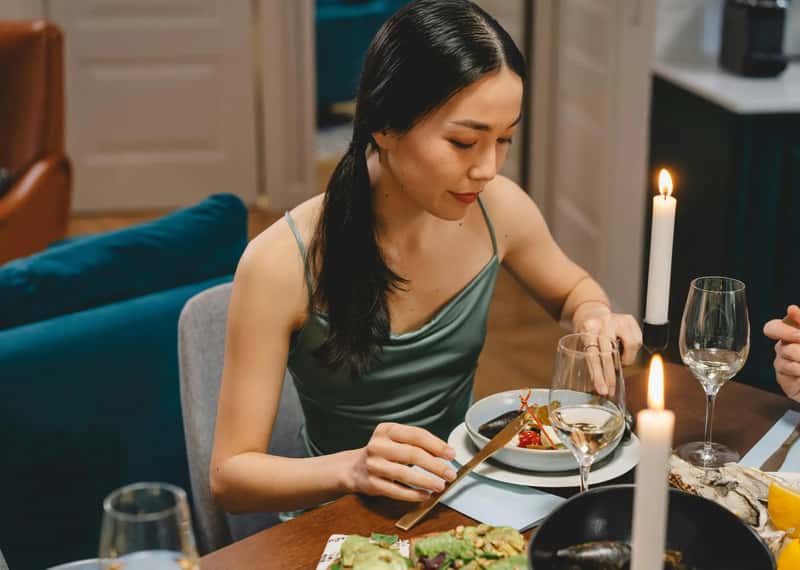
Before you read the menu, before your eyes even register the words, your brain has already made a calculation.
It is not a romantic calculation. It is a survival one.
The job of the amygdala, part of the limbic system, is to assess stimuli – especially threats – and initiate an appropriate response. And here, in this candlelit restaurant in a foreign city, the stimuli are everywhere. The sound of a language you don’t speak. The smell of something fermented and beautiful and unknown. The texture of a menu where you can only guess at half the words.
Our survival depends on our ability to make predictions, and a primary goal of the brain is to predict where and how we can avoid threats and encounter rewards. Because the brain seeks to make accurate predictions, it has an aversion to uncertainty. The brain dislikes ambiguity.
The grilled chicken is not a preference. It is a prediction your brain is willing to make. Everything else on that menu is a question it is too tired to answer.
2. The Evolutionary Ghost at the Table
You did not invent this reflex. It was handed to you by every ancestor who survived.
Food neophobia – the clinical name for the fear of unfamiliar food – is not a personality flaw. It is ancient architecture.
The phenomenon of food neophobia was initially described as a survival mechanism that was beneficial in evolutionary terms since it prevented the ingestion of potentially toxic plants. Think about that for a moment. The instinct that keeps you from ordering the fermented shark or the century egg in a Hong Kong side street is the same instinct that kept your great-great-grandmother alive in a forest she didn’t know.
From an evolutionary standpoint, food neophobia may have served as a protective mechanism. In the ancestral environment, unfamiliar foods could potentially be poisonous or harmful. A cautious approach to new foods would have been advantageous for survival.
The ghost of that ancient caution still pulls the chair out at your table. It sits down beside you. It points, quietly, at the chicken.
3. The Tourist Bubble Is a Fortress
The brochures never advertise it this way, but most travel is a negotiation between immersion and insulation.
We want to experience the culture. We do not want to be consumed by it.
Neophobic tourists tend to suspect or dislike unfamiliarity and are more likely to consume familiar foods in foreign places to achieve psychological comfort. The tourist bubble – that invisible membrane of familiarity we carry like a second skin – is not failure. It is the brain’s way of managing bandwidth. You have already processed an airport, a time zone, a currency conversion, a hotel room that smells like someone else’s soap. By the time you sit down to dinner, the brain’s reserves are running thin.
To reduce the strain and anxiety resulting from contact with a new culture, familiar food in a comfortable environment during travel is essential, especially for comfort seekers.
The bubble does not mean you are incurious. It means you are human, and the human brain has a budget.
4. Decision Fatigue Arrives Before Dessert
Travel is beautiful. Travel is also one of the most cognitively expensive activities a person can undertake.
By the time you open a menu in a foreign city, you have already made thousands of decisions.
An average American adult makes approximately 35,000 decisions per day, comprising both personal and organization-level decisions. Now layer travel on top of that baseline. Which exit at the metro. Which street to turn down. Whether that smell is something wonderful or something to avoid. Whether that person is waving at you or at someone behind you.
Decision fatigue is a cognitive shortcut that causes irrational trade-offs in decision-making. It emerges when mental resources are depleted after making numerous decisions, leading individuals to favor immediate gratification, oversimplify complex decisions, or default to familiar, less optimal options.
The grilled chicken is not a culinary choice. It is a cognitive surrender. And surrenders are not shameful. They are data.
5. The Familiar Is Also a Mirror
I remember sitting in a night market in Chiang Mai, surrounded by stalls of things I could not name. Skewers of cartilage. Broth that had been simmering since before I was born, apparently. Bowls of something purple and gelatinous that smelled like earth and sweetness at once.
I ordered pad thai.
Not because I was afraid, exactly. Because I was tired in a way that travel makes you tired – tired not in the body but in the self. The part of you that constantly calculates who you are in relation to where you are had been running all day, and it needed to rest somewhere it recognized.
Under sustained strain, people often rely more heavily on simplified reasoning. Familiar patterns and habitual responses reduce cognitive effort when working memory is consistently taxed. These adaptations conserve mental resources, but they can also narrow the ways in which information is interpreted.
The pad thai was a mirror. It reflected back a version of me I could still find in the noise.
6. The Anxiety Encoded in Your Senses
It is not just the brain that protests the unfamiliar. The body joins in.
Smell, in particular, is a surveillance system running its own threat assessments.
Studies have shown that people suffering from food neophobia do not perceive smells – food-related or otherwise – as pleasant and as intense as non-sufferers do. When travel anxiety is running high, the olfactory system stops being a sense of wonder and becomes a security scanner. That perfume of fermented fish paste, gorgeous to someone raised with it, can register as danger to a brain already on high alert.
There is a consensus that increased anxiety leads to greater rejection of novel foods, and this has been confirmed across self-report and experimental studies.
This is not snobbery. This is not arrogance. This is your nervous system doing its job badly in a context it was never designed for. Culinary capitals are not designed for anxious nervous systems. They are designed for people who have already eaten themselves brave.
7. The Identity Underneath the Order
There is something almost confessional about a food order in a foreign place.
Strip away the performance of being a traveler, and the menu becomes a personality test you didn’t agree to take.
Neophobia is defined as the fear of new or unfamiliar things, which often leads individuals to prefer familiar options. This phenomenon reflects a paradox where individuals may express a desire for novelty while predominantly choosing what they already know. That paradox is the gap between the traveler we perform and the person we actually are. The Instagram stories about getting lost in a souk do not capture the moment at dinner when we quietly pointed at the one thing we recognized.
In this state, individuals are temporarily outside the normal constraints of their home culture, allowing them to experiment with new behaviors and self-definitions. But experimenting with a new self is exhausting. And sometimes the self simply wants its dinner to be something it already understands.
The order is not a failure of imagination. It is an honest report from the interior.
8. The Comfort Food Carries a Passport
Here is the quiet irony: the “safe” dish you order in a foreign culinary capital is often as culturally rich as anything else on the menu. You just cannot receive it yet.
Comfort food is not lesser food. It is differently timed food.
Comfort food refers to food with which individuals are familiar, providing psychological and physical comfort. That psychological comfort is doing real work. It is lowering cortisol. It is giving the prefrontal cortex a moment to breathe. It is telling the amygdala: the evening is safe. You can stand down.
Tourists are curious and excited about unfamiliar places but at the same time concerned about different climates, living conditions, health standards, and safety. These are not contradictory states. They exist simultaneously in the same body, at the same table, reading the same menu. The excitement and the fear share a chair.
And sometimes the most honest thing you can do is order what feeds the fear first, so the excitement can eat later.
9. The Neophile Myth We Sell Each Other
Travel culture has a hero. She eats everything. He photographs nothing and just tastes. They move through foreign markets like water, like they belong, like they were born digesting the world whole.
This person exists. She is also exhausting to be around.
The opposite of neophobia is neophilia; representatives of this group will sample anything and their food choices are primarily generated by curiosity. Neophilia is celebrated in travel culture the way extroversion is celebrated in office culture – as the default, the gold standard, the goal. But food neophobia is often related to an individual’s level of sensation-seeking, meaning a person’s willingness to try new things and take risks. And sensation-seeking, like all personality dimensions, is a spectrum. Most of us live in the middle.
The myth of the fearless eater flattens the real experience of real travelers. It makes the person who ordered the pasta in Bologna feel like a failure instead of a person whose brain simply needed a rest. The myth serves the travel industry. It does not serve the truth.
10. The Slow Archaeology of the Brave Bite
And yet.
There is a moment, sometimes, when the fog lifts. When the anxiety has been fed its grilled chicken and its recognizable wine, and something shifts. The cortisol drops. The amygdala quiets. And suddenly – suddenly – the menu becomes interesting again.
This is not a moral achievement. It is a neurological one.
Travel rewires your brain through neuroplasticity, creating new neural pathways when you navigate unfamiliar environments and cultures. Discomfort during travel fuels personal growth by forcing you outside comfort zones and building confidence through uncertainty. But that rewiring does not happen at gunpoint. It happens in the quiet aftermath of having been safe for long enough to remember that you are curious.
That is the real archaeology of travel. Not what you ate on the first night, but what you ordered on the third.
Not what you photographed for the algorithm, but what you reached for in the dark when no one was watching and the fear had finally gone quiet.
The menu will always be there. The city will wait.
What changes, slowly, meal by meal, is the distance between the person you perform and the person who sits down hungry.
Order what you need tonight.
Tomorrow, maybe, you try something new.