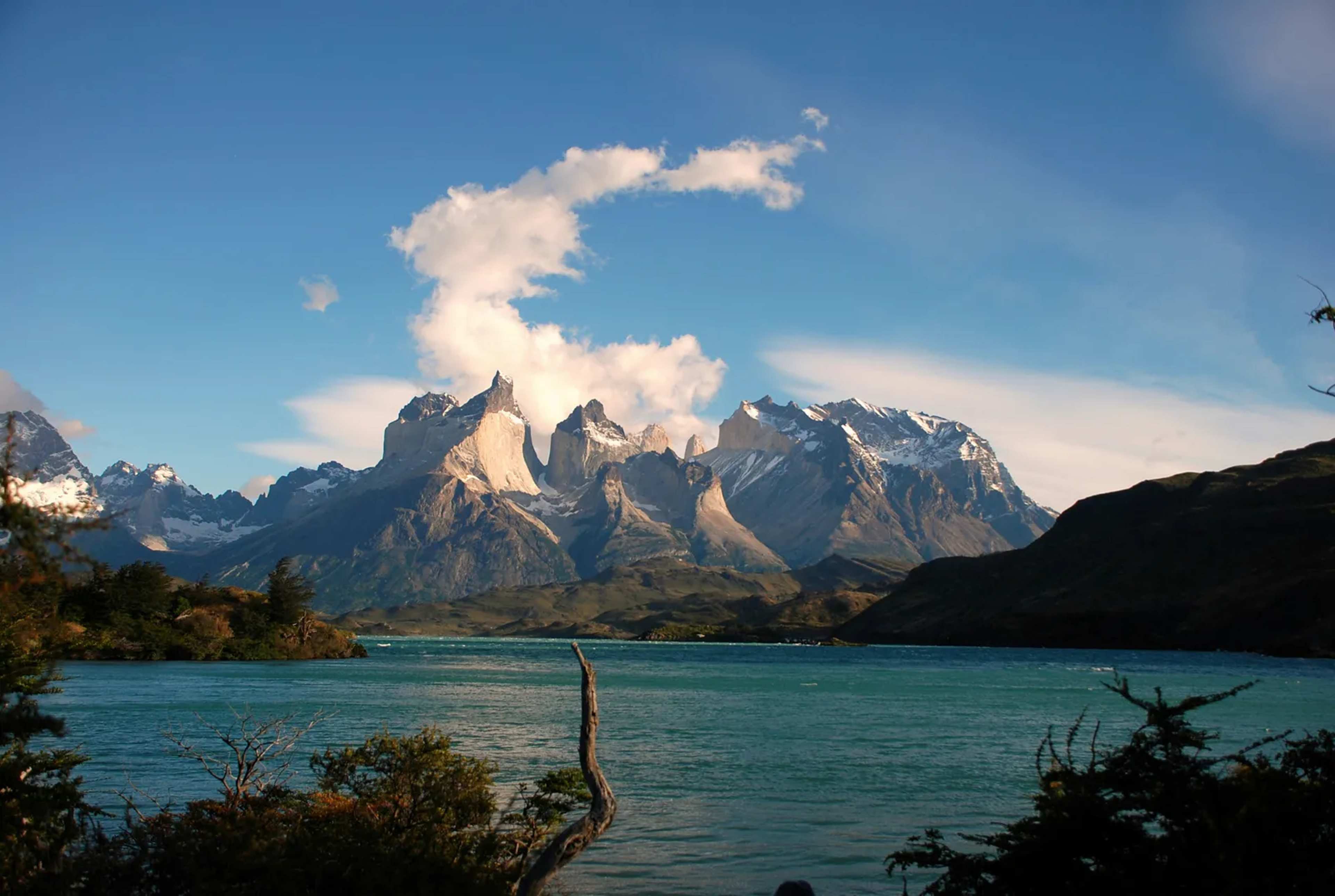
You landed in a new city at dusk.
The guidebook said the cathedral. The museum. The square with the bronze general on horseback.
You found yourself in a bar, asking the bartender about the mayor who disappeared in 1987.
Not the cathedral. The scandal. Not the landmark. The wound.
There is a version of you that travels with an itinerary. And there is the version of you that actually shows up – the one drawn to back streets, hushed histories, and the kind of local story no one puts on a tourism placard. The question isn’t why you keep gravitating toward the dark and the complicated. The question is what you already know, somewhere deep and wordless, that keeps pulling you there. Our sense of self-identity is influenced by society, family, ethnicity, culture, location, and life experiences. Which means sometimes the history you seek out in a stranger’s town is the history your own family never let you touch.
1. The Inheritance You Never Asked For

There are things that were handed to you before you had language for them.
A tightness in the chest when someone raises their voice. A compulsive need to leave before things get complicated. An inexplicable pull toward stories of collapse and cover-up.
This is not coincidence. This is inheritance.
Intergenerational trauma refers to the apparent transmission of trauma between generations of a family. People who survived historical disasters or traumas may pass the effects of those traumas on to their children or grandchildren, through their genes, their behavior, or both – leaving the next generation susceptible to anxiety, depression, hypervigilance, and other emotional and mental health concerns.
The traveler who haunts the municipal archives isn’t being morbid. They’re being honest.
They’re doing the archaeology their family refused to do at the dinner table. Every local scandal they research – the embezzlement, the affair that split a town, the name everyone stopped saying after 1962 – is a proxy. A stand-in. A rehearsal for a conversation that hasn’t happened yet back home.
The landscape outside is always a mirror. You just have to be brave enough to look directly into it.
2. The Conspiracy of Silence
Every family has a room no one enters.
Sometimes it’s a literal room. The study where your grandfather worked. The drawer that was never opened after your aunt died. More often, it’s a subject. A year. A name spoken in a lowered voice, if at all.
In intergenerational trauma research, one of the central clinical features is the silence that occurs in families surrounding traumatic experiences. The isolation and wordlessness of trauma persists – often referred to as the intergenerational conspiracy of silence – with symptoms serving as a form of speech in family patterns, repetitions, and interconnections. The trauma remains a “secret” trauma not verbally expressed; unacknowledged but with the potential to be passed on nonetheless.
So you travel. And in a small Portuguese town or a rust-belt American city, you find a story about a family that covered something up for thirty years.
You feel a recognition you can’t explain.
That recognition is the point. You’re not a voyeur. You’re a person raised in silence, finally finding the words in someone else’s history that your own family refused to provide. The local scandal is the Rosetta Stone of your own inheritance. You’re translating yourself.
3. The Temporary Identity
Nobody knows you here.
That’s not a sad fact. That’s the entire architecture of freedom.
When you travel alone, the roles dissolve. The responsible one. The difficult one. The one who holds the family together or the one everyone worries about. Gone. A solo trip is an opportunity to shed the constraints that we all have in one form or another. Solo travel frees you for a journey of self-discovery.
And in that freedom, something curious happens. You don’t rush to the famous sites. You slow down. You ask the wrong questions – the interesting ones. Who used to own this building? Why did they tear down the old neighborhood? What was the name of the family that everyone blames?
These are not tourist questions. These are the questions of someone who grew up knowing there was a story underneath the official story. When we pause the day-to-day things that bind our experiences, that allows for other things to come in. You could use that time to do identity-building work in terms of thinking about your future self.
The temporary identity is the truest one. And it always leads you toward the buried thing.
4. The Pattern Recognition Engine
You were trained young.
You learned to read rooms before you could read books. You learned which silences meant danger and which meant sadness. You became, without being asked, a decoder of subtext. A reader of what wasn’t said.
This is a survival skill. It is also a travel style.
Families often attempt to protect children by not speaking about the past. However, this “conspiracy of silence” can be destructive. Children are highly intuitive; they sense the “unspeakable secret” and the emotional heaviness in the home, often filling the void with their own frightening fantasies.
The child who grew up filling voids with their own frightening fantasies becomes the adult who can walk into a strange town and immediately sense where the real story is hiding. It’s not in the tourist brochure. It’s in the way locals go quiet when you mention a certain street name. It’s in the memorial that isn’t quite the whole truth.
You know how to read the gap between the official version and the lived one. Your family taught you that. They didn’t mean to. But they did.
5. The Exit Strategy
I want to tell you about a city I once stayed in for eleven days.
I had a list of things to see. I saw exactly none of them. Instead, I spent hours in a neighborhood that had been razed and rebuilt three times in fifty years, talking to an elderly man about what the city looked like before each erasure. He kept saying: “It was different. We don’t talk about the first one.”
I understood that sentence in my body before I understood it in my mind.
Because I grew up with a “first one” that we didn’t talk about either. A generation back. A move that wasn’t explained. A relative whose photograph disappeared from the family wall sometime before I was born.
I began to realize I wasn’t travelling to escape my life or even to see the world. I travelled to meet the parts of myself that had never been given language.
The exit strategy isn’t really an exit. It’s an entry. Every time you leave home, you walk straight into the thing you were raised to walk around.
6. The Borrowed Mirror
Other people’s scandals feel safer than your own.
There is a distance – geographic, temporal, cultural – that makes it possible to look directly at the thing. The corrupt official in a Sicilian village. The family feud that divided a Welsh town for eighty years. The local hero who turned out to be something more complicated. These stories allow you to practice the gaze.
You’re learning to look at a covered-up truth without flinching. You’re building the muscle.
Dark tourism provides a structured and socially sanctioned outlet for curiosity, allowing us to explore themes of mortality and suffering from a safe distance. This is a form of controlled exposure, a way of touching the void without being consumed by it.
The borrowed mirror works because the emotional stakes feel lower. But the reflection it offers is entirely personal. The dynasty that fell because of one secret is every family that fell because of one secret. Including, perhaps, yours. You’re not studying history. You’re studying the mechanism. The way things stay hidden. The cost of the hiding.
And slowly, trip by trip, you are becoming someone who can bear the truth of your own story.
7. The Interrupted Narrative
Every family has a story it tells itself.
We came from nothing. We survived. We worked hard. We never talked about money. We were happy. We were fine.
And somewhere in that story, there is a seam. A place where the telling gets rushed or vague. Where the details stop arriving and the general statements take over. Where someone changes the subject.
Trauma is transmitted to subsequent generations through a variety of channels, including unconscious or subconscious processes resulting from unacknowledged trauma, interruptions to family narratives, learned behaviors, and disruptions to intrafamilial relationships.
You feel that seam like a splinter. You can’t stop pressing it.
So you travel. And in a city with its own interrupted narrative – a neighborhood that gentrified too fast, a monument that’s been quietly defaced, a history that the official tourism board presents in one clean paragraph – you feel the splinter again. The familiarity of the cover. The specific shape of what was smoothed over.
People often describe the experience of intergenerational trauma as patterns or cycles of dysfunctional behaviors that affected several generations in their families. Some perceive their experience as that of having an indelible scar acquired through others – a constant reminder of the difficulties experienced by older family members, which were never allowed to fully heal.
You keep tracing that scar in other people’s cities because you haven’t yet found it in your own family’s story.
8. The Need to Understand
You don’t want to judge. You want to understand.
That distinction matters enormously. The traveler who seeks out the dark history of a place is not looking to condemn. They are looking for the logic. The sequence of events. The how and why of how a good thing became a bad one, or how a bad thing was kept quiet for so long.
There is a need for understanding which drives us to look for meaning behind acts that seemingly have none.
This is the same need that makes you want to understand your family.
Not to assign blame. Not to rewrite the story into something cleaner. But to finally hold the whole complicated thing in your hands and say: I see it. I see how it happened. I see the fear and the pride and the silence that made this possible.
People who are open with their children about the traumas they experience appear to be less likely to transmit the effects of those traumas. Some researchers believe that when parents or grandparents who have experienced significant trauma openly discuss stories of their survival, it can have a beneficial effect on their descendants and foster greater resilience.
Understanding is the first act of healing. You’re practicing it in strangers’ towns because it’s still too raw to practice at home.
9. The Return
Every journey out is a journey back.
This is the paradox that the postcards never mention. The further you travel, the deeper you go – not into foreign territory, but into yourself. Into the sediment of your lineage. Into the rooms your family sealed and the names they stopped saying and the years they referred to only as “before.”
The negative collective experience of an entire community influences the transmission of traumatic experiences to subsequent generations through family secrets, untold stories of loss, murder, torture, and more.
And here is what the journey teaches you, if you let it:
The secrets your family kept were not kept out of malice. They were kept out of the same human instinct that makes a town put up a cheerful mural over a building where something terrible happened. The instinct to survive. The instinct to keep moving. The need to present a version of things that can be lived inside of.
A tendency to pass on traumatic experiences from one generation to the next can be observed in family systems. This continuity manifests itself in posttraumatic stress disorders, anxiety disorders, mood disorders, aggressive behavior, social withdrawal, or health risk behaviors in the second or third generation – with family secrets, communication deviances, disturbances of interpersonal boundaries, and conflicts of loyalty all playing a role.
You are not a tourist of other people’s pain. You are a person in search of a map. And the map, it turns out, has been inside you all along – written in the particular shape of what you were never told, in the specific weight of every silence you grew up inside of.
The scandals you trace in foreign cities are the questions you haven’t yet found the courage to ask at home. Each one is a rehearsal. Each one is you, practicing the patience and the steadiness required to hold a complicated truth without flinching, without running, without changing the subject.
One day, you won’t need to borrow someone else’s history to understand your own.
You’ll sit across from the silence and call it by its name – and somewhere in the marrow of everything you come from, something will finally, quietly, rest.