You are standing outside a real estate office in a city you’ve been in for four days.
You don’t live here.
You aren’t moving here.
And yet your finger is tracing the edge of a listing in the window like you’re reading a map back to yourself.
There is a gap between who you perform being – the seasoned traveler, the untethered soul, the person who needs no fixed address – and the version of you that still aches quietly for a room where you belong. Not a rented room. Not a hotel room. A room that holds your name like it means something. That gap is where modern identity goes to negotiate. It is not comfortable. It is not romantic. It is simply the truth of what happens when the childhood version of “home” was unreliable, absent, or simply never quite warm enough.
1. The Window You Keep Returning To
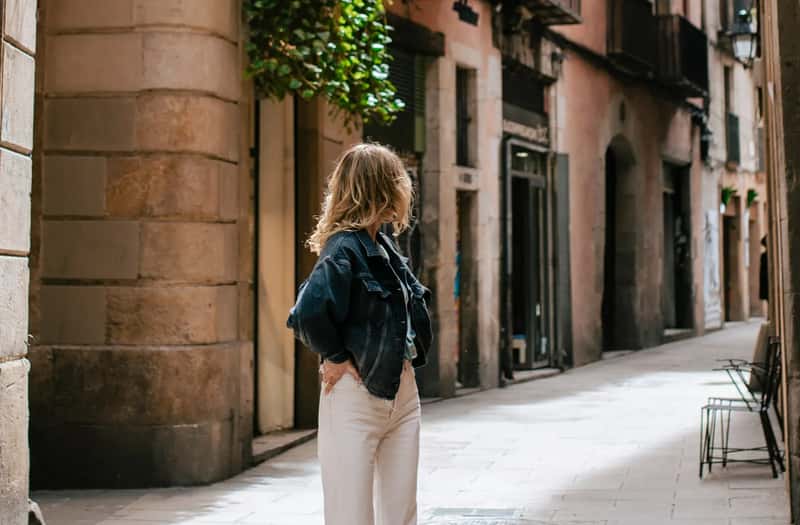
Real estate windows are not neutral objects.
They are curated invitations. Laminated photographs of rooms that have never held your grief, your bad mornings, your silences. They are promises, and promises are extraordinarily seductive to people who were promised things that never arrived.
Every person has at least one place that feels different from the rest. This feeling of connection isn’t random – it’s a well-studied psychological phenomenon called place attachment, and it runs deeper than simple preference.
But standing at a foreign real estate window is not place attachment.
It is place longing. A very different animal.
You are not scanning those listings for square footage. You are scanning them for the feeling of safety you were supposed to receive at roughly age four and somehow never fully did. The window is just the latest surface you are pressing that question against.
The asking price doesn’t matter. The answer you are looking for isn’t listed.
2. The Architecture of the Unmet Need
There is a clinical scaffolding beneath what feels like wanderlust.
The psychology of place posits that individuals require a “good enough” environment in which to live. They are linked to that environment through three key psychological processes: attachment, familiarity, and identity.
When those three things were disrupted in childhood – when the house moved, or the house stayed but the emotional climate shifted – the nervous system holds the record.
It doesn’t file it. It doesn’t close the case. It keeps looking.
So the adult version of you boards planes and scans skylines and ducks into open houses on Sunday afternoons in cities you’re just passing through, and calls it curiosity. It is curiosity. It is also something older and rawer underneath the curiosity. Architecture becomes a proxy for the security the body still wants.
The corridor of a beautiful old building doesn’t just look appealing. It feels like a question getting closer to an answer.
3. The Temporary Identity
Travel offers something seductive: a version of yourself that hasn’t made any mistakes yet in this city.
You walk differently. You notice things. You are present in a way that your actual life somehow doesn’t require.
Researchers coined the “Fresh Start Effect” – the surge in motivation that occurs after temporal landmarks. A new year. A birthday. A new address. By generating separate mental accounts for each time period, we relegate past mistakes to our former selves. This psychological separation gives us the feeling of starting over on a clean slate.
Every new city is a temporal landmark. Every new city is a chance to audition a version of yourself that feels more coherent.
The problem is the audition never quite becomes the role.
You return home. The lines between the temporary identity and the permanent one blur. And a low-grade ache reminds you that you haven’t resolved the thing you were trying to outrun – you’ve simply given it another set of postcards.
4. The Suitcase as a Psychological Document
Look at what you pack. Look at how you pack it.
The people who overpack are often the people for whom leaving has always felt unsafe. The people who travel with almost nothing are often the people who learned early that possessions get left behind anyway, so why form attachments.
There is the luggage you check at the counter. And there is the other kind. The grief you didn’t process. The professional shame that clung to you long after you resigned. The family dynamic you haven’t named out loud, not once, not to anyone.
That second bag is the one that sets the itinerary.
It decides which cities feel like possibilities and which ones feel like rehearsals. It stands beside you at the real estate window. It is why the apartment in the listing with the high ceilings and the warm light gives you a feeling in your chest that has nothing to do with the apartment and everything to do with something the apartment reminded you was still missing.
5. The Anecdote You Already Know
I will tell you a thing that happened.
I was in Porto. I had four days. On the second afternoon I found myself standing in front of an estate agent’s window on a narrow street that smelled of salt and old stone. The listings were in Portuguese. I don’t speak Portuguese. And I stood there for longer than was rational, working out what I could afford if I just – stayed.
I wasn’t planning to stay. I had a return ticket. I had a life that fit my dimensions.
But something in me was doing the math anyway. Something in me was constructing a parallel life in a city I had known for thirty-six hours, because that parallel life felt quieter than the actual one. Calmer. Less tethered to the record of all the ways I had not yet become the thing I was supposed to become.
That’s not wanderlust. That’s negotiation. And the person I was negotiating with was about seven years old and still waiting to feel at home somewhere.
6. The Exit Strategy
Some people use travel the way others use relationships – not to arrive somewhere, but to avoid staying anywhere long enough for the real inventory to be taken.
The serial mover is often, at their core, an escape artist – every move an attempt to escape mental health issues, broken relationships, jobs they hated, and ever-worsening patterns. The city changes. The patterns don’t.
The exit strategy feels like freedom. It is dressed in freedom’s clothes. It carries freedom’s vocabulary.
But an exit strategy is still a strategy organized entirely around exits. It is a life built on departures. And people who build lives on departures are often people who, at some fundamental level, believe that arrival is dangerous – that if you stay too long, something will be taken from you.
That belief didn’t start in an airport. It started much earlier. In a house. Or the emotional atmosphere of a house that never quite let you exhale fully.
7. The Topophilia Trap
Environmental psychologist Yi-Fu Tuan coined the term “topophilia” to describe the deep love people can feel for particular places, capturing the intersection of emotion, memory, and environment.
But what happens when topophilia becomes displaced?
When you cannot love your childhood home – because it wasn’t safe, wasn’t stable, wasn’t yours in any real emotional sense – the longing for place doesn’t disappear. It migrates. It attaches to everywhere and nowhere. It stands in front of real estate windows in Lisbon and Osaka and Buenos Aires and Copenhagen, scanning listings with a specific ache that it cannot name out loud.
Every beautiful city becomes a vessel for the feeling that somewhere, there is a correct answer to the question of where you belong.
Displacement – whether voluntary or forced – often triggers nostalgia, grief, or a sense of rootlessness. But the most disorienting displacement is the kind you carry from the very beginning. Before the first flight. Before the first suitcase.
8. The Place That Shaped the Search
For children, place identity forms through direct physical interaction with environments, which is why childhood memories of places are typically oriented around intensely emotional or sensory-rich events.
The smell of a particular hallway. The specific quality of afternoon light in a room. The sound the front door made when it closed behind someone leaving.
These are not small details. They are the raw materials of your psychological architecture.
And if those raw materials were unstable – if the hallway smelled like tension, if the light was always slightly off, if the front door closing meant something frightening – your nervous system catalogued all of it. And it has been looking for the corrected version ever since.
Research consistently shows that people feel more comfortable and less stressed in environments that resemble the landscapes of their childhood. The tragedy is when the childhood landscape was never calm enough to emulate. Then the search becomes infinite. You are looking for a childhood you didn’t have, rendered in the language of foreign real estate.
9. The Belonging Debt
There is a specific kind of debt that accumulates in childhood when belonging is withheld or inconsistent.
Lack of stability, safety, acceptance, warmth, and connection to community at such pivotal ages are considered potential experiences for emotional wounds that can lead to feelings of depression, anxiety, or other mental health issues.
That debt does not dissolve when you grow up.
It compounds. It earns interest in airports and hotel lobbies and late-night scrolls through foreign property listings. Rootlessness expresses the feeling of having nowhere to belong and nowhere to call home. This state is usually brought about by a lack of meaningful relationships in life which causes a sense of emotional and psychological isolation.
You can be housed and rootless simultaneously.
You can have a fixed address and an entirely unfixed sense of where you are allowed to take up space. The belonging debt is not a real estate problem. No square footage repays it. No postcode resolves it. Only the slow, deliberate work of understanding what was owed and to whom – and beginning to grieve what was never received – can begin to settle that account.
10. The Soft Architecture of Enough
Here is what nobody tells you about the real estate window habit:
It doesn’t stop when you find the right city. It doesn’t stop when you sign a lease or a deed or plant a garden in a place you’ve decided to stay. It stops – slowly, incompletely, tenderly – when you start to understand that you were looking for a feeling, not a floor plan.
Although ideas about what constitutes a home tend to be formed in early childhood, culture and changes to life circumstances in adulthood affect its ultimate perceptions. Which means the story isn’t fixed. Which means the architecture of home is something that can still be built, even now, even late, even after all those windows in all those cities.
The central tenet of place attachment theory states that an individual has an inborn predisposition to form strong bonds with places as well as with people. That predisposition never went away. It was never broken by the childhood that didn’t hold you correctly. It was simply waiting for you to direct it with intention rather than desperation.
The heaviest thing about this particular kind of searching is not the distance it covers. It is not the cities accumulated like evidence of a life well-traveled. It is the specific weight of arriving somewhere beautiful and still feeling the low-frequency hum of insufficiency. That hum that says: not here, either. Not yet. Not quite.
That hum is not a navigation error. It is a signal from the part of you that still has enough hope to keep looking. It is the child who believed that the right room existed – that somewhere there was a place that would hold them without conditions, without weather, without the sudden cold front of an adult’s mood moving through the house. That child was right to believe it. They were not wrong in the wanting.
They were simply looking in the wrong direction. Not outward. Not through glass. Not at listings in languages they don’t speak in cities that don’t know their name. The version of home they were always searching for was never a place that needed to be found. It was a feeling that needed to be built – quietly, deliberately, in the interior architecture of a self that finally decided it was allowed to stay.
Somewhere between the departure gate and the next real estate window, there is a door that opens inward. You’ve walked past it a hundred times. It has no listing price. It has no photograph. But it’s the only one you were ever actually looking for.