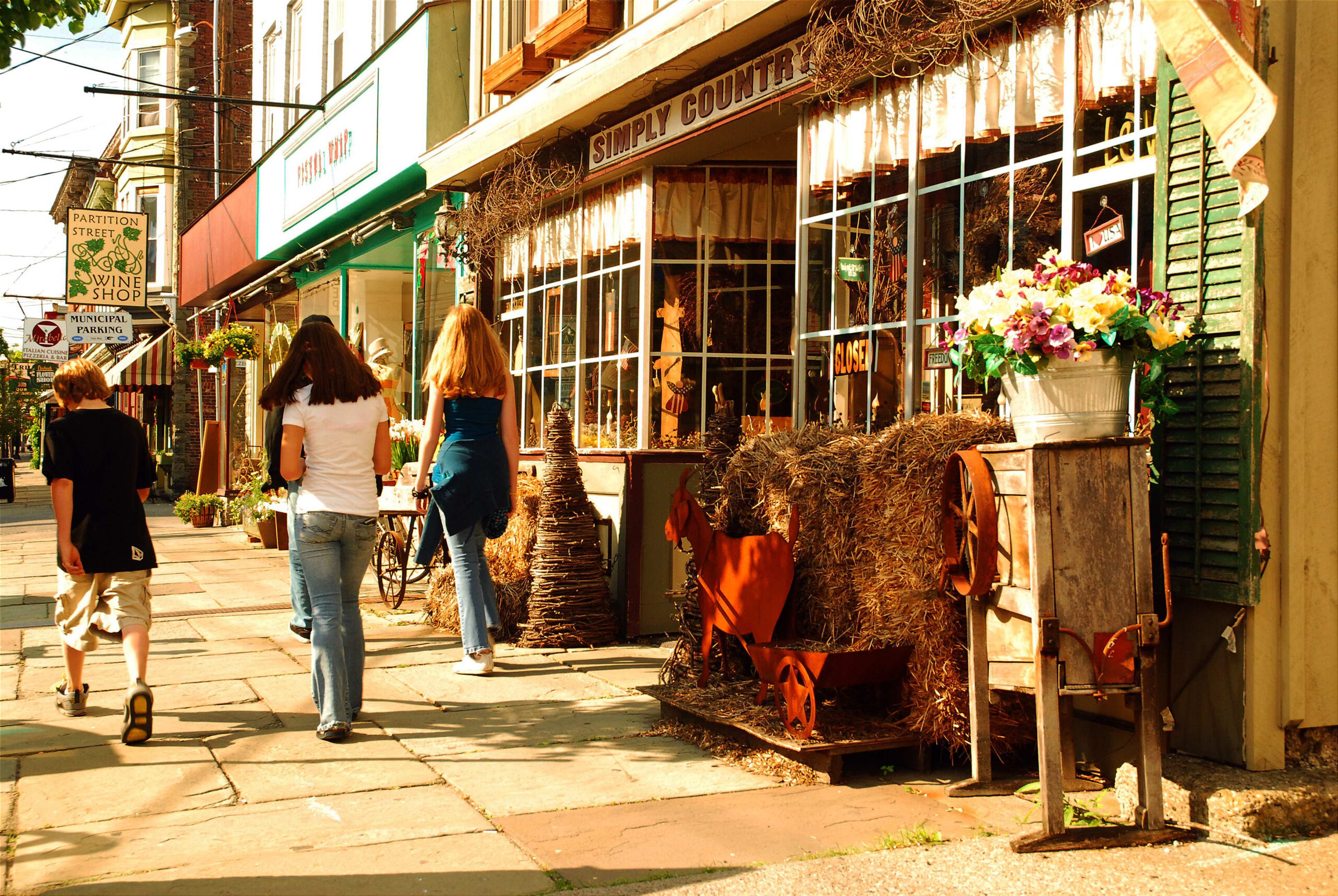
You stop in front of the window.
You weren’t planning to.
The listings are laminated. Slightly sun-faded. A two-bedroom in a city that isn’t yours.
You read the price. You do the math. You think: I could live here.
That thought – quiet, almost accidental – is the most honest thing you’ve felt all week.
There is a version of you that exists only in transit. Unburdened. Unrecognized. Free from the accumulated weight of who you’ve had to be. When you step out of your everyday environments and routines, you undergo a temporary rearrangement of identity – one that lets you imagine other possibilities for yourself. The person reading that real estate listing isn’t shopping for square footage. They’re shopping for a self.
The Identity Gap is the distance between the life you perform at home and the life you feel capable of living everywhere else. It is wide. It is mostly silent. And it opens widest when you’re standing in a foreign city, reading the price per square foot of somebody else’s ordinary life.
1. The Laminated Window

There’s something about the real estate window that shouldn’t work as a mirror. And yet.
You weren’t looking for apartments. You were looking for coffee.
But the window caught you. A photograph of a kitchen with afternoon light. A price that seemed – just barely – possible. A neighborhood you don’t know, in a city that doesn’t know you.
At first glance, window shopping appears to be an idle pastime. But beneath its leisurely surface lies a complex psychological dance involving aspiration, identity, and even self-regulation. When people engage in window shopping, they often imagine themselves using or owning what they see.
With real estate, the object is a life. Not a sofa. Not a coat. A whole, breathing, daily life.
This mental simulation can activate parts of the brain associated with reward and anticipation, providing a dopamine boost without the commitment of spending. It’s fantasy with a touch of reality – within reach, but still safely distanced.
The laminated window is a controlled hallucination. You stand outside it. You feel everything. You risk nothing.
That is the point. That has always been the point.
2. The Temporary Identity
Every city gives you a new character to try on.
In Lisbon, you are slow and sun-worn, someone who buys bread every morning from the same bakery. In Tokyo, you are meticulous and interior. In Montreal, bilingual and slightly mysterious.
None of these are lies. They are all facets of a self that can’t fully exist inside your real life’s constraints.
We’re all made up of multiple identities. The people we are around and the environments we’re in – those things contribute to whatever identity is having primacy in the moment.
The real estate window makes that temporary identity feel permanent. It offers a floor plan for the person you’re being right now, in this city, on this afternoon.
You are not planning to buy. You know that.
But for sixty seconds, the math works. The self works. The life in the photograph – with its high ceilings and its light – feels like something you were supposed to arrive at.
The tragedy isn’t that you can’t afford it. The tragedy is that even if you could, the feeling would move on without you.
3. The Exit Strategy
People who read real estate listings in cities they don’t live in are running a very specific kind of contingency plan.
Not financial. Existential.
The plan sounds like this: If my current life becomes unbearable, I could go there. I have already done the research.
This is not escapism in the cheap sense. This is a coping mechanism with architectural specifications.
When you return to a structured life, with exceptionally predictable surroundings and limited choices, the old sense of predictability can seem suffocating. The emptiness of returning from traveling is not a simple feeling of nostalgia and space. The emptiness may also be a sign of a small expansion of your identity that can’t fully be embraced in your past context.
The exit strategy doesn’t require execution. It requires only the existence of a door.
You need to know it’s there. Somewhere, in a city with better light, a version of your life is available. The listing is still up. The price is still listed. You have already imagined where the books would go.
4. The Partial Home
The word “home” has been lying to us for a long time.
We’ve been taught that it is singular. Fixed. The place with the mail and the mortgage and the memory of where you were when something enormous happened.
But the research tells a different story. A Pew Research Center survey found that 38 percent of respondents did not identify the place they were currently living as “home.” Twenty-six percent said home was where they were born or raised. Twenty-two percent said it was where they lived now.
The numbers don’t add up to certainty. They add up to confusion dressed in polite language.
Researcher Ilan Natan Magat coins the concept of “partial homes,” which in contrast to the “ideal home” does not include conformity between one’s culture, nationality, and relationships.
Every city you’ve stood in, reading a listing, has been a partial home. A fragment. A room in a house that doesn’t fully exist.
You are not looking for an apartment. You are assembling a complete home from parts scattered across six time zones.
5. The Person You Were Before the Address
I remember standing outside a real estate office in Porto on a Tuesday morning. I had been traveling for three weeks. I was supposed to be working. There was a one-bedroom apartment in the window – terracotta tiles, a view of the river – and I stood there for longer than I’d like to admit.
I did the math. I converted the currency. I calculated what I’d have to give up.
And then I realized: I wasn’t calculating rent. I was calculating who I was allowed to be if nobody already knew me here.
Traveling alone removes external influences and expectations. Every decision, big or small, comes from your own preferences. This clarity helps surface who you are when you are not performing a role or responding to others’ expectations.
That is what the window offers. Not rooms. Not a river view.
It offers the possibility of a you that predates your current biography. The you that existed before the job title, before the apartment you settled for, before you became legible to everyone around you.
That person is still in there. They keep stopping at windows.
6. The Dopamine of Elsewhere
The brain doesn’t distinguish cleanly between planning and fantasizing. It rewards both.
The possibility of a treat or reward releases dopamine – a chemical released in the brain that makes us feel good. Dopamine lasts even past the act of the purchase. The anticipation also releases dopamine, such as when window shopping or adding items to an online cart.
Now apply that to a two-bedroom in a city with better weather and no history.
The dopamine hit of the real estate window is enormous. It is the anticipation of an entirely different life. It is chemically indistinguishable from hope.
When travelers scroll through products and properties, they envision themselves within that experience. More succinctly, travelers who dream of far-away places are actually “seeing themselves” in those locations.
You are not browsing. You are neurologically rehearsing.
The brain lights up. The body briefly believes it. And for one long moment on a foreign street, the elsewhere feels not just possible but necessary.
7. The Nomad’s Grief
Nobody talks about what is lost in the constant act of leaving.
Not the places. The versions of yourself you had to abandon when you moved on.
Some people have described this feeling as “post-travel depression,” where you miss not a place, but a person you became while traveling.
Read that again. You are grieving a person.
The real estate window is a form of mourning. It is an attempt to house the version of yourself that only comes alive in motion – to catch them, to pin them down, to give them a kitchen and a lease and a reason to stay.
Each of the psychological processes – attachment, familiarity, and place identity – is threatened by displacement, and the problems of nostalgia, disorientation, and alienation may ensue.
The chronic traveler carries all three. They carry them quietly, between gates, between cities, between windows.
The grief is real. It’s just dressed in the language of real estate.
8. The Homelessness Nobody Names
There is a condition that has no clinical name, no diagnostic code, no support group meeting on Tuesday evenings in a community center.
It is the state of being technically housed and functionally homeless.
You have an address. You have keys. You have a city that appears on your tax forms.
And yet.
As people migrate and settle in new places, the concept of “home” becomes less tied to a particular nation. More of the world lives in a generalized condition of homelessness.
Due to a change in customs, traditions, and values, it can be challenging to maintain a sense of identity about a culture that feels now far in time and space. We may feel displaced – like we don’t belong anywhere.
The person stopping at every real estate window knows this feeling in the body, not the mind. It is a low-frequency hum. A persistent sense that the coordinates don’t match. That wherever you are, the real place is somewhere just slightly beyond the frame of the photograph in the window.
9. The Architecture of the Self
We use the language of buildings for the interior life.
We say we are grounded. We say we have foundations. We say relationships need room to breathe. We say a person is solid, or that they’ve fallen apart.
We were always building something when we looked at those windows. We just thought it was a house.
Beyond brain rewiring and emotional shifts, travel profoundly reshapes who we are at our core. Identity – our fundamental understanding of self – undergoes remarkable transformation when we step into unfamiliar territories.
Every city rearranges the interior architecture. A new neighborhood changes the load-bearing walls. A foreign kitchen makes you realize how much of yourself you’d designed around inconvenience.
The real estate window is not about the building in the photograph. It is about the building you are still mid-construction. The one that keeps needing a different city’s light. A different latitude’s silence. A different window entirely.
You are the project. You have always been the project.
10. The Version That Doesn’t Exist
Here is the hard thing. The thing beneath all the other things.
The home you are looking for – in Seville, in Medellín, in Tbilisi, in that sun-warmed third-floor apartment with the iron railing – does not exist.
Not because those cities aren’t real. They are radically, specifically real.
But the self you imagine inhabiting them is a composite. A best-of. A version assembled from every afternoon you’ve ever felt completely, briefly, alive in a place that wasn’t yours.
When we step out of our everyday environments and routines, we undergo a temporary rearrangement of our identities. We can escape our at-home personas and live unbound, or widen our perspectives and make big-picture plans for future iterations of us. We can mark the transition from one chapter of our lives – one version of ourselves – to another.
That version – lighter, more intentional, better-lit – is not a person you can move into a new city and become. It is a feeling. And feelings don’t survive the logistics of forwarding addresses and new dentists and the slow accumulation of a local self.
Window shopping, then, is not just about things we want – it’s about the people we want to become. And the cruelest truth is that the person you want to become keeps living just one city ahead of the one you’re standing in.
The search is real. The need is real. The longing that makes you stop mid-stride on a street you’ve never walked before and press your attention against a glass – that is one of the most human things you will ever do.
What if the window isn’t a symptom of restlessness, but a ritual of permission? A small, recurring ceremony in which you grant yourself – for sixty seconds, for the length of a listing – the right to imagine a life that fits differently.
Not better. Not elsewhere. Just differently. With more room for the parts of you that your current life was never quite built to hold.
The home you’re searching for isn’t in another city’s inventory. It never was. It is the ongoing, imperfect, deeply courageous act of deciding that where you are is worth the full weight of who you are – and then, slowly, making the rooms match.
Or maybe you stop at the next window, and the next, and the one after that – and maybe that, too, is a kind of living.