The cabin door seals shut with a pressurized thud.
You feel it before you understand it.
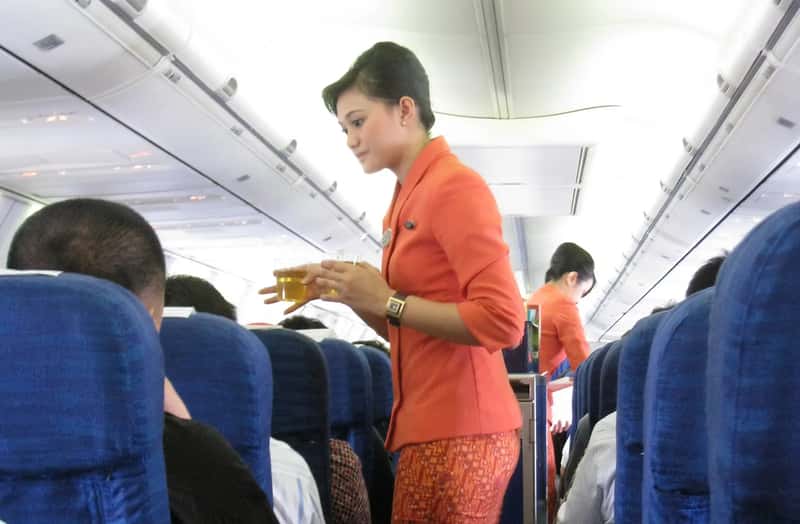
A flight attendant’s jaw tightens. Her smile flickers – just once. One half-second deviation from the script.
And somewhere deep in your chest, an old alarm starts ringing.
Not everyone feels that. But you do. You always have.
There is a version of you that grew up learning to read the room before entering it. The one who learned that an adult’s tense shoulders meant the next hour could turn dangerous. The one who developed a sixth sense not for directions, but for danger disguised as normalcy. The gap between those two versions is not geography. It is not jet lag. It is the space between who you had to become to survive, and who you actually are when no one is performing for anyone.
1. The Borrowed Alarm
Here is what nobody tells you about growing up in a high-conflict household: you didn’t just learn to fear the people in it. You learned to borrow their emotional weather.
Children whose families and homes do not provide consistent safety may develop ways of coping that allow them to survive day to day – becoming overly sensitive to the moods of others, always watching to figure out what the adults around them are feeling and how they will behave.
A flight attendant is a professional authority figure sealed inside a metal tube with you at 35,000 feet.
She is also, to your nervous system, the person at the head of the dinner table.
When she grimaces at a passenger, your body doesn’t file it as “occupational stress.” It files it as a warning shot. It files it as: someone is about to be in trouble. It wonders, instinctively, quietly, if that someone might be you.
This is the borrowed alarm. You didn’t create it. It was handed to you without your consent, wrapped in the ordinary furniture of your childhood home.
You still carry it. And it rings in the strangest places.
2. The Threat-Reading Machine
Your brain became something extraordinary in that house.
It became a threat-reading machine of almost supernatural precision.
This hyper-awareness often manifests as emotional reactivity, where minor stimuli are interpreted as threats. Loud noises, sudden movements, or even subtle shifts in tone can trigger a sense of danger, reinforcing the perception that the world is unsafe.
A flight attendant’s body language is a minefield of these stimuli.
The clipped walk. The whisper to a colleague. The way she scans the cabin just a half-beat too long before the announcement.
They’ll notice the shaking leg, the shallow breathing, the eyes darting to the window. But it goes both ways. You are watching her just as carefully as she watches her passengers.
You are reading the room. You always read the room. You were taught by masters.
The tragedy is that the machine never learned to turn off. It was built for a specific environment, and it never got the decommission order. So it keeps running, scanning, translating benign data into threat assessments, even at cruising altitude, even when there is nothing to fear.
3. The Authority Equation
In your childhood home, authority and unpredictability were the same thing.
In many families, our first experience with authority is with a father or mother figure. If that relationship was unpredictable, critical, emotionally unavailable, or unsafe, your body may have learned that authority equals danger.
A flight attendant holds a specific kind of authority. She controls the environment. She decides who gets accommodated and who gets corrected. She can, in a very real sense, summon consequences.
To a regulated nervous system, she is just someone doing a professional job at altitude.
To your nervous system, she is a loaded variable.
Even if you consciously know your manager is reasonable or your doctor is supportive, your nervous system can still go on “high alert.” The flight attendant never needed to do anything wrong. Her stress was enough. Her visible stress landed in your body as a precursor to punishment – not because it is, but because that is the only translation your system was ever trained to offer.
This is not irrational. This is a learned equation that once kept you safe.
4. The Fawn in Row Fourteen
Watch what you do next.
After you clock the stressed flight attendant, notice the impulse that follows. The sudden urge to be conspicuously agreeable. To fold your tray table before anyone asks. To smile wider when she passes. To disappear into perfect, frictionless compliance.
The fawn response originates from a survival strategy often developed in childhood, particularly in environments marked by neglect or abuse. In such situations, a child learns to adapt by excessively trying to please and appease their abuser as a means of securing protection and avoiding harm.
You are not being polite. You are running a survival program.
The victim responds to an abusive parent or other authority figure by being highly agreeable, pressing down their own needs. In later life, it can manifest as being highly submissive, looking to others to shape reactions and relationships.
You become the model passenger. You fold yourself into the smallest possible shape. You preemptively resolve a conflict that exists only in your memory, in the architecture of a home you have not lived in for years.
Row fourteen. Exit row. Somewhere over Ohio. You are still trying not to make it worse.
5. The Disappearing Act
I remember the first time I noticed this in myself.
A red-eye out of Chicago. The flight attendant at the front of the cabin was managing a difficult passenger – raised voice, that particular brand of performative outrage. Standard aviation theater. Nothing to do with me.
And yet I pulled my hood up. I turned toward the window. I made myself smaller in the seat. I was, in the most literal sense, hiding.
Not from turbulence. Not from the difficult passenger. From the emotional climate in the cabin.
Emotional hypervigilance is a trauma-driven state of constant alertness where your mind and body remain on guard for emotional threat, even in safe situations. If you constantly scan conversations for hidden meaning, feel a rush of anxiety before conflict even begins, or read other people’s moods as a matter of survival, you may be experiencing emotional hypervigilance.
I wasn’t anxious about the flight. I was re-enacting a childhood instinct so old it had no label. The disappearing act. The one you learn in a house where being visible during a conflict meant becoming part of it.
The body keeps the score at 30,000 feet, too.
6. The Nervous System That Never Landed
Here is the clinical architecture beneath the anecdote.
While the fight-or-flight response is healthy and necessary in short bursts, chronic exposure to stress causes it to remain active, creating a chronic stress response. For children exposed to ongoing trauma, this heightened state of alertness becomes their baseline, leading to heightened alertness even in safe environments.
Your baseline is not calm. Your baseline is ready.
Ready for the shift in tone. Ready for the door to slam. Ready for the perfectly ordinary Tuesday to become a catastrophe with no warning.
A cabin full of strangers, pressurized air, an authority figure showing stress – this is not a neutral environment for a nervous system calibrated on chaos. Every micro-signal hits the intake valve of a system designed to process threat data, not ambience.
Childhood trauma often means that you grow up on high alert. This leads to a dysregulated nervous system that is seemingly always looking out for potential threats, even when it’s not necessary. Although we develop hypervigilance to keep us safe, experiencing constant stress hormones when there’s no real threat can have a serious impact on life, mental health, and physical well-being.
The nervous system that never landed. It is still circling. Still scanning for a safe place to touch down.
7. The Invisible Checklist
You do it without thinking.
The moment you board, you run a checklist that has nothing to do with the safety card in the seat pocket. You assess the flight attendants – mood, tension level, the texture of their professionalism. You note who looks strained and who looks buoyant. You map the emotional topography of the cabin before you even find your seat number.
This condition involves a constant state of high alert, leading to an intense and obsessive awareness of one’s surroundings and frequent scanning for threats or escape routes.
This is the invisible checklist. It was never written down. It was never taught explicitly. It developed organically in a home where reading the room was a prerequisite for safety.
One subtle way childhood trauma shows up as hypervigilance in adult relationships is constantly monitoring another person’s mood or tone. You may feel anxious at the slightest shift, even when nothing is wrong, as if anticipating conflict or disconnection.
The checklist runs on every flight. Every hotel check-in. Every new environment with an authority figure at its center. It is thorough. It is exhausting. And it is invisible to everyone but you.
8. The Body’s Misdirected Memo
The stress is real. That is the part people miss.
When a flight attendant’s visible distress activates your threat response, the physiological reaction is genuine and measurable. It is not catastrophizing. It is not drama. It is a biological memo sent to the wrong address.
When a child grows up afraid or under constant stress, the immune system and body’s stress response systems may not develop normally. Later on, when the child or adult is exposed to even ordinary levels of stress, these systems may automatically respond as if the individual is under extreme stress – experiencing significant physiological reactivity such as rapid breathing or heart pounding.
The physical effects of hypervigilance are equally profound. The body’s chronic stress response can result in fatigue, sleep disturbances, and muscle tension. Many individuals experience headaches, digestive issues, or an overall sense of being “worn down” from the constant state of alertness.
You land at your destination feeling inexplicably depleted. You chalk it up to altitude, recycled air, the indignities of modern aviation. But the fatigue has a different origin. You spent four hours running a security threat analysis on a cabin environment that posed no threat to you whatsoever.
The body charged you for labor you didn’t consciously authorize.
9. The Identity You Pack in Your Carry-on
Travel promises reinvention. That is the oldest lie of the road.
The truth is more complex. You do not leave your nervous system at the gate. You do not check your attachment patterns with your luggage. The person who boards the plane is the same person who grew up memorizing which floorboards creaked and which tone of voice meant the evening was about to change.
Hypervigilant people may struggle with clinginess, people-pleasing, emotional regulation problems and trust issues. They often neglect their own needs – or even suppress elements of their identity – to avoid conflict.
Travel reveals this identity more sharply, not less. Because in a foreign environment, your adaptive self has to work harder. The signals are less familiar. The cultural codes are new. And so the scanner runs hotter, faster, burning through more fuel.
The identity you pack in your carry-on is the one built for survival. Compact. Portable. Perpetually on guard. It fits in the overhead bin because it learned, early, to take up as little space as possible.
That was never a virtue. That was a strategy.
10. The Distance Between Safe and Gone
Here is what the research quietly confirms, and what your body has always known:
Rather than being set off by one major trauma, this state often evolves gradually – in response to long-term stress, childhood emotional neglect, or persistent overwhelm – usually rooted in the chronic or repeated experience of growing up in chaotic, unpredictable, or emotionally unsafe households.
The flight attendant’s stress is not a diagnosis. It is a mirror.
It reflects something back at you that has nothing to do with turbulence or delayed beverage service. It reflects the original wound: that the people responsible for your safety were sometimes the source of the threat. That authority and danger lived at the same address. That a shift in someone else’s emotional weather could mean a fundamental change in your own physical safety.
The reaction often feels bigger than the situation because your nervous system responds to past experiences where authority did not feel safe.
The distance between “safe” and “gone” – between visible and hidden, between present and disappeared – was a distance you learned to cover in seconds. You could read the room. You could make yourself small. You could become the version of yourself least likely to attract consequence.
You still can. You do it at altitude, at check-in counters, in conference rooms, at dinner tables that are not the original dinner table. You do it automatically, efficiently, without being asked.
The problem is not that you developed the skill. The problem is that the skill never learned to distinguish between the house that required it and every room that came after.
There is a particular silence that falls over people when they first recognize this pattern in themselves. Not shame, exactly. Not grief, exactly. Something older and quieter – the particular stillness of someone who has just been handed a map of territory they have been navigating blind for years.
The flight attendant will finish her shift. She will debrief, deplane, and decompress in ways that are professional and bounded. Her stress was occupational. It had a start time and an end time. It was not a weather system that lived inside the walls. Yours was. And your nervous system, loyal and thorough, never stopped treating every subsequent stress signal as if it still was.
That is not a flaw in your character. That is evidence of how hard your system worked to keep you alive inside something it had no map for. And somewhere, on a plane still climbing through cloud cover, there is a version of you pressed against the window – not watching the landscape, but finally, slowly, beginning to understand the view.